Hello,
Everyone.
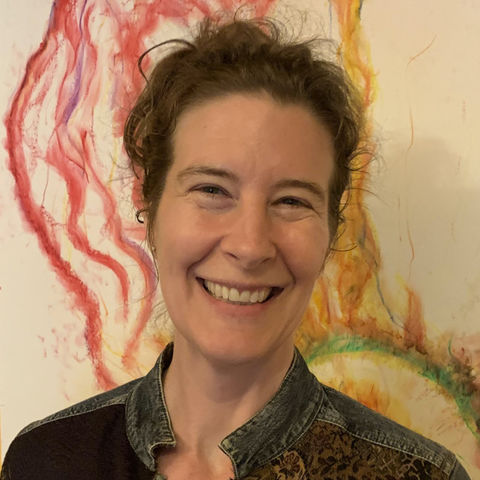
So very excited to welcome to the summit my friends,
Dr.
Julia Mossbridge and Michael Sapiro,
And they've been working together on the topics of hope,
Unconditional love,
And time travel.
Dr.
Mossbridge is a scientist,
Technologist,
Change leader,
Aiming to scale hope,
Unconditional love,
Future preparedness,
And human potential.
She's a fellow at the Institute of Neurological Sciences in Petaluma,
California.
She's an associate professor of integral and transpersonal psychology at the California Institute of Integral Studies.
She's executive director of TILT,
Which is the Institute for Love and Time,
A nonprofit focusing on scaling,
Unconditional love,
And time travel.
And to support her work,
She recently received funding from the Robert Wood Johnson Foundation.
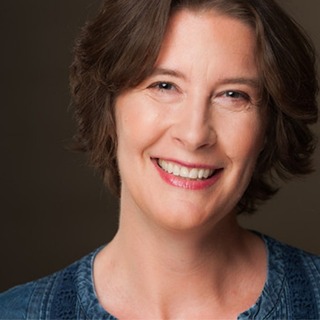
Dr.
Sapiro is a clinical psychologist,
Writer,
Meditation teacher,
And a former Buddhist monk.
He teaches on the art and the science of transformation,
Expanded human capabilities,
Self-care,
And non-dual meditation for personal as well as community growth.
Dr.
Sapiro is dedicated to personal awakening for the sake of the collective as well as planetary transformation.
Julia,
Mike,
Thank you so much.
I'm extremely excited about the conversation.
I was pondering to myself earlier,
How did I get so lucky to be able to interview together two of my favorite people and on this very topic?
I want to begin- Thank you so much,
Paul.
Yeah,
Thank you both.
Thanks,
Paul.
I want to begin with this concept of connecting with our future selves and what gifts can we receive by connecting with our own self over time?
Well,
That's a biggie.
Let's just start out with the big stuff.
Let's just- Don't mess around.
Mike,
Do you want to start off on this one?
Well,
I'd love to hear your thoughts on this big topic first.
Sure.
Yeah.
We both have similar yet complimentary takes.
What gifts can you get from connecting with yourself over time?
All of them?
I can't think of a gift that you can't get by doing that.
I guess the only gift you couldn't get by- Now,
Of course,
I'm going to prove myself wrong.
The only gift you couldn't get by connecting with yourself over time is the gift of what it feels like to connect with another person,
Which is a big gift.
But having said that,
Your capability of connecting with another person grows exponentially with your ability to connect with yourself over time.
We have this idea of living in the present.
The idea is that we're just focused on the now and we're not focused on the past or the future,
And that's valuable in the sense that if you're not aware of what's happening now,
If you're not mindful of the present,
You really can't have anything.
The only way to receive anything is by being here right now.
But acknowledging that the present has unfolded within it,
The past and the future,
And really developing your relationship with yourself over time,
So your past self and your future self and your past selves,
Of which there are multiple,
And your future selves,
Of which there are multiple,
Has a profound impact on your ability to be here in the present moment.
So everything that we receive in the present moment can actually be affected by your capacity to lovingly connect with yourself in the past and the future.
So it's a big gift.
How do we do that?
I mean,
Many of us presumably are already doing it to some degrees unconsciously,
But you're advocating this program that you're teaching together that we should be more conscious about it so that we can unfold these gifts.
Yeah.
I mean,
So how do we do that?
Well,
How do you nourish a relationship with someone that's important to you?
So time and attention.
Time and attention and love.
And love.
Right?
So you do that for yourself.
We all have a model of our past and future selves in our minds already.
We all have that.
We all,
You know,
Unless you don't have a memory or you don't have a capacity to think about the future,
Which is very rare,
We all have this model.
And so why not connect lovingly,
Spend some time and attention and intention connecting with a past self that was hurting and being with that self in a loving way?
Why not?
I mean,
Why would we not connect with a future self that has something to tell us that's important for our lives?
The reason and the answer,
That's a real question,
Why not?
And the real answer seems to be often fear,
Because when we open ourselves up to connecting with ourselves over time,
We really emerge.
Our power really emerges,
Our strength really emerges,
And that can be scary.
Mike has some thoughts on this that I think are really useful.
Well,
I'm going to go back to your first question,
And then the how to first question from my perspective is no one's going to do this for us.
We're responsible for taking care of ourselves.
And we're turns out we're our best resources.
And so many of us don't know that we,
We hope for our parents or our lovers or our partners or our friends to kind of tend to us and take care of us.
And people can to some extent do that.
But when we become dependent on others to do the tending and to love us the way we really need,
We often end up alone feeling isolated or disappointed.
And so what I've discovered in my work and myself with Julia and my patients is that when we become the most loving resource for ourself,
Then we have the unlimited potential of tapping into the universe's love,
Which is constant.
It's radiant.
It's pervasive.
And so when we learn to go backward and tend to those parts of us that were wounded in our childhood,
Adolescence,
Young adulthood in our adulthood,
When we really love those parts of us that were wounded going back,
Then we have a model for how to look forward and our future self and turns its attention toward us and offers that same kind of love,
That same kind of attention and the same kind of nurturance.
So now we have over time,
This capacity to love deeply ourself.
And in doing so we become much stronger,
Emboldened,
Empowered,
Embodied,
And we find ourselves healing in ways no one else could have ever done that for us.
That's beautiful.
So I have a question.
Mike,
I know you're a former Buddhist monk.
You teach meditation,
Non-dual meditation.
So much of the Buddhist philosophies,
I understand it,
Perhaps certainly the Vedantic too,
Emphasizes the eternal now,
The eternal present.
And it seems those traditions emphasize we should just stay here,
Here in the now and not go drift to the future time or the past time because the reality is there's only the now.
Now,
I appreciate that's just one perspective,
But how do you understand that as far as this other kind of concepts you're sharing with us?
Well,
We become the grounding rod in the present.
With us connecting to earth,
Connecting to the cosmos,
All mystical traditions have the experience of timelessness because everything exists in the present,
But all moments exist in the present.
So it's not really going too far outside a lineage to say when you're in the present,
The grounding rod,
Then time opens up and becomes extensive and beginning and non-ending,
Which means we always have access to all of those moments.
And what we know from the science of trauma is our bodies actually contain the traumas of our childhood and our ancestors going all the way back and it can project all the way into the future.
So it becomes our responsibility then to sit in the present as a grounding rod and expand our sense of time so that we can then heal in all directions because our bodies need healing,
Our ancestors' bodies needs healing,
Our future body needs healing.
So we stay here,
But expand the sense of here to include all of time.
Okay,
Beautiful.
I understand it better because the way you're describing it is very consistent with these traditions,
Meaning you have to be grounded here in the present in our body-mind system to be able to successfully transcend the present moment,
To be able to fully access these other time domains and reap really the benefits,
Which is our future selves,
Our past selves,
The inheritance of all of that.
That's basically what you're saying.
This is more of a mental concept,
But if you could describe this,
Either one of you,
I understand this material dimension that we're in at this moment is often called the third dimension and a concept of the third dimension or how we generally get around here is space.
Everything's spatially oriented.
We go from one space location to another.
In the so-called fourth dimension,
That movement is actually time,
Time's the primary currency of movement.
When we're dealing with our,
Say,
Other selves,
The future and or past,
Are we as part of our consciousness operating in this other dimension?
Okay,
Could I redo the 3D,
4D analysis?
Yes.
Okay.
You can't have movement without time.
We aren't doing anything in 3D.
3D is just this,
This,
This.
It's just space.
We aren't doing anything in 3D.
We're always doing everything in all four dimensions.
We physically,
Anyway,
Physically we're doing everything in those four dimensions because we exist in time.
Time is often forgotten about because it's complex for people to think about because we can't see it.
Like we can see the directions in space,
But we experience it.
And the reason I'm saying this is because time ends up being almost equivalent to our experience.
And so,
I guess what I'm saying is in the materialist worldview,
What is real is our bodies,
Right?
I'm sure that these hands exist.
What is doubted is our experience.
Even though the only way we know that this hand exists is because of our experience,
Right?
Even though the experience is the actual tool with which we know that the physical world exists.
So it's backwards in terms of what we ought to really believe.
I mean,
We ought to really believe first the tool that we're using to perceive everything else,
But it's backwards.
And so,
Of course,
Everything that we're doing is in the four dimensions,
But when we do things mentally,
It's always in the dimension of time.
When we do things with our minds,
Minds don't exist in space.
They just exist in time.
So we are just operating in the fourth dimension,
Which I think is what you were saying,
But I wanted to get clarity on those pieces.
And operating in the fourth dimension is no problem.
Zipping around is no problem for our minds.
But we are so used to applying the rules from the physical world,
But says,
No,
If I can't see it,
It doesn't exist.
So my past self is gone.
My future self is not here.
It's just a mistake of logic to apply the rules of the physical world to the rules of the temporal world,
Which are very different.
I really appreciate that.
I think that was very deeply insightful and a way that I haven't actually understood it before.
Mike,
Did you want to chime in or I have a question?
Oh,
Please go for the question.
OK.
So Julia,
I was reading one of your articles in this domain.
You wrote a positive or robust future orientation or quote future time perspective are the scientific terms that may come closest to what we commonly call hope.
That to me is beautiful.
I don't fully understand it.
So I'd like both of you to elucidate that because hope that that's our session here as related to time.
So future orientation,
Future orientation is equivalent generally with this term called future time perspective.
And they're both about how do you relate to the future?
And everyone has a relationship with the future.
It could be largely dread.
It could be largely optimistic.
But the kind of future orientation that leads to hope is one that is robust in the sense that it is a powerful relationship in your life with the future.
It is extensive,
Which means it goes not just to the end of today,
But over weeks,
Months and years.
It is adaptive in the sense that if something changes according to your sort of mental map of the future,
You could adapt to it.
And it's flexible,
Which is slightly different from adaptive in that if you change your desire and nothing external changes,
You also go ahead and you change your orientation towards the future.
So it's a straight it's like a I think of it often as if you think of a necklace with a bunch of beads on it where each bead is a moment in time.
When you have a strong future orientation that's adaptive,
It's flexible,
It's extensive,
It's robust,
Then that thread that holds those beads is really strong and cannot be broken.
And you are identified with that thread rather than each moment in time in particular.
And that's what I call deep hope.
So that's deep hope as opposed to say cheap hope.
Cheap hope is real connection with the essence of who you are over time.
So that no matter what happens,
You're going to be okay.
You know that there's a you that's going to be okay.
So it's almost like you really exist.
That's a deep hope.
And to just distinguish that from cheap hope,
I'm not putting down cheap hope.
It's just that cheap hope is cheap in that it doesn't take much to develop,
Right?
Cheap hope is like,
Oh,
I really hope that I get to see this guy I like or whatever.
That's a perfectly valid hope and everyone needs to have hopes like that.
That's like a wish.
But it's about some external outcome.
It's a wish about something to happen in the world over which you don't feel like you have control.
Whereas deep hope is this feeling of I do exist and I'm strong over time.
Very different,
Very motivational.
Thanks for that.
That was helpful for me,
Particularly this idea of the strings of the beads.
The string you're strengthening,
You're changing your orientation to the string,
Which is really the self itself.
And you're cultivating that as a foundation.
And then it sets you through all the linkages.
I'd like to add to that too,
If I can,
Just for all the audience and listeners to really make this felt in the body.
If you think about all the times you've been through something challenging and all of us have,
You've made it.
You've made it through to today.
You're alive.
We might still be struggling with something today,
But all the things you've made it through have made you stronger and wiser and more adaptive.
And so you can imagine going into the future,
You're going to face struggles and hardships the same way,
But you're going to take the strengths and resiliency and tenacity you've built up into the future.
So you can project that into the future going,
I know I've already been through something difficult and I know I can get through it again.
Whether you're facing something now,
You can imagine just a few weeks or months going,
I will get through this.
And so now you have a deep sense of hope because you know you've come through something and you know you can make it through something.
Your future self can actually turn to you from the future and go,
Here's how I want you to go through this.
I want you to rest more.
I want you to take it easy.
I want you to be firmer in your boundaries.
And when you hear that,
You can start practicing that which will get you through what you're going through today.
So it's not just like,
Oh,
I wish I didn't have to go through this.
It's like,
I know I can go through this.
And that's the difference.
It's a fundamental difference in your body and mind when you have that deep sense of hope that it's going to be tough,
But I will be okay.
Thank you for that.
That did bring it right down to a groundedness and an orientation in the here and now that's inspiring as well as very practical actually.
Thanks Paul.
So well,
Mike,
How are you bringing this idea,
These technologies,
The teaching around this out to people?
What are you doing?
Well,
We've been really blessed to be gifted a grant from the Robert Wood Johnson Foundation to study this process that in the beginning of last year during the coronavirus,
We called it the hope intervention.
And it was a 14 week series that Julia and I led teaching these concepts,
The science of hope,
And then actually engaging in a meditation that expands our sense of time and our connection to ourselves over time.
And I know you can find that on YouTube.
It's available to the public.
And then we shifted from doing that 14 week series into a focus group orientation where we started testing this with groups of people who experienced poverty,
Addiction,
Trauma,
Incarceration,
Or abuse in their life.
So those of us with really kind of tender and wounded upbringings or experiences,
And we started teaching these to focus groups and in hopes that we would understand from their perspective how this kind of mental time travel and this unconditional love of self in all directions helps create a really strong relationship to themselves over time.
And then through that experience,
We're starting to develop the technology and application in which people relate to themselves through time over this application.
And then really Julia can speak to this because that's more her than me in this case.
Yeah.
A technology.
Yeah,
It's a hope technology,
Which I think is honestly quite revolutionary because we're adding the person into the technology and the person relates to themselves over time through this technology.
And so I'd like to invite Julia to actually talk more about that.
Oh,
For sure.
Yeah.
This is something that came to me just after writing that grant is the grant was saying we're going to make some kind of technology that helps people mentally travel through time and connect with themselves in the future so that they can build a more robust future orientation.
That was the grant.
And then after,
Surprisingly,
We got the grant.
I had to say,
Now I have to build a technology that's going to help people connect with their future selves.
But what I did was I checked in with my future self and I said,
Show me the technology.
Like,
Of course,
That's the solution,
Right?
That's the easiest solution.
Of course.
You got it.
And it just came out all in one piece.
So there were three functionalities.
One is just simple recording a message to your future self.
One is,
And we call it,
We call the whole technology the time machine.
One is the meditation room where you can record a mantra for yourself that loops over time.
And one is called,
I think we're calling it the hope garden.
Yeah,
Where people can grow blossoms or plant seeds of hope and watch those grow with various resources that they need over time.
So that came to me almost immediately when it was required because I checked in with my future self.
And what we did then was create these pods of people,
And Mike talked about the focus groups,
Who knew about the ideas behind the technology from the focus group and then brought those ideas into a 26 day pilot study,
Just interacting with the technology rather than interacting with us.
And it was powerful.
So I worked with technology for most of my life,
And most people don't have this positive a response to technologies that they're asked to work with for 26 days.
And they really loved it.
And some of them asked us afterwards to create extra focus groups,
We weren't paying them for these focus groups.
But they said they wanted to come anyway.
And when I said why,
You know,
Is there something that went wrong?
They're like,
Well,
We just want to give you feedback.
And then in the focus groups,
They were like,
This is amazing.
And we want to continue doing this.
And so I'm delighted so far with the pilot results.
One of the things that we need to get better at,
The whole one of the whole points of the grant is to bring this technology to people who are who are have part of the hope deficit.
So there's a hope deficit.
So people who have had positive life experiences who are who aren't in a situation where they are impoverished,
Who aren't under resourced,
These people generally have hope is in the water for them.
Inter orientation,
That's very extensive and robust and adaptive and flexible.
That's all in the water for them.
They don't even know it sometimes.
But the people who most need hope are those who don't have those things.
And it's usually less in the water for them because of their life experiences.
And so what we're working towards is bringing this technology to those folks so that we can help reduce this hope deficit.
Fabulous.
In addition to hope,
Which obviously you're cultivating and describing that,
What are some other features of people's lives that begin to change as a result of participating in your programs?
Sure.
So hope is so deep hope that is this huge motivational force that impacts a lot of things.
So future orientation has been directly linked in I'm sorry,
In a like study,
I think they were I'm trying to remember how many people probably like 30,
000 people are pretty big study,
Showing that your future orientation,
If it's robust,
Positive,
Etc.
All the five things that I listed.
If that's integrated into your thinking and into your behavior,
There are mega positive impacts in three domains,
Physical health,
Career,
And education.
And so it's kind of like a one stop shopping.
So yeah,
It's very powerful.
But also in our study,
We measured the capacity to feel unconditional love.
And we were very pleased that that actually significantly increased in the participants,
People's own experience of unconditional love for themselves and others.
So that was in addition to the general well being increases,
The future orientation increases and the decreases in negative feelings about the past.
I'd like to add to kind of anecdotal experiences come to mind from our from our focus groups.
One person went back to a traumatic experience that they had and reported finally being able to be there for herself in ways no one else could have been.
And she's been waiting to feel healing around this experience.
But she was waiting for herself to go back to do it.
I mean,
That's that's a profound,
Profound shift in our ability to tend to ourself when you've been waiting all of these years for help,
And finally realize you're the one who has to go back and do it and help yourself.
Another person,
A man said that in this experience,
This mental time travel where we embed unconditional love,
It's not a concept,
It's felt in the body,
It's felt in your in your energy,
In the aura around us,
That he didn't know this,
But he gave the best hugs of anyone he's ever met he in his mind and body hugged himself lovingly from both directions and reported,
And he didn't even know that he was the best hugger he ever met.
I mean,
How many of us are longing to be felt and intended to,
And when we really do this work,
We realize,
Oh,
Shoot,
I'm the one I've been needing this whole time.
And that that changes our dependency and our code and our attachment styles and the way we mesh with other people.
We don't necessarily need to do that if we realize and recognize within ourselves is this tender loving person that we actually are.
You know,
And that brings up,
Oh,
Sorry,
Did you want to go to another question,
Paul?
No,
Just want to say that I so much appreciate that because it ties into what you said at the introduction,
Mike,
Namely that we are the ones who are responsible for our own healing and well-being and we often we're socialized not to really look to ourselves and our own gifts and our own power spiritually and otherwise to take care of ourselves.
And you're emphasizing here that that's what this work can do.
It wakes up those other aspects,
The other resources we have of ourselves.
We embrace them and then as a domino effect for multiple domains of well-being,
You mentioned physical,
Mental,
Spiritual.
Yeah.
I really real quick,
I want to say this is,
I believe,
Where real hope comes from,
Because I know I've got my own back.
Do you know what a change that is when I go into the unknown future going?
I don't know what's coming up and I'm still kind of scared of it,
But I know I'm there for myself.
I mean,
I get chills just saying that because I've been longing my own life for please someone help me.
It's so scary,
But really not Mike.
I've got you.
I will be here no matter what you go through.
And that's a strength I've never felt before doing this work,
Actually.
Very powerful.
I get that also as you're speaking it.
Is it okay if I add to that?
Yes,
Of course.
So two things.
One is Mike,
I am there for myself.
I've got your back.
Reminds me of that study from two therapists who work for the Israeli army and they were working with a young man who had PTSD for 10 years.
And it was intractable.
I mean,
They couldn't,
He couldn't work.
He couldn't get rid of his nightmares.
It was affecting everything.
And their job was to try to get him back to work.
And so first they did the regular therapy,
Which is exposure therapy,
You know,
Tell the story of the trauma from multiple directions,
Dimensions and directions and feel it in your body and process it.
And that really helped a little bit,
But he was still having nightmares.
And so they tried this experiment that they had tried once before,
At least that they had published.
They tried it with him and they said,
We'd like you to tell the story of your trauma,
Which was that he had witnessed an explosion and I won't go into detail because it was pretty traumatic.
Tell the story of your trauma,
But please tell it now from the point of view of Hussein,
That was his pseudonym,
Hussein 2011.
The trauma was in 2001.
And so he said,
Okay.
And he went back in time as himself now,
You know,
In his mind,
He took to it like water and he said,
Oh,
So let's see,
I see who's saying 2001 over there.
And he's scared because the explosion just happened and he's afraid he's going to die and he's covering his eye because his eyes hurt and he doesn't know where the doctor is and he just assumes that he's going to die.
And so I go over to him and I say,
Hey,
Hussein,
You're actually not going to die.
I'm from 10 years in the future and you actually also aren't going to see like your eye is actually going to heal and he's really grateful and I take him in my arms and take him to the doctor.
Now that didn't really happen in 2001,
But it significantly helped him in 2011.
And he did that three times,
Only three times.
He also told it from the point of view of 2001,
Hussein who said,
I see this future person coming towards me who looks a lot like me.
And I'm like,
Who are you?
I don't know.
You know,
I need to find a doctor and he helps me get to the doctor.
So he does it from both directions.
It's brilliant.
And the title of the paper is that they wrote about it is I see no,
I fear no evil because I am with me.
Twist of an ancient aphorism.
Exactly.
Exactly.
So that's one story.
And the other story is the reason I think I'm so compelled by this work is because I've I've developed a relationship with my future self as a kid when I was under a very stressful situation in the house where I grew up and there was some abuse going on and some neglect.
And I had a future self version of Julia who was there and who told me it was okay to be angry and that I would survive and thrive and that this was not normal and very helpful.
My future self has guided me my whole life.
And yeah,
I want to I wanted to just get really practical.
I thought I thought I think that's really important because I contend to be kind of abstract.
It's very helpful when I say very helpful.
What I mean is life saving to be able to do this.
Yeah,
I'm appreciating that more and more as both of you are speaking,
Sharing the programs,
But also people's experiences who have walked away from it,
Not walked away from it,
But who have participated,
Including both of yours.
I'm wondering,
Are there any meditative or spiritual traditions historically that have had these understandings and have taught this type of work?
I can speak to the shamanistic tradition that I'm studying in the Sangoma tradition in South Africa.
My teacher,
John Lockley,
And I have been working on this.
But it's not been in my Buddhist tradition.
It's not been in even the Nandul tradition,
But in those indigenous traditions where I've been blessed to study and have teachers.
Again it's about the grounding rod connecting between the heavens and cosmos and the earth.
Then we expand through dream time and we expand in all directions and spirits,
Ancestors,
The spirits of plants and animals all start showing up in the work we're doing all across time,
Across space,
Across worlds and dimensions even.
But it's through grounding and it's through expanding at the same time where we have this access where we're not lost in it.
And fundamentally it's about love and hope,
Hope for ourselves and our community and our planet,
But it all comes down to love coming in and out of all directions.
But it's also as a psychologist seeing from the inside of these traditions,
It's also about healing across time,
Healing my ancestors.
But it's also about gathering the strength of my ancestors through my bones and my blood because they've been through all of it.
They've survived and now I can carry that survival and thriving forward as well.
So that's where I find this kind of dream time work that we're talking about in real time being done is in those more indigenous traditions rather than the Eastern Asian ones,
Which I also spend a lot of time in.
So these indigenous traditions or civilizations even,
They just hung there naturally.
They didn't become so mental as we have in the so-called West and certainly in the modern post the scientific age.
I love what you were saying,
Mike,
In that this work opens us to dimensions.
Number one,
We could call them dimensions,
But also as a result of that,
It allows us to access the different resources across these dimensions,
Namely love and then various permutations of that,
Which included you're speaking,
Including hope,
Of course,
When you're both speaking about hope,
I find myself wondering what exactly is hope?
We have hope,
Faith,
Gratitude.
These are all traditional aspects of the soul life.
We call them virtues,
For example,
But each one of them is something profoundly significant beyond just how we might normally have a relationship with hope.
Gratitude,
For example,
I'm thankful for this,
Thankful for that.
But if we really meditate deeply on gratitude,
We get a whole different insight into its energy as beingness and what it means to us.
And I'd like you both to speak about that in terms of hope.
What really is exactly hope as an experience,
As an energy for our transformation and wellbeing?
So thanks for asking that,
Paul.
Really it comes back to a few things.
When we presented this to our colleagues,
Richard Miller and James Barres during a meeting,
They said,
Oh,
That sounds a lot like faith,
Not hope as in I wish things would be different in the future,
But as in I know things will be okay in the future.
I have deep faith in the nature of the mystery in the universe to do exactly what it needs and I will be prepared.
And again,
I'm going to restate for me,
Deep hope is understanding in the body that I have myself.
I'm here for myself.
And so hope translates to me as no matter what happens,
I know I can count on myself.
So that's the strongest version of hope that I can kind of elicit at this moment.
Thank you.
Thank you.
Julia,
Do you want to share?
Yeah,
I love Mike's definition.
The only thing I would sort of tweak about it to match my own experience is that it's not only counting on yourself,
Right?
It's counting on like if we were just to say like,
If the whole rest of the world didn't exist,
I'm still going to be okay.
That's actually false.
And so it's like,
It's more like counting on the entire system.
And so it does seem very similar to faith,
Except faith,
The word faith is so often tied up with the experience of separation,
Like I have faith in something other than myself.
Yes,
Hope is so grounded in the self,
But over time,
And it has a real future based component.
So you could have faith that there's something happened in the past for a reason,
Whereas hope is really oriented toward the future.
So I think there's some little distinctions there,
But there's definitely a strong relationship and a strong relationship with gratitude.
So that it's they're not the Venn diagram has a lot of overruns.
Venn diagrams,
Gee,
It's been a while.
Well,
Thank you,
Julia.
And thank you,
Mike,
For participating in the summit.
You've really expanded my mind.
I want to ponder this some more.
And I'm going to look up these resources you were sharing.
Some of it's on YouTube.
Is that correct?
Yeah,
I did on our we both have websites for organizations and both of them list the whole playlist.
So you can also go.
But I saw those are on the shift.
They're on the shift.
Yeah,
Perfect.
Oh,
I want to encourage people to consider our five day time travel retreat offering for our bonus because I'm really excited about it.
I want to hear what people think about it.
So I just want to encourage people to take a half an hour a day for five days to go through that audio session includes this amazing meditation by Mike and some discussion of the science of hope and response to the meditation and homework problems,
Of course,
From me.
That sounds good.
Well,
Congratulations to both of you on this work.
It's pioneering and really transformational.
So thank you and take care.
Thank you.
Thanks,
Paul.
Thanks,
Mike.
Love you.
Bye.