Hey everyone,
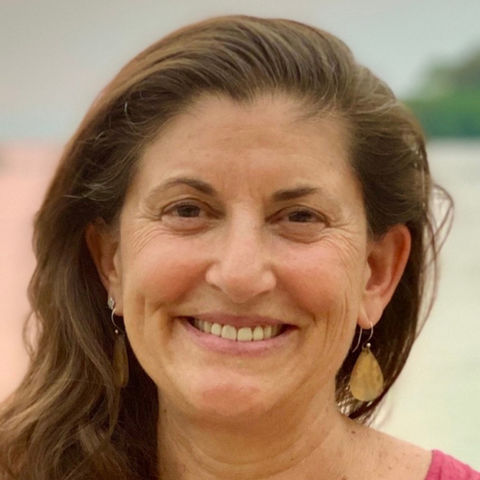
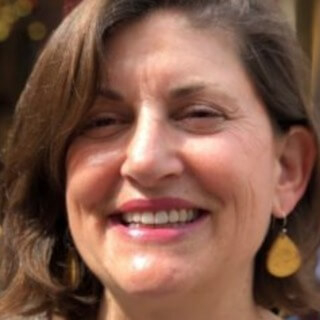
It's Judy Cohen and this is Wake Up Call 336.
A lot has happened in the last week.
And yeah,
I feel like I say that all the time because so much does happen these days,
But in this last week,
Two things happened that really brought me to my practice.
And once I was offering a training in Arizona and talking about how mindfulness can support us when we're facing big impactful moments,
And this older partner said,
When that happens for me,
I just hit my knees.
And he was talking about prayer,
I think,
And I'm talking about my practice,
But they're not really different.
Anne Lamott,
The great writer and teacher says,
I love this,
She says there are three kinds of prayer.
She wrote a book with this title and maybe three kinds of practice,
Help,
Thanks,
And wow.
So I used to think hitting my knees,
Hitting my practice was the help prayer.
But now I think falling to our knees,
Falling into our practice is really the thanks prayer.
And a lot of times for me,
It's even the wow,
Thanks prayer.
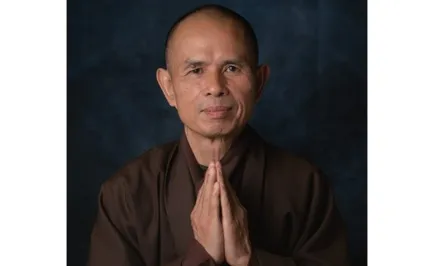
So one of those big impactful moments for me this week was the Dantiknadhan,
There's his photo,
And Tay or Thay,
As his students affectionately called him or Thay,
Was one of the great mindfulness teachers of our time,
Maybe of all time.
He was past 95 when he died,
He had taken orders as a monk at the age of 16.
So in his 80 years of practicing and studying mindfulness and in 100 plus books,
Thay taught us to turn towards difficulty in order to find a way forward that is just and loving by remembering the most important thing,
That we belong to one another.
His order of interbeing is named after this most basic tenet of mindfulness.
As Thay we often say,
And as we,
Or at least as I so often forget,
We inter-are,
He would say,
We inter-are.
And this point of view,
Which is in classical mindfulness,
It's known as right view,
Doesn't stand alone,
It's paired.
Thay taught us to pair it with a commitment to heal the world,
Not a theoretical commitment,
But a commitment to this very world with its pandemic and its systemic racism and its tight patriarchal grip and its anxiety and depression and unfathomable threat of climate collapse.
And this pairing inherited a name.
In the mindfulness world,
It's engaged mindfulness.
In Hebrew,
The concept is as old as mindfulness,
And it's called tikkun olam,
The commitment to repairing the world.
In the law,
We just call it social activism,
And it's what we do.
Whatever its name,
The commitment is at once deeply aspirational,
Abundantly practical,
And nothing we can do alone.
When I heard about Thay's death,
I did hit my proverbial knees or hit my proverbial practice,
But not to say help,
To say,
Wow,
Thanks.
Yeah,
I'm so grateful.
I'm so amazed to have lived when Thich Nhat Hanh lived and to be living when the Dalai Lama is living and when so many other great teachers are living.
We are all living right now in a golden age for mindfulness,
An age that's not so golden in other ways.
But I think never in the history of the world that we know of has mindfulness pervaded east and west and north and south and landed so solidly and powerfully in the hearts of so many humans.
Which in one way makes it easier to think about how we inter-are,
How we belong to one another,
As Sabine Stelasi says in her beautiful book,
You Belong,
Which I highly recommend.
We belong to each other.
We belong to every human,
Whether they're practicing mindfulness or not,
But we especially belong to those who are like-minded,
Like-hearted mindfulness practitioners.
In one way of thinking about it,
Together we are already that worldwide community,
That Sangha,
Stretching from village to village and continent to continent,
With our hands reaching back across millennia and forward in equal distance,
Helping the legal profession,
Helping the world to wake up.
As my friend and yoga teacher Brooke Layman says,
We always need to extend towards what we care about without losing track of where we come from.
The legends say that Gautama Buddha,
The Buddha who's teaching so many of us study these days,
Was just the most recent in a long lineage of fully awakened humans stretching back across that millennia and forward into an unfathomable distance.
But Thich Nhat Hanh said that the next Buddha to come along in the lineage will not be one person.
He taught us that the next Buddha will be the Sangha,
Meaning the remarkable worldwide community that we are all a part of,
And that that community will be our teacher,
Our teacher,
The world's teacher.
So maybe like Indra's net with its uncountable gems nestled in each knot,
Each reflecting toward one another,
This huge earth-wide mindfulness Sangha will reflect its wisdom not only at each of its members,
But also at all of humanity,
And in this way deliver the message of mindfulness,
Or as Thay called it,
The miracle of mindfulness,
The miracle of peace and justice to the world.
So Thay died,
Which was one thing that happened in the past week.
And then the other thing that happened was that yesterday Stephen Breyer announced his retirement.
But that wasn't really the second thing for me.
The second thing for me was that Justice Breyer is a meditator,
And he's a long-time meditator.
And so the news forced me to think about what that's meant to the Supreme Court in the,
What,
Almost 30 years that he's served,
And what his departure might mean in terms of Thay's teaching that we inter are,
And that peace and justice are truly possible.
When I heard that Justice Breyer was retiring,
That was the second time in the week that I hit my knees,
Not in health mode,
But to say,
Wow,
Thanks.
Because maybe,
Maybe,
Just maybe,
Justice Breyer has left enough of an impression to have brought even the U.
S.
Supreme Court.
Into this growing worldwide sanda that will become the next Buddha,
The next great enlightened being.
Yeah.
Wow,
Thanks.
As crisis upon crisis threatens to bring us all tumbling down,
It's good to remember Thay's message.
We are the crisis.
And we are also the cause of the crisis.
And we are the conditions of the crisis,
And we are the solution,
Or at least the resolution to the crisis.
Thay was a great teacher.
He was also a poet.
And one of his most powerful poems about interbeing is called,
Collie by my True Names.
And so I thought it might be nice to do something different today for our sit together.
I thought maybe I would read that poem while we sit.
So if that is resonant for you,
Then I'll do that and you can listen while you sit.
And if it isn't resonant,
Then you can just stay with the community and sit with the community and just turn off your volume.
And either way,
Just inviting you for today to find that comfortable posture.
And usually the instruction is to find a posture that's upright,
But I want to invite us today to relax,
To find that posture of relaxation rather than sitting upright,
If you like.
Whatever will support you the most today.
And so here is Thay's poem,
Call Me by my True Names.
Don't say that I will depart tomorrow.
Even today I am still around.
I am still in the dark.
I am still in the dark.
I am still in the dark.
I am still in the dark.
I am still in the dark.
Even today I am still arriving.
Look deeply.
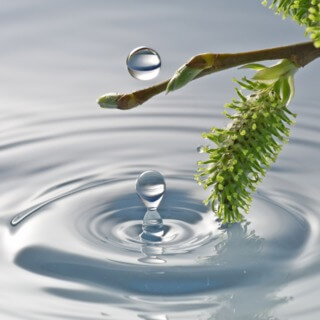
Every second I am arriving to be a bud on a spring branch.
To be a tiny bird with still fragile wings.
Learning to sing in my new nest.
To be a caterpillar in the heart of a flower.
To be a jewel hiding itself in a stone.
I still arrive in order to laugh and to cry.
To fear and to hope.
The rhythm of my heart is the birth and death of all that is alive.
I am a mayfly metamorphosing on the surface of the river.
And I am the bird that swoops down to swallow the mayfly.
I am a frog swimming happily in the clear water of the pond.
And I am the grass snake that silently feeds itself.
Ah,
The frog.
I am the child of Uganda all skin and bones.
My legs as thin as bamboo sticks.
And I am the arms merchant selling deadly weapons to Uganda.
I am the 12 year old girl refugee on a small boat that throws herself into the ocean after being raped by a sea pirate.
And I am also the pirate,
My heart not yet capable of seeing and loving.
I am a member of the Politburo with plenty of power in my hands.
And I am the person who has to pay their debt of blood to my people,
Dying slowly in a forced labor camp.
My joy is like spring so warm it makes flowers bloom all over the earth.
My pain is like a river of tears so vast it fills the four oceans.
Please call me by my true names so I can hear all my cries and laughter at once so I can see that my joy and pain are one.
Please call me by my true name so I can wake up and the door of my heart to be left open.
The door of compassion.
So I'll just sit together in silence for that final five minutes.
Thank you.
Thank you.
Thank you.
Thank you.
Thank you.
Thank you.
Thank you.
Thank you.
Thank you.
Thank you.
Thanks for being on the wake-up call this morning.
This wake-up call is dedicated to Thich Nhat Hanh and stay safe out there everybody.
Take good care.
I'll see you next Thursday.
Thank you for coming.