Some people wake up and the first voice they hear is a prosecutor.
It tells you what you didn't finish,
What you said badly and what you should have been by now,
What you haven't achieved and how much better everyone else is doing than you.
If that's your morning,
This meditation is for you.
So get comfortable.
If you like,
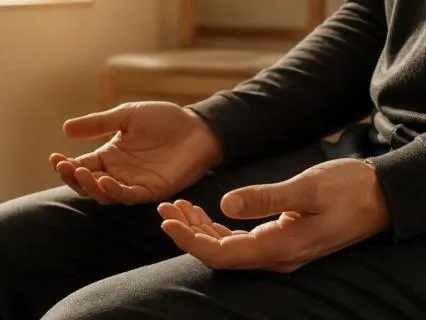
Rest one hand on your chest and feel the heartbeat underneath it.
This heart has been doing its work all night without any instruction from you.
Three slow breaths right now.
Let each exhale be a little longer than the inhale.
Breathe in and out.
Once more.
And a final time now.
There's a version of Stoic philosophy that's kind of popular right now that's basically saying that self-punishment is the thing we all need to be doing,
Right?
Harden up,
Feel nothing,
Demand more.
And that's not what the Stoics actually practiced or wrote.
Seneca did examine himself every night.
He tried to hide nothing from himself in his own words.
But read what happens next in that passage,
Having looked honestly at the day,
He goes to sleep.
No self-flagellation.
He's not angry with himself.
He's not beating himself up.
He is simply someone who's taken an honest look at himself and he's trying to be better.
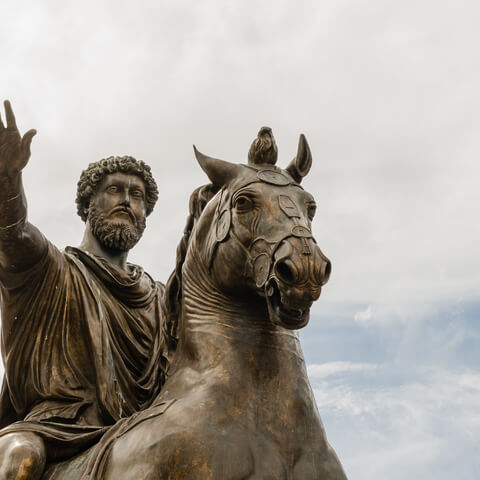
And Marcus is the same.
His journal is full of him failing to get the thing he's trying to do.
And then he reminds himself to return to it,
But he doesn't express disgust or hatred towards himself.
He's just coaching himself the way a friend would coach another friend.
So he's honest,
But that's not the same as harsh.
The Stoics were straight talking,
But they were also compassionate.
A lot of us,
We tend to be unnecessarily harsh and also vague as well in the corrections that we give ourselves.
So let's be accurate rather than merely cruel.
All right,
Let's work on that now.
Bring to mind one thing you have been criticizing yourself for lately,
Just one.
Okay,
I don't need 25 things,
Just one thing.
Right now,
Bring it to mind that you've been criticising yourself for.
Now,
Separate two things that usually get mixed together.
The first is what actually happened,
Right?
The bare facts,
What you did or did not do.
The second is the opinion or verdict that you attached on top,
Like a label such as lazy,
Selfish,
Not good enough,
Never will be.
Epictetus taught that it is not events that disturb us,
But our judgments about them.
And that applies to your judgments about yourself as much as anything else.
The event is real.
Sure,
But the verdict,
The judgment is something that you added.
So,
My challenge to you is,
Can you hold the fact?
And drop the opinion,
The judgment,
The sentence,
The story that goes with it.
Here's a clever way to do a check on this,
Right?
So imagine someone you care about came to you this morning with exactly your situation.
Same fact,
Same failure.
What would you say to them?
You almost certainly would not say what you've been saying to yourself.
Not because you would be lying to them,
But because you would be able to see the whole person and not just the one moment or the simplification,
The label,
The single pointed attack that you often put on yourself.
Try offering yourself the same accuracy.
You might say silently,
This happened,
I am not what happened.
I can do the next part better.
If your hand is still on your chest,
Let it stay there a little bit longer,
And if it's not,
Place it there now.
Notice the warmth of your own palm through your clothes.
Small,
Ordinary,
Physical.
You are allowed to be on your own side.
That is not weakness.
It is not indulgence.
So let your hand come down.
Notice your fingers,
Your shoulders.
Relax.
Open your eyes when you're ready.
You have now started today with an accurate reading instead of an attack on yourself.
And today will be a different day for it.
The inner critic does not go quiet after one morning.
So come back again tomorrow.
Go well,
And be fair to yourself today.