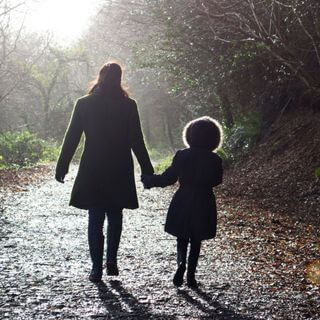
Everything your father taught you about love without ever saying a word.
My name is Joanna Lynn.
I'm the founder of the Family Imprint Institute.
And for our time together,
We're going to explore something most people could spend a lifetime circling without ever quite understanding.
We are going to take a look at the unwritten things that our fathers teach us about love,
Even though they may not say it directly.
The way your early experience with your dad becomes like a template.
You could think of it like a blueprint guiding your choices of partners that end up feeling painfully familiar.
And by the end of our time together,
My hope is that something invisible becomes visible.
And that you leave with a language for a pattern that you've been living inside without being able to name,
To understand,
To integrate,
Or even to overcome.
We're going to find out with our time together today how much dad is a shaping factor,
Whether he's physically there or not.
Whether he was at work,
Whether he was behind the scenes,
Whether he was addicted,
Whether he had lots of anger issues.
The truth is,
Long before you knew what love was supposed to look like,
You were already learning.
You were watching,
You were taking it all in.
The way your dad showed up,
And the times that he didn't.
The way that he might have held you,
Maybe after a nightmare or after you fell and scraped your knee.
Or the way he was always in the background,
Just kind of keeping his distance.
The way he might have made you feel seen or heard.
And for some of us,
The moments you were left quietly wondering what you had to do to earn his attention,
To gain some of that time or affection.
If your father was your first experience of what it is to receive love from a man,
And whether that relationship was warm or painful,
Present or absent.
Complicated,
Or somewhere in between.
It left a mark.
One that quietly shapes who you build relationships with,
How you attach,
What you unconsciously expect.
And what you might still be waiting for in the people you love today.
When I talk about it like a template or an imprint,
I use those words very intentionally because we are drawing from that kind of body memory of what that very first love with a man,
With our dad,
Showed us,
Taught us,
And what it felt like.
And with our time together today,
It really is an invitation to look at this relationship with fresh eyes so you can finally understand how it's been showing up in your life in ways that maybe you never connected before.
I mean,
When I think back and when our son was really young,
I would so appreciate watching my husband play with our son,
Just even seeing how much has changed in one generation.
There was a ton of ease between them,
Lots of laughter.
You know,
His own father,
As I got to know him,
Was a really good and solid man.
He worked really hard,
But he'd been shaped by his own father.
A man who survived things that,
Honestly,
Required shutting down.
And that inheritance passed quietly from one generation into the next in silence.
There's this sort of continuance of care that we might not think about.
What went on for my great grandparents?
What went on for my grandparents?
How were my parents parented?
Because that really shapes the parenting that we end up receiving.
So I'm going to turn it back to you again.
I want you to think about your own dad for a moment.
How did love move between the two of you?
Was there ease there or a ton of effort?
Was there a natural sort of resting into warmth?
Or a kind of careful distance.
Was there awkward silences that you'd try to fill?
Because sitting in silence felt too uncomfortable.
So if you'd like to take a moment and just bring out your journal or open up a document on your phone or your computer.
And just sort of write that down.
Give that some thought in the privacy of your own mind.
How did love move between you?
When you were a child.
Because here's the truth,
When we grow up,
We take that template along with us into every relationship.
It also follows us into every argument.
You know those moments maybe you have a partner that's similar to mine who goes quiet.
And maybe your body reads that as abandonment right away.
Or maybe for you,
It's the opposite end of that spectrum.
The moment someone gets close,
Something in you needs to protect or pull back.
None of this happens by accident.
In my over 20 years of working with people inside of their relationships,
I found that most of us experienced a handful of dynamics with our dad.
And I just want to share and explore some of these patterns with you today.
How did love move between the two of you?
Was there ease there?
Or did it require a ton of effort?
You know those relationships where it just feels like hard work.
Is there a natural warmth where you could just kind of lean in,
Rest your head on his chest and feel that hug?
Or a careful distance.
Or maybe when you'd show up to visit even as an adult,
Your body remembers not being sure which version of dad you'd get after school.
Or maybe you're bringing home an important friend or maybe a potential partner,
And you're kind of just bracing for what inappropriate thing dad might say.
You know,
And wondering,
Oh my gosh,
How am I gonna,
You know,
Soften that or turn that down?
So let's talk about what I have observed and common dynamics so that,
First of all,
You know you're not alone,
That if you're nervous about a Father's Day get together or wondering,
Should I reach out and bridge the gap this year?
I hope it will add some clarity.
To that.
So one of the really common dynamics is an absent father.
You know,
Some dads might have been.
Um,
Physically just gone for a number of reasons.
Others maybe were present in the house,
But somewhere else entirely.
I mean,
They're behind work and schedules and travel for work or they're out on a golf course or kind of anywhere but home,
Maybe out in the shop fixing something.
And the message it might have left for you,
In what I talk about as the body memory,
Is that love is something I have to wait for.
Love is something that can't really be counted on.
Love is something that kind of just disappears out the door.
And so if that was your experience,
You might find yourself either working very hard to keep people close.
Or keeping that at a careful distance.
So if they leave,
It's not going to break your heart all over again.
And so once again,
If you can relate to any of these pieces,
Just jot that down in your journal.
The critical father is the next dynamic that I see.
You learned almost like to brace for evaluation.
Criticism,
To scam the room before you'd ever dream of relaxing.
And so if that was your experience,
I really want you to hear this,
That his criticism is rarely,
If ever actually about you.
Often it's the only,
Let's call it emotional vocabulary that he was ever given.
It was often handed down to him in the same way he's now passing it on to you.
And so you might find yourself in relationships with a kind of hypervigilism.
Reading your partner's tone or any kind of signs to get ahead of the disappointment or the argument.
Before any critical word has even been spoken.
And so how are you ever supposed to rest into connection or care?
That hypervigilance has a cost.
Another dynamic I see that's not just about dad,
But about what you witness between mom and dad.
And what is wild here about this is that we can end up replicating it in our own love life.
And so let's say,
Um,
The term that we use in my approach with my colleagues is we sort of go on to mom's team against dad.
And if we do that,
You lose your dad in the mix.
And so it becomes like,
Oh yeah,
You know,
I roll men.
You can't count on them.
And maybe you suffer the same imbalance of he's not helping with everything around the home or with the children,
Or you have to be the responsible one and you earn all the money because dad was an addict,
You end up.
Either marrying an addict or marrying a workaholic which is just a more celebrated ism but they're still separate from your natural needs and supporting you and so there's this unconscious loyalty The internal very unconscious question is,
You know,
Who am I to have more than my mom and dad?
And so in a very strange symmetry,
Your marriage ends up replicating theirs.
So that's something to look out for.
And if we've lost a father,
A sort of like 10 and under.
This has a huge impact on our developmental growth.
And we can end up replicating what hurt us most,
Again,
Unconsciously,
Of course.
But when we start to look at the parallels and how eerily similar they are,
I hope in a way that that's good news because the work that I've done for 20 years unravels that because we know the route to follow.
Often the things that go on inside of our relationships,
Go on inside our own confidence,
Go on even in our closest friendships,
They're not solved at the level of the friendship today in the here and now.
We want to track it back to that root cause.
Why am I so triggered by this?
Why does this break my heart open?
Why am I so hooked?
And that's where we go to get some lift.
The other dynamic I see is the emotionally unavailable dad.
You know,
The one that is,
I would call it a quieter form of loneliness because there's nothing,
You know,
Obviously wrong.
Everything's provided for and roof over your head and meal on the table and all this stuff.
And you know,
Your dad cares for you,
But the communication of that care.
The hug,
The I love you,
The I'm proud of you,
That essential something is somehow missing.
And maybe it wasn't even known how to name it,
Especially as a kid.
And you can't quite explain it to your partner who didn't grow up in it.
Of why you need those words of affirmation to feel close and connected,
To have love feel strengthening and kind of pull you away from questioning.
Am I loved?
Is it okay?
Are we okay?
Sadly,
Another dynamic I see very commonly is the addicted father.
And so as the child,
You end up learning to read the room.
Before you even walk into it.
You know,
You get very good at sensing which version you might get that day and you adjust yourself accordingly.
And so if you grew up in a home like this with a lot of unpredictability,
It could be generous and warm in one moment and then absolutely gone in the next.
And so you might notice you spend a lot of energy in this internal dialogue of trying to be good enough or quiet enough or helpful enough to keep the good version of him close.
These two can really be the roots of people pleasing.
This can really be what has us notice what the other needs and be really outwardly focused.
And so noticing sometimes if I can't turn myself into the right form of the pretzel,
That that didn't work.
Something in you might have believed because that child self thinks I must be the problem.
And so we tiptoe into relationships wondering,
Am I the problem?
And it wasn't that.
This leaves its mark,
I guess is what I really want to say.
This has likely followed you.
When we grow up with this early imprint,
It really impacts our ability to have healthy boundaries with others that we're in close relationship.
I get that roots of people pleasing.
The next dynamic is the complicated father.
Some of us did not land,
You know,
Like neatly in this or this.
It's not a clean description.
And so it's like a blend in a way.
Our father might have been wonderful while also being wounded.
And maybe he was different depending on his mood or the stress at work or how much he had to drink or if he'd recently argued with your mom.
And so the message was how inconsistent love felt.
Which really might be the most disorientating of all of them,
Because you could never count on which version would be there.
And so I want you to really understand that these patterns,
Or if you see your dad in some of these dynamics,
It's not his fault.
And they're not your fault at all.
It's simply understanding that we're all shaped by what we received and how we were parented.
You were shaped by what he could give along with what he couldn't.
And the purpose of this is not blame,
It's clarity.
Because the moment you can name it,
You can begin to work with what is rather than being run by it.
When you were young,
And something hard happened.
What did your dad do?
Did he move toward you,
You know,
Offering support,
Maybe offering some guidance?
Did he go quiet?
Did he get busy with something practical?
You know,
You burst into tears about something and he's like,
Well.
I gotta go out to the shed and fix the lawnmower.
Was he the person you ran to?
Or the person that you learn not to burden.
Don't let dad know about this.
I don't want him to stress out about it.
And so just know whatever came to mind right now,
Maybe it's a memory.
Or a bit of resentment or a bit of hurt.
This is what we're exploring here together today.
You know that part of you.
Who grew up waiting for an absent dad,
Who often finds herself in relationships where she's doing most of the emotional reaching.
Or she finds herself drawn to partners who are just out of reach because that particular ache is familiar.
It feels like love.
We fall in love with the familiar,
Not what's healthy,
Not what we tell our dear friend we're looking for in love.
And so often,
Wherever I start with my client work,
Is what are you noticing in your relationships today?
If you're dating,
What's happening on dates?
Do you turn into a performance mode yourself.
Or what are you noticing in the last three men you dated?
What's the familiar thread?
I can give us so much information.
And so I think the other trait is that the woman who grew up with an emotionally unavailable dad may have learned to manage her own needs very,
Very efficiently.
And you could think of these as very much intelligent adaptations.
You learned early about something,
You know,
Really how to stay safe in love.
And the problem is that what kept you safe then,
Is getting in the way of what you truly want most now.
I gotta be honest,
I see this regularly in the couples that I work with.
You know,
It's two very intelligent and well-meaning people,
But they're just stuck in a loop that they can't exit because they're both running emotional software that they downloaded back in childhood and they don't even know that they need to update it.
And so maybe he shuts down and it's not because he doesn't care.
But because his family taught him that silence is safer than expression.
And maybe she escalates not because she's unreasonable,
But because in her family,
She learned that unless she was loud,
She would not be heard.
And so really understanding neither of these things are anywhere near wrong.
They're just both running old programs inside of this new relationship.
And they tend to bounce off of each other.
And it can be so devastating to be stuck in that loop.
I have a few more questions of you to reflect on and consider.
About how you experience your relationship with your dad.
Do you sometimes feel that your dad doesn't actually know you very well?
Tell me a little bit about that.
Do you feel known and understood by your dad?
Was that important to you?
Are you certain?
Do you feel it in your body?
That your dad is proud of you.
And you know it,
Or was it expressed?
I grew up with a very stoic dad,
So maybe I might sense it or feel it,
But it wasn't ever expressed.
And there is a difference there,
Isn't there?
Do you look forward to seeing your dad?
And then feel vaguely let down after the visit.
Either it was all about complaints or he made it all about him and he didn't ask about you,
Or it just sort of felt awkward and a lot of work.
There wasn't a lot of ease.
I think what I notice a lot now in my practice is families thinking so differently about the world,
About politics.
That can create a lot of division.
The fourth question is,
Is it hard to make a conversation with your dad?
Does spending time together make you feel awkward,
Uncomfortable?
It just doesn't flow.
That can be an indicator.
It can be hard when it's just not naturally happening and you feel like you gotta put a whole lot of work in.
When you grow up emotionally disconnected from your dad.
You don't necessarily realize how it's going to impact your adult relationship with him.
Many dads,
They deeply love their kids,
Yet that missing link is often that they don't know how to emotionally connect.
You know,
They didn't have that emotional connection when they grew up.
And so this leaves an essential missing link as our life unfolds.
I want to share with you a few steps that I've learned over the years for celebrating Father's Day if you can really relate to having an emotionally distant dad.
And it's not necessarily only around Father's Day,
Is it?
You know,
There'll be summer vacations,
There'll be holidays,
All of these wonderful moments.
And I think the other part is if your father has passed on.
What does that look like around?
Really having a healthy,
Safe,
Internal relationship with him.
And I know with Insight Timer,
It's a unique crowd in that we do the meditation.
And it's not a strange thing to say that you might have a relationship with your father who has since passed.
Because what really makes a change,
Whether dad has passed away or dad will never change how he shows up with you in physical life,
Is the way that you carry dad inside.
That is the deepest healing work that we can do.
What's behind dad,
Why he could do what he could do and couldn't do what he couldn't do.
And we really stopped the blame.
And that can be some of the most profound work that we do that has the most beautiful ripple effects into all the rest of our lives.
So the first step.
With how to be with yourself when it feels stressful to be with your dad who might be emotionally distant or somehow disconnected.
Is to acknowledge,
First of all,
That this lack of connection doesn't make your dad a bad guy.
So if we can step out of blame for just a moment.
And really try to understand where his stoicism may come from,
Where his criticism might have originated,
Why his sort of default is just kind of grumpy or noticing what's wrong.
Because in understanding him,
You can understand yourself so much more.
And I think especially around Father's Day or holidays or the times that are meaningful that you're going to get together with your dad,
Put a special focus on yourself and your needs.
Recognize that these holidays may be much more complex for you.
Than maybe some of your friends,
And that's okay.
That if you need to do a little bit of emotional work to kind of get ready to ready yourself.
To be sure you give yourself the space and time to do it.
Many of us rush into these sort of family gatherings or these things that are expected of us and we're kind of bracing for the worst.
What if this year you did some of the preparatory work so that you were more emotionally prepared?
And dedicate some time for yourself afterwards to care for any empty spaces or disappointments or any blind spots.
In all the areas of your life that seem to be affected by an emotionally disconnected dad.
And in that taking care of yourself,
You may begin to notice,
Ah,
When my partner goes away for work or when he chooses golf with the buddies for the weekend over having a quiet weekend at home with me,
That's why it hurts so deeply.
It's reminding me inside of that body memory of that disconnection and really not getting my emotional needs met.
I think there can be such an important movement around a decision that you're not going to pass this invisible emotional distance down to your own children.
You could make a commitment to give to yourself what you never got,
What you'd always wished for,
So that you're a little more full.
And then have the ability to give that to your children.
The consideration of what shaped your dad.
And therefore shaped your whole family.
And hopefully we're planting the seeds of more compassion and understanding.
Because as children,
Of course,
We don't have the ability to take in this larger picture.
And we don't even know how to really reflect on how these life experiences ended up shaping us.
So we just want to let these insights that often come with age,
Come when we become parents ourselves,
Or we run into some friction points inside of our relationship or our friendships.
It's almost like this doorway.
To start to look at things differently.
To start to open up your eyes and your heart,
Whether it's this upcoming Father's Day or this next holiday that you're going to get together with him.
I think sometimes the anniversary of a death can be so impactful.
So if dad's been gone for a really long time,
It can be the day that he passed or around the season that he passed that brings up some melancholy and some reflection.
So lean into that.
Let whatever pulls you out of the demands of the now be that spark for healing.
What if my dad's a narcissist?
And so I come from a systemic lens,
Meaning I'm looking at you inside of the sort of full fabric of your family of origin.
And so all a narcissist means to me is that your dad didn't get enough from his mom and dad.
And now he is more self-orientated,
More self-directed to lean in to,
Gosh,
His own children,
Certainly his spouse.
Maybe even people that he works with,
As a way to pull in what he never got enough of back here.
And so the trouble with every article these days being about the narcissist is we cut off,
We paste a label on dad and we in a way discard him.
And we stop the movement towards this concept of looking behind our dad.
Can I get curious instead of furious?
Why is he so self-orientated?
Why does he drone on and on about all the things that affect him?
And I would bet you anything,
If you look back,
Nobody listened to him as a boy.
And so he's going to bend the ear of anybody he can get close.
And so this is why if we have a parent who's a narcissist,
Our own boundaries need a lot of refinement,
A lot of special care,
Because we can kind of sink under the weight of their demand to give me what I didn't get from my parent.
And that's impossible.
We're we're the kid here,
Even if we're a 40,
50 year old kid.
But we cannot replace to our parent what wasn't given by their parent.
And it can really block the flow of love.
Because oftentimes,
We the child,
Again,
Even if we're 40,
50,
60 parents ourselves,
It can feel exhausting.
To have a parent who's pulling and drawing so much of our energy and not giving anything back.
Really from a systemic lens a parent gives and a child receives.
And so if that parent is a narcissist,
They're sort of wanting you to listen,
Replace the care that wasn't there.
And it can be a real puzzle to reconfigure how to love and drop resentment and be at ease with a parent who has these needy places from their own childhood.
I think that many of my clients have shared this with me,
So I didn't want to not include this in today's class,
Is that they feel called to speak directly to their dad.
You know,
About unfinished business or old hurts or,
You know,
You did this and here's why it hurt me and here's how I'm still carrying it.
Or maybe he's already passed away and the conversation is only something that can happen inside of you to release the burden and to shift that pattern.
So whether your father is living or since past,
This is what I've found.
You can give your dad more compassion and much more understanding when you know what shaped him.
So his emotional limitations are not a verdict on your worth.
They're the ceiling of what's been given to him and what actually isn't available for him to pass along to you.
And it doesn't mean that what happened was fine.
None of us can rewrite the past.
Some of the most painful things I have ever heard happen inside of the family relationships.
And I think what we can let go and release here is it really truly means you're not obligated to carry his unlived grief or his regrets or his unmet needs.
You don't have to carry them forward.
You don't have to be the one that somehow knows how to solve it.
So learning to become a witness to the pattern.
Rather than an actor inside of it.
The moment you can go,
Oh,
Wow,
There's dad being narcissistic again.
Wow,
That's right.
You know,
He lost his dad when he was four.
And he tells me,
You know,
Grandma would lose her temper.
And really,
His family were the friends that he made.
So even in that 30 second reflection.
Something inside of you can shift and you're no longer the reaction.
You're the person observing,
Choosing,
And responding differently.
So the next time you feel that familiar feeling in a relationship,
Any one of the ones that we might've touched on today,
Pause before you do the thing you always do.
That's how you can shift the dynamic from your end.
So not just to stop the reaction or the cascade of events that typically go on from that place,
But to truly and sincerely notice it.
Even if you're saying to yourself silently,
There's a deeper story here.
And that can be very helpful in the clients that I've worked with when I say to them,
Oh,
So tell me about your dad's childhood.
Oh,
I have no idea.
In my family,
Nobody talked about anything.
And this can be harder to generate compassion when you're like,
I don't know why my dad is so negative or critical or selfish.
Right.
And so this piece where.
There's a deeper story here,
And maybe I don't need to dig up every family secret.
But I really need to recognize and understand there's a bigger story at play,
And I don't need to take it personally.
So now we're intentionally creating this space between the pattern and your response,
And that this is where real change becomes possible.
You know,
I think you can learn every communication technique in the book.
But if your body is still running this old program,
Nothing inside of your most important relationships are going to feel different for very long.
Real change is something that's felt and it happens in the body,
Not just in the mind.
It's not just a decision.
It's really something that is felt,
Released,
Integrated.
And that's the work I do with people,
Not teaching them what they already know,
Helping them to feel something different.
So they can live differently,
Show up in their relationships differently.
And I want to just encourage all of you that change is often closer than you think,
Especially once you finally understand the root.
That is the most important thing to take away from our time together.
And so for those of you who've maybe had a father who died young,
Or an absent father due to incarceration or addiction or went to work in another part of the world.
Or because your parents divorced when you were young and dad was just absent,
I would encourage you to do the same systemic get curious work,
Which is asking about what happened with dad.
So is there an aunt?
Is there a grandparent?
Who can you ask about what happened to dad?
What was his childhood like?
What contributed?
To the need to numb or the need to run when family life got pressing,
Got intense.
And I think some of the biggest movements here,
And it's so tender,
Is to really let it in that it rarely,
If ever,
Is personal.
That dad,
Your pain,
Your shame,
Your whatever it was that kept us at a distance.
I need to know that that's what your absence was about,
Not about me,
Not about you not loving me,
Not about my worth,
That I'm going to,
With intention and with compassion,
Leave your pain with you.
Because if I somehow carry it,
It shows up in my relationships and all these.
.
.
Detrimental ways.
It shows up in my own confidence in all of these really heavy,
Unsupportive ways.
And maybe your dad didn't have the language for any of this.
But that's what you're learning.
And once you do,
This makes all the difference.
So often what feels like your greatest relationship struggle.
Is your clearest invitation to understand yourself.
It's like a neon sign pointing you in that direction.
So the conflict that keeps returning.
The loneliness that persists even when you're in a relationship.
The love that always seems to come connected to the same issues.
There's a deeper story there.