So why don't I feel like meditating?
How do I get myself motivated or inspired?
So anyone who's ever meditated has came across this question.
There's always days where we feel more motivated and raring to go and just wanting to tick on the world and other days when we feel like just staying in bed,
Stuffing our faces,
Basically the opposite,
Just wanting to close off.
And then of course there's everything in between.
There's days when we're just like meh,
Don't really feel up to it but you know I could take it or leave it,
It's kind of in between kind of feeling.
So what do we do when we don't have the inspiration or the motivation?
What do we do when we just don't feel like getting on the cushion?
Even though we have a million reasons,
We know why it's so good for us and we know our friends are doing it and it's this amazing thing and it's going to change our lives.
For some reason we just still can't get our bones on the cushion.
So what's going on here?
Well as you may expect,
There could be many things going on.
It's not so straightforward.
Building any new habit is going to bring resistance.
It's going to bring these feelings and doubts and thoughts of basically not being sure about what we're doing,
Not being sure about our skills,
Our abilities and just a kind of general sense of unease.
What am I doing here?
Should I be doing this?
Is this the right thing for me?
And what it all comes down to is this resistance.
It's this difficulty of trying to change habits,
Often long ingrained habits that have been there and have been built up over many,
Many years.
So this isn't to say it's not possible,
It's just to say that we need a particular strategy or approach to make sure we deal with these habits and deal with this resistance in an effective way.
So what could that strategy look like?
Well,
John Yates,
A mindfulness instructor and neuroscientist,
He's came up with a six point preparation that can really help us with firing up our motivation for meditation and really finding an effective way to deal with this resistance that's always going to be there in some form or other.
And that is what meditation is.
We're learning to approach and relate to our experience in a different way as opposed to trying to fight against it and always be trying to somehow make it different,
Make ourselves feel something that we're not feeling.
So let's have a look at those six steps.
Number one,
Posture.
So anytime we do a meditation,
Whether it's sitting,
Standing,
Moving,
Lying down,
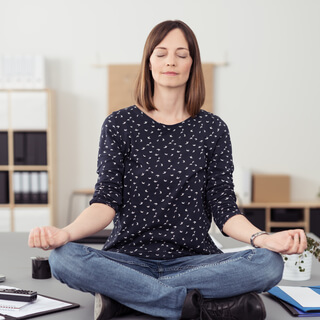
It's important to revise our posture and make sure we're in a dignified and stable position but also a relaxed and comfortable position.
So it's really surprising how little shifts in the body,
Little shifts in how we position ourselves,
How the body is aligned,
Can really make the difference in influencing our thoughts,
How we feel and really setting the stage for the practice.
So number two,
Distractions.
So we can run through everything even before we sit on the cushion,
We can run through anything that might distract us during our practice.
In other words,
This is just getting to know our state of mind.
So we're just taking an inventory of where our attention is in the moment,
Not needing to make any judgments about where it might be or even not needing to indulge some of the places where it might be.
For instance,
If we're thinking about something that happened 10 years ago,
That's fine but we may note that and be like,
Ah,
Okay,
I don't really need to think about that at the moment or I can make a note of it as something to look at later on.
So journaling is a great thing to do here,
Shopping lists,
To-do lists for the day,
For the week,
Anything that's on the mind,
You can just drop and you'll know it's there for when you've finished your meditation.
Number three,
Motivation.
So of course,
All of these steps are about motivation but we do tend to have particular motivations that lead us to meditate.
So it's worthwhile considering and reflecting on these.
Anytime you feel you need a little bit of extra fire,
A little bit of an extra push to get on the cushion,
There's always times,
As I said,
When things are going to be going good but there's always times when we're going to be tired and there's always times when we're going to be going through some difficulty.
So rather than relying on external motivation and emotions,
Feeling like you want to meditate,
Feeling fired up like all you want to do is sit for 10 hours,
We can't really rely on these things.
They may never happen,
They may happen some days but for most of us,
We're lucky if we just get our bums on the cushion.
So reviewing our motivation for practice and the reasons that brought us to meditation in the first place can be really effective.
Remembering that there's no right or wrong reasons.
It could be to get smoother skin,
It could be,
God knows,
It could be anything.
So any reason is a good reason.
Number four,
Goals.
So similarly to the motivations to practice,
We all may have our particular goals as well.
So these can be short term goals based on the session ahead of you,
It could be just to be able to sit still for a bit and not get caught up in thinking about the series you were watching last night for 10 minutes or it could be longer term goals such as the direction in which your life is going and having more deeper meaningful relationships or reducing stress and generally feeling happier and more appreciative.
So remembering again that there's no right or wrong goals,
This is just how things are now and remembering also we don't set these goals in order to strive and push ourselves to achieve them and make sure we can get out of the terrible situation we're in at the moment but rather we use these goals as a kind of way to reflect on what's happened in the past and think about in which direction we want our lives to go.
So rather than striving towards the goal,
We're rather basing it on how things have been and orientating ourselves towards another direction,
Not necessarily getting caught up in having to achieve a specific goal and hanging everything on that goal,
But rather saying,
Okay look this is how I want things to be,
I want to move myself in that direction and move away from this direction and this is something that meditation will help you do.
Number five,
Expectations.
So one of the most important points and one of the points that can be the source of most resistance is having too high expectations of ourselves.
So for whatever reason we may have such high expectations of ourselves that we may never even get on the cushion.
Some people literally hear the word meditation and they're like,
Nah,
I'm not a good meditator,
I can't sit still,
I can't stop thinking for two minutes,
That's not me.
And this can often come back down to our expectations about ourselves and what we can do and what we're capable of and also what's possible.
So when we're beginning in meditation especially,
We may have built up these habits over potentially a lifetime and these habits are not going to change overnight and that doesn't make it depressing.
It's actually quite a revelation to recognize this because once we see that habits have a force of their own,
We do things because we've done them that way for a long time,
Hour after hour,
Day after day,
Year after year and that momentum needs to be met with some kind of recognition and kindness if we want to ever change it.
If we're just going to be like,
Okay,
This is how I am and I need to change,
Then those habits are just going to feel stronger and more resistant to change.
So the key here is recognizing where we are and taking small realistic steps to change these habits for the better.
So here as well,
Some days you may think,
Oh,
I'm such a good meditator,
I was just made for this.
Other days you may be thinking,
I'm just the worst person in the world.
So as well recognizing that there will be these fluctuations in how we feel and how well the practice is going.
So the way we see expectations is incredibly important here and recognizing and being more realistic about where we are and what we can expect to achieve in the next session and the next week is really the foundation of a strong long lasting practice.
So finally we have number six which is diligence.
Diligence is a practice.
Diligence is really a skill in itself and it doesn't need to lead to anything else because if we can sit down and practice then the diligence of being able to do that will pay off tenfold.
So here we have diligence on this list because if we can remind ourselves that as long as we sit down to practice and as long as we recognize our expectations and review our goals and fire up our motivation and take note of distractions and review our posture then if we sit down and do the practice it will pay off in the short term and in the long run.
We will start to see benefits.
There is nothing else special that needs to happen or that we need to do.
It sounds pretty dull but actually it can be where the most transformative benefits come from.
So I hope that helped with getting you motivated and inspired to practice.
If you have any questions that you'd like me to answer please feel free to send them through and I'll look forward to speaking with you again.