Hello,
And batting cleanup tonight.
It's so great to be here.
Thank you so much,
Paola,
For having me,
And I love these kind of discussions.
It's just wonderful to have an opportunity to really talk about some things in some substance and some depth.
And so I thought I'd start building on what David said about this question of why do the arts matter.
And I work with many,
Many,
Many hundreds and hundreds of nonprofits,
Of social enterprises,
Of purpose businesses.
And it's an interesting question because what I hear all the time is,
Well,
My issue is more important than this issue.
And in fact,
I was doing a training at a very well-known environmental organization,
And the trees people were literally fighting with the oceans people about what was more important.
And of course,
None of this stuff is disaggregated.
For us to possibly say that clean water and girls' education and hunger and poverty eradication is anyway disaggregated is naive and silly.
Now,
There are points of entry,
Of course.
Art is not disaggregated from any of this either.
And in fact,
In many ways,
It's more profound as far as I'm concerned,
Again,
Building on what David said,
Because art gives us the opportunity to ask these deeper questions about the nature of who we are.
Why are we here?
What does this matter?
What meaning do I create?
And so while none of us want hunger in this world,
We also don't want to live in a world without art.
And so I have great appreciation,
A,
For the power of art to transform our lives and to be a part of this dialogue,
But also not to see it in any way,
Shape,
Or form disaggregated,
Because we can do our work as philanthropists so much more substantively when we're thinking about these questions.
And the challenge that I see today with a lot of art is that it becomes,
We're a little reductivist about it.
And art often becomes sort of a form of entertainment.
You know,
I took my stepkids,
I always remember this,
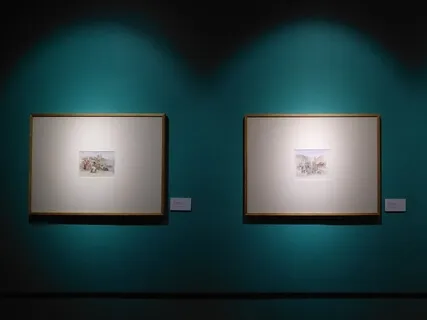
I took my stepkids here to MoMA for their first visit.
This was many years ago.
And we're walking around,
And I hadn't been for a long time.
And everybody,
Not everybody,
Many people were looking at the little labels,
Which Paola,
You beautifully curated,
But they weren't engaging with the art.
And they were missing the substance of,
And by the way,
Of course the labels matter.
We need,
We don't live in this vacuum,
So understanding context really matters.
But just looking at the labels puts up this obstacle,
This block,
To really allow us to immerse ourselves in what this might mean for us,
And what this makes us feel,
And what this tells us about being human.
And by the way,
We do this with each other all the time.
We look at labels,
And we look at what people do externally,
And instead of really trying to understand who we are,
And how we can potentially combine resources to get more work done in the world,
Which to me is what philanthropy is all about.
You know,
I always say,
And when I teach,
The ultimate understanding of all this is not really what's my issue,
But it's who are my people?
And how are we combining resources to really get work in the world?
And resources aren't just money.
Now money is a valuable resource.
I have no problems with money because we live in this culture.
I do have a problem with the fact that we've moved from a capitalist economy to a capitalist society,
And that's a topic for another salon.
But money,
To me,
Is abundant,
And if we're infusing it with values of courage,
And justice,
And care,
And change,
It's a very different conversation than we're having with somebody when we're infusing it,
As we often do,
With values of scarcity,
And power,
And control.
And so,
You know,
If you go to a,
Have you ever been to a cocktail party,
And you're talking to someone and having a really nice exchange with this person,
And somebody sort of whispers to you,
You know,
That person's a billionaire,
Or you know,
That person is CEO of this or that,
We can't help but change our attitude toward that person.
And as soon as we do that,
Right,
We've put a wall up.
We've created an obstacle.
And we stop listening to the person as a human being,
But we start going into the marketing sort of mindset and the sales mindset,
And there's a distance put up.
And when there's,
And then there is often a power dynamic that's created.
And any time there is a power dynamic alive in any relationship,
And money is one of the most promised,
You know,
Prominent power dynamics,
There's going to be somebody who's a supplicant,
And somebody who you're looking for something from,
And that's the antithesis of how we actually create partnerships.
And so my life's work is how do we recognize these obstacles?
Get them out of the center of our relationships with each other,
And actually start to create generative,
Building,
Ever-growing partnerships,
Which is seeing money,
For example,
As only one resource again,
Money as the gas that goes in the car,
Not the car itself,
Not the driver,
Not the destination.
And I think this is true with all of our resources.
And Paolo and I were at a dinner two nights ago for the MIT Media Lab where we both serve on the advisory council,
And we were talking about sort of the mythology of the lab,
And it came up that so much of what we do,
And what art,
You know,
Certainly curators do,
Is combine.
And I always think of de Tocqueville when he was here said,
The art of combining is the mother of all knowledge.
I mean,
That's not insignificant.
The mother of all knowledge is the art of combining.
And what does that mean in philanthropy?
It means we have to be incredibly mindful of all of the resources that we're bringing to the table.
Money is one of them again.
But so is time,
So is creativity,
So is our life experiences,
So are our moral values and resources like courage and our capacity for risk,
Our capacity to stand up and take a stand in things that we believe in.
It's demanding work,
But it requires us to deliberately,
Not in some sort of haphazard way,
But to deliberately have deep conversations with each other about how are we combining our resources so that we're actually creating more change.
And so when I look at relationships,
To me,
If I can get the money out of the center of the relationship.
By the way,
I hate the word help when I go into meetings and I hear people say,
How can I help you?
Or if I slip up and say,
Can you help me?
Help is just get rid of that from your lexicon.
Get rid of the word help from your lexicon because the real challenge is that we're not helping means that somebody is unequal,
Unequal,
That there is,
Again,
This power dynamic.
I also hate the word fix because to me the word fix means the world's completely broken.
And I think the world isn't broken,
That actually there's this opportunity to co-create and serve each other.
But the word help changes the conversation.
So the conversation that I like to have always is how can we work together?
How can we take a stand together?
How can we really,
Truly tease out and think about what we can combine to create something different?
And there are just so many.
I really,
My theory of change,
My absolute fundamental operating principle in life is that there are ample resources to get all this work done.
We just block them because we believe in this competition of why arts versus this.
By the way,
Just statistically,
There's over 2 million nonprofits in the US alone.
Three thousand new nonprofits created every month in this country.
There's over a million now in Africa,
Over 2 million in China.
If we start factoring in social enterprises and pro-purpose businesses,
I mean the numbers are boggling.
How could we possibly be in this realm of competition?
So again,
There are points of entry.
And you know,
I happen to work,
As Paola mentioned,
In eradicating mother to child transmission.
But I never see it as a separate issue disaggregated from global health,
From women and children's issues,
From all of this stuff.
And I think that really matters.
I'll end because I only have a minute left by saying the way that I really view this work is a challenge of the head and the hands and the heart.
And I think that's what philanthropy is.
The head being strategy.
Of course we have to have strategy.
We heard a lot about great strategy.
The hands being what skills do we have,
What resources?
Again,
What unique resources are we all bringing to this?
And heart,
And to me,
Heart isn't a soft valentine kind of thing.
Not this emotional just pushover thing.
The heart is an instrument of vision.
And the heart means courage because it takes a lot of courage to keep doing this.
So one of my favorite TED Talks is a guy called Brian Stevenson.
I don't know if you all remember or have seen Brian's talk.
If you haven't,
I really encourage you to do it.
Watch it.
It's really fantastic.
Brian is a civil rights lawyer and fights for,
Every day,
Fights for justice and getting people off death row.
And he was telling a story at the end of his TED Talk and he said he was talking to his mentor Rosa Parks and she said to him,
Brian,
You must just get so tired doing this work every day.
It is so hard.
You must get tired,
Tired,
Tired.
And he said,
I do,
Rosa.
I get so tired.
And she said,
Then you have to have courage,
Courage,
Courage.
And so I'll leave that with you because I think this is an exercise in courage and I appreciate you all being here and thinking together on some of these topics.
So thank you.
Thank you.
That's so good.
Let's do it.
Thank y'all.