Welcome to Mindset Reset Radio where we're on a mission to help millennials get intentional in life,
Business,
And career with practical advice and real stories of living with intention,
The good,
The bad,
And lots of the ugly.
I'm your host Jess and my goal is to flip your perspective on what's possible with the help of the amazing intention getters I get to have as guests.
Join my community on Instagram at Jessica Tiefels so we can keep these conversations going while supporting one another to stay intentional every day.
And finally,
If you love this podcast,
Please subscribe,
Share,
And review.
I would greatly appreciate it.
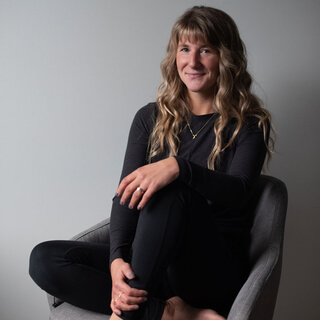
I am so excited to introduce you to Maggie Glasser.
She is the founder and owner of Maggie Glasser Enterprises,
A boutique consulting business serving the event and hospitality industries.
She works with millennials and emerging leaders to refine their professional skills and strategies in order to advance in their roles and prepare to become the next generation of business leaders.
I love,
Love that mission.
Welcome Maggie,
I'm so happy to have you.
Thank you Jess and thanks so much for having me today.
I'm thrilled to be here with you.
Yeah,
I'm so excited about the topic of adaptability which feels like even more important now than it ever has before.
But before we jump in,
I just want you to tell the listeners a little bit about who you are and what you do.
Absolutely.
So,
As you mentioned before,
I am a new business owner.
I transitioned out of my corporate role as an event manager and producer and started my business in October,
Which was nine months ago,
Which is crazy to think about.
Time really,
Really flies when starting your own business.
But as you said,
I have a boutique consulting business and I work as a full-time consultant with companies of all sizes ranging from Fortune 500 to small businesses to provide them with authentic insights to inspire positive change in business.
And my main focus is assisting companies with developing and implementing sales initiatives and helping their sales team become more natural and authentic salespeople,
But also really working with the millennial generation and helping them really emerge into their leadership and providing their businesses with the values and strengths of our generation.
And I guess I should say,
Though,
That my main focus was my consulting work,
But because of the coronavirus,
Our abilities were limited not only to work as normal as professionals,
But also to behave as normal as people.
And for the hospitality industry,
Specifically in the event segment,
Which is where my main focus is,
The ability to gather in groups and to celebrate and to meet and to learn is really the core purpose of our businesses.
And so with so much widespread disruption to the industry,
We were really forced to adapt.
Absolutely.
As an industry as a whole and as a business owner.
Yes,
Absolutely.
And I think that today's topic,
Like you said,
Is really relevant because we're all facing some sort of challenge in adapting,
Whether it's in our businesses,
In our personal lives.
And so I feel as a business owner that I've adapted in many ways.
But first,
I think it's important to point out that change isn't easy.
I was almost six months into my new life as a business owner and a consultant.
And then in a matter of one hour,
I remember it perfectly,
On a Wednesday morning in early March,
Everything changed when my clients called to inform me that all my contracts were suspended until further notice.
And so my business really,
Really changed overnight.
But I think in a large part,
It could because I adapted to the changes.
With the social distancing guidelines,
Our clients' events just stopped.
And my clients' calendars were wiped out entirely.
Without that ability to gather and that opportunity to gather,
They couldn't sell events.
So my role as a sales consultant for them,
Which was so necessary and valuable just a day prior,
All of a sudden became obsolete.
But through that,
I recognized a huge opportunity for my business.
And that is the role of a virtual event consultant.
So I pivoted my business to assist my clients and better meet their changing needs by providing guidance for their new approach,
Their new virtual productions.
And so now I provide them with the information and tools they need to build successful virtual events so they can lead their teams through the transition.
I think that's just one example of how my business has adapted.
I was really quick to be able to read between those lines and act on the signals of change within our industry.
But another way that my business has changed and that I've been able to adapt is I found myself with the time to focus on the business side of my business,
Specifically marketing and value promotion.
After transitioning to starting my own business,
I really just jumped into the client work so I didn't have much time to focus on my business as a business.
And so I'm now writing articles regularly to assist millennials and emerging leaders in navigating difficult situations.
My articles generated interest,
And so I've participated in a number of virtual events to talk about my generation as consumers and also as professionals.
And it really opened up a new segment for my consulting business,
Which is actually how we met.
Yes,
Yeah,
And what I'm hearing in what you're saying is I'm hearing a lot of opportunity.
So in adapting,
I don't know what comes first,
The opportunity or the adapting,
But it seems like they work in tandem.
Do you feel that way,
That if you're willing to adapt,
You can sort of embrace opportunity that may not have been there if you weren't so willing to shift and evolve as needed?
Yeah,
Absolutely.
I think opportunity is a huge thing here in adapting because I really think that the opportunity comes when you can detect and also respond to a change or maybe even lots of changes around you,
No matter how unexpected or how inconvenient that they might be.
But in doing so,
You're creating that opportunity.
Right,
Creating that opportunity.
And not even just in a business for just people listening who work for other people or who are out of work right now.
There's so much resistance to adapting,
Especially right now as we shift into this sort of really wonky phase of a new normal.
I notice there's even in myself a lot of resistance to adapting,
But it's interesting to think that when you allow yourself to shift in that way and to almost lean in to the adaptability,
There's opportunity on the other side.
And you've really leveraged that as so many other very smart business owners have leveraged that.
Let's talk more about bringing that adaptability into our personal lives and maybe some of the qualities that it takes to become adaptable in these challenging situations.
Can you speak to that a little bit?
Yeah,
Absolutely.
I think that there are many qualities of being adaptable.
I think it occurs when you're good at learning how to do new things,
When you experiment,
When you're curious and when you're creative,
When you can really think through a situation so that if plan A falls through,
What might plan B or C look like?
You're also embracing the failure and understanding that without failing,
You can't grow.
And I think that sometimes in our personal or business lives,
People hesitate to be adaptable because they're afraid of failure.
So I really think that being adaptable means that you have awareness of your environment so that you can anticipate changes or see maybe little indications of change and then you interpret them and then you really work to refine or reinvent yourself.
And I think that goes hand in hand,
Like you said,
In personal life and business life.
And so often too,
I think they work together.
Being adaptable in one facet of your life just kind of trains your brain to become adaptable in other facets.
Absolutely.
And especially as you take those risks to change the way you're doing things,
The more you take those risks and they pay off,
The more you want to keep doing it because the more you see your own power and what you have within you to make change for your own self.
So absolutely,
I think the more you can lean into that adaptability and then see those wins or if you have the failure,
See the failure as a win because it's an opportunity to learn,
The more it's going to feel easier and more natural.
And you don't even have to necessarily think about being intentional about being adaptable in hard moments.
It just becomes second nature.
Yes,
I agree.
I couldn't agree more.
And I think it's important too,
Like you're saying that sometimes we can recognize the failure right away and we can learn from it,
But also remembering that sometimes you don't really know why you failed and that's okay,
But maybe later on,
After some time and reflection and other opportunities,
You'll recognize how you really were growing because of that failure sometimes without even knowing it.
Right.
And that's why I speak so highly of regular journaling and daily journaling.
And you don't have to write a novel.
You don't have to write,
Dear diary,
This is how I'm feeling every second of the day,
Though writing down your feelings I highly recommend because it's something we can easily ignore.
But journaling is such a good opportunity to just continually reflect back,
Continually reflect back on what was happening yesterday,
What's been working,
What hasn't been working and so easy to gloss over that stuff and keep charging either A,
Keep charging ahead and burn yourself out or B,
Not recognizing where those tiny little wins are.
I mean,
A huge win for you is adapting in the industry,
But a small win before that was simply recognizing what needed to happen in that moment instead of feeling paralyzed and feel like,
Shit,
I'm a new business owner.
I've been in this for six months and all of a sudden I don't have any clients or my clients don't need me.
You know,
That fear could have paralyzed you and held you back or pushed you forward.
And a win was that you allowed it to push you forward.
Yeah,
Absolutely.
And I think it's funny that you bring up journaling because it's something that I actually started to do like within that same week where everything just changed for my business because I really needed an outlet to put just to write on paper and make the feelings,
The thoughts,
The,
You know,
Maybe worries,
Maybe other,
You know,
Opportunities down on paper.
So they just existed somewhere but my brain and it's really,
Really helped.
I continue to do it and it's brought me back to the reason why I loved it so much when I was growing up and I don't know why I ever stopped now that I'm doing it again.
Yes,
Absolutely.
Absolutely.
So let's talk about getting intentional about adaptability.
So not just sort of falling into a shift because you have to,
But seeing that opportunity.
Can you tell us a little bit more about how we can get intentional with this really important characteristic?
Absolutely.
I think that you're right,
Like as humans,
You know,
We have the luxury of creating tools that will prepare us for times of change and sometimes even crisis.
But you know,
Those forecasting charts or preventative frameworks or even preparedness plans,
We can prepare all that we can,
But when it comes down to it,
Adaptability really starts with sensing like that initial indication of change,
Which I really think pulls from your intuition.
And so being more intentional and listening to that intuition,
I think will really,
Really help people get on the track of becoming more adaptable if it's something that is needed to be worked on.
And I think another part that comes from being intentional about adapting is when that intuition guides you towards the change.
So adaptability,
It's really important.
I don't think adaptability is predicting the future,
But it's about sensing that change,
Listening to your intuition,
And then acting to create a positive outcome within a difficult or challenging situation.
You know,
I think it's safe to say that we all want to experience positive outcomes at work,
Even in our personal lives or in school.
But like we were saying,
Failure is a part of that success.
It will happen.
And so your ability to learn from your stakes,
To get intentional about confronting your failures,
Especially in the difficult situations,
Is a way that will move you forward and also separate you from the rest.
And so I think being intentional about listening to your intuition,
Being intentional about understanding your failure or learning from it is very important.
I love that.
And I want to break those two things down because I'm curious how you do these things.
So tell us about how you tune into your intuition.
How can you hear that when it's chirping up?
So I think I've become better at recognizing when I really need to stop and take a moment and really ask myself what's going on.
You know,
Why am I feeling this way?
And a part of the process for me is having conversations with a variety of people who I trust and who can also offer different perspectives but might also be removed from the immediate situation that I find myself in.
So I think resting,
Taking that moment to really internalize what's happening but also having the conversations is really helpful for me when guiding and using my intuition,
I suppose,
To guide me.
I like the idea of having conversations.
When I talk about tapping into your intuition,
And this is exactly what I wanted to ask you,
So I love that answer.
When I talk about tapping into your intuition,
Things that I talk about are meditation,
Getting quiet,
Closing all the tabs in your brain so your intuition has a chance to actually pop up.
But I love also the idea of adding in this other element of having conversations because I feel like sometimes when our intuition perks up,
We don't want to hear it or we hear it and we're not really sure what it means,
What we're supposed to do with it.
And I love the idea of really leaning on the support of people around you and saying,
I'm having this interesting thought pop up and I don't really know what it means.
What do you think?
Or what do you think I should do?
Not that we should be relying on outside sources to decide what to do,
But I think it's an interesting way to tease out what can sometimes be not totally clear.
Sometimes our intuition isn't like,
Hey,
You should do this at this time.
It's like,
This is something to look at.
And so I really love that idea of talking to people around you,
People that can give that objective perspective and help you tease out what does this mean so that I can figure out how to move forward.
Yeah,
I think it's a really important part of my process.
Aside from,
Like you said,
That reflection,
The meditation,
The really trying to understand what's happening for myself before diving into it with other people.
Absolutely.
And then the other piece you said was kind of like reflecting on the failure and allowing ourselves to learn from that because in being adaptable,
In making changes,
We're going to do things wrong.
And failure doesn't have to mean like my entire business fails.
It could mean like I reached out to five new potential clients who fit this new branch of my business and no one responded.
So listeners remember that failure isn't like totally fell on your face.
It's just maybe something you were hoping was going to work out and didn't fully pan out.
And so I want to know how you reflect back on that failure and use those lessons to move you forward.
Tell us a little bit about your process there.
Sure.
So yeah,
I think failure is essential for growth.
And so I actually,
You know,
Sometimes can be my own worst enemy when things don't go as planned or when I feel that I fail.
But what I've really done is I've started to write down what I believe my failures were.
And I actually have it on a document.
It's called my failure log.
I just jot down what happened,
The situation,
And then also how now in hindsight,
How I view the situation and how I can improve for next time.
And sometimes I can't do that right away.
Sometimes I'm very still in tune with that failure and I'm being a bit too hard on myself.
So I might not log it for some time.
But I do think that there is a benefit in being timely in logging my failures because then I really have an authentic recollection of the experience.
And I'm not like in my mind tricking myself to think it might be something different.
You know,
It's a very authentic representation of what happens because that's almost the hardest point of accepting your failures,
Recognizing what went wrong,
What you did wrong,
And then creating a plan or some thoughts of how you can change it in the future.
Yeah,
Absolutely.
Creating a plan.
And I like the idea too of,
I love the idea of a failure log,
But I also love the idea of switching around the language on that because I feel like the word failure is so negative.
And it's important for us to look that right in the face.
Just like it's important to look all of our fears in the face and say,
I see you because I have more power over you than you have over me when I actually say you are there and I see that you're there and I let you be there.
But I like the idea of sort of switching around that.
So in being adaptable,
We're going to fail.
But maybe in being adaptable,
Instead of we're going to fail,
It's we are going to have many opportunities for learning.
And so having your log be like,
I don't know,
This is a dumb name,
But like learning log or.
.
.
Yeah,
Or even like failure celebrations,
Right?
Like celebrate that failure.
And I will speak to that a little more in a little while because it's part of my process too of being adaptable are really celebrating failures.
And another thing you said about shifting your mindset about failure is having faith in failure,
I think is so important and not enough people connect the faith with the failure.
But when I remind myself to have faith in failure,
That's a way that I can shift my mindset so that I can really deal with it more efficiently and grow from it.
I like that.
So have faith in your failure.
So have faith that in your failure,
There is something better or something to learn.
Yeah,
Absolutely.
A lesson,
You know,
Something that can help you grow.
Yeah,
I like that.
Another key concept I think that's really closely aligned with adaptability that we haven't touched on yet is flexibility.
And I know when we talked before the podcast,
You had sort of mentioned that.
So do you want to talk to me a little bit about working this flexibility into your daily routine,
Sort of practicing this flexibility,
And how that relates to being adaptable?
Yeah,
Absolutely.
I think that when you train your brain and refine your instincts to become flexible and to take risks,
Those are really strong qualities where being adaptable can thrive.
And so if you work for yourself or work from home like I do,
I like to be intentional about building time for free work within my daily routine.
So I actually schedule free time,
Whether it's reading a book or listening to a podcast,
Even meditating or going for a walk,
Which is my personal favorite,
Or even just doing nothing.
I think that scheduling that free time breaks up a fixed routine so that you can introduce flexibility into your thoughts and also into your actions,
Which is really important for the learning process.
And it also improves your ability to adapt to change.
I think adaptive people and businesses are fluid and flexible in their routines and with their processes.
And so if you have,
Instead of a work for yourself mentality,
If you have a larger organizational perspective,
I would encourage you to evaluate the structure of your business.
Does it have strict boundaries or routes that people use to transfer information and responsibilities?
That describes a fixed structure,
Which lacks flexibility that is necessary to learn and to adapt to change.
Or maybe your business structure allows the people that are most likely to detect changes the opportunity to respond to them and to make decisions,
Which is a characteristic of a fluid,
More flexible environment that creates autonomy,
Encourages risk-taking and communication and knowledge sharing flexibility.
And so as organizations become more fluid,
They transition decision-making to those people at the front lines,
To the people who are in positions to detect changes.
And I think a really interesting example of this is Whole Foods.
I recently learned that each store has about eight teams in the store and those team leaders come together to decide what they're going to stock on their shelves.
It's not the national buyers or the corporate offices telling them what they should stock.
It's those team leaders telling,
Well,
Acting,
I guess,
To stock the shelves in a way in which people in their stores buy.
And so I think the main takeaway here is that we can all look at that structure in our lives,
Or in our businesses,
And create room for flexibility so that we can really learn to become better at adapting.
Yeah,
Intentional flexibility.
And I like that example.
And I also like your example of leaving time in the day for free time.
And I think another thing that comes up with adaptability and flexibility is,
I'm thinking about it too,
Like in our day-to-day lives.
Like in a day,
Let's say you have something specific planned.
When that goes off the rails and it doesn't happen,
Or someone cancels a meeting,
It's so easy to spin out in that moment and freak out because what you had planned isn't what's working or isn't what's happening.
And all of a sudden,
You have to re-figure out your whole day.
And that leads to fear and anger and frustration and irritability.
But even those little moments are really important moments to practice this adaptability and flexibility.
Because if you can start really leaning into,
Okay,
That happened.
How can I be flexible right now,
Shift my day around,
And use this as an opportunity?
Great.
I didn't want to have that meeting anyway.
So now I can do something else instead or whatever.
But I like the idea of just looking at the day-to-day because yes,
We're talking about adaptability on a large scale for organizations or for businesses during COVID or for us in our lives during COVID.
But we have opportunities every single day to practice this flexibility and adaptability and build that muscle and start to see these potential setbacks as the opportunity that they are.
Absolutely.
And also,
I would say a learning opportunity.
If your schedule is thrown off and thinking of it as an opportunity to learn and be curious,
I think those are also really important qualities of becoming successful as adapting.
And like you said,
It doesn't matter whether you're a business owner or an employee,
But recognizing how valuable you become when you're flexible,
When you're curious,
When you're learning how to do new things,
It really,
Really benefits your ability to be more open,
Experiment differently or try new ideas,
Try a new schedule for the day.
Thinking creatively,
All of that comes into play when you allow yourself to be flexible and also be curious.
Yes,
I love that.
And I feel like those are all things that we're striving to bring into our lives more and then the more we can be that and live that,
The more we attract those people into our lives and then the more we build an even more supportive community around us who is also adaptable and flexible and can support us in those moments.
So it's all very cyclical as with so much that we do.
Maggie,
This has been so amazing.
You've had so many great insights and I'm loving all of them.
Before I jump in to ask you my last question,
Is there anything we didn't talk about that you think is important to mention before we finish up here?
I think that if I could leave on one note,
I would say just to encourage people to act,
To do something.
I think people too often can't adapt to change because they don't act.
Whether they're intimidated by the task,
So they deliberate or go back and forth instead of acting on it,
Or they want to wait for the right time,
But the right time hasn't come yet.
Maybe they even want to be perfect,
So they delay until they can meet perfection.
But I really believe that action is the perfect choice in becoming more adaptable.
And one way that I do that is using Nike's brand identity,
Just do it.
It's something that I've said to myself since I was 12 years old,
Shooting hoops in the driveway and it stuck with me and it provides me context and meaning in everything I do.
You know,
I use it on my most productive days as a business owner.
And I also use it on days when before I start my work for the day,
I'd rather do anything but my morning workout.
Because to me,
Just doing it is better than doing nothing at all.
And it improves my ability to be adaptable in business and in life.
Yep,
I love it.
I love such a simple little affirmation and reminder that we can always,
Always be using.
Okay,
So tell us what your current intention getter story is.
What are you working on?
Yes,
So we talked a little bit about it before.
But journaling has been really,
Really important to me.
And I noticed that sometimes I slip away from it.
And so I'm really working on being intentional about it because I think it's such a powerful tool for me to just jot down my thoughts,
Organize my thoughts,
And have a place for them to exist.
So definitely journaling is one of them.
And the other part is being intentional in getting outside.
I'm so happy that during this unusual and chaotic time in our life that we're emerging into the summertime.
And I think there's nothing better than fresh air just to give myself a breather.
You know,
When I have a hard work day or even not,
I think there's something really,
Really wonderful about taking a walk or doing a quick workout in the park and having that time outside.
Yes,
I could not agree more.
Nature is necessary for me to recuperate,
To realign.
I just need that fresh air and the greenery.
So I feel like probably most people listening to this will agree to that.
Well,
Thank you so much again for coming on today.
And tell the listeners how they can connect with you.
Sure.
So I am available on LinkedIn,
My LinkedIn profile,
Maggie Wood Glasser,
And also over email.
If you want to start up a conversation,
My email is maggie at maggieglasserenterprises.
Com.
Perfect.
Awesome.
Thank you everybody for tuning in today and talking about adaptability.
If you love this episode,
Please remember to rate and review and share with other people.
And we will talk to you again next time.