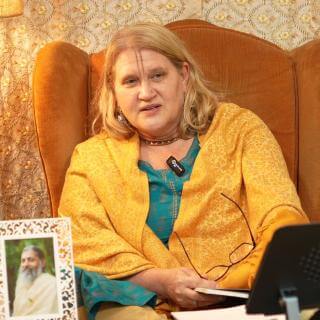
So today's class nine.
We're going to,
The outline we'll do today is take 20 to a tune,
Like we did last week.
Then I'll review the main points from last week.
And then we'll talk about empathy and awareness.
And then we'll do the empathy,
Guessing game.
We'll do the second part of that.
So let's take a minute.
I know you guys have all different time zones,
Different things going on.
So just 20 seconds ground into your heart.
Ground into your feelings.
How do you feel?
Just ask yourself,
How am I feeling right now?
And Narottam gave me this to share with the group.
You can see all these different faces.
Sometimes if you just read a word,
You're like,
I don't know what even that is.
Especially if English is not your first language,
But you can see here,
Sometimes it's easier to just see the face and say,
Oh yeah,
I'm feeling like that one.
That one,
You know?
So some of these are like surprised,
Confident.
Sleepy.
Suspicious.
Shy.
Tired,
Embarrassed,
Right?
Check in for one minute and see.
How it is that you're feeling right now in this moment.
How are you feeling in this moment?
Everybody got some feelings?
Let me just double check.
Can you guys hear me on Zoom?
Thumbs up.
You can hear me.
Okay,
Cool.
Okay,
So you got your feelings?
Everybody got one feeling?
Maybe more?
So now,
The next step to this is once you've caught your feeling,
I talked about that last week,
Right?
Catching your feeling,
Trying to catch one.
And once you've caught it,
You can use this sentence structure to express your feelings.
So you can say to yourself,
I feel.
.
.
Anxious because I'm running late,
For example.
So this is actually how our mothers were supposed to attune to us when we were young.
They were supposed to always be doing that with us and be saying,
Oh,
It looks like you're feeling really anxious right now because we're running late.
And you'd be like,
Yeah.
Or you'd be like,
No,
I'm anxious because the cat got out.
The cat's missing.
So the mother doesn't always get it right.
But together,
You kind of work through it.
So she can hold the mirror up for you and help you.
You validate what you're actually feeling and why,
Okay?
So this is all just keeping in the big picture why we're doing this is this is a skill.
To practice compassion and empathy.
This has to be there.
This is the foundation.
So when I'm like,
Oh,
Feel a feeling,
And if you're not doing it because you don't think you need to and you're talking to other people or you're coming late to class,
This is probably the most important part of the whole class,
Is actually feeling your feeling and identifying it.
Because if you can't do that,
It's like coming to Sanskrit class,
But you don't even know how to speak or something.
This is like the very first step of compassion and empathy.
You have to identify and feel a feeling.
Okay,
So.
Please don't take it lightly.
Okay,
This is the second step,
Expressing your feeling.
I feel this because of this.
Bad cat.
Review of the main points.
We've been talking about bad cats for a while now.
Okay,
So last week,
Remember I said that there was a message from Babaji and he had emailed me this and I read it to you guys.
And right at that time,
People came in late,
And I got very distracted,
And I actually lost my concentration,
So I couldn't even explain.
What he was actually trying to say.
I just moved to the next point.
And the reason why I'm bringing this up is because Vedic psychology is not an armchair sport.
Vedic psychology is in all of our lives and we're affecting each other all the time.
And part of my role is to point it out.
And so I'm not here to actually make any friends.
I'm here to help you see how I see things.
So that is very rude when you come late to a class.
Now,
Babaji is a different person.
I don't think he has any problems with it.
It's very rude to come in.
It's also rude when you cut the teacher off when she's teaching.
That's also rude.
OK.
So what I'm trying to say is this was perfectly wrong timing,
Right?
Because Babaji had given me a message that he emailed me and asked me to share.
And then people came in late,
And then they were talking,
And they were tripping over people.
And Gauji's like,
I can't hear you.
And Kama's like,
What did you say?
So I have to start again.
And I was so disoriented that I actually forgot what he was trying to say.
I just read,
And I said,
Oh,
That was a good point.
So that's doing a really,
It's very disrespectful to what Babaji's message was,
And also to me,
Because I was trying to teach it.
So I'm bringing it up because if you had empathy,
Not even compassionate,
But just empathy,
You wouldn't come late to class.
And if you did,
You would apologize to the teacher.
You would explain why.
You have a reason,
You know,
And maybe the teacher agrees.
And if you come in,
You would not interrupt everybody else around you.
You'd probably be very quiet,
You know,
Maybe,
Or maybe you wouldn't even come.
Maybe you'd listen to the recording.
Okay,
So I'm not trying to be harsh,
But if you are in the mode of Thomas,
You won't pick up on this,
So I have to say it.
Okay,
So now I had to reach back out to Babaji and I had to tell him what happened and I had to say,
So I don't,
I didn't get to say your message.
Can you please tell me what you wanted to say?
So here's what his punchline is from last week's message.
The Gopi's love for Sri Krishna,
Okay This requires the highest form of empathetic attunement possible to feel that.
To feel what the gopis are feeling with Krishna.
What we're doing now is learning how to attune to our heart by practicing compassionate empathy.
That's what we're doing every week.
This is a spiritual practice on the path of Bhakti Yoga,
Preparing us for the ultimate attunement of our heart with Guru and God.
Okay,
So this is no joke what we're doing.
I tend to teach in a very practical way and I think people don't understand the power of what I'm teaching sometimes.
You think,
Oh yeah,
Feelings,
We'll ha ha.
This is the foundation of what you have to learn.
And if you want to be advancing,
I mean,
This is all based on that.
OK?
So this is a review,
Cognitive versus affective empathy.
So cognitive empathy is thinking,
Remember?
You can understand,
I can understand that you're feeling hot.
I can understand it,
But I don't feel hot and I don't feel bad for you that feel you feel I just understand.
Okay,
So you're taking another person's perspective.
It's called perspective taking.
And you are imagining what it's like to be in the other person's shoes.
And you can understand their feelings too.
So you can say,
I understand you're feeling angry right now,
But I don't feel bad about that.
I just understand it.
Okay?
Affective empathy is that feeling one,
Remember?
And so that's when you're sharing an emotional experience with someone.
So if I'm feeling sad,
You might be crying with me.
You might be like,
Oh my God,
My heart is breaking for you.
You might be feeling distress in response to someone's pain.
So if somebody gets cut or something,
You would be like,
Oh my god,
Are you OK?
That makes me feel very anxious.
I feel very bad for you.
Let me help you.
You would you'd be feeling distress if it's cognitive empathy you can say oh,
I understand you're in pain You should get it.
You should go to the doctor for that I understand and I understand that I need to help you and I'll get you the you know I'll do all the things to help you,
But I'm not feeling something So what the other person is experiencing emotionally has an effect on your emotional state.
That's affective empathy.
What I'm feeling emotionally,
You're going to be feeling it too.
OK,
But cognitive is not.
You're not feeling it.
I'm not going to affect your emotional state.
Okay,
If I'm cognitive.
So,
But effective,
You will.
You're more like one heart.
But remember what I said last week about effective?
If you're only effective,
You're going to go,
You can go too far.
And you can be like,
Like I was saying,
If I'm,
You know,
As a therapist,
If my client just tells me something sad,
If I start crying,
That's like too much,
You know?
So I can feel for you,
But I also have to be balanced.
With the thinking part,
You know?
Okay,
So this is just a review.
But these concepts are not easy.
And when I'm working with people one-on-one,
That's what I'm realizing.
And that's why I keep going over them.
And I keep going over them.
Because one-on-one,
It's still not clicking.
Not that I expect it to.
But I'm just saying,
If you think you know it,
And you think you're doing it,
It would be good to check with someone to make sure.
Okay,
Compassion,
Empathy,
Right?
So that's the best one,
Right?
And that helps us to repair conflict.
Come closer together and helping,
And at like a helping capacity or a healing capacity,
Right?
Because you're feeling,
But you're also,
You're getting in their shoes.
It helps you work collaboratively.
It helps you be more approachable and more likable,
Right?
Because you're probably not going to do something to hurt them because you have feelings for them.
So it will hurt you if you hurt them.
Or maybe you don't realize it,
But then if you hurt them and then they give you feedback,
You feel very bad.
I didn't mean to hurt you.
I feel so,
You know,
You feel apologetic,
You know,
If you hurt somebody and they tell you.
It's easier to solve problems because your ego,
It's not just about your ego,
You're not all about me.
You're trying to understand them and you're like,
Okay,
How do you think we should do it?
You don't just come to a meeting.
If you work in the business world,
There's some people who just come to the meetings and they just blast.
And then there's some people who you love working with because you're like,
What's your idea?
Oh,
That's cool.
OK,
Let's,
You know,
And you start collaborating.
And it's really fun when the two ahankaras go down and you can collaborate,
Right?
Versus when you feel like you can't solve problems with someone because they're just like,
No,
That's not going to work.
And that's not going to work.
Or they'll just call you up and just tell you their idea or tell you what to do.
And then they're like,
Got it?
And you're like,
OK.
That's the conversation.
It's not a conversation,
Right?
They just blast you.
So it's hard to solve problems or work with people if they don't have compassion and empathy.
You feel connected,
Too,
When someone has compassion and empathy.
You're like,
Oh,
I really like that person.
Why do you like them?
Probably because they listened to you,
And they validated your feelings,
And they heard you.
They were respectful of your time.
They were respectful of your feelings.
They didn't tell you what to do.
They just heard you.
So that's compassion empathy.
And if they felt for you too,
Like maybe you told them a sad story and their eyes filled with tears,
You know,
Then it's like,
Oh,
You know,
That person gets me.
Compassion and empathy.
It helps you be more productive because you're not fighting with them and you're not triggered by them.
It helps you be very creative,
Right?
Compassionate empathy.
Because you're in,
You're like,
Good place,
And you're open,
And you're looking to connect.
So it's very creative.
You know,
You're like,
Oh,
What did you think?
Oh yeah,
Me too.
Okay,
Let's add to that,
You know?
And let's pull this third person in too.
I think they might have some good ideas,
Right?
So you're in this mode of union,
Of trying to connect with a lot of people when you have compassion empathy.
It also helps you be kind,
Right?
Because you won't be able to actually hurt somebody if you have very high compassion empathy.
You know,
You're very in tune to other people's feelings and how you make them,
How you could potentially hurt them.
And you also are in tune to what they need.
So you'll be doing kind and caring and giving things,
You know?
But not to your detriment,
Not in a codependent way where you hurt yourself as a result.
You know,
You're balanced yourself too.
And then you give from this very full place.
So of course,
Because of that,
You're going to have harmonious relationships with other people.
And you're going to understand and anticipate the actions of others.
Okay,
So the barriers,
This is still review,
The barriers to empathy.
You see the caddies in jail.
Here's some barriers,
So as a child.
It's hard to be empathetic if you didn't have parents who were empathetic to you,
You know?
How are you going to learn that if you don't have people being empathetic to you?
You don't just come out of the womb being super empathetic.
If your parents were not tuned in to you,
If they were hurtful to you,
If they were selfish,
If they're emotionally neglectful,
If they weren't there,
If they were working,
If you were,
You know,
You came home to an empty house,
How are you going to learn empathy?
That's mostly by the mother,
You know,
Being right there with you and attuning to you.
And also,
The second part is how you were treated as a child when you expressed your feelings.
So if you had a parent just say who was depressed,
Or if you had a parent who was an alcoholic,
Or if you had a parent who was just selfish,
Or maybe they went through a divorce and they're dating and they care more about dating than you,
Or maybe they have You were fine,
But maybe one of your siblings was sick or had a serious problem and needed more of the mother's attention.
There's so many reasons.
Or maybe you're from a really big family,
Like eight kids.
How is the mom going to attune to eight kids?
So there's a lot of reasons why it would be possible that your mother could not attune to you in the way that you needed.
And also,
When you express some feelings,
Maybe she wasn't even there.
You know,
So then you're going to get the message that your feelings don't matter,
What you think doesn't matter.
So then how is it that you're going to be some great empathetic person as an adult?
It's just not possible.
So that's why I'm not saying it's not possible ever.
I'm saying first you have to see where you stand,
And then we have to do the work to get you there.
So the messages you received as a child also about the value of your emotions.
Last week I talked about how,
You know,
Boys don't cry and girls should be passive.
You shouldn't say what they think,
You know.
So we get messages about not expressing how we feel.
So then,
Various empathy as an adult.
Because of this,
These things that happen as a child,
Lack of attunement basically,
Then you have a fear as an adult of feeling your feelings.
The majority of people that I work with individually.
They either don't know what they feel or they're scared to feel or right when we get just to the point of going into some samskaras with inner child,
They're like,
Oh,
I'm done with my therapy now.
It's like,
Of course you are,
You know.
It's very scary and they may not realize they're afraid.
They will have a really good reason why they've stopped therapy,
But it's never really that.
Usually it's because we're hovering right over the most painful samskara.
We're hovering We're circling right around that.
And then they're like,
Oh,
I'll be back.
And then maybe they don't come back.
I try to explain why,
But I'm just talking to the cognitive side.
The heart is scared and they already have the defense mechanism on how to get out.
Or there's a fear of getting stuck in the emotions with another person.
So if you're not very in tune with yours and you don't know how to deal with your feelings,
How are you going to sit there and be in tune with someone else's?
You know?
So then it's kind of,
That's also a barrier to empathy.
Because how can you attune to someone else if you're afraid of their feelings?
You're afraid of getting stuck in,
These are too messy for me.
So then you kind of unconsciously shut down and you have basically superficial kind of conversations.
You're not really heart to heart.
Okay?
Other barriers are just your own feelings.
If you're feeling angry,
How are you going to attune to someone else?
If you're feeling hatred towards someone,
You're not going to be like,
Oh,
So empathetic to that person.
If you're feeling jealous of someone,
How are you going to be empathetic?
How are you going to see their side?
So your own feelings can also be big barriers to empathy.
So then last week I talked about five ways to improve on our empathy,
Right?
Upon our empathy.
So putting aside our viewpoints,
Which is super hard to do,
But that's one way.
Using our imagination,
Like trying to imagine,
Oh my God,
What would it be like to be them?
And oftentimes,
When I'm working in individual sessions,
I'll say,
Imagine that you're a news reporter.
You know,
Forget that you're a daoji.
Imagine you just came to the scene and you've got to get the story about Kamala and you don't even know who she is.
You have to drop all of the knowledge you have,
All of your feelings about her,
All of the past stories with her and just be like,
Kamala,
So tell me what happened.
And then you just get the story and ask her and ask follow-up questions.
It's a very powerful technique,
You know?
And then you use your imagination and say,
Oh,
So that must have made you feel so angry when this and this and this happened,
You know?
It's very powerful.
And that's that third point of listening very intently,
Not trying to think of the response to say,
Not trying to tell them what they did wrong or what they should do or how you felt.
Literally just trying to catch their feelings and ask more and more and more about their feelings.
So that also relates to this point about being curious.
Oftentimes,
When we're talking to people,
We're actually not curious.
What we are is desperate to be loved and desperate to have somebody see our feelings.
Right?
We're not really that curious about someone else,
Unless we want a little gossip about something,
You know?
But otherwise,
How are you feeling?
And do we really mean it?
Do we really want to know how they're feeling?
A lot of times we don't,
And it's just like too much information,
You know?
So we can't handle it,
So then we try to tell them,
Well,
You should do this.
You should do that to take care of it.
That's not really empathetic.
That's telling them what to do because you don't know how to deal with feelings.
So that's that last point,
Trying not to fix other people's feelings.
Just holding the space for them to feel how they feel.
Okay,
So that was the review.
Now I'm going to go into this week,
I'm going to talk about empathy and awareness for a little bit.
So this is from Babaji on empathy.
Okay.
He said everyone has awareness of one's own feelings Use this as the basis of dealing with others.
Śrī Kṛṣṇa made it more explicit to Arjuna while giving the definition of a yogi.
In Gita 6.
32.
Oh Arjuna,
In my opinion,
A person who sees by comparison to one's own self.
The pleasure and pain of all creatures as his own.
That yogi is considered the best.
So that's empathy right there,
Right?
You know your own pleasures.
You know your own pains.
And if you're very much in touch with that,
Which is why I keep saying,
Take 20 seconds to attune.
Keep attuning to yourself.
It's not a selfish act.
If you can do that very well.
You're an attuned instrument and then you're going to pick up on other people's pleasures and pains and you won't do that to them.
He also said,
Babaji also said that on the basis of our own experience of our own pain and our own pleasure,
We can understand the pain and pleasure of others.
We should not do anything that would cause pain.
We should act to give pleasure to others.
And so that's.
Hard to do if you're not in touch with your own feelings,
Right?
Or if your feelings are so painful that you just want to tell them,
You just want to offload your feelings to someone so they'll hear you.
You know,
It's very hard,
How can you give pleasure to someone if you don't have pleasure inside of you,
Right?
If you're not feeling good.
But that's the goal anyway,
Right?
And it starts with our awareness.
So some of you who are in my generation might remember,
If you're from the U.
S.
,
Mr.
Rogers.
I used to watch him every day after school,
And he would always say the nicest things.
He said,
There are three ways to ultimate success.
The first is to be kind.
The second way is to be kind.
And the third way is to be kind.
He is very sweet.
So anyway,
I made up the little saying,
Use your mind to be kind.
Okay?
So being kind requires something called radical self-acceptance.
Some of you guys may have heard of this.
There's books on it.
You can read about it if you're interested.
Radical self-acceptance.
So what is it?
So it's the idea that it's okay,
You are okay exactly as you are,
And it's okay to not be okay.
In other words,
It's okay to be feeling.
.
.
Unsettled or angry or jealous or hateful or like you messed up on something or Or maybe that you didn't mess up and someone else messed up on something and you're annoyed with them Or you're too tired or whatever the thing is.
It's okay to not be perfect basically Because a lot of times,
As children,
We get the message that we have to be perfect.
And we can't do anything wrong.
And if we made a mistake,
That's very bad.
And we have a lot of shame.
We have a lot of shame and a lot of guilt for that.
So radical self-acceptance is awareness of our own difficult thoughts and feelings,
Okay?
The art of fully embracing our true nature.
Radical self-acceptance is practicing a conscious effort to acknowledge and honor Difficult situations and difficult people right so right now.
I have a difficult situation So I have to accept that I'm getting distracted right now.
I'm distracted.
So I'm just reading the bullet points.
I'm not really in my flow.
So I'll just wait a sec.
So that's just me.
Different people are different ways.
I know Babaji's fine with probably like a circus going through,
But for me,
I'm like.
.
.
I lose my focus because I'm not an expert teacher.
So anyway,
So radical self-acceptance,
Right?
It's awareness of your own difficult thoughts and your own difficult feelings,
Right?
If you're being self-critical of yourself or if you're whatever those are,
But being aware of those.
And then it's an art of fully embracing our true nature.
Like I just said,
I'm not a teacher.
That's actually not my thing.
I'm teaching it because I know the information I want to share with you guys.
I would prefer to be in my room writing,
Actually,
Or listening to my clients talk to me for the hour.
So this is my least comfortable thing,
But I'm aware of that,
And I'm embracing my nature.
I don't think I'm some amazing teacher or something.
And I'm okay with that.
I'm not trying to be.
So you have to practice kind of a conscious effort to acknowledge and honor difficult situations and difficult people and then love the entirety of our whole human experience.
Just accept it all,
Right?
So just embracing whatever is going on and kind of flowing with that instead of rejecting some part of ourself that we think is bad or wrong.
Or imperfect or some part about somebody else.
So the idea is,
This idea is just fully accepting everything as it is,
Including our own faults,
Other people's faults,
Our own mistakes.
Other people's mistakes and inadequacies and the more we do it with ourselves.
The easier it'll be to do with other people.
So oftentimes what I've found when I work individually with clients is there's a lot of denial.
You know,
About things.
And so this is,
You're not denying either.
Just right in the moment,
You're like,
I'm feeling triggered.
I'm feeling anxious.
I'm feeling angry.
I'm feeling sad.
I'm feeling scared.
You know,
You say what you're feeling is.
And you don't blame somebody.
You don't try to pretend like you're not.
You don't make it of some reason for it that's not really the reason.
You don't wish it could be different.
You just sit there with it.
And it's so interesting because usually we're pretty good with it when it's a positive feeling.
But when it's a negative,
We do all these things to deny.
Okay?
So I want to give you guys an example.
I've shared this with some of you in the past,
But I want to give you this example of self-acceptance,
Radical self-acceptance.
Okay?
I'm going to play this.
I don't know,
Vylas,
How this will work,
But let's try.
But why can't you hear it?
Can you guys hear it?
No.
Shoot.
Okay,
I'm gonna share my audio Switch off the mic.
I don't know.
Is there another way to do it?
Let's find out.
At this moment.
Do you have the link?
Can I turn this mic off and just play it on here?
I'm just going to play something.
OK,
So how do you do this?
How do you turn it off?
This.
Speak at one,
Or not even one of these committees.
No,
I just executed in two tickets.
So that's not what she wanted.
She wanted to get the mic,
And she has her own control.
Yeah,
OK.
OK,
I understand.
So now I'm going to move you guys.
No,
You said it.
Should I just send you the link?
Yes,
Please.
Okay.
So can they hear me on Zoom?
Can you guys hear me?
No,
We can't do it.
OK,
So I'm going to email you the link for this.
Paste it in the chat.
Okay.
Paste it in the chat.
Coming.
Then everybody can also have it.
See if you got that.
Should I share my screen or no?
No,
You're going to share the whole thing,
Right?
We're happy you are what's your name?
My name is Jane when I sing I go by nightbird That's nice night bird.
That's right.
Did you sing it you sing for a living?
Um,
Not not recently.
Where are you from?
I'm from Zanesville,
Ohio.
Okay.
How old are you?
I'm 30.
30 years old.
And the dream is to be a singer.
What are you going to be singing for us tonight?
I'm singing an original song called It's okay.
It's okay.
Yeah,
It is.
It's okay.
What is it's okay about?
It's okay is the story of the last year of my life.
All right,
And who are you here with?
I'm here by myself.
It's okay.
What do you do for a living?
I have not been working for quite a few years.
I've been dealing with cancer.
Oh,
Sorry.
No,
It's OK.
OK.
Yeah,
I'm OK.
All right.
Can I ask you a question?
How are you now?
Last time I checked,
I had some cancer in my lungs,
My spine and my liver.
So you're not okay?
Well,
Not in every way,
No.
You've got a beautiful smile and a beautiful glow and nobody would know.
Thank you.
It's important that everyone knows I'm so much more than the bad things that happen to me.
Alright.
Sing for us!
My bird!
I moved to California in the summertime I changed my name thinking that it would change my mind Thought that all my problems they would stay behind I was a stick of dynamite and it just wasn't matter of time,
Yeah Oh dang,
Oh my,
Now I can't hide Said I knew myself,
But I guess I lied It's okay,
It's okay,
It's okay,
It's okay If you're lost,
We're all a little lost And it's alright It's okay,
It's okay,
It's okay,
It's okay If you're lost,
We're all a little lost And it's alright It's alright,
It's alright,
It's alright I wrote a hundred pages but I burned them all Yeah,
I burned them all.
I blow through yellow lights and don't look back at all Don't look back at all,
Oh dang,
Oh my Now I can't hide It's okay,
It's okay,
It's okay,
It's okay If you're lost,
We're all a little lost,
And it's alright It's okay,
It's okay,
It's okay,
It's okay If you're lost,
We're all a little lost,
And it's alright It's alright to be lost sometimes This woman,
Wow.
You know,
It's funny because singers come on and I think about authenticity.
You know,
When you feel it,
When it moves you,
That felt like the most authentic thing I have heard this season.
That was surprising to me.
It was powerful,
It was heartfelt,
And I think you're amazing.
You gave me chills.
I mean,
Your voice is so beautiful to listen to.
It was beautiful all day.
Your voice is stunning.
Absolutely stunning.
And I totally agree with how he said,
You know,
About authenticity.
There was something about that song after the way you just almost casually told us what you're going through.
Oh,
You know.
You can't wait until life isn't hard anymore before you decide to be happy.
Amen.
There are,
However.
.
.
There have been some great singers this year.
And.
.
.
I'm not going to give you a yes.
I'm gonna give you something else.
Thank you very much.
So now,
Let me share again,
Vila.
Is it okay I can share?
Okay,
Thank you.
Okay,
So that was Nightbird,
And you may have had different experiences.
Maybe you felt something.
Maybe you didn't.
Her story is very powerful for a lot of people because she's already passed away.
I think she died within a year of that.
She was dying of cancer.
She's at the very end.
You could tell how much weight she had lost,
And there she was singing her heart out.
And the quote that she said here is that you can't wait until life isn't hard anymore before you decide to be happy,
Right?
So we can all clear these some scars out.
You know,
We don't have to wait.
We can do it now.
So,
The secret to radical self-acceptance,
Right?
Is authenticity.
So that's why those judges were moved.
Simon,
I don't know if any of you know this show,
It's called America's Got Talent,
But Simon is very tough.
And he's always very critical and very hard on the singers.
He's like,
He'll cut them off when they're singing.
Get out,
Get off the stage.
This is a joke.
You're horrible.
So to see him break down and cry like that was,
I mean,
If you know the show,
It's very shocking.
Like,
Whoa,
She really touched his heart.
She touched all of their hearts.
Because she's authentic.
So here's what they said.
You just heard it,
But I'm just going to reiterate it because it was so powerful how much she touched their heart because she was so authentic.
They said,
One of the judges said,
You know when singers come on and I think about authenticity.
You know,
When you feel it and when it moves you.
That felt like the most authentic thing I've heard this year.
Authenticity,
It moves your heart when someone's truly authentic.
And then one of them said,
That was surprisingly beautiful.
It was so powerful.
It was heartfelt.
And I think you're amazing.
Another one said,
You gave me chills.
You know when someone tells you a story sometime and they're telling something from their heart?
And you go,
Ooh,
I got chills.
That's because you made a heart-to-heart connection.
I agree with what he said about authenticity.
There was something about that song,
The way you almost casually told a story of what you're going through,
And you know,
And that's when Simon was like,
You know,
He was actually holding back his tears.
And he said,
And then later on,
He said,
God,
That really got to me.
You know,
So she pulled his heart strings,
You know?
And she wasn't trying to do it.
That's the other thing.
She just was herself.
She was in her heart and she was in her story.
She was grounded and situated in herself.
And that moved the hearts of all the judges.
And one of the lady judges says,
Pushes all the heart strings buttons,
Doesn't it?
Right?
You know?
So radical self-acceptance leads to radical other acceptance.
Right?
So we're trying to not do all these things to hurt each other,
And especially if you're on the path of Bhakti Yoga,
I don't want to make an offense,
And I don't want to be this,
And I don't want to upset the person,
But it's really hard to do if you haven't accepted yourself first.
And we often get the message that that is so selfish.
I'm just this body or I shouldn't indulge in myself.
So I'm not talking about indulgence,
I'm talking about basic baseline stuff that you didn't get as a kid from mom.
So radical other acceptance,
It comes from radical self-acceptance and that's the core of compassion and empathy,
The core.
So this radical other acceptance is the commitment to loving everything and everyone from a very genuine place because you love yourself and accept yourself.
And that's embodying this interconnectedness.
Okay?
So compassionate empathy,
Where does it start?
With introspection.
Welcome to Vrindavan.
That monkey probably pulled off the,
You know,
Somebody's mirror off their bicycle,
I mean off their motorcycle,
Right?
It's like,
Eh,
What did I,
Did I do something wrong?
Not me,
You know?
So introspection,
It increases our self-awareness,
Okay?
Because we need to,
We're trying to get high self-awareness here,
Right?
How do you do it?
You have to introspect.
But a lot of us don't even know how to do that.
When we introspect,
What we do is we analyze someone that we're mad of or,
You know,
Mad about,
You know,
Or some situation that we're stressed about.
We're not really doing a proper probably a very good job with introspection.
So you have to introspect by going with your feelings,
Not what you're thinking,
Your feelings.
That's why I gave the feelings wheel.
That's why I keep doing it as a morning practice when we first start at the beginning.
Not morning practice,
But beginning practice,
You know?
Oftentimes I'll tell my clients to do it in the morning first thing.
That's why I said morning.
You look in the mirror for one minute and you just gaze into your eyes in the mirror for one minute,
Which feels like a really long time,
And you just ask yourself how you're feeling.
And if you feel like being compassionate to yourself,
You could say,
Sweetheart or honey.
Or my love,
Or say something endearing like that.
How are you doing this morning,
Sweetheart?
How do you feel?
What's going on with you?
You look really tired,
You know,
And you look in your eyes and you talk to yourself.
It feels weird.
You might feel like you're losing your mind,
But this is the practice of attuning to yourself that mom didn't do.
And some of you are laughing because you've been doing this practice and it feels a little crazy,
But that's how you get in touch with your feelings.
So your feelings live in your heart.
In Vedic psychology terms,
That's your citta.
They live in your citta,
In your samskaras.
They manifest into your manas.
But we're not at the manas.
We're trying to go deep into your heart.
What's there?
You know,
And that's the home of your inner child.
And then once you feel a feeling,
Once you're like,
Oh,
I felt something,
OK,
Good,
Then you validate it.
And you say,
Of course you're feeling tired.
You were up all last night because the people next door were having a marriage party and blasting the music all night.
So of course you're tired.
You want to validate it.
You don't want to say,
Tired,
Just get up and get going,
You're late.
And then you nurture the inner child by saying,
What do you need right now?
I know you're tired.
There's nothing wrong with being tired.
What do you need,
A nap?
Or you try to do something to.
.
.
To help yourself not feel so tired,
Basically,
That was the example.
So here's lack of empathy.
The cat is holding a sign he's in jail again,
And his says,
I hate people.
So if you're in the mode of Thomas,
Oftentimes you do hate people.
You spend a lot of time criticizing people.
And sometimes you may not realize you hate people,
But by your behavior,
It makes you feel like they hate me.
They wouldn't do that to me if they liked me.
And then if you confront them,
They'll say,
I don't hate you.
And it's like,
Well,
You sure are acting like that.
So you may not realize,
Because Thomas is very dull.
Oftentimes you are not clear in your thinking,
And you don't realize how your behavior is affecting other people.
And then when somebody tells you,
You get mad at them,
Because you're like,
They're so rude.
Work with someone in Thomas that's why I was at the beginning when I first started teaching Vedic psychology trying to do things to help to suggest getting into the mode of Rajas if you can and then you can move from there to Satva.
So anyway,
So lack of empathy,
Here's some signs of it.
It's a lack of self-awareness.
If you're not aware of yourself and your feelings,
That's what I mean,
And how you affect other people,
Then you don't have empathy.
Somebody also who has low introspective skills.
For example,
We all are not equal on introspective.
Some people have very natural introspective natures and some people don't.
You might have another nature that you're really good at.
So it's not just something you can take for granted that you have.
You know,
That might be something you need to learn.
Everybody can learn how to do it,
But you have to figure out how good am I at this first.
Another sign of lack of empathy is a persistent disregard for the feelings of others.
Bad boundaries,
For example,
Time,
Like I already said,
Coming late all the time,
Space,
Someone's getting too close to you or they're grabbing you or they're doing something like they're getting in your personal space bubble,
That's taught by the mother.
The mother is the one who's like,
Hello,
You know,
She keeps you at a distance or she keeps you close.
There's actually a time in the first year of life when that's taught to you.
But if the mother's not doing that with you,
You don't know.
You actually don't know,
And so you do a lot of things where people are like,
What is wrong with this person,
You know,
With space?
And also personal,
Like you either overshare too much or you ask too many probing questions,
You know?
So that's bad boundaries.
Like a fake smile or a fake laugh at inappropriate times because you actually don't have empathy,
So you're not quite sure how to do that.
Maybe not even empathy,
But how to relate.
So you just kind of like laugh or smile to cover because it's awkward.
You don't know.
Um.
.
.
And there's different personality types who have this and it's,
You know,
I have empathy for them because it's hard to go through life if you don't have feelings and you're just kind of faking it.
You know,
You kind of feel like an imposter.
If you have low empathy,
You're kind of dismissive to other people in distress or unresponsive.
Or you don't pick up on social cues or other people's body language.
You just don't pick up on it,
You know?
Um.
.
.
And it's not that you're purposely doing it,
You're just not attuned.
You know,
Because sometimes you can get mad at somebody for,
You know,
But it's like,
No,
They're not purposely trying to do that.
They actually aren't tuned in to you,
You know.
They lack a feeling of remorse when they upset somebody.
They're like,
Oh,
That's their problem.
They don't feel bad.
They have difficulty communicating with people or working in groups.
They have relationships that are transactional,
So they kind of treat you like an object,
You know,
And they'll use you for what they need,
But you,
If you're not that type,
You might be like bonding with them and thinking we're friends,
And then they just drop you when they're done with their use of you.
Just like the bottle of shampoo when it's done.
Why would you keep an old bottle of shampoo?
That's how they feel.
They haven't made the heart-to-heart connection.
They're like,
I'm using you for this.
And so it feels,
On the other end,
If you're not that type of person,
It's hard.
It's hard to understand.
They tend towards jealousy because they don't see actually their goodness.
You know,
They don't see what the skills they have and the qualities they have and the wonderful nature they have,
And they're only looking out at other people and what they have.
They lack a clear sense of identity.
And underneath their facade,
They feel very insecure,
Even though they might be projecting a very,
Very confident.
It's a lot.
So this is one of my favorite analogies for lack of insight.
So lack of insight,
You see this little boy here?
He doesn't see how his behavior would make other people angry.
And in this picture,
Maybe you can't see,
But basically this is an old fashioned paddle ball.
It's called a bounce back paddle ball,
Right?
So there's a string and there's a ball.
Okay?
And when you obviously let go of the string,
The ball comes bouncing back,
And you go like this.
With that,
OK?
This idea of not having a lot of insight,
I'm going to come back to that analogy.
I just got to go here first,
And I'll come.
So when you have a lack of insight,
You're not in touch with your own feelings.
So you struggle to feel emotions.
Oftentimes,
You feel numb.
And so then when I'm saying,
Have a feeling,
What's your feeling?
And he's like,
I don't know.
I actually don't have any.
I think this exercise is stupid.
So I get that a lot,
And that's fine.
It's good to know where you stand.
It's not that you can't feel it,
But you have to practice.
They oftentimes live in their head,
Thinking,
Thinking,
Thinking,
Thinking.
And when I say,
How do you feel?
They'll say,
Well,
What I was thinking was,
And I'm like,
Okay,
Can you get out your feelings wheel?
Get out your feelings wheel and point to me a feeling on the feelings wheel.
I want to know how you feel.
And it's very difficult for most people.
And some people I've been in therapy with every week for years,
And they still are telling me how they're thinking,
What they're thinking.
It's not easy if you're not wired that way.
And the older you are,
The more years you've been thinking and not feeling,
This is a very difficult one to undo and operate a different way in your heart.
So if you're trying now to start practicing getting in touch with your feelings,
Be patient with yourself and be gentle.
It takes a long time.
They're expert at,
You know,
Finding faults in other people or holding grudges.
They pretend,
Like I said before,
To kind of feel their feelings to kind of fit in,
But they don't understand really how this friendship thing works or how relationships really work.
And they can't figure out why do people respond to me in these negative ways?
What is wrong with these people?
What is wrong with them?
Because they're not attuned.
So they're saying that quite often.
They feel that nobody understands them besides their guru.
Or their psychologist,
You know,
A lot of my clients will say that to me,
Like,
You know,
You're the only one who understands me.
And I'm like,
Well,
That's because number one,
I'm trained to do that.
And number two,
I'm not your friend.
I am hired to understand you,
So I will fully understand you for the hour we're working together,
You know?
But if you want to know the truth and you want to hear it from me,
That's when things get tough.
Because then they're like,
How could that be?
And I'm like,
Well,
You're asking why,
What's wrong with these people.
The question you should be asking is,
What's wrong with me?
You know,
Okay,
So what's wrong with me?
I'm like,
All right,
So I give like a little,
You know,
Three out of ten.
I just put a little pepper in to see.
And most of the time,
It's like,
What?
You know,
So it's very hard,
You know,
Depending on where the person stands,
What they're trying to get out of therapy.
A lot of people actually just want to be heard.
They don't,
They don't want to know really what's wrong with them.
What they,
What they want is because they have so many hard,
Difficult times in relationships,
They just want someone to listen and say,
Yes,
That sucks and I'm so sorry for you.
So that's what I do for a lot of people.
They don't want the truth,
You know?
And that's also a service,
To just listen and say,
I'm sorry,
Because everybody needs somebody to talk to,
You know?
So it depends on the person and what they want.
And the level that they're willing to hear and the level that they're willing to change and have their ahankara be shaking.
Um.
.
.
And they also oftentimes,
Because they're not in touch with their feelings,
They can't feel what they felt.
In their childhood.
So they'll be like,
I had a great childhood.
My mom was great.
My dad was great.
We had a great family.
And when I try to poke at that or try to give them a book and say,
You should read this or look at there,
And I try to like stir something up to get them to see it,
They're just very like,
They're not able to see it because it has to come from the feeling.
You have to feel something,
You know,
That you remember when my dad did this or my mom did that.
And if they're not feeling and they're just remembering it,
It's very difficult to go there.
So that's a harder work sometimes.
And that's this picture.
You see this cat,
How it's like staring.
It's like staring at other people.
Analyzing other people instead of themselves.
So if you're not in touch with your feelings,
Then either you're just in your head all the time,
And then you're analyzing everyone else.
Okay?
So how they see it.
I'm coming back to the bouncing paddle ball.
So how they see it.
I didn't do anything wrong.
You know,
And he has the paddle going like this,
Okay?
I didn't do anything wrong.
They don't see this part,
That they actually started it,
Okay?
He picked the paddle ball up and he had the ball,
You know,
And he went like that and then the ball went out and then the ball came back and it hit him in the face,
Right?
So by the time they come to me for therapy,
You know what they want to talk about?
How did this ball hit me in the face?
I can't put,
Can you believe this ball hit me in the face?
And then they can't see because they're not insightful,
They don't know how to introspect,
They're not self-aware,
You know,
They don't have any of those skills and they'll go on for the whole hour.
Can you believe what he did or what she did or my husband or whoever the person is,
My boss,
What they did?
But the story starts at how the ball hit them in the face.
So then I'll always,
I'll listen,
You know,
Because I want them to feel heard and then I,
There's no way the ball just hit them.
So I'm like,
What happened before the ball hit you in the face?
Well,
I told my boss that his idea was stupid.
I'm like,
Do you think that might have been why the ball hit you in the face?
No,
His idea was stupid.
I thought you said I'm supposed to tell the truth.
I'm like.
Okay,
No.
You know?
If you're interested in Vedic psychology and applying it to yourself,
One very helpful thing you can do for yourself is whenever you're triggered by someone else,
Write your story down of what happened,
You know,
And then go back one slide,
One,
You know,
Take the story back a few steps.
Because people don't usually run around like a crazy bull and want to charge you unless you did something to trigger that.
OK?
So what is it that you did?
Because just imagine you're like,
No,
Forget that.
I just want to talk about what they did.
Great.
You're going to be in therapy the rest of your life because there's always going to be somebody who triggers you.
There's always going to be somebody.
So if you want to actually get out of these problems quickly,
Figure out what you did to trigger the bull.
You know,
And sometimes it's so subtle.
It is so,
So,
So subtle.
You're like,
I had no idea that would upset somebody.
No idea at all.
But that's a very humbling act to realize.
Okay,
That did actually upset somebody and I did trigger them and how can I change my behavior?
Because remember the quote I read from Babaji you should be trying to please others.
You should not be trying to upset others You know,
And you should not be trying to use others to please you.
So how can you be pleasing to others?
Understand their mind and don't upset them.
So here's the example.
So the boy,
He throws the ball on the thing with the huge elastic wire thing,
And it slaps him back in the face.
And then he's like.
He's shocked.
Why did they do this to me?
I didn't do anything to deserve this.
Can you believe?
Can you believe them?
Look at what he did to me.
They're so triggered for nothing.
No reason at all.
I mean,
Why would they be upset with me?
It must be their samskara.
It's their samskara.
They have such a big ahankara.
Their ahankara is so big they can't even see their own issues.
They're so strange for having this overreaction,
Don't you think?
So this is my life all day long with my clients,
You know?
I listen to this all day,
And so nothing wrong with that.
We all say this,
But what I try to help them see is,
Yes,
Ball hit you in the face,
You know,
Like I said,
But,
And yeah,
You can think all those things,
But what's your part in this?
What is your part?
And,
You know,
This is even harder when I do couples therapy,
Because they're both basically telling me how bad the other one is,
And I'm like,
Hold up,
Hold up,
Hold up,
Hold up.
What's your part?
I don't have any part.
Oh,
I'm sorry,
You're some enlightened being.
And what's your part?
I don't have any part either.
He shouldn't have,
She shouldn't have.
I'm like,
You know,
So it's super hard.
But this goes on all day long in our minds,
Whether you're aware of it or not.
You know,
This is the function of ahankara.
This is what ahankara does.
It's your fault,
And you did it,
And you shouldn't have done it,
And here's what you shouldn't have done.
And then we want to go tell the other person,
You did this and you shouldn't have done that.
So that's the state of the mind.
And if you want to get out of it,
You have to figure out,
OK,
What did I do to cause that person to react like that?
And then how can I take responsibility for that?
Maybe it's an apology to that person.
Maybe it's nurturing your inner child.
I don't know what it is.
You have to figure that out.
But this is the work of Vedic psychology,
The practical work.
So how others see somebody who operates like this,
Somebody who has no empathy or low empathy and lack of insight.
They're difficult.
They're cold.
They're stuck.
They're immature,
Insensitive,
Manipulative.
They're hogging attention,
Right,
Because they're not aware of how they affect everybody else.
You feel unsafe around them because they freak out.
You feel like they're rude?
They're annoying.
They're selfish.
They're deceitful,
They're clueless,
And they're angry.
So this is what I hear a lot.
This is like the summary of when I'm talking with my clients,
What they're saying about the person who's triggered them,
You know?
So they also are something called an energy vampire,
Okay?
So you see this is the therapist sitting there.
She's in the green dress,
And then the lady is like sucking her brains.
You know,
Sometimes Babaji says,
That person was eating my brains or eating my head.
That's how it feels sometimes,
You know?
When someone just comes up to you,
You say,
How are you?
I mean,
You want to know,
But you don't want to know the whole thing,
You know?
And they're just like,
Blah,
Blah,
Blah.
So you just feel like they're draining your emotional energy,
You know?
And they feed on your kindness,
On your kind heart,
On your willingness to listen.
You know and then they use you as this kind of emotional dumping ground And then you just feel exhausted after interacting with them,
And they're like okay.
See you later So that we have to be careful especially in this community that we don't do this to each other You know we live together And there's a way to probably think of a healthy way if you have something to maybe make a date with that person and say hey I have something I need to Process would you would you have time today at 11 to talk for a little bit?
And then the other person would say let me check yeah,
But I only have like 15 minutes is that good if you know You have to protect yourself too,
Right?
You check in with your feelings and go,
Oh,
I feel already like a little hesitant So you might say actually not today.
Sorry or okay I can be there for you,
But I don't have a lot of time because I'm working on my own thing It's okay to be honest,
You know,
But not rude and not tell them what to do.
Just hold the space.
But you have to do your side of it too,
Where you don't just start dumping,
You approach and ask,
Would it be okay?
And then maybe the other person would say,
Yeah,
Actually,
Would you mind if I,
After I hear you,
Will you hear me?
Because I got something too.
And maybe you each get 15 minutes.
Right?
So those are ways you can prevent this from happening.
Okay,
So awareness is what we're working on,
Right?
That's a self-attunement process.
And I just wanted to map it out for people who are kind of like logical and like to see things like that.
Okay,
So self-attunement,
Here's what it involves on the left side.
You have to introspect,
Which is the exercise of what are your feelings,
Right?
Then you have to identify.
Okay,
I'm feeling tired.
Then you have to validate.
Okay,
Of course you're feeling tired because you didn't have a good night's sleep because the wedding and the speakers were blasting all night.
And then you have to nurture inner child.
And that's a whole art in itself that I'm not going to get into right now,
But at some point I will and you can also research it.
So that combination of things is called the self-attunement process.
And if you do all those things,
That equals self-care,
Good self-care.
That equals self-love.
Which is an important piece.
Right?
Because how can you love someone else if you're not really loving yourself?
Self-compassion.
And self-acceptance.
And once you've got those things down,
Then life becomes easy because you can do that in all your relationships.
Everything you're doing for you is like a reflection on how you're doing for others.
Okay,
So now we've got the empathy guessing game,
The eye analysis,
But there's only five minutes left for Babaji to be here.
So I think I'll probably start next week with this and I'll just open it up for any questions for the last four or five minutes.
Yes.
OK,
Just one sec,
Because it's being recorded.
I apologize.
So in this slide here,
How do you see them?
Just at a cursory glance here,
It seems like there might be some overlap with almost like some personality disorder stuff.
Maybe borderline,
Maybe neurotic,
Histrionic.
What do you do when you.
.
.
When you're dealing with a person who's not as easily malleable because the psychological you could say imperfections or disorders in them run so deep.
What do I do when they're not able to really change or they're not able to see it?
Not necessarily you as a therapist sitting across from somebody in your session,
But like,
You know,
Just in our everyday world,
Yeah,
When we're dealing with a person who's just very entrenched in these kinds of things,
But again because it might be a personality disorder.
So the thing about personality disorders,
The ones you named and a few others,
Is that one of the main things is they have a lack of insight.
So they have a lack of insight,
They have a very low ability to introspect,
And that's why it's always everybody else's fault.
So what you do when you're in the community with them is you realize,
You see them where they stand,
And you be very kind.
Kind and loving,
But keep a strong boundary.
So that means you have to kind of protect yourself,
Otherwise you're going to get sucked in.
So that's the idea,
But the idea is not to tell them you have a personality disorder,
Like you wouldn't,
But or to make them feel bad about it because it's very difficult to change that,
You know?
So the idea would be just to,
If you see where you stand and if you're being kind and loving to yourself,
Then you see where they stand too and you're like,
Okay,
That's what they've got,
You know?
And they're probably in the best place in the world if you're here because,
You know,
With Babaji and Bhakti Yoga,
That can also get you out of that,
You know,
Combined with Vedic psychology.
So you just try to stay in your lane,
Which means not trying to change them.
Just hold the space for them but within boundaries.
So,
Because those personalities,
Disorders usually don't have good boundaries,
Right?
And they can suck you in and then the whole day is gone,
Right?
Yeah.
Good question.
Anyone else?
Villa.
I'd like to ask one question about empathy.
Maybe you could elaborate on how much is it necessary that I have felt what the other person is going through in order for me to you know feel have this affective empathy or even to have cognitive empathy How necessary is it that you have felt it?
You mean that you feel it when you're then or that you felt it like at some point in your life?
Yes,
That I had felt it at some point in my life.
At some point in your life,
Okay.
That's a good question.
I don't think it's necessary because there's many things that I have.
.
.
That I have.
Not Experienced but I can feel you know,
So I would say,
You know,
Just say somebody gets in a car accident I've never been one of those I've never even had stitches,
You know,
But if I see that I'm like,
Oh my god,
You know,
They must be so I wouldn't say that you've had to have had experienced it yourself So it's something like that there are.
.
.
When we see the feelings,
There are a couple of basic emotions,
Which we probably all have felt at some point.
And then we can recognize them,
Even though we haven't felt the exact thing that someone was going through.
Yeah,
That's one way to do it.
You could start with,
Okay,
What are the basic feelings I know that I've felt?
And just go with that.
Because even if you're in the ballpark,
Like as a therapist,
I don't peg everybody's exact feeling every time.
But if I'm like,
Okay,
I know it's a negative one.
I can tell that you're,
Is it angry?
No,
Not angry.
What is it?
Oh,
Irate.
Oh,
Not irate.
Oh,
Frustrated.
So that's the right idea.
Get in the ballpark of things that you know you felt,
And then you can get close enough to the other person's feeling.
You don't have to get the exact one.
Or even just,
They're disturbed right now.
They don't seem peaceful.
That's enough to say,
Okay,
They're disturbed.
I'm not going to poke them even more.
Or they're in a rush.
They seem like they're moving quickly.
They must be stressed about something.
I'm not going to ask them a question right now.
So you know what I mean?
So you don't have to get it exactly.
That's a good question.
Does that make sense?
8.
30,
Babaji's time.
Thank you guys very much.
Haribol.
Very well.