This is a March 19th,
2021 Zoom interview slash conversation slash teaching experience slash chat with Ms.
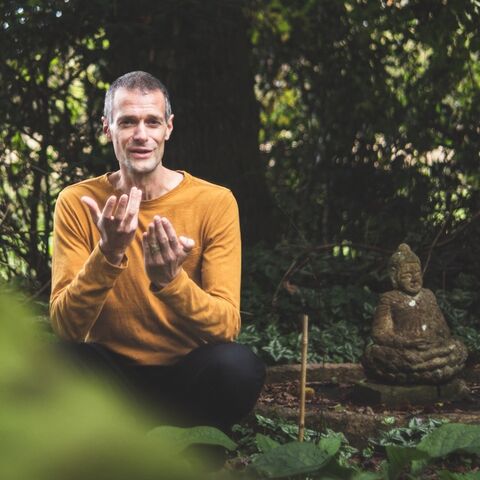
Beth Upton.
Here's a bit of Beth's bio from her website.
I've been teaching meditation since 2014,
And the more I teach,
The more I love it.
If there is one thing that I've learned in my years of teaching,
It is that we are all different with our own strengths and weaknesses.
In order to teach well,
I need to get to know each student individually,
Guiding each to tap into their own innate wisdom,
Offering instruction that fits each student's unique circumstances.
The 10 years I spent as a Buddhist nun afforded me the great privilege of being able to practice meditation in much depth and detail.
I was blessed with masterful teachers and all of the support I could have hoped for.
I spent five years in Myanmar training diligently in the Theravada tradition under the guidance of Paak Siedow.
I then spent a further five years training in several other methods and spent many months doing long solo retreats in various caves and forests.
The opportunity to practice meditation so comprehensively has been the greatest gift of my life.
My passion is now to repay that debt of gratitude by providing the same opportunity to others.
As well as teaching meditation,
I am also enthusiastic about building community.
Over the past years,
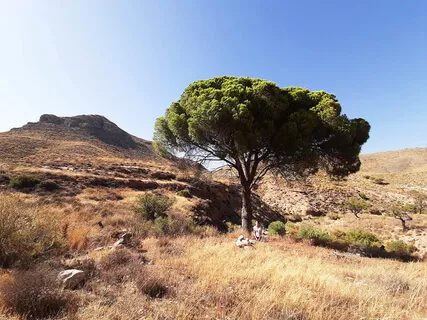
I've been leading the Sanditacan meditation community in the caves of Almeria,
Southern Spain.
I am also finding ways that we can support each other wherever we may be in the world.
And that's the end of a portion of Beth's bio.
Amongst Beth's copious wisdom teachings,
A big thanks goes for furthering my training in mindfulness of speech and presentation.
Be aware that audio challenges may be for me adjusting the zoom volume without monitoring the audio level for the screen recording.
And a correction,
The teaching of the importance for focusing on before,
During,
And after giving is not related to Rahula.
Some of the topics we get into include life as a Theravada,
Buddhist monastic in Southeast Asia,
Generosity and a giving economy and giving culture,
Relationships,
Community,
And lack of community,
Advice for establishing a daily meditation practice,
Meditation trends,
What Beth's meditation interviews are like,
And a mini example interview from my practice.
Samana Vipassana and Supra,
Mundane,
Or Psychic powers.
Without further ado,
Here's Beth and I.
And hi Beth,
How are you today?
I'm okay,
Thank you.
I'm good.
Right on.
Well,
I'll just tell people a little bit about how I found Beth before I let her introduce herself.
I was reading this book,
Practicing the Jhanas,
And it's basically Steven Snyder and Tina Rasmussen's,
I guess,
Journey through practicing the jhanas with Venerable Paak Sayadaw.
So I just thought I would Google to see what Venerable Paak Sayadaw looks like.
And one of Beth's videos that she did,
She doesn't have too many videos posted online,
But she did a small interview type thing with Venerable.
And that's how I found Beth.
So how would you like to introduce yourself?
Hi,
I'm Beth.
I don't know.
It depends what you want to know.
When you were speaking about that video,
It reminded me of,
It was only about a year ago that I made that video.
And I was planning to be back in Asia,
Like now,
But I couldn't go because of the lockdown.
And I have this feeling of,
Oh,
I hope I get to see him again.
Eyes like that are really precious where we get to sit and listen to the dharma from him.
So for anybody that doesn't know,
Could you explain,
Maybe talk about him?
You know,
Your bio says that you were a monastic for 10 years,
Right?
And disrobed.
Yeah,
That's right.
So I was interested in,
Like in my early 20s,
In meditating more.
I had sort of looked at other things to do with my life,
But none of them caught my interest.
And I wanted to find a place to meditate and was looking here and there.
I tried a few places in Thailand,
Was looking at a few places in Myanmar.
And when I turned up to Paak,
Actually Paak Sehirah wasn't there at that time,
But something really felt right about the place that I could ask any question I wanted and usually get a really satisfactory answer.
One of Paak Sehirah's students was teaching a teacher called Sehirah Uravatha,
Who's an incredible teacher.
I would encourage you all to go and practice with him.
So I met him and I was like,
He knows,
I should just stay here and listen to him.
And so I did.
And in that context,
It really made sense to ordain us in that.
And I made this determination to myself,
I'll stay until I've learned the essence of what they're teaching here.
And I did.
And I think so far it's like the best few years of my life.
I really adored one.
And then after some time,
Paak Sehirah came back and I also spent time learning from him.
So not too many people can in the general population probably encounter too many experiences like you've had,
Right?
I'm sure it's not totally uncommon,
But perhaps people would like to know or may be of interest if you feel it's of interest to know kind of like daily life,
Daily monastic life,
And maybe some of the precepts,
The excessive,
Not excessive,
The numerous precepts that were required,
How those might be relevant,
How they might be helpful and challenging at the same time.
And then maybe a transition to lay life and how that process went.
That's a lot there all in one question.
So daily life is like your full time job is to meditate.
So if you stick to this schedule,
They have like a schedule,
Then I think it's five or six meditations a day.
And they're like an hour and a half long each.
But me and some others prefer to make our own schedule.
But usually when we make our own schedule it's because we want to do more.
And although meditation is a full time job,
Probably the biggest complaint amongst the people there is,
Oh,
I haven't enough time for meditation.
Oh,
I want more time for meditation because it's also life.
The way that Parag Siro teaches is very detailed and very profound.
So it's what we can't learn all in 10 days or in three months.
Most of the people if they want to learn those teachings comprehensively,
They need to stay for years.
So life comes in.
And there's things to do.
Sometimes get sick,
Sometimes people come to visit,
Things happen.
And so this was like the main struggle is to find enough,
Sounds bizarre now,
But to find enough time for meditation because we become very sensitive to distractions.
As for the precepts,
So as a nun we had 10 only.
The monks have 227,
But lots of those 227 in essence are contained within the 10 if we're keeping the 10 very diligently.
And so the first five are rooted in our wish not to do harm.
So not to kill,
Not to steal,
Not to do any kind of sexual conduct,
And then not to lie and not to take intoxicants.
And then the next five precepts is more based in restraint.
So we keep the precept not to eat in the afternoon,
Not to watch any kind of entertainment or singing or dancing,
Not to beautify the body,
And then not to use high or luxurious beds.
And then the last one is not to use money.
That last precept really revolutionizes the life.
After 10 years we stop to see things in financial terms and how values come somehow into line with the Dharma.
You mentioned about disrobing,
So one of the main things I noticed when disrobing was having to re-engage with money and seeing how that interaction with money started to distort my values almost instantly.
So for example I could eat this or I could eat this,
And rather than as a monastic I would reflect on gratitude to the donors and humility and gratitude to the body and the importance of the practice.
And if I was in a lucky situation as a monastic to have a lot of food then I would tune into what my body needs.
But when we're buying our food we tune into,
Oh that one costs £4.
50,
That one's only £3.
That's really messed up.
It's just a little example but so many ways of the influences on how I would use my time.
Yeah really distorted by finance.
So let's talk about that a little bit.
I know I've heard you talk about this vision of generosity too.
And then also you were an econ major right?
In university?
So maybe that ties into it somehow.
But I also love this idea of gifting and generosity and if you want to talk a little bit about why generosity is so important and then also your vision for it and maybe what was inspiring of that vision.
And it's interesting too if anybody's up on culture in the States there's something called Burning Man.
I've never been but I've heard they have a gift economy there.
So I'm curious if you have any thoughts if you're familiar with that and you have any thoughts on how something like that might tie in.
So it's a lot there.
Yeah I've never been to Burning Man.
I think we see quite a few inspiring examples of gift economy working.
What we notice is that they work when there's a strong sense of community.
So to use a rather ugly economic term the social capital needs to be quite high in order for gift economy to work.
Sometimes I feel of economists like if they can put a definition on something they feel like they've trumped it.
Never mind the whole of human relationships and society and community.
We'll call that social capital and now we know better.
Got it pinned down.
Nothing else to figure out.
It's all taken care of now.
Yeah.
All right.
Yeah.
Anyway yeah my my degree was in economics and sort of killed my spirit.
And then I was immersed in this what we call like a Dana economy now in the West.
I think they're calling it gift economy.
And I would also encourage you all if you're interested in this topic to look at the work of Charles Eisenstein who writes about very brilliantly very with a lot of clarity.
So one of the main things like if we really get to the root of what money is is saying I've given you something and you're hereby obliged to give me back something of the equal value in return.
That's that's its whole purpose right.
And it might have to go by the by.
So I've given you two cows and you don't have whatever but you're going to give it to Joe down the road who's going to give me something might go by the by.
But the basic premise is one of entitlement.
I've given you something and I want some kind of guarantee I'm getting mine back.
And so what the Dana economy does is frees us from that obligation.
And that allows a purity of intention to grow.
So I've given you something because I wanted to give it.
And I trust that if we're all in that spirit then mines come into me when I need it.
And it's putting the onus on us all to support the things that we value to support the things where we seem need.
And on receivers it's putting the onus on us to be worthy of receiving.
So that's really like at the heart of gift economy for me.
There's much more nuance and much more detail to speak about.
But that's really why it's such a foundational piece for Dharma.
What I hear in the West is a lot of people thinking that gift economy serves only as a means to access.
So if it's by donation then even poor people can join.
But it's really such a small,
Small piece of the puzzle that access about them.
Didn't the Buddha say something like even if you have just give,
Even if you just have a little.
I'm not exactly sure if that's right or not.
But yeah,
It comes down to the intent,
Right?
And also at the root of it,
Money is an idea.
So it's kind of like rewriting the idea of money in a way I feel.
Yeah.
Yeah,
I mean the other thing with money is,
As I was saying before,
It's grossly distorting the value.
So we have money,
Or not money,
But let's say price.
We have price as a function of massively distorted supply and massively distorted demand.
And so the number of values that we put on things,
The prices that we put on things,
So grossly,
Horrifically distort their true value.
And when we engage in that system,
We legitimize it.
Yeah,
It definitely can,
Right?
I mean,
I'm sure there's some accurate,
I mean,
There's just so much to say.
Yeah,
I'm sure some of it's accurate,
Some of it's really distorted.
And then how all that's gamed,
And I mean,
It's such a huge topic.
Possibly we can explore more some other time.
But yeah,
The spirit of giving,
The spirit of generosity and how,
Where a place that comes from,
Like the Buddha said,
Was a teaching to Rahula,
Where you notice how you feel before you give,
While you're giving,
And then after you give.
So okay,
So now I guess we can talk a little bit about what you do now,
Your work with folks and whatnot.
Yeah,
So it's a strange time to ask me that question because we're just coming out of a pandemic.
And it hasn't been the year that I was envisaging 2021 actually,
No,
Going into 2020,
I was complaining to my friends and bracing myself because I had this crazy schedule lined up of changing country maybe like 17,
18 times to go and lead retreats in God knows where.
And I'm so done with so much travel that I start to feel kind of physically repulsed by uprooting myself yet again,
Engaging with a new community,
New group of people.
So I haven't done that.
That's probably on the cards for the coming year.
But I,
At least I've had a break.
And what I have been doing is teaching mostly my existing student base by Zoom and experimenting with online retreats,
Which is something I never thought I would have done.
I would have argued you down if you were told that I would be spending so much time on my lap.
Although it's definitely it's not as good as teaching in person,
And I very much don't want it to become a new normal.
I've had to admit that it is definitely better than nothing.
So that's mostly what I've been doing now.
And just as things start to ease,
I'm going to move back to teaching in person.
So my first in person retreat for almost a year will be through April in Joshua Tree.
Very cool.
That's kind of the nature of I mean,
Maybe this is a gross overall generalization,
But seems like a lot of Brits.
They they they're world travelers,
Right?
You know,
Historically,
Too.
Are we?
I don't know.
We've got the East India Company,
Right?
I don't know.
Yeah.
Yeah.
We did that.
Sorry.
So you also do you also do besides teaching,
You also do interviews,
Right?
Well,
At least online here,
Too.
And by the way,
I've attended two full online sits or full day online sits with with Beth and various communities she has online.
And I've really benefited from those.
So thank you again for those.
And so but you also do interviews,
Right?
And interviews online through Zoom,
Like through maybe an hour to begin with,
And then half hour for anybody that any for meditators.
And then also,
Maybe we can,
You can talk about that,
But also talk about what your interview what that interview process is like usually.
And then what about your interviews with your teachers?
And if there's any like similarities or anything worth mentioning there?
Yeah.
Yeah.
So I don't really like to teach a group.
I don't like to teach sort of a one size fits all or now we're all going to do this because everyone's different.
Everyone's at a different place in their practice.
And also people have different strengths and weaknesses.
And so I like to teach people one on one.
So as you just explained,
I am doing that by Zoom.
And it's probably something I'll continue into the future.
As I leave retreats in different places,
Sometimes the keener of the students who want to maintain their practice after the retreat.
If I just leave I have I have nothing to offer.
But now I can say,
Okay,
I'll keep teaching you by Zoom.
So this is one actual like silver lining of the past year,
I think that I've okayed myself with doing that work.
And what was the second part of your question?
Oh,
You're well,
I'll just make a comment real quick there too.
I feel pretty much.
Oh,
My teachers.
Yeah,
I feel pretty much the same way about Zoom.
You know,
There's opportunities I probably wouldn't have had otherwise and with people from all around the world.
But also,
Yeah,
It's a faint,
You know,
Simulation of real life.
You know,
It really is.
So it's just so much more powerful to be in the presence of another human being,
You know,
In the flesh,
Obviously.
So but yeah,
Yeah.
How do you remember some of your interview styles of your teachers and whatnot?
Yeah,
So they are the same in that they're teaching everybody individually.
But they're different in personality.
And in different ways,
They're the teachers I've learned from.
So Parag Sierdor is really a master.
One of my friends who is also a student described him as being like the wind element in that he's very pushy,
But it's somehow supportive.
And that's quite true.
Like he really pushes hard to get the best out of people.
But there's such a strong loving presence there that he can pull it off.
Maybe if somebody else tried to be so pushy without that strong meta and that strong spiritual presence,
You just feel stressed.
But my experience with Parag Sierdor is also been very supportive.
And then among the teachers who teach within the Parag institution,
Let's say so Parag Sierdor's senior teachers under him.
They each have their own personality,
I think that they bring to the teaching so that the content is quite the same.
And when I've started teaching in the West,
Probably I also have my own personality,
Which is different.
I think maybe more,
I hope maybe more relatable to Westerners.
Maybe I'm not coming from this very traditional patriarchal culture.
I'm using a vocabulary that feels more natural to people.
But also in the content,
What I've learned is there's need for more support on the basic.
So Parag Sierdor's teachings are really getting interesting for the students once they already have Jhana concentration.
And then that's where Parag Sierdor gets really enthusiastic and there's loads to say and loads to do.
But there's not so much guidance for the students who are not there yet.
Mostly just keep on focusing on the breath,
Be patient,
More time on the breath,
Less distraction.
That can be quite a frustrating place for meditators to be.
So I've practiced some other methods,
I've learned from different teachers and also just through my own practice and things that have worked for me through listening a lot to the students,
Find more to give on the basic.
So you've got the best of all worlds here.
You've got deep,
Deep practice in the East with probably the world's premier meditation master.
And then you've got,
You grew up in the West,
So you're familiar with Western culture and now you're getting more into the basic style too.
So that pretty much covers all the bases,
I would think.
So that's cool.
So maybe we can actually do a little example,
Mini meditation interview,
Just to give a sample of anybody that's interested in what it might be like.
Obviously it won't be representative of a whole.
Before we get to that,
Let's see.
So general advice and encouragement and empowerment for meditation practice.
That's where on this topic.
So at pretty much different skill levels,
If you want to mention anything.
I mean,
One of the things here again and again is trying to establish a daily meditation practice from folks and how to do that.
Yeah,
That's a hard one.
So one of the really important points to learn is that the mind is habit forming.
And so what we want to do is like put in the effort early on to make it a habit and then it will become easier in the future.
So if we can,
Usually I say to the students,
Do the amount that you can realistically do every day.
So better,
Like if you can only do 15 minutes a day,
Do that,
But do it every day because the mind will get into the habit rather than saying,
No,
I'll do an hour,
But then you only end up doing it once a month.
So do what you can realistically do every day.
And then I need to get really clear about what we're wanting for our meditation practice in daily life.
So how are we,
Are we stressed and burdened and we're looking for a practice to give us some calm?
Are we bored and we're looking for a practice that will give us some growth or yeah,
Whatever it might be.
Are we in stressful relationships and looking for some self nurture?
How really we wanting our practice to serve us?
And then we can look for a practice that will go some way towards meeting those needs.
And then we want to use a meditation object that is not too subtle.
This is one of the biggest mistakes I think of meditators in daily life is that they go in with a lot of shoulds.
I should be able to focus on this for a long time and experience this.
We need to take a look at our mind.
I like this,
If you're trying to make a Buddha statue from a lump of wood and you know,
You get a chisel and you lob off the corners,
You get it vaguely person shaped and then you take a finer chisel and you put in a few of the details,
Get the arms and legs going.
Then you get an even finer chisel and you start to carve in the details,
Maybe the fingers and the nose.
Then maybe you got some sandpaper and eventually a polishing cloth.
If you want to make a Buddha statue,
You've got a big lump of wood and you go in with a polishing cloth,
You're going to be there for a really long time.
And so oftentimes the best thing that we can do for the depth of our practice is to go in with a really coarse object.
Coarse object here could be if you're practicing with the breath,
Maybe counting,
You might use a mantra,
You might do some walking meditation.
But if those things are still too subtle for you,
If you've got hectic life and hectic mind,
Then go for something even coarser,
Which means go for a silent walk in nature.
Turn off your phone,
Put it down,
Go for a silent walk in nature.
For some people that coarse thing will be taking a nap,
Just switch off the noise,
Take a nap or lie down in a dark room on your back with no stimulus and don't even try to do anything else.
And that might be your really coarse chisel and then you'll notice some calm come in and you can go to something more subtle.
So that's probably three biggest pieces of advice I have.
Do what you can realistically do every day,
Build a habit,
Get clear about what you're wanting your meditation to do for you in your daily life,
And then don't choose an object that is too subtle.
That's so great because the practical one I haven't heard before about the gross and subtle thing because some people just aren't to go straight into the subtle.
People are dealing with it.
I think it's true,
Especially for people who have practiced on retreats and their practice in retreat has been very subtle and they're wanting to carry that into their daily life and some stubbornness or maybe pride comes in and they think,
No,
I don't want to go back to whatever it is,
More coarse thing,
But they're doing themselves a disservice there.
When I'm in London,
I practice the counting method a lot.
The other thing is,
Yeah,
Once it's a habit,
It's no big deal anymore.
It's like brushing your teeth.
I love that metaphor too.
You could skip a day,
But you really wouldn't want to.
It's like putting on your shoes or whatever other habits you have.
So it doesn't even become an issue really so much anymore.
So now sometimes people ask me about my practice in daily life and it doesn't feel like practice.
It's just what my mind does in gaps.
It's focused on my breath.
Or go to some vipassana project if I'm sitting on a bus or walking down the street and no one's talking to me because of force of habit,
Because of force of training.
So let's talk a little bit about the core practices there,
Samatha and vipassana and how they differ in the East and West.
What would you give as relevant advice and experience for practicing each of the ones?
And then maybe what do you think about combining the two?
So I think we should first start off with giving your definition of samatha and vipassana.
Yeah,
So there are two different ways of focusing the attention.
When we're practicing samatha we're focusing the mind on one unchanging concept for a long time.
And the purpose of that is really to develop this strength and focus of mind and along with that comes a lot of bliss,
Which is sort of the counterintuitive part that when you sustain your attention on one thing for a long time you're no longer paying attention to the body,
To the sounds,
To the time.
You're losing all of your diversity of perception of the past,
Of the future.
It becomes incredibly blissful.
But the point there isn't really the bliss.
The point is that we can hold this subtle object for a long time.
And sometimes I give this simile of like if you have a pipe of water with a lot of holes in it.
This might be a simile from the Buddha,
I'm not sure.
If you have a pipe with water and a lot of holes in it.
So all of the water is coming out the holes so hardly any of the water is coming out the end of the pipe.
But if you start to plug up holes then you get like a power hose.
You get like a laser shoot of water.
So in the same way our mind has all these outlets thinking about the past,
Thinking about the future,
Engaging with the senses,
The sounds,
What we see,
Who said what.
And when we start to plug up if you like those outlets when we don't allow our mind to flow out in those ways,
The mind becomes really powerful.
So that's samatha practice.
We develop samatha practice not for the bliss but for the tool to have that very refined,
Very powerful level of focus and concentration.
And with that concentration we can then practice vipassana.
Vipassana is also sustained attention by a sustained attention on the impermanent suffering and non-self nature of all phenomena.
So it becomes vipassana meditation when we start to see the momentary arising and perishing of either materiality,
Physical things or mentality,
The contents of the mind.
When we see the momentary arising and perishing.
Here arising and perishing it doesn't mean changing,
Changing like a river.
It doesn't mean yesterday was Thursday and today is Friday,
Thursday has perished and Friday has begun.
Or a few minutes ago I was cold and now I'm warm,
Oh it's impermanent.
Or the pain was there and now the pain has faded.
This is a type of impermanence but it's not the impermanence that we're speaking of when we speak about vipassana.
When we speak about vipassana we're speaking about things that come into existence and a split second later are no longer existing,
They're coming into and out of existence.
So when we can observe things on that level of subtlety that's where vipassana starts.
Some people are able to observe that momentary arising and perishing with what we call access concentration.
Access concentration is a level of concentration that's just before the jhana stage.
It's also a very deep sustained attention but it's not quite yet full absorption.
Most of the meditators in my experience they find it easier to practice vipassana well if they already practiced deeper samatha practice into the jhanas.
The jhanas there just mean that when we're focusing on this one object for a long time that it's unbroken.
And what about the differences because it seems like in the west there's more of a culture among buddhism and meditation with more on vipassana but if I'm getting this right kind of in the east that's taught later right?
A lot of teachers teach a full grounding in samatha practice before going into vipassana.
I think what we see in the west in general is a dumbing down.
To say the least yes.
Yeah we see a dumbing down and then which is you know it's not entirely bad it's like I said when I started teaching in the west I also realized I need to teach more on the basic but what we then have is rather than them giving a new name to that basic that they're teaching they call it vipassana or they call it jhana.
It's not jhana it's just they had some blissful feelings or some light arose in their practice but they call it jhana and in the same way they will focus on the sensations in their body and they call it vipassana.
So it's not but the practice they're teaching is good there's nothing wrong with the practice they're teaching what they're teaching is usually basic awareness practice a basic acceptance practice a non-judgment and non-aversion so all these things maybe like foundational skills of the mind but we can't say yet that we've got into jhana or into the vipassana jhanas yet.
I think it's a good way to put it Beth yes so can you endorse any particular methods meditation methods I mean generally speaking I know we talked about how you know individually would probably be better and then also what do you see as like trends is are there any trends you can see kind of in people's practices either in the teachers that you've studied under or meditators you've worked with or just in the general culture at large?
Yeah I think for endorsing any practice it really does depend so much on the individual and especially with teachers because a lot depends on personality and mostly I feel grateful that we have so much diversity there because we don't have the buddha anymore to come along and be the perfect teacher for each person but where we lack the buddha we have diversity and so maybe amongst all of these teachers there's enough for everybody to find the part that they need at the right time and there have been times when I thought wow really how could anybody find that teaching beneficial no need to name the teaching no but like really people are following that but then maybe some years down the line I thought oh wow there's like that little piece that I can take from that and I'm really grateful that person's teaching so I think we need to mostly hold the diversity of teachings that we have with gratitude and really with cooperation because it's very ugly when we see teachers you know like in competition with each other this is not in the spirit of the Dharma at all and at the same time if there's really wrong wrong things then we need to call it out like if we see teachers abusing their power or engaging in things that obviously cause harm then we have responsibility as a community of teachers and students to call this out.
Yes absolutely and just on the everyday day-to-day it's kind of like balancing you know honesty and self honesty with how we're actually taking it but also having gratitude like you were saying for for the diversity of practice as well you know.
You asked me something else there and I've forgotten because you keep on asking me all the questions.
I know right I was like trying to cram everything in as much I think it was kind of trends trends overall trends yeah.
I noticed that dumbing down trend and I think the teachers don't realize the damage they do with misuse of vocabulary because like I said the practice isn't what they're teaching is good and helpful but it's not let's say Jhana but they're calling it Jhana or it's not Vipassana but they're calling it Vipassana so the danger is the more people call that basic thing Vipassana the fewer people ever strive to practice actual Vipassana and before you know it those practices are lost in the world and it's very difficult to correct people if they think they've done something and you tell them sorry no that's not it oh you thought you were at this stage no you're not even at stage one.
That's a really difficult conversation to have with people who have believed what those initial teachers have told them.
It's really tough it's really challenging right well a lot of people just aren't even open to feedback where actually I feel that honest feedback from someone you respect is more valuable than a pile of gold because you can always make more money you're not always going to get honest feedback from some work and actually help your practice and help other people as well right so yeah and then language is so important I mean that's why I ask at the very beginning your definitions of Samatha Vipassana right the semantics and not only do you know this do the definitions of words change throughout time as well it's a very kind of convoluted process sometimes too and then misunderstandings and clarification it's just so vast and complex can be but it can also be very simple too.
They've started calling some experiences soft jhanas and other experiences like real jhanas because nobody had the heart to say to the soft jhana people that's not jhana and you had a lovely experience and it's wholesome and it's good but it's not jhana but it seems like people are too nice or I don't know like well on the kindness-truth balance it's too far towards the kindness.
It is it in you know in the culture I can see a lot of benefit or some benefit and in some of the you know some of the culture of what is it called political correctness but honestly for the most part of that it's self-censorship people it's people self-censor themselves a lot because they don't want to be perceived as being you know unkind or some kind of offensive but I would say that anybody that's even remotely concerned with other people and coming off with that impression and they're not getting satisfaction from offending people then they're not being you know offensive or you know insensitive you know are yeah so if you have if that concern are that that even that that intention or thought comes in it's not a lot of people hold back what they would actually say that could benefit because of this culture of political correctness well that's I mean that's kind of the con of it right I mean we've already we're already we're already so familiar with a lot of the so-called benefits of it and I guess there are but I yeah I don't want to get too political here but you know that's that would be one criticism I have of it as well of that so.
Another big trend I see or I have some bias here because people tell me things that maybe like they know I have this in Trans-Ready but I hear a lot from my existing students about how they feel a lack of community this I hear really often like what does Sangha mean to us here in the West it might not look like this monastic lay division but there's seems to be a real lack of working together a lack of communal space and then I run this little community down in Spain I say I run it my very good friend Daya is running it in my absence because I've barely been there over the past year but anyway I founded this little community and some caves in Spain and what I noticed there is that a lot of people or well let me rephrase that actually there's few people who they have some like nice idea of what community is like but the work of co-living and of doing the relational stuff those skills have really atrophied in us because of our very individualistic lifestyle and there's work to be done there and if we really want strong Sangha to thrive then we need people who are up for that work and so that's why my enthusiasm has shifted a lot towards relational work so that's really what I'm putting my heart into this year is looking at ways of bringing the same refined attention of meditation into the way that we relate and sort of with the long-term aim that that will help to foster more meaningful community.
Beautiful and you know that's the thing with in a Steven further complex or added complexity with this whole pandemic thing going on right with community it says a whole different ball game even more right and one thing I learned about visiting Maba it's a monastery about an hour from here is it's get the best of both worlds right I mean you like you're saying in the West we're so individualistic right for good and ill and otherwise but there it seems like there's there's plenty of time for community and but everybody's individual life is also respected so you kind of get the best of both worlds right you don't have to sacrifice one for the other it's just kind of like this melding emerging that was my experience maybe I can't speak for anybody else but you know I've got the best of both worlds there.
It can be like that.
I haven't been to that community but another perspective on that is that people like communities that they can dip into contribute little experience the benefits and then leave and usually the only way that's possible is if there's a few people with massive sacrifice keep the whole thing together and I'm not sure if that's what's happening there but that's what happens often.
That very well could be.
Dedicated people like you know given their blood and sweat and souls to keeping the thing going and other people come along and say oh this place is lovely it's nice for a day trip thanks beautiful place and then they're off.
That's a great point Beth and you know and I would say I want to give thanks out there too because of all the venerable and community there as well.
That said you know about people dipping in and out that's true but it's got to start somewhere too right because if people don't even have that sometimes in the West it's just there's like really no sense of any kind of authentic community.
I mean well some maybe but if you get to experience it just for a little bit maybe they might be more likely to actually be more immersed in something like that you know what I mean?
Get a taste and then really get more serious about it as well instead of not even having that experience to begin with but yeah no I totally get you that's it yeah and then living on the surface and you know pretending that yeah it's something it's not that's that's another thing too right so.
I think if we really want to build community then we need to start from a place of acknowledging there's nothing there for the moment there's nothing there.
Honesty.
So we need to approach it all with the attitude of okay what can I give to build this thing that currently isn't there?
What can I bring and it's a space into which we mostly give and then we might be surprised at what we get back in return but to really approach with this giving and not look for where can I go to take and be healed and get what I need because those places frankly don't really exist at the moment for us in the West.
And that's a great point too it's like it ties into generosity right?
I mean we just we don't have to be just generous with our money right because obviously our time our skills our expertise our presence you know our care our kindness.
Yeah all of those things.
So if you if you want to do just like a like a mini meditation interview here and then maybe a couple other things but yeah we're running we're getting close towards the end here so what I would say is in my practice right now I'll just.
So I'm interviewing you?
Yeah yeah right so yeah go ahead.
That's not weird for you.
That's not weird for you no?
What's not weird for me or what's weird for me?
So like have your meditation interview recorded you're cool with that?
Yeah why not I mean I'm recording yeah so but we'll just you know we'll keep it we'll we'll keep it just maybe a topic or two so it is weird but hey you're weird we're all weird right so.
Like maybe in 2012 when I first started I was experienced tinnitus like ringing in the ears and that kind of went away for several years but I've noticed it a little bit coming back here recently do you have any like thoughts on that advice?
Is it we pronounce it tinnitus here.
Ah okay.
So is it is it tinnitus that you experience or when you're meditating or is it that you experience all of the time and it's disturbing you in your everyday life?
Here recently no not it's usually right around meditation time and then I think maybe in 2012 is a little more persistent for a while but now it just seems or maybe I'm just not noticing it you know it just everything becomes more amplified when meditation but I would say definitely it was way more noticeable throughout daily life 2012 not so much now.
Yeah so if it's noticeable also in your daily life like you're walking down a busy street and you can still hear this ringing then that's maybe what needs some attention from somebody who knows about that condition but what we hear a lot from meditators is that when their concentration starts to deepen then there is start to ring and this is very many meditators I don't want to say all but it's a lot maybe the majority and so my little non-medical conclusion is we all have ringy ears I know I do but usually we just got too much distraction to notice it and as our mind becomes quiet we start to notice that that ring so it's just another thing to accept.
And I guess maybe just one other topic here I have several of them but I'm just going to the what about blockages so I would say maybe energetic blockages I don't know if you know kind of what I talk about but or what I'm mentioning but for me it's actually starting to clear up a little bit but for a while it would just be like my right nostril would be blocked up it would come and go it would unblock you know usually they say a lot of times air will go in for a certain amount of time on one nostril switch to the other nostril and back and forth like that but for me it was just persistent blockage on the right side I don't know you know.
It's one nostril yeah so it doesn't it doesn't really matter so I assume it's not you're not speaking about like a medical condition like.
I wouldn't think so I did have my nose broke a couple times in childhood.
A marble up the nose or something.
What up my nose?
Marble oh I should check for that I guess but I hope yeah I don't don't anticipate any marbles but you never know.
Yeah so broadly speaking there seems to be like two different approaches to samadhi that sort of run alongside each other and they're sort of they're different but they're sort of working together so one is this Theravada way of focusing on a single object basically ignoring everything else including the energy in your body or any blockages just continue to focus and what we find is that when we do that when we do it skillfully then automatically blockages in the body start to release and we can notice if we're sitting slumped well immediately our body will without effort it will become erect.
We might have like electric shock of where energy gets released all types of things can happen in the body where basically we're coming into balance and that's the way that I trained so to ignore basically blockages in the body focus on your meditation object and allow these things to unravel by themselves.
Alongside that there's a different tradition which is to do with the chakras kundalini for example some yoga practices go into this where you practice specifically on the body to find the blockages do practices to unblock them and according to those traditions the result is the mind will concentrate.
So sort of similar but in one way like we're switching what is the practice and what is the result and so this way of working with the energies in the body is not the way that I trained in I know a couple of my friends come to mind who are very good at those practices but it's not what I would instruct and I've got far more experience in teaching the Theravada way which is just ignore those blocks it really doesn't matter which nostril the air is going in and out or as long as you have wise attention on your breath eventually it will sort itself out.
It's kind of like a body's perfect if we wait until we have a perfectly balanced body then we'll be in forever.
It's kind of like a top down or bottom up approach right maybe you know yeah you're approaching it different yeah different ways so I guess we can go into a couple quick dharma questions here right I know sometimes the Samatha stuff is associated with you know so-called psychic powers or supra normal abilities oh right yeah and you being in England right all the you know the hinges and yeah all the so anyway so what is like the prevailing well you know like Stonehenge and Avery Hill and all the yeah all those different megalithic monuments or whatever you call them so that's supposed to be a hot spot for that I hear but therefore there's a witch huh well of course right Beth no so the prevailing gold standard right now about psychic about those kind of things so like what is the kind of Theravada approach I know you know you have some academics who completely kind of just discard all that and say it's a it's just you know aspect of consciousness and then you have people with all these detailed encounters and things like that and then but one thing I hear is that it can be a distraction from the end goal as well so yeah I guess in a nutshell here what would you say about that so those practices are definitely possible my teacher park said or teaches them but he didn't teach them for only recently when he was like old he started teaching them I think because he didn't want this controversy of like oh why is he teaching this and this you know it's a distraction but actually for the meditators who do they experience as being really beneficial because first of all the concentration that you need the depth of samadhi that you need to be able to do those practices is so deep and then also those psychic powers can really add some wisdom to the practice so one of the practices that parks it or teaches for example is to see back many many hundreds of thousands of lives or many many world cycles and there's something that happens to the urgency spiritual urgency when you've seen the world destroyed by fire and then a new eon is born and there was another big bang and there was another one and destroyed again and all the humans have been wiped out and here they are back again round and round and round how many more times do I want to go around this and we stop sweating the small stuff and not wanting to get political or imply that like our environmental crisis is the small stuff on a multiple eons scale it is and the big question is like how do we get out of samsara and that's a possible thing to do and so anyway each went a bit off track that each of the psychic powers are giving their new flavor of wisdom that they're basically they're rooted in the dharma also they're not necessary for liberation but we can say like they are helpful accessories sam vega right that's the polly word for spiritual urgency right yeah very much so i so we're probably just not going to have time to go into i was going to ask about kind of the arhat ship you know the kind of the restrictions on that in monastic life and then how some lay people have come out and claimed our hardship and what would be the pros and cons to that you know i don't think we're gonna have time now are we so leave that as a juicy cliffhanger maybe for a possible uh part two uh so beth thanks for joining thank you so much all right yeah lovely conversation