I awoke with an inquiry,
A natural inquiry,
And I hadn't even opened my eyes and all these selves were arrayed before my mind's eye.
Higher self,
Lower self,
Body,
Mind,
Personality,
All these different ways I was showing up.
Business owner,
Employer,
Just everything.
Mother.
They were all just like,
Okay,
You know,
What are you going to do about us?
And I'm like,
Where am I in all of this?
That was the question.
Holness,
Welcome.
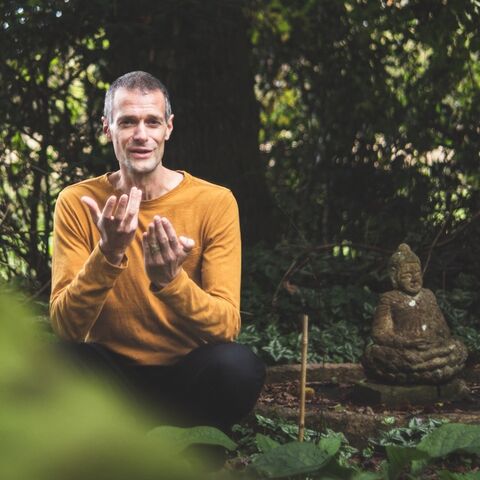
This is Josh of InnerSkills.
And today,
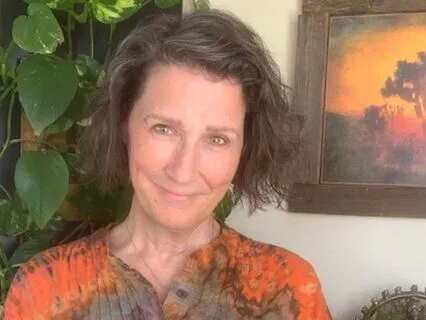
I'm graced with the lovely presence of Amara Palmer.
Amara,
How's it going today?
It's going great.
It's a beautiful day in the neighborhood.
You're talking a little bit about- It's a gorgeous day today.
Yeah,
Go ahead.
It does look amazing.
And it's just the spiritual landscape of desert areas.
I don't know.
There's a lot to say about it,
But there's also a lot of quiet and stillness,
I think,
To be had in the desert as well.
So I'm going to throw it back to you.
Who is Amara Palmer and what kind of work does she do?
Well,
I will introduce the other presence in the room here and give place.
I live in the Mojave Desert near Joshua Tree,
But I'm deep in the Mojave.
I'm way off grid.
I've been a desert dweller for 25 years,
And it's really supported me in my awakening process,
If I can call it that.
And so that stillness,
Yes,
I've been very supported to be embedded in nature like this.
And so I've been here off grid for 13 years.
So it's been a while.
Oh,
Really cool.
I got to house sit for some friends who are just completely fresh and new to off grid,
Just as an aside here,
Kind of.
And I hadn't really done it before.
They've got the best of both worlds where they can charge their house,
But if it gets too little sunlight,
They can switch back on the grid,
Right?
They need to.
They hadn't done it for a while.
They've even got an electric car that can charge the house and the house can charge it and chickens and pets,
And they're getting into gardening.
So it's cool to see a younger couple with kids get into this,
Really not know anything at all about it and just start doing it.
It really is an amazing lifestyle.
And there's a whole movement now of exit and build.
I hear,
I like this term,
Exit and build.
My little Midwest kind of Southern accent kind of mashes things together.
So yeah,
Exit and build.
So I just thought I'd share that too.
Now,
You mentioned awakening,
And this is a term,
Of course,
That's dear to my heart.
And let's suss this out a little bit,
Because I know some people maybe throw it around loosely,
And then other people,
I think,
Are maybe a little bit too strict with it.
I like it over enlightenment.
Enlightenment's really kind of watered down and vague too.
I mean,
I love that term as well,
But what do you mean by awakening?
Let's just so we kind of,
Not that it could be super strict,
It could be super loose,
However,
But let's just define it for those.
So good.
I'm so glad you brought this in,
Because those who are strict are kind of back here saying,
Meh,
Meh,
Meh.
And I do stay away from the term enlightenment,
Because it does have a superlative kind of static feel to it.
So awakening,
From my perspective,
Awakening can happen in an instant,
But then there's a process that I call realization that follows awakening.
And we can ascribe a lot of things to what awakening is,
But I would say that awakening is when we come to a recognition without a doubt of,
I could say our true nature,
But as we go along,
So much falls away.
So that recognition might not be fully clear at first,
And then as more and more falls away,
It just deepens and deepens.
And I've even seen awareness fall away,
Being fall away.
So I don't want to give the suggestion that even though it feels like there's a clear delineation,
That's another quality of awakening.
Like there's before,
Your life before and your life after,
Right?
But I'll just keep it simple.
That would be an undoubtable glimpse of our true nature.
And I say glimpse,
Because it happens out of time,
Right?
It's something we can talk about later as an experience,
But it's not exactly an experience.
It's a glimpse.
And so that awakening can set off all kinds of processes.
It can be very demanding,
Because with awakening also comes awareness,
And we begin to lose the capacity to deny which is kind of a super human superpower.
I think of denial as a human superpower.
And it's helpful when we're caught in identity.
There's nothing wrong with denial,
Because we need it when we're caught in our identity as being a human that's vulnerable and under attack,
Constant attack,
Or who knows what people's journey has been in this human experience.
But once this awakening,
The shift happens,
And it can come through a spiritually transformative experience by whatever means,
It can be actually a slow seeping,
Right?
And that's a beautiful thing about meditation.
When we drop in again and again with this yearning to know what's real and true,
That sincerity,
Just nothing like that sincerity.
We drop in again and again and again,
It can be actually a kind of a process akin to sinking or seeping.
But just like if we have a headache and take an aspirin,
And we look back and we don't know quite when the aspirin took effect,
But we know our headache's gone,
It can be like that for folks.
So I don't want to give the impression that awakening is bam,
And that's it.
That's the fantasy.
And along with that fantasy is that it's smooth sailing after that,
But no,
And that's where I come in really with integration and realization,
The process.
That's when the process really comes in,
Process of realization,
Making it real in our system so we can live what we've come to see and know that's true and real.
CBT Yeah,
This speaks to my heart very well.
I think there's an old Zen saying,
It's something like there's sudden awakening,
And then there's gradual awakening.
And you mentioned that very eloquently,
I feel.
The other thing about now,
As far as a realization,
I've also heard that awakening or enlightenment is a realization.
It's not a place to arrive.
It's not a state.
But I think you described this well enough.
And you talk about the integration process too,
And the embodiment of it,
And taking what we've learned and our experiences and our kind of our realizations,
And then embodying that and taking that off the cushion or,
You know,
Into the real gritty,
Mundane world and things like this.
The other thing is,
Oh,
Dang it,
Now I'm blanking on what it was.
But for me,
I've talked about this before,
I had kind of dark awakenings for a while,
You know,
And yeah,
And you mentioned shadow work as well,
And how that can be the transformational process around this as well.
And denial is a super power.
I like,
I really like that.
And what's come up for me,
At different stages is that in others of seeing,
You know,
This denial that others are in,
But then being kind and compassionate about,
Okay,
This is a defense mechanism,
You know,
Either they're not ready,
Or they're not equipped,
Or they have no interest,
You know,
And so for some people,
This is okay for the rest of their life.
And I have to honor and respect that.
And they've chosen either oblivion,
Or however we want to frame it.
And then there's others of us who just seemed almost I don't like this word,
Destined.
But,
You know,
At a certain point,
Things are just maybe happening a little bit too much that at certain point,
It's going to be hard to keep up the denial in certain situations,
I think,
For certain people,
As well.
Yeah.
Oh,
That was the that I'd like to finish or wrap up here and throw it back to you with is that there's another old saying enlightenment,
Or awakening is an accident.
And meditation makes you accident prone.
So I think we can extend that to certain practices as well.
So yeah,
I think that was Maharishi Mahesh Yogi.
I thought maybe.
Yeah,
No,
I like that.
And,
Yeah,
As far as realization,
You know,
That's just my vernacular,
We're just clarifying where I'm coming from.
And,
And I do like to refer,
I like to have some kind of word to refer to the process,
Because so many people say awakening is not a process.
It's a moment of time,
And all of that,
But there is a process to it.
And that's,
That's where I come in.
Now I can,
I,
I can also support if somebody's right on the edge,
And their,
Their yearning is so in place,
And they're in touch with that yearning for authenticity,
Really,
That's another way it shows up is a yearning for authenticity.
That's what it was for me.
I can support people in that recognition.
So,
So rather than this,
This gradual path,
I have to say that,
That I've found the direct path to be very helpful for some,
If it's,
If it's,
If it's right for them.
And that would be to point again,
And again,
And again,
Back towards our true nature through using words.
But in that process is,
Is a,
A,
An understanding,
Coming to an understanding that,
And it's mostly using inquiry,
Self-inquiry.
But in that process,
We're not appealing to the mind.
So inquiry can often bring up,
Just automatically bring in the mind.
So part of what I do is help folks drop into meeting inquiry with the simply awareness,
Whatever it is that's knowing,
Whatever this is that's knowing,
Taking in the question.
And that's silent,
And that's not going to be answered with words.
So that's how it is that inquiry points us back to our true nature.
I can sit here and use descriptors all day long for what,
What,
You know,
Our true shared nature.
But that's just going to engage the mind,
Right?
This has to be seen directly by that which sees.
Well,
Absolutely.
Seeing and knowing,
I'm practicing kind of in the Pak-Sai-Dao tradition,
And that's one of his thing,
To see and know.
This,
This notion of freedom through inquiry,
I love that,
That phrase put together like that.
And yes,
If I may maybe speak more generally for males,
At least I know for myself,
Kind of more mental oriented,
A lot of us.
And this notion of inquiry can be,
This notion of inquiry can be like,
Yeah,
Well,
That just is what it is,
Right?
So this notion of inquiry,
Though,
And working with the awareness directly is,
Is really profound and kind of a knowing without language and a knowing without cognitive process,
You know,
This,
This bare awareness,
This bare knowing,
And then actually even knowing through the body is an amazing thing too.
And I have to second the,
What you said about words,
They can only really at best point to something,
You know,
Not confusing the menu for the meal,
The map for the territory,
Whatever metaphor we want to use here.
And now you talked about your own notion of authenticity.
I think mine was probably more towards kindness because I was kind of the opposite where I would see people and,
And,
And unfortunately probably blame them,
But it's just,
There's so many different causes and conditions involved here.
How,
Well,
One of them is society and not to blame some kind of vague term called society that just kind of conditions people to be,
I guess for lack of a better term,
Fake,
You know,
To put on a certain appearance that,
That is not authentic in order for all kinds of things,
You know,
To be more presentable,
To be more palpable,
You know,
To protect oneself,
You know,
In a way it's a type of deception and deception can use to get back at people or to protect oneself,
You know.
Um,
So talk about kind of the journey of authenticity and how you,
And how you work with people around this,
Because me,
It was more like blaming and shaming others for being fake and condescending when I actually need to go into my heart and have some kindness and compassion for all the things we go through.
I tell people that I thank them for their,
Their patience,
Something that seems so easy for them can be so challenging for me and vice versa,
Something I find almost insignificant and so natural that others are struggling with,
Have patience and kindness while they go through it and know that we're kind of on these receiving and giving ends,
Or I don't know how you would say it,
Challenges like this in our lives.
So authenticity,
How you're,
I guess,
Maybe a more,
Uh,
Kind of personal story around that.
And then also how you work with people around this too.
Sure.
Sure.
And authenticity is one quality of consciousness that can be a gateway to know ourselves knowingly.
Um,
And that just happened to be mind.
It was,
Yeah,
I do want to mention that if we don't know our true nature,
There will be a sense of inauthenticity period,
As long as we're identified.
And that's,
That's one way we can,
We can recognize when identification is coming up or deeper identification,
Does this feel authentic?
Does this feel relaxed and open and spacious and welcoming?
Am I able to welcome this moment as it is that to me is authenticity.
And I knew that I couldn't do that.
Now,
Of course I have,
I have so many words now.
I didn't have them then back in 2013,
Just prior to,
Um,
2014,
Prior to,
Um,
A pretty shattering awakening.
Um,
I was at a,
Uh,
Crescendo of feeling inauthentic and not being able to not feeling I could do anything about it.
And I had,
I had begun the year before sun gazing every morning,
Going out and staring into the sun started with 10 seconds and increased 10 seconds thereafter.
This is not my recommendation.
I'm describing,
Not,
Uh,
Prescribing for sure.
Do,
You know,
Do what feels right for you.
But,
Um,
That sun gazing turned into getting up even earlier to chant and then getting up even earlier to meditate.
Um,
And all that was happening during the sun gazing,
Which ended at about 36 minutes.
By the time I got to,
And there was,
There was contemplation in there.
There was inquiry.
I didn't even know from inquiry.
I didn't know what was happening.
Um,
This was effortless by the way,
All of these pre-dawn practices were coming effortlessly.
I would just spring out of bed and go,
Go for it through all the,
All the seasons I'd be sitting on a giant rock out here and,
And,
Um,
You know,
Watching the sun come up.
It was my joy.
It was my joy.
And there were little insights that happened along the way,
But toward the end,
I,
I found myself saying I would give anything,
Anything to know my true nature,
To know,
To know what I am.
It was more,
Even simpler words than that,
To know what I am.
I've got to know what I am.
And,
Um,
And I would give anything was the key because it was okay.
Would you give your daughter?
Would you give your marriage?
Would you give your home?
Would you give your business?
Um,
So each of these in succession,
And I realized it wasn't an invitation for me to just throw something away in my life.
It was,
Will you liberate yourself?
Are you willing to liberate yourself from the grasping of these things?
Um,
But it was because it was sincere.
I turned them over sobbing most of the time,
But let them go.
And,
And again,
Effortless meaning I wasn't doing any of this.
It was just doing,
Doing me really.
And then,
Um,
The morning of August 2nd,
No,
Yeah,
August 2nd,
2014.
Um,
No,
July 2nd,
2014.
I,
Um,
I woke with an inquiry,
A natural inquiry,
And,
Uh,
Hadn't even opened my eyes.
And all these selves were arrayed before my mind's eye,
Higher self,
Lower self,
Body,
Mind,
Personality,
All these different ways.
I was showing up business owner,
Employer,
Just everything.
Mother,
They were all just like,
Okay,
You know,
What are you,
What are you going to do about us?
And I'm like,
Where am I in all of this?
That was the question.
Where am I in all of this?
And I had just reread in it.
He speaks of the witness.
I mean,
I really was an educated,
Been on a spiritual,
I've been spiritually seeking for 35 years by this time and even have gone through a Kundalini process of 15 years in there from 1992 to,
Um,
Gosh,
Yeah,
2007.
Yeah.
2007.
But I still didn't understand what was happening.
It's amazing what the mind can do,
Right?
So I said,
Okay,
I'm going to get into this witness self.
I created a witness self.
I'm going to get into this witness self and I'm going to figure this out because I wasn't allowing myself to be the witness.
That's how removed I was from,
From all of it.
Very confused.
And so as I'm,
As in my mind's eye,
I'm moving towards this witness self.
I stopped halfway and went,
Wait a minute,
How did I make this yet another self,
Right?
How did I make this self?
And what am I moving from?
And as I turned around to look,
Everything just imploded.
It shattered.
Everything was gone.
Everything was gone.
And there was just a wearing stillness,
A wear stillness.
So it kind of,
Yeah.
And,
And so a little bit later there was,
And not that there was time in that,
But then there was laughing and then getting out of bed.
And it took a while for a,
For a sense of me to reconstruct.
I had,
Again,
No idea what was,
What was happening,
But I did know this is it.
And it was the most relaxed I had ever felt.
And I knew without a doubt,
Everything was okay.
Everything is okay.
No matter what,
No matter what,
Everything is okay.
So that was the first in a series of,
Of this type of shift in perception,
But yeah.
I really appreciate that.
And I'm wondering because around that same time period,
There was quite a bit of stuff going on in my life that similar type things that I haven't shared yet.
So that's really,
I find that really interesting,
Amazing.
And what this does now for me is open up the door for this,
What some people call self inquiry process.
And I'm not familiar with that whole modality just by that as much as I should be.
I do come at this from a more Buddhist perspective and this notion of anatta or not self is how it's usually translated.
I'm sure you're familiar with this.
And what I found that depending,
You know,
Certain people can go,
It's completely unaccessible to a lot of people,
But then it can go all the way to,
I think the other extreme,
If it's not ready to be completely destabilizing and people not wanting to do it deeply because it can really,
When you start looking into what's actually there,
What is this thing we mistake for a self can be destabilizing.
And so that's why some people recommend a kind of grounded,
Like Samatha or Samadhi practice to have a sense of really grounded rudeness and wellbeing before starting to deconstruct everything.
But what I've,
You know,
When we look into,
Sorry,
It's just a little bit by the book here,
These ways to slice the self pie,
You know,
Into these five things of,
Let's just say former body feeling pleasant or unpleasant,
Then we have perceptions or recognitions,
And then just say mental activity,
And then we have consciousness,
Right?
So if we slice it even further and deconstruct these even further,
Am I the body?
You know,
Do I own the body?
Am I in the body?
Or is the body in me?
And so it's interesting how certain people will see it certain ways.
And even at certain times in their life,
But if we start peeling away the layers of the onion like this and deconstructing,
At least in my own experience,
There's really nothing there.
I mean,
The metaphors that are used are like foam on the water,
You know,
Or like bubbles in the water.
And then for perception,
I think it's like this banana tree,
And I've never seen one of these,
But apparently,
If you start peeling it away,
There's nothing in the middle,
You know?
Right?
And so then we get to,
I'm blanking on one of them,
But then the other one,
Consciousness is like a magician's trick,
A conjurer's trick.
So like,
I guess where I'm going with this and why I bring this up is,
What did you find out?
What would you say a self is?
We talk about our true nature,
And how would you define self?
I would just say that as far as I know,
The Buddha never said point blank,
There is a self or there's not a self,
Because of course,
We need some kind of ego mechanism to be able to remember our name,
To get out of bed in the morning,
Go from point A to point B.
But like when we really start to inquire deeply,
It's kind of almost like a phantom or,
You know,
This collection of phenomena that's constantly arising and passing away very subtle,
Very rapidly.
And it's just this kind of illusion of continuity,
You know,
This compactness of continuity that fools us,
I guess.
Again,
And these are all on a conceptual level,
Right?
I don't feel I've gone to an absolute level on this,
Because when it gets to that,
There really is no words to talk about it.
But how would you say,
I think this is really fundamental to a lot of spiritual practice,
Is talk about what you think about a self.
And then I do want to move into trauma if you're up for it,
Because you mentioned all these things in terms of self.
And I kept thinking,
One of my pastimes now is to witness survivor stories of RAMCOA,
Which you guys have to look up that.
Well,
I might as well just say it.
It's a ritual abuse,
Mind control,
And organized abuse.
I mean,
Horrendous amounts of trauma.
And a lot of them are,
From what I understand,
From an outsider's perspective here,
Is creating trauma in order to fracture the psyche and to make these different personalities.
And you talked about all these different selves.
And of course,
It's not in that context.
However,
Think of all the different types of selves we have.
You illustrated so well there.
And I want to kind of move,
Maybe somehow move into how trauma is a whole other thing compared to my regular spiritual karate moves.
And I feel is so vital,
Important,
And it's over my head,
And I don't feel qualified to do it.
But I would like to see what you have to say about certain things like this too.
Oh my goodness.
There's a lot on your plate here.
There's so much there,
Josh.
Okay.
So what is self?
And I'm glad you mentioned the word deconstruction.
That's a really good idea.
I mean,
Good word for what happens before or after that recognition.
Let's call it a recognition.
Recognition,
It could be a recognition that we're not what we took ourselves to be.
It can be very,
Yeah,
It can be a clear,
Oh,
It was more that because there's nothing really left when there is that recognition.
So it's not recognition of what we are because that can't be named or touched or heard,
But is what is receiving all those.
It's what sees and hears and knows.
And even that seems like too much.
So the self that we take ourselves to be,
So that's where inquiry comes in because we have to peel those layers.
We have to see for ourself.
Teachings are only going to take us so far.
And we have to turn around and see for ourself and question,
What am I really?
What's real?
What's real here?
I had the rug pulled out from under me in my first college philosophy course when the teacher explained the difference between rationalism and idealism.
And it really landed hard that I couldn't prove that anything that I was seeing existed outside of my knowing of it.
He didn't quite put it that way.
That's how I would put it now.
That I couldn't prove that in that.
That hit me like a ton of bricks.
I mean,
I left school.
That was the beginning,
I think,
Of the seeking way back in 1980.
So coming back around to inquiry and the process of deconstruction,
Yes,
It helps if we have a stable life.
But I'm seeing like I did people awakening who did not grow up being recognized,
Being seen and validated,
And even receiving abuse.
That actually,
In my mind,
Is maybe controversial,
But primes one for awakening.
And then,
And it's not an imitation,
It's just saying that when our psyches have been broken in certain ways,
There's certain questioning that will arise a yearning to know.
And we don't necessarily have the trust in what we're seeing in the world that that's real.
So boy,
I feel like I've really fallen into a deep hole here with regard to trauma and awakening.
There's neurodivergence and awakening and what we're noticing with neurodivergence.
I consider myself neurodivergent,
At very least highly sensitive.
And how some can be wired for awakening.
And I'll just say that with regard to looking out at the world and not believing or not trusting that it's real,
That kind of comes with that.
There comes a time in our life,
In all our lives,
At some point where we can see that what we're yearning for,
What we're wanting is not going to be gotten out in the world.
And then the lens starts to turn around.
So that those are all kind of tied together.
And the main thing I want to get across is we're not in charge of this awakening.
There's,
You know,
Whatever it is that's holding the planets in their place in the sky is the same force that's moving this.
And one thing,
One more thing I'll say in that,
Because it can bring a relief that we're not in charge of it.
This is,
It's simply happening.
It comes back for itself.
This,
Whatever this is that we are,
Comes back for itself.
And I feel like that's really what awakening is.
And,
And what sharing this message is,
It is it coming back for itself in seeming others.
And that's really fundamentally something that I feel is worth sharing.
If there is a yearning,
I say foster,
Foster that yearning to know,
To know your true nature,
To come into authenticity.
With,
Yeah,
Let me see.
I don't know if I answered any of your questions.
No,
You,
Well,
You've,
You've got the ball rolling for sure,
You know,
And probably even more important things you mentioned.
Because that could take hours,
Hours to open up that.
That's right.
Yeah.
It is kind of a can of worms.
And so we'll,
We'll dive into a couple of them on certain levels.
Of course,
You can't get to everything today.
I just want to make sure that this fracturing and trauma that you talked about,
And what I mentioned,
Dark awakings,
It's not an excuse for the so-called dark ones to say,
Oh,
We're just helping you wake up.
And so then that gives them an allowance to do abusive things.
That's not what we're talking about,
Right?
It's not what we're talking about.
We're talking about who knows how it all works.
The other point I want to make real quick,
So I can keep up with all this,
Is,
You know,
This notion of agency and control.
Of course,
Control is an illusion.
Sometimes it's a helpful illusion at certain points.
In certain points,
It's a very huge hindrance because it's not the way things work.
I will say though,
That I'm not also a fatalist or a predeterminist.
I feel that,
Yes,
We can't control everything that happens to us.
Obviously,
I mean,
If we've,
We have a human life,
We can see that in our own experience.
The things we do seem to have some sense of agency or choice on is how we view what happens to us and how we respond to it.
And,
You know,
Because if we didn't have some kind of choice or at least sense of how we're going to view and how we respond to things,
Or even what we pay attention to and how we pay attention to it,
Then there would be really no point to do anything,
Right?
It would just be this kind of,
Oh,
Well,
Everything just happens.
I'm just completely at the whims of everything,
Which,
Yeah,
Like I already said,
You know,
That's,
Yeah,
We can't control what happens to us,
But we can't,
How we see things in our choices.
And there are intentions too,
Right?
So our,
When we think,
Speak,
And act with skillful intentions,
There seems to be a greater probability of a more skillful outcome and vice versa as well,
You know,
And this is not the only thing governing reality.
And then the other thing you mentioned about looking out there and seeing it is not real.
I just wanted to add a few details because that was kind of my experience too,
But not that I mean like it's a hallucination or,
You know,
Something weird,
Meaning that what we're seeing,
There's so many different causes and conditions to go into what's going on in our experience.
And we're only seeing a fraction,
Right?
A lot of us connect or are trained to experience the world so much through our eyes,
In our ears,
Language,
And sights.
And we can only see a small spectrum of what's going on.
And then we interpret that,
Right?
So we're seeing kind of an interpretation of the world through our perceptions.
So I'm looking at this,
I call it a computer,
But you know,
It's just a certain types of light and form,
You know,
And colors.
To make it more convenient and to not have to figure out everything,
Every single time I look at a computer,
It's just more convenient,
You know,
To lump it in and recognize it as a computer.
But the problem with that is when I do that,
I think I know everything about it.
And then it gets this overly simplified,
Like cartoonish version of what's actually going on,
On deeper and deeper,
More profound layers,
Right?
So these are some of the things that I just wanted to point out to how kind of more beautifully and elegantly you put these matters.
Yeah,
There's a couple other things,
But we'll see if they come back here.
I'll throw it over to you if you'd like to say anything around this.
Oh my goodness,
There's just so much,
So much there.
I do want to mention,
Yes,
When I say out in the world,
That comes,
This world that's being perceived by most folks comes with so many superimpositions that aren't recognized.
So this is where inquiry comes in as well.
What's real?
What's real?
And the layers just start coming off until there's,
You know,
It could be said to be one seamless reality happening.
Just one thing being experienced.
And it's raw in that way,
Like you were describing with the sounds and the sensations and the colors.
One of the first thing I do in a guided meditation as we come into our present moment experience through the senses is they're so immediate.
They're here and they're now.
And those,
Again,
I love these gateways to what's real.
So when I say the world,
Oh boy,
That comes with a whole package of,
Okay.
So,
And also,
And I really appreciate you coming in and clarifying and grounding what we're saying.
So to keep them from being misconstrued,
Which this is just,
These are topics that really deserve ours to be clear on and to bring out in their fullness.
Let's see,
There was something that you,
What do you feel is missing from what you caught?
Because way in the beginning,
You had so much that I wanted to share.
It's okay.
If it comes back again,
But now I am recalling one of the other things.
Move it on.
I want to ask you about your personal experience and kind of a light that went on in psychology class.
But before I do that,
I want to say,
Yeah,
I'm so,
I feel that I'm so far from these different layers of truth.
There's a teaching of these two truths.
You have a relative truth and you have kind of more absolute truth.
And so this method,
And I'm so far from it,
It starts with building up deep,
Deep levels of Samadhi concentration in order to build up the mind power and steady it to penetrate very deeply into the nature of reality.
And so then the next stage comes once you master Jhana and have certain types of Jhanic mastery on different meditation object is to then go in discerning ultimate materiality and ultimate mentality.
So again,
I'm just going off,
But in your own experience,
Not from a theoretical thing,
And I'm not there yet,
But apparently the ultimate materiality comes to discerning these particles that cannot be subdivided anymore.
They're known as kalapas.
And I practice with some practitioners who can see and know this directly in their own experience.
But then when we get to ultimate mentality,
There's so much going on,
So much to kind of parse and know on very minute,
Very rapidly arising and passing away and sequences and things.
And so the amount of skill and wisdom needed to discern such granular layers of reality is just so vast and profound to me.
And so I just study it on a theoretical level now,
But I am,
Let's say,
Practice with practitioners who can do this and see and know this for the self.
And then it goes into,
I would say,
Dependent origination,
Where that's the other point I wanted to mention,
That nothing happens in a vacuum.
You say it's all kind of one thing happening.
And the way I like to look at it is,
Yeah,
Nothing happens in a vacuum.
Everything is interconnected.
You can't just take one phenomenon and isolate it away from everything else.
And it doesn't really,
It's not dependent on anything else.
No,
Everything is conditioned.
Anything that's of a compounded nature,
Exactly.
It's whatever is the nature to arise is the nature to pass away,
Right?
But again,
This has to be seen and known for ourselves.
So there's some things to clear up there.
And if you remembered some things,
But then I want to go into this psychology thing too.
Well,
Yeah,
That was kind of an aside of the philosophy class,
Because that was just the first rug pulled out from under me where I didn't know it was true anymore.
But I think those are really significant though.
Yeah,
Exactly.
As a starting point.
That's all it takes is doubt.
Exactly.
Yes.
Great,
Great doubt.
Yeah.
And you know,
That's right.
You can't explain.
Oh yeah.
Go ahead.
Jump in.
No,
It's okay.
I just want to,
I want to,
I want to confess I'm in amazement at your beautiful practice and your understanding.
I have to say,
I kind of have been a renegade spiritual seeker.
I've just followed intuition the whole way.
If something wasn't working,
I dropped it.
And you know,
There is the parable of,
You know,
Do you want to dig a lot of shallow holes or dig one deep hole?
Well,
I hold that we can dig one deep hole with many tools.
The tools that are appropriate for our systems and our perspective at any given time,
This life has been several lifetimes.
I've gone through major transformations again and again and again,
And what suited that 20 year old would not suit the 40 year old.
So I just wanted to add that.
So,
But that's,
You know,
That's my path.
We're all unique.
Well,
I echo that.
We start where we're at and we use the tools that are going to be the most helpful for us in that area of our lives and where we're at.
Absolutely.
I totally agree with that.
Yeah.
So for me and even unrecognized devotion to truth carried me 35 years.
I didn't even know that's what I was devoted to.
So much was operating on the unconscious level.
Right.
So,
So there's that.
We're all so unique.
There's that.
Yeah.
What else?
There was so much more.
Again,
Josh,
Thank you so much.
That's my experience too.
And that was the historical Buddhas as well.
Seeker after truth.
You know,
Because if we don't know what's true,
Then it's not real.
It's,
It's an illusion,
A complete waste of time,
A fantasy,
You know,
Kind of pointless and a distraction and a deterrent.
Yes.
That's the app.
I mean,
That's,
That's kind of the ground,
The whole reason throughout to me as well,
Because yeah.
And it's just certain things are,
I think on a conventional level,
They would just have things that seem more and more true,
You know,
It's not to invalidate certain things in a certain context,
But then I'll go at the end of the day,
The ultimate,
Ultimate truth.
Oh yeah.
Yeah.
That's a good point.
I mean,
Really,
We think we found,
And it could be said to be absolute truth.
We were resting in that absolute can't,
This is the bottom that can be,
That can fall away.
So that's another,
You know,
That's maybe perhaps a bigger picture of awakening is that it's never ending.
We get into this free fall,
This free fall where we just don't know.
We don't know.
And that,
That for me was a conscious surrender.
There's a,
There was a point when several years ago when the center just fell away and I recognized the mind just started scrambling,
Trying to assemble another me.
And I'd,
I'd been through it enough times watching that,
That I said,
Oh no,
Thank you.
I'll take the free fall.
I'm trusting.
Now I can trust in this moment,
Just as it is,
Just as it is.
There's,
There was just this,
And that's another thing we can develop a deep trust that can hold that free fall in a way.
It's real in that free fall.
That courage is so,
A super important in that notion that everything is okay.
When you said everything is okay,
That was a huge kind of turning point that we can't really be intimidated and held in fear of anything anymore.
And in a certain way,
We still have kind of a moral fear of,
You know,
Wrongdoing and harm.
We can still have that type of fear,
But as far as being intimidated by just,
Yeah.
Now the,
The notion,
What I found though,
Is when we have this,
Or at least in my experience,
Conviction can sometimes be lacking.
I have a really strong conviction in the importance of truth,
But everything else,
Because I'm kind of like,
Okay,
This is so far in my experience,
You know,
This is what I know to be as true as I can at my level right now.
But I'm always open to it being wrong or going deeper,
Like you're saying,
Falling away,
Or a more profound higher truth as well.
So when,
It's hard for me to have conviction in certain things with that,
But if there is conviction,
I think it is important to that truth.
Now,
The other thing you mentioned.
I want to jump in.
Sure,
Please.
Yeah,
Yeah.
Unconditioned,
But yes,
Please go.
That's one thing that happens,
Just memories.
So I haven't lost it already.
Right.
So what we are,
What this is,
What we are,
What this is,
One thing,
Is ungraspable.
So,
So when we think we've got it,
When we can,
When we can just relax into that.
And I also think of awakening as a series of relaxations.
Just really,
Oh,
Just,
It's just this.
It's so simple,
Actually.
It's so simple.
It's just this.
So that deconstruction,
Pulling away what's not true of us,
What's not real of us.
And we just come down to just this.
And what this is,
Is ungraspable.
Now,
We can recognize the mind wanting to grasp once we've distinguished what we are apart from,
So to speak,
Apart from our thoughts.
The thoughts are what wants to grasp.
And that's just,
Again,
Conditioning.
And that's going to,
The conditioning is going to run for as long as we're embodied,
As long as we're having this human experience.
And that's how also how I like to look at it.
We are,
Whatever this is,
It's aware,
Experiencing humanness and experiencing world.
It gets to be so simple.
And then it just,
It all collapses into one,
One thing.
It's just,
Again,
So simple.
So with that being said,
I remember what I wanted to come back to with all the minutia of creation.
So I kind of leapfrogged past all that to just this.
And now the adventure is exploring the territory,
Is exploring all the layers of creation from the most subtle to the most gross form.
And there's a tremendous joy in that because I'm free to do it.
I'm not exploring in order to be free.
I'm exploring in celebration of it.
So it can go either way.
You mentioned,
I think it was a quote from Maharishi Maheshoggi.
There's also a story about a territory that has a castle in the middle or a fort in the middle.
And this territory has gold mines and diamond mines and amusement parks and restaurants.
And there's all kinds of things to explore in the territory.
But if you don't go straight to the fort and take the fort,
That territory isn't yours.
So you're not going to really be able to enjoy and relax into your experience.
You'll always be looking over your shoulder.
What,
You know,
Is somebody going to take this away from me?
This could be taken away any minute.
But if you go for the fort and you claim it,
So to speak,
The whole territory is yours to enjoy.
I see these,
Of course,
It just leads to more and more things here to mention.
And this,
To me,
Loss.
Either way,
Yes,
I see the point of that and doing that.
But at the end of the day,
You know,
We can't take it with us.
I'm not saying we shouldn't go after it,
Enjoy it,
Because we have to be in some kind of we have to be in some kind of territory,
You know,
When we're when we're living this human experience,
I guess.
Right.
The other thing is the unconditioned,
Though.
Right.
The unconditioned.
And also,
You're talking about our experience.
And I want to ask you about this.
You mentioned creation.
And I hear this term co-creation,
Too.
But is it who's creating what,
You know,
And how it's I think it's I to me,
It just seems like it's rising due to causes and conditions instead of a little me inside here or something,
You know,
Creating.
I don't want to kind of excuse our experience and say to just be disinvolved with life and not do any kind of activity and lead to a couch potato.
That's not what I'm saying here.
But,
You know,
I just don't know about this creation thing and co-creation.
I think it seems a little bit better term.
But and then,
You know,
We talk about our experience and the all the teaching of the all is basically our five senses.
And of course,
The mind is like a sixth sense.
And so everything else can be pretty much in the mind.
And then there's sense objects,
There's sense organs.
And then when contact meets,
Then there's that consciousness of,
You know,
I consciousness,
Your consciousness,
And then all the way up to mind consciousness.
And so to me,
That's kind of the all because that's our experience,
Right?
Some of us have seemingly greater abilities to know things directly with the mind that that can be corroborated with others with similar abilities.
But then there's there's folks that that really don't have access to this.
So I think I threw enough out here to comment on to again.
Yeah.
So way to name all the all the layers of experience that we can speak from.
So when you ask a question,
The first place I go is,
Okay,
Which layer of experience should I speak from?
You know,
What,
You know,
Am I speaking from the conditioned,
Deeply conditioned my experience,
Which I'm,
Yeah,
That's not so much here.
But,
But,
You know,
Because yes,
But then,
Then,
Yeah,
All the other layers that you mentioned,
The sensorial layer,
There's the mental layer.
And,
You know,
All of these can be and then the,
You know,
More into the refined and then absolute.
Those are all constructs.
All the layers are actually constructs.
And that's fine.
You know,
It's a way we can relate.
That's again,
Going into the relative.
So,
So yeah,
That my first question would be at what level or layer should I answer from the,
From this,
This simplicity?
That's just this.
That's,
That's the,
That's the most basic layer that I've found,
Actually.
Kind of thusness or suchness,
Isness.
Yes.
Which includes everything.
Yes.
And then let's go to the,
The ultimate layer here,
Where some people might call it nirvana or the unconditioned,
Right?
And you said earlier,
Like,
It doesn't stop.
However,
I don't know,
You know,
Maybe conditioned experience.
It feels like a full stop there.
Right?
Conditioned experience.
I don't think there's,
I think even the historical Buddha said he couldn't discern a beginning and he couldn't discern an end.
But what about the unconditioned?
Think something that's not subject to arising and that's not subject to conditionality,
If I'm languaging this right,
You know?
And in that sense,
I think,
I think that it could stop then.
And the reason I want to get in here,
Because we can both,
We can kind of both agree that nihilism is probably not the best answer,
You know?
But the other end is eternalism.
It's kind of another extreme.
Okay.
What happens if you want it to stop?
What happens if you want to get off the wheel?
Well,
I'm sorry,
But it goes on forever.
Okay.
But I don't know.
You know,
So it's kind of another trap,
Right?
On and on forever.
So that's,
That's a mentation of what this is right now.
So right now,
This is eternal right now.
This is eternity is happening right now.
I mean,
This is it.
So we're outside of time when we're resting in this moment,
Just as it is,
There's no time here.
And that's my definition of eternal.
It's outside of time.
It's not a long time.
It's outside of time.
So eternity is here right now.
And that's another release that happens in the system of acceptance of this just as it is.
There was a,
There was a point where I,
I kept waking up with this tension,
And I ended up identifying it as this or reifying this tension as an annihilator.
It wanted it to end.
It wanted it not to end,
But have the power to end.
And I would say we're not so much afraid of death as holding death in our back pocket as an escape hatch,
Right?
Psychologically,
There comes a time and awakening.
And again,
All of this needs to be held in a sacred container with someone who's been there.
It can be helpful,
But this annihilator wanted to turn,
Be able to turn things off.
And this,
This tension inside was the recognition that it just can't.
It's like,
Try to be unaware right now.
Try to be unaware right now.
So that's a pointer for anyone who's listening.
Turn this off.
Turn this off.
So that's an acceptance we all have to come to,
Right?
This is eternity right now.
I like the term timeless because to me that,
That resonates really well.
Eternity for me seems like,
Yeah,
It's linked to time and goes on and on forever.
And that's kind of maddening to me in a way.
Right.
But when you say it's so interesting,
Exactly for me,
Because timelessness kind of invokes time.
Timelessness in,
In the name kind of invokes time,
But eternity is outside of time.
Time appears within eternity,
Which is right now.
Right now we're,
We're able to cognize time right now.
It's always going to appear right now.
This,
This idea called time.
It's all it is.
Exactly.
Exactly.
So outside of time,
We definitely can both agree on that.
Right.
Not subject to time,
You know,
So that,
That I really resonate with.
And I see your point too.
Yeah.
And I would say if we want to find a bottom line truth of us,
That's what's true of us.
This,
This eternal nature.
And you talked about these,
These are really things about clinging,
You know,
And,
And thirst and craving on the subtle.
We have just everyday sense sensuality and things that we,
It's hard to let go of.
Right.
The,
The things you talk about relaxing,
How it's so easy,
But I mean,
It's so simple,
But it's not easy all the time,
Especially for us Westerners who are at least myself,
I'm pretty high strung sometimes,
You know,
And we think we have to put forth,
You know,
Tight effort to do things,
But we were not taught how to relax really in school.
And it's so simple.
People don't value it really,
You know,
I mean,
Some people do of course now,
But especially once they've reached an edge,
But this notion of clinging and craving the subtle layers are this clinging,
Like you're saying for annihilation or for non-being non-becoming,
Right?
Yes.
If we could just wipe it all out,
It would be great.
If it didn't have to do this existence thing or this illusion of existence,
It would just be better.
But that that's a clinging and a craving too,
Right?
And it's a notion,
It's just a notion appearing now in eternity that can't be turned off apparently,
Because here it is right now.
Well,
There's no end because the end is not here.
There's no end because the end is not here.
Well,
That's,
That's,
That's right.
So to get,
I don't know,
Then we get into notions of getting off this wheel of being birthed again and again and again,
And having to go through the same stress and,
You know,
Suffering and things like that.
So how,
And some people go the opposite of this subtle craving and clinging of being and becoming.
If I could just be this perfect person,
Right,
Or I can just be this and have become that,
And then that would solve all my problems.
And then that would be all the greatest things.
So it's these kind of two extremes that kind of keep us,
I think,
On this hamster wheel,
You know,
A lot of times.
Very subtle winners,
Yeah.
This is how it is that I love the direct path.
Just like point again and again and again to that absolute nature.
Shock yourself out of this.
Believing in that I am form.
I am what comes and goes.
I am this grasping.
I'm,
I'm kind of all for that,
Just.
And then,
And then we ought to start wrapping up here in a little while.
Go ahead and go.
Yes.
But we could,
Because we could stretch it out.
We could just keep stretching and stretching and stretching it out.
We could,
Because this,
This I am though,
This is a,
I think this may be where we could wrap up,
You know,
Even after we strip away so much,
There's this,
Still this sense of I,
And I think when we get into this,
I am this,
Just to use conventional language,
You know,
We,
It's hard to use English language without the I,
Right.
But the,
The rub is to not get fooled by it,
To use conventional language and not get fooled by it.
Exactly.
When you know yourself knowingly,
You know,
That this I sense is just a sense.
It's just a sense and it falls away.
It falls away.
That I sense it does fall away.
It's just sensation and thought that are kind of corroborating each other.
And that eventually,
Even that falls away.
You think,
And you think it's not subject to re-arising then,
Or do we?
Oh yes.
But then it's just very temporary.
It just,
Right.
It's like a self congeals as needed.
And it's not because it's not pushed against,
It's not reified.
It's not brought forward.
It's just like not even noticed.
It just comes up and then falls back down.
And I would say this is like consciousness.
There's no problem.
There's no problem.
Well,
I think the problem,
The only problem if I see one is clinging,
You know,
And you mentioned that beautifully earlier about just letting go constantly.
What are we still clinging to?
And what can we let go of safely?
That's for our own welfare and happiness and wellbeing and for that of others.
And especially in the long run too.
So Amar,
This has been amazing.
I'm so glad you reached out to be on here.
We got to go deep and yet casual about all this stuff too.
Yeah.
So there are so many ways to address in a gentle way,
These resistances to what is.
That's basically,
You know,
We can call them conditioning and trauma response and all of that,
But we go in and meet with loving awareness.
What's here that wants to resist this moment and it brings liberation to the body.
We're free.
What we are is ever and always free.
What's liberated is the body mind.
So we can live that freedom that we are.
And one thing that I would leave with are the words of the Buddha,
As I heard through Pema Chodron way back in 2003,
I think everyone without exception,
Every living being has the potential to awaken in this lifetime,
In this life.
Thanks so much,
Amar.
That was great.
And to tackle that may all beings everywhere realize awakening and be free.
Thank you.