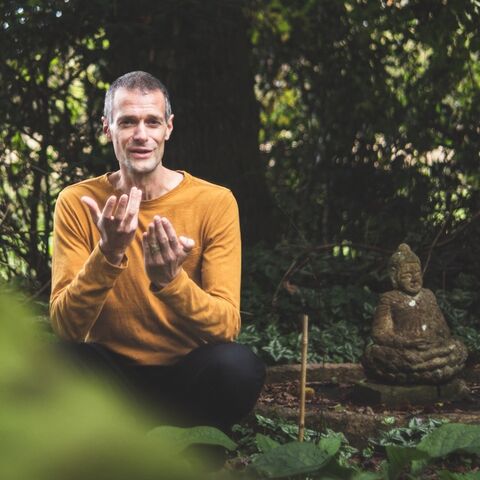
You're listening to another meditation Q&A with Wendy Nash and Josh DuPont on the Integrating Presence podcast.
And today,
Again,
Once again,
The lovely Wendy Nash with me back again for our meditation Q&A.
This is number six.
Wendy,
What's going on?
How are you?
Yeah,
I'm good.
I'm good.
I'm writing all about my favorite topic.
Just before we came on,
I was writing all about my favorite topic,
Which is about active travel,
How to think about our cities and our urban areas in a way that doesn't involve a car.
And since our Q&A today is meditation on love,
What do we do,
You and me,
What do we do in our things?
You know,
Engaged Buddhism,
As Thich Nhat Hanh calls it,
Is part of the practice because I get these documents from the council and I'm like,
No!
And so I have to think about love.
So there we are.
I would really love to see the other Insight Timer and also YouTube.
So if you put them in the link,
Then I'll be able to see that.
And I'll see if there are any questions.
I'm going to put the link to the Insight Timer so Wendy can take a look at that.
And if in my YouTube channel is youtube.
Com slash at Integrating Presence,
I'm going to put that in link.
So it's just you and me.
I think now there's one person we have at the moment.
So I apologize,
We're running just a little bit behind.
So last time we talked mostly about the Brahma-Vihara practices,
Right?
We went into detail about those and spent a little time on loving kindness,
Read the Mettā Sutta,
Also talked a little about forgiveness.
I wanted to do,
Since I'm calling this,
I think I'm calling this Love Heart Practices.
So I just wanted to give a little rundown of all the ones that came to mind.
I had a little bitty download and I wrote these down.
So we also talked about gratitude.
So we've got the Brahma-Viharas,
Which are loving kindness,
Compassion,
Rejoicing,
And equanimity.
And then we talked about gratitude,
Forgiveness.
One that also came up for me,
This is not around my alley so much,
Is devotion practice.
So this dedication and devotion to someone or something.
And I think it comes in with faith too.
Faith practice is not the same as belief,
But we can be inspired by faith,
Inspired by something.
We can have a bright faith,
See how it can benefit us and help us.
And then we can have a verified faith where we can actually verify the benefit of this for ourselves.
Empathy is an interesting one too.
I think it's called Appamata in Pali.
Being empathic,
Feeling what another feels.
Another thing is Chanda.
This is a desire,
But like a healthy enthusiasm,
An aspiration,
I guess,
A desire towards things that are wholesome and spiritual practice.
So usually we might have a sense desires,
But we can actually have a wholesome desire for things that are going to benefit us and others.
Samvega,
This is this Pali word that means like a spiritual urgency.
It's like this moment of waking up,
Oh crap,
I got to do this.
I mean,
It's very urgent for me to do.
This can almost be like a life-saving thing.
When my ass got kicked into gear,
When I hit rock bottom,
And I realized,
Oh shit,
I've wasted so much time.
Just waking up to how important this really is.
Generosity.
I know Wendy and I were talking a little bit before the last show about maybe how we could bring generosity when we're talking about certain relationships.
And maybe we'll talk a little bit about all the different ideas we've thrown around trying to plan for this show.
But another one is relaxation.
It doesn't really think of a heart practice,
But for some people,
I have to really sit there and some people really need to unwind.
It's almost like an act of self-care and self-kindness.
Vulnerability.
This is how the heart opens.
We talked a little bit about armoring last time and how we think not being vulnerable will protect us.
Maybe sometimes it does,
But it's hard to connect when our heart is so shielded and hardened and about opening up and being vulnerable from time to time.
Acceptance.
But this is also to be balanced with assertiveness,
Forthrightness,
Diligence,
And ardency.
But the passive side of this is acceptance other than abusive relationships.
That's nothing to accept.
And just a few more here.
Encouragement and empowerment.
I think those are also more minor and not traditional things,
But encouraging one another,
Empowering one another.
Safety though.
We talked a little bit about safety last time.
Maybe we'll go into this when we talk more about Brahma Viharas,
But I think this is hugely important.
And healing.
Whatever that might mean to you,
Me,
Us.
Healing and letting go too.
It's more of a wisdom-based practice,
But I think there's a heart element in letting go as well.
But I think today,
Wendy and I try to keep true to the name of this show.
We're going to kind of ask each other some questions about our own practice.
Then we'll maybe ask you guys about your practices as well.
Some questions about your heart practices.
And feel free to ask us questions.
That's what we usually invite folks to ask questions about their meditation practice or anything somewhat related or whatnot.
And to maybe get more engagement,
We're going to try to ask some questions of the audience too as well of each other.
So I threw a lot out there,
Wendy.
Is anything coming to mind you'd like to pick up on?
Well first up,
I guess this is to me about love,
Care,
Respect at a practice.
So I'm in Australia and the Aboriginal people have been,
First Nations people have been living here for,
We had a figure the other day and it was between 55 and 65,
000 years.
So that's now,
It came from,
It's one country.
So what is now Papua New Guinea,
Which is a bit to the north,
And Tasmania,
Which is part of Australia,
But is a separate island to the south.
All that is called Suhul.
And so people came down through there and in the space of 10,
000 years,
They covered,
They populated the whole country,
The whole land in like millions and millions of people.
So I think it's really important to acknowledge the country that I'm calling from,
And I'm calling from Gabi Gabi country.
And to,
I guess I think it's really important to recognize that they are people who have shown a lot of love,
Care,
And respect,
And veneration,
And devotion,
All those things that you described in your opening.
You know,
Communities,
Keeping it together.
Now it wasn't all sweet and light.
There was a lot of stuff that went on down.
So let's not be,
You know,
No bull savage idealization kind of thing.
But I think it is really important to recognize that we are on stolen country,
And that that recognition kind of being the recipient of stolen property that you can't give back,
And what can I do to show care for the people whose lives have been very seriously impacted by that injustice,
That crime,
That violence.
And so that's why I like to say I am on Gabi Gabi country.
It is a kind of loving kindness practice.
So that's one of the loving kindness practices that I do.
Yeah.
But also just a heads up for people who aren't familiar with the term Brahma Viharas,
There is another term,
The immeasurables,
Which I find easier to understand than the divine abodes or.
.
.
Yeah,
It doesn't mean anything to me,
Brahma Viharas.
I'm not a Brahmin,
And I don't live in a Vihara,
Which is a.
.
.
Dwelling place.
How do you translate dwelling place?
Like,
You know.
.
.
Definitely a mode,
Yeah.
Yeah.
It's good.
And we mentioned this last time,
And I like sublime abidings,
You know?
What are we living in?
Are we living in a squalor of the mind and heart?
Are we living in a bright and radiant heart?
Or maybe we aspire to live in a nice neighborhood of our minds and hearts,
You know?
It's like.
.
.
And the whole term with this,
From what I understand,
Is the Buddha.
It's like,
You know,
A lot of religions,
There's so much good to them.
It's always like the next life,
You know,
Getting there the next time,
The next time.
But here and now,
You can abide in the goodness of all those lovely heavenly states.
It's present here and now.
It doesn't have to wait until some other time or some other place,
Right?
We have this opportunity to live in these beautiful and immeasurable.
.
.
I like that,
Because there is no limit,
You know?
It's not like,
Oh,
I'm going to steal a little bit of your kindness here,
And that's not enough for you anymore.
It's not based on scarcity,
Right?
There's no limit to it.
So yes,
It's.
.
.
And then the native practices as well.
You know,
Currently I'm in Denmark,
So this is a good reminder to me to learn more history about the native people here.
But in the States,
I know I can definitely recognize with that.
In Missouri,
There's the Trail of Tears.
So literally march the native people off the land of Missouri through a trail of tears where so many died to put in reservations.
I'm not sure that the term that's most used now where,
You know.
.
.
So they wanted them out of certain areas and in other areas.
And there was just.
.
.
Exactly,
There's so much kind of lack of recognition,
Just the simple recognition that Wendy gives as well,
That it's not all dominated by Europeans and kind of covered up and sanitized with all the bloodshed and the wars that were going on to move Native Americans out of certain areas and into other areas,
Because so many different reasons that I'm not really up on exactly how it all went down.
But I mean,
There's kind of still a sense of sadness on the land around that.
And for the very least,
I encourage any time we can acknowledge that in the right ways to and without being overly worried about if I'm doing it right or not.
It's like,
Tune into my own heart and how it feels for me and what's really helpful with that,
You know,
Without causing any more harm.
So the whole point is to do less harm than was done in the past.
We clean up,
Leave a place better than I found it.
Yeah.
You know,
Yeah.
So first up,
I just wanted to ask,
We have 16 meditators here.
And if any one of our 16 guests would like to put in a comment,
We will answer it.
You can say that,
You know,
I love my cat.
That's fine.
That's a form of meditation.
It's just nice to see who's here.
And there was something there that you said,
What was your final sentence there?
I can't remember.
Oh,
Leaving a place better than we found it.
Ah,
Yeah.
Okay.
So I was in a house and I was raised always.
Leave it better than when you found it.
But at some level,
Actually,
That is saying that what is here is a bit rubbish and I can do better than what is here.
So you have to be careful that you're not insulting someone and you're not saying,
Well,
You're a slob or you don't know how to keep house or whatever it is.
So I think I learned the lesson that that is a kind of form of superiority in a way.
Yeah.
That's a really important point,
Wendy.
And you can definitely get into that really easily.
And so this is another practice.
I'm just looking at the point of if I go to a campsite or go outside in the States here in Denmark,
It's a lot cleaner,
But there there's there if there's trash and of course,
I'm an Eagle Scout,
Right?
So lots of distortions and things in that,
But a lot of good too.
So if I'm going to a place or then I want to,
When I leave the place,
At least I want to keep it cleaner than I found it.
So we'll just go with this example.
Right.
If I go to a space that I'm going to be living at a little bit,
Then I probably want to clean up the trash that's been there.
However,
How do I do it?
So I noticed within myself,
When I start picking up pieces of other people's trash where I'm living or where I lived,
Then I can get really self-righteous and judgmental and blaming.
Okay.
Now it doesn't make it glittering,
Right?
But,
And at the same time,
Okay,
Well,
What am I perceiving about other people?
I don't even know what,
How that got there.
It could have blown out of the trash can from when the trash people were taken away.
Imagine if we didn't have trash people and we had all this stuff had to build up.
What if somebody is having a horrible day,
They're going through horrible life circumstances and then just happens to just not be mindful of when they're doing or,
You know,
Or,
You know,
Just,
It just blows out of the car.
It could be a million things.
It can also be somebody that's really kind of crappy and say,
I'm better.
I mean,
I don't care.
I'm just going to throw it here.
Who gives a care?
I don't,
You know,
Screw it.
Somebody else's job.
Well,
Then I think,
I think,
I think we're off track.
I think we're off track.
So we said we were not going to get sidetracked.
We were absolutely going to go on.
Very good point.
The point is,
What are our loving kindness practices?
Yes.
So how,
Okay.
So I think the cat comment is really good.
Sorry about that.
So how do you guys show kindness in your life to yourselves and others?
And this can include cats.
I know the very first practice and I want to,
We're going to get into the Tibetan practices and versions of this,
Because I want to be educated too.
I know very little about the beautiful Tibetan traditions out there.
I know one of the classic ways to do Bravo Haras,
I mean,
Loving kindness is starting off with someone where it's really easy to show loving kindness.
And it's because our relationships are so complicated.
A lot of times,
So emotionally charged.
It's easy to pick somewhere where there's not a lot of emotional complications.
And one of that is with the pet,
Right?
With a pet,
Because they're just there to show love and receive love and get love.
So that's where it's a lot of times people can really connect with an authentic sense of kindness in their hearts with their pet.
So I want to ask Wendy and then other people listening into how do you connect?
Like who would you connect that you feel safe with sharing?
That where things just flow naturally,
This friendliness,
This kindness,
This well-wishing,
This goodness.
I would say my niece and nephew for me.
I flip it on its head,
Actually.
So I was going to pull out the book by John McCransky,
Awakening Through Love,
Which I can't seem to find for a moment.
And this is one of,
If you guys work individually with Wendy,
This is one of the books that she's requires you to read.
Is that right,
Wendy?
This is one of the- It's one of the sort of,
You know,
Some people like a book.
And so that's the one.
And I also recommend Sam Harris' Waking Up as an app.
So that,
And I recommend Tricycle if you're into magazines.
So that's your kind of avenue.
So with Awakening Through Love,
I didn't,
I mean,
I just didn't feel love.
My heart was hard and it was difficult.
So what I,
What I do as my practice is I focus on the ways that people are kind to me.
So I focus on something as simple as you and I are in this call together and it's an amicable call and you turn up and I turn up and you have done a bit of prep work.
You've thought about it,
So have I.
And we've got 20 meditators here,
Which means they've got,
I mean,
I don't know,
They might be cooking dinner or something because it's that time of the day here.
But there is an intention to engage with what we offer,
Which is so they have a presence.
They share their presence with us.
That's an,
They don't,
They could be,
I don't know,
Watching the telly and doing something else.
But instead,
They're,
You know,
Our people here are actually spending time with us,
Taking time out of their day to work with this.
And so I prefer to do that.
And I said that I'm reviewing a document at the moment that Council's provided about active travel.
And so active travel and public transport,
Mass transit,
These are,
Yeah,
So this is,
I guess,
One of my acts of love and kindness is how do I apply my love for humanity,
Actually.
And it's through this because I want everybody to be able to get around without having to buy a car because it costs a friggin' nudge,
And you know,
Only so few people can do it.
So I'm sitting here reading this document,
And I'm swearing and cursing at how much is not there.
But actually,
There's also a lot of good intention in there and a lot of,
I've met,
I've met and had conversations with a couple of these people.
And they are good and kind people who really care.
They're really passionate about it,
Actually.
So they're trying to put forward ideas in a way that is going to be manageable by the society,
By the community.
And I'm replying to what they've put forward.
And I guess my act of kindness is to try and find the good that they are doing.
So that's enough for me.
That's more than enough.
But I do have another practice that I have.
And I got a funny sort of,
I got a package and a brief note from somebody who I have a strained relationship with.
And as I got this package and the note,
I was just like,
That is such a weird letter.
I do not understand that person at all.
Like,
I was really like,
What?
What is this person on about?
How can they move through the world like that?
So I'm not compassionate in that moment.
But I am kind of trying to figure it out.
And then I realized what I did this morning in my own practice is this morning is I brought to mind this person.
And I thought,
I am that person's difficult person.
So if you were to do,
So your practice,
Which is from the Abhidharma,
Where you start,
May I be well,
May I be happy,
May I be at peace.
May my good friend be well,
Be happy,
Be at peace.
May a neutral person,
Somebody I don't know,
Maybe,
I don't know,
Somebody in the office who you just see their face,
You don't have any interaction with.
May this person be well,
Be happy,
Be at peace.
And a difficult person pisses you off.
And then the whole world.
And so I am that person's difficult person.
You know,
And I don't want to be that difficult person,
But I am that difficult person.
And that person finds me absolutely baffling.
Why am I so difficult?
I'm sure that's what that person thinks.
After,
You know,
I do all these things and I try and get it right,
But nothing,
Nothing is good enough.
Nothing is right.
And so I am difficult.
And I find that a really good meta practice because it stops that thing where the self-righteous,
I'm doing good,
Bestowing good onto other people.
So that's one,
They're the practices that I like.
That's,
It is beautiful.
And to think,
Yeah,
That's a really good way to flip that difficult person around,
Right?
Because who knows,
I'm probably their difficult person too,
Or even if not.
And yeah,
It's good.
You said,
And also what I picked up on is you said,
You said,
You're sure there's something.
And I'm like,
Oh,
Really,
Wendy,
How do you,
Are you really sure about that?
I forget exactly what you said there,
But sometimes what this often does too,
Is it makes what I kind of,
I have this idea about something and a lot of times it's right,
But a lot of times it's not.
But however,
These practices will kind of put me in a mind and heart space where when I go,
Then when I finally do maybe have a chance to sit down and interact and find out,
You know,
What's going on,
If it's appropriate time with this person,
You know,
If they're in a space to talk more than,
You know,
Open up a little bit more than other,
Their fixed view about how I am,
Right.
Maybe they might have a little wedge in there to kind of get more of an idea of how they view me and what's really going on in their mind when they think about me,
You know,
And what's,
You know,
What's just niceties and what's more honest and real or it's in the,
Then,
You know,
It just,
It kind of gets me in a place where I can be more willing to be with challenges too.
I know in my own practice this morning,
Since we were doing loving kindness,
A little bit of a humble brag here.
Yesterday we went to Munchland in Denmark and it's this huge place by the sea.
Denmark is really kind of low lying,
But this is a really huge rock out,
Out facing on the sea and it kind of bins in and out and there's a huge amount of air element or wind going on all the time there.
It's a mix between chalk and and Flint.
So this very smooth,
Very crumbly rock,
But with a really,
And then mixed with a really hard rock.
So,
I mean the condition is real,
Really challenging.
But so one of the kind of things I could do for myself when I got home is just sit in meditation and just do nothing,
You know,
Just kind of let my nervousness,
My anxiety,
Nervous system catch up with me or me catching up with my nervous system.
And by the time of my meditation got done,
I was just about ready to be at a point where I could start meditating,
You know,
But yeah,
Sometimes the kindest thing I can do for myself and others is remove myself from the situation,
Right.
Or allow others to be how they are,
You know,
A girlfriend and a friend that was a new friend that was there.
And they just kind of went in their own little space and just kind of chilled out and weren't social.
But that was,
That was provided the space to talk to the driver.
And so they could,
You know,
Go offline for a while,
You know,
Because that's what they needed.
I'm laughing because when I met my partner sort of almost three years ago,
Two and a half,
Whatever it was years ago,
We were walking along and it was sort of,
I think our first date or something,
And he said something and I said,
Oh,
You know,
Is it okay if I do such and such?
And I said,
Oh,
You just do your thing,
Lovey.
And he just got up a bit,
You don't condescend to me,
Da,
Da,
Da.
And I was like,
Okay,
All right,
Well,
I've clearly done something,
This is like first date,
Whoops.
And then,
And actually,
You just do your thing,
Lovey,
Is such a staple now in our relationship.
And letting someone be able to do the thing that gives them a space,
A sense that they are able to be present,
You know,
If that's what makes you happy,
You just do your thing,
Lovey.
So there is something really lovely about the permission to,
Because sometimes I think,
Oh,
Should I do that,
Am I being hard,
And by withdrawing,
Can I do that?
And just that simple acknowledgement,
You know,
You just do your thing,
Lovey,
Then it just,
It's so nice to have that permission.
That is an act of love.
It really is.
And it's also giving ourselves permission a lot of times,
Allowing,
Yes,
This allowing practice.
But one of the topics,
Wendy and I thrown around for potential is this notion of being generous in relationships,
Right?
And we can be,
You know,
It doesn't have to be even intimate relationships,
But here's a question for you guys.
How do you be,
How are you generous in relationships?
And this includes being generous to yourself,
To a relationship with yourself,
Or let's just say my part of myself,
Being generous to myself in relationship to,
Now generosity,
Of course,
Doesn't have to be money all the time,
Right?
It can be like Wendy was talking about our presence and being available,
You know,
Emotionally,
Spiritually,
Physically,
You know,
Psychically,
Even if we're going to go that way,
Our expertise,
Offering our being generous with our expertise and,
You know,
I guess whatever qualities we have that we want to be generous with.
So to answer my own question,
I'm going to say,
I don't know right now.
I want to sit with this and hear what Wendy has to say.
That's yeah.
In order to go back one other comment I wanted to make too,
With,
We were talking about the councils and things like this.
And it's,
For me,
I have to hold back a lot of times because a lot of times I want to go in there and I want to say,
Okay,
Yes,
I totally honor and respect the good part of this.
It's coming from a good heart,
But I see these distortions.
And if only these distortions were cleared,
Even more goodness can come through.
But you know,
I might even give more distortions by doing that.
So,
But when I do,
I've learned the hard way.
I really only try to correct people if they ask,
If they ask for my advice.
Right.
However,
Wendy did say Abhidhamma,
Which is actually the Vasudhi Maga.
Anyway,
It's just technical detail.
Right.
Yeah.
But,
But this is,
This is a thing,
You know,
And then even if we are asked to,
For feedback and advice,
How do we do it in the best way?
Because things,
Some people can be very touchy about things,
Right?
If we push the wrong button,
Say the wrong thing.
So then I have to start,
Well,
Do I need to walk on eggshells around this person or what?
Then there's other people who probably need a little bit more of that.
Like me,
I'm probably way too wide open and invite too many things in sometimes.
But you know,
It's this balancing act of how are,
How are we going to bring to the table when somebody asks for advice and wisdom too.
Okay.
So I think I put enough things out there.
Let me,
The questions I asked were,
Okay,
How do you show generosity in relationship?
And then the other main thing is kind of when people ask for advice and wisdom and how we dole it out and how don't we dole it out.
Right.
And same for you guys too.
Please share if someone comes to you for advice and wisdom,
You know,
How do you deal with it?
What are your,
What are your standards for doing that?
Or how do you go about that?
I've been looking while you've been talking,
I've been looking at the five,
I've got five people at the bottom of the screen.
Let me see if I can bring up more,
Uh,
Who,
Uh,
No,
Only five.
So five people who are at the bottom of my screen and we have people in France and we have people in England.
Are you talking about on YouTube or are you talking about insight timer?
Insight timer.
Okay.
Yes.
I actually chose 36,
Mine shows 36 and there's eight people.
I've got,
Okay.
I've only got four people,
Four baubles bouncing around.
Oh,
I see.
Yeah.
Yeah.
Yeah.
Same here.
Okay.
So I was thinking about generosity and love and one of the topics that,
Uh,
Josh,
You and I were chatting about is the curly topic of inheritance.
So I've heard lots of stories where it,
It,
Inheritance is,
You know,
What we inherit is,
Is really an expression of love.
That's how we see,
Did that person love me?
And I've heard situate,
It's a complex thing because money is finite and if somebody doesn't have an enormous estate,
Well,
That's a thing.
If somebody has a huge estate,
Then that's thing.
So,
Um,
Uh,
What was that name of the beetle who got killed?
I've suddenly gone,
Drawn a blank.
Well the beetles we've got Ringo,
Uh,
No,
No,
John Lennon,
Of course.
John Lennon.
That's who it was.
So he apparently put a clause in his will,
Which said anyone who contests the will is instantly cut out of it because he just knew how many people would be championed a bit for it.
So that's a very interesting thing.
But I've known lots of situations where you have an older family,
Children from a first marriage and when the,
It's usually the father dies and they've had kids by a second wife,
Then all the money goes to the second wife and the second children,
Which is yet more abandonment.
And that is really,
The older children get very incensed by that and very hurt.
And then I also heard the story about,
And that one I've heard lots and lots and lots,
Or even if there's no children together,
Then it all goes to the second wife.
And so the children of the first marriage don't get anything,
Even if that was the house that that child was raised in.
Really complicated stuff.
And then I heard the story about a guy who had had to give up his work in order to care for the parents.
And when they died,
The parents left,
Split it exactly 50-50 between the two children.
Now the other son had,
Was a very wealthy solicitor.
So because it went right down,
Straight down the middle,
The house had to be sold.
And so this person who'd been living in that house,
Caring,
Who had given up their work,
Suddenly found themselves really in a much worse situation.
There had been no,
I guess,
Compensation for the fact that this child had really put themselves out for the care of the parents.
So I think inheritance is a really complex question when it comes to love.
And how do you do that?
One of the Tibetan practices that I really like,
And I did this with a client when he was,
When he was thinking about how am I going to allocate all the shares with the other co-founders when they're not pulling their weight.
So it's a very complex process to think about.
And there is a practice where you put,
You imagine you've got all your wealth,
You get your wallet or purse or something.
And then you imagine giving them everything.
So you have nothing.
And then you imagine not giving anything.
And then testing it,
Imagine giving some or a bit and then sussing out what feels good.
And that's actually a monastic practice.
So before you go into become a monk,
You try that.
And then you see what you're still really attached to,
Your big most favorite possession,
You know,
Something very dear that has been a gift from someone.
I find that's a really good practice on generosity because it really gives,
You can't cheat with it.
And there's another one on the metta bhavana practice,
The standard loving kindness meditation practice where you've got,
You know,
May I be well,
May I be happy.
So I guess these days you don't have so many meditation halls,
You know,
So many have closed down due to COVID.
But if you're doing loving kindness meditation in a group,
Then instead of saying,
May I be well,
May I be happy,
Bring to mind somebody in the room who is with you and they are wishing you to be,
They're wishing themselves to be well.
And then somebody who likes you and then somebody you feel,
Somebody you don't really know.
And then somebody who thinks you're a pain in the ass and then everybody in the whole room and just see,
See how that lands.
Cause it's really shitty when you have somebody who's,
Who,
Who they're sending you loving kindness and you don't like them.
It was like,
Oh,
Piss off,
You know?
So yeah,
We talked about this last time,
Right?
Really we don't hear so much about the receiving end of this,
But just think of how many thousands of practitioners in any given moment are sending loving kindness to all beings everywhere.
And so if we get exhausted or we think we have to send it out there,
What about just sitting back and basking in that goodness?
And it's even more immediate if we're in the same room with someone.
Yeah.
Like Wendy mentioned,
That is a really good thing,
Right?
Cause it's not just a one way street here.
Yeah.
Now this inheritance thing,
It really fascinates me.
So me being,
You know,
A guy and more practical,
Right?
And want to fix everything sometimes.
I would just offer to not,
Not,
Not,
I'm going to solve all the world's inheritance problems by this,
But you know,
What would it be like to just invite everybody,
You know,
In a,
At a time and just talk about these things.
The thing is there's so much emotionality involved in this.
I would say a lot of entitlement involved here too,
A lot of righteousness.
And then it just brings up past memories around people,
Around things.
Now for me,
The way I look at this is,
You know,
This is what if I was okay with getting absolutely nothing?
You know how would I feel about that?
You know,
In sitting with that practice too.
And now Wendy mentioned the monastic practice.
It's really good,
But now think of being on the receiving end of this.
Okay.
What if I did that,
Get absolutely nothing inheritance from,
Which is easy for me to say actually,
Because you know,
I've actually received a little bit of early inheritance,
Probably too much personal information here.
So just,
Just keep that in mind.
It's easier for me to say that,
Right?
Not a lot,
But but the thing is,
What would it be like if I got nothing?
What if I,
You know,
How would I,
How would I take that?
And then the opposite extreme,
What if I somehow found out about some rich uncle or somebody came into a ton of money right before their death and then left me everything,
You know,
And like John,
He had the opposite problem.
Like he is,
Cause there's going to be so many people after that,
Right?
Or somebody wins the lottery.
People come out of the woodworks and say,
Your friend,
How am I going to do that?
Now I have all this responsibility that I have.
People would say it's great,
But some people would be like,
No,
There's going to be,
You know,
My life will never be the same.
I'm going to have to,
You know,
Have so much more,
You know,
More money,
More problems,
As they say.
So this is a great practice.
And I hear in the monastic life that you can't,
You can't even ordain if you have debt.
And I guess the,
In some traditions,
Because one of the things was people would escape debt.
They would just run away from it and go ordain.
And then nobody would go after a monk,
Right?
Because they've,
They're fairly well protected and society and things like this.
So they weren't allowed to even ordain if they were in debt.
So this is another thing,
Right?
Yep.
So it was like,
What would,
And then this is,
Speaking of generosity,
By the way,
Okay,
If you're on Insight Timer,
We're encouraged on the live events to ask for donations and how it will help us.
And of course it will help pay the website bills,
Of course.
And so I can still do this,
But this is a standard generosity practice,
Like,
And for lay practitioners and just anybody in general.
What is it like to,
Before I give a gift,
Before I give an act of generosity,
What do I feel like?
How does it land on me?
You know,
How is my heart?
Then again,
When I'm giving,
And then again afterwards as well.
So,
And I like Whitney's practice,
How it takes it even further by,
You know,
Imagining the amounts,
Right?
And then this is,
It ties it into a mindfulness of death too,
Because this is,
You know,
Our inheritance.
We're going to be gone after this,
Right?
So this is a mindfulness of death to the inevitable that we're not,
No one is going to be able to take anything with us.
So how much is it really worth to get upset,
You know,
Prolonged amount of time over this when we can't even,
You know,
We can't take anything with us anyway?
I think,
You know,
But I have,
I have seen people say,
Oh,
You know,
When my,
When my father died,
When my,
You know,
It was all fine.
I was totally at peace with it.
It was all fine.
I just,
To me,
I think,
Wow,
That sounds like spiritual bypassing.
So I think it is important to acknowledge that things wrinkle,
That it's not easy.
It's not comfortable.
It's not pleasant.
And to me,
That's where the work is,
Not to say I'm a good person,
I'm all over it,
You know,
I'm cured,
But to say,
Oh,
Wow,
Actually,
This is,
This is difficult practice.
And I think that's why so much.
So I want to go back a little bit to the,
We talked about loving kindness meditation.
Yeah,
I think,
Honestly,
Yeah,
That's the big thing about this.
Are we lying to ourselves about this?
And I think,
You know,
One of the things that I have heard,
And I see this too,
And certainly this was my case,
Is I found it really difficult to do loving kindness meditation because love was so strongly associated with romance,
It was associated with my sense of worth as a person,
It reflected the difficult relationships with people in my family.
I'd also struggled with the fact that I was often single.
So it was,
It felt more like it was an unloved meditation more than a love meditation,
A meditation about feeling unloved than a meditation about feeling loved.
And yeah,
I guess where am I going with that?
But I think there is something important to say.
Loving kindness meditation is not easy.
And in fact,
It's so twisty in our society,
A lot of teachers don't even call it loving kindness practice anymore.
They call it something else,
You know,
Goodwill or benefaction or something.
I like unstoppable friendliness.
In this,
It's a well-wishing too.
I know I can just echo Wendy's statement.
When I first started this,
All of a sudden I started remembering all these times the exact opposite.
And I think this is fairly common,
Especially amongst practitioners first starting a loving kindness practice.
The exact opposite of what we want comes up.
And at the same time,
I look at that in retrospect as what needed to come up as a type of cleansing and purification.
I would see how I treated myself,
Like really low quality,
But also other people.
And it was really heart wrenching to kind of see that in the mind's eye and relive that and actually weep during that process a lot of times too.
You know,
I was by myself,
But then it was just,
It felt like a relief to have that come up,
You know,
Because,
Oh wow,
You know,
This is,
It really hurt that time,
You know,
Oh,
I could have really hurt that other person.
I didn't really mean to do that,
You know,
Or I can see how they want to be happy just like me.
Right.
To now where it kind of evolves into,
Yes,
I liked it.
I like when people are friendly to me.
That feels good.
It feels actually really good to have someone authentically friendly towards me.
Maybe if I'm not having a,
If I'm having a bad day,
I'm just going to like,
Yeah,
Whatever.
Now I happen to be so happy kind of thing.
Right.
But at the most part,
And then more than likely people are going to reciprocate in a similar way that we put forth.
Right.
Or we will reciprocate a lot of times to match the energy of what's coming at us.
So of course it's,
It's,
It seems beneficial if I at least don't cause any more problems for people.
People have enough problems and issues they're dealing with too.
I don't need to contribute any more to that.
And that's how I would like to be treated too.
You know,
This,
This kind of cheesy or,
But also helpful golden rule,
Treat other people like we'd like to be treated.
Right.
So imagine how if someone,
What is it?
Here's a question for Wendy in the audience.
How would you like people to treat you?
Right.
How,
How would I like to be treated by,
You know,
Different people in my life,
My friends,
My family,
Myself,
My enemies,
How would I want to have them treat me?
And I love this other question that's kind of along the same lines is if,
What would the world look like if everybody was doing what I was doing?
So this is more of a rhetorical question,
But you know,
It really makes me think about the things that,
You know,
I think I can get away with or,
You know,
Oh,
It's no big deal.
You can do this.
But what if everybody was doing exactly what I was doing?
What would the world?
So yeah,
I want to get it back to the Q and A of meditation.
Yes.
Okay.
So,
So how does this look like in a meditation practice?
Okay.
So,
So I,
I remembered there was a meditation tricycle.
I was reading it,
An article,
And there was a practice called Naikan.
It's a Zen practice,
I guess.
And there are three questions.
So he describes,
He goes on retreat for a week and the only practice he does is these three questions.
And he says,
What have I received from others?
And then the next question is,
What have I given to others?
Which I think ties in with what you're saying there.
And what troubles and difficulties have I caused others?
And I think that's a,
That's quite nice,
Because then it starts to be,
Oh,
Dear.
Oh,
Dear.
And,
And we don't,
We always want to see ourselves as the good guy.
And I think seeing ourselves as the difficult person,
The trouble,
We are the troublemakers.
I find that it's very humbling.
And just,
I think it's really easy to,
So I've met a couple of people who follow a similar,
Slightly different path,
Which is Advaita,
And they have recognized no self,
But there isn't the loving kindness part of it that I can't see that as part of that practice.
And so here are these people who are really clear,
They see really clearly.
But you know,
In Buddhism,
We talk about there are two wings of a bird,
Wisdom and compassion.
You need to have compassion,
But too much is no good,
And not enough is no good.
And in fact,
I was anyway,
I'm digressing here.
We're so excited about all the different things.
So what was your question,
Josh?
So we're going to look at these more in the meditation practice.
And I'm glad you brought up that Zen practice,
Because that's kind of what I was getting at,
Right?
So these is a formal practice,
You know?
How do these really land in the heart when we're doing our method practice on the cushion,
You know?
Really tuning into how this feels in the body,
In the heart,
In the mind,
When we're wishing well to other people.
Yeah.
And how would,
Like Wendy was saying,
The practice of just the imagining of what other people,
How does it land when we practice about receiving loving kindness,
Friendliness,
Goodwill,
Non-ill will?
How does that land in the heart?
And then,
Yeah,
If we're doing more of a contemplation practice,
What are the benefits of this?
How can we see this benefit off the cushion?
I guess I wanted to talk about maybe,
Is it called Tonglin,
The Tibetan practice?
Yeah,
We can talk about that in a sec,
But I wanted to ask about,
And then also,
How do we take this off the cushion?
How do we practice this in our everyday lives?
As more of a formal practice,
Though,
It's hard to do this when we're interacting.
When we're interacting,
It's just kind of our practice,
The fruit of our practice can kind of come through,
Right?
I mean,
I'm sure there's artificial methods for us,
Like doing eye gazing and wishing each other well and things like this.
And those are beautiful,
Kind of more public,
Or interactive practice,
Like meditation circling and these,
What do you call them,
Dyad practice.
And there's insight dialogue,
Which maybe we'll even do a show about at some point or something.
But I mean,
One of the things I do,
If I remember it,
If we're standing in line,
Or if I'm standing in line at the grocery store,
How can I at least bring less ill will towards what I'm viewing in the grocery store?
I mean,
Does my mind spin off to,
And when I'm in the States,
Look at all this GMO crap food with all the additives and poison in it.
Is that really going to do me or anybody good in that moment?
No,
Because it's already there,
Right?
It's not going to do me any good.
But what about the people that are there?
Why not?
I wish them well and health and happiness,
You know,
And the rest of their day,
Or,
You know,
Or even just acknowledge that they're in front of me and that they're not just taking up my time,
You know,
Part of a line,
Something like this,
You know,
Or just driving by people or just acknowledging that someone's passing me by in the store,
Instead of just jutting off to the aisle that I need to get something.
These really small acts of kindness,
We can bring these into our daily lives off the cushion.
I mean,
A lot of people have so much stuff going on,
There's not a lot of capacity for this,
But even just a remembering to do some of these things,
Right?
So I mean,
Wendy,
Do you do this in your daily life?
I mean,
I think the beautiful practice of giving acknowledgement to the native people on your land is a beautiful loving kindness practice,
Like you say.
Do you do anything else in daily life as far as kindness and these type of things?
Yeah,
I do,
Actually.
I tend to do my loving kindness practices in real life.
So in these moments,
I tend to do the one,
What is,
So what is the person giving me in this moment?
What is that person taking time out of their day for my well-being?
So something as simple as you've got a meeting and people have prepared documents for that meeting,
They have thought about what will work.
Because when we go to work,
We don't just work nine to five,
Or even if you work longer hours,
Eight to six.
You're not just there thinking about work during that time.
You're thinking about work outside that time.
So that's to just really notice all the contributions that people make.
That is,
I think,
One thing really lovely.
And I have found that that has changed the way that I am.
But there is also one of the things that I was really stuck with is that I was doing that,
But I also come from a family which is really condescending.
And so I had this unconscious stuff that was coming across as,
People would say,
You're so patronising.
And I was like,
What are they talking about?
I'm not,
I'm not,
I'm not.
And then just a couple of weeks ago,
I was sitting in the morning sitting,
And I was going,
I'm so condescending.
That's why they told me I was so condescending.
It's because I was condescending.
And so we can offer,
We can give,
Treat others as we would like to have done back to us.
But we don't know how we treat people sometimes.
You know,
And that was a big challenge.
Hey,
Josh,
Just so you know,
We've got seven minutes left.
Sure.
I,
It was a big trigger for me when people,
When I at least perceived other people to be condescending.
I really,
For whatever reason,
It really,
It kind of hurt or triggered something.
And then I,
One way I realised that when I was perceiving that,
It's just like,
Well,
You know,
Some people,
That's how they,
They distance themselves from the world,
Right?
So if there's a sense of condescending,
It's kind of like a protection mechanism a little bit,
Right?
And I find myself doing it too,
Right?
I don't think any of us have completely cut that off.
Now I want to just give shout out to Wendy too,
Because when we did our first very podcast,
Before we started these things,
She really acknowledged the fact that publicly that,
Thank you for doing these podcasts.
They take a lot of preparation and things like,
And you know,
And a lot of work.
And I just,
Wow,
Somebody finally acknowledged this.
And I was totally unconscious the entire time.
I was really looking for someone to acknowledge all the work it took because it,
You know,
It goes in behind the scenes.
And then once I just had that simple acknowledgement,
I had this realisation like,
Wow,
I was really seeking that from outside myself for so long,
You know?
And then there was just like this huge relief in this realisation that,
Wait a second,
I can give that to myself.
I really don't need it outside myself so much,
You know,
But it took that outside mirror to show that I was seeking for it outside myself.
And it was just like this aha moment and,
You know,
Yeah,
It was great.
So I just wanted to do that.
And the other thing that occurred to me,
We talked about,
It goes along the lines of some of these things we've talked about,
But this new term I've heard not too long ago,
Toxic positivity.
Oh,
I,
I know that term.
I grew up with it.
It used to be called positive thinking.
Yes.
And I always wanted to stop thinking about it.
It's actually helpful in a way,
But then some people take it too far,
Right?
And then it gets,
You get toxic too.
So,
Oh yeah.
I think the thing,
The way that,
So I had a bit of a conversation with somebody late last year about this,
Where it was about being really positive.
And I felt like,
Where is the,
Where is the line?
And you talked before about,
You know,
How do people see us and what do we want from our relationships?
What do we want from our connections?
And I want people to see my heart,
My,
My emotional landscape,
My,
That,
That's what's important to me.
But when I talk with family members,
They're only interested about where I've gone,
What I've done,
Where I live,
Where do,
What do I,
You know,
And they're not a materialistic family.
They're just not interested in the emotional landscape.
So it feels quite breath for me a lot of the time.
So there,
So where was I going with that?
So on the one hand,
There's this toxic positivity.
Yeah,
Hi,
It's so nice to meet you,
You know,
And I just go,
I'm so excited.
Like a lot of Americans do this.
I'm so excited.
I'm doing the podcast thing.
Oh,
This is such an exciting show.
And I'm thinking,
Do they do that every single show?
Yeah,
I'm really excited.
Really?
And to me,
It doesn't,
It doesn't feel sincere.
And there's something about when somebody is sincere and positive,
You can let the shit,
You can let crap in.
It doesn't have to be lovely and warm and kind.
You have,
But you do have to have emotional breadth and depth yourself to be able to manage that because as one of my relatives said to me,
Oh,
You're always dumping on me.
You know,
It's an emotional dump.
And actually,
I realized that that person doesn't have the capacity to understand the emotional landscape,
Which is why we have so many conflicts,
Actually.
Yeah,
And this is one that I struggle with too,
Is that,
You know,
Okay,
So this wise advice of people can only meet us as deeply if they've met themselves,
Right?
So if I'm looking for someone to get really involved and in deep things,
And I keep forgetting,
Oh,
Wait a second,
They don't do any of these practices.
It's just on the surface level.
And they do not have the capacity.
These will bring up things in people that they're not either not ready to deal with,
Or if they have no idea how,
You know,
How to deal with them.
So they don't have the tools if some of these things come up,
Right?
So I am constantly reminding myself of that.
And that just shows our power in a way and our responsibility.
I need,
Or we,
I can't speak for myself of what I'm,
You know,
What I can possibly bring up in people.
And are they able to handle it?
Or,
You know,
Most,
You know,
Thankfully,
Most people can sense right away.
And so they kind of distance themselves or only talk about very surface level things because it is a really deep thing.
Now,
On the other end,
I know I really involved like psychological and emotional depth.
However,
At the same time,
I also like to,
You know,
I'm the productive American,
I like to get things done.
And so sometimes I'm like,
Okay,
Well,
How much of an emotional process do I need to be with this person right now?
And it's just like,
In a way,
It's,
This is something I'm still grappling with.
Because if I think that way,
Then I'm kind of not valuing the other person as much too,
Right.
But and at the same time,
There's only so much time in the day as well.
So it's a balancing.
And then the,
I mean,
A more traditional masculine qualities,
Masculine,
It's not as fascinated in emotions,
Although I can go very deeply and be involved and be there and really appreciate the process.
At the same time,
Just know that there's a masculine quality that's more,
It's different a lot of times than our feminine qualities.
So it's,
Again,
It's a balancing act,
This type of thing.
Yeah.
Yeah,
We're at time Josh.
All right.
Well,
It says six o'clock according to my clock.
Yes,
I just turned this way.
So guys,
Thank you all so much for our,
At least considering to share your hearts with us and open your hearts and consider some of these practices.
All the things we did well,
Welcome to write in the questions.
So Wendy,
Why don't you leave folks with something here?
What would you like to leave?
What should I leave them with?
I think so.
We have a number of Americans I've been checking.
We have a number of Americans and Mr.
Rogers says,
Receive gracefully.
So always receive gracefully.
And I think that is a really beautiful practice.
And then you can be with who you are.
And the thing that I learned with family,
I'm a bit slow on the uptake for this one,
Is that they are essentially strangers who you happen to have blood ties with.
So you don't have anything in common with them except the fact that you have blood ties and some common experiences.
But effectively they're like office workers.
You don't have anything in common with them.
They are not friends.
Well,
I.
.
.
I mean,
Sometimes you're lucky,
But yeah.
Sure.
And I like to extrapolate this to other people too,
Because sometimes I can get,
Oh,
Wendy is like this.
Oh,
Wendy is this type of way.
But what if I went into it with a brand new stranger look every time?
That way I don't solidify my views towards someone and only see that this person's always late.
This person's always on time.
I know this person,
They're like this.
Well,
What if they're.
.
.
What if I went into it with fresh eyes every time?
And just like,
What can I learn new about this person today?
You know,
That I've never seen this way before.
That's right.
That's a really nice.
.
.
That's a really nice practice.
That's it.
We're over time,
Josh.
All right.
All right,
Guys.
Be well.
Thanks for listening.
Check out IntegratingPresence.
Com for show notes and similar material.