Hulness,
Welcome.
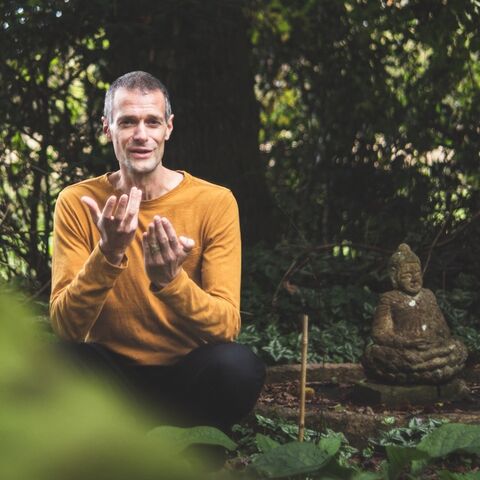
This is Josh DePolt,
IntegratingPresence.
Com.
And today's event is entitled,
Cultivate,
Develop,
Train,
And Progress Discernment.
And the description is,
We all need discernment,
But how?
Let's look at some ways to cultivate,
Develop,
And train,
And progress discernment.
While there's so much to discernment,
One key is,
Quote,
Dot,
Dot,
Dot,
One listening well gains discernment.
And this is from Atavaka's questions.
So before we jump in today,
Let's just either sit back if there's too much energy,
Or plenty of energy,
Or maybe come forward a little bit.
If,
Kind of,
You could use a little boost of energy.
And let's just,
If you're comfortable,
Close your eyes and take a few deep breaths.
Arrive in the room you're in,
The space you're in,
Wherever you're at.
Noticing any areas of tightness in the body,
Feeling them,
Inviting them to release and relax.
Letting the breath return to normal.
And for a brief moment,
Let's open to hearing and listening.
Hearing in general,
So notice what kind of auditory phenomenon is being noticed right now.
So for me,
I can hear a muffle of the neighbor's media,
I guess,
Whatever's playing on the media entertainment system.
You can notice a few birds,
Song,
Very light traffic sound,
Louder,
Refrigerator running a little bit,
And the sound of my voice when I'm speaking.
So let's just spend a few more moments opening to hearing.
I'm not necessarily focusing right now on any one particular object,
Sound,
Object of sound.
So opening to all sounds,
Hearing.
Okay,
Now welcome to pick any of these objects and listen for a moment.
Usually it's easier with the most predominant object,
The one our attention most naturally gets drawn to.
And we can notice how that might change too,
Like there might be competing,
Not necessarily competing,
But maybe we can perceive it as that.
Maybe one sound will be louder,
Taper off,
And then another sound will be louder.
And if there's no particular noticing of sound,
We can just notice the sound of silence as well.
So again,
Let's listen in to a particular object,
Particular sound.
And notice how we can also,
The mind can also focus in on one object and kind of exclude other objects to focus exclusively on a single object of sound.
And then before we close this brief introductory meditation,
Just notice our relationship to whatever we're listening to and looking back on just hearing in general.
What's our general relationship to that?
Likes,
Dislikes,
Other higher relational values.
Okay,
When you're ready,
You can open your eyes,
Bring yourself back to the room,
Space you're in.
And of course,
Continue meditating while I do this,
Especially since we focused in on sound and with the sound of my voice,
Right?
I'm gonna do a brief reading here from the suttas.
So this comes from SN 1020.
And a few things before I start here,
Actually before I even start with this,
I want to ask,
Reflect on our intent for discernment.
And what is our current motivation right now to practice,
Train,
Develop discernment?
It's the ability to judge well in Christian context,
Perception in the absence of judgment,
With a view to obtaining spiritual guidance and understanding.
So I don't know if I really like those as well.
It's kind of an evaluation,
The ability to evaluate.
I love this word evaluate,
Because so many of us get caught up on judging,
Right?
How there's people who want judgment and justice a lot.
For me,
It's more remedy and resolve,
Moving towards remedy and resolve.
But on the positive end of judging,
You need to take some authority in yourself to make decisions.
So either way,
If you want to just say judge and judging or evaluating,
The ability to judge well,
To discern.
That's discernment.
Okay,
So in this reading,
Probably mispronounced the locations,
And there's two definitions if you're not familiar.
Yaka is like a title or a class of being.
It's most of them,
And I'm pretty sure in this context,
It's like a demon.
And then an arhant,
This is the final stage of enlightenment.
I know that's kind of a gross oversimplification,
But pretty much their spiritual journey is done.
They've done everything they can do,
And they're pretty much considered fully enlightened and awakened with some other kind of stipulations.
And I'm not going to go into,
You can look at the definition on that.
It's a big topic too.
And then we'll be focusing on this one particular passage from the short sutta,
How does one gain discernment?
It's convinced of the arhant's dharma for attaining,
Unbinding,
Heatful observant.
One listening well gains discernment.
And that'll make more sense with the context of what I'll read.
And so this is from basically the sutta to this yaka,
This demon,
Alavaka.
I have heard that on one occasion the Blessed One was staying near Alavi in the haunt of the alavaka yaka where he lived.
And I'll probably interject here,
Maybe give a little clarification on some of this.
Then the alavaka yaka went to the Blessed One and on arrival,
A rival said to him,
Get out contemplative,
Saying,
All right my friend the blessed one went out.
Come in contemplative,
Saying,
All right my friend,
The Blessed One went in.
A second time,
A third time,
The alavaka yaka said to the Blessed One,
Get out contemplative,
All right,
My friend,
The Blessed One went out,
Come in contemplative,
All right,
My friend,
The Blessed One went in.
Then a fourth time the alavaka yaka said to the blessed one,
Get out contemplative.
I won't go out my friend.
Do what you have to do.
" And see in these,
There's in threes in the suttas a lot,
A lot of times something won't happen until it's asked three times.
But in this case,
It looks like that's being kind of abused here.
And so after three times,
It's the opposite where he's not listening anymore.
Buddha's not listening anymore.
This repeat.
Alivakayaka says,
I will ask you a question contemplative.
If you can't answer me,
I will possess your mind or rip open your heart or grabbing you by the feet,
Hurl you across the Ganges,
Big river in India.
And there's way more colorful stories and build up to this sutta.
I'll link to that in Wikipedia.
But back to the sutta here.
My friend,
I see no one in the cosmos with its Devas,
Kind of like angel beings,
I guess.
Mara's kind of like a king,
Demon on the highest levels in a way.
And Brahmas,
Another really high level beings.
It's contemplative in Brahmins,
Brahman's class in India.
It's royalty and common folk who could possess my mind or rip open my heart or grabbing me by the feet,
Hurl me across the Ganges.
But nevertheless,
Ask me what you wish.
There's like three sets of questions here.
Alivakas says,
What is a person's highest wealth?
What,
When well practiced,
Brings bliss?
What is the highest of savers,
Like savoring a food?
Living in what way is one's life called best?
Pretty good questions,
Huh?
The Buddha says,
Conviction is a person's highest wealth.
Dhamma,
Teachings of the Buddha and Truth,
When well practiced,
Brings bliss.
Truth is the highest of savers.
Living with discernment,
One's life is called best.
Alivakas says,
How does one cross over the flood?
How does one cross over the sea?
How does one overcome suffering and stress?
How is the person purified?
The Buddha says,
Through conviction,
One crosses over the flood.
Through heedfulness,
The sea.
Through persistence,
One overcomes suffering and stress.
Through discernment,
A person is purified.
And Alivakas says,
How does one gain discernment?
How does one find wealth?
How does one attain honor?
How does one bind friends to oneself?
Passing from this world to the next world,
How does one not grieve?
The Buddha says,
Convinced of the arhat's dhamma for attaining,
Unbinding,
Heatful,
Observant,
One listening well gains discernment.
Doing what's fitting,
Enduring burdens,
One with initiative finds wealth.
Through Truth,
One attains honor.
Giving binds friends to oneself.
Endowed with these four qualities,
Truth self-controls stamina relinquishment.
A householder of conviction on passing away does not grieve.
Now,
Go ask others,
Common brahmins and contemplatives,
If anything better than Truth self-controls stamina and relinquishment can be found.
Here can be found.
Alivakas says,
How could I go ask common brahmins and contemplatives?
Now that today I understand what benefits the next life,
It was truly for my well-being that the Awakened One came to stay in,
Alavi.
Today I understand where what is given bears great fruit.
I'll wander from village to village,
Town to town,
Paying homage to the Self-Awakened One and the true rightness of the Dhamma.
Again,
That's from SN 10.
12.
These teachings are tailored to a demon,
Kind of,
But when we just talk about discernment,
It was mentioned three ways here that it's the best way to live.
I mean,
That's a big claim,
Right?
Purification,
That's an interesting one.
Purifying oneself through discernment,
One,
A lot of other spiritual traditions think,
Well,
You have to do a lot of,
I don't know,
Rituals or,
You know,
Things like bathing in the Ganges,
Abstaining from lots of activities,
Maybe sexual activities or misconduct.
And so,
I'm not saying those things,
You know,
Aren't helpful,
But discernment can actually tell what needs to be done and what needs to be abstained from,
Relinquished and given up.
And then,
How does one gain discernment?
So,
This is the thing we'll focus on for the first part of this.
We'll go into more than just this part.
Convinced of the Arhat Dhamma for obtaining unbinding,
Heatful,
Observant,
One listening well gains discernment.
So,
This unbinding means,
Kind of,
Goes with the clinging,
Right?
That's another synonym for Nibbana,
Is an unbinding.
We think about,
We could just think about when we're entangled in something,
Right?
I mean,
Knotted up with this,
That,
And the other,
And how amazing it is when we can undo that knotting,
That entanglement,
Our binding,
You know,
It's something that's really,
We're bound to something,
Even though,
Even if we want to let go,
It's really hard to,
Because there's a binding,
A tying,
Some kind of outside force almost,
That's causing the clinging and attachment,
Right?
The unhealthy attachment.
So,
Listening,
You know,
How does listening do that?
It's a really cool question.
So,
We'll go into that here.
So,
We'll just start off with what we did a little bit in the meditation,
Was hearing and listening.
We can also look at it as seeing and looking.
So,
When we see,
It's different from looking,
Right?
Seeing is just being open,
And the visual phenomena,
Right?
So,
There's eye objects,
Then there's the physical eye,
We're just talking about external sight here,
And then when those two meet,
There's an eye consciousness.
So,
We can come conscious of what vision.
Same way with hearing.
Hearing is not really discerning auditory objects,
Auditory phenomenon.
There's the ear apparatus,
The ear organ.
There's objects of hearing,
And then when those meet,
There's sound consciousness,
Right?
Your consciousness.
But listening is the ability to tune in on one of those objects or multiple objects to pay attention on purpose to whatever particular sound phenomena there is.
So,
Our state of listening right now,
Let's take a little assessment of our state of listening now.
Our listening habits and our abilities.
So,
Our state of listening,
I just mean overall.
How well do we listen?
Is it,
If we had to rate ourselves,
You know,
Something that kind of low-level base,
Surface-level thing.
Our listening skills,
How we'd rate them on a scale of one to ten.
Our listening habits,
What do we listen to?
Are there sounds in our environment that we're just kind of forced to pay attention to?
Are those things that we go out of our way to not listen to?
When we have the choice,
What do we bring up?
You know,
What type of material with podcasts,
Media,
Going to certain people in our life and wanting to listen to them for whatever reasons.
And that goes in with our listening abilities too.
We get distracted really easy.
So,
That brings us to the next point.
What do you and can you really pay attention to right now or currently in your life by only listening?
So,
Let's just think,
Just kind of reflect a moment on like what types of things do we,
Can we really pay attention to for long periods or longer periods?
And then what do we want to listen to and what don't we want to listen to?
So,
There might be some things we're not listening to now,
But we want to.
Maybe some of those things we do listen to,
Some of those things we don't,
That we still want to.
And what don't we want to listen to?
I know it's probably a fair guess here,
Safe guess to say,
Well,
Something we find unpleasant or annoying,
We're probably not going to want to listen to it,
Right?
If there's no kind of interest or there's a dislike towards something,
There definitely seems to be a proclivity not to want to listen to something we dislike,
Pretty obvious,
Right?
Sometimes we don't,
We're not conscious of that though.
Sometimes we don't realize something's unpleasant and we don't want to listen to it.
But if we knew that there was unpleasantness surrounding it,
Then we could have a little bit more space,
A little bit,
Maybe more tolerance or a little bit more choice on how we view it and respond to it,
Just by knowing that it's unpleasant.
Now,
How can all these be bridged and connected?
Can we see the value in being able to listen to something that we find unpleasant?
Maybe something might be for our benefit,
But you know,
We just don't want to hear it right now.
And it's understandable too,
We might not be in a space where we really have the capacity to listen to something in certain times in our lives too.
But,
You know,
How can we take what we do like to listen to in our listening abilities and habits and the things we like and the things we can pay attention to for a long time listening?
How can we connect that to things that we want to listen to,
But aren't listening to,
Things that we,
That might be of our benefit to listen to,
But we just haven't yet.
And you know what?
I really don't have any immediate answers to that.
So I'm gonna leave that for you guys to ponder and consider on that.
What hasn't been listened to in a long time?
Like types or categories of material or specific things.
Now this I can give an example of.
I haven't really listened to like standard podcasts in a long time.
I think maybe 10,
20 years ago I was listening to mainstream podcasts.
I listened to NPR,
Not to knock totally NPR,
But I used to listen to it a lot.
And I thought it was really kind of sophisticated and a little more highbrow,
A little bit better quality news than some of the other stuff out there.
And I would say to a certain degree my assessment of it is a little bit like that.
But now my overall my opinions probably change to that,
But I'll just leave my opinions to myself.
Right?
So that type of material,
Some of the kind of more popular podcasts just for purely entertainment purposes.
And for me right now there's so much what's called infotainment.
So out there that just listening to something for entertainment,
It's rare for me.
I do have a favorite comedy podcast though.
Super Ego,
Go Super Ego.
It's a free podcast.
So as far as infotainment,
So not only can you learn things now,
But you can be entertained at the same time.
So it doesn't have to be all dry rote learning when listening.
That can be somewhat entertaining too.
I mean that just makes sense if you're either going to do one or the other,
You get burnt out on really dry material.
Then you go to kind of entertainment that really just is kind of a waste of time for a lot of it.
So there's these things are combined now.
How can you hear or listen to something new?
I know some people out there,
They really love finding new stuff and discovering new stuff to listen to.
And other folks are the opposite.
Taste where they like the comfort of listening to the same type of thing over and over.
Maybe they have a favorite show or something they can listen to again and again.
So how likely are you to go out of your way to find something new to listen to?
And this next one,
It's funny as a motorcycle goes by outside.
How about loud sounds?
I know I've heard this a few times that the things we're afraid of in life,
There's only a few of them we're born with supposedly,
And all of our other fears we learn.
And one of these kind of born with fears is loud sounds.
I think another one is the fear of falling backwards.
I'm forgetting another one,
The other one here.
But loud sounds,
The fear of falling backwards,
That's one of them because it's really hard to kind of break a fall backwards and kind of can break open your skull fairly easy of falling backwards.
Loud sound usually can oftentimes signal danger as well.
Again,
I think there's a spectrum to loud sounds.
I mean,
What might be loud for one person might be actually pleasurable or not loud enough for another.
So there's this phenomenon of mistaking sounds and kind of the incorrect identification.
Early on in my meditation practice,
This happened all the time,
Sitting there in silence and all of a sudden we start hearing the sound outside.
And it's like,
Oh,
And I was like,
Sometimes it's like,
Oh,
I have no idea.
What is this?
And so the mind will try to fill in the gaps.
Perception will say,
Oh,
Well,
This is obviously this.
And then a lot of times,
Sometimes it's true and sometimes it's not.
And sometimes you figure out,
Oh yeah,
It was something entirely different than what I thought it was.
One of the common ones for me is still,
Is it takes a little bit to discern a leaf blower and a helicopter.
So these are things that I still get annoyed by every once in a while.
And it takes a little bit,
A few moments to discern.
Usually that one's not too hard because you can tell if it's coming from overhead or on the ground.
But so when it's far away,
That's when it's challenging.
But when it gets close by,
It's easier to detect.
This is funny how the mind can just be so convinced of what one sound is and how often it can actually be something else.
So this is why,
Or one of the reasons why listening very closely can help gain discernment,
Right?
One of the beautiful things to do is if kind of in a higher state of consciousness is listen to music with headphones,
Really rich,
Deep music,
And then start to discern individual things in the music.
Oh,
That's a high hat on the drum.
That's the snare drum.
That's a kick drum there.
The horns,
Maybe you know it's a trumpet or saxophone.
Maybe just know it's some kind of brass instrument,
Right?
And then the different spaces between the sounds.
And I know some good music that's really rich and they spent,
I don't know,
Years and years on it.
You can almost hear something different each time or hear it in a different way or notice something you haven't noticed about it before.
So in order to listen,
It's almost imperative,
I feel,
Especially when there's some resistance,
Is to temporarily at least put aside beliefs and even disbeliefs in our opinions and analysis in order to listen.
For me at this point,
I really don't have much interest at all of believing or even are disbelieving anything because it's just information to me.
I take it as information instead of having this imperative where I have to believe something or disbelieve it.
So once I've erased that from my operating system,
Then it's just information,
Right?
It's light.
There's no emotional investment in it.
You can pick it up if it's helpful and then when it's no longer helpful,
Easily set it aside.
Now,
You know,
There might be some people in the Christian tradition listening to this that say,
Well,
I can't just give up my belief on God.
You know,
I wouldn't ask that.
You definitely wouldn't disbelief,
Right?
But there's this notion,
I've heard from a different teacher,
Of,
Can you have a relationship with God without having to believe in God?
And he says,
Yeah,
You can have a relationship with God without having to believe in God.
It's definitely a different perspective,
A different way of viewing things or relating to things.
And of course,
I've given the analogy before about the bicycle,
Right?
You say you've never seen a bicycle before,
But your friend tells you all about it.
It's got wheels,
It's metal,
You can hop on it and ride,
And there's pictures.
It looks like this.
This is a maintenance.
This is how much it costs.
It's like,
Oh yeah,
Yeah,
This is really cool.
I believe that's out there.
I really believe it exists.
But then you finally encounter a bicycle and you do all the things that he told you about it.
And so now when you see a bicycle,
You don't have to say,
Oh,
I believe in bicycles,
Right?
You just know it for yourself.
You know that a bicycle exists.
And so there's really no reason to believe it or disbelieve it anymore because you know it,
You know that it exists.
So where is the listening material on the spectrum from comfort zone?
Let's knock the iPhone down.
Where is this at on a spectrum of comfort zone on one end,
Toxicity on another?
So on one hand we have,
This is very pleasing.
I feel very good listening to this.
No issues whatsoever.
I actually want to listen to more of this.
Versus,
Okay,
This,
I'm interpreting this as really toxic.
I don't like this.
It's actually,
I feel it's harming me.
I don't want anything to do with it.
I either want to get away from it or I want to fight it.
I want to reach out and I want to kind of attack it either verbally or with some kind of action because I want,
I want it to get away from me.
It's not helping me.
In fact,
If I could just get rid of it,
Everybody would be better off.
Okay,
So these are kind of like two extremes here.
When we look at what we're listening to on that kind of spectrum,
Where does it fall?
So if we're too much in our comfort zone,
Right,
And we're not kind of getting out of that or pushing ourselves a little bit out of our comfort zone in order to learn and grow more,
Then of course probably need to go more towards the middle just like on the other end.
If we're constantly find ourself drawn to toxic material in order to either get away from it or actually,
Yeah,
Try to avoid it and go back to our comfort zone or seek it out in order to attack it to express our righteousness,
To say they're wrong or right or,
You know,
Shaming,
Blaming,
Guilting someone for toxic listening material.
I know for me,
I have a strong dislike towards kind of really loud,
Violent music.
I just,
I feel the pain that the folks are in with that and,
And then that might sound a little condescending or little bit kind of pitying.
Tune into that and listen.
Well,
I used to be the exact opposite though.
You know,
I used to listen to some of that stuff regularly,
But when just people are spewing out harmful things,
Their intent to harm,
It's just,
I definitely have a dislike for that.
And I don't really know what to do because we can't really control other people.
Now there's certain situations you can go up and ask them,
You know,
To kind of have a conversation with them,
But it depends on how you do it,
Right?
Because depending on how open they are of listening or,
And then how do you approach that,
Right?
I guess acknowledging the pain that they're in to begin with,
That they might have not any idea of the pain they're in and that they they're crying out for their pain to be acknowledged by someone else.
Cause they're not able to do it themselves or don't even realize that they're in pain or realize that they can't acknowledge their own pain and don't have to get that attention from other people all the time.
Again,
That might sound a little bit kind of righteous or pitying,
But I'm still working on that.
Let's talk about note-taking.
Sure,
Everybody's been through some schooling systems and education where note-taking is involved.
I know in my day,
A lot of it was paper notes and lectures,
And there really were no recordings to go back and listen to.
Some of this was before,
You know,
The prevalence of cell phones where you could just make your own recording.
If we look at our note-taking habits when listening,
Do we take notes during the first listen or do we wait and listen to the recording again and do notes on the subsequent listen?
Or do we do ever do any notes at all?
And then how can this enhance or detract from better listening?
So by this,
In my experience,
From what I remember,
When I was taking notes in the first listen,
A lot of times I would miss content because I was focusing on my own notes and writing what I wanted to write down,
And so I didn't feel I was listening.
But then on the other hand,
Sometimes I would just,
It would be so helpful to have that note to go back to,
To refer to what was being said.
So it was kind of like a reference point to remember more.
It seems like on the second listen,
Especially if it's recorded,
It's more of an obvious thing.
If you have the time to do that,
To take notes in the second listen,
It seems a lot better to do it then,
Because then you can kind of pause and write down and go back and that stuff,
Depending on how much time you want to spend.
And of course we have to use our discernment to find out how much time we want to spend taking notes and re-listening a certain material.
So that moves into the repetition.
What,
What role does repetition play in our discernment skills?
Do we find it reinforcing when the same things are repeated over and over and we hear things multiple times?
Is it,
Do we find that helpful where it kind of really drills home the message and helps us discern things,
Learn things?
Or is it more annoying?
So like,
Oh,
How many times is this guy or gal gonna say the same thing over and over again?
And I'll just give a really brief example.
I walked into,
Speaking of knocking over iPhones,
I walked into a store,
Mac store,
Used Mac store,
To see if,
You know,
A rare chance they would trade,
Trade this rose gold iPhone I got from my mom's old phone because whatever reason,
I mean,
We won't go into that,
But,
And so they had some,
You know,
The same type,
It was just a different color.
And they said,
Well,
Probably won't do this,
But I'll go and ask the owner there because,
You know,
Just a humor you kind of thing.
And so he,
You know,
He says no,
And then offered me to sell the other ones anyway.
And I said,
Well,
You know,
Amazon way less and I forgot to ask him for a trade in for this and if they'd match prices or whatever.
But anyway,
We got into the thing where it just kind of became a joke,
Right?
He's like,
Well,
I've already got,
He said,
I've already got so many other rose gold iPhones,
You know,
Nobody wants them.
For whatever reason,
We just started joking back and forth about rose gold.
And then so,
But he started saying rose gold,
Rose gold,
Rose gold life a little bit wild.
I was like,
I started laughing a little bit because it was kind of like this joke,
But after a certain point,
I was just like,
And I said this as like Apple's addresses,
One infinite loop drive,
Right?
And you just keep saying,
And I was something like,
You just keep saying this over and over.
I mean,
It was,
I didn't say it was funny for a little bit,
But I just,
So I just finally laughed.
I left laughing,
But he just kept saying it in a way it was kind of funny,
But at the same way,
It was,
It was kind of weird and annoying at the same time.
This next point here,
Can we listen how we want to be heard and seen?
Can we see someone the,
The,
In the same way we want to be seen by them?
Can we listen to someone the same way we want to be listened to by them?
A lot of times I will go and just wait to talk,
Listening a little bit,
But it's just like,
Oh,
I got to remember this point.
I want to say to them,
It's really important.
So I just kind of waiting to talk and reinforcing that point instead of actually listening to the,
Whoever's talking.
That's not how I want to be heard or listened to.
So that's just my example.
How do you want to be heard and how do you want people to listen to you?
And can you listen to them the same way?
And I know Lydia and I have talked about this on past Ask Us Anythings,
About full body listening.
So how can we listen with our entire body instead of just her head?
Of course,
The heart is really big because what everything that we're saying or listening to has an emotional resonance,
Right?
Or at least an energetic resonance.
And that can be picked up on with the heart.
And the heart lies in the middle of the chest,
Obviously,
But also just the energetic portion of it.
And I know everybody here has probably heard really loud music that will vibrate the body.
If you've ever been to a concert,
You'll be,
Can be close to these humongous speakers and can feel the body,
At least on the skin level,
Vibrating.
So on a more subtle layer,
And can detect this with her own voice too,
We can actually feel the vocal cords,
Throat,
I guess windpipe,
Larynx here,
Resonating,
Vibrating.
Sometimes it can be felt on throughout the nasal passages and back of the throat too,
Through the top of the head.
It can actually come down into the body too.
We know if we just tune into our whole body when we're speaking too,
It seems to come from a more,
I don't know,
Authentic,
Grounded place instead of just the head.
And until I really tuned into that,
Just have been realizing that kind of speaking from the chest up,
But that can also be discerned when listening too,
Right?
How in tune someone is with their body when they're speaking.
Maybe,
Maybe that's a little too subtle,
But also just even if it's imagination starting off,
How can we listen with our full body?
Well,
One way that helps with this is relaxation,
Right?
If we're not relaxed when we're listening,
Then it's going to be hard to really tune into the body as fully as we can without relaxing.
We're kind of more on a surface level when we're not relaxed.
Sometimes that's good though.
Sometimes we don't need to be in a state of relaxation because there's too much going on or we have to act and do something.
But when we really take the time to relax and listen at the same time,
Can really deepen,
I feel,
Our listening habits and abilities and probably our comprehension and our attention too,
Attention span.
I was lucky for I had a few years where I did a lot of just listening to other people's podcasts.
I would get in a really comfortable chair.
I would close my eyes and either have the phone or computer nearby and just listen or sometimes with headphones.
And so this brings to the next point here about using closed eyes to possibly increase available hearing bandwidth,
Especially when listening alone.
If I do that when I'm with someone,
Then some people will be like,
Why does he have his eyes closed?
That's distracting me.
So it's unless the other person really knows what and is comfortable with you doing that when you're listening to them in real life or with video and whatnot,
Then it depends if it's distracting you or the other person might not be too helpful.
But if you're alone,
For me,
I found if I can close my eyes,
It kind of gives more bandwidth to listening.
The human voice doesn't need a lot of bandwidth.
You can transmit the human voice,
At least kind of the content of it,
Just get the words through a landline,
Which doesn't have much bandwidth.
You can even a lot of times hear through a tin can.
I don't know if anybody's here old enough to know what the tin can thing is or kids will build these tin cans,
Put like a fishing line between the two and you can speak like an old phone and just vibrates to the fishing wire and can hold up the other end to the ear.
Like shortwave radios can bounce all the way pretty much across the earth,
The other side of the earth from one person's little shortwave setup.
Now that's kind of an antique thing,
A shortwave,
But it's possible,
Right,
To go create distances and hear someone just like that,
Not to mention kind of these higher level celestial,
This Claire audience where some people have these more psychic abilities to hear things in the celestial realms or in other places.
But what I'm getting at here is just think about the amount of data that's needed for video,
Right?
It's a huge amount of data,
But the voice doesn't need that much.
When we close off the visual,
Then we don't have to match that kind of processing or go beyond that.
So it frees up a bunch of space for the mind and unconscious mind to not have to process a lot of visual information.
So when the eyes are closed,
All that extra capacity,
Then again,
On the other end,
It's also good to train where on this higher level,
We can do all that really easily too.
But maybe experiment with this and find out if that's helpful or not.
And of course,
Music needs a little bit more bandwidth than the human voice,
Right?
You can have a really high quality music that uses more bandwidth than just the human voice.
So it doesn't apply a hundred percent to the phenomenon sound.
Because yeah,
Music can use a fair amount of bandwidth too,
And just not as much as visual.
So how does listening translate to discernment?
And I'm not going to answer this question,
But what is the relationship to listening and being able to discern?
That core question for you guys to ponder on your own here.
Getting close to the end here now.
So how do we put aside discernment?
So this is almost the opposite.
This is maybe one of the criticisms of discernment.
Because if we're discerning stuff all the time,
How can we reach this undifferentiated observation,
This witnessing,
This knowing of knowing,
This being more with a sense of unity instead of differentiation,
And even going beyond all this,
Going beyond all that polarity.
So by this,
I mean,
So yes,
If we have discernment skills,
We can differentiate,
You know,
This is that,
This is that.
Can really tell what is what,
But,
And at the same time,
Can those skills be overdeveloped and this sense of unity be underdeveloped?
Instead of seeing differences,
Where can we see commonalities?
But then again,
That's not a good example because of the polarity.
The more we can see differentiation,
The more we can also see where things are lacking in unity,
And seeing the causes that are contributing to a division or a lack of unity too.
I guess what I'm getting at here is that just noticing the common thread between things,
Being able to observe and witness just this raw data without having to discern anything from each other,
Just witnessing just pure awareness,
Right?
Being aware of awareness,
Does that take a discernment?
That's a good question.
I don't,
I guess it could probably be answered both ways.
I don't know,
That's still a little hazy,
So still working that one out.
Also,
What is the role and discernment of memory and past life memories?
So I'll link in the show notes to my little post on discerning past life memories,
Because there's,
I have a long kind of laundry list of potential situations where what one initially feels might be a past life memory can actually be all these other things.
I don't know if I mentioned at the beginning too,
One of my intents for doing this,
My own intent for discernment is all the different deceptions out there.
I mean,
Deceptions are really rife,
They're everywhere.
And so when we're able to discern truth,
Right,
Discern what is a deception,
What someone's agenda might be,
What part they're lying about,
What part they're telling half truths on,
What their strategy is for leading someone to believe certain things,
Kind of deceiving someone by not giving the entire truth or only focusing attention on one area in order to promote their worldviews or agendas,
Not being clear about this.
Sometimes this happens without really the person's conscious knowledge,
They've just been trained that way.
Or that's kind of like their,
The organization's training has trained them to see the world and act and behave in this way.
It's just kind of like second nature because that's the way they've been trained.
When these things are spoken out on or pointed out,
Well then there's sometimes can be not only defense mechanisms,
But just different strategies and approaches for discrediting that,
Redirecting,
All these different tactics that are used as that.
And so when discernment comes up,
These things can be detected.
And then the wisdom element comes in and heart qualities of being kind and compassionate,
Or the best level of energy.
So they can be seen and how they can be seen,
If they can be seen in a better way.
And then if they need to be responded to in a way and how one might respond.
So again,
That goes into evaluation and judgment or judgmentalism.
How much are we evaluating something with our discernment skills and how much are we judging it?
The more downside of judgment is judgmentalism.
Oh,
That's making a judgment call or a value call saying,
Well,
That's,
You shouldn't do that for this reason or whatever.
And sometimes,
Yeah,
That's,
I mean,
It could be totally valid.
And at the same time,
Some people will beat themselves up because they have this initial judgment and they're like,
Oh,
I'm judging this person and I don't want to judge this person.
And I feel judgmentalism really comes in when someone's deriving satisfaction from putting someone down,
Making a judgment and making them,
The other person feel bad and horrible,
But making themselves feel good for having done that judging,
That judgmentalism.
So it just doesn't seem right to criticize oneself for judging someone if,
In fact,
They're conscious of that and they don't want to do that.
Right.
It just happens.
And the silver lining to this is that sometimes it's just an identification of,
Hey,
You know,
I see your Buddha nature,
I see your divinity,
But that is just not for me right now.
And so that's why I like this word evaluation.
So we can just evaluate things.
It doesn't have to be cold and uncaring,
But to make good decisions and develop our discernment,
We can evaluate things.
So how does the application of reference points come in here with our discernment skills?
Can we create new reference points?
How do we create new reference points?
Can we identify helpful reference points?
And then what reference points are we clinging to?
I know some people will get really frightened if they encounter something they have really no reference point for.
Or sometimes we can encounter things in life where we think we have a reference point for it,
But it turns out that reference point was so far off from the actual truth of the thing that happened in our real life that it wasn't really helpful at all.
It was just a little bit helpful.
Then it was almost so much like it was the reference point we had was like a kind of third grade level reference point where now through this new experience,
We have kind of more of a high school or college level reference point to how things actually are and work in the world.
Sometimes encountering new things without reference points can be very terrifying because they just don't know which way's up,
You know,
Where to put it or how to see it or relate to it.
Usually that's a fairly rare case though,
Because I mean,
Once you're in your 20s,
You kind of have like,
You've not seen and done it all,
But you kind of know of most of the possibilities out there in life,
Right?
And there's not going to be something so shocking that comes along that it's just like,
Oh wow,
This just changes my life forever.
All those things could happen,
But as far as general categories in life,
Right?
Okay,
So this other thing here,
Decisiveness versus the being bogged down in the research process.
So when we go to do research and gather information for our choices,
There's this one end of decisiveness,
Knowing exactly how to act and make the decision almost immediately.
It's clear because there's only one choice or one way forward in whatever we're doing in life.
But then there's these other things where,
Oh,
I just,
I want to get more information.
I want to study this more.
I want to consider my choices.
I want to weigh my choices.
And so this drags on and on and on,
And then no choice is really kind of made,
Kind of weighing where we're at on that spectrum.
Maybe,
Do we need more decisiveness?
Do we need more research,
More gathering information,
More asking for advice?
That's another thing discernment can help with too,
Is if we need to make a decision right away or we need to gather more info.
Some other ways for discernment here,
Using our gut.
Some people are polarized on this.
They'll say,
Yeah,
Just go with your gut instinct,
Trust your gut,
Right?
Some people will say,
Well,
You're just acting from kind of instinct then.
And for me,
It really depends.
I mean,
I got in trouble for ignoring my gut feelings a lot of times.
Sometimes I'll have gut feelings on things,
But I'm just like,
Ah,
Okay,
Well,
I realize that there's something here going on,
But I don't know what it means or what it's trying to tell me,
But I know it's important.
What about our heart?
Are we making decisions from our heart too?
What really makes the heart sing,
The heart open?
Kind of the heart either fill with wholesome qualities,
Joyfulness,
Connection,
Warmth,
Caring.
Are we neglecting the heart?
Or maybe we're making too many decisions from the heart,
You know,
Emotional decisions.
Some people emotionally eat,
Right?
They'll go find comfort in food and not really realizing that it's out of emotional comfort.
What about logic and mind?
I know that's where I'm kind of on the heavy end.
Some people don't have this enough.
You know,
They will put off even considering any kind of logic or mind-based decisions and just go with their gut or heart.
Some people,
The opposite.
How often do we use reflection when making decisions and gaining discernment?
A lot of times it just takes time to sit with something,
Also contemplation,
And just contemplate it and just spend some time letting the mind and body,
Heart,
Gut,
You know,
And beyond just sit with it and really let it sink in and let kind of higher faculties and things happen.
A lot of times we will just hear or see something and then sometimes we'll think about something or tune into it.
But then this other level is in meditation,
Contemplation,
And reflection where get this other level of learning.
It's really kind of hard to describe but it's not like the others really.
So intuition,
That's a big one too.
Some people are really intuitive,
Some people are not,
But where does intuition fit into all this?
And of course asking counsel and advice and I'll put a link into the show I did recently about asking for advice.
Some people won't ask for advice,
Some people they really won't make any choices without somebody else's opinion.
We might also want to look at the alignment,
Opposition,
And polarity with and of what's attempting to be discerned in our discernment.
So alignment,
Where are we aligned when it comes to discernment?
Sometimes we're not able to develop and progress on our discernment skills if we're aligned with the wrong thing.
Or maybe we don't even know what we're aligned with when we're going into discernment skills.
Are we aligned with truth?
Are we aligned with appeasing our ego?
Are we aligned with a particular agenda locked in that our discernment is entirely around that confirmation bias of,
Well now that I've decided this is the way it is,
Well then I'm just going to seek out material that confirms that bias.
What is the opposition to the material that we're looking at too?
So can we see not just one side of it but the oppositional side?
At least two different sides.
I mean opposition can come from more than one side too.
That's more with the polarity then of whatever it is we're not necessarily whatever but a lot of things have a polar kind of opposite to it.
Polarity.
If something's really really negative well then with the law of polarity right there's going to be a kind of a positive either version or side to that.
A lot of times it's overlooked.
Sometimes the polarity is a little bit more noticeable.
Sometimes it just it's totally escapes us.
And then of course doubt.
Where is our doubt at in whatever we're attempting to discern?
Where is our lack of doubt?
What kind of conclusions have we drawn?
Have we already something we go into to try to discern or we have a lack of discernment?
Have we already drawn conclusions before we even really assessed and evaluated the situation?
We made up our mind before we even get into it.
Conviction like the reading said.
How convinced are we of certain things being the way they are?
I was fascinated for a long time by the amount of conviction some people had and I didn't really have much conviction at all.
I have conviction on things that are true and helpful and kind of like some of the teachings of the Buddha Dharma.
But some people can be so convinced about the most mundane pointless things and have so much energy poured into being convinced about them.
It just fascinated me like that some people can be like that.
I mean it's really not one thing one way or the other but it's like how much time and energy are we gonna really spend just knowing for sure something.
However,
You know if we go back to the sutta,
Conviction is really important but what is our conviction about?
Is it something that's worthwhile?
Is it something trivial?
Or what about like me not having hardly a conviction about anything?
How do we gain more conviction about what we really need to be convicted about?
Openness.
How open are we to things when we go into wielding discernment,
Finding things?
Are we too open?
Are we not open enough?
Correcting.
This is a big one for me.
Like how often do I need to correct others,
Right?
That can be way way overdone.
Some people won't.
There's this saying I guess we're all adults here wouldn't say poop if they had a mouthful.
So speaking up,
Saying something too.
A mission of right and wrong,
Right?
I mean for the longest time had to be right about everything,
Right?
Really got some satisfaction or felt I had satisfaction about being right about things.
This person's wrong,
I'm right.
But now it doesn't really it doesn't make much difference to me who's right or wrong.
It's like who's benefiting?
Am I benefiting?
Am I gaining well-being from this or not?
And then extend it is the other person too.
So that's more important to me now than being right or wrong because that satisfaction dies off fairly quickly.
It reinforces this bitter kind of stale,
Brittle righteousness.
I started this off by what is your intent for discernment?
We spend a few moments reflecting now if our intent for the importance of discernment is any different.
I know there's a lot of words here but reflecting again on what is our intent for being discerning and cultivating discernment.
And then how might we be motivated to do this more?
All right with that I'm going to wrap this up now and can just let all the words float away for now.
Before you do that you can take kind of what's helpful and just what's not you can set aside or let just dissolve.
Thank you all so much for joining,
For listening,
For considering using your discernment skills to discern what's helpful and what's not in this.
And may you all be blessed with a joyful,
Peaceful,
And lovely time of day or night or afternoon of wherever you might be.