Hold us welcome.
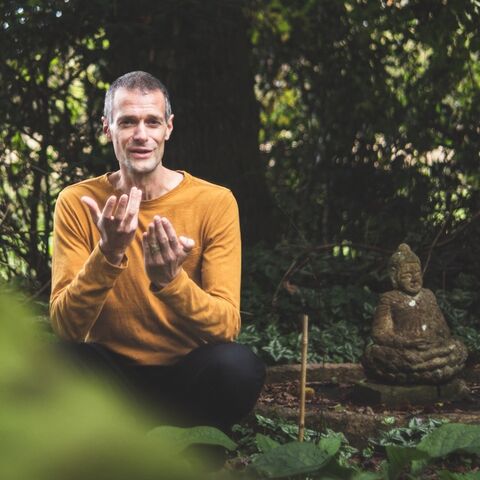
This is Josh integrating presence today.
Luca burnish is with me.
Luca.
What's up?
Oh,
It's my pleasure,
Man.
Um,
This is a,
Um,
Chance encounter I had.
I was looking for domain names and I just happened to type in,
Um,
Luca's domain name.
Let's just say that.
And,
Uh,
Yeah,
Without doing any kind of promotion right off the bat here.
And I was kind of,
Uh,
Surprised,
You know,
In the old text,
It says,
Uh,
There's like four things you should never neglect.
And I forget what the fourth one is,
But one's a small fire because it can grow into a huge fire.
Another one's a small snake because it can be very poisonous.
And the third is a young sage.
So I honestly look at Luca as kind of a young sage,
But you know,
I've,
I've,
Um,
I've studied,
Um,
Buddhism and practice Buddhism,
But I don't call myself a Buddhist.
It's just,
It's,
It's just like,
What is this and what's the best way to go about it?
You know,
What the hell is this?
What is,
What is reality?
What,
You know?
And so I'll just ask my standard question here,
You know,
At the top,
You know,
Who's Luca and what kind of work does he do?
And I like this because I told him before the show,
I want to jump right in kind of the straight,
The deep end here,
You know,
Starting with self.
Yeah.
I mean,
Hey,
Who's Luca?
I guess I could say,
Yeah,
Luca,
I like writing,
Painting,
Reading,
Traveling beyond nature.
Yeah.
What is self?
I guess,
I guess the real answer to this is that if you think there is a self,
Who you think you are,
Is,
Is some entity or something specific,
Then I would always invite you to look for that,
Right?
Try to find it,
Try to pinpoint it,
Try to,
Try to see it or find it in every experience where you assume it's there,
So to speak.
Yeah.
I love this call to inquiry because no one can tell us the answer to this,
Right?
We have to see and know it.
We have to discover this.
We have to do the exploration for ourselves and wisdom,
You know,
That we have to,
I don't know,
Garner the wisdom for ourselves.
And yeah,
It's a great,
You know,
I,
Yeah.
So pretty much said it all without saying too much.
So let's just start though,
With some kind of standard stuff,
If you want,
Like,
How did you get into all this?
You know,
Tell,
Tell people like what you write about.
And I know it's,
It's,
It's,
It's something you just need to go and read his,
Read his work really to,
To really know,
Because you cover so many things.
And what I like about it is it's like down to earth,
You know,
In a way that,
I mean,
That's a kind of a cliche saying,
But it's like really plain everyday life,
But the kind of the wisdom embedded in everyday life,
You know,
Like I wouldn't call it self-help either.
Cause that's so cliche too,
But it's like,
How do we go about this?
You know,
Where,
Where are we tripping ourselves up?
And I don't know.
It,
The words kind of fail me here,
Which is,
Which is interesting.
Yeah.
But yeah,
The,
The,
The,
The writing is,
Is great.
And so we,
You've,
You've talked about things from some self,
Right.
I even reached out to you about this notion of solipsism.
I think I pretty much align on everything you're saying from the,
The,
The,
The nature of life,
You know,
In,
In suffering and things like this,
You're,
You're fairly well versed in philosophical backgrounds and various spiritual traditions and things from what I gather.
And the one thing though,
That kind of sent me for a loop,
And I would love if you would just talk about this a little bit is it seems like you're into predeterminism though.
So,
You know,
Is that,
Is that right?
Or how would you put that?
Well,
I wouldn't say I'm into predeterminism.
I would say that I'm definitely not denying free will.
I just don't think free will is something that we,
I think it's something that we are.
It is in essence.
So the thing that is predetermined is what appears to be,
Right?
Like the you,
You think you are is doesn't have free will because it's actually out there to have it.
Right.
But when we,
But we can also,
We can't,
Or at least I don't feel like we need to dismiss free will completely.
Otherwise we would just go to the other end of the spectrum,
Like say predeterminism as the opposite to free will is true,
Which,
You know,
Is a fallacy.
So yeah,
Let's say it's like,
It's neither and so to speak.
Yeah.
It's a good point because you know,
With the problems like with predeterminism,
Is it just like,
Well,
Who did first off the big one,
Who determines it,
Right?
Who,
Who is determining it?
So that's,
That's a whole line of inquiry.
Then it can get into this notion of powerlessness and in a sense,
Like,
Okay,
If everything's predetermined,
Then it really doesn't matter what choices I make because they're all predetermined.
Or,
I mean,
Then do I even have choices?
And yeah,
I don't,
You know,
Yeah,
It can,
Or yeah,
Or it can lead to like nihilism.
Like I don't,
I don't give a shit.
I can just go do whatever I want.
You know,
There's no incentive to do anything worthwhile or anything like this.
So,
You know,
But then the free will,
It's just like,
Well,
We see that in our,
In our daily lives too.
It's just like,
If we did have entirely free will,
I could say,
Why can't I have the utmost level of consciousness all day long?
You know,
Why can't I just say,
I want this level of consciousness now,
Then when this now,
You know,
Free will,
Why can't I control my body?
You know,
Why can't I live forever?
Because I choose.
So yeah,
There's,
There's problems with that too.
You know,
That's right.
Especially when it comes to our most intimate experiences,
You know,
Thoughts or feelings,
Like if you truly have free will,
You should be able to stop them for a day or two or have them whenever you feel like it.
Right.
Yeah.
And there's some incredibly advanced yogis that can get into like Neurotasamuppada,
I hear.
Oh,
That's true.
Right.
So,
But,
But for the rest of us,
You know,
It's,
It's,
I don't know.
Yeah.
So what's on your,
So besides this,
Cause I think I have a little bit of a challenge penetrating into this.
I wanted to ask you some things outside,
Maybe your wheelhouse and see how you just your opinions on things like the big hop topic today,
I think is AI.
Like,
Where do you see,
You know,
Maybe throw you a curve ball here and do you have any views on this?
Well,
Obviously I'm not,
I'm not a,
You know,
Experimenter or anything like that,
But I think there might be a fundamental misunderstanding in a sense that when we say AI can become conscious,
Because I think there is a misunderstanding for consciousness if we say AI can become conscious.
Despite that,
I do think there's a,
There's wonderful benefits we can get from AI.
We already have them,
Wonderful benefits.
I mean,
Everyone who's used ChatGPT and all your sites,
Some fun stuff there,
You can have some fun with it.
Other than that,
I really don't have a,
I really don't have an expectation where this will go.
I mean,
We're all familiar with,
You know,
The RS scenarios,
But I mean,
It could go either way,
I guess.
Yeah,
That's,
That's my feelings on it too.
So,
You mentioned consciousness.
Let's,
Let's get these big topics then.
So,
What is consciousness?
You know,
What is awareness?
How does it differ from like attention and mindfulness?
I think this is,
People often,
And then you jump back into self,
You know,
Do you,
Is there any,
No,
We already did that.
I like just trying not to give a definition and pin it down.
I like the self-inquiry method.
So,
Let's just,
Let's just talk about the big one here,
Consciousness and awareness.
Right,
Right.
Well,
I mean,
I feel like we can use consciousness,
Awareness interchangeably.
Some don't,
Some do,
But if we,
If we want to really talk about what's our true nature,
Then you might call it awareness.
You might call it consciousness.
You can call it presence or everything or nothing or whatever gets your boat floating.
Attention and mindfulness,
Well,
I guess you could say that attention is simply what is,
What your focus is on the present moment,
What are the focuses on the moment.
And mindfulness is,
In a way,
You're just being present with the present.
You're just being present with your actual experience,
With your immediate experience,
Instead of losing yourself in concepts about it,
Right?
And I think that's also an important thing is that if we want to find or,
Like,
Recognize who we really are,
All we need to do is we have to look right here,
Right now.
I mean,
The easiest part,
I mean,
You know,
Like the most basic point basically is,
Have you noticed that everything just kind of is?
And we can easily over-conceptualize everything,
Right?
We can think that like,
Oh,
Okay,
You know,
I've heard about consciousness and awareness,
And I want to get there.
So I project it onto a timeline as a future experience.
So I have all these expectations about it.
So I think it's going to be an experience going to liberate me or the experience is going to be,
You know,
Like the final great experience and then I'll be satisfied.
But then we've already overshot the goal.
Yeah,
Then there's also chasing after peak experiences,
Having these experiences,
Never being able to regain them or live up to them or surpass them.
You know,
That's another thing.
So what do you think the point of all this is?
Is there a point?
Well,
I would say there is none.
I mean,
I guess the point to what?
The point to what?
The point to life?
Yeah,
I would say the point to,
Yeah,
To this living,
This notion of,
Yeah,
And then we might as well just get into the classic existential things.
You know,
The one that really took me for a loop was when I heard someone asked the historical Buddha,
You know,
After a full awakening,
Will I exist?
Won't I exist?
Will I exist and not exist?
Or will I exist or will I neither exist nor not exist?
And he said,
None of that fits the case.
You know,
That doesn't apply.
Yeah,
Right.
Right.
Exactly.
Exactly.
I mean,
You know,
I think that's,
That's kind of the point,
Because you're already trying to,
You already have expectations about it.
You're trying to project yourself into an experience.
But that's,
It's not that it's not a specific experience.
You're not experiencing it.
And yet,
The experiencing is it,
Right?
Like the experience,
The immediate non conceptual experiencing that's happening in every moment.
That's it.
There's nothing more to look for.
That's why all the sages said,
The seeker is the thought,
Right?
But we usually think,
Oh,
The seeker is the thought.
I wonder what that is.
I want to get there.
And you're already,
We're already on the timeline towards,
Yeah,
A conceptual experience.
And regards of what's the point?
Well,
You know,
Of course,
We can say there is no meaning to life outside the meaning we make,
Outside the meaning we create in the mind.
But,
You know,
Another,
Another classic answer might be,
You know,
The meaning is just being alive,
And perhaps enjoying it,
Even.
Because what,
What better way might you want to spend your time here in your life than enjoying it?
And I think that's also the reason why most people get into this whole,
Like,
Spiritual awakening stuff,
Because they feel like it promises a life where they can finally relax and enjoy and stop chasing things.
So are you advocating hedonism,
Luca?
I would say control of hedonism.
No,
I mean,
You know,
Like,
That's,
I think,
You know,
I think there is,
Everyone usually knows,
Like,
Gitan,
You know,
What's right for you.
You know,
What's correct for you to do.
Everyone knows,
Hey,
I,
It's not right for me to endlessly indulge in drugs and food and entertainment all day long and do nothing else,
Right?
You know what,
That's,
That is a classic question.
And I thought,
You know,
Early on,
Yeah,
That seems obvious.
But,
You know,
Even from my own behavior in the past,
And some other people,
I think some people have a better understanding of that than others.
You know what I mean?
And then some people love to test the limits.
They love to push the limits on that.
And for better,
Worse,
Or otherwise.
And so,
I mean,
This gets in a thing of ethics,
You know,
Like,
How,
To me,
It's real simple,
Non-harming.
You know,
Of course,
There's maybe a lot of gray areas,
But I do think a lot of us,
We can start there,
Is we know when we're harmed and when we're not,
Right?
And then we apply that to others.
So how do you feel about like an ethical framework or just either based on that or anything else?
Well,
I would almost say the same to what I said earlier.
Like,
I mean,
Of course,
We could say there's psychopaths and sociopaths and all that kind of stuff.
But I think,
You know,
Every,
Most of it is the result of conditioning of growing up.
But deep down,
I already know,
Like,
That it's right not to hurt others.
I don't need,
Like,
And I don't need to study ethics or what's right or what's wrong.
I know what's right or wrong before I think about it,
Before I conceptualize.
Yeah,
It's just,
You're right.
So this comes up with this psychological gunk that gets layered on top that obscures this.
So it seems a lot of the paths are discarding things that get in the way of this innate,
Knowing this innate brightness,
This innate awareness,
And there's confusion,
And then there's trauma.
And then we,
I don't know,
I can't speak for anybody else,
But sometimes we'll justify actions or come up with rationality of why the things we do are okay,
When maybe we know they're not,
Or we're unwilling to examine them further and,
You know,
Contemplate the implications.
And so where am I going with this?
That's right.
Yeah.
So that's,
I guess what I'm asking you,
Maybe,
Do you have any advice,
Instructions?
What do you think about discarding things,
You know,
Getting rid of things?
So this might go into spiritual practices,
Like your work to me,
It exemplifies so brilliantly how natural and easy and commonplace,
You know,
A lot of the things in the spiritual,
For lack of a better word,
Are,
You know,
And reminds me of Ajahn Chah.
I don't know if you're familiar with his teachings,
But he was a common dirt farmer,
And he just could connect with people.
He kind of knew,
Like,
He had skillful means.
He just could kind of really see into people's nature,
But then connect with them on a very earthy,
Simple way.
But it was very super profound,
You know?
So like,
What do you,
For people that just have tons and tons of gunk,
Or even,
You know,
Huge spiritual egos,
Or,
You know,
Like the spiritual ego I'm trying to integrate,
Or do something with,
And,
You know,
Just all the things that obscure and get in the way.
Yeah.
Yeah.
Well,
First,
I want to address what you just said earlier,
Because I think it's a good point that spirituality is for everyone,
Right?
What we're talking about here is for everyone.
It's not for a few spiritual geniuses,
Or the followers of a guru,
Or a teaching.
It's,
Like,
The most pragmatic thing there is.
It's just an immediate experience.
It's for everyone.
And,
Well,
For everyone has a lot of gunk,
As you said.
I would say a first important step is,
Or at least,
You know,
A helpful step is first to accept yourself as you are.
I think we spend so much time and energy trying to constantly improve who we believe we are,
And it doesn't get us anywhere.
I know I've tried for a long time,
And in the end,
I felt more tense than I was before,
Because I always felt like I'm chasing some idea of perfect human being,
Of perfection,
Of being a specific way.
So that's,
You know,
Like,
Accept yourself.
See that there's essentially nothing wrong with you.
And then the next step is question.
Question your assumptions.
Question your beliefs.
Look into your condition.
You can do that in any way you like.
And I'm not saying it's just a mental exercise.
As you said,
With meditation,
It's like it can be a full body exercise.
And usually it is.
You feel when tensions leave the body.
You feel when something and something's being released.
And for that,
Self-honesty is really important.
As you said,
Like,
When we talked about,
You know,
People justifying their behavior,
A lot of it is because we see ourselves as these good people.
We want to be good people.
And then there's this cognitive or perhaps even spiritual dissonance.
It's like,
Oh,
I believe I'm a good person,
But what I did is not good.
So then I'm trying to,
Like,
Kind of catch this belief instead of really looking at it.
Like,
Are you really a good person,
Or is it even necessary to see yourself as a good person?
Yeah,
It's a really good point.
You know,
On the higher and higher levels,
It doesn't really apply.
But on an everyday thing,
You know,
Even just this notion of good and bad can be problematic.
I mean,
I think it's helpful for some people,
But that's why I like this notion of skillfulness,
Right,
And wisdom.
So instead of putting this value judgment,
Oh,
This person's good,
This person's bad,
Which one person might think is good,
Another person might think that's not too good,
Or oh,
You're a goody two-shoes,
You know,
All this type of stuff.
But pretty much everybody can connect with,
I think,
Degrees of skillfulness and wisdom,
Right?
This is not to deny evil,
Because,
You know,
This problem of evil,
It's such a loaded word,
Too.
However,
There are things in the world that are just maliciously harmful.
But again,
How much time and effort do we want to spend,
You know,
Really putting on our superhero cape and go fighting this,
You know?
And then even if we look at all the ills in the world,
Is it really going to be helpful when some of these people,
I mentioned psychopaths,
Or people find out about them,
And they're kind of the shenanigans they do,
You know,
Is it going to be helpful to be a vigilante or seek,
You know,
Retribution?
I don't think that's helpful either.
So,
This is why it comes back down to skillfulness and wisdom,
And also the heart qualities,
You know,
Because with too much wisdom,
We get cold and like snake-like.
So,
You know,
This notion of these skillful heart qualities of compassion,
Kindness,
You know,
Rejoicing,
And,
Yeah,
Equanimity even,
That there's only so much we can do,
We can't make other people's choices for them and live their lives.
This notion of,
You know,
I asked earlier about what's the point of all this,
And I think I'm in line with the historical Buddhas on this one,
It's just no suffering and the end of suffering,
You know,
Which equates on the positive side to contentment,
Yeah,
Being content in life,
Because all the other stuff really doesn't mean shit,
You know,
If we feel like complete and utter ass all day long,
You know,
Or things are real bad,
Things are stressful,
Even unsatisfactoriness,
You know,
It's just not as fulfilling and all the other things that we might be interested in or worthwhile in life,
If there's just too much stress there,
Then all that other stuff really doesn't even matter anyway.
That's right.
But what I would say about earlier when you,
About good and evil,
I think there is like,
I think it's a Zen saying,
It's like,
There is no right or there is no good and there is no bad,
But good is good and bad is bad.
Wow.
Yeah.
Just let that sink in for a little bit.
Go ahead.
And what you said right now,
You know,
About the contentment and happiness,
Yeah,
Suffering,
I think what's important to see is also,
We always have these,
And that's also,
That's also the result of conditioning,
That we believe we need all of these things to be content and happy.
Like,
I need this house and I need this partner and I need this car and I need all of these things.
I need the success and everything to be happy and content.
And the truth is you don't.
And if you truly want to be happy,
Then you can make a choice.
Do you want to be happy with this thing or do you just want to be happy?
And if you're honest with yourself,
You know,
You can be happy without it,
But some part inside of you really wants to be happy with this thing.
So in a way there's like a choice there,
Right?
There totally is.
And,
You know,
I saw this early on when I was still working like in semi-corporate,
Even though it was a really cool,
Lax,
Creative people had a lot of fun and stuff,
But I had no interest in,
You know,
Climbing the ladder and getting all this stuff that I saw other people just in a state of misery,
Basically yearning,
Taking their happiness like a bone,
You know,
And throwing it into the future and chasing after it.
You know,
Uh,
That's a funny analogy.
Yeah.
That's what it is.
Yeah.
It's,
It's,
It's right here and right now.
And it is the conditioning enough.
Can't be said about that because a lot of,
I think a lot of our behavior is from our upbringing and tons and tons of conditioning.
Yeah.
Causes and conditions for pretty much everything.
Yeah.
That's right.
So what's on your radar now?
Like,
Um,
What are you looking at any,
What do you,
Uh,
Well,
Yeah,
What are you reading or like what kind of not,
Maybe not specifically,
But like any areas of topics you have going on,
Anything that interests you,
Um,
And,
And as far as your writing goes,
How do you,
How do you get inspiration?
You know,
Is it things that happen in your everyday life?
Do things just occur to you?
Um,
You know,
Do you see things in the greater world that need addressing?
Um,
We can just talk about creativity too,
In general,
If you'd like.
Yeah.
Yeah,
Sure.
Um,
Well,
I guess,
Uh,
When it comes to inspiration,
It's a bit,
It's a bit of everything you mentioned,
Right?
Sometimes things just occur to me.
I've been inside and then sometimes I read something and find it really interesting.
So I chew on it and digest it and then see maybe if there's another angle or maybe something I could contribute or something like that.
I recently,
Or recently,
Or for a while,
I've been mostly reading or reading a lot of just literature,
Really generic literature.
And,
Um,
I'm,
I'm constantly surprised because often,
You know,
It's the deepest insights you get from books,
Sometimes not from like spiritual literature,
But,
Uh,
Just like novels and really well written,
Really,
Really well written stories.
So I think there's a lot in there.
And,
Uh,
You know,
If you had your,
I don't know if you've noticed that,
But the moment you became interested in all this awakening stuff,
It feels almost like your whole environment,
Everything is trying to help you.
You know,
You like hear a song and it's about this.
You hear it everywhere.
You read it everywhere.
Everything's like a key,
A hint,
A pointer.
And if you're open to that,
Then it's everywhere.
Right.
And,
Uh,
In terms of creativity,
You know,
Like,
Like,
Um,
Tongue firmly held in cheek,
I would say for me,
That's like,
If there was a meaning in life,
Then it would be to be creative,
You know,
Create something we're here and we can obviously do something.
We can create something.
So just create something and it doesn't need to be writing or painting.
It can be creative in all kinds of ways.
And,
Um,
As far as I'm concerned or where I feel like everyone has a desire to create something to be creative.
And I wouldn't even say that there's sure.
Some people might be more in touch with their creative vein from the get go,
Or there might be like in their childhoods that might've been,
You know,
The parents might have supported them in whatever they wanted to do.
So they feel like they're more creative,
But I think we're all pretty like creative energy is not something you're,
It just flows.
It's not something you have inherently more than any other person.
It's more,
It's more like kind of thing of tapping into it.
And I found that if you actually just do something,
You're doing,
I don't know,
Sometimes I just sit down and write randomly,
Like just stream of consciousness,
Or I paint something and I don't know what to do.
And I just go and go and go,
Something happens.
Sometimes in the most ugly pieces of art,
There is a really a hidden gem,
Something that you have like a unique style almost.
Yeah.
It's it's creativity is,
Um,
Such an amazing thing.
Um,
There was part of my practice where it just,
It just started rolling out and I would just keep a sketch pad and just,
Just almost,
It was almost not a compulsion,
But it was just like overflowing and I just wanted to do it.
I think a lot of people might get turned off because they're trying to judge their,
What they create up to something else,
You know,
You could do it just for you as an outlet or an experiment and not have to show anyone whatsoever,
You know,
Or even when I did show,
Uh,
Stuff later on to a few people,
You know,
It's,
It's interesting.
It's another creative process to,
To,
To talk about it and explain it,
You know,
And if you reveal the intent behind it or process,
So that's a whole nother thing of the creativity.
And,
You know,
Today,
Some of my creativity is just,
You know,
This natural,
Uh,
Old fashioned male hood of problem solving,
Right?
You can be creative in our problem solving.
Now we can't solve a lot of problem solving actually can kind of create problems,
But in those times in our lives,
When we,
When,
When it does make sense to solve problems,
Um,
You know,
We can be creative even in that,
Uh,
With,
With our speaking,
Our expression,
Our,
Our communication even.
Um,
I,
So yeah,
Creativity doesn't have to be even limited to traditional means and modes,
But,
And it's such a beautiful expression,
Um,
Uh,
The,
The emotional expression and it's so healthy,
I feel,
Um,
To take some emotions that we have and express them or are integrated with emotions or use an emotional aspect behind,
Uh,
Creation.
I think it's really healthy for a lot of that.
Um,
Yeah,
Absolutely.
Absolutely.
I also think,
You know,
A lot of people that maybe feel like a lack of fulfillment,
I would tell them,
Create something,
Create something and then see how you feel.
And it's not even,
And then you notice it's not even about sharing it with people specifically,
But like the creative act is something has a specific flavor and it is inherently fulfilling.
There's the creating,
But,
Uh,
But I also agree that,
Um,
I,
For example,
I saw this a lot with painting,
Especially that there's kind of multiple stages to what creativity can be.
And like the,
The catharsis can unfold in every stage of the creation process.
Like for example,
Why are you creating?
Like if I'm,
If I'm painting something,
Why am I choosing what I paint?
And then of course it's in the process of creating.
Often,
Often I realized how there's like things that stuff that's being released,
Like thoughts that come just to come up and go while I'm creating.
And then of course,
When you're done with your creation,
Then you can look at it and then you can reflect on it and think,
Oh,
Okay.
And then afterwards you might understand why you did what you did,
Like what was it this was,
Why you did this kind of thing in the first place.
And then you can look back across the art and see that it all reflects kind of a specific state of your life or a state of being.
Yeah.
I think it's really fun.
Yeah.
That's,
That's beautiful to remember because there's sometimes we go into the creational process with a very specific intent,
Right?
And then to bring that intent to light,
But sometimes it's the other way around where you just start doing something.
And then it's almost like dreamwork and interpretation later.
It's like,
Oh,
I can see,
You know,
This makes sense.
This is why did I draw this?
Or,
Oh,
Okay.
This was going on in my life,
Or I can see how this matches up in either free associating,
Doing interpretation,
Or maybe it might spawn another idea,
You know,
And another process.
Do you,
The other way around though,
Do you ever like destroy some of your creations,
You know,
Or like,
What is the destruction process or,
You know,
How is that,
Does that,
Is,
Is it just as important as creativity or how do you find this,
This either rejection process or,
You know,
Another classic one is how do you know when you're done?
Right.
How do you know when you're done with a project?
Yes.
Well,
In terms of destruction,
I can say like over painted so many canvases,
For example,
Multiple times and be like,
Oh,
Okay.
Now I no longer like this.
And I kind of feel like this needs to be something or it can also be exhilarating to destroy something,
Right?
To create it.
Like,
For example,
You might,
You might be into poetry and you write a poem and instead of sharing with the world,
You just rip it apart and,
You know,
Scatter all the pieces.
That can be a really,
Almost like an exercise in letting go,
An exercise in non-attachment in a way.
Yeah.
The thing with when do you know when you're done?
I think everyone who's creating art knows this feeling,
But I think it,
It varies.
Sometimes I have a really clear sense of,
Okay,
I'm done.
Other times I just,
You know,
Let peace sit for a while.
And that's true for writing and for painting,
For example,
For me personally.
And then after a while I come back and do something more or a few weeks I come or a few weeks later,
I come back and look at it and like,
Oh,
It's been done all the line.
It's been done all the line.
It really does depend.
And what this speaks to me,
It's this notion of a sense of kind of power,
Right.
That just kind of,
But also with the intuition,
Because there is no textbook for things like this,
Right.
It's just kind of like this kind of self-trust,
Self-knowing decision-making process in a way,
Right.
In a way that's not just the standard old worldly way of making decisions and following things out and the power to create the power to destroy or redo.
Right.
And so,
Yeah,
It's,
And some of the most inspiring things in the world are things that people have created,
Right.
Most meaningful things.
Some people derive so much meaning and pleasure from creation too.
Some people get in a lot of trouble,
You know,
Either,
You know,
Can't come up with the next creation or feeling they need to get in a,
An extreme state to be creative,
Things like this.
So it is a really fascinating area of our being.
Yeah.
Yeah,
That's true.
That's true.
And I think,
I like what you said earlier,
There's no textbook for this because in a lot of ways you can,
You can almost like,
How would you say,
You can almost slow yourself down by,
By reaching towards too many prescriptions.
You know,
The mind is kind of like always reaching towards prescriptions.
And it's true for creativity as it is true for like spiritual practices.
Because I mean,
It's for some things,
You know,
Like how to turn on your computer.
Well,
Of course you can have a prescriptive advice.
It's like press the button,
Right.
But when it comes to things that are like multifaceted and complex,
And they all depend on kind of your own individual context and experience and environment,
There's no prescriptive advice you can take.
And I think if you can really like hold off on always reaching towards a new prescription on how to and five steps and other kinds of stuff,
Then there is,
There is the possibility that something naturally emerges.
You find your own way,
Which is kind of what most people want in a way,
Right?
Yeah,
It's a really good point.
And I get reminded of this sometimes too,
When I fall too much into established spiritual teachings,
Right.
And we just look at the historical Buddha,
He had to leave all his teachers,
Ironically,
Because they weren't doing it for him.
Completely self awakened,
Right?
And,
Yeah,
We can use it as I think what prescriptions can sometimes do is they provide inspiration and motivation,
Perhaps in a certain way,
But maybe the end result,
But it's maybe it's part of our experimental process to try some of these.
But like,
Do you really think somebody can give you the prescription for the next Mona Lisa,
You know,
Or famous work?
I mean,
Maybe you can get in the ballpark,
But are we just copying,
You know,
Or like,
How?
Yeah,
It speaks to like originality to I guess,
Yeah,
Maybe it comes to expression.
But yeah,
I wouldn't in the spiritual sphere.
Also,
Yeah.
No,
I just wanted to say,
And also,
You know,
Like,
Most people who give you prescriptive advice,
They give you the part and pieces they think were contributing the most,
They think were the most important bits.
So for example,
If you look at the historical Buddha,
And you look at his life,
And you think,
Okay,
He was an ascetic,
He did this,
He did that.
So I'm just going to do all these things,
Because I think that's what led him to his awakening.
But I think the Buddha would have been the first one to tell you,
I know,
That's not it,
You can't try to find a cause and effect relationship here.
Right?
Like you,
You can,
Or like,
I don't know if someone,
If someone,
For example,
Creates a super successful business,
They might tell you,
Okay,
Like,
You have to wake up early,
And you have to study this and do copyright and all these kinds of things.
But then what,
In the end,
Really led him to that successful business.
It's not just a combination of these few steps.
He is cherry picked,
So to speak.
Yeah,
It's a good point.
And I often I've pondered this too,
For for one,
One thing,
Or a few things.
So he was supposedly grew up in a palace,
Right,
And had all this sensual pleasure.
And then he went to the other extreme.
Well,
Then he did the deep concentration practices,
Right?
And left those two,
I mean,
Integrate them,
But that wouldn't take them all the way when everybody at the time said,
That's it,
You know,
Eighth jhana,
You know,
Neither perception or non perception,
That's it,
They can't go any higher.
And he said,
Well,
When I come out of that,
Can't do anything out.
I mean,
It's still back to where I was,
Or whatever,
That's the story goes.
But then you go all the way to the other extremist asceticism,
Right,
Extreme kind of deprivation.
And he said,
That's not that's not necessary,
Either.
The thing is,
Though,
Like,
He did all these things,
Right?
He did all these,
You know,
And he's telling people not to do them.
And I don't,
You know,
I'm not saying go out there and indulge all the and then do extreme things to find out for yourself.
Maybe he does,
We could learn a lot from what he says.
But there's also the thing,
The handful of leaves,
You know,
He took a handful of leaves in the forest and said,
Okay,
What's more abundant,
You know,
The hand that leaves my hand are in the forest.
And of course,
You know,
The leaves in the forest are more abundant than his hands.
He said the same way,
Even though my knowledge is the leaves in the forest,
But I teach only this suffering in the end of suffering.
But the question still remains,
How did he get to know all those leaves,
You know,
And we can we can speculate on why he only taught suffering the end of suffering,
But it remains unseen all the other vast wisdom supposedly had and why he didn't teach it,
You know,
And I've got pretty good answers to that.
But the matter of the fact is that no one else can do this for us,
Right?
We can have friends,
I think,
And then I want to ask you about friends and relationships next,
But we can have teachers as helpful feedback and guides,
But they can't do all this stuff for us.
They can't view the world for us,
They can't respond to the world for us.
It ultimately relies on how we do that,
You know,
And yeah,
So that's of the utmost importance.
And yeah,
The Buddha encouraged that too.
He said,
You know,
Here's some things I figured out.
You have to see and know this for yourself.
If it's helpful,
It's helpful.
If it's not,
It's not,
You know,
I can't do it for you.
Yeah,
I think it's easy to put other people like that on a pedestal,
You know,
You put them off you.
You think like they are somewhere where you're not and you constantly keep yourself above them,
Well,
In reality,
You're your own authority.
And all you need to do is check in your own experience.
You have to,
There's no other way.
Exactly.
And it's easy to get lost in,
You know,
Like teachings and this one did this and this one did that.
But the truth is everyone finds their own way.
And there is no right or wrong way.
If we'd say there is only one right way,
I think that would be a fallacy of objective knowledge,
Where we would say,
Oh,
There is the right way.
And it's just waiting out there for us to see it.
But that's not the case,
You know.
Well,
At least there are many skillful means out there for sure,
You know,
To limit oneself to only one thing.
I mean,
That's kind of dogma,
Right?
We have to explore and see and know this for ourselves.
And some of the brilliant things are things that we come up with our own,
And that we share with others that can help others.
Because if we were just parroting everything all the time and falling in line with everybody else,
I mean,
How boring of a world that would be,
How gray,
Hive mind,
Authoritarian,
You know,
Limbing like reality would that be?
It wouldn't be helpful.
So totally agree with that.
So now relationships,
You know,
I want to ask,
What would you say about relationships?
Just in general,
I have no idea where to point you in this,
Maybe just how important they are.
Some do's and don'ts.
I don't know why I'm asking you to comment on this.
But in my experience,
Everything is relationship,
Right?
Yeah.
But we have to ourselves,
You know,
And externally too.
Yeah.
I mean,
Absolutely.
I think like,
Even you could say that all spirituality is just about relationship.
You know,
In the end,
It's all just about relationship.
And yeah,
Relationships are beautiful.
I mean,
I think one of the most valuable things a human can do,
Like,
If they really want to see how much they can grow,
It's like live with another person.
You know,
Live with another person for a while and see how you do.
I think that will teach you a lot about yourself.
And so yeah,
I think relationships is,
They're a good,
They're a good gauge for what you might be rejecting in yourself,
What you might not be accepting yourself,
What you might be judging in yourself,
Where they can show you like blind spots in yourself.
And beyond that,
Of course,
Relationships are a source of great pleasure and joy.
But I would also say that,
You know,
I think there's like,
A little bit conditioning in society where it says like,
If you're not constantly out and about and wanting to meet people and make new friends,
Something's wrong with you.
People ask you,
Are you depressed?
Are you okay?
But,
But because I noticed that in myself,
Like,
I,
You know,
I had long times where I would just want to earn it for myself and meet people.
And I was completely satisfied and happy with that.
But from the outside,
People would often think,
Hey,
Something's not right.
But I think it's important that you listen to yourself.
And if you don't have a strong desire to do online socialism,
It's okay.
If you do want to socialize,
Awesome,
Do it.
And,
You know,
If it varies,
Also great.
Like,
I don't think there is,
You know,
Specific rules with how we invent and how much we should engage with each other,
But allowing our relationships to be like an authentic reflection of how we feel about it,
How we want to go about our lives.
That's beautiful,
Too.
And that takes so much pressure off because I know those times when I was going through rough patch,
Rough patches and more introverted,
And people throw around the term introverted,
Like it's some kind of condition or something,
You know,
Like,
It's like a disease.
Yeah,
I mean,
It's like,
What?
And so the introvert,
It recharges on their own,
You know,
And what I found become more messy,
Overt or ambivert.
So these times when I just really enjoy solitude and being in my own energy and my own surroundings and peace,
And even we have words like,
You know,
Isolation or,
You know,
Yeah,
But there's something about solitude,
You know,
Just the difference in the word,
Right?
Solitude versus isolation or this renouncing.
There's certain things in the world I find are helpful to renounce,
You know,
Have a renunciate on certain things,
Other things to engage in,
You know,
If it's going to lead to my long-term welfare and happiness,
Well then,
Yeah,
Enter and abide in it.
But if it's not,
Then it makes time to withdraw from it.
Yeah,
I couldn't agree more.
And this notion,
You say,
Of letting it be an expression or not trying to be inauthentic with it,
Like if you don't,
You know,
If you don't feel it's going to be good for you and it's,
Now I get it when some people,
They can be challenged,
You know,
By not ever wanting to leave their comfort zones,
But that's not what we're talking about here,
Right?
So,
Yeah,
I think,
I think a good key word here is try,
You know,
If you try too much,
You usually get away from where you really are or who you really are,
Which feels right to you.
And also with the renunciation,
I think renunciation often has this kind of like go away kind of feeling,
But it can be a very,
You know,
A very like loving,
Like,
Hey,
Okay,
I see this is not serving me right now.
Like,
Thank you,
But no,
Thank you in a way.
And something else I wanted to say.
Yeah.
Yeah,
That's,
It really,
I think that's,
Yeah,
It gets a bad rap sometimes,
But we did see like a really interesting reversal during the lockdowns of going from,
You know,
People that always stayed alone by themselves to look really weird to the exact opposite where,
You know,
Now,
If you're wanting to go out and be around people,
Well,
You're the dangerous one,
The weird one,
You know,
And what,
What people thought about hypochondriac beforehand,
Now everybody's like putting stuff on their hands and being very scared of germs and things.
I don't know.
I just thought it was interesting if some aliens would have landed during that time period and saw everybody doing what they do.
I wonder if they thought that we were,
Um,
You know,
A bunch of hypochondriacs or something without the context of what was going on.
But yeah,
But anyway,
Yeah.
But I mean,
Like,
I think,
You know,
The positive is because I think solitude is,
Is beneficial to everyone,
At least at some point,
I understand that some people don't desire solitude as much as others.
And I would never say like,
Hey,
There's this one thing and works for everyone all the time.
But if you don't have at least some time where you reduce the noise and just get away from everything that's being constantly poured into you,
All the information on all the opinions of others,
Then you have trouble to see what's really with you,
What is really there with you.
Yeah,
It's absolutely necessary.
You know,
Most people are kind of,
It seems like they're a amalgamation of,
You know,
The ones they've been around.
And even once they've,
They've looked at their conditioning and deprogrammed a lot of things and unlearned a lot of things,
Then we're still kind of reflections of those that we spend the most time with.
But if people haven't even done that and,
And looked at and been with themselves and turned out turned off all the external inputs,
You know,
It's kind of ironic to say on a podcast,
Right?
But yeah,
It really is to power off and,
And shut down because yeah,
You really be surprised.
I mean,
Some people get really freaked out when they sit in silence and see just how absolutely out of control their,
Their mind and heart is,
You know?
Yeah.
With,
With the literature,
Though,
You know,
In my twenties,
I was really into postmodern American stuff.
And I think we can start transitioning here to,
To wrapping up.
And I think this came with writing myself is like,
At some point,
It's not just about what you say,
How you say it,
That the sentences you,
Sentences you build and like the rhythm to it.
And some things that I wouldn't have noticed before,
Like suddenly there's like,
Really,
I,
Like,
I'm,
I know this feels right to this sentence feels right.
You know,
It doesn't matter what it says.
It just feels right.
And I think that's really what,
At least for me,
That what makes good writing where I feel like it just,
It just,
It doesn't miss a beat,
So to speak.
It's like,
You know,
It's like,
Yeah,
It's like music.
And how,
How it lands with you is definitely going to,
It's going to be how it more than like Google land with your audience.
You know,
It seems that way.
Cool.
All right.
May all beings everywhere find their most optimal,
Ideal creativity and best way of being in this world.
Thanks for joining me again.