Welcome to The Flow from Ohm School Live.
The Flow is a profound mix of wisdom and humor as student Lisa Berry asks spiritual teacher G.
P.
Walsh questions you would ask an elder,
A wise man,
Or a sage,
And receive direct,
Simple,
Comprehensive,
And deeply human lessons and teachings.
Step into these conversations with a master spiritual teacher and discover that you are way more than you think you are.
You are The Flow.
Oh,
Good afternoon.
Good morning.
Good day,
Everyone.
Welcome to The Flow Live from Ohm,
Actually from Ohm Schooling Live.
I always say that backwards because we switch.
That's right.
That's the most important thing.
Well,
Hello,
G.
P.
Hello,
Lisa.
Good morning.
It's morning for me.
Yes,
Yes.
We're letting you wake up and we're diving in with quite the hot topic.
Yeah,
Really great start.
Yeah.
Yes.
Well,
Everybody,
As you're jumping on here,
We are continuing.
I believe this is our third one here in – I'm liking doing it live.
Let us know in the comments if you are enjoying this live version and being able to see us and comment along the way other than just the radio show,
Which we did have fun doing as well.
So that is – We did.
Yes.
This one offers a little bit more opportunity.
It's not the same as – yeah,
I want to start with distinguishing the difference between your sax songs,
Which you do on Sundays,
Which are very question and answer,
Super participating,
Different than the patron program.
This is actually our show,
But we get to say hello and see how people are responding and what's going on.
Today is a very interesting – I can't even imagine what's going to come from today's show,
But I think it's going to help a lot of people.
But it is called the Battle of the Nymph.
So Battle of the Sax is Battle of the Nymph.
That's where that kind of came from,
But even more so.
So GP,
You have shared with the people who do know that our different archetypes,
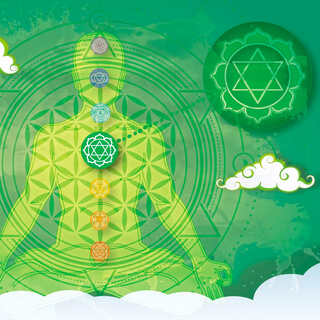
Different aspects of ourselves and represented by chakras to some people who do that and who you're interested in that.
And one of them is the nymph.
And this is a busy little chakra.
Sorry,
Annie G said three aspects.
Can you share right away?
Could you define where that came from?
Why the term nymph and where in our aspects does it lie?
Well,
It came just looking at the chakra system and where it came from,
What its real purpose was.
You know,
Because I thought like,
You know,
It's just a pretty little spinning vortexes of light that look great on New Age posters.
And if I were,
You know,
Red underwear or yellow sunglasses that,
You know,
I balance my chakras and things like that,
Which is,
You know,
A typical reduction of the West,
Which,
You know,
Just kind of takes the soul out of everything,
Right?
Yoga becomes exercise.
Meditation becomes stress release.
And these very powerful representations of aspects of consciousness are kind of get lumped in there.
I mean,
All of the mystical and spiritual traditions have been about trying to explain our own nature,
The nature of what it means to be a human being and what it means to be a self-aware being and what's the meaning of consciousness and life and all that kind of stuff.
And it serves two purposes.
One is,
Of course,
The existential,
To answer those big questions of life.
But the other is how to function in life as a healthy human being.
It has to serve all of those purposes.
And looking at the chakra system as representative of certain aspects of yourself brings a unity to them,
A real yoga,
A real reunion of the different peace parts of you.
And also can explain a lot as to how it all got messed up.
Now,
That's a long prelude to the fact that I just decided to give them names,
Right?
To give them character names instead of,
You know,
The first chakra,
The mahodara or something like that,
You know,
The Sanskrit,
The Sanskrit word for it.
I called it the tribe because it is an aspect that represents the basic functioning of life.
It's like the reptilian stem.
It represents the safety,
Survival,
The pack as opposed to a family,
Right?
It's very much the primitive animal instincts,
Right,
Which are very much alive in us.
The second chakra represented pleasure,
Desire.
I mean,
That's where the sex organs are.
That's where we move our hips.
That's where we dance.
And that becomes a symbol for the seat of all desire,
The juice of life,
Life for the enjoyment of it as opposed to the first chakra which is life purely perfunctory,
Right?
And then the third chakra actually represents the egoic self,
The egoic mind,
Which I named the storyteller because it is this capacity to basically invent all sorts of ideas about what life is like.
And so,
I called the second chakra the nth because it symbolizes that it's just pure pleasure.
It's just the juice of life.
It doesn't see past or future,
Right?
It's kind of like,
You know,
The dog sees the food on the table that takes it.
I can see it.
It must be mine.
And that aspect is alive,
Quite alive in us.
And so,
When you see when certain aspects,
They get out of balance if it's,
If the weight is all on safety.
And you can actually see the tribe and the nymph as being,
As representing our drive for safety and our drive for personal self-expression or freedom.
And both of them are equally powerful.
And if it gets out of balance,
That is one becomes dominant,
You know,
Life gets,
Life becomes dysfunctional,
Right?
If it's all about being safe,
You know,
I make a really good aunt.
Life is very safe but boring as hell.
If it's all about pleasure and fun,
Life will be really great but won't last very long,
Right?
So,
It is how they flow between the two that makes all the difference.
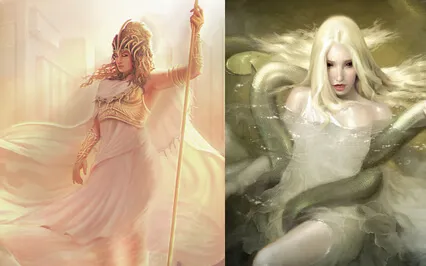
And the nymph represents nature,
Right?
I mean,
The nymphs were the consorts of the god Pan in Greek mythology,
Right?
And the god Pan was the god of nature,
Right?
And so,
You know,
The wood nymphs and fairies and all of these kinds of things.
And there was,
You know,
Sea nymphs,
That's what mermaids are.
And it was Pan that became in the West and through Christianity,
Abrahamic religions,
It's the same deal,
It's the devil.
It's the hoofed feet,
The goat legs,
The pitchfork,
The horns,
It became demonized into the devil because the Abrahamic religions made nature the evil that it needed to,
Nature was to be overcome,
Not to be harmonized with,
It was to be subdued.
And because it is the female body that gives life,
Woman becomes something that needs to be subdued.
She's an object,
She represents nature.
Matter of fact,
This is actually true.
For a long time in Christianity,
It was regarded that women didn't have a soul,
Only men did.
What?
No.
Yeah.
Oh,
I didn't know that.
Yeah,
They didn't really have a soul.
They were just there to basically his breeding stock and to tempt,
Right?
To tempt the man so he could prove his righteousness.
Yeah,
I mean,
There's so many bizarre ideas.
But it all stems from this basic denial of nature and that nature is to be conquered.
Out of that grew property,
Ownership,
War,
I mean,
All of it grew out of that,
Right?
So rather than harmonizing with nature,
Which is the Tao,
We have the dominance and the complete control of nature,
Which is the Abrahamic religions.
So many words just jumped out at me and during that.
That is so interesting,
First of all,
About the soul.
It is,
It's fascinating.
Yeah.
Especially the part about even thinking that women wouldn't have a soul because then how are we're the ones making the life.
So it's like,
We're not just an advent.
I'm getting my LG oven.
It's just absurd to think about but this is how absurd the whole thing,
God,
How twisted it all got.
Because women are closer to nature,
The moon cycles.
I mean,
Literally give life and nourish that life for a couple of years.
So obviously that represents that which is to be dominated and that's the big contrast between the tribe and the nymph between the first and second chakras.
And traditionally,
In the hunter-gatherer before agriculture,
That was all in perfect balance.
And the very earliest representations,
Objects of worship,
Right,
You know,
Like statues and things to God,
Were goddesses.
Yes,
Yes,
I noticed that.
And of course,
I mean the source and nourisher of life.
So it would make perfect sense.
As Joseph Campbell put it,
Women are life,
Men are the protectors of life.
And we need them,
We know what I do.
They have some uses.
And it's interesting when we pull that into individual beings.
So a man and a,
There's something dinging on my phone and I don't know how to turn it off so I apologize.
Hopefully they're not a busy platform.
But it was a new thing that happened.
Something came up so important.
So keeping it into like one person.
So we,
Everyone has that male-female,
The nymph and the tribe,
The nymph,
The – what's on the other side of it?
Ego,
Self.
Yeah,
The storyteller.
Storyteller,
So storyteller.
So I'm imagining,
You know,
You've got the nymph in the middle and then we have this functioning aspect,
Functioning aspect.
And over here we have that ego and then in the middle the nymph.
And so I can see where a lot of people get into trouble.
You said the word slave.
And of course,
You know,
I'm being silly but you know,
Sex slave kind of thing.
But – and I want that to be playful,
Not yucky.
But what we – It's all voluntary here.
What we often think about is we say we're a slave to the grind.
You know,
That word can come up because that's very working.
And it's so interesting how I find – a lot of questions that came up on why this topic was – I was like,
OK,
We must share about this is a lot of people are finding that difficult how to sway gracefully,
How to dance and move those hips from side to side from the slave of being in the functionality and safety because it's where we can actually calm down a little bit.
Our nervous system is not so frighty,
You know,
And flighty.
It's a little bit calmer.
And then on the other side,
We had that ego,
Which is storytelling and our image that will be accepted by others.
So that's where I know a lot of people right now are like,
I want to work,
But I want to play.
And so that's a big – how can – Yeah,
Absolutely.
Absolutely the case.
Yeah.
You know,
The need to survive is obviously absolute.
You know,
The rest is a moot point if you don't.
The real problem is,
You know,
According to what I've seen about the life of hunter gatherers,
They had basically a 20-hour workweek.
Oh,
Hour,
Week,
I like the week one.
All right.
Yeah.
It was not this,
You know,
This burdensome work,
Work,
Work,
Work,
Work,
Right?
There was all sorts of play and celebration and,
You know,
They're very close.
You know,
Lots of very natural bonding.
The roles between the gender were very,
Very clear.
But remember,
Our culture now has been based on this conquest of nature.
And so it is this relentless attempt to put down nature,
Which has taken us so completely out of any kind of relationship with it.
We don't even know what normal is anymore.
I mean,
Especially in the United States.
I mean,
This place is absolutely psychotic in terms of the drive and totally delusional.
I can envision – and it's possible.
I mean,
Buckminster Fuller talked about it back in the 70s,
That we had already in the 70s,
50 years ago,
40 years ago,
Reached the – no,
50 years ago.
Yeah,
50 years ago.
That we've already reached the point technology where we could easily provide for every man,
Woman,
And child on the planet,
Which would release them into just really a golden age of creativity,
Where everybody would actually have the capacity to explore their capabilities to the fullest.
The internet held out that hope,
Right?
But this underlying idea,
This underlying idea,
Which just manifests itself as enormous greed,
Wants to instead dominate.
I mean,
Nelson Rockefeller,
Right?
Who basically got rid of holistic medicine and put us on the road to pharmacological as well as men and other things.
He says,
I don't want a nation of thinkers.
I want a nation of workers.
That is the philosophy that has been dominating the economic life.
By economic,
I mean simply the way we work together,
The way we exchange one thing for another.
And so,
That's what ends up happening.
This war of nature goes on and you inevitably get this hierarchy that wants to dominate.
And greed is an illness.
It's a pathology.
It certainly can create within the body that energy is not flowing in a harmonious way.
When you said that,
That really brought that to you.
I don't want to say struggle or battle,
But I guess it is between being and doing.
And can the nymph do or is the nymph only being?
It's a pleasure to be here.
No.
That all of the,
What they're called the lower three chakras,
The nymph,
The tribe and the storyteller are all the action of life.
The doing.
They're all the doing.
Yes.
Okay.
You don't start getting into being until you get to the heart.
And that's the big transformation.
And the sage,
Which is the crown chakra,
Is pure being.
That's the cycle that it represents.
So this is all the energy of doing.
This is all the instinctual.
This is where the distortions are greed and avarice and also lack.
Those are all part of the instinctual.
And the real Kundalini model of the chakras is this rising from the instinctual to the spiritual,
Which is represented by the two snakes,
The snake sheds its skin so it represents resurrection and eternal life.
So you're literally dying to the animal nature to be reborn in your spiritual nature.
That's what it represents.
So those lower three are pure animal instinct.
Right?
It is enjoyment,
It's pleasure and things like that.
So it's not just like the pure animal reproduction is just reproduction.
Right?
Yeah,
They enjoy it,
But they don't go out and have wine.
Little one's drunk and spaghetti and wine.
Write poetry and music about it.
That sort of thing.
So it reflects all the way up and down.
So you can see that it represents different ways of looking at the world.
So if I'm dominated by that tribe energy,
I will see everything in terms of safety.
Everything is just in terms of self-preservation.
And that's when you get extreme nationalism and racism,
All sorts of things like that come out of that.
Because that's all there is.
It's all it cares about.
If you understand that there's energy systems inside of you that are completely single function,
That's all it cares about.
And as far as the nymph is concerned,
That's all it cares about.
And as you can tell,
That's going to make a real fight going on between these two equally powerful entities.
They aren't really entities,
Aspects.
I love that word,
The aspects.
That's an interesting way of thinking about when they're a single function.
Because you teach us and help us to have inner reconciliation.
We are reconciling between all these aspects wherever they are.
But question,
Because if we are focused on the doing and the instinctual and those lower three or whatever three,
Well,
Three,
When we move into our hearts,
And we're in the being,
Can we ever do well being?
That is a common misunderstanding that they're like,
It's like one or the other.
I'm either doing or I'm being,
Right?
And if I'm being,
I'm sitting in the corner chanting,
Oh,
Right?
And that's it.
But don't you have to be in order to do?
It's just assumed.
It's a matter of where your attention goes and what is absorbed you.
What happens is in the doing,
Which is the way our whole culture works right now,
Being is ignored.
In all sorts of really practical ways.
The jobs out there aren't interested in you having self-fulfillment and self-expression.
I got a job,
I need you to do it.
I'm not interested in you individually.
I'm only interested in what you can do to do this job.
That's the most primitive and horrible economic system you could possibly build,
Which is what we have.
So it isn't about your who you are,
Your being,
Your own nature.
It is about,
It is completely focused on the doing.
So you get reduced down to a marketable commodity to be bought and sold on the marketplace.
And that's what all the colleges put out and that sort of stuff.
And of course that goes to the gender.
Women get reduced to an object.
They're commodified.
You know,
As a sexual object,
Because sex sells.
And you're prettier than we are.
So everything gets reduced down to that.
And it is really quite a sickness.
The antidote is,
It has to be individual because the culture isn't going to help us.
We have to take the steps ourselves to reawaken that beingness,
Which touches,
Which connects us back into our actual nature.
That connection to beingness is also what's civilized as going from the heart to the upper chakras all the way up to the sage,
Back to the actual essence of your being,
Which is what is feeding and informing and is the source of the doing.
They're not two.
But what we've done is we've divorced the doing from being.
And as a result,
We've become automatons.
We've become robots.
Okay.
Is this correct?
I love that.
The being is the source of the doing.
Yes,
Of course.
Oh,
Okay.
That's fun.
That's a fun one.
When the being is the source of the doing,
As long as we are being our true nature,
Our true selves,
And the storyteller isn't doing this and this.
So when we're being from our hearts and above,
Then all of our doing will have been done with good intention,
With the right… not from lack.
But yes,
I love that you said that feeding and fueling the being is the source of the doing.
That is really good.
I love that one.
I would love to see that in the comments.
That was a big one.
Okay,
I'm throwing this one out there.
I don't know.
I feel like it fits in here,
But I'm not sure because I don't know.
So I'm in Canada and GP,
You're in the States.
We have begun this new process of a very doing thing when you are purchasing a house and you put a bid in on the house in order to be attractive for the… it's not just your offer about the number.
They've started now having people write,
It's called the emotional letter and you are accompanying your offer with an emotional letter.
So your bid might actually be lower than somebody else's,
But you have more emotional love for this house than you needed or you wanted or why you should have it.
Now I still haven't wrapped my head around what I feel like it's actually quite exposed.
You feel naked because now it's like,
Gosh,
Now I'm selling my emotions to get this property.
Exploitation,
Exploitation.
That's what I feel like.
I feel like it's… so in that kind of a world that's happening there,
How was there… are our emotions safe if we're forced to give them and share them when we don't… we feel like our safety depends on it.
Isn't that interesting that it came back to the emotion came back to this drive for safety.
Is it safe to express my emotions?
So you can see that there is this beautiful and subtle and absolutely important relationship between the safety mix,
The tribe and the expression.
So if you see the expression of the emotions as the nymph,
Is it safe for the nymph to do that?
Now when there's a splinter between the two,
When there's a schism between the two,
You won't know.
You'll say things when you really should have kept your mouth shut and it will be quiet when you should be speaking,
Because it's out of balance.
It's a beautiful illustration that they have to flow together.
One's not better or worse than the other.
They are a flow.
And so,
Yes,
What will happen is that it could be a very cute novel little thing,
Right,
To help make my case,
Because I don't have enough… I don't have the same amount as they do,
But I love this place more than they do.
But in our economic cultures,
It almost assuredly will become manipulation.
Because what is the primary motivation?
The primary motivation is to sell the house to the highest bidder.
And this is a way of trying to manipulate it,
Because I can't be the highest bidder.
Maybe I can make some case to give it to me anyway.
So you could look at it either way,
Right?
And what's going to make the difference?
Well,
The thing that's going to make the difference is the heart from which it's arising,
Which means the being again.
That's what's going to determine the quality,
The value of it,
And whether it's authentic and heartfelt and genuine,
Right,
All aspects of being,
Right?
Or if it's going to be manipulative and just a tactic,
Right?
Which does not emanate from being.
And I mean,
When you're talking about things like it's authentic,
It's genuine,
It's heartfelt,
It's – that's all being.
That's being.
Right?
That's not doing.
The doing is always an expression of the being.
Always.
Right?
Because the doing will always have the energetic signature of the one doing it.
And if the one doing it is in touch with their own being,
What is done will reflect the beingness.
If they're not,
It will simply reflect the storyteller's version of them,
Which has been enculturated into you.
No,
That was so good.
Okay.
Yes.
Okay,
That – you know,
It's funny.
I have so many – because I coach people.
I'm hearing where they're coming from and what they're feeling and then I'm thinking of my life and the people in it and even my interactions as well as – and you're right because sometimes – well,
I can't help it.
I'm human.
I am going to judge on some level,
Right?
I might be doing somewhere and say,
Hmm,
I don't like that doing because for me,
Maybe in my – wherever my aspect is coming from,
That doingness,
Whatever was produced from their doing was coming from the storyteller and I was hoping it would have come more from the heart.
So there is this – I'm going to judge whether I can feel safe.
I'm going to be discerning whether I'm going to be safe or not.
When you said about – so expression,
Expression is the nymph.
The nymph is the expression aspect whether we might say nothing when we should and we might say a lot when we shouldn't.
Can we get so fearful that we actually just – we don't even know when our cue is to speak from our heart?
Like can we get lost in that and just not know?
Absolutely.
That's what happens when everything gets out of balance.
And if I've got a real emphasis on safety,
Which we all do when we start,
Right,
Because that's all that matters for the child is being safe.
Authenticity being my true self is not as important as surviving and because I can't take care of – I am totally powerless and vulnerable,
My authenticity gets put on the back burner.
That's the original,
The existential crisis.
I can't be myself.
And that's where the schism takes place.
Now if that happens and I'm totally living from this place of being safe,
I'm going to curtail everything because the safest thing is to simply don't take risks,
Don't speak,
Don't ask for anything because that's 100 percent safe.
But you can see how drab a life that is.
So in order to become mature and healthy,
One has to find a working version of themselves and that's what the storyteller does.
He gives you the working version of you that works within that context.
It's not you,
Right?
The ego is not you but it is another function that resolves the conflict between the nymph and the tribe and gives you a functional persona to show to the world to try to make sure you get your needs met and to give you as much opportunity for expression as is possible.
Which is the nymph,
The pleasure from expressing.
That's correct and in our society it is completely dominated by the tribe.
And so that's where you get all the distortions.
When I'm kind of imagining,
Like I'm taking this to movie here,
Movie world,
Hollyweird.
When we switch gangs,
When we switch families,
When we don't feel safe at home with our own tribe,
Do we seek out an other based on the nymph looking for expression of pleasure or the storyteller manipulating the nymph a little bit to find a tribe?
Well,
It all gets modeled up because safety is so predominant.
And if I'm not safe at home,
The gang is safe.
And the gang gives me an identity.
Now I am somebody.
And of course the ego is always somebody in terms of somebody else.
There's always this playing,
I'm better,
I'm worse.
There's always some kind of judgment or assessment to figure out where I fit in.
And if I know where I fit,
I'm good.
And depending on where I fit will be the degree to which I have any opportunity for self-expression.
But oftentimes by the time we get to that point,
You don't have any self-expression anymore.
Who you are expressing is completely the creator of this creation of the storyteller.
The real you is so deeply buried that you couldn't come out at all.
So you end up at 45 years old or 50 years old having a midlife crisis and spending a billion dollars to put yourself in space,
The most expensive midlife crisis the world has ever seen.
That's what it was.
It was three guys wagging their dicks around.
I mean it's just – They're all men,
Notice.
Can I say?
We always have some fun on the channel here,
Don't we?
You know,
It's like,
Can we be so married to the ego who has created this functioning version of us and we hang on to it?
Even if others can see that it no longer fits,
We still feel safe.
Even when we're not,
Like some people are so – I'm going to use my mother's example and she's not here,
She's alive so she can't even yell at me.
But she was centric.
I want to say she was weird to me but I was a child and I'm going to judge her because I'm a teenager who was rotten and all that stuff.
So but some really interesting things and I want to share this one thing.
She sewed bells on the inside of her skirt and I remember going,
You are not wearing that with me in public.
You're beautiful when you walk and she's like,
I'm bringing music to the world and I thought,
Oh my gosh,
I'm so embarrassed.
Don't do that.
So I think it's still neat to this day but she was not hanging on to it.
It was really her expression and she thought it was beautiful.
So what if the world doesn't – like I thought she was not safe.
I would not have welcomed her in because I was saying get away.
But she didn't feel that it wasn't safe.
She continued to express.
But now what do people do in the world who are so committed to their unique individuality,
Their expression and it's not accepting of the tribe but they still feel safe in it.
Is that okay?
Is that – are they okay?
Oh,
The only way that happens is they've done a lot of work on themselves and they've severed a lot of ties with the tribe.
Simple as that.
The tribe is – yeah,
The tribe is your source of safety for all the formative years of your life,
Right?
Even up through being a teenager.
I mean it's really weird when you think about it how long it takes a human being to become self-sufficient,
Right?
By that time,
You are the tribe,
Right?
Yeah.
And you have become it.
And the only way you couldn't is if you really did reject it.
Now you can't do that as a child because you'll die,
Right?
So you'll see it in the rebellious teenagers and things like that.
They're trying.
They can't let go of the safety because they can't make it on their own.
But they're trying to find some degree of authenticity.
And this happened on a huge scale in the 60s.
The whole images of the 50s broke down.
And with the advent of music and just a much broader world in which influences began to come in,
What had been just going on generation after generation,
Very little difference between them,
All of a sudden was completely shattered,
A completely different world emerged that had an enormously powerful impact.
And for the first time,
A generation got the idea that they were entitled to self-expression.
Oh,
Yes.
Oh,
Yeah.
And that was a huge shift.
And one of the big parts of that shift was the invention of the pill where women actually had control over their own sexuality.
Huge,
Absolutely enormous impact that happened.
And key ways.
Yeah,
So many different ways.
I mean,
It was naive.
In many ways,
It was very indulgent.
But yeah,
Of course,
It was new.
It was young.
Of course,
That had to be stamped out.
And the establishment hasn't completely succeeded at it,
But man,
It's come close.
But you can see how this has been what it's been like forever.
I mean,
Romantic love is a modern,
Relatively modern phenomenon.
It starts showing up really in the medieval period,
Right?
We really can't tell from,
You know,
It's always been there,
Right?
But romantic love,
Two people,
You know,
Marriage was a cultural institution,
Right?
And it's for the families,
Right?
The benefiting of countries and families and land.
Yeah,
Absolutely.
It's all about that.
You know,
The girl has her dowry,
Right?
She's going to the highest bidder,
Right?
And so just actually being with the one you love is rebellious.
Yes,
Romeo and Juliet.
It's classic.
It's classic.
But there are other stories,
Tristan and Isolde.
I mean,
They pop up all through history.
Most of the time,
They don't have pleasant ends.
I think you're trying to do it to deter us.
Every one of those is a representation of the essential conflict between the nymph and the tribe.
And the tribe.
Yes.
Okay.
Which is in every single one of us individually,
Which is how it becomes.
That's why they're archetypes.
It's in everybody.
And then it manifests in different forms,
In different cultural expressions and the like.
But it is essentially human nature.
Yes.
I'm going to take a moment to kind of share this.
I want to have a peek at all the comments because there's so many of them.
This whole thing to me when I first did the chakra course,
The intro.
I didn't even do the course yet,
The whole course,
But I've done the intro to the chakras and what you're speaking about,
Which,
Everybody,
That's a free.
The intro is free.
You can go to gpwalsh.
Com forward slash chakras with an S dash intro.
It's I don't know,
It takes 90 minutes to do all the little segments.
They're in little bite sized pieces,
Nine minutes,
10 minutes.
They were so incredible.
I got addicted.
I was thought,
I'm going to go listen to one.
And then I was like putting off a light so I could hear more.
It really made such a clear,
There was such clarity to me and understanding that it really rocked my world.
And once I did it,
I had,
I want to sit with it and let it what you would say integrate within my nervous system and my brain.
And it just changed my life.
So I do encourage everyone to do that.
And I love that it's free and you go and you check it out.
So do that.
We can put that link below.
And then really what that allowed me to do is have a foundation and a base to understand what you were saying about inner reconciliation and how this aspect isn't trying to overtake or squish or say,
Get out,
You know,
Or embrace and love.
It's literally integrating like,
I'm sorry,
Reconciling to integrate it.
And I just think that's fascinating.
So you have a course coming up.
It's not till September,
But there is a lot of work,
Nice work,
Fun work to be done prior to,
And also more because you just need time.
You know,
Like you've got to let,
When you're making bread,
You have to let it rise first.
You can't throw it in the oven.
There's the oven thing again.
I'm not going to mess up with that.
So I do encourage everybody.
We're going to talk about that course a little bit,
But there's some fun things as you learn this not only for yourself,
But when we learn something,
What is it?
GP,
I know that I do this.
As soon as I learn something,
I share it.
I teach it.
I want it.
I tell everybody.
And so if you are watching and participating right now,
GP,
This course that you are offering,
So the inner reconciliation,
And we'll give the link and everything,
It's for ourselves and then to teach it,
To be teaching.
Oh,
Perfect.
You're so good.
Okay,
There you go.
So you see that screen there?
GPWalsh.
Com forward slash IR for inner reconciliation and yeah,
Foundation for facilitating,
FFF.
So this is a paid course that's coming up.
It's in my opinion underpriced,
But I don't think I'm allowed to say that.
And just if you're thinking,
Oh my gosh,
There's homework and stuff beforehand and everything.
I want to share that we have some lovely people who have already taken it that are just,
We have volunteers.
Penny is one of them.
She's in our comments.
If you are needing some support and would like to be held accountable or have a support group along the way,
That's free.
You just sign up under,
Penny's got some posts there.
You can sign up as a group so you can be doing this together or you can be paired up,
Partnered up so you can do one on one and then you'll be all set in September to take the course,
Which is good.
And that,
And you'd be just bringing it back.
Cause I want to read through the comments.
I'll get you to share a little bit while I read.
Is there one,
I already feel like I know the answer,
But is there one aspect,
One name that you've done that really gets more attention than another when they come,
When people come to you to,
I need help,
You know,
I'm confused.
I'm suffering.
Is there another?
We find?
No,
We're fine.
Yeah.
Easy.
Easy.
Yeah.
Safety.
Yeah.
Safety.
It's always about safety.
All the distortions,
All of the distortions in our world,
All of our personal distortions,
All of it are,
Are,
Are because we don't feel safe.
And the manipulation of our safety has been a threat that been used to,
To get power forever.
Everything is always justified.
Freedom is always sacrificed at the,
For safety,
Right?
Well,
We got to stay safe and all of that.
And we're so distorted about it now that we don't know where to draw the line.
Right?
And so we ended up giving up things that we shouldn't,
Or then we start,
You know,
Demanding things irrationally.
Right?
Because we don't,
We've just lost the flow.
We've lost the,
The,
The natural balance that is between it,
Between that.
So I find every,
Every psychological problem,
Every trauma,
Every residual thing you're doing,
All the self sabotage,
All the stuff you want to get rid of is all the result of the,
Of the,
Of an absence of a sense of being safe.
Okay.
That is being,
That started with your parents.
Was it,
And I don't mean that you weren't physically safe,
Because if you weren't physically safe,
You wouldn't be listening to us now.
So obviously you managed,
You did survive,
But it wasn't safe to be yourself.
And that's the initial schism.
Right?
So you picked that up and you've been doing that to yourself ever since.
Every time you judge yourself,
Every time you criticize yourself,
Every time you take a self-help course to try to improve yourself,
You are reinforcing the idea that there's basically something wrong with you and you need to be fixed.
This is the schism that creates an inner sense of danger and the defensive mechanism simply digs in deeper.
That's why self-help doesn't work.
Because all it's doing is triggering the same mechanism that's been there the whole time,
Which is what inner reconciliation is about,
And which I do with everyone and everything starts with it,
Is you have to become safe for yourself.
Which means you have to be able to be present with your own feelings without judging or trying to fix them and make them go away.
This is the rather unfortunate side effect of the law of attraction that made everybody afraid of their own thoughts and negative emotions.
Stop!
Oh my God.
Oh my God.
That's what it was in the first place.
The child just has emotions,
But because those emotions are not acceptable to the child or to the tribe,
Even though they're totally natural and innocent,
They become negative emotions,
Because every time they come out,
They get slammed.
They're not.
But they've been characterized that way because they weren't given the freedom of self-expression.
And so when I started hearing the law of attraction people talking about those negative emotions,
I just wanted to scream.
Yes.
I just,
Oh my God,
You're doing it again.
Original sin in the back door.
I'm going to say this anyways.
I don't know what we were ever allowed to say or not allowed to say,
So I'm just going to say it and then I'll ask for forgiveness over permission.
And I've listened to Abraham,
Abraham Hicks and everything,
And I remember there's this one thing and she said,
You know,
After 17 seconds or 16 seconds,
I can't,
We gained a second by the way,
Somewhere along the line,
And I remember this shift happening.
I was like,
Oh,
How does that happen?
But anyways,
If we continue a negative thought for 17 seconds or a positive thought after this magic time,
Then that's,
You're in momentum now.
And I was like,
I had the fear in me now after hearing that going,
Oh my gosh,
It's been 10 seconds.
Stop it.
Stop it.
Like I was freaking out.
I'm stuck if I don't get off of it.
And so what you're saying there was very real and it was more of like putting like that elastic band and flicking yourself like,
You know,
And that when I was a child,
That hearing that reminded me when I was a child that you,
Well,
Don't do that cause you'll get in trouble.
Don't do this.
You know,
So it was behave.
It was,
Was the thing.
And so what you're saying that really resonates for me,
It's like,
I don't,
I don't want to be afraid of my own thoughts and I'm sure,
And I'm thinking people here,
If you'd like to comment on this,
I would love to hear somebody,
Kimberly saying I needed to hear this and the,
Um,
If we live in fear of our own thoughts,
Our own self,
Where can we start to even rebel?
I don't even know.
Trust isn't even a good word there.
I don't know.
How do we fix that?
How do we fix that word?
Fix it.
How do we help ourselves?
Yeah.
Fixing that is my life's work.
When you understand the principle behind it,
You know,
It's not that the law of attraction is just complete and total nonsense.
It's just,
It is a,
An old idea.
It's been around a very long time.
This kind of things have been practiced by yogis for thousands of years.
So there's nothing new about it except that it's a multi billion dollar industry now.
Yes.
Right.
Yes.
But like everything else,
It got absorbed into a very materialistic consciousness.
Right.
So you don't hear these people,
You know,
Giving,
They're going to get a seminar,
You know,
A thousand bucks,
I'm going to teach you how to manifest world peace.
No,
It's how you manifest a house and a lot of money.
Right.
You know,
Why,
Why,
What in the hell,
Why,
You know,
I can manifest,
You know,
My own spaceship into space.
So it's just,
It's just a simple,
A simple thing to just acknowledge that yes,
There's obviously the quality of my life is going to be determined by how I feel about it.
Duh.
All right.
That's it.
This is not rocket science.
Okay.
So what I do is I start the process of reacquainting you with yourself under,
In an environment where it's safe to do so.
Whereas the child couldn't do that,
We create an environment where you can.
Right.
So you can,
You,
And,
And the only reason it's difficult is because we ourselves have become the parents suppressing that child.
Right.
And,
And like anything that is really suppressed,
You know,
Just imagine taking anyone and throwing them in the basement for 20 years.
They're going to be noisy.
They're going to be dirty.
They may not be pleasant company right away.
So when you open up that door to the basement,
You know,
Yeah,
I can,
All sorts of stuff can come up and memories and feelings that you have not allowed yourself to feel.
Right.
And at first it can feel daunting and it can feel like,
Like I'm just being overwhelmed by quote unquote negative emotions,
But they're all just you.
Right.
They're your feelings.
I mean,
How can you possibly be killed by your own feelings?
They're just you.
Right.
And if you were stuck in a basement for 20 years,
You'd be pissed off too.
I would be.
Yeah.
So it is,
Is really creating the inner environment of safety.
That's what inner reconciliation does.
And once that begins to get established,
You can begin to,
You can begin to actually have a conversation,
An inner conversation or inquiry.
In the most interesting ways with the various parts of you.
And you know,
Kind of like a shaman,
You're going to bring all the fragments of your soul back together again.
But in order to do that,
You have to become a safe place in order for it to happen.
Because it was the absence of safety that caused the fragmentation in the first place.
The only thing that will heal it is,
Is the presence of safety,
Or simply unconditional self accepting love.
And that's all it is.
Right.
But we've been so disconnected from ourselves,
So alienated from ourselves,
So afraid of our thoughts.
So when I say,
Somebody says,
I get this recurring thought and I go,
Okay,
What is it?
Okay,
Okay,
Well,
Let's be with this for a while.
And it's amazing.
You just sit with a recurring thought for a while,
It'll stop.
Because it's gotten your attention,
Which is all it ever wanted.
Like a child,
Mom,
Mom,
Mom.
Absolutely.
That's all it is.
You give me attention.
Just look at me mom for one second.
Just look at me.
Look at me.
Look at me.
Look at me.
When I visit my granddaughter,
It's like,
Papa,
Look at me,
Papa.
Look at me.
I'm going to swing.
Papa.
It's like all,
You know,
Constantly.
So what do I do?
I look at her.
And I look at her.
Or we go hunt monsters,
Right?
That's the latest thing.
We have to hunt monsters now,
So we have to eradicate.
Interesting.
I love that.
That's the analogy.
So and how old is your granddaughter?
She's three,
Four,
Four.
Sorry.
I know she's gonna watch this and go Lisa.
And so as that four year old is saying,
Look at me,
Look at me,
If we were not looked at,
If we were not seen,
If we were squished,
And I know we're running out of time,
And now we're adults,
We're still saying,
Look at me,
Look at me,
But it comes out differently.
It can come out like I'm robbing the 7-Eleven.
It could come out like I'm having,
I'm a nymph and I'm having sex all over the place.
You know,
It can look like anything.
That's right.
I'm out of control.
Or I don't say anything to anyone.
I hide.
I'm a wall flyer.
I just hide.
Well,
Obviously,
If they don't want to look at me,
I must not be worth looking at.
Oh,
I have goosebumps.
Oh,
That's sad.
Well,
That's what the child does.
It has to be explained in terms of the child because the parents are gods.
They make no mistakes.
So if I'm getting hurt by them,
It's my fault.
And so I just try to get rid of everything that might be causing that hurt to take place,
And anything that does,
Even if it's the best part of me,
Becomes my enemy.
This is the soul fragmentation.
And yes,
If you don't get it adequately,
And the child can also sense if it's authentic,
Right?
If I say,
Yeah,
I'm looking at you,
And then I look away,
She's going to know I'm not really – I got to be there and look at her and say,
And she's going to know that I'm there.
And that then sinks into the message,
I am worthy.
I am valuable.
Who I am is significant.
And that makes a healthy adult.
And the little girl needs that,
Especially from her father.
If she doesn't get it from her father,
She will try to get it from men and end up getting men who don't give it to her,
Because that's what the nervous system is used to.
And the same is true of men and women.
This is what happens.
We end up recreating these circumstances over and over,
Not because we want to,
But because for the nervous system,
This is right.
This is reality.
This is what I deserve.
This is what it's supposed to be.
And I can function in this.
Don't change this.
I'm safe here.
So it is all about safety.
If you look at my videos on EFT on YouTube,
Most of them are about safety.
Because that's it.
You can't even get to the higher aspects of yourself if you first don't establish a safe relationship to yourself.
You simply can't do it.
That's what self-sabotage is.
I'm trying to reach for something,
And my nervous system at the base level says,
It's not safe to have it.
So I fight and I struggle and I take courses and I visualize and I watch my watch for 17 seconds,
And it doesn't matter.
You'll get this close and it'll fall away,
Because the foundation isn't there.
The foundation is this sense of safety.
I'm imagining a kid again looking at a pie,
Smelling it,
Tasting it,
And they get really close.
They put their little fingers on the table and they're like,
Oh,
Wait,
I'm going to get smacked.
And then they don't.
So it's not.
It's like getting to the right.
You've almost created this wealth.
You've almost had the perfect relationship.
And then you're like,
No,
I'm going to get smacked.
So off you go.
And oftentimes you don't even know it's happened.
All of a sudden the person doesn't call you back or you're late for the appointment or also these little things can take place.
They just kind of distract you.
Once I,
When I was in New York,
I was seeing this therapist,
Marvelous,
Marvelous guy,
Introduced me to gestalt processing and things like that.
It was really,
It was really very good.
I remember working on stuff with him and one particular day walking to his office,
And I'd been there 10 times and this one day I walked back and poor three times and didn't see it.
I kept missing it.
I found this,
How the hell did I get here?
I turned around and I walked back.
It was the strangest thing,
But that was it.
That was,
That was no,
No,
No,
No,
No,
No,
We don't need nothing to see here.
Moving on,
Moving on.
Fascinating.
Fascinating.
It's fascinating.
I would like to see it.
I was just going to laugh.
What are you doing?
It's right here.
It's right here.
And that door to go into the therapist's office represents,
Well,
Doesn't that say it all?
We need to,
Who can draw a caricature here?
Who can do all this little comic strip thingy?
Oh God,
I'd love to have a cartoonist.
Yeah.
Yes,
Yes.
Everybody's here.
So now I must share with everybody,
As I said,
I am definitely new to the comments flow and I want to acknowledge the comments.
So GP,
Because you do this every Sunday for hours.
Can you help me here,
Just model for me how we might run through.
I want to acknowledge everybody,
Say hello.
And there's no big questions,
Which is nice,
But there is some just state statements and comments.
So how would you do that?
I'm doing this live training right here.
This is student Lisa showing up.
I just go through and say hi to people.
If something catches my eye,
I read it and talk about it.
You know,
If it's satsang,
I go through very methodically to take,
To take them in order.
But in this case,
It's mostly little comments and things like that.
We appreciate them all.
Yeah.
And when I'm actually giving an answer,
I try not to look because it can get,
You know,
Things go popping by and it can get distracting.
So yeah,
There's no real process.
Just kind of glance through and see what grabs your attention.
And just,
You know,
The names,
Thank you everybody for being here.
And you know,
Obviously I see familiar names,
So it's,
They're getting some benefit.
Yes,
That's the whole point.
Yes,
The benefit.
Yeah.
And suffering,
Be happy.
That is what it is about.
And you know,
Once you've discovered the cause of suffering,
You know,
You kind of want to tell people about it.
Yes,
I've been blasting it.
Yeah,
Yeah.
Yeah.
And,
You know,
What I put down in Inter-Reconciliation,
You know,
The language is new,
But this is what Buddha taught.
This is what Christ taught.
This is what all sorts of sages have taught.
I,
You know,
I draw on modern psychology and neurology and things like that in different systems to demonstrate it.
But I mean,
The whole message,
Genuine message of Christ was love.
Pure,
Absolute,
Innocent love.
Total forgiveness or the total vindication from wrongdoing.
And that's what this is.
This is unconditional love.
And when you have unconditional love for yourself,
You accept those thoughts,
You accept those feelings.
And in that environment of unconditional love,
Accepting the feelings that you didn't accept before,
They transform in front of your eyes.
Because they're not really negative at all.
They are the power of self-expression.
Right?
But they've been distorted.
They've been squeezed out of shape.
And your job is to release the grip.
And they will naturally pop back into their normal shape.
And this is where the harmony between the nymph and the tribe takes place.
It becomes safe to express yourself.
And that is what we're all seeking.
That's what we all want.
That is happiness.
Heather Teysko That was a beautiful,
Beautiful way of just like the battle of the nymph is really it is safe to express myself.
That is right.
What a great bookend.
I would like to do an invitation.
Is it safe to express myself?
I got to write down.
Ah,
Safe to express myself.
I write so much during these shows.
It's crazy.
My workbooks from all of our shows GP are going to be a workbook.
I'm sure one day but until then.
Jon Sorrentino That's a great idea.
That's a great idea.
Heather Teysko The workbook of a student of GP.
Now,
I like that right there to safe to express myself.
So if anybody watching currently right now or the replay,
We would love to if you need help to get there to say it is safe to express myself.
GP you do one on one private sessions.
It doesn't always have to be in a group or a class.
I love that you do the one on one.
There's many things I'm I ran through my head right now and went,
Yep,
I would rather a one on one on that one.
But I love that because it you know,
It's so it's honestly guys,
If you do a one on one,
It's it's like you know,
You don't have an audience,
But you are literally sitting like this would be chatting away,
You know,
And then you get those those I don't want to say teachings,
But you share and self inquire you assist them and guide them and point them along the way for self inquiry.
And it's I find GP that it's the the all those moving parts of the working parts of the time I get with you that's that one on one and the question and answering and then joining some groups and then doing some of the actual course lessons.
And it's been about 11 months for me and I've come Wow,
Do I have more self love than I've ever had in my life.
We would love to hear from you and just have you be a part of you know,
Somebody who is not a part of this group,
The GP Walsh spiritual teacher group and Facebook here,
We would love for you to invite them and we'd love to have them here.
Or just be a part of the light letter and be on the list,
You know,
So we can we can be in touch with you guys.
And it's that we're here every Tuesday live in this group at 12pm Eastern,
And we're gonna continue this because we're having fun.
So far,
Yeah.
If you have any specific like,
Hey,
I'd love to see a show on this or have it's a topic that's just on my mind,
Then just we welcome those suggestions.
And we want to know where you are as well.
Because GP you always meet people where they are at.
So I love that.
So I think we'll leave it at that.
What do you think?
Wow.
Yeah.
Really comes and goes fast.
Yeah.
I know.
I was like,
Are we gonna be able to talk about this?
Of course we can.
So thank you,
Everybody.
All these lovely comments from YouTube to Facebook to everywhere you're showing up.
We thank you so much.
Thank you,
Everybody.
Thanks GP.
Bye.
You've been listening to The Flow from Ohm School Live.
Join us each week as we dive deep into the flow of life and self discovery.
To learn more,
Visit gpwalsh.
Com and download GP's free ebook,
Angels in the Basement.
This is your host,
Elisa Berry.
Thank you for joining us and remember,
You are not a thing.
You are the flow.