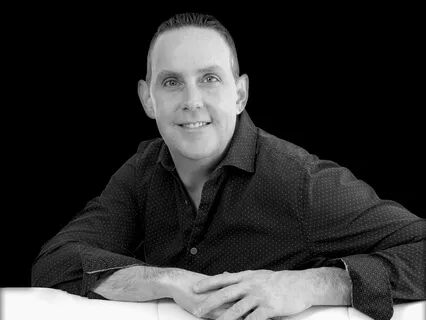
Welcome to Life,
Lessons,
And Laughter with your host Glenn Ambrose.
Hello,
Welcome to Life,
Lessons,
And Laughter with Glenn Ambrose.
How are you today,
Ben?
Good.
Good.
We are talking about procrastination today and how to not let it run our lives.
Okay?
No.
Well,
We're going to do it anyway.
So.
I'm not really ready for this episode.
Can we,
Uh.
Procrastinate?
Can we just push it back a little bit?
Um,
No.
We're going to stumble forward.
If I could just get like,
Tomorrow.
Tomorrow would be great.
As my friend Brian says,
We'll stumble toward,
Toward.
If you're stumbling.
Yeah.
Instead of forward,
Toward your goals.
Stumble toward them.
So,
That way you don't have to be ready for anything.
You just keep moving toward.
And if you fall,
That's part of it.
But you fall toward your goal.
That's good.
I like that.
All right.
Good visual.
Anywho.
Um,
So.
Kind of what I want to open with is what oftentimes I close with.
In some of my workshops.
And that is to give yourself a realistic vision.
Oftentimes we're so caught up in our lives,
We don't take a moment to really look at what our actions or our non-actions are going to do.
And that's how we allow ourselves to procrastinate.
So,
If you look at,
Any type of structure helps with this.
If you can even write down the things you want to take action on in your life.
Even if you don't know what the actions are.
I mean,
If there's areas that you want to take action on in your life,
Sometimes that's enough.
So,
You can either write down the areas that you want to take action on,
Or the actual actions that you'd like to take.
And you just write those down.
And then you look at your life,
How it is at the moment.
Obviously,
There's some adjustments that could be made for the better.
And then,
Once you get a concept of that,
You look at what your life would look like five years from now,
If you don't take any action.
And most often times,
It's going to look very similar to where you are now,
If not worse.
And,
Usually,
Fear comes shooting through people at that point.
You know?
They go,
Ugh!
You know,
When they stop thinking of themselves five years down the road,
Being in the same place,
It's very disconcerting.
And that's because we are beings that are made to expand,
Grow,
Get better.
That's our nature.
So,
When we have a mental projection of ourselves not doing that,
Staying where we are,
It's very uncomfortable.
So,
You know,
When you get that mental picture of where you're going to be five years from now,
If you don't take any action,
It really can feel very uncomfortable.
Then,
You look at what your life could look like five years from now,
If you do take the action.
Imagine what it's going to look like if you do take the action.
Usually,
That's a lot better feeling.
And that's a good way to,
It's a good way,
It's realistic,
It's not hokey-pokey,
It's not weird,
It's factual.
And,
You know,
That oftentimes can at least spark the motivation needed to start taking the action.
I was just thinking that.
.
.
Oh,
No!
Oh,
No.
You were thinking.
.
.
Yeah,
It hurt.
How many times have I talked to you about that?
It hurt.
All right.
Get it out.
I was just thinking,
If.
.
.
What if you.
.
.
If you look and you think,
Well,
If I don't do the things that I'm.
.
.
If I don't do the things that I'm procrastinating on in five years,
Then I'll be just in the exact same spot that I'm in now.
That can be a thought.
But if you're not going forward,
You are going backwards.
That's unrealistic because.
.
.
Because it goes against our nature.
Nothing ever.
.
.
If you're not going forward,
You are going backwards.
Things that you're.
.
.
You know what I mean?
Yeah.
Right?
Like that's a.
.
.
Yeah.
And it's.
.
.
There's kind of two ways to look at it.
It's like,
I envision it with a visual,
I'll put a car on a hill and put it in neutral.
If I'm just in neutral,
That gravity,
That pull of the weight of the car is going to be going backwards.
So,
I'm not staying where I am.
The weight of the procrastination of whatever you are not doing.
.
.
Is pulling you back.
If you're procrastinating something,
It's probably because it's something that needs to happen that you need to do.
Like,
You know,
We don't usually procrastinate things that are easy or that are.
.
.
Well,
Sometimes we'll do that just out of habit.
Right.
You know?
It's just a habit of.
.
.
Or things that have no consequence.
Right.
Yeah.
I mean,
People procrastinate more with things that have a larger consequence on them because there's more fear.
But most people are functioning unconsciously.
So,
Procrastination just becomes like a habit.
And it doesn't really matter what it is.
It's just like living in fear.
It becomes a habit.
I think I know the answer to this,
But is the root of procrastination fear?
Yes.
Okay.
Because there's something.
.
.
Our nature is to expand.
It's to move forward.
You know,
We're made in the image and likeness of God.
That means that our innate ways of being,
Just things that we don't have to learn,
Just our natural ways of being are like what created us.
So,
The universe is constantly expanding.
Always.
You know,
They've proven that scientifically.
So,
The nature is constantly expanding because that's its nature.
So are we.
We need to be constantly expanding.
That's our nature.
That's why you can't take anybody that just lays around the house all day every day and they're all vibrant and full of life.
It's just not.
You need to shut down your natural tendency to want to expand,
To be able to just lounge around and not do anything with your life.
It goes against our nature.
You know?
So,
That's why we constantly need to keep moving and expanding and moving forward.
Otherwise,
That's why when we look at where we are now,
We go,
Oh,
Okay,
That's where I am now.
Well,
You know,
Maybe I'm not completely happy with it,
But that's the facts.
Then we go,
Okay,
What if I'm in the same place five years from now?
We go,
Oh my God.
It's so uncomfortable because it goes against our nature.
It's like,
Oh my God,
No,
That would be,
You know,
And that's if we're procrastinating.
I mean,
Some people,
Well,
No,
Even,
You know,
Some people,
Even if they like where they are right now,
If they're realistic with themselves,
They don't want to be in that same place.
Right.
You know,
If they like their life and they're going,
Oh,
I'm experiencing different things.
I'm doing different things.
I have different feelings and excitement in my life and I do this and I do that.
When they picture their life five years from now,
They might be doing the same things,
But they're doing them.
You know,
They're experiencing them.
They're enjoying it.
So it's not that things always have to change for us to expand,
But we have to constantly be taking part in life for us to expand and become fuller and happier.
And,
You know,
And if we're not,
That's what goes against our nature.
Keep feeding that life force.
Yes.
That we talked about two weeks ago.
Yeah.
All right.
So the big question.
Ooh,
I like big questions.
How do you stop procrastinating?
One of the best ways is structure.
It's just bring some structure into your life.
You know,
One of my favorite quotes,
Which I'm sure I said before is lack of direction,
Not lack of time is the problem.
We all have 24 hour days.
Zig Ziglar.
So it's lack of direction.
There are people on this planet that have a very similar life to whoever is listening to this.
If you're a single parent with a bunch of kids at home,
If you're a married couple that both working,
If you're,
You know,
Whatever situation you're in,
There is somebody else near you that is living that situation too,
But is expanding their life where you're not.
And the reason that they are and you're not is because there's lack of direction,
There's lack of structure,
Focused energy onto what they want to achieve.
You know,
It's it's we're all busy.
I mean,
I can I can wave the I'm too busy flag all day long because I do have a busy life.
But it's and every once in a while I'll get caught up in doing it.
Every once in a while I'll be like,
Oh,
Geez,
I was I haven't stopped all day.
I'm like,
Wait a minute.
You know,
That's not how I choose.
That's not how I choose to live.
So I need to add structure in those times and be aware of what I'm doing and how I'm spending my time.
And these,
You know,
Calendars are a wonderful way,
Whether it be handwritten or I love the computer ones because they can give you little reminders on my phone.
And I mean,
That's you know,
That's how I live my life is is those reminders and going,
Oh,
It's time to do this.
Oh,
It's time to do that.
You know,
And I get a lot accomplished in in one day.
And it's because of the structure that I have.
But the the thing we need to do is start taking action where we are.
Because usually what we do is we go we talk ourselves out of it before we even start doing it.
So you just got to take the action that you're capable of taking before you determine that it's not going to work.
You know,
That's one of the biggest things in procrastination is we live 10 steps down the road and we haven't even taken the first step.
So we go,
Well,
I could write a list.
I could add it to my calendar.
I could set a goal.
I could attempt to take 20 minutes a day to accomplish this.
I could do all that.
But then what's going to happen when there's that extra errand to run or,
You know,
I'm late making dinner because sometimes that happens.
And then what if the kids need homework and help and,
You know,
And then and it's going to fall apart anyway.
So why should I try?
So we figure out how it's not going to work before we even start taking the steps.
And what we need to do is just start where we are.
Take the step where we are.
OK,
First,
I need to make a list of what I would like to accomplish.
Then I need to set time aside each day or each week.
And sometimes it can be 15 minutes,
Depending on what it is.
Sometimes it could be two hours a week,
Whatever.
And if you're looking at your life and saying,
I can't set aside 15 minutes a day or I can't set aside two hours a week,
Then you really need to change what you're doing in your life.
Because,
Honestly,
You do.
And it's because if that's the case,
If you can't take two hours a week for you,
Then you have no hope in being happy anytime soon because you're living your life for everything but your happiness.
You're not worth the way your actions are playing out is that you're not worth anything,
Really,
Because two hours in a week is very minimal time frame.
That's that's not a large percentage of hours in a week.
So if you can't take two hours a week for yourself,
Then you are living your life for your children and you're teaching them how to not care for themselves.
You're living your life for your spouse and you're teaching them that you're in that you're not very valuable because you don't require any time or energy for your boss,
That your job is more important than your happiness is.
Though that's the type of life that you're living unless you take action to do something different.
You know,
So it's this I'm too busy,
Too busy to experience your own life because that's what you're not doing.
You're not experiencing your life.
You're not happy.
And unless you put energy towards your own happiness,
You will not achieve it.
So,
You know,
If you're if you're content and not experiencing happiness or fulfillment or joy in your life,
Well,
I'm sorry that you're there,
But you can stop listening to this podcast.
If you would like more happiness,
Joy and peace in your life,
Then add some structure in and really take a step back and look at what you're doing with your life and where your priorities are.
Now,
As somebody who's never procrastinated anything in their life.
Yeah,
Right.
Do you have a cold?
No,
No,
Just something got stuck in my throat.
Anyway,
As somebody who's never procrastinated anything in my life,
I don't need to know this.
But,
You know,
Maybe somebody out there has a problem creating structure.
Sure.
And,
You know,
Being disciplined or having discipline.
Same thing.
Just the first way that I said it made it sound like somebody was yelling at them.
So how if you are procrastinating on putting the structure into your life,
How do you fix that?
I'm asking for a friend.
Well,
You know,
There is there's all kinds of little tips and tricks that we can use.
And one of them is like using a calendar and working with a life coach.
So a life coach holds you accountable to your actions.
Accountability is huge to get through procrastination.
That's the number one best thing you can do is be accountable to somebody other than yourself.
So that,
You know,
Bringing in a structure like using a calendar,
Stuff like that.
But at the end of the day,
I mean,
Really,
We have to take responsibility for our own lives.
So at some point,
You know,
You have to stand up and say,
I'm not going to do this anymore because I don't want to be where I am five years from now.
I want more out of my life.
And you have to kind of kick yourself in the ass and get moving.
I mean,
There's only so much,
You know,
We can lay out the tools before people.
But if they look at them and go,
Well,
I know there's like 15 tools on the table right there that would fix my life.
But I don't feel like standing up and walking the three feet over to the table.
Well,
Then tough.
Then stay where you are.
You know,
That's that's so at some point you have to just really sit down with yourself.
I think I think the best thing to do with that is what I opened with.
Sit down and look at your life.
Be honest with yourself.
Really take a long,
Deep,
Honest,
Meaningful look at your life and then make a conscious decision what you want to be.
And if you want to be in the same place five years from now,
For some reason,
If that sounds like a good idea to you,
By all means,
Stay where you are.
But if you really sit down and go,
Oh,
My God,
I really would not like that.
Then do something about it.
You're worth it.
There is happiness for you to have and fulfillment and joy.
That's why we're here.
We're not here to suffer and suffer and suffer and not do anything and then die and then,
You know,
Go to the other side and go,
Oh,
Crap.
I didn't really do anything with that whole life.
I had a whole life given to me.
I didn't really do anything with it.
Last week I was talking to somebody and kind of about this.
And we were talking about,
Like,
Where you want to be in five years or whatever.
Well,
Like,
What are the things you want to accomplish?
And like some of them are lofty,
Obviously,
As they should be.
And it's like,
Well,
You're probably not going to do that right away.
And I compared it to at the end of the street that I live on,
Like almost my entire life,
There was an empty lot when I was younger.
And this couple bought it and they didn't have enough money to build a house.
So they built a foundation.
And then the next year,
They took a little bit of more money.
They started putting up a frame and then they kept putting up the frame and then they started doing some interior stuff.
And it took maybe 10 to 15 years to build this house.
But now it's the most gorgeous house in the neighborhood,
Right?
Like by far,
Like in the surrounding neighborhoods,
It's the nicest thing.
It has like a column with like a spiral staircase.
It's gorgeous.
And it was literally built like a little bit at a time.
And then I would sit there and then a little bit at a time.
And they could have saved money for years.
They could have saved money for 10 years and then tried to build it all at once.
And different people do it different ways.
But instead of putting it off,
They said,
I'm going to start now.
Right.
You know,
I'm not going to.
That's an awesome example.
And it's also an awesome example of how there's not one right way.
You know,
Because there's absolutely nothing wrong with the couple that saves for 10 years and then builds it all at once.
It's just a matter of taking the action to save.
You know,
There's there's plenty of people who are sitting there going,
OK,
We should build a house,
But we can't afford to.
OK,
Well,
Are you you know,
What are you doing to try to build a house?
I'd like to build a house.
I'd like to.
So what are the people who will have a house are the ones who sit down with their finances,
Figure out everything and say,
OK,
We could we can actually afford to put a hundred dollars a week.
Into an account strictly for the house and never touch it.
We can afford to do that.
OK,
Let's start doing that.
And you know what?
There might be an emergency in their life.
And they dip into it.
That could happen,
But then they'll replace it as quick as possible,
Or they might.
It might delay that house for a whole year or two years because they had to dip into it for an emergency.
But they'll still they're still walking in the direction of building that house and they'll still have it,
You know,
And it's the same with these people.
They chose to to do it as they could.
And that's just another way of being that worked for them.
And I mean,
That's that's like that's really motivating,
You know,
Visual concrete,
Literally concrete,
You know,
Concrete.
Proof that we're walking towards our goal that had to have been motivating for them to sit there and see that,
You know,
Day after day after day,
Week after week,
Year after year to see their dreams starting to come true.
If there was anything that they could do,
If they're like,
You know what?
Instead of going out to dinner.
We this house is our real goal.
Maybe we should go out.
You know,
I don't think people should stop living.
But,
You know,
OK,
Go out to dinner,
You know,
Once or twice a month and save the rest for your house instead of going out to dinner twice a week.
You know,
Stuff like that.
It's just but they're very motivated because they have something going up,
Becoming into being right in front of them.
And they're also acting in faith.
You know,
They're not sitting there going,
Yeah,
But what if this happens and what if that happens?
No,
They're sitting out there going,
It's going to happen.
And we're going to start right now.
And eventually we're going to get there.
You know,
That's walking by faith,
Not by sight.
They're not looking for reasons why it's not going to happen.
They are acting as if it is going to happen.
And that is walking in faith.
That's that's I love that example.
Yeah.
So it was basically just,
You know,
Instead of procrastinating,
It was like if that's what I if I want a house in five years,
That I should probably start.
Yeah.
What can I do?
What can I do now?
Yeah.
You know,
And people can do that in any area like,
You know,
A lot of people like to travel.
So it's like,
OK,
Well,
You'd like to travel if you'd like to travel overseas.
Do you have a passport?
Yeah.
No.
OK.
Well,
Go get a passport,
You know,
Because you're going to need that.
Do you have luggage yet?
No.
OK.
Well,
When you can afford it,
Get some luggage or,
You know,
Get a savings account.
But it doesn't matter if you put five dollars a week into a savings account.
I did that this summer with skydiving.
You know,
I saw a couple of my friends went skydiving and I went like 17 years ago or something.
And after the second person went,
I said,
That's it.
I've always wanted to go again.
I've been busy doing other things.
I'm not letting another year go by without jumping out of a plane again.
It's not happening.
So,
You know,
I created an adventure group at my business and had everybody put ten dollars aside a week in an envelope.
And I wanted to jump in the warm weather.
So that was at the beginning of summer.
First week in August,
We were going to have enough money saved up to go skydiving.
And three of us went.
Now,
You know,
At the beginning,
I had 15 people,
You know,
Some of them procrastinated and just didn't do it and didn't stick to the plan.
Some of them had situations that came up that were completely reasonable.
But a lot of times,
You know,
With that adventure group idea,
If people wanted to go skydiving and they really stuck to it the way they could,
I bet you at least 10 out of the 15 people that didn't go would have gone skydiving between the first week in August.
And now,
If they were to have kept putting ten dollars a week aside when only when they are capable of it.
Right.
Like they probably were incapable of doing it for a few weeks and then went,
Screw it.
Yeah.
So that's one of the big things about procrastination is it's OK if something comes up in your life that derails you a little bit from what you were planning on doing.
But the first thing you need to do is reschedule it.
OK.
Oh,
Get how am I going to going to get back on track instead of just throwing our hands up and say,
Oh,
Well,
That didn't work out.
Yeah.
Why?
Because you you can put 10 bucks a week aside for two months.
OK,
Fine.
Start the week after that two months.
Start back up.
You know,
And if people had that mentality,
They would be skydiving at some point if they wanted to do that.
And,
You know,
That's so that's what we do when we're saving for things.
If life everybody uses life happening as an excuse not to continue doing it.
Of course,
Life happens.
So if it does.
So you're going to you're going to accomplish your goals in a year instead of in three months.
OK,
Whatever.
You still accomplish them.
If you just throw everything right out the window,
Then you don't accomplish them at all.
You know,
So it's keeping your eyes on the prize,
Getting back on track as soon as you can.
I do it with my personal training clients all the time.
It's like,
Oh,
I can't,
You know,
An emergency came up.
I can't come to the come work out today.
OK.
When can you reschedule?
You know,
It's just when can you reschedule?
It's a half hour workout.
You can fit it in sometime this week.
You know,
You got a whole week.
So let's find out when you can reschedule.
And nine times out of 10,
It happens every once in a blue moon.
Schedules are too tight and it doesn't.
And that's OK.
It's fine.
If every once in a while it doesn't work out,
That's fine.
But you have to do everything you can to try to reschedule,
To try to stay on task.
I have a quote for today.
Let's hear it,
Ben.
The best way to get something done is to begin.
Yeah.
And then don't stop.
Yeah.
You know,
It's it's just when generally what we do is we try to see those the 10 steps ahead,
You know,
And we want to figure out,
We want to know,
We want to control every aspect of it and know everything that's going to happen from now until the end result.
And if we can't figure that out,
Then we go,
Oh,
It's probably not going to happen.
Why bother?
No,
Just start.
Just begin.
Just take that first step.
That's all.
And then once you you you are a different person after you take the first step than you were before.
So that's how things move forward.
If you if you're capable of taking the first step,
Then you take it.
Then you look around for the second step.
Maybe it's what you expected.
Maybe it's something different.
Doesn't matter.
Then you take that second step.
Then after you take the second step,
You're a different person than you were before you took the first.
And there's different opportunities around you and there's different circumstances.
So then you take the third step based on those circumstances and who you are at that time.
And that's how a journey unfolds.
We're not supposed to know how to get from beginning to end before we take the first step.
Yeah.
You know,
Anybody that I just I think it was Gabby Bernstein.
I just got an email like maybe yesterday and it said if and I've seen this before,
Too.
But the title of her video,
Whatever it was for that day,
Was if you want to hear God laugh,
Make plans.
Yeah.
You know,
Because it's true.
I mean,
We can't we're not going to know how everything is going to unfold.
And thank God we'd cut ourselves short if we did.
So it's you know,
It's just keep moving forward from where you are.
I have one more quote.
I will listen to it.
Many great things can be done in a day if you don't always make that day tomorrow.
Hmm.
Yeah.
There's always tomorrow,
Tomorrow,
Tomorrow,
Tomorrow.
That's depressing.
Super,
Super,
Super depressing.
So take action today.
Any little action,
Even if it's even if it's putting on your calendar tomorrow that you're going to take action.
That's action.
Even tomorrow,
You have to be accountable and actually take that action.
You know what else is would be good action to take right now?
What?
You could contact a life coach.
Yeah.
This Glenn Ambrose guy I heard is good for accountability,
Keeping you on track.
He's OK in my experience.
I don't know.
He lets me slack a little.
He's not everybody's favorite.
Yeah.
How could he?
How could you reach him?
You can reach him at life dash enhancement dash services.
Dot com.
Dot com.
All right.
Well,
Thanks.
Thanks for listening,
Everybody.
And thanks for joining me,
Ben.
Oh,
Hey,
Contractually obligated.
OK,
Good.
So we're going to have to make new contracts for you to keep you moving.
So thanks for listening,
Everybody,
And go out there and take some action.
See you.
This podcast is presented by New Shore Productions,
Executive producers Glenn Ambrose,
Benjamin Barber and David DeAngelis.