Welcome to Life,
Lessons,
And Laughter with your host,
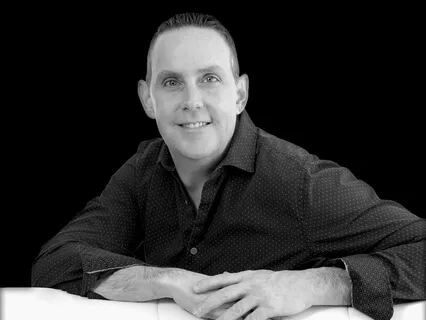
Glenn Ambrose.
Hello everyone and welcome to Life,
Lessons,
And Laughter.
I'm your host,
Glenn Ambrose.
And I'm Ben.
That's how you do it.
Oh,
Okay.
That's the line.
You did really good there.
I did.
Try it.
No,
That's too much pressure.
Hi,
Welcome to Life,
Lessons,
And Laughter.
I'm your host,
Glenn Ambrose.
Yes,
It's the morning zoo.
You're our host.
And hang on to your seat.
Nice.
You're going to need the whole seat,
But you'll only use the edge.
That's horrible.
Wow.
Today we're going to talk about.
.
.
That was too bad for even me.
Oh,
Today we're going to talk about suffering.
Since we're on such a light note,
We're going to talk about suffering.
We're going to really bring it down.
We're just going to put a little shot of reality into you.
And we're going to bring it down into some suffering.
So today is an extension of our last podcast.
And what we're talking about is we started talking about not judging anything as good or bad.
It just is.
So as we got further into that,
We're going into the suffering end.
Because really that's the part that we want to get rid of.
I'd like to.
Yeah.
So that's what we're trying to do here.
I guess some lessons mixed in with this laughter.
So we're going to try to see how we can avoid the suffering or a lot of the suffering that we experience in our day-to-day lives.
So all suffering is resistance to what is.
That's it.
And really what's more absurd than resisting what is?
Yeah,
Speechless.
I am.
It's so profound.
It's very profound and very simple.
And yet it is the resistance to accept what is.
Yeah,
It's it's we just resist what's happening at that moment.
But the point is,
It's happening.
I mean,
So resisting it,
You know,
What's it doesn't do anything except cause us emotional suffering.
Do you think that it's a natural,
A natural thing to resist what is?
Oh,
Absolutely.
I mean,
Because there's a lot of deep situations that suffering is a heavy word like suffering is not the example of sitting in traffic that we used for the,
You know,
The people,
The people that these sirens are going to suffering.
They're suffering,
I imagine.
Well,
They could be physically suffering,
Which is different,
Which we're talking about emotional suffering.
Well,
They could emotionally be suffering afterwards.
They could be.
They could be.
But if they're emotionally suffering afterwards,
Then it's because they're resisting what is.
So we're rolling with the punches.
Absolutely.
There have been no,
In all in all seriousness,
Though,
I don't know why there have been sirens all day going by the studio here and our attention,
Trying to get our attention.
Yeah.
And there was a speaking of suffering,
Though,
Because there's a serious subject like,
For example,
Our neighbors,
A couple of doors down,
There was a fire the other day and a lot of people are,
You know,
There's about 20 apartments there.
Those people are homeless at the moment and businesses that have to rebuild.
And those people are now in a situation where they are emotionally suffering because of this.
And and that's how do you deal with something like that?
Like,
That's a that's and I mean,
It's just like,
I guess,
Probably any form of suffering would be a good example.
That's a beautiful example.
So it's the fact that they need to rebuild the fact that they need to sleep somewhere else.
The fact that they have an actual problem that needs a solution.
That's a fact.
That just is.
That's just reality.
The suffering comes in when they resist that when they say,
I shouldn't have to rebuild.
I shouldn't.
This shouldn't be happening to me.
This is horrible.
When they start judging it as bad and when they start saying this is horrible and it shouldn't be happening.
That's the resistance.
And that's what causes the emotional suffering.
If that and you can take,
You know,
This is a big building.
So you're going to have multiple people dealing with it in multiple ways.
So let's say you take two business owners and one is dealing with it from the situation that says,
OK,
Well,
The fire happened.
It wasn't my fault.
There was nothing I could do to prevent it.
It just happened.
And now I have to do I have to weather the storm in any way that it affects my business.
And that's a fact.
It's part of life.
Things out of the ordinary happen.
It's nobody's fault.
It just is.
And if they go through the rebuilding process or weather whatever storm they need to weather in that space of just acceptance,
It is.
It's they're going to be fine.
And they're going it's they're not going to suffer emotionally through that period of time.
But they will still take the action to rebuild.
They will still weather whatever storm they need to weather.
And they're going to be fine.
It's just they're going to be at peace and ease as they do it.
The people who suffer and run around going,
Oh,
My God,
I can't believe this happened.
This shouldn't have happened.
I don't know what I'm going to do.
That's all needless suffering.
They don't have to do that.
You don't you don't have to suffer just because something bad happened or something that you deem as bad happened.
You can still deal with the circumstances of the situation.
It's just how are you going to deal with it?
If it you know,
In this situation we're talking about,
Let's say it takes a year to get everything back on track as if it didn't happen.
One person who accepts the situation and doesn't suffer through it is going to have a year and they're going to get through it.
And will their life be easy?
Probably not.
But they're not going to be miserable for that year.
The person who is struggling against it,
Against the reality of it happening,
Is going to be miserable for the next year.
And quite possibly because of their misery,
They could get sick,
Which could,
You know,
They could delay.
They're not going to be thinking as clearly because they all caught up in their emotion.
The victim mentality,
Poor me,
You know,
So that they're not going to be even as motivated to do what it takes to correct the situation because they're going to be feeling bad for themselves.
So it's actually detrimental to sit in suffering as you go through that year.
And it could actually extend it for another six months or another year before they get back in their feet because of the added misery that they're including and the,
You know,
The added negativity and obstacles that they're creating in their own way because they're living in that space of suffering.
It's very difficult sometimes to like,
It's one of those things.
I feel like suffering is like you can't see the forest for the trees.
Yeah,
Kind of a kind of a thing like you focus on this one negative thing that happened and your resistance to that causes you emotional pain and then you can't see the other things.
Right.
And that's that's a big that that's and that's another way to kind of phrase it,
Which which what I'm going to try to do is include a solution that we can implement.
Coming from that point.
So like,
What happens when something that we deem as bad happens into our reality that is it like everything closes down like a microcosm and that's all we can see,
Like you said,
So we're focused on the negativity aspect of that and that's all we can see in a stronger the story and the poor me goes the stronger we see that.
So it's just we're just staring at this tiny little problem in front of us and we keep growing it so it looks like a bigger problem and encompasses every area of our life.
But the fact is,
Is it's just one little situation.
You know,
If we have the concept,
If we can conceive the concept that we're going to live,
You know,
A lot of people are going to live anywhere from 70 to 90 years on this planet.
Whatever you're going through for a year or two isn't the end of the world.
You know,
We're going to get through it somehow.
So,
But we,
You know,
You're looking at it at that microcosm and the solution I was talking about a way to deal with things where you don't get sucked into that microcosm so much as to take a giant step backwards and look at the bigger picture.
You know,
Step away away from it and look at things like like I just said,
You know,
From a 70 or 90 year picture or a 10 year block of time.
You know,
I mean,
If if I mean,
I'm 45.
So it's like sometimes I like to look at things in 20 year blocks.
20 years is substantial,
Man.
I mean,
That's a huge.
There's a lot of changes I can have that that changes that happen between when I was 25.
And now that I'm 45.
Are you kidding me?
I'm like completely different person.
And it's so if I can take things at a 20 year block,
It's like I look at some something that has has got a hold of me because things can still get a hold of me.
You know,
It gets a hold of me and I start staring at it going,
Oh my God,
Oh my.
Oh,
Wait,
Wait a minute.
You know,
I mean,
Really this I've been through plenty.
I mean,
20 years from now,
This is going to be a hiccup.
You know,
It's a bump in the road.
It's whenever this is what this is one thing.
Another way I phrase it that has helped me quite a bit over the years is when anybody says is life easy,
Everybody goes,
Oh,
No,
No,
No.
Life's hard.
Life can be very difficult at times.
It really is.
And everybody will agree with that.
And I'll agree with it.
And I'll get up on that soapbox and go,
Boy,
Life can be difficult.
It sure can.
Nobody's going to argue with that.
And then all of a sudden,
When something difficult happens in your life,
The first thing we do is fall into victim mode and we go,
Oh,
My God,
This shouldn't be happening.
I shouldn't feel like this.
I have to.
It's wrong.
It's bad.
No,
This is what it feels like when life is being difficult.
We said that life was difficult.
We knew that life could be difficult.
We knew that we would go through difficult things.
So now that we're in one,
Why are we freaking out so bad?
You know,
And I would tell myself that I'd be like,
Glenn,
This is this is what it feels like.
And this is what it looks like when life is difficult.
You know damn well sometimes life is difficult.
You knew it was coming.
So now that it's here,
Don't act like you're all shocked and you're some horrible victim.
It's just life happens to everybody.
And this is what it looks like.
You're going to make it through.
You know,
And that was enough of a reality shot in several situations to pull me through without getting sucked into it.
There's very like deep there's deep things like like losing stuff in an accident or a fire or losing a loved one or even like,
You know,
Things that are as horrific generally accepted as horrific as that.
But even like things like a bad breakup can that you hold on to can cause emotional suffering.
Right.
You know,
And it's it's weird to like you almost need an outside force to help you take a step back and see that stuff.
A lot of times because we're not used to it.
This is all you know what we discuss on this show is all healthier ways of living and things that we that we need to do to enhance our own happiness in our lives.
And if everybody if this was a Norman society then you wouldn't need my show.
You know,
So it's this is learning new ways.
And it's it does.
It takes some work.
And one of the big things that we can do is get that outside perspective.
You're right.
It's it's a huge aspect because the norm is to get sucked into whatever misery you're going through.
That's the norm in our society.
So if we're going to do something other than that,
We need to you know,
One of my favorite lines is you can't solve a problem with the mind that created it.
Yeah.
Mind Stein.
So it's you know,
If you're if you're sitting there in misery,
Try a lot of times pulling yourself out of it is a very difficult thing.
You need that outside perspective.
You need to have somebody go.
Well,
I understand that you're feeling this way.
But what if you looked at it from that way?
You know,
And what if you applied this principle to that situation?
You know,
And to help pull you back,
That's I mean,
That's one of the main things I do as a life coach is to give people that outside healthy perspective because they're stuck in the way that they view things.
You know that that that they've they've created a way of viewing things over their lifetime.
And that's how they view things.
So that's that's where they are.
And when I say outside perspective and I think you would agree with sometimes like it's not your friend or a relative a lot of time.
Like there's no you know,
The resistance of a situation and the emotional suffering is deep in most cases where it exists.
And it's a natural grip on someone.
And,
You know,
You know,
You're already aware that the person,
The people that are closest to you are going to tell you it's OK or to look at the bigger picture or to think about those things.
And that just becomes white noise.
Right.
Like,
Well,
Actually,
It's worse.
It's worse than white noise because it perpetuates it.
You know,
If you go,
I mean,
You know,
That's one of the things that I try to do as a friend to people who that I consider friends is I try to be honest with them.
You know,
And that's hard sometimes because it's it will blindside people a lot of times because they used to considering somebody that's close to them or a friend to them,
Somebody that's going to back them.
No matter what.
And I just I honestly can't do that.
I can't I can't sit there and go,
OK,
You're just suffering for no apparent reason.
And I'm going to support you in that.
You know,
It's it's I have a I mean,
I can I can I can feel for somebody and I can be like,
I understand why you feel that way.
And I think it's completely normal.
You know,
And there's just good reason for you to feel that way.
However,
You don't need to stay there.
What if you looked at it from this perspective?
But yeah,
Most people that care about you.
I mean,
If you think about it,
If we take if we take the the what the labeling of what's right and what's wrong out of it and look at the realistic situation.
I mean,
If somebody comes up to you and says,
Oh,
My God,
This girl broke my heart.
She she did this.
She did that.
She did this.
And I hate her.
How easy would it to be to just go,
Oh,
Absolutely.
She's just a jerk.
You should hate her.
You poor thing.
You know,
That's so easy to do.
And then and that's nine times out of 10 what the person's looking for anyway.
So so they feed into it.
They're like,
Yes.
Thank you for understanding,
You know,
And it's and boom situation solved.
Nobody had to feel uncomfortable.
It was an awkward and you move on,
You know,
And that's what happens most of the time.
But it's a lot more difficult to take somebody in a very fragile position like that and go,
I understand why you feel that way.
And you know what,
What she did wasn't right.
However,
You know,
Now you can live your life.
She obviously wasn't good for you because you don't want to be with somebody that treats you that way.
So now you found out who she is.
You can let her go.
Now you can go find somebody that will treat you the way you deserve to be treated,
You know,
And to try to move it in that direction.
That's the direction of healing.
The other direction is the direction of induced suffering.
Yes.
Let's let's talk about how right you are and how wrong she is.
And then all that does is the reason that we get a high out of that or we only do what works.
We we do that because it raises our our ego.
Our ego gets a lift out of that,
You know.
So if we go,
OK,
I'm wrong.
I mean,
I'm right.
She's wrong.
Therefore,
I'm better than her.
And my ego gets stroked.
So there we go.
That's good.
You know,
And that's why we do it.
And we mistake that little good feeling of superiority for.
A healthy outlook.
It's not a healthy outlook.
It's just building up your ego,
You know,
Which will come crashing down on you later.
Now,
What about in the in the,
You know,
The most severe case of or one of the most severe cases of suffering,
Which is losing a loved one and the non acceptance of that reality?
And that's got it.
That's not something that you want to say like,
Well,
Yeah,
But get over it.
And right.
Right.
And that's well.
And that's that's perfect because that's exactly what you don't want to do.
Yeah.
But get over it is.
That was beautiful because I think in the last podcast,
I said something about we will will go to black and white.
That's how that's how we knock away healthy things.
Not that you were trying to knock away a healthy thing,
But it's just a lot.
I usually do.
But that's no,
You don't.
That's what we do,
Though.
That type of thing.
You know,
Like if if I'm talking about how you shouldn't fall into the trap of suffering,
Then somebody else goes,
Well,
Yeah,
I'm not going to walk up to somebody that died and said,
Yeah,
Get over it.
You know,
Like that's how far to the extreme will go to prove a point to keep us trapped in our misery.
You know,
But in that situation,
I mean,
The fact that somebody doesn't the fact that somebody passed away,
That's just a reality.
We all pass away.
We all die.
So it just is.
That's not good.
It's not bad.
It just is.
It just that's reality.
Everybody dies.
So somebody died.
OK.
Now,
If we can accept that,
They're gone.
Period.
Now,
The other aspect of it,
Where most of the suffering comes from is when when they start going,
I don't want them to be gone.
They're resisting what is I don't want them to be gone.
I want them to be here.
I miss them.
Well,
That's a whole separate issue.
You know,
The fact that they are gone is that's just reality.
It's not good or bad.
It just is.
Now,
The fact that you don't want them to be gone.
Well,
That's another issue.
And if we separate those two,
It's a little bit easier to deal with what we do.
Generally,
A lot of people when a death occurs,
They combine those two.
This person died and it's bad and miserable and it's all blurred into one ball and they just stay trapped in that misery.
But if you separate it,
You go,
OK,
That person died.
Well,
That's I mean,
Death isn't bad.
I mean,
If death is bad,
We're screwed because everybody is going to die.
We're screwed.
But so,
I mean,
The fact that somebody died isn't a bad thing.
The fact that we didn't want them to die,
Our resistance to that could that could cause some trouble.
So let's deal with that.
That's the thing that we're dealing with.
You know,
So so that's but if you look at it realistically and you go,
Oh,
So basically I'm sad because I really enjoyed them being around me on this physical plane and they're not going to be able to do that anymore.
Well,
That's a lot more manageable,
You know,
And at the end of the day,
Some people are going to be able to take that information,
The way I laid it out,
And they're going to be able to go,
Oh,
All right.
Well,
You know what?
Since when I look at it like that,
It removes all of my suffering.
I get it.
I'm good with that.
I'm fine.
And other people are going to be able to go,
Well,
No,
I still miss them.
Maybe I know that I don't have to miss them or,
You know,
But I do.
And I just miss them.
And sometimes I get sad.
Well,
That's OK,
Too.
But it's it's on a lot more manageable level than when we than when we combine it all.
Oh,
They died and it's horrible.
And,
You know,
Right.
Sadness and suffering are two separate things.
Yeah.
Well,
Sadness kind of usually couples on the suffering.
It's we have I mean,
You can be sad without suffering.
Yes.
Yeah,
That's what I mean.
Obviously,
Suffering is an immense sadness.
Right.
Yeah.
And it's and that's actually a good point.
It's very suffering is kind of an extreme way or that that's the more feelings of sadness.
We're going to have them.
We're going to have feelings of anger.
We're human.
We have emotions and and we if we weren't supposed to feel any of them,
Then we wouldn't have them.
You know,
So there are going to be things that happen that's that we're going to feel sad.
OK,
Well,
Feel sad,
Feel it and then let it go.
You know,
It will automatically go if you feel it.
If you allow yourself to feel the sadness,
You'll feel it and then it will be released because that's what an emotion does.
Its job is to be felt and and it will automatically go as it's felt.
If you don't feel it and you stuff it down,
That's when we get the problems.
You know,
The this resistance and the suffering and just I just watched a show the other day that that it was a cool story.
It was this David Beckham went out into the rainforest and he just retired.
David Beckham,
The soccer player.
Yeah.
Yeah.
He retired.
So apparently this this trip to the rainforest with a few of his friends was a way to get away from from all the limelight and everybody who recognizes them all over the world and just kind of get away from it all.
You know,
So he went out there and at one point of the show,
He was talking to this guy who lived in the jungle.
And the guy says,
What do you do for a living?
He's like,
Oh,
I played professional soccer for 22 years and a guy who's like,
Oh,
Really?
And he had never he didn't watch TV.
He listened to soccer on the radio.
And so he didn't recognize Beckham.
So the guy was like,
He says,
Oh,
Well,
What are you doing in the middle of the rainforest?
And and Beckham said something about I want to get away from the pressure,
You know,
And the guy looked at him and goes,
Yeah,
We don't have that here.
And it was so cool.
It was so matter of fact.
Yeah,
We don't have that here.
He knew what pressure was and he knew that they didn't have it there.
You know,
It was he's like,
You know,
We I live in a little house with my wife and children and the forest supplies everything we need.
You know,
They have food,
Shelter,
Clothing.
They have everything that they need right there.
And there is no pressure.
He did.
Beckham had to go.
You know,
Beckham's a big success.
You know,
This is what we label as success and wonderful.
And,
You know,
When he got home,
He also said he didn't have a day off for a month and a half.
And this is when he's retired,
Like and he's our picture of success.
And then we all stand back and we go,
Oh,
My goodness,
Look at these people in the rainforest.
They don't have TVs.
They don't have transportation.
They don't have,
You know,
Grocery stores to get food and all these poor people.
You know,
We need to help them and all that stuff.
And this guy's out there happy as can be.
And he starts talking about like people over here and all the conveniences.
And he's it was almost like,
Yeah,
You you poor things.
You have all those pressures and stress that you have to deal with.
And it's like so it's you know,
I thought that was a cool story,
Not only for the for the just such a different perspective,
But how we can,
You know,
Put you can take Beckham,
Who's not used to this,
Put him in a rainforest and he's suffering out there.
He's struggling.
And he's like because he's not in the situation that he's in and just dealing with it.
You know,
When he was struggling against the situation he was in,
He was suffering when he just kind of accepted where he was.
He was fine.
This guy over there is just he's he's sitting in the rainforest and he's loving it.
You know,
He's loving his life.
Now,
If he were to come over here,
It would be new to him.
And he'd be he'd be struggling.
You know,
Trying to struggle to fit in.
David Beckham.
So to sum everything up,
Sometimes you need to find an outside perspective because when you're close to a situation and you're not dealing with what is,
It's you're resisting it and it's causing grief and suffering.
And that is a dangerous thing that builds upon itself.
Yeah,
It's just,
You know,
If if you could.
One thing I do with with some of my workshops is I'll say like,
OK,
Look at look at the negative aspect of this.
So this situation,
Look at suffering.
OK,
Suffering.
We obviously don't like it.
So what would what would your life look like if you weren't suffering?
If you got rid of,
Like,
Say,
75 percent of the mental and emotional suffering that you go through,
What would your life look like?
Well,
If you stop for a minute,
That's awesome.
If you just get rid of 75 percent of the mental and emotional suffering that you went through on a day to day basis,
I mean,
That that would be a phenomenal step towards living a happy life.
You know,
So,
You know,
Once once you get that big picture and it's like,
OK,
Now it gives you the motivation to try to.
Implement these things that we're talking about today,
Just experiment with it,
You know,
Next time you're in a traffic jam,
Look at it and go,
OK,
I can't change what's happening right now.
So what if I just tried accepting it,
You know,
And just play around with it in your own life and whatever situation that you can on a small level.
And if you continue to do it on the small levels,
Then it'll be easier when the big things come.
Absolutely.
Yeah,
You just build on it and enhance,
You know.
Well,
Thank you for this has been a big topic covering two episodes.
Big.
And if anybody has any more questions on this or any other subject,
Where can they contact you?
Contact me at my email.
That's G Ambrose dot L.
E.
S.
At Gmail dot com or my website life dash enhancement dash services dot com or my Facebook page.
Life Enhancement Services on my personal Facebook page,
Glen Ambrose.
This was fun for such a deep episode and suffering and suffering and all that stuff.
Well,
That's why it's life lessons and laughter.
Got to keep it somewhat light.
I mean,
That's that's part of reducing the suffering,
I think.
If it's like we can learn and experiment and try to get better without just dragging ourselves down,
Making it so damn serious.
All right.
All right.
Well,
I will keep it in mind and I will let you know how it goes in two weeks from now.
Sounds good.
All right.
Thanks for joining us.
We'll catch you next time.
This podcast is presented by New Shore Productions,
Executive producers,
Glen Ambrose,
Benjamin Barber and David DeAngelis.