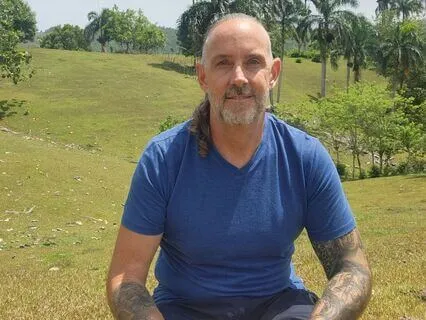
Welcome to Life,
Lessons,
And Laughter with your host,
Glenn Ambrose.
Hello,
Welcome,
Welcome,
Welcome,
Everybody.
So today,
Today we're having an interesting topic,
Talking about sin,
And specifically through our thoughts.
You know,
Is this possible?
What do you believe sin to be?
You know,
It's,
I've had varying opinions on this topic over the years,
And that's one of the reasons why I wanted to do this show,
Is because to me,
It seems like there's a fair amount of religious statements that I don't know that people really understand,
And I'm sure that there's many that I don't understand,
Right?
So when I get,
You know,
A deep insight on something that seems to make sense,
I like to share it,
Because who knows,
Maybe it'll resonate with you too.
So it's,
You know,
I've heard,
And I'll just touch on sin briefly,
Because that's not really what this is about.
It's more about the dynamics of what people might call sin or might call something else.
It's just the dynamics of how things work.
And so sin,
You know,
I heard at one point that sin was originally translated,
A more appropriate version would be to say that to sin is to miss the mark,
Like an archer misses the mark.
You know,
And to me,
That made sense.
Now,
I've heard varying opinions on that since.
Some people say,
Yes,
That's true.
Some people say,
No,
It's not true.
I don't really care.
What I found is to.
To follow what resonates and feels right to me.
So that's what I do.
So to me.
Sinning,
Yeah,
I just don't have this perception that God has this ego that.
That makes him trying to control us all the time,
Otherwise,
Why did they give us free will?
So,
Like,
I think we have freedom of choice,
And I think that the the consequences are basically built right into the actions,
And we'll get into that more as I unfold this.
But I don't believe that there's this this such a,
I don't know,
Moral compass,
I guess we'll say.
Yeah,
It's if you do the right things,
You feel good.
If you do the wrong things,
You feel bad.
So like that,
It's I've lived both both lives.
So like,
I don't do the right thing because I'm scared that God is going to condemn me or something,
Or I'm not going to get into heaven or something like there's no fear motivating me is my point.
I do the right thing because it feels right,
And I'm happier and I love myself more when I do it,
And I think that that's in alignment with what God wants.
So that's that's kind of how I guide my actions.
But what I so I specifically want to touch on this topic because I was doing a reading in this book 365 through with the science of mind.
It's a daily reading book that I absolutely love.
So I was I was doing my morning reading and this this reading that part of it just jumped out at me and I really conceptually saw it in another way.
So at the top,
It says from Proverbs,
Or as he thinketh in his heart,
So is he.
OK,
So so that I'm like,
OK.
You know,
It just kind of jumped out at me,
And then as I started in on the reading,
That's just like a little quote on the top as I started in on the reading and dove right into that right at the beginning of the reading.
And this is where the concepts really started.
Oscillating,
Oscillating around inside of me,
And I started contemplating them.
It says,
Note that Proverbs does not say that we are as we think we are quite the contrary.
It says we are as we think.
Here is a vast difference.
We might imagine ourselves to be very clever while remaining quite dull.
But if our thoughts are brilliant,
We also are brilliant.
As we think in our heart,
So are we.
The heart stands for the center of consciousness,
The point from which everything that we are circulates.
So I think I'm going to stop there because that's the main part and really,
You know,
What was jumping out at me is says.
Proverbs does not say we are as we think we are quite the contrary,
It says we are as we think there's a vast difference.
Now,
OK,
So this is.
We are not as we think we are.
It says we are as we think,
OK,
And just a little.
Qualifying concept.
It goes on a little bit later to touch on the cause and effect mentality of the spiritual dynamics as they are set up.
So what I mean by that is.
If.
We believe that there's our thoughts are what creates our reality.
So if we're thinking a particular way,
We are going that's how we're going to experience life.
OK,
So if I'm if if I just say on an unconscious level,
If I feel that.
Others can tell me what to do.
Because that was something from my childhood,
You know,
Well,
Everybody's childhood,
I mean,
You know,
As a child,
You're always told what to do,
Right?
And your thoughts and opinions don't really matter.
So you're you're being told what to do.
So,
Therefore,
If I carry that around with me in adulthood,
Then when somebody tells me I need to think or believe a certain way,
I'm going to get defensive.
Why?
Because I think that they have some sort of control over me.
That's,
You know,
And that belief system is left over from my childhood,
Let's say that belief system can be put in place at any time.
So so if I believe that other people can tell me what to think or what to do or if they have the right to determine whether I'm right or whether I'm wrong,
If they have some sort of control over me,
Then I'm going to get very defensive when somebody starts attacking my way of thinking.
However,
If I'm if I don't think other people can control me and I think I am the master of my own destiny and I think that other people have the right to their opinions and other people even have the right to voice their opinions.
Well,
Then I'm not going to get defensive if they tell me they disagree with me.
Right.
They're going to say,
Like,
And I think this is a good example for me because I don't I don't think there's any doubt that I have some of this residual in me.
And this is I believe it's one of my life lessons.
I've actually had past life experiences and visions and regressions that I've seen in many of my past lives,
How I was held down,
Blamed for things I didn't do,
Hurt.
My loved ones were hurt because of my actions,
All kinds.
And when I didn't do anything wrong,
I mean,
By that.
So like there was this control over me that was.
Very severe in past lives,
And I believe that that's one of the things that I came here to clear up and clear through because I just have no respect for a blind respect for authority,
I don't really have any respect for authority at all.
Like,
I don't really care.
I will.
I just don't I just don't I just don't really care what other people say,
Like I don't care that.
Like when I was a child,
I didn't care that a principal was a principal.
Of a school or a teacher was a teacher like I don't care what your title is,
There is no authority and a title to me like so I will respect people that respect me.
And as a child,
I got disrespected very often.
Adults thought I should respect them,
But they didn't have to respect me.
And I.
I believe I understood on an unconscious level that that's not true.
So I didn't really care that I was a child,
I was just like I would just talk in a way I would I would give respect if it was given to me.
And if I was disrespected,
I would disrespect back and I would never feel any guilt or shame because of that,
Because they did it to me.
I was like,
Well,
Like I'm supposed to respect somebody as they're crapping on me.
That doesn't make any sense.
I did.
I didn't.
Yeah.
Yeah.
But they're a teacher.
Yeah.
But they're an adult.
I'm like,
I don't give a crap who they are.
Like,
It doesn't make any sense.
Like.
Why would I respect somebody that is crapping on me?
OK,
That's just like I just didn't understand that dynamic.
You know,
I came in hardwired to basically give the middle finger to authority and just go,
No,
You have no authority over me.
And as you can imagine,
I didn't go very well as a child.
Right.
So all these years later,
This is why I'm using this as an example,
Because I still have the ability to get defensive sometimes,
Especially like if I'm voicing my opinion and then if I don't feel heard,
I can that can be a trigger for me.
So like if if I'm speaking my truth and somebody says,
No,
You're you don't have the right to that thought process or you're you're close minded because you think that way or.
You think you're better than me because.
You don't agree with my perspective or something like if if people aren't hearing what I'm saying or challenging my perspective,
I can get defensive,
Which,
Of course,
I try to pull back on.
And part of that is because of my whole life of past experiences.
Right.
So I suffered a lot in childhood,
But also in adulthood.
By consequences,
I experienced by people that were in positions that were more powerful than I was.
So.
You know,
I experienced difficulties because of that,
Because many people in power think that I'm supposed to.
Cow down to them or something because they're in a position of power and I just see them as equals,
Like,
Well,
I don't think I'm better than anybody,
But nobody is better than me.
So to me,
Everybody is an equal.
I don't care who it is.
I don't care if it's the pope or the president or anybody else on the planet.
As far as I'm concerned,
They're just an equal and we can interact with in a respectful way or we cannot and I will play either game.
So like this is why I'm using that as an example.
So I so my thought now,
Now,
If I'm if I'm sitting here and I go,
OK,
How do how do I view myself?
You know,
I'm going to get back to the specific reading for as he thinketh in his heart,
So is he.
OK,
So as I think it's in my heart,
As I think it's in my heart can be shown through my actions.
What I actually end up doing is a.
Representation of how I think it's in my heart.
Now,
I can sit back and I can rationalize my behavior,
I can in my head,
I you know,
I can think,
Well,
I'm a really nice guy.
I'm a good guy,
I try to do the right thing.
I try to be respectful.
I try to respect others,
But.
In my heart.
If I feel that other people can have control over me.
And if they try to control control me,
Then I have the right to lash out towards them verbally.
That's how I feel in my heart,
That's my unconscious belief system,
That's on a deeper level.
If you challenge me,
I will.
I will view that as an attack and attack back.
Well,
That's that's that's deeper,
OK?
So I can sit here all day long and say,
Like,
Oh,
I you know,
I don't attack people.
I'm a loving,
Kind person.
And then and I can rationalize when I when I when my behavior doesn't align with that and I lash out,
I can say,
Well,
I have a reason for lashing out like they said something to me first.
It's like,
So I think I in my head.
I think like I'm clever,
I'm a good person,
I'm kind.
But yet in my heart,
If something is is deeper and overrides that and makes me act in a particular way.
I'm not sure if I'm explaining this well.
Then then it's more powerful.
That's what I truly am,
Not what I think I am.
Well,
I'm a good person.
Yeah,
I mean,
I'm not doubting that I'm a good person or not,
But it's.
I don't run around attacking people.
Well,
Unless they trigger you.
But but I don't tell myself that right in my head,
I try I try to treat people with respect.
I'm kind,
I'm loving.
I'm a good person,
Yeah.
And all those things are true,
And that's why I can rationalize it.
Unless they trigger me.
Right,
So am I truly a loving,
Kind person in a lot of ways,
Yes,
But in some ways,
No.
Not when I'm verbally attacking somebody because I felt attacked because I'm not.
Solid in that aspect of who I am,
There's something on an unconscious level that still thinks that people might have some power over me and I can't allow that in this lifetime.
Right,
So the more confident I get.
That people don't have power over me,
I'm a sovereign being and I have nothing to defend,
Then the less I will lash out.
Which I think I've made tremendous ground on this particular issue,
But but I'm not perfect at it.
So this is this is what we mean.
My point here is that we rationalize our behaviors on a mental.
Plane.
We can behave in certain ways and because of our rationalizations.
We pretend that that's not who we actually are,
Right,
So let's go to something that that is a little bit more specific here with this this mindset,
So.
So,
You know,
The other way.
To say this is that like.
God tells us in the Gospel of Matthew that we can sin in our minds,
For example,
By being angry with someone.
You have heard that the ancients were told you shall not commit murder and whoever commits murder shall be liable to the court.
But I say to you that everyone who is angry with his brother shall be guilty before the court.
So here,
Jesus,
And I'm just reading this here,
Jesus said a person can commit the sin of murder both by action and by becoming angry for the anger motivates the action.
God restates this principle in a different way in the following passage.
You have heard that it was said you shall not commit adultery.
But I say to you,
Excuse me,
But I say to you that everyone who looks at a woman with lust for her has already committed adultery with her in his heart.
OK,
So now when I was younger,
I was I was like,
I don't know about that.
Man.
Like,
You know,
Seeing an attractive woman,
You know,
I don't I don't know that.
Lust is a very tricky word,
Too,
You know,
Because we have this negative connotation to it.
And there's an aspect of lust that is just natural,
Like it's just a natural physical attraction can be misconstrued as lust.
So but to me,
They're different,
Right?
Lust is kind of the a more advanced version.
Maybe not to everybody,
But so.
So to me,
I'm like,
OK,
So I look at a woman and I find her attractive in a sexual way,
That means that I've committed some sort of sin like that's ridiculous.
And in some ways,
Yeah,
You know,
I still kind of think to some degree that,
Yeah,
That no,
You know,
That's not necessarily true.
So but use that word lust.
OK,
Lusting after somebody instead of just find somebody attractive.
Now,
All of a sudden,
To me,
That word implies like this conscious connection,
This a lust.
It's more of this driving pull.
You know,
It's just not a fleeting thought.
It's like you're ruminating,
Oh,
I really want to be with this woman or I really want to do this thing.
So so like,
You know,
When you start getting into that,
Now all of a sudden you're attaching to the fleeting thought.
It's no longer just some fleeting thought.
You're attaching to it,
Therefore putting energy towards it,
Which now all of a sudden we're talking about the the.
Cause and effect law.
OK,
So so like.
Even so,
I guess here is my point.
It doesn't matter if we do it physically or not,
It doesn't matter if we actually go commit the sin.
Because the energy of it is what contains the punishment.
OK,
So if I am lusting after some woman in some inappropriate way,
You know,
Obsessive like whatever,
Some,
You know,
Really latching on to that thought,
Feeding it energy,
Lusting like that is transpiring within me already.
It doesn't matter if I go out and do it.
So it's this statement doesn't mean that thinking it is the same as going out and doing it.
That's not what it means.
It means that thinking it has just as negative a consequence internally as going out and doing it.
OK,
Hopefully you guys can see the difference between that.
It it's not the same because like if you're lusting internally,
Then you're not acting out or,
You know,
Let's use committing murder,
Which would be even a better example.
Like if if you don't go kill somebody and that person is not dead because you didn't act on your thoughts,
Then you didn't take a life.
Their family isn't in mourning.
Their children are not going to be raised without a parent.
You know,
There's all kinds of realistic aspects that are different because you didn't act on it.
And that's a good thing,
Right?
But we are living spiritual existence.
We are trying to clear our own energy field of negative energies.
So if we are walking around thinking about killing somebody,
You want justifying in our mind why it's OK,
It's OK to kill somebody.
Then what we are doing on an internal level is we are stripping the humanity out of that person and minimizing them into an object that is capable of being killed.
Without really considering their humanity or how bad that is.
Or let's just say we don't we go,
OK,
No,
I don't want to kill them.
I'm just going to walk around being angry with them for the next 30 years.
OK,
So use that as an example.
So what's going on inside of us?
What are the statements that people talk about?
Through spiritual terms about carrying anger.
Well,
They say it's like drinking poison,
Expecting the other person to die.
Oh,
So so it's like me drinking.
If I'm walking around with anger inside of me,
It's like I'm drinking the poison.
Well,
Why would they say that?
Well,
It's because of what's going on inside of me because I am carrying that anger.
I am hurting myself by carrying that anger.
Well,
What else do they say?
They say carrying anger is like picking up a hot stone,
Intending to throw it at somebody else,
Only you get burned.
Oh,
OK.
So again,
It's referencing that if I carry anger,
Then I am the one experiencing the hurt.
Because I'm carrying the anger,
So it's the problem is me,
It's not about the person I'm projecting it out.
It's about me because it's transpiring within me.
This is the point,
This is what this is talking about.
We this is this is why there is no such thing as righteous anger,
Because righteous anger would imply that carrying around anger inside of us hurts the other person and doesn't hurt us.
Right.
Otherwise,
What?
Otherwise,
Why would you want it?
What why would you want to try to rationalize a way to call it righteous?
If it's just hurting you and you understand that the anger is hurting you.
Then you wouldn't justify carrying it around and try figuring out some intellectual way to call it righteous.
You wouldn't do that.
You would be like,
I'm just hurting myself.
I don't want to hurt myself because that goes against nature.
So I'm going to try to get rid of this anger.
You can do that by reframing things,
You know,
Whatever.
At some point you have to shift the way you're looking at the situation so you are no longer a victim of the situation and you are now a victor of the situation or no longer a victim,
But now a survivor or,
You know,
You have to reframe the way you're looking at it because anger is generally experienced because of a perceived victimization.
Right.
So that's I almost went further off into that,
I'm not going to.
So.
So that this is this is a good example of what I'm talking about.
So.
It does not say that we are as we think we are.
Hey,
I'm in the right.
This person attacked me.
I have the right to be angry with them.
I have,
You know.
That's rationalization,
Rationalizing why we have the right to be angry.
Right.
And that's on an intellectual.
And that's how most people view themselves.
This is why we can judge and condemn so many other people's people when we're doing the same thing ourselves.
Because when we do something negative,
We rationalize why it's not our fault,
Why we're the victim here in a situation and why it's OK for us to be angry,
But then when somebody is angry at us,
We go,
What the heck,
Man,
I didn't do anything.
Well,
In their mind,
You did.
That's why they're angry with you.
Just like in your mind,
They did something to you in their mind,
You did something to them,
It's the same thing.
So everybody's running around rationalizing why we're angry with somebody else.
And all feeling righteous,
This is why there's no such thing as righteous anger.
Which I didn't know I was going to talk about righteous anger today,
But that's where it went.
So.
This is this is how we can judge and condemn others and still think we're good people because we well,
There's a reason why I do my behaviors.
They're just attacking me for no I've never done anything to them and they're just attacking me.
But they attacked me,
So now I can attack them.
Well,
That's not how they perceive it.
Most most people don't just run around attacking innocent people for no apparent reason or feeling angry towards somebody.
So it's not we are not as we think we are,
Because as we think we are is based on the rationalizations that are in control of our thought processes.
It's like like sometimes I tell people,
I go,
If you feel like being lazy or I'll just stick with that,
If you feel like being lazy one day,
Then be lazy,
Allow yourself to be lazy,
Be like,
I'm choosing to be lazy.
I'm consciously choosing to be lazy.
I'm going to be lazy.
Just allow yourself to be lazy,
Because if you if you do it consciously like that,
What's going to happen is you're not going to allow yourself to be lazy for too long.
Because there's no rationalization you're using,
You're actually using truth,
You're just deciding to be lazy and being lazy when there are things that you should be doing is a is a negative thing.
And as long as we're honest with ourselves about it,
At some point we'll kick ourselves in the butt and go,
You know,
As long as we have some self-esteem,
Don't get me wrong.
There are there are exceptions to this rule.
People who are very in a hopeless state or depressed state can just reinforce this forever.
But as a general rule,
If you're doing something like granting yourself the ability to be lazy and you have a negative connotation of being lazy,
Well,
Then after a day,
Two days,
Three days,
Whatever,
You're going to be like,
OK,
That's enough of that.
I got to get up and do something.
Why?
Because you didn't rationalize your behavior away.
So you're only going to participate in negative behavior for so long before you're going to go,
Well,
I can't just keep doing this.
I need to go do something.
And you'll go correct the situation.
You'll go take some action,
Action and stop being lazy.
But most people,
What they do is they go,
Well,
I'm going to be lazy today.
Oh,
That doesn't feel good.
Well,
I've been working really hard for the last 40 years,
So I deserve a rest and then they rationalize it and go,
OK,
Now that can go on for weeks,
Months,
Years because they rationalize their behavior.
So they don't think they're lazy.
Why?
Because they rationalized it.
Now,
Are they lazy?
Yes,
They're they're they're lazy.
Well,
Why don't they think that they're lazy then because they're rationalizing their reality and they're making excuses for it.
OK,
So but being honest,
If we know we're doing something that we shouldn't be doing,
We'll stop doing it.
Natural.
Right,
This is why it's important if we understand this now,
All of a sudden we start understanding to take responsibility for our energy that's within us.
This is like I said in the beginning,
You know,
I didn't I don't do the right thing because of some fear of some God or fear of some consequence.
I don't really have fear of consequences.
I do the right thing because I like the way that I feel inside when I do it.
I like me more.
Myself,
Love grows.
I feel closer to the energy of love,
Which I perceive as God.
Why?
Because I'm vibrating at the same rate as God is.
That's why not not not because God said thou shall not do something bad.
And I go,
Oh,
No,
God said I shouldn't do something bad and I really want to do something bad.
But I want to be close to God.
So see,
This is why fear doesn't work.
Because if you do something out of fear of consequences,
Even if it's God's consequence,
Oh,
I'm not going to get into heaven or God's going to strike me down or I'm going to go to hell or whatever.
Anything fear based like that,
Like.
I can't use those as motivators.
It's because I don't really have a fear of consequence.
Now,
Do I want to go to hell?
Of course not.
Of course not.
But I can't walk around not doing things that I want to do because of some hypothetical thing that may or may not happen.
That is this ethereal out there perspective.
Like,
I understand that that works for some people and it's OK if it does.
It just doesn't work for me.
And quite honestly,
I don't think it works for a lot of people dynamic wise.
I don't think it works for a lot of people as well as they think it works.
It may curtail their behavior.
But if you're curtailing your behavior out of fear of something instead of out of love,
There's a consequence to that.
Right,
So.
If I want to do something,
I do it.
If it's in alignment with what I believe to be right,
I'm not going to go like,
Oh,
You know,
Oh,
I want $10,
000 so I can go walk into a bank and rob it and walk out with $10,
000 because I want it now,
Like because stealing is wrong.
When I if I steal and I did plenty of stealing when I was young and alcoholic and in another life,
I didn't feel bad about my stealing.
But it's just I thought,
Hey,
They had I want I took.
They'll get over it,
They have more than they need,
They'll be fine,
You know,
Usually I stole from stores,
I didn't I didn't really like stealing from people,
I saw people as people,
I saw stores as conglomerates making a bunch of money off a bunch of poor people.
Like,
You know,
That was just my perspective at the time.
So.
So like,
I don't steal because I don't like thinking of myself as a thief.
That's why I don't steal,
I don't it's not because I'm afraid of getting caught or I think God's going to punish me.
I just don't like how I feel thinking of myself as a thief.
I don't like that.
I love myself more when I align myself with values of honesty and love and truth and stealing is not part of that energy.
Right.
So so if I don't steal,
It's I'm not stopping myself from stealing,
Even though I want to.
I'm moving towards loving myself and towards love in general.
Therefore,
Closer to God.
That's what motivates my behavior.
I like walking around in a body that vibrates of self-love.
I enjoy that feeling better because now don't forget,
You know,
Like I've been on this journey for 21 years,
So for 20 years and I'm just talking adult years now,
I'm not talking about my childhood,
20 years of adulthood,
I walked around vibrating at a rate of somebody who didn't love themselves,
Who rationalized their behavior,
Who made excuses for their behavior,
Who who made poor decisions,
Who hurt others.
I've vibrated at that rate and I don't like that.
I like vibrating at the rate that I have in the last 21 years,
Where as a general rule,
I'm a loving person and I love myself more and I make good decisions and I do good things and in alignment with what other people might call moral values.
Like morals,
To me,
Implies that like.
There's some sort of a code that somebody wrote down or something,
And to me,
It's just in alignment with energy.
Like,
Yeah,
I have my own morals.
Are they the same as everybody else's?
I don't know.
If I feel something vibrates at the rate of love,
Then I want that part of my vibration.
Who knows,
I might be mistaken with something.
Maybe my brain convinced me that this was an aspect,
An expression of love when it wasn't or something.
You know,
Who knows?
I can make mistakes.
But as long as I believe that it's part of love.
Then I want to incorporate it in my life,
In my body,
In my vibrational being and my energetic being.
And the better I do it that.
Then I actually.
Then I actually am as my as I am in my heart,
In my heart,
I want to be a good person in my heart,
I want to.
Resonate with love,
I want to vibrate at the rate of love,
I want I want to be a loving person,
So when I do loving things,
It's in alignment with my heart.
And the more I do that.
The more I am the person that I want to be.
The more I rationalize my behaviors in my mind.
The less I am the person I want to be,
Because I can't change who I am.
If I'm walking around angry,
I'm angry.
If I'm walking around feeling like a victim,
Then I am a victim.
Now,
It doesn't matter that on an intellectual level,
I go,
No,
I'm not a victim,
You don't understand,
Blah,
Blah,
Blah,
Blah,
Blah.
Or my anger is righteous.
Like,
You know,
I think that we should all be love.
And this person obviously isn't.
So I hate them.
And so therefore,
I'm right.
It's like,
Well,
Yeah,
But you're walking around vibrating at the rate of hate.
Yeah,
But it's righteous hate.
Like,
I have the right to be angry at this person.
That doesn't change just because you think you have the right and it's appropriate to be angry towards somebody does not change the vibration that's transpiring inside of you.
It doesn't change it.
It's you're still vibrating at the rate of hate.
And that is what you truly are.
You are a being vibrating at the rate of hate,
Not not solely.
I'm not I'm not trying to minimize you into that one thing.
That's not what I'm saying.
What I'm saying is,
Is that it's an aspect of who you are.
And that aspect of who you are,
Doesn't matter what you tell yourself on an intellectual level,
How you rationalize it,
How you're right and the other person's wrong,
It doesn't matter.
You're experiencing the hate inside of you.
This is how the sin is built.
I mean,
The punishment is built into the sin.
And this is how we can sin just through thought instead of just action.
As if we're walking around with anger inside of us.
That is a sin.
Well,
In my head,
I think I'm a good person,
Even though I have anger inside of me.
OK,
Well,
In your head,
You can think that all day long.
Doesn't really matter because in your heart,
You're angry.
And that's what you truly are.
You are not as you think you are.
You are as you are in your heart.
You are as you as what you experience in your heart.
If you're experiencing anger in your heart,
Then you are an angry person.
And you are suffering the consequences of that anger being inside of you already,
That's your punishment for your sin.
If you believe in punishment,
I don't even like using that word.
I don't think we're punished.
I think it's just a natural consequence.
There's a natural consequence.
God is not punishing us for experiencing hate.
He doesn't have to punish us.
It's built into it.
If you are walking around with hate inside of you,
You are experiencing the natural consequences of walking around with hate inside of you.
And that is you are suffering.
Your vibration is not one.
It's a little less.
You know,
Let's just say you have anger about one issue,
Right?
Well,
You are that much less a loving person because you can't vibrate that love and anger at the same time.
It's either love or anger,
You can't have both.
So if you're vibrating out 90 percent love and 10 percent anger,
Then that's what you truly are.
Right,
Which is wonderful.
I mean,
I'm not saying we have to be perfect.
I don't know if any of us are ninety ten,
But,
You know,
Whatever,
You know,
Like so so let's just say we're trying to get to a.
A seventy five percent,
Twenty five percent,
Like let's say we just want to be seventy five percent love,
Twenty five percent other stuff negative just to give ourselves leeway,
Right?
Just this is strictly a hypothetical experiment here.
So the goal,
We'll say,
Is to just try to get seventy five percent love,
Twenty five percent anger.
And right now we are vibrating at sixty five percent love and thirty five percent anger.
Well,
How do we get to the seventy five percent that we're trying to get to?
Well,
We have to forgive.
We have to stop rationalizing.
Some anger,
10 percent worth of the stuff we're carrying around.
We have to shift our belief systems.
We have to stop rationalizing.
We have to be honest with ourselves and go carrying around anger.
And that's hurting my vibration.
That's hurting my closeness to God.
That's hurting me.
It's not hurting anybody else.
It's hurting me.
The fact that I'm angry with this person is not affecting them.
And even if it were affecting them,
Let's say it's a family member.
And it really bothers them that you don't talk to them anymore.
That's their own stuff like that.
You're not actually really affecting them.
Like if you forgave them,
They would.
Well,
You don't even have to tell them you forgive them,
They'd still be walking around with all that stuff inside of them for years.
And you're over here feeling fine.
So this is what's meant by this,
OK?
So hopefully when we understand now we can understand that it's not a punishment,
It's a natural consequence if we are.
Thinking things and I'll go back to the.
Adultery thing for a moment,
Like if you're if you're thinking about somebody else's wife or somebody else's husband and you just keep ruminating and ruminating,
Like what you're doing is that's not loving,
That's not respectful towards the other person's spouse or or their relationship in general,
Or even it's not even respectful for the person that you're lusting after because because like they're already in a committed relationship.
So you lusting after them is not respecting what they want.
What they want is they chose to be in a committed relationship.
You that it's not loving to disregard what other people choose for themselves.
So so this is what is meant.
So so you're carrying all this negativity inside of you.
And if you carry it around long enough,
It will it can start controlling your behaviors.
Sometimes it doesn't,
Sometimes it does.
You know,
So it could actually make somebody.
Make a pass at this person.
Or even end up sleeping with them.
Well,
Where does that start?
That's what always kills me.
Like when people end up.
Sexually with somebody that they knew they shouldn't be with,
Their rationalizations are hilarious.
They're just off the charts.
They're like,
Oh man,
It just happened.
And I'm like,
It's just what do you mean it just happened like you were standing there and your clothes fell off and somehow this gust of wind like from opposing sides pushed you two together and you were having intercourse and you don't even know how like that's weird.
Well,
No,
No,
No.
Like,
Well,
You know,
We went out and had drinks.
Be like,
OK,
Why did you go have drinks?
Well,
We're just going to have drinks like,
Well,
Didn't you tell me last week that you were interested in them?
But didn't you have a past relationship with them or didn't you know you were attracted to them and that you shouldn't be with them?
Yeah,
But it was just drinks.
No,
It was a stepping stone.
You were rationalizing your behavior and it was a stepping stone to get you to do what you really wanted to do.
See,
This is why the mind,
It's cause and effect.
Like if we keep holding these desires and and cultivating them and giving them energy,
Eventually we start taking actions to actually bring that into being.
That's what we do.
We're creators.
So if we harbor something that we want to create long enough,
We'll start trying to create it.
Even on an unconscious level.
You see.
So so I'm going to wrap up with this now,
Hopefully you guys got a better understanding about what this concept is,
Right,
And how it works.
What I don't want you to do is to stop freaking out and judging yourselves over every thought that you have.
Right.
It's not about that.
It's not about that.
Thoughts come and go,
Man.
Our brain is a computer.
It just shoots stuff through all the time.
And sometimes,
You know,
We can have some we can see somebody attractive and be like,
Wow,
They're attractive.
So what?
They're attractive.
You know,
A flower is pretty like it's not that big of a deal.
It's when we attach to these things,
When they're not unconscious,
Just spit out thoughts,
When we attach them and feed them,
That's where the problems start.
That's where we actually take it and start bringing it into us.
And one,
We can start cultivating it into a possible rationalized experience that we may end up creating,
Or we just walk around carrying it,
Depending on what type of energy it is,
You know,
Like like the lust.
We could actually start trying to create the anger.
And both of these go both ways.
It's just clearer to look at it this way.
And the anger we can carry around within us and just consistently damage our our own vibration and our own self love.
So so like once we latch on to these things and we harbor them and we rationalize them and we tell ourselves why they're OK and blah,
Blah,
Blah.
That's where the problem is,
Is because we think we are the way we think.
And we're not we are the way we are in our heart,
What we truly believe,
What we're harboring on the inside is who we truly are.
And if you are harboring a ton of stuff on the inside,
Don't worry about it,
Just start chipping away.
When you're honest with yourself,
It's just you're going to choose differently because you're just hurting yourself and it's not natural to hurt yourself,
So we all harbor some stuff,
Don't worry about it.
Just bring it up.
Reframe it,
Some things will be as simple as letting go because you are no longer lying to yourself and rationalizing your behavior.
See,
This is why I want to talk about this concept,
Because this as as the punishment is built into the sin,
So is the solution.
Once we look at this is how the truth shall set you free when you when you just open up to the truth and you stop BS in yourself and rationalizing your behavior and you just see the truth,
You go,
Oh,
I didn't realize I was doing that.
Isn't that silly?
I won't do that anymore.
A lot of things are going to be that easy because why would you why would you do something that's just hurting yourself that's going to that causes you to to experience negative consequences?
You wouldn't.
So you'll just giggle and put it aside and not do that no more.
All right,
So as deep and as important as this concept is,
Which is wonderful and awesome and profound,
Don't beat yourself up over it,
That's just another aspect of negativity.
Don't do that to yourself.
Use the truth to ship to set yourself free.
Guide who you are through the heart.
All right,
Cool.
All right.
Well,
Thank you guys for listening.
That's going to be it for me.
So.
I will talk with you soon.
Hope you enjoyed it.
Peace.