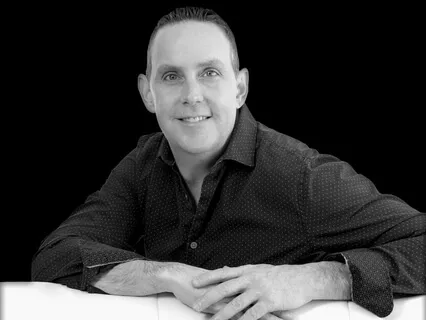
Welcome to Life,
Lessons,
And Laughter with your host Glenn Ambrose.
Hello everybody.
Welcome to the show.
We are back after.
We haven't recorded in a little while,
So it just feels like I've been on hiatus or something.
The last time we recorded,
There was snow all over.
Yes,
And now there is none.
No,
It was treacherous to get into your house.
Yes,
And now it's a more peaceful,
Serene environment.
Yeah,
Now it's really nice out.
We do both have long sleeves on,
But it's nice.
But it's coming.
It's coming.
The coldest weather is coming,
The warmer weather I should say.
I don't want to judge it.
I don't want to be too sensitive.
That's a great segue.
What are we talking about today?
Sensitivity.
So we're talking about sensitivity today.
So sensitivity,
It's rampant in our society.
There's a lot of people who are,
I mean,
There's always been sensitive people,
But I think the generations that are coming up are coming up more sensitive because of the shift that's happening.
It's going to serve them well as they move forward to be able to be sensitive to others and to be even sensitive to their own feelings and the own things they're going through.
So I mean,
It's going to serve them well,
But we're in this society where we're in the middle of a shift and it can be kind of difficult when you're sensitive.
I was sensitive growing up.
So I mean,
I would go through things as a young person and it would affect me deeply.
I think that's because I didn't know how to deal with my sensitivity.
I was very sensitive,
So I felt things real strongly,
Which could be a benefit.
It can heighten my awareness and it can be a big benefit,
But I allowed myself to get hurt very often because of that sensitivity.
If somebody was mean to me,
I took it to heart.
So that was really difficult and caused a lot of confusion growing up.
And I think part of what we need to do is if we're sensitive,
We need to really learn to stand in our own strength as much as possible.
So the dog chased the cat there for a minute.
Like literally for you people listening,
My dog just went after the cat and it just kind of took us off for a minute.
So that's a huge issue today,
Being sensitive,
Being oversensitive.
Yeah,
That's what people.
.
.
I don't think there's such a thing as overly sensitive.
People say that a lot.
I don't think it's true.
It's just people are more sensitive than other people and it's just natural.
I don't think you can be overly sensitive.
It's just you need to learn how to deal with it.
You need to really be able to stand in yourself and the self-confidence that you have because if you're not standing in that,
Then every time something gets thrown at you,
It can really knock you off center.
So with that sensitivity,
It will serve people when we learn to use it in our lives and we grow into who we are and we're confident and it can really be a beautiful,
Beautiful asset.
And that's its intended purpose.
I don't believe that God makes mistakes.
It was an intended purpose for us to become.
.
.
To be sensitive,
But there's that other side to it that if we don't really understand it and we're not really standing in our own truth,
Then people can use that sensitivity against us and sway us.
So we really need to be able to stand in who we are and learn that as early as possible.
That way,
Every time somebody throws something at us,
We're not taking it personally.
So it kind of heads down that avenue of the four agreements,
Don't take things personally.
Right.
Everything comes back to the four agreements with you.
Yeah.
That's why it's such a good book,
You know?
It's like all the spiritual lessons overlap.
So they're constantly overlapping and the closer you get to the truth,
Or the more you simplify,
The closer you get to the truth.
So the more you simplify,
All of a sudden you start seeing that this stuff's very simple and it does come back to really core,
Basic little truths that if you implement in your life,
You'll see how they heighten or they benefit your life in a lot of different ways.
Don't take things personally,
Manifest in all kinds of different ways.
Can you make a blanket statement?
Yes.
Is sensitivity a good thing?
Is sensitivity a bad thing?
Can you not make that blanket statement?
Is it how you use sensitivity?
Well,
Yes and no.
So like at first when you asked that question,
I said,
Yeah,
I can make a blanket statement.
Sensitivity is a good thing.
It has to be a good thing because we didn't make it.
It was divinely created in certain people that they're more,
Everybody's sensitive,
But that some are more sensitive than others.
So if it was divinely created,
Then there's nothing wrong with it.
But then as you kept talking,
I was like,
Well,
Wait a minute now,
We can judge it as good and bad.
We can use it as good and bad.
People can try to use it against us for good and bad,
But that's just how we use it here on planet earth.
So because in this realm on the earth,
We have yin and yang.
So depending on how we look at it,
It can be a good thing or a bad thing,
But it's all perception.
So if somebody uses your sensitivity against you and you go,
Oh,
That's a bad thing,
They shouldn't have used it against me.
But then all of a sudden you get hurt and you go,
You know what,
I can't continue allowing this to happen.
I really need to learn to stand in my truth so I don't get swayed every time somebody tries to use it against me.
And then you ground yourself in your truth and then you're able to use your sensitivity for good.
Then was that person using that sensitivity against you a good thing or a bad thing?
It caused you to take responsibility for your life and for your gifts and use them for good.
So at the end it was a good thing.
At the moment it felt bad.
I think sensitivity is just a really touchy subject.
It's a sensitive subject.
It's a sensitive subject.
Yeah.
It always makes me think of when,
And this might just be because this past weekend I did sound for a play.
When you're using microphones,
Right,
There's something called the gain and it measures the sensitivity.
And when you're using wireless microphones,
If you turn the sensitivity up,
If you don't turn the sensitivity up enough,
You're not going to pick up anything.
Right.
But if you turn it up just a little bit too much,
You get feedback and you get that horrible sound that everybody hates and it's way too much and it picks up everything and it just screeches at you.
And I think that's a good metaphor for sensitivity.
It's very delicate.
You need it.
But then if it goes too far,
You're letting everything in,
Which is what a microphone does if you turn up the sensitivity too loud,
All of the sound comes in and then it gets overwhelming.
Right.
So it's a gift,
But you need to learn to be able to handle that gift and use it properly.
And that's just like every,
I think everything that we have is like that.
There's a lot of people listening to this,
I'm sure,
As well as a lot of people in our society are empaths.
They're very empathetic and a lot of people,
So they can feel what other people are going through and when they're going through something and they feel it,
It's difficult.
So when you're feeling somebody else's feelings,
All of a sudden you're like,
If you don't know how to control that and how to use it to your benefit,
Then all of a sudden you're on an emotional roller coaster and it's difficult.
It's really difficult.
I mean,
I'm an empath and when I first started doing life coaching and working with people,
I would feel everything that they were feeling and take it on.
And I mean,
It was exhausting and it was difficult.
And very early on I sat down and I was like,
If I can't learn how to manage this,
There's no way I'm going to be able to be a life coach because I'm just going to burn out.
This is just way too much.
So I had to learn my own way of navigating that that worked for me.
And I did.
I did.
I can still connect to people deeply,
But I don't take on their emotions and I don't take on and by not taking on their emotions,
Then I can still connect because my empath ability,
But by not taking on their emotions,
I don't get the cloudiness that comes with emotions because emotions cloud our vision and we don't see things clearly.
So since I'm not getting the emotional aspect of it and I'm not getting the cloudiness that comes with that,
I can see the answer even clearer.
So I can still use my empathic abilities to connect with people on a deep level and understand them deeply,
But I don't have to go on the emotional ride with them.
I can kind of stand on the outside of that and help them through it.
But I needed to learn that,
You know,
And the first part was understanding that nothing that I was divinely given is a mistake.
It's not a mistake.
So sensitivity isn't a mistake.
There's nothing wrong with anybody that's more sensitive than others.
It's just a matter of learning how to manage it.
And I'll take it a step further.
It's actually sometimes an aspect of society learning to deal with the sensitive people.
You know,
I think the real,
Real,
Real heightened sensitivity we're seeing in autism and ADHD and stuff like that,
You know,
Those are highly sensitive children that are coming into this world and they're coming in at a large rate.
There's a reason for that,
You know,
And do I know what it is?
I don't know exactly.
No,
But I think if you have a large group of people coming into a society that are heightened,
That have heightened sensitivities,
Then we're going in the direction of living in a world with heightened sensitivities.
You know,
I just don't think the society's caught up to these children yet.
I think as they grow,
Society is going to kind of catch up to them.
So I think they're kind of leading us down the way of becoming more sensitive.
That's really interesting.
That's a that's that's an interesting thought.
I was I don't I don't want to talk too much about the like,
You know,
People on on on the spectrum or anything,
Because I don't know enough about it to to just to speak on it.
But that's a that's a really interesting topic that you just brought up.
And I would love to get I think it'd be really cool to get to get someone in here who could who could,
You know,
Share more about that.
Yeah.
Yeah.
That'd be a good idea for our future podcast.
Yeah.
And I think we're let's get some more interviews.
So going back to what you were saying about the social and the social implications of sensitivity,
Social sensitivity.
Yeah.
There seems to be a lot more of that now.
You know,
You hear people that don't like how politically correct everything is getting.
Yeah.
And you know,
Everybody's too sensitive now where,
You know,
Back in my day,
It was blah,
Blah,
Blah,
Blah,
Blah.
You know,
Yeah.
And that's a kids used to play outside and.
Yeah,
It's a it's a double,
You know,
It's a double edged sword because I mean,
You know,
You know,
Back that in a certain way,
There's more than one way to look at it.
In one way,
If you're if you're kind of growing up in a close knit environment where like it's kind of like siblings,
You know,
Siblings go at it and then they won't like each other.
But then,
You know,
The next day they're playing with each other again.
And then because they live in the same house and they kind of have to,
You know,
So like in my community,
Like like in my little neighborhood growing up,
There was a certain aspect of that same dynamic.
So like somebody could say something really mean or do something really mean.
And then the next day you had to find a way to get over it and play again.
Otherwise you couldn't play.
So you know,
So you kind of learn to not take things personally or take them to heart too much,
You know,
And some of that.
And so,
I mean,
If people are talking about that,
Sometimes there's a little,
You know,
Okay,
I can looking at it from that perspective,
I see where there's a benefit.
But there's also the other side of that coin where it goes.
Yeah,
But everybody treated each other like jerks.
You know,
What about that?
Right.
You know,
What if we lived in a world where everybody did everybody didn't walk around crapping on each other?
That'd be neat.
So then maybe we it'd be a little easier to learn how to not take things personally if we weren't walking around crapping on each other all the time.
So you know,
It's not as cut and dry.
We tend to romanticize the past like it was this big euphoria that we lived in.
And it really wasn't,
You know,
I mean,
That's,
That's one of the biggest misconceptions that I think that we have with people walking around romanticizing the past.
Like it was glorious.
Like you got shot over a card game that you know,
You don't have to worry about that.
Today,
Things have gotten better.
You know,
It depends on who you're playing cards with,
I guess.
Yeah.
Well,
Yeah,
It's not as rampant.
I mean,
You know,
You're to move your family from the East Coast to California.
Like that took years and half your family died along the way.
It's like now you can just hop on a plane.
It's it's a big difference.
You know,
We have things have gotten better in a lot of ways and things have gotten very difficult in a lot of ways too.
So it's,
You know,
It's where we're on the learning curve though.
So as things change,
Of course,
You know,
What does change feel like?
We've talked about that a lot.
Change feels comfortable.
Yeah,
It's uncomfortable.
And you kind of in one way,
You kind of like the old way of doing things,
Even if it wasn't really working for you that much,
It was comfortable and it was kind of normal.
So then you kind of lean back,
But then but then you found a better way and you know it's better.
So you're trying to implement that.
And then since you know it's better,
You really believe in it.
And then so you so you lean in that direction.
But then those doubts come back up because you're feeling all uncomfortable and you're not sure and you think you might want to go back the other way.
That's what change feels like.
And that's what we're in the middle of.
So you know,
When we when we're moving into a new way of being,
Of course,
There's going to be some people going,
Well,
Geez,
They're just too sensitive.
You know,
Why?
Because it's different,
You know,
And it's going to take a while for the masses to adjust to a new level of sensitivity.
But that's where we're going.
And if if at the end of the day,
It means that we just don't treat each other like crap,
I say it's progress.
It's a bold statement.
Yeah,
Yeah.
I'm going to go out on a limb here and say that if we don't treat each other poorly,
This is a good thing.
You're a radical.
Yeah.
I should run for office.
Never get elected.
So I want to go back to not taking things personally,
Because I think that that's a big point in all of this is when you're sensitive to other people's actions.
Right.
I feel like it's really easy to take those things personally.
But if you can understand,
I think that this is what the four agreements talks about in this chapter of not taking things personally.
And I know that we have talked about it in the past.
When things that happen that might affect you because you're more sensitive from someone else,
It has way more to do with them than it does you.
Oh,
Yeah.
How's everything to do with them?
But if you're sensitive,
You're more susceptible to internalizing that.
Right.
So,
So like,
Or if you're sensitive.
Sorry,
I don't want to say if you're sensitive,
Like sensitive is a blanket statement.
Like if you're sensitive on that matter.
If you're sensitive to that specific subject,
Right?
You know?
Yeah.
And if you're and if you're more of a sensitive person,
You have a larger likelihood of getting affected deeper by something like that,
Where somebody else might be able to shake it off a little bit easier.
You know,
That's why it's important to understand that when somebody takes an action,
It has everything to do with them.
You know,
It's it has nothing to do with us.
Even if it's even if it's directed at us,
You know,
It's it's not natural.
It's not good for somebody to.
Nobody is sitting there and going,
You know what,
I really want the best for myself and mankind.
So therefore I'm going to lash out in anger towards this person.
That doesn't make sense.
So for somebody to lash out at somebody else,
They are not in their right mind thinking calmly,
Clearly,
Insanely about the situation.
What they're doing is lashing out with the pain that they're feeling inside.
So and that applies to every situation.
You know,
That applies to a kid yelling at somebody else at lunchtime.
And it applies to somebody,
You know,
Walking up randomly,
Putting a gun against somebody's head and pulling the trigger.
It's the same thing.
It's not it's not rational behavior.
You know,
For some reason,
They thought that that was the right thing to do at that time.
And it obviously wasn't.
It's an example of unconscious thinking.
You know,
So that doesn't mean that we don't hold those people accountable for their actions.
What I'm saying is,
Is that it doesn't have anything to do with the other person.
It had something to do with them that was going on inside of them that made them believe a lie or a false idea that lashing out in anger was the right choice.
And it's obviously not.
You know,
I've been I've been spending a lot of time around a toddler recently.
Yes.
And it's taught me a lot about,
You know,
Patience and and and understanding that just because they're upset about something doesn't mean that there's a good reason for it,
You know,
Or that you should internalize that or that it has anything to do with you whatsoever.
Yes.
You know,
It's their own experience.
And I don't think that there's the more time I spend with the with the toddler who is as he grows older,
Becoming more and more defiant sometimes.
Yeah,
They do that.
Yeah.
I'm just I'm just noticing that there's there's not that many there.
There's more similarities between,
You know,
Dealing with adults than I would have realized.
Oh,
My God.
Yes.
Yeah,
We kind of all act like that.
Yes.
All the time.
That's I heard it said that that adulthood is just the continuation of learning the lessons we never finished learning as children.
Oh,
It's crazy.
Because it is.
It's the exact same stuff that we work through with adults is the exact same stuff you work through with children.
It's just on a different level.
You know,
Like I see stuff with my son that that comes up in his world.
And I can take absolutely any issue that he has in his life that he struggles with and he has to deal with.
And if I look at the core of the issue underneath it,
I can apply it to something that I'm dealing with in my life.
Yeah,
Every time.
You know,
Not sometimes every time.
So it's like the and that goes again to simplifying things and getting to the core issue.
There's not that much stuff we have to deal with.
It's just it looks different on the surface.
So you know,
Oh,
Well,
You know,
I have to deal with this and I have to deal with that.
I have to deal with that.
I have to deal with.
Yeah.
Well,
That's all time management.
Yeah.
Which is underneath that is self love and balance.
Oh,
It's like everybody.
Everyone that you interact with when you're walking around is either,
You know,
Overtired,
Irritable about something.
They have something that they need to change that they don't want to that they're resisting.
And you wonder why I have a job.
Yeah.
So so they're all dealing with something that you know nothing about and the way that it's going to come out at you is a rude comment.
Cutting you off in traffic.
Yeah.
Well,
I had anything,
You know,
Not holding the door,
Not holding the door.
You know,
People people just just just a disgusted look in your direction.
Absolutely no reason.
People get so upset because of like basic simple courtesies that other people don't do for them.
Yeah.
And all it is is that you're living your life from your perspective.
And in that particular moment,
You saw an opportunity for somebody to be just everyday normal human kindness,
Courtesy,
Courtesy,
You know,
Just to to allow you this normal little courtesy.
They were so caught up in their world that that courtesy didn't even occur to them because it just caught up in their world.
They're thinking their own thoughts.
God knows what's going on in their head.
You know,
It just didn't occur to them.
It doesn't mean that they're not a courteous person.
It just for some reason didn't occur to them in that moment.
And we take it so personally.
Oh,
My God,
I'm such a wonderful person.
I'm always courteous to others.
Baloney.
There's times when you're caught up in your head,
When you when you're sitting there,
Listen to the radio all alone in your car and you go,
I don't like this station.
I think I'm going to change it.
And you go to change that station.
And then all of a sudden,
You kind of cut somebody off a little bit and you go,
Whoops,
I was just changing the station.
My bad.
Didn't even notice.
Whoops.
And you continue down the road and the other person in the car is going,
I can't believe that person did that.
It's just a simple courtesy.
What were they think?
You know,
But but you dismiss it because it's just part of your life and somebody else internalizes it.
So,
Um,
I would think of myself as a nice person.
I would agree with that.
And,
And yet,
You know,
Like two or three months ago,
Dave and I were coming from recording a podcast and we stopped somewhere to get food.
And it was just a simple interaction with somebody and they left.
And Dave just looked at me and he was like,
What,
What's wrong with you right now?
I was like,
What do you mean?
He was like,
Do you have any idea how you just talked to that person?
I was like,
What?
What do you like?
I'm fine.
Everything was I mean,
And he was like,
Oh,
You had an attitude.
Wow.
Yeah.
I was like,
I have no,
I didn't know that that that's unconscious living.
It happens.
You know,
It happens sometimes.
It's I felt so bad.
And since then,
I've tried to make sure that I'm more conscious of it because anytime that I am being conscious of it,
I try to go above and beyond being friendly with what most people do.
Yeah.
And that's why the most important boy,
This keeps coming up lately.
The most important thing to do in our lives is to live consciously,
Slow down and pay attention to what you're doing because most of where our lives go awry is when we're not paying attention to what we're doing.
We're just going so fast in our lives that just things happen.
So obviously,
So obviously we missed a week with the podcast.
And one of the reasons that that happened was because I got sick.
And the reason why I got sick or maybe not the reason,
But like,
You know,
A good,
A good,
A good portion of it.
If you look at the week and a half before that,
I'm just going straight up.
Just going straight through not living consciously,
Like going 90 miles an hour the day before.
Yeah.
The day before I woke up sick,
I had,
I was like from like five o'clock in the morning,
Five or six o'clock in the morning until like two o'clock in the morning.
The next day I had barely drank water.
I barely ate,
You know?
Yeah.
And I was never not doing something.
And you're sensitive.
Yeah.
You're a sensitive person.
So your system doesn't allow for that.
You know,
There's different sensitivities in levels and people.
Your system just doesn't allow for that.
It's like,
No,
I can't,
I can't,
I can't function when you're doing this to me.
No.
So it shut down.
And that was the fourth or fifth day in a row of not that,
Not that intense,
But like it had built.
Yeah.
And I just,
So now I'm like,
All right,
What am I,
You know,
What am I doing?
What's today like?
What's going on here?
So.
So if you,
If you learn from it,
Then it served its purpose.
I'm trying to,
Yeah.
Yeah.
So it's,
You know,
That it is that,
That sensitivity that's,
And that's why,
You know,
Like,
Oh,
Sensitivity is bad.
Oh,
No,
It's not bad because we have the,
If we use it in our favor,
We have the ability to learn from things quicker,
You know,
And we have the ability to connect with people on a deeper level.
And we have,
We have all these wonderful things that if you're living a spiritual life,
If you're living a life that is conscious and connected and really allows for everything that brings joy into your life,
Like being conscious in your experiences,
Being able to connect deeply with your friends,
Being able to really experience deep joys and stuff,
You know,
Without taking advantage of,
Or dismissing things and really feeling things on a deep level.
Those are all symptoms of being sensitive.
So if you're using sensitivity in the right way,
It's a huge asset,
You know,
And it is a vehicle for us to connect better and experience more joy.
That's if we use it the right way.
But if we're,
We're walking around like a raw nerve where everybody,
Everything everybody else does triggers us,
Then it's going to be a heck of a bumpy ride.
So it's all about taking,
You know,
Us learning about our gifts,
Learning about ourself and learning to manage that,
That gain dial,
You know,
We need to be able to,
If we put things in perspective in the right perspectives,
And we see that other people's actions don't and words don't have to be our truth.
But yet we can use our sensitivity to heighten our experience here.
Well then,
Then it's all a win-win.
And when it's a win-win,
It's spiritual.
So there,
Take that.
And you just got to make sure that you're sensitive enough to let it in,
But not enough to get the feedback.
Yeah.
Like that microphone.
Yeah.
And understanding that the noise,
If you do hear some of that noise,
That's really not,
That's none of your business.
Right.
That's not anything you need to bring into your picture.
You're letting too much of it in.
Right.
So you can,
There can be noise all around you.
And just because you're aware that it's happening doesn't mean,
You know,
You're using your sensitive,
Your sensitivity poorly.
You can be aware that it's there.
You just can't bring it into your world and internalize it.
You stop bringing it into your world and internalizing it and making it part of your experience.
Well,
You know,
Then,
Then you're off.
So all right.
Well,
Thank you very much,
Glenn.
Great to be back doing this.
Yes.
Where can people find you?
They can find me on,
I finished all the rebranding and everything.
So the new website's up and you can find me at glenambrows.
Com.
Glenn with two N's.
Awesome.
And just letting everybody know that the podcast is going to be,
The podcast page is going to be revamped and you're going to be able to find us on more platforms pretty soon.
Sweet.
Yeah.
And we're going to finally be in the Google Play Store,
I think.
Oh,
Good.
And again,
I'm getting a lot of listens on Insight Timer too,
Which is nice.
So thank you guys very much.
If you do listen to the show on iTunes or wherever you listen to it,
Please rate it,
Leave a comment that helps the algorithm and helps more people find the show.
Absolutely.
And reach out and shoot me.
I love getting,
I've had a big increase in people reaching out and saying hi.
In the last several months.
So please continue doing that.
I love hearing from the,
From people and how it's affecting their lives and stuff.
So awesome.
All right.
Thanks,
Glenn.
All right.
Thanks everyone.
OTW is the best show on YouTube and이고colored he is so wonderful he's a little weird,
But