Welcome to Life Lessons and Laughter with your host,
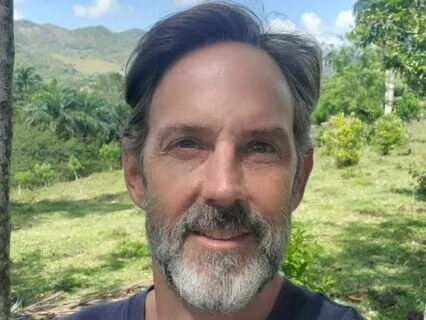
Glenn Ambrose.
Hello,
Everybody.
What's happening?
So today I'm going to be doing a sweating podcast.
You know,
As you most of you know,
I lived in the mountains in Dominican Republic and there are different things that happen up here than more developed countries will say.
So right now I'm having some issues with my inverter,
Which is my backup power source and the power goes out regularly.
So I figured I'd try to squeeze in a podcast now while my inverter is actually working.
So but it's the middle of the day.
It's pretty hot,
So I don't want to use a fan to use up all the power because it ain't going to last long.
If I make it through this,
We'll be doing good.
So I want to take a little time to talk to you about empowerment.
You know,
There was a post I put out today and it lends itself into empowerment and disempowerment.
So which is a big part of life,
Really.
Like we disempower ourselves on a regular basis.
We feel sorry for ourselves and we view ourselves as a victim.
And you know,
The victim mentality is a big catchphrase right now.
So much so that people know they're not supposed to look at themselves like a victim,
Which is helpful if we're able to be honest with ourselves,
You know,
And,
You know,
Honest with ourselves.
It's difficult interacting with other people,
Especially in this day and age,
Because we're so used to defending ourselves.
Like if anybody calls us a victim,
We go,
No,
I'm not like,
Why?
Because we know we're not supposed to,
You know,
We're not supposed to be a victim.
So the first thing we do is just defend against it.
No,
I'm not a victim.
That's not what I'm doing.
And then we'll either come up with some sort of excuse to rationalize why our situation is different or why we're not a victim or blah,
Blah,
Blah.
So,
You know,
It's which usually if I get into those conversations,
I just end them shortly because it's just,
You know,
If somebody is in defensive mode,
No information is going to get through.
So therefore,
There's no point in talking.
So what I suggest is we,
You know,
We need to do this work on ourselves.
Other people's opinions don't really matter anyway.
So like,
Do this work on yourself when you're alone,
Then you don't have anybody to defend yourself against.
And you can actually look at yourself honestly.
So get still,
Get quiet and,
You know,
Start looking at different ways where you feel sorry for yourself,
Where you feel self-pity,
Where you feel that that life isn't fair or your circumstances weren't fair or somebody didn't treat you right or you would you would be somewhere else in your life if only like,
You know,
Those types of mentalities,
You know,
Just glance at this,
This post and stuff I was writing.
Yeah,
It's,
You know,
The victim mentality,
If you're feeling self-pity,
Like you can't improve your situation when you're in that energy.
You know,
This is why this is why a lot of people don't really empower themselves in this particular situation.
And that's one way of keeping yourself stuck.
We keep ourselves stuck in lots of different ways.
But but,
You know,
Now we're talking about the victim mentality and self-pity.
It's we don't go deep enough with our questions.
You know,
It's just like it's because we think that our mind is us.
We think that the thoughts going through our mind and the words coming out of our mouth are.
How we truly feel and they're not they're just reactions.
They're just reactionary.
Unless they're well thought out,
They are just reactionary.
They're not how you actually feel.
They're not what you actually think.
They're just what society has conditioned you to say in most situations.
This is what I was talking about in the beginning.
Like we're so defensive.
Somebody is like,
Oh,
You're in the victim mentality.
No,
I'm not.
You didn't even there wasn't even a space to think like,
Am I in the victim mentality right now?
There was there was no space to think about.
Are they right or are they wrong?
Defense mechanism is deemed as bad.
I mean,
Victim mentality is is registered in your brain as a bad thing.
Right.
So that's the stimuli.
So stimuli comes in victim mentality.
It equals bad defend.
So no,
I'm not.
You know,
Like,
Yeah,
You are.
No,
I'm not.
And then it's an argument.
Right.
And there's no we do this with most conversations.
You know,
This is why people like to pick a side so much,
Because it makes them feel comfortable because they have their side.
They don't have to slow down and think because we're all moving too fast and we just don't do it well.
So so it's just if you know where you're staying,
Then you can relax.
You feel like you won't be caught off guard.
If somebody says you should get a vaccine and if you know that you support vaccines,
Then you can go,
Yeah,
You should.
And you don't even know the scenario that they're talking about.
You might not even know the vaccine that they're talking about or the scenario or the age of the person or anything.
But you already know your stance because it's programmed.
That's your conditioned response because you pick that side.
And then anybody that says,
Well,
Yeah,
You know,
Like like this is this is why,
Like a lot of times people who are just trying to vie for safety,
Let's say,
Of vaccines get deemed as anti-vax because nobody listens to what they're actually saying.
If if anything,
If you say anything negative in any way like,
Oh,
They didn't test this enough.
Oh,
You're you don't trust science and you're anti-vax.
It's like,
Well,
Wait a minute.
I'm just saying maybe that they should test it more and maybe they should let us know what the tests are.
That's all I was saying.
I just want to know what the test revealed.
Well,
You don't trust that.
Like or if somebody's anti-vax,
It's the opposite.
Somebody says something about vaccine and you just oh,
That vaccine's bad.
Well,
Wait,
You like not this.
I was talking about the polio vaccine.
Like that's actually done a lot of good.
So.
You know,
Like,
Yeah,
But yeah.
And then you got to defend because there's a part of you that knows that,
Well,
Yeah,
The polio vaccine did do good,
But I need to defend my point because I already took my stand.
So therefore,
I'll bring in,
You know,
A lot of times what people would do in this particular scenario is they'll just start talking about other vaccinations that that they think are bad,
That have nothing to do with the polio vaccination,
Which is the actual conversation that they're having.
They'll just shift the conversation into something else.
So so that they can be right.
Right.
So this is all unconscious.
There's no thought to it.
So we have to slow down and think things victim mentality.
Just do it with yourself.
Am I feeling like a victim?
Because you're the only one that can change yourself anyway.
You're the only one that matters.
You're the only one that has to navigate your life.
So you do it.
Do it alone where you don't have to be defensive,
But ask yourself the deep questions.
Don't listen.
Like if you're if you ask yourself a deep question or you try to and the answer comes back too quickly,
That's not that's just the condition to response.
We do the same thing with ourselves as we do with other people in society,
Because it's just a condition to response.
So to go deeper and find out how you are actually feel and think you need to slow down and pay attention.
So like if you say,
Oh,
You know,
Am I feeling sorry for myself?
No.
Oh,
Well,
If you believe that answer,
You're never going to get any depth into your life.
You're never going to be able to work through anything because you're just believing B.
S.
Conditioned responses.
So you notice how quick there's no gap.
Your actual who you are,
Your consciousness doesn't respond like that because it's not in a rush.
It's not trying to defend you.
There's no there's no time in the spiritual realm,
So it doesn't have to defend itself.
There's no defensive in the spiritual realm.
There's you know,
It's just you.
You,
Your consciousness,
What you truly are,
Doesn't function that quickly because there's no reason to.
It's much more calm.
It's much more content.
And it's not up here.
It's more body centered.
I know this might sound weird,
But if you put your attention on it,
Everybody I do this to or I should say at least 95 percent of the people I do this to,
They can they can figure it out.
Even if I have to ask a couple of follow up questions or whatever,
They can figure it out.
But if you ask what two plus two is.
It's for that answer comes from your head.
How do you know?
You just kind of put your awareness to your head and you go,
Did the answer come from my head?
And your attention's up there right now and you know,
All of a sudden,
It just seems right.
So most people go,
Yeah,
I think so.
I think it came from my head.
Then you talk about like something like,
Do you love your child?
Yes.
Oh,
Where'd you feel that more in the body,
More in the heart center?
OK,
So like our information,
Our real information comes more from the body than it does from the mind.
That's just our computer.
That's our conditioned response calculator.
So when you slow down and you go.
You know,
Am I feeling sorry for myself?
When you're talking to yourself like your real consciousness,
The intelligence that's within you.
It knows it doesn't have to defend itself because it's too smart.
So it just goes,
Yeah,
Yeah,
I am kind of feeling sorry for myself.
But notice how calm and it is.
It's not defensive.
It's not rushed.
It's just calm.
Oh,
OK,
You're feeling sorry for yourself.
It's nonjudgmental.
It's OK.
You can feel sorry for yourself.
We all do it sometimes.
Don't have to defend yourself against it.
OK.
And then go deeper.
Is there another way to look at this?
You can ask,
You know,
Is feeling sorry for myself,
Empowering or disempowering?
Of course it's disempowering.
How does feeling sorry for yourself help you?
When you're feeling sorry for yourself,
Do you feel motivated to go do something different?
No.
You know,
So it's when when we feel like a victim,
If we can get past the point where we're proving that we're a victim,
You don't understand is a great way to stay in the victim mode.
Like,
I don't know,
There's probably a handful of people on the planet that haven't gone through some majorly hard times in their life.
I mean,
Majorly hard times.
And,
You know,
Being over here in the Dominican Republic and next to Haiti and all the troubles that are going on with Haiti,
Like those people know a hard time on a whole new level,
On a whole I mean,
A whole nother level that most people in the United States and other developed,
More developed countries don't don't they've never even experienced it.
Right.
So you have that level,
But it's all.
A difficult time,
It doesn't have to be life and death.
You know,
Comparing yourself to somebody that's living in Haiti,
Going through that difficulty,
It can help because you can be like,
Oh,
OK,
At least I'm not in that situation.
So then you can pull yourself out of victim mode easier.
But like it doesn't it our reality is our perception.
So it doesn't like just because their situation,
Especially right now,
Is so difficult and so life and death,
It doesn't mean that their emotional state isn't necessarily harder.
Some situations it is,
But some situations,
You know,
If you have a a a teenager that's going through their first breakup and they felt under pressure their entire life to get good grades,
Either from the schools or their parents or themselves,
It doesn't matter where it came from.
You know,
Like and they're there.
They don't know what to do and they think their life's falling apart and they're suicidal.
Like to them,
That is horrible.
Like the emotional excruciating pain that they're going through is is is horrible and it could drive them to suicide,
Just like,
You know,
A situation that's more life and death.
So it's it's not that one is necessarily worse than the other.
It's just your perspective on it.
It's how you're looking at it.
You know,
It's that's what determines your reality.
It's how we process the information.
This is this is why we look at little kids that,
You know,
Somebody stole their crayon and they're losing their mind,
Like somebody ripped an arm off their body and we're like,
What's your problem?
It's it's just their perspective at that particular age when they're little like that,
They're developing their ego and they actually think that they're learning the words me.
And mine and they actually equate the crayon with part of themselves because they don't understand the ego yet.
So like when somebody takes their crayon,
They're processing that like somebody ripped off their arm because they equate the crayon as being theirs.
It's mine.
Just like my arm is mine.
The crayon is mine.
And somebody took part of me.
That's why they're flipping,
You know.
So it's our perspective that determines our reaction to things.
It's not necessarily the situation we're in.
As the situation gets more extreme,
It's more likely,
You know,
To affect us.
But our perspective is everything.
So it doesn't you know,
It doesn't matter what you're going through.
If it's difficult to you,
It's difficult to you.
So you need to work through that.
You know,
There are people on death row sitting there at complete peace.
It's possible.
So like we have to look at our mindset,
How we're looking at things,
How we're looking at ourselves.
If you perceive yourself to be a victim of life,
You're screwed.
Like you're never going to be happy.
You can't because your happiness isn't in your hands.
That's the whole detrimental aspect of the victim mentality is that it's not your fault.
So if it's not your fault that and I'm not saying that,
Especially as children,
Like sometimes difficulty can be thrust upon us from external sources.
But at some point,
We have to transcend those things and empower ourselves and be survivors of them instead of victims of them.
It doesn't mean that it didn't happen.
It doesn't mean that,
You know,
Going from victim to victor does not mean that what you experienced wasn't difficult or that somebody else didn't do it to you.
You know,
The facts are the facts,
If somebody actually did do something to you and that is a lot less common than people realize,
Most people walk around thinking that people have done all kinds of things to them when they really haven't.
What it is,
Is it's poor boundary setting there.
They haven't learned to control their own experience.
Like if a boyfriend or a girlfriend,
As a general rule,
Did anything to you,
That's your fault.
As a general rule,
There are exceptions,
But it's because you're choosing to be with them.
Don't choose to be with somebody that does that type of stuff.
Or if they do one thing,
Then you got to get out.
If you see the red flags and you got to get out,
You know,
We have to learn to do this,
Take responsibility for our own lives.
And I understand that it's not,
It's not always easy to get out.
I understand that there are extreme situations,
But even in those extreme situations,
How is being a victim going to help you?
Oh,
I can't get out.
Oh no,
You can get out.
Is it going to be difficult?
Yes,
But you can do it.
How do I know?
Because people have been doing it for many,
Many,
Many,
Many,
Many years.
Many people have gotten out in the most dire,
Extreme,
Horrible circumstances.
And how did they get out in those horrible,
Extreme circumstances?
Not by sitting there going,
I can't get out.
Not,
No,
By,
By becoming a victim or a victim of a crime.
By becoming a victor instead of a victim and going,
I have to find a way out.
I have to find a way out.
I have to find a way out.
That's empowerment.
That enhances your life.
That makes things better.
This is what I'm talking about.
The victim mentality does nothing for us.
It just disempowers,
It strips our energy away.
Because like,
If you go deep into the,
The.
You know,
The victim mentality and the self pity,
It's it just it implies that you're not the cause of it.
Like this,
This is this is why,
Like,
Usually we can,
You know,
We can work through issues pretty quickly when we're life coaching,
You know,
And,
And quite honestly,
The easiest part is to see the problem clearly.
And point it out and explain it to people.
That's the easy part.
Then they have to go take this new information,
Absorb it and start implementing a different way of living.
You know,
And that's more of the action stuff that they have to take to actually change their lives.
It's up to the client to change their life.
But for me,
It's very easy as a life coach to sit there and go,
Okay,
Like,
This is what,
You know,
This is what's going on.
It's because I go deeper than the surface.
Oh,
Somebody,
You know,
I got fired and I didn't do anything.
So like,
That's not the problem.
The problem isn't that you got fired and you didn't do anything.
The problem is that you think that somebody else has control over your life.
That's the problem.
I can't count how many times I was fired.
Like I was a drunk for 20 years.
It was a hobby to get fired.
Although I did have,
I had pretty good intuition.
So quite honestly,
I usually quit before they fired me because you can feel it.
I mean,
You know,
When you're going to get fired,
Like,
I mean,
I even did it in the same conversation.
Like somebody come over to fire me and,
You know,
I'd pick up on some of the words they were starting to say.
You know,
When somebody says,
Glenn,
We really like you,
But you're going to get fired.
So I'd be like,
Oh,
I'd feel that energy or the firing is coming.
I'd be like.
You know,
I'd interrupt and then quit.
But my point is,
Is that like.
I always knew I could go get another job.
Why,
I mean,
I was fired,
I quit,
I was a drunk,
I was unemployable at times,
But I still knew that I could go get another job because I didn't get that like I didn't get down.
I didn't believe that about myself.
That's that's all.
It's not that I didn't have self-pity.
I was filled with self-pity at that time.
It just wasn't in that area.
That's all I just didn't.
If somebody was like,
You could never you'll never be able to get a job again,
I'd be like,
Yeah,
Sure,
I will.
Why?
You know,
I don't know why I get I think it was because I was so independent,
You know,
I was so independent that the idea of depending on somebody else was so revolting to me that I wouldn't even entertain the possibility of it.
Whatever,
It manifested as me having confidence that I could go get another job,
So I just would,
You know,
And I mean,
I would literally I did this multiple times,
I would literally be in the car because like I you know,
If I'm out of work and interviewing,
I ain't doing much before my interview because I don't have a job.
So like usually.
And I didn't want to go out drinking all day,
You know,
So I usually have interviews in the morning,
I usually wasn't drunk,
So therefore I had the shakes.
So what I would do is I would sit in the car with with a few nips of something that didn't smell too much,
Like like peppermint schnapps or vodka or something,
And I just sucked those down to calm my nerves,
My shakes,
My DTs,
And then I walk in.
So I would literally be interviewing for these jobs.
One time I remember it was a security position.
But I would literally be interviewing for these jobs under the influence of alcohol.
So it was like,
And I'd still get them.
Anyway,
It's.
My point is,
Is that in that particular area,
I just didn't have disempowering thoughts,
So therefore I didn't experience disempowerment,
I experienced empowerment.
It wasn't because I was capable or more capable,
I was probably less capable than most,
As I just explained,
But I didn't let that mess with my head.
I just,
Yeah,
I can get a job.
So I did.
This is what we have to do.
We have to feed ourselves empowerment.
This this disempowering victim mentality bleeds so many places in our society.
You know how many places people that are looking for places to get a job,
They're people that are looking for places to live.
Like I always found the coolest places to live and people always like,
How do you do that?
Like,
I don't know.
But then I looked into it and like I just the biggest hurdle to finding a place to live is that that I found the most repetitive excuse is people saying that there aren't many places like that.
When I when I went to when I started my business,
I wanted an apartment and a business space in the same building.
Because I was a single parent.
So I won.
That was part of the reason why I wanted to start my business so I could have freedom to be there for my son and coaches,
Soccer teams and and have him home and still be able to work.
They're like,
Oh,
You know that.
Well,
They said there aren't any of those buildings in this town,
But I didn't let that deter me.
I'd be like,
Yeah,
It'd be nice if they did.
And I kept my eyes open and everyone eventually stumbled across one.
You know,
Somebody telling me about it.
And it's when I found the.
The horse farm that had a separate entrance for a workplace.
Oh,
There's not many of those,
You know,
Like one bedroom apartments,
Mother in law apartments,
All these unique little places I always used to find to live.
And most of the time my credit was horrible.
Right.
So I used to go.
I didn't look at apartment complexes because they're going to run my credit.
So I would go look at little.
But but see,
So I could sit there and say it's not fair.
All the apartments run credit checks and my credit sucks.
So I'm screwed and I can't.
No,
I was just like,
Well,
Who's unlikely to run credit checks?
Well,
Old people that have places in their house that they want to rent out,
Like a mother in law apartment,
Where are older people that have these things that are looking for extra money,
Where are they going to advertise?
Because they're probably not tech savvy.
So they're probably not going to be advertising the regular places online.
So then I would look in newspapers and I would find these things even after computers came out.
They'd be like,
How the heck did you find that place?
Because I looked in the newspaper because I knew that I couldn't pass a credit check.
So these people probably weren't going to run a credit check because they didn't know how.
So then I just had to meet them and be personable.
And once I met them,
They'd probably give me the place.
That's how I got a bunch of places.
But my point is that I found a way it was empowering.
Every time I hit a hurdle,
I didn't just go,
Oh,
No,
I guess I can't.
No,
It's just like,
OK,
Well,
Let's find a way.
You know,
That's the difference between disempowerment and empowerment.
Disempowerment,
It's just you see you see a hurdle and you go,
Oh,
No,
Well,
I can't.
Or I experienced this,
So I can't.
Well,
My circumstances are this,
So I can't.
No,
There's always a way,
Always a way to get where you want,
Always.
But you have to lean into the empowerment.
You have to look into the different what was the different ones?
You have to start looking at yourself as a survivor of.
Still standing in spite of able to move forward,
Even though or stronger,
Because I went through this.
You know,
Like where you are,
I did a podcast on this quite a while ago,
Where you are right now,
Regardless of your circumstances,
You are the best version of you.
I think that was the title of the podcast,
The best version of you,
Something like that.
But you can search them with keywords.
You are the best version of you that you've ever been right now.
The reason is,
Is because you have experience,
Even if you haven't done things,
Even if you were in like better external circumstances before and now you're in crappy circumstances,
You're still a better version of you because you have more information.
You've acquired more experience.
So you've gone through these difficult situations and you gathered more knowledge.
If you use that knowledge to learn from,
Like,
Let's say you were in a good situation before and then something happened and you fell out of that good situation.
And then you've gone through a difficult period.
If you look at what happened,
Like how you got out of the good situation and what you've been doing since you've been in a bad situation and you look at that information.
In a nonjudgmental learning,
Trying to better myself,
Empower myself way,
Then what happens is you use all that information to figure out how to get back into another good place.
Or what pulls you down so you can avoid it in the future.
So your experience is your biggest asset if you use it in your favor.
So that's the key is using it in your favor.
So that's why you're the best version of you,
You are more capable of transcending whatever difficulty you're in today than you were yesterday.
And sometimes it's because of the information and the experience you have.
And sometimes it's because of suffering.
You know,
People don't hire a life coach because they're bored on a Tuesday.
They do it because they're sick of the suffering.
People don't get sober because they've got nothing better to do.
They do it because they hit bottom.
Suffering is the most.
Unfortunately,
It doesn't have to be like this.
It's like this because we're unconscious.
We're not living consciously.
When we start living consciously,
We don't have to go through the suffering to learn the lessons,
But until sometimes we still do,
Unless we're perfectly conscious,
Which I don't know anybody that is.
So when we're going when we're going forward.
I just had my my phone just dinged.
I didn't mute it.
Threw me off.
So what was I saying when we're going through this stuff?
Like using our past experiences,
Our biggest benefit,
I'll get it.
But we are all suffering,
So we are a better version of ourselves when we use our suffering to propel us forward.
We don't you know,
That's what pushes us towards change when we're sick and tired of being sick and tired and we can't live like that anymore.
Then we go seeking another way.
That's empowerment.
The suffering is they're pushing us towards empowerment.
We're not suffering just to suffer like the universe doesn't inflict suffering.
So people will suffer for 40 years.
For no apparent reason,
With no way out,
Like that's not the point of suffering,
Suffering is till it's basically a signal,
It's an energetic signal saying that you are heading in the wrong direction.
The way you're thinking and looking at things is disempowering and it is not serving you.
That's what suffering is.
So it's there to push you into empowerment.
It's there to get you to a point where you go,
I can't live like this anymore.
I'm tired of suffering.
There's got to be more to life.
And you start expanding your mind and looking for solutions.
That's the whole point of suffering.
The quicker you lean into the empowerment direction,
The quicker the suffering will stop.
The suffering is just a warning signal saying you're out of alignment with with life.
You need to realign with life and you need to start looking at things differently.
And,
You know,
And that's one of the first what I'm talking about is basically the first step in that you can't find a solution if you're not looking for one.
So you have to get your play yourself in the place where you start looking for the solutions.
That's empowerment.
That's the opposite of disempowerment.
It's happening to me.
I'm a victim.
I can't.
It's not my fault.
Those are all they make you feel good a little bit because it's like,
Well,
It's not my fault.
So therefore I'm not bad.
Like,
Yeah,
But that's horrible,
Man.
I want all my troubles to be my fault.
I want them to be my fault because if they're not my fault,
I have no chance of fixing them.
If they are my fault,
Then I can figure out a way to fix them.
So I'd rather take the blame.
Which is counterintuitive to what to what society is teaching.
Society is teaching you if you feel anything bad,
Just run from it.
So like taking blame for the problems in your life feels bad.
So so just stuff it and just.
I don't want to take blame for what's wrong in my life.
It makes me feel like a bad person.
I don't like the way that feels.
So I'm just going to rationalize it away and pretend it's not true.
But that's the very thing that keeps you stuck.
So take responsibility.
You're like,
OK,
Maybe I wasn't.
Maybe I wasn't.
It wasn't my fault what happened to me originally,
But staying stuck because of it is my fault.
Feeling like I can't do anything is a result of the way I'm thinking.
It's not the result.
It's not happening anymore.
Or thinking that I'm in a situation and I'll never be able to get out.
That's your fault.
You can get out,
But you have to go look for it.
You can get out,
But you have to go look for it,
Even if it takes you five years.
Even if you write a note to the freaking cashier every time you get a coffee and say,
My my husband is keeping me and my children hostage.
Please send help.
Or something like I don't know,
You know,
Like just and you do that every time you get a coffee,
Like I don't know,
You know,
I don't know what the solution is for your particular situation,
But I know that there is one.
And the only way you're going to find it is if you look for it.
That's what the empowerment does,
It gets you looking for the solution.
So this is kind of a shorter one,
But I'm getting the wrap it up mode,
Maybe because my inverter is about to run out.
Who knows?
All right.
Empower yourself seriously,
Please,
Like whatever is going on in your life,
You can create a different future from your experience,
From your suffering.
Those are those are the things that are pushing you towards your solution.
OK,
So use them to go towards your solution.
Empower yourself.
You're stronger because of what you went through.
It can't hold you down forever unless you let it.
So empower yourself,
Look for the solution and don't worry if it takes five years or ten years or 20 years.
Who cares?
You're going to spend the next five,
Ten or 20 years doing something.
You might as well spend it trying to get out of your current situation if you don't like it instead of sitting there being a victim of it.
Right.
So lean in,
Empower yourself.
You guys can do this.
You can create the life of your dreams.
And a lot of times that's just a lot of that's that's filled with a lot of peace,
Contentment,
Happiness.
That's all.
That's the life of our dreams.
So.
All right.
Thank you,
Guys.
I'm going to cut out.
Yeah,
I think that's it.
All right.
Talk with you soon.
Peace.
Looking for more?
Check out over 200 videos on YouTube.
Looking for more?
Check out over 200 episodes of Life Lessons and Laughter or click the link in the description of this episode to connect with Glenn directly.