Hello spiritual seekers!
Welcome to another episode of the Unraveling Shaltazar podcast featuring me,
Mark Lane,
Spiritual seeker,
Writer,
Along with the mouthpiece of Shaltazar,
My good friend and co-conspirator Jeffrey Eisen.
For those of you who may be unfamiliar,
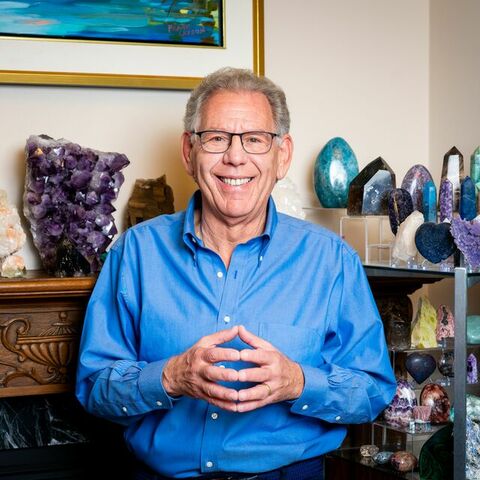
Jeffrey is a Toronto-based spiritual life coach,
Energy-intuitive,
Teacher,
And channeler of a spiritual entity who goes by the name Shaltazar.
With the help and support of Shaltazar's cosmic wisdom,
It is Jeffrey's mission to assist in shifting the consciousness of our planet.
It is my pleasure to assist Jeffrey in making this marvelous wisdom available to the largest possible audience and to unravel it in an understandable and comprehensible way.
Hello again everybody!
We're using this podcast as a vehicle to talk about the various Shaltazar messages that Jeffrey channels,
And today the message I picked up was,
It's time to embark on a new journey of change.
And welcome Jeffrey!
Thank you Mark,
Thank you very much,
And thank you for picking that message.
You let me know that that's the message you were going to pick yesterday,
And I tell you change has been all around me,
So those messages can be pretty powerful.
Just listening to one of them can invoke some very interesting energy in our lives.
And the thing that I'm finding interesting about them is,
I've listened to a lot of them,
I'm sure not all of them,
And I like to listen to them and then I like to print out the PDFs that are provided along with the messages and then read them.
And I have two different experiences,
The listening experience I gain certain insights from,
Then the reading experience I gain different insights from,
And it's almost two separate energies that I find are embodied within the messages.
And the other interesting thing is that I can go back to a message that I've read or listened to long ago and read it today and get a whole different perspective and a different point of view out of the message.
So that's kind of a remarkable feature of these things is that they're instructive and they keep on teaching different lessons,
The same message teaching different lessons over time,
Which is fascinating.
Yeah,
It is,
And it's interesting because this message from Shaltazar is telling us that it's time to embark on a period of a big change.
And you bring something that's interesting to mind.
If you listened to,
If you read a book,
If you listened to a Shaltazar message three months ago,
You're not the same person.
So one of the things that I think people may not be realizing is that change is happening,
Whether we like it or not.
And who we are today is not who we were last month,
Six months ago or a year ago.
That change happens in very slow terms and sometimes we don't notice it because we think,
Well,
I'm the same person.
And this came to mind to me,
It was a fascinating experience.
Just as you said,
I'm a big fan of Don Miguel Ruiz and I had read The Mastery of Love and then I read his Four Agreements and then I read The Voice of Knowledge and I didn't like it.
I really didn't like it.
And it was really interesting because time had passed and I had reread The Mastery of Love again,
Which is one of my favorites.
And then I decided to pick up The Voice of Knowledge and it was like,
Wow,
What a fantastic book.
And so that helped me understand exactly what you're talking about,
That change is happening in our consciousness whether we like it or not.
And so it's really important to realize that how you look at things today is different than how you looked at them two months ago.
And unfortunately for a lot of us,
That change happens very unconsciously and Shaltazar is encouraging us to make it more conscious.
Well,
And we're again,
Kind of back into the teeth of a COVID pandemic.
It seemed to subside a bit during the summer and now it's kind of back in full force.
And I hear a lot of people talking about their desire for things to go back to normal.
You hear that word normal quite a bit.
And this message in particular,
It speaks directly to that idea of normal.
There's a phrase in here,
There's a section in here that said,
It's time to look at the possibility that less is more.
It's time to rethink your habits,
Your rituals,
What you would refer to as normal for nothing on planet earth is normal.
It goes on to say,
What is normal?
Normal is only you reaching out for some semblance where you can feel more comfortable.
And so your normal has been shaken up for a reason.
And the reason is to create a new,
And that seems to be kind of the crux of the message.
And that's kind of what I wanted to ask you about today.
How do you interpret normal?
Yeah,
That's so interesting because I did listen to that message this morning and it's fascinating,
Interesting,
Not very shocking that that's the exact phrase without you telling me that I picked out of that,
That really stuck with me.
And so of course that's because we are in sync and that makes sense.
But you're absolutely right that normalcy,
I remember hearing that line about normal is only us trying to feel comfortable.
And it reminds me of when I'm driving somewhere and it's fascinating because,
And I love all of the driver aids,
Google maps and Waze and all of those things,
Because they'll get you somewhere in somewhat of an interesting route.
And whenever I'm driving somewhere that I've never been before,
I become very aware of how long it takes me and what the drive is like.
And when I drive back from that place,
It always seems faster.
And I don't know about you,
But I noticed that for a lot of my life that when I'm going somewhere for the first time,
It seems to take longer than when you return the same route.
And if you clocked it probably took exactly the same time.
What I've come to realize is that we crave a sense of familiarity.
And I think that's the normal that that that Shaltazar is talking about because they go on in that message to say,
There is no such thing as normal because there's seven and a half billion people on the planet.
And how can there be a normal for so many countries and cultures and languages and belief systems?
So there's no such thing as a normal,
A global normal.
There's an individual normal.
And I think that normal is the familiarity.
And I think that's what COVID is doing.
It is stirring up that familiarity.
It's like you're taking a drive to that place you've never been before day after day after day.
And you never get a chance to come back and feel like it's familiar because every time something changes they'll pull the rug out and it'll change again.
And so I really think it's important for us to make change our friend.
It's interesting.
You and I are working on a Shaltazar Oracle card deck.
And as soon as I listened to that message this morning,
I wrote down the message,
Make change your friend.
And I think that too many people,
Even people that like change don't realize that there's a part of them that craves that familiarity,
That craves that normalcy,
That craves that feeling of comfort.
And it's kind of interesting because there's also this dichotomy that when we're feeling too comfortable,
We want to stir things up and create something new.
And Shaltazar addresses that in a few messages where they say we're programmed to seek and search and you better get used to it because you're always going to be seeking and searching.
And so on one hand,
We're always seeking and searching and wanting change.
But on the other,
If that change makes us feel uncomfortable,
Then we're going to feel a little bit disrupted and out of sorts.
And I really believe that the energy we're in,
The COVID-19 energy,
What Shaltazar says is the great potential for change where no change is not an option is speeding up that change so that we can handle it at a faster pace.
I really think that that's what it's all about is that we've been used to the change at 60 miles an hour,
And now we're going to have to get used to the change at 100 miles an hour.
We got used to the change where your technology changed maybe a couple of times a year,
Right?
Or once a year,
They'll give you a new iPhone or a new Android phone.
And now all of a sudden,
There's all of these new devices and there's all of these new apps and things are coming at us quicker and quicker.
And I really believe that those that can become more comfortable with the uncomfortable,
Those that are more adaptable to the change are going to do better.
And I really think that in this message,
There's an undertone that we need to use that change in our personal lives to get rid of some of the foundational beliefs that are no longer serving us.
In one of the messages they're talking about,
They're talking about that building that's been renovated and added on to so many times that it comes a point where you have to demolish it.
And I really believe that we're getting to that point where we have to demolish some of our foundational beliefs.
We have to demolish how we normally,
Normally do things and come up with the new normal.
Yeah,
That kind of resonates with me as well.
That seems to be a kind of a common theme in several of,
Especially some of the newer messages that you've channeled from Shelte Azar.
It makes me wonder,
I guess,
Kind of a twofold question.
Is change ever comfortable?
Stasis seems to be comfort where we're kind of at our even keel.
Change seems to,
As you mentioned,
Bring up those feelings of discomfort or being out of sorts a bit.
And so I guess my two questions are,
Is change ever comfortable?
And do you think that what Shelte Azar is saying is that the reason we've been thrust into all of this rather dramatic change is to teach us to be comfortable with change and maybe that maybe changes,
Maybe a lack of stasis is the new normal.
I don't know.
What do you think about that?
A hundred percent.
Answer to your second question,
I concur.
Absolutely.
I truly believe Shelte Azar is telling us that we need to respond to change differently than we did before.
And I mean,
You don't have to be a rocket scientist to realize that the amount of change in our parents and grandparents lives is infinitesimal compared to the amount of change in our lives and our children's lives.
I mean,
I've got a 10 year old granddaughter who does video editing and TikTok and puts up videos and it's like,
Wow,
You know,
She teaches me things that I never knew before.
So I do believe that your second premise is a hundred percent correct,
Which is Shelte Azar is saying that change is the new normal and we need to find a way to adapt to that change in different ways.
I've often thought if there was one thing,
I mean,
My children are all grown up,
But if there was one thing that I could do over again,
Raising my kids,
If there was one thing I could give them,
It's resilience.
It's the ability to adapt.
And I think that that's what Shelte Azar is saying.
Now,
You know,
Back to that first question,
How can we become more comfortable with change?
And that's a $64 million question,
But let's talk about it.
But I want to talk about it from the premise that those that adapt to the change better are going to have less suffering in their life.
Okay.
And I think that that's really important.
There needs to be this desire to figure out how we're going to coexist with change.
And if you think about it,
I mean,
If you were the universe and you wanted to teach us this lesson of change,
COVID is a pretty amazing way of bringing forth massive change.
I mean,
It's going to affect governments.
We're now,
I read something this morning here in Canada that growing up,
Governments used to be concerned about deficits and that's got thrown out the window because now we need post COVID stimulus packages and nobody seems to be caring as much about government spending and government deficits.
So the change is inevitable.
How do we handle it better?
I think some of it is questioning our paradigms,
Questioning our foundational beliefs,
Looking and saying,
Why is this change uncomfortable for me?
And I think if you ask that question,
You will find a fundamental belief that maybe can be shifted.
Sure.
Yeah,
That does make sense.
I think change is experienced.
It's a very personal thing.
Everybody experiences change differently.
Two people can experience the same outward event and one to one person,
It causes them anxiety or frustration or fear and another person doesn't bother them at all.
I think of the idea of a little,
Some children on the beach perhaps and a wave rolls up and one child runs into it and laughs and thinks it's funny and the other one turns around and cries and runs away.
Same wave,
Same experience,
Same time,
But change in the landscape in front of them from sand to water is the sum.
It's not a big deal and to others it's something scary.
Right.
Right.
And maybe we could even throw in the factor of risk.
The child running into the wave is sort of risk averse and loves that thrill.
I mean,
I never went skydiving.
I don't think I went whitewater rafting.
There's a lot of things that I didn't do because when it came to physical risk,
I was very uncomfortable with it.
Maybe even financial risk.
And so I think you're onto something.
We all respond to change differently.
And so how can we get ready for this greater resilience?
Well,
I think that we have to start looking at why are you risk averse?
Why are you resisting this change or that change?
One of the things that I recommend to people is change up your daily routines.
If you go somewhere and you always drive the same way,
Drive a different way.
If you tend to have the same thing for lunch,
My late mother would always,
She would go for years at a time when having the same lunch and then she would change it and then she would change it.
And unfortunately I seem to be taking on some of that habit.
And as I'm talking,
It's like,
Okay,
It's time to mix it up.
I have a client of mine that decided to go to bed at eight o'clock at night and wake up at three in the morning.
And it's like,
When I think of sleep,
It's like,
No,
No,
You got to go to bed at this hour and get up at that hour.
And if you don't have eight hours,
You're going to be tired.
Well,
I'm finding around new moons and full moons and I don't get a good night's sleep.
I'm tired and I still get through the day.
So try to introduce some change into your life that's uncomfortable because there's that old saying,
If you've always done what you've always done,
You'll always get what you always got.
And so change it up,
Change it up and look at why you're resisting doing some things that require change.
And I think you may find that fundamental foundational belief that needs to be let go and replaced.
In the last number of weeks,
I've come across a lot of people I've talked to where I sense they have to demolish the foundation,
They have to demolish what they believe and start bringing in new beliefs.
And in order to do that,
You have to be okay with the change because,
You know,
I don't know about you,
But it's really hard to let go of those favorite pair of jeans because they just feel comfortable.
And so it's really becoming more aware of change and how it makes you feel and introducing that change so that you can be more comfortable with the resilience of something different coming your way.
So if I hear you right,
What you're saying is the,
What Shaltazar is telling us is that not only is no change not an option,
But stagnation is not an option because we're being encouraged not to cling to that normal.
Right.
And I'm going to say,
I'm going to go one step further.
I think they're saying get used to rapid change because if you think about it,
If you want,
I mean,
Most of us spend our lifetime wanting something.
Well,
If you want to create faster,
Then you have to be resilient.
You have to be able to try different things.
You know,
There's,
I mean,
Again,
Our parents' generation or grandparents' generation,
They kept the same job for a lifetime.
And they say our kids are going to have what,
10 or 15 different careers because jobs are going to change.
So what they're saying is they're getting us ready for this energy of change that is,
That's happening.
So,
You know,
You might as well get on the bus.
You better figure out,
Right?
I mean,
You want to teach your kids,
How are we going to teach your kids how to have 15 careers when we had one or two?
So it's really important.
And I think you'll find that some of the young people are probably a lot more adaptable to this change.
And so if you,
Again,
They haven't had as long to be entrenched in their beliefs.
So I mean,
I think Shaltazar is encouraging us to go deep to the foundation of our beliefs,
Of what we believe is true and start changing those.
And then you'll find that the smaller changes will come very easily or more easily.
Well,
We're,
It looks like we're about out of time.
So I think this was a really enlightening conversation.
Change seems to be the topic of our lives now.
So I'm glad we talked about this one and thank you for.
.
.
It's a beautiful message.
Thank you for choosing it.
Embrace that change.
And hopefully this episode has helped people get more comfortable with that change.
So thanks so much for bringing up an amazing topic.
Thank you for explaining it.
So that's it for this week.
I want to encourage any listeners who may have questions that they would like us to discuss on this podcast.
Feel free to submit them in the comments on Insight Timer.
I guess it's the rating feature.
You can click a number of stars and then it'll allow you to add comments.
Jeffrey reads those and we will respond to them and we'll pick up your questions on a future podcast.
So thank you for tuning in and I look forward to hearing from you next time.
Thank you,
Mark.
Take care.