Salut aferums mountain,
The stars of are stars The stars Now Kabir is singing to the Sadhus.
In ancient India,
These Sadhus were ascetics.
An ascetic means one who abandons his wife and child.
It is 99.
99% of the time male ascetics that were there in the 15th century.
So they would abandon their wife and child and home and sell off their properties or whatever,
Give away the money and they would just take a few basic belongings,
Whatever they need to live through one to two or three days and tie it up in a gathari.
It's called a gathari,
In a piece of cloth.
Those few belongings are tied up and they would just leave the house.
So when he would start teaching people,
All kinds of people would come to him and because his teachings were so profound,
Even the so-called Sadhus and ascetics who thought that I am very learned,
I have a guru,
I have so much knowledge,
Even they started now coming to Kabir.
So now in the story that he has not only Sadhus from the Hindu background coming,
Now he has even the Muslims coming to him to listen to his preachings and really find that witness consciousness.
So it goes like,
Karguzharaan gareebi me sadhubhai magaroori kyum kartaam.
Karguzharaan fakkiri me sadhubhai magaroori kyum kartaam.
Abide in austerity,
My dear sadhu friend or my dear seeker friend.
What are you so arrogant about?
What was the ascetic arrogant about?
See,
I have left my house.
See,
I have left everything.
I am a great renunciate.
I am not attached to the world.
Yes,
I have no cravings and no aversions.
So there is an ego that develops because of this magaroori.
So understand that word,
Those who know Hindi know the word.
It does complete justice.
That magaroor that comes in you just because you know the scriptures,
Just because you have a particular understanding.
It is an intellectual understanding.
Remember,
The real ultimate truth will not give you magaroori because the ultimate truth dissolves the divide only.
There is oneness there.
What are you going to be magaroor about?
There is oneness there.
So till the time the person reaches the ultimate realisation,
Even if he is a sadhu,
Even if he is a mullah,
Even if he is somebody who has been seeking the truth for a long time,
Even if he is a spiritual teacher,
Remember that.
Big warning.
These sadhus used to learn from Kabir and then go and teach their people.
That is why I am saying this.
All these people had magaroori of the jnana,
Were proud,
Had pride,
Had arrogance of their wisdom,
Had arrogance of their sense of renunciation.
So he says,
Live as if nothing is mine.
The ribi here is not in poverty of money.
We are not talking about that,
The ribi,
Where from within you are not attached to the things.
Things just are.
They are not mine.
There is no mineness anymore left in you.
That is the meaning of fakiri.
I know a billionaire who says I am a fakir.
Literal translation of fakir is a beggar on the road.
A homeless person.
Somebody who owns nothing is a fakir.
This is the way that Kabir says that you must live if you want to attain the highest truth.
Till that time you are stuck in me and mine and mine and mine and mine.
Even if it is my knowledge,
You are going to be clouded from the truth because you are stuck in the mind.
Do you get it?
Till the time you are stuck in the mind,
You are clouded and till the time you are clouded,
You cannot be steady in the witness consciousness.
It's a very simple formula he gives them.
Very difficult to implement of course for most of us.
From within,
Knowing very clearly that this is not mine,
This does not belong to me,
Including this body.
Most of us,
It's not just the body is mine,
You think I am the body.
Big journey for these people who think I am the body.
First you have to move towards.
From I am the body,
Move towards.
I have a body.
From I have a body,
Move towards.
I have a mind and then move towards.
I am something beyond the body and the mind.
Yes?
I don't even have a body.
I don't have a mind.
They are just there.
Then that attachment drops off.
You recognize I am that witness consciousness.
I am just that field,
That space in which a body and a mind appear.
They only appear like a dream.
They play for a while and then they dissolve.
Another thing appears,
It plays for a while,
It dissolves.
Another person appears,
It plays for a while and dissolves.
Everything is changing,
Everything is moving like a moving train.
This moving train constantly is moving.
There is nothing stationary about it.
My greed,
My craving,
My wanting,
Rasps at this moving train.
It has to stay.
At least let it stay for my lifetime,
Whatever 20,
30,
40,
50 years I am going to live,
At least till that time it should be there.
It's impermanent.
Changing,
Constantly changing,
Constantly changing.
It will also go.
Kabir's Doha's are hard hitting.
He constantly reminds you about the impermanence.
Drop this arrogance.
Even your so-called knowledge will go away.
You can learn all Kabir's Doha's by heart and recite them one after the other.
One day you will become so old,
Your memory will evade you and you will not remember a single Doha.
One day you will become so old,
You will not be able to speak about Advaita,
The path that you followed all your life.
Everything is changing,
Everything is moving,
Everything is moving.
Drop this Maghuri,
Drop this arrogance about it.
Be happy in fakiri.
I own nothing.
Nothing is mine.
Nothing is mine.
Clear?
Jogihukar jata bada hai ve,
Nangge pear kyu bhirta hai rebhai.
In ancient times,
They used to grow their hair and they would not cut their hair.
Even this was a tapas that if you cut your hair,
It shows vanity or you're very attached to this body.
So don't cut your hair and then they would have matted hair like that.
You've seen a lot of pictures and lot of jogis like that.
So they would have that.
What is the real reason?
Why would they come up with this?
Because they believed in this that somebody who has to show that now I'm not attached to my body should not care for the body.
So now I'm going to let my hair grow and see I am such a great renunciate.
Look at my hair.
I have not cleaned or washed it for 10 years.
I have not done my hair for 10 years.
So that also is Maghuri.
You're trying to show that you have attained a state of not being vain.
But what are you really describing here?
You are appreciating what inside?
What are you so Maghru about,
So arrogant about?
See,
I have not done anything to my hair.
So jata bada hai ve and becoming a jogi.
So they give up all beautiful clothes.
Pink clothes are all abandoned.
They wear only white.
And you become a jogi.
You don't do anything.
You go to the mountains.
I have actually done that in my life.
I know it doesn't work.
So don't even try it.
So don't go this way.
He says,
Jogi ban ke jata bada hai.
Nang ke per kyu bhir ta hai rebhai.
What are you going to get by doing something like this?
Dathadi baan dasir upar dhar le,
Yunkiya malaik milta hai rebhai.
They just carry few clothes and oh I'm going to live my whole life in white colour salwar kameez okay,
Specifically.
And I carry my little potli on my head from one city to another city doing service,
Doing teaching,
Meditation and stuff like that.
No,
No,
No,
No,
No,
No,
No,
No.
Kathadi baan se rupar dhar le,
Yunkiya malaik milta hai rebhai.
See,
He's asking a question.
Are you seeing the beauty in his poem?
Mula hokar bhang pukare.
Kya tera sahe behera hai rebhai?
What is the point of taking a mic and on a loudspeaker shouting out the name of your lord?
Your lord is deaf,
Is he?
Wake up,
Wake up by doing something like that.
You are not going to attain God.
God is not going to come to you.
Five times in a day you start shouting on his name,
He's not going to come to you.
Chiti ke paav nevar baaje,
Tobi saheb sunta hai rebhai.
Chiti is an ant.
The lord listens to the footsteps of an ant.
You don't need to shout out his name.
You really don't need to shout out his name.
You don't need to chant his name.
By doing Rama Rama Rama Sita Sita Sita or whatever,
Allah Allah Allah.
No point,
No point he says.
God is there all pervading.
He is not in a particular name.
He is not in a particular sound.
He is all pervading.
He is everywhere.
It is not a him or a her.
It is not somebody limited in a body.
It is that witness consciousness,
That witnessing that is already there.
Jotere ghatme wo meri ghatme.
That which is inside you is also inside me.
That same witnessing consciousness.
But the ego says no,
No,
How can it be so easy?
How can it be so easy?
Okay,
Go take your ghatdi,
Put it on your head,
Go on the Himalayas,
Come back after 20 years.
We are waiting here.
You will have to come back.
There is no other way out.
No other way out.
For the people who have reached the level of witness consciousness,
There is a subtle meaning to this line where he says,
Cheeti ke paon nivar baaje,
Tubi sahib sunta hai rebhai.
There is a sound of this creation.
The people who have become very quiet within,
Whose minds have quietened,
There is not too much self-talk.
Such people can manage being in the witnessing consciousness.
They go to a level of the void where everything is just a void,
Very quiet.
People come in that void,
They play for a while and they go away.
They cannot disturb the void.
This is the experience of the person who has attained the witness consciousness.
Such a person has enhanced senses.
So he can even hear the sound of this creation.
It is very audible,
Very audible,
Provided you have a silent mind.
Right now it is there.
Can you hear it?
This is sahib.
This is the meaning of sahib in this sentence.
Tubi sahib sunta hai rebhai.
That sound of creation is all-pervading.
If you want to figure out whether you have reached that void or not,
This is given as a milestone on the path.
To be able to hear the sound of this creation.
Dharti akash gufa ke andar purush waha ek rehta hai rebhai.
Again,
Now this is not a form of a purush or a man.
The same witness consciousness is here.
It is there.
Check,
Is it limited to this body-mind?
No,
The witness is there.
I can see the witness is observing the mind speaking,
Is observing the hands moving,
Is observing the body.
The witness is just like the background screen.
It is there.
But it is not limited.
I cannot find the limit of this.
I cannot find the limit of this.
Oh,
It's limitless.
It doesn't have an end.
It is like a huge space.
Is it just behind?
No,
It's not just in the background.
It's in the foreground.
It's here.
It's there.
It's up.
It's down.
Oh,
It's like a space.
This space is absolutely still,
Is quiet.
The space itself has the quality of being alive,
Of being conscious.
The space itself is lively and yet quiet,
Devoid of any activity.
There is no thing happening here.
Not nothing.
I'm saying no thing.
No thing means devoid of things.
The mind perceives something.
Yes,
The mind does not know how to perceive no thing.
When it comes to that space of witness consciousness,
It just collapses.
There is no mind there because it does not know how to understand no thing.
In that space of no thing,
That space when you establish there,
You can see very clearly that everyone and everything is a part of this no thing.
In fact,
They just appear to arise in this no thing.
As a thing,
It appears like something.
It stays in place for a while and then that same thing now dissolves and there is no thing.
The one who reaches this recognition of no thing,
Reaches the recognition of Shunyata.
This is where the Tawir's teachings came very,
Very close to Buddha's teachings.
The same Shunyata has been described on both the paths.
The no thingness,
The same Shunyata.
When you get to this no thingness,
You can see that it is like a huge,
Indivisible,
Limitless,
Single,
Non-dual space.
That is what is addressed as dharti akash gurfa ke andar purushvaha rehta hai rebhai.
Hatha na pav ruppna rekha nanga hokar thirtha hai rebhai.
It has no forms.
No thing means no form.
Hatha na pav no hands,
No legs means no form,
Means no thing.
Ruppna rekha.
No outline that can describe a form.
No thing.
Nanga hokar thirtha hai rebhai.
It is naked.
Witness consciousness is naked.
It is not covered by anything.
You are that witness consciousness.
You are that.
So he says in the next line,
Jo te re ghat mein,
Wo me re ghat mein sab ke ghat mein ek hai rebhai,
Tahi kabir sunobhai sadhu,
Har jese ko tessa.
That same limitless consciousness witness,
That same space of no thingness is in this ghat and that ghat and that ghat.
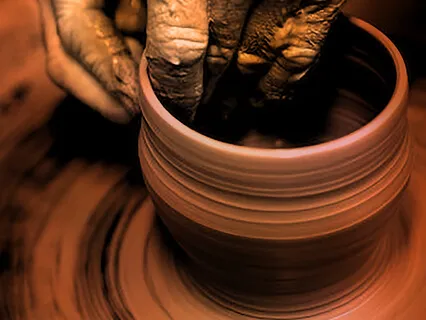
Ghat means a pot.
So he is just poetically describing this body-mind complex as a pot.
He says that same consciousness,
That same witness,
That same limitlessness,
That same no thingness is in this pot,
In that pot,
In that pot,
In that pot.
Har jese ko tessa means every body-mind,
Intellect,
Ego complex has a tessa,
The witness consciousness.
Har jese ko tessa.
Kya?
Kar gu zaran gareebi me sadhu bhai magaroori kyun karta.
Kar gu zaran fakiri me sadhu bhai magaroori kyun karta.
Jogiho kar jata bardhave nang e per kyofirta hai rebhai.
Gathri bandh sir upar dharale yo kya malaik milta.
Kar gu zaran fakiri me sadhu bhai magaroori kyun karta.
Mula hokar bang pukare kyatira sahib bhera hai rebhai.
Mula hokar bang pukare kyatira sahib bhera hai rebhai.
Chitti ke paumini bhar bhaji tobi sahib bhasanta.
Chitti ke paumini bhar bhaji tobi sahib bhasanta.
Dharti aakash gufaki andar purushva hai ikr reheta hai rebhai.
Hatna paumini rupanari ka nanga hokar bhirta.
Hatna paumini rupanari ka nanga hokar bhirta.
Kar gu zaran fakiri me sadhu bhai magaroori kyun karta.
Jyothi re ghatme bhumi re ghatme sab ke ghatme ek hai rebhai.
Chitti ke paumini bhar bhirta hai kabhiri su nubhai sadhu.
Har jase kotte saam.
Kar su bhai magaroori kyun karta.
Chitti ke paumini bhar bhirta hai.