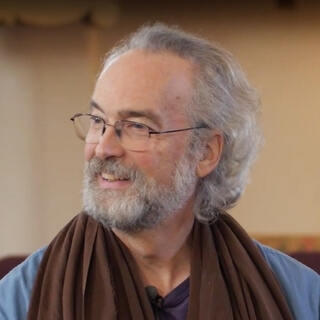
This is Amanda Kimball reading from Resting in the Waves by Doug Kraft.
We pick up where we left off in the middle of chapter one.
Coping Mechanism.
Neural binding and neural suppression occur in relatively simple creatures.
They also happen in us.
But our neural network is so much larger that our sense of the self and the world are vastly more complex.
For example,
As I write these words,
I'm cognizant that ice shelves off the coast of Greenland are melting.
There are riots in the streets around the world.
My cat just jumped into my lap and is kneading my leg.
My fingers are typing out words.
A faint hunger echoes in my stomach.
I hear a jet plane in the distance.
A space heater near my feet just turned on.
My toes feel chilled.
I remember angry political debates in the news.
One of my family members is sick.
My car is out of gas.
The sun glows through the leaves of the trees in my yard.
A towie just landed on the bird feeder outside my window.
And so much more.
At any given moment,
There are thousands of events,
Far and near.
The Buddha spoke about four imponderables.
Achintaya in Pali.
One is the complexity of the universe.
It is more intricate,
Multidimensional and diverse than we have the brain cells to process.
If we try to swim all nervous systems vexing solution,
Bread in canism that buffers us from overload.
The brain tries to filter stimuli and allows into awareness only that which is most relevant to the moment.
It does this so quickly and quietly that we usually don't notice the shifting process.
We just refer to it as who I am.
Our sense of selves become a coping mechanism for managing the variety of situations in our lives.
If I am with my Sangha discussing Buddhist practices,
Certain attitudes and perspectives coalesce into a self-image that helps me attend to what is most relevant while I'm in the group.
If a fire alarm goes off,
Suddenly my self-image shifts from Dhamma student to flammable being.
I don't carefully ponder and decide to shift mood,
Alertness,
Focus of attention and so forth.
It just happens.
My self-sense flows effortlessly from one set of qualities to another.
While I'm talking to a computer support specialist,
Reading a bedtime story to my grandson or hurrying through traffic,
My self-identity flows to different sets of qualities.
It's a coping mechanism that helps me adapt to the fluidity of the world around me.
On the other hand,
If I'm strolling through a meadow on a quiet day or soaking in a hot tub in the evening,
Life is easy and my sense of self softens and fades.
There is little challenging me for the moment,
So a sense of self is needed.
It rec or disappears.
Our sense of self is fluid both in how it adapts to different situations and in how it becomes denser under threat and fades when life is mellow.
Suggested Exercise Notice the strength of the self-sense as it waxes and wanes through the day.
When you notice any tension in it,
Gently relax the tightness and observe what happens.
Dysfunctional Selves If we were always wise,
Aware,
And our coping mechanism worked smoothly,
We'd be enlightened.
We'd adjust optimally to each situation and life would be groovy,
But we are works in progress.
Human evolution isn't perfect.
Things go wrong,
Slip out of balance or break down.
This can result in a loss of fluidity.
We get stuck for many reasons.
Sometimes the sense of self helps us navigate a difficult situation.
Sometimes not so much.
One reason we get stuck is that evolution is slow and changes in human society are rapid,
Particularly in the last few thousand years.
Natural selection wired biological reflexes into us that may no longer be relevant.
For most of our evolution,
We were puny creatures in a world of giant predators.
The biological reactions that helped us survive in old environments are often not relevant now that we are the alpha predator at the top of the food chain.
Some wired in responses are outdated.
Another reason we can lose fluidity is trauma.
Difficult events can lock our system into patterns that continue after the stressor has passed.
Let's look at a broad spectrum of dysfunctional selves and what may be helpful and healing for each.
Stuck and runaway minds.
On one end of the spectrum are people who have difficulty taking care of themselves because of schizophrenia,
Psychosis,
Severe thought disorder,
Or biochemical imbalances.
The mind freezes up or runs away in obsessive thinking.
Additional treatment for them might include medication and or psychological techniques designed to bring errant behavior and thought under control.
For these people,
Insight meditation is probably not optimal.
It may help some,
But it doesn't address the core of neurosis.
Up to the middle of the spectrum,
We come to ordinary neurosis.
People who can manage themselves in the world pretty well,
But have exaggerated fears,
Anxieties,
Or other emotional imbalances.
For these people,
The optimal strategy is not pharmaceuticals or behavioral control.
It is loosening up and opening up.
It is going more deeply and kindly into bottled up feelings and getting them exposed,
Expressed,
And released.
Sometimes milder medications such as the serotonin reuptake inhibitors,
For example Prozac,
Zoloft,
Paxil,
May help take the edge off so the person can open more.
But the basic strategy is not chemical.
It is gaining more understanding of how one's own system works and disinhibiting emotional blockages wisely.
Direct insight can be very helpful.
Meditative awareness can be healing.
Well adjusted malcontents.
As we move toward the upper end of the spectrum,
We find people whom the early 20th century mystic philosopher and teacher George Gorgiev called well-adjusted malcontents.
They have adapted to the world,
Can care for themselves just fine,
But yearn for more spiritual depth.
They are seekers.
Many strategies look for a deeper,
Higher,
Truer self.
Erik Erikson's psychotherapy extends into these higher reaches,
As does Maslow's hierarchy of needs.
Hinduism,
Ayurveda,
Some Christian mystical schools,
Native American spirituality,
And more,
Speak about finding a higher self.
For years I channeled a higher being who directed me toward my true self until I began to see that true self was not the highest possibility.
There are many helpful forms of meditation that support this search for a higher self.
They tap into and support the yearning for a deeper,
Richer experience of life.
Non-self.
At the top of the spectrum is non-dual awareness or non-self.
When no essential distinction is made between self and other.
Buddhism is basically non-dual in its understanding of life and in its deepest meditation practices.
As such,
It's not the most appropriate strategy for all people and all imbalances.
The Harvard psychologist Jack Engler once said,
You have to love yourself before you can lose yourself.
If we have a poor self-image or painful feelings,
Trying to get rid of our painful self is just aversion.
We have to deal with the discomfort rather than pushing it under the rug.
To go beyond a sense of self,
We must genuinely love ourselves and then recognize that there is deeper truth beyond the self.
Suggested exercise.
Look at the world through the eyes of a child.
Then look through the eyes of a wise elder.
Now look through the eyes of nobody.
Don't know mind.
To summarize,
Self-sense can either be a coping mechanism that keeps our life on track or a distortion that derails us.
It can also be both and neither.
Self is like a shimmer in the air on a hot afternoon.
Water vapor subtly bends light that passes through it.
The vapor is invisible.
We can't see it.
All we can see is the distortion it causes.
Who am I is a compelling question that evades easy answers.
We can't see vapor,
Only its effect.
We can't see the distorter,
Only the distortion.
Only the effects it has on experience.
Self-sense is invisible because it arises out of pre-verbal,
Pre-conceptual,
Pre-cognitive suppression of sensation.
It arises out of something we aren't aware of rather than out of something we sense.
A Sufi story tells of a man looking for his key in the grass outside his house.
A friend comes by and helps him search.
When they can't find it,
The friend asks,
Where did you lose it?
The man answers inside.
Why are you looking out here?
The light is brighter.
An earthworm doesn't have the bright light of a complex neocortex that can think,
Ponder,
Imagine and expound.
Yet it has a functioning self.
We,
Like earthworms,
Have a functioning self.
It doesn't arise out of something we sense.
It arises out of a rudimentary,
Pre-conscious suppression of sensing.
We'll never find it in the bright light of thought.
When I was a beginning Zen student on retreat,
The Korean Zen master,
Seung San,
Gave me the koan,
Who am I?
When I meditated on it deeply,
It took me into a place of not knowing who I really was.
That don't-know mind is closer to the truth than any neocortical concepts or fantasies.
Koan training invited me to welcome and relax into the imponderable not-known.
This is where wisdom begins.
Seung San asked,
Who are you?
I answered,
I don't know.
He smiled and gave me the next koan.
Suggested Exercise.
The next time you encounter something you don't know,
Rather than resist the blankness,
Relax into it.
Freedom from Self.
The Buddha had many insights into self and the process of welcoming fluidity,
But he spoke to a pre-scientific,
Agrarian culture,
While we live in a post-industrial society.
He had a different worldview and spoke a language with an entirely different structure.
Nevertheless,
He had deep insights that can help us today.
So in the next chapter,
We'll bring his teachings into the discussion.
We'll consider some of the ways he viewed and spoke about this topic.
In the end,
His message is direct and simple.
There is no freedom for ourselves.
There is only freedom from a self.
Although immeasurable,
Innumerable and unlimited beings have been liberated,
Truly no being has been liberated because no bodhisattva,
Who is a true bodhisattva,
Entertains such concepts as a self,
A person,
A being or a living soul.
Thus,
There are no sentient beings to be liberated and no self to attain perfect wisdom.