I always receive inspiration and musings for the topics that we share in together here.
I was scanning through an issue of Yoga International and came across an article on the first Yama of the Yoga Sutras of Patanjali.
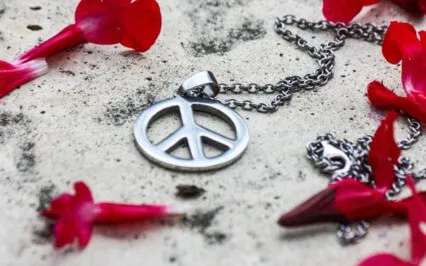
The first Yama is Ahimsa and it translates as nonviolence.
In this brave new world and given the violence and wars that we are all affected by if from even afar,
Nonviolence is an appropriate teaching.
It is a moral discipline to uphold.
And as I share its meaning with you,
I believe it will offer you teachings that you've never experienced before.
The philosophical texts,
The Yoga Sutras of Patanjali constitute the foundations of yoga.
Not only as a physical practice but a way of living life and as a guide to reaching Samadhi,
Which is a state of bliss.
The Sutras cover what is known as the eight limbs of yoga.
Each limb is considered an aspect of the path of yoga and offers us guidance for our life beyond the physical practice of yoga.
Remember yoga means unity.
It is a way of approaching and living life in unison with the divine and in understanding our human connection to source.
The first limb or path of yoga as life is made up of what are called Yamas.
The word Yama in Sanskrit is translated as restraint.
Yamas are moral values and disciplines that guide us in how we may best act towards our self,
Others and the world.
In this series of five episodes,
We dive into each of the five Yamas and I share with you how those who teach this first limb of the Yoga Sutras make these sacred texts relatable and certainly significant as guiding values for living whole,
Abundant and of loving kindness.
Each of the five Yamas are a wonderful remembering of what allows us to live as our best self,
Our greatness.
Remember that to influence and direct change in the world,
You must begin with yourself.
The very first of the Yamas and often thought of as the most important is Ahimsa,
Which means non-violence or non-harming in all aspects of life.
When we act with Ahimsa in mind,
This means not physically harming ourselves,
Others or nature,
Not thinking negative thoughts about others or ourself and making sure that what we do and how we do it is done in harmony rather than harm.
To quote the Sutra 2.
35,
In the presence of one firmly established in non-violence,
All hostilities cease.
This implies that those who do not cause harm emit harmonious vibrations,
Encouraging others to live peacefully also.
For example,
Gandhi's life was lived by the vows of Ahimsa and Satya.
Satya is the second Yama.
That is of truthfulness.
As I take you on this beautiful journey into the Yamas,
I want to acknowledge the work and the wisdom of author Deborah Adal.
I will be both citing and reading direct quotes from her book,
The Yamas and Niyamas,
Exploring Yoga's Ethical Practice.
I will,
With great appreciation,
Leave a link to her book and her monumental work in the description.
There is a lot written on the Yamas,
And yet I found her method of describing these sacred vows to be most insightful.
Her words are deeply valued as a guide for us through the practical means by which you can live these moral codes in your daily life,
And especially as they give us an incredible gift of inner peace.
Join me for a beautiful journey into these moral vows that express the highest form of just and good.
We begin with a look at the first Yama,
That of Ahimsa.
In Eastern thought,
Nonviolence is so valued that it stands at the very core and foundation of all yoga philosophy and practice.
All of our achievements and successes,
Our hopes and ideals,
Our daily moment-by-moment actions need to stand on a foundation built by nonviolence.
When we feel hurried,
Afraid,
Powerless,
Out of balance,
And harsh with ourselves,
We may find ourselves speaking words of unkindness or even exploding with a violent outburst.
As our awareness of these nuances grow,
We learn that our ability to be nonviolent to others is directly related to our ability to be nonviolent within ourselves.
Our inner strength and character determine our ability to be a person of peace at home and in the world.
We grow our capacity to be nonviolent by learning how to move through the everyday challenges of life and by addressing the things that precipitate our tendencies toward violence.
Ahimsa,
Or nonviolence,
Literally means to do no harm,
And it calls forth from us our most brilliant and best self and our capacity to be nonviolent.
In the study and practice of Ahimsa,
We look to the practices of courage,
Balance,
Powerlessness,
Self-love,
And compassion.
We begin with courage.
We only have to look around to see that fear abounds.
It abounds in cowardly faces that turn away,
In violent attacks,
In walls of protection,
In bins of possessions,
In numerous unkind words and gestures.
In an abundant world,
Those with greed take more than their share,
Leaving others lacking.
Wars are started and fought to seize land,
Possessions,
And for leaders to seek more power.
All around the world,
Children's innocence is destroyed by abuse and horror.
If we look closely,
We can trace all of these acts of greed,
Control,
And insecurity back to their root,
Fear.
Fear and greed creates violence.
If we are to begin to address our fears,
We need to know the difference between the fears that keep us alive and the fears that keep us from living.
The first kind of fear is instinctual and built in us for survival.
The second kind of fear is fear of the unfamiliar.
The unfamiliar can become an abundant place for our exploration once we realize this fear lives only in our imagination.
It is only our minds that have created the turmoil that we feel in our body and keep us hostage to the possibility of our own lives.
To create a life and a world free of violence is first and foremost to find our own courage.
An example of fear that Deborah shares in her book and that lives only in the imagination might be skydiving.
For you or someone else to walk into this fear if you have never experienced this is to first imagine a scenario that looks like adventure and fun,
Something where you are competent and collected as you jump from the sky to earth.
Then,
When you are ready to step into your courage,
You would find a skydiving school and sign up.
Seeking out people and experiences that you would normally avoid provides a fertile place to learn new things about yourself and about life.
People that you have previously avoided will open up new ways of thinking and give you new pieces in which to incorporate as new parts of yourself.
As you walk into your fears with both people and experiences,
You find that your sense of self has grown.
Your view has expanded.
The world suddenly looks like a bigger place and you are more competent to navigate it.
As you expand yourself into these new places,
Your mind and heart grows more open and you have less need to be violent.
Thus,
To create a life and a world free of violence is first and foremost to find your own courage.
Courage is not the absence of fear but the ability to be afraid without being paralyzed.
Courage is found by facing your fears.
To live the fullness that your own life is inviting you into,
You often have to let yourself be afraid and do it anyway.
If you keep yourself safe,
How will your courage grow?
As Deborah talks about in her book,
One of the reasons for Gandhi's unmatched power was that he continued to stay with life.
He didn't run when life got too confusing or difficult.
He stayed and learned from the moment.
And in the process,
He became a skillful leader no one could match and a force that no one could stop.
For Gandhi and others,
Fear becomes a stimulus to develop one's courage.
Balance.
Courage demands our best self and that is a self-inbalance.
Think about the times you were short with others because of too much work to do or your impatience with them or too much caffeine or sugar or a restless night of sleep or your own insecurities and worries manifesting as a rational fear.
Balance in your body is almost a certainty for violence as the dis-ease you feel within finds its way to express itself outwards.
Balance creates harmony within us and harmony within naturally expresses itself in external actions that are harmonious.
Creating balance in your life is not an easy thing.
If you are not on purpose with creating balance for yourself,
You can easily fall victim to false promises and fill every breathable space with appointments and activities and all of the responsibility that go with a full agenda.
Balance can exist when you listen to the guidance and wisdom of your inner voice.
Ms.
Adele talks about how it is anti-cultural to claim any space that is simply space or to move with any kind of lingering or to take time for closure.
We are bombarded and we bombard ourselves with busyness,
Doing,
Being productive and filling our day with things and experiences and all of this generates noise.
Like the body,
The mind and the soul need time to digest and assimilate and rest.
We create this rest by allowing space that we can breathe in.
Not more clutter,
But more space.
Space to reflect,
Space to journal,
Space to breathe,
Space for closure,
Space for emotion,
Space for imagination,
Space to just be and space to feel the calling of our life force within us.
I remember once a client describing how she was determined to use this third bedroom in her home,
A bedroom that was filled with old children's furniture and a crib and things they were storing and without needing to clear everything out right away,
She cleared a little space for herself and put her yoga mat and her yoga cushion down and she went there.
She went into that room and in that small space she found amongst all the things around her that was her space to be,
To breathe,
To exist.
Balance does not look a certain way because it isn't a set standard to impose upon ourselves or something we can plan or schedule.
Balance instead arises from listening to the guidance and wisdom of our inner voice.
Balance will look and feel different to each one of us and also different within each of us at different times.
To be in tune with ourselves,
We must get quiet and listen and then heed this inner voice.
This voice does not push or bombard or make demands upon us.
This inner wisdom simply knows what we need to be vital,
Healthy,
In balance and in deep harmony.
When you are in balance,
You automatically live in nonviolence.
I created a video for a collaborative project that fits perfectly here in the messages of balance and harmony.
In it,
I guide you through the mindfulness practice of balance as the trilogy of mind,
Body and soul.
It is a lesson in harmony that exists as a spiritual practice.
I will include a link here for you to experience the practice of balance.
Dealing with Powerlessness One of the biggest challenges to maintaining balance is feeling powerless.
Feeling powerless leads to outward aggression in the form of frustration and anger,
An inward withdrawal into depression and victimization.
We fear our own power and we often feel trapped at our sense of powerlessness.
By powerless,
Ms.
Adele intends it as the times in which you feel like you've run out of choices or options and feeling incompetent to deal with the challenges at hand.
At these times,
You may feel like a caged animal,
Trapped and ready to pounce.
Whether you respond with anger,
Withdrawal,
Frustration or resignation,
There is a way that your mind shuts down,
As if you are riding a train through a dark tunnel and you can't see anything but darkness and anxiety.
Ahimsa or non-violence invites us to question the feeling of powerlessness rather than accept it.
When you feel powerless,
You have forgotten how much choice you really have.
You have a choice to take action and you have a choice to change the story you are telling yourself about the powerlessness.
Instead of letting it overtake you,
You can ask,
What do I need to do right now to feel competent to handle this situation?
During these times,
You can also remember a past situation in which you successfully handled a challenging situation while remaining loving and whole and then aim to recreate that experience for yourself again.
In her book,
The Yamas and the Niyamas,
Deborah Adel shares three ways of thinking that shift us out of a feeling of powerlessness.
Practicing gratitude,
Trust in the moment and thinking about others.
When you change your thinking,
You begin to see options and different perspectives that offer you a path into the light.
Often we carry a sense of powerlessness from a childhood story.
You feel powerless from believing an old story that you continue to accept as true.
Perhaps at one time in our lives,
The story was true,
But it probably isn't true anymore.
Powerlessness can often be traced back to the story you are telling yourself in the moment about a situation.
We all have the choice to tell a different story and grow ourselves up to take responsibility for our lives in a new and positive way.
Situations where you feel powerless can also be an opportunity to grow your skill levels with life.
Things of powerlessness can be opportunities to learn something new,
To be extra kind and gentle with yourself,
And to become competent rather than violent.
Self-love.
How we treat ourselves is in truth how we treat others.
Our ability to remain in balance and to be courageous has much to do with how we feel about ourselves.
I like the example Debra uses of how we would never purchase a can of red paint and expect it to be the color blue when we apply it to our walls.
And yet we can be so harsh and demanding with ourselves and then expect to be loving with others.
It doesn't work like that.
The color of how we treat ourselves is the color of how we treat others.
If we can't be safe with ourselves,
Others can never be safe with us,
And the world can never be a safe place to be.
Love lies at the core of nonviolence and begins with the love of self.
Not a love that is egocentric,
But a love that is forgiving and lenient.
A love that sees the humor in the imperfections and accepts the fullness of the human expression.
Only when we find this love for all the parts of ourselves can we begin to express fully the love that swells up inside of us for others.
Finding this love for all the parts of ourselves means we have to forgive ourselves.
Without forgiveness we carry guilt like a heavy burden around our hearts.
Guilt holds our love for self and others hostage and keeps us bound to a one-side expectation of the human experience.
Without the ability to love and accept all the pieces of ourselves,
We create a ripple effect,
Tiny acts of violence that have huge and lasting impacts on others.
It's also important to balance the need for changing ourselves with loving ourselves and to love ourselves completely even as we seek change that we know is needed and that will allow us to feel even greater pride and happiness for who we are and who we are becoming.
Courage and love are deeply connected.
Where fear creates harm and violence,
Love creates expansion and nonviolence and the true safety that we seek.
Nonviolence is woven with love and love of others is woven with love of self.
These cannot be separated.
And finally developing compassion.
In her book,
The Yamas and the Niyamas,
Deborah Adel speaks about learning compassion as we dissolve our personal vision of the world and grow gentle eyes that are not afraid to see reality as it is.
We learn compassion as we stop living in our heads,
Where we can neatly arrange things and instead ground ourselves in our bodies where things might not be so neat.
We learn compassion as we stop trying to change ourselves and others and choose instead to soften the boundaries that keep us separate from what we don't understand.
We learn compassion through simple acts of kindness and as we allow others' lives to be as important as our own.
When we begin to expand the boundaries of our heart,
We can see clearly to act in ways that truly make a difference.
Compassion is a clear response to the needs of the moment.
Compassion is more than a sorrowful feeling.
It is a powerful inner response leading to an immediate outward action that takes a risk on behalf of another.
It moves us across the boundaries of established norms and often past the boundaries of safety,
Rushing headstrong to do what it can to ease another's suffering.
Compassion forgets itself and the standards of protocol to answer the cries of another.
We may not yet have the kind of courage and depth of compassion that some display in their efforts to risk precautions and safety,
Yet we can begin to practice acts of kindness religiously and with all beings.
Whatever we find ourselves engaged in,
This jewel of Ahimsa or nonviolence asks us to step lightly,
Do no harm,
And to honor the relationship we have with the earth,
With each other,
And with ourselves.
And as we wrap up,
I'm going to leave you with some practical wisdom for how you can live each of these principles in your life beginning now.
I have been exploring the reflections and questions that Deborah offers here in the principle of nonviolence as a deeper passage into peace,
And I've been really loving the effects.
I will share with you some right here.
And so to close,
I encourage you to bring more peace inside of you over the next week.
Practice courage by doing one thing each day that calls on you to feel brave when you feel scared.
As Deborah says,
Get excited about the fact that you're scared and do it anyway.
Watch what happens to your sense of self and how your relationships with others might be different because you are courageously stepping into unknown territory.
Standard your balance as your precious inner resource.
Find guidance from your inner wisdom to live more of the time in balance and harmony.
Ask your inner wisdom for what you need and follow this to feel harmony in yourself and in your world.
Notice the effects of this on your life and on others.
In honoring self-compassion for the week ahead,
Pretend that you already are complete and whole.
I really love this one.
There is no need to acquire anything,
To prove yourself to anyone,
To criticize or judge or change anything about you.
Note your experiences when you hold kindness,
Joy,
And patience,
And as you allow yourself to live in compassion.
Thank you so much.
That was amazing.
I look forward to hearing from you your feedback,
The experiences you've had in practicing nonviolence,
In embodying this fully in the rest of your life.
And please join me next Sunday where we dive into the second Yama,
Satya,
Truthfulness.
Until then,
Sending you great love,
This is Dorothy.
Namaste.
Thank you so much for joining me in this episode of the Wisdom Podcast.
To hear more,
Please check out the other episodes here,
As well as my guided meditations,
Including my signature prose meditations and I Am mantras,
And as well the meditations to guide you into a deep and restorative sleep.
Please also visit me on social media and say hello.
And a special thank you to Insight Timer for this beautiful space to share all of my love.
Allow yourself to go within,
To access your inner wisdom,
And to live this.
Awaken your authentic power,
Live your truth,
And be love.
Namaste.