Are you worrying about anything right now?
Or have you worried about anything over the last couple of weeks?
Or do you even think it's likely you might worry about something in the future?
If the answer to any of these questions is yes,
Then there's something in this short talk for you.
Since COVID hit,
I've spent most of my time delivering virtual programs to help people deal effectively with the stress that's a very natural and normal reaction to the impact of the pandemic upon our lives.
I've had thousands of people pass through our programs over the last year.
In a recent session,
A 28-year-old woman stayed behind to ask my advice.
Let's call her Anna.
Anna told me that she was blessed to be married to a man that loved her every bit as much as she loved him,
Has beautiful two-and-a-half-year-old twins,
A job she loves,
In a company where she's regarded as a top performer.
With COVID,
Anna had recently started working from home and so has her husband.
So suddenly she,
Her husband,
And the twins are spending most of their waking hours in the one-bedroom department,
Which is starting to feel very small indeed.
They're both feeling the pressure on their relationships,
She told me,
With friction and arguments that were never there before.
Anna confided that she'd recently found herself repeatedly thinking,
What if our relationship falls apart under this pressure and I end up alone with the twins?
And what if the pressure of that affects my performance at work?
And what if I lose my job?
And what if I can't pay the mortgage?
And what if,
And what if,
And what if?
The purpose of this talk is simply to share one small part of a practical approach I share with folks like Anna for breaking the tyranny of this what if question that's driving an invisible epidemic of worry.
To understand the way worry affects us,
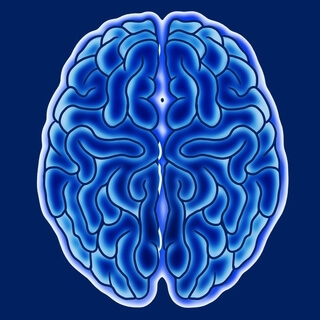
We need to understand how our brains manage danger and fear.
If you were to push a pen into your ear and another one into your eye and don't try this at home,
Then where they cross would be at the centre of the so-called emotional brain on an almond-shaped object called the amygdala.
And there's an amygdala on both sides of the brain.
You could think of the amygdala as being like the smoke detector of the brain continually sniffing your environment for threats.
And threats for the amygdala are anything it hasn't seen before,
Doesn't have complete control over,
Is anyway uncertain,
Cannot control or any really clear and present danger like the danger of being infected with COVID for example.
If something happens that causes it to predict such a threat,
It kicks off a completely automatic process that makes your heart beat faster to rush blood to your arms and legs to get you ready to either run from or fight your way out of trouble.
You've probably heard of this fight or flight response.
Now this was a very effective response to ancient threats like sabre-toothed tigers,
But it's somewhat less effective against an angry phone call from the boss or the threat of coronavirus.
But brains evolve slowly and we're stuck with this response.
When this fight or flight response is triggered,
The danger emanating from the emotional brain can often be so overpowering that it overwhelms the thinking brain and you're now acting solely out of emotion,
Completely on autopilot with no great amount of rational thinking going on.
This automatic response also switches off your immune system,
Your digestion and your sex drive.
These are not important when your life is under danger.
It also slams you full of stress hormones like cortisol and adrenaline that get you hypercharged.
So you're faster,
Stronger and more focused than you've ever been before.
This is why when you're stressed,
You'll often find yourself jumpy and too wired to sleep.
You're full of aches and pains and muscles that you haven't even exercised.
You're more open to suffering minor ailments like colds and flus and you have absolutely no interest in sex.
This incredibly useful response takes a lot out of your system.
The collection of sensations and reactions that come with fear are what we tend to call anxiety.
So back to the amygdala,
It's really like a fortune teller continually making predictions about the future.
Certainty about the future allows for planning and planning assures survival.
If you know there's a threat coming around the bend and you don't like the sound of it,
You can plan to avoid it.
Now,
The reality is we have never been very good at predicting the future and even less so during uncertain times like a pandemic.
But sometimes,
Especially in times of high levels of uncertainty and fear,
Like those created in times like these,
Our brains can get so anxious that they get triggered into patterns of thought that convinces we can tell the future.
And that is going to be bad,
Like really,
Really bad.
These patterns of thought rarely provide any really new or useful information.
They tend to be worst case versions of unlikely future happenings.
It's really just the brain trying to predict all likely outcomes.
And it tends to start with the brain's equivalent of hyperventilating,
Generating an endless succession of questions,
All of which begin with what if.
And you never have just one what if question.
You don't think,
What if I lose my job and then go on to think,
What will I have for dinner tonight?
Or I wonder what's on Netflix right now?
What ifs cascade and escalate.
What if I lose my job triggers?
What if we can't meet the mortgage payments?
And what if the bank takes the house?
And what if,
What if,
What if?
And when these what ifs cascade out of control,
They can become so real.
The scenarios the painting can start to feel so real that it triggers our fear response.
And we experience the same anxiety we would experience if our life was under threat.
Now,
In moderation,
Worry is OK and it's normal.
Some amount of worrying probably helps you solve problems and and helps has helped you make breakthroughs you otherwise wouldn't have made.
But sometimes it can get out of control and crowd everything else out of your life.
And that's when you need to take action to stop that cascade of thoughts in its tracks.
Remember a few years ago when a US Airways jet had to land on the Hudson River just minutes after taking off in New York,
When a flock of geese flew into its engines.
The Captain Sully was branded a hero for this so-called miracle on the Hudson,
Which saved all of his 150 passengers.
But behind him,
There was another critical hero.
That was the checklist that he and his co-pilot followed to try out as many possible courses of action as short a period of time as possible to try and find a solution to their challenge.
Every pilot in the world rehearses,
Rehearses and rehearses with these checklists to prepare for the time they find themselves in emergency situations,
Because they know that when that happens,
Their emotional brain is going to be in control.
Their thinking brain is going to be stunted and they're going to be dealing with severe anxiety.
When you're gripped by worry,
Your emotional brain is in control and you simply don't have access to the full range of cognitive facilities you normally would.
You need to have a checklist for how you'll respond to worry and you need to have rehearsed with that checklist before you're gripped by worry.
Practicing your response to worry before you begin to worry is key,
So it can be absolutely automatic when you need it.
Over the last few months of working with so many people troubled by chronic worry and the anxiety that comes with it,
I've created an easy to remember four step checklist that you can adopt to interrupt this what if thought pattern to nail worry before it nails you.
The handy mnemonic for this checklist is nail.
N A I L.
And the first step in is notice.
Notice the what if question when it arises and think I'm beginning to worry.
Now,
This probably sounds counterintuitive,
But bringing the thinking brain online is what happens when you notice and you have that thought.
I'm beginning to worry.
And the moment the thinking brain is online,
It begins to downregulate the emotional brain.
Already you're disrupting the pattern that normally cascades from the first what if into a snowstorm of what ifs.
The second step is A.
Allow it.
Don't try to resist worry.
It's normal for your brain to do this.
Instead,
Say,
I don't like this,
But it's normal for me to respond this way.
Allow it to be.
Don't try to push it away.
That which we resist persists.
So allow it to be and move quickly on to step three.
I investigate.
First thing you do when you hear what if questions replace it with what is.
What is actually going on right now?
Is there anything I can do about it?
If there is,
Just do it.
If there's not,
Then it's very likely you're worrying about something that hasn't yet happened.
And research suggests that 85 percent of the things we worry about never come to pass.
And so you can move straight on to the last step,
L,
To deal with it.
L stands for leave it until later.
Make a formal worry appointment with yourself.
Plan to worry about this at a specific time for a specific period on a specific day.
Put it in your diary.
And when it comes,
Keep that appointment.
Sit down with a pen and paper and work through all the possible solutions to that which is worrying you.
And when that appointment is over,
Do what you do with every other appointment.
Go back to your life.
If you feel the need,
Set another worry appointment for the following day and the following day again until you start to feel yourself getting some perspective.
The bottom line is you will always have some element of worry.
Worrying is one of those things that our brains have evolved to do.
But you do not have to suffer nonstop worry or the anxiety that comes with it.
You can interrupt the pattern.
This checklist is not a silver bullet.
But if you create it and most importantly rehearse with a checklist like this,
You'll find that you begin to tame worry and prevent it taking over your life.
You'll nail worry before it nails you.