Hi friends,
I'm Deb Blum,
A teacher here on Insight Timer.
I'm just going to dive right in here.
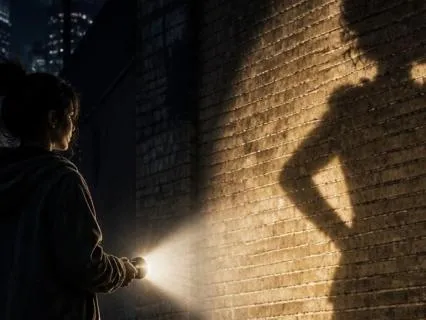
I'm of the opinion that shadow integration is the final frontier of healing.
I think it's really how we cultivate the deepest,
Truest self-love,
And the deepening of our relationships,
And I believe it may even help transform the world.
I do know also that it's edgy work,
And that it can feel off-putting,
Or maybe confronting,
And sometimes triggering.
So I'd like to invite you to move at your own pace today,
And if you need to pause the recording,
To breathe,
Or maybe even come back later,
That's totally fine.
I pride myself on trying to.
Address shadow work from a more compassionate and gentle place,
But how it lands for you is how it lands for you.
So let me tell you a little bit about where we're heading so that you can settle in and know what this time is for.
So today we're going to look at three things that live inside every one of us.
I know,
You're not going to like this.
So we have the part that's been a victim,
The part that's been a villain,
And the power.
We have to choose what we do with both.
My belief after many years of my own work and many years of sitting with women who are ready to grow,
Is that when we make honest,
Compassionate peace with all three,
We become free.
I think in a way that very little else can give us.
We stop living out old wounds and we start choosing how we show up.
And I really believe that about all shadow work,
But specifically today we're going to be talking about the victim villain power shadows.
Before we go any further,
Though,
I want to explain a word that I've already used and that I will be using because I know that it can land hard,
And the word is villain.
Now,
It comes from the drama triangle work from a psychiatrist named Stephen Karpman and he described this back in the late 1960s,
And he noticed that in many of our relationships,
Before we become aware of it,
We slip into one of three roles.
The victim,
The persecutor,
And the rescuer.
Now,
I use the word villain for persecutor because it's the word that naturally came to me and you'll hear other people use those interchangeably.
Just like some people will use the word rescuer interchangeably with hero.
What I find so helpful about this drama triangle is that these are roles that we step into,
But they don't describe who we are.
And in fact,
We move through them,
Depending on the person,
The topic,
And sometimes even from one moment to the next in a single conversation.
For example,
You might feel like the victim when you're with your boss,
Or maybe sometimes you play the rescuer with a friend or friends,
And maybe sometimes you are the villain with someone that you love.
And that can happen all in one day.
So when I say villain today,
I mean a role every one of us has stepped into at times.
Oftentimes without meaning to.
Or certainly not wanting to.
And so I'm using it as a description of a pattern that can change rather than some verdicts on your character.
And then one other thing I want to talk about early.
The triangle's victim role is a stance of feeling powerless and stuck.
Which is close to what I'll call a victim mentality.
Having been truly harmed,
Especially as a child,
Is its own thing,
And we're going to spend time with both.
I want to be both gentle with you and also honest with you,
Because if you're here,
I think you're probably somebody who wants to take responsibility for your life and for making changes and improvements in your life.
And I also want you to make sure you take responsibility for your own pace and for how this lands for you.
Okay,
So let's just take a couple of breaths before we begin.
I've given you already a lot of information,
So let's just bring ourselves into our bodies and bring our bodies into this conversation.
So perhaps just take a second to let your shoulders drop a little bit.
Take a nice slow breath through your nose.
And then a long,
Slow exhale through your nose.
One more just like that.
And remember that if at any point today something feels like it's too much,
Sometimes just looking around the room and feeling your feet on the floor can ground you in a way that gives you more resources to continue to listen.
Let me start with my own story.
When I was very little,
And then again at different times growing up,
I was harmed by people who should have known better.
I would say sometime around 10th or 11th grade,
I made a decision.
I decided that no one would ever hurt me again.
And I meant it,
Like,
With my whole being.
And I became a fighter.
I became feisty,
And I carried an attitude.
I would like to say a quiet attitude,
But I'm not positive that's true.
But internally,
I felt like,
I will hurt you before you ever get a chance to hurt me.
It's interesting though,
Because in many ways I was a people pleaser.
But there was a line that I knew that I would never let anyone ever cross again,
And that I would never ever call myself a victim.
I'll tell you what that internal vow gave me,
Because it did give me something.
It gave me a sense of feeling safe and strong.
And it probably helped me survive.
And I am super grateful for the young girl inside of me doing what I needed to do to survive.
But I also want to tell you what it cost me.
I couldn't stand to see someone playing out a victim mentality,
And I frankly even had a hard time being present with genuine victimhood.
It's like I had a complicated relationship with it.
I would sit beside friends who felt like victims,
And I loved them,
I was compassionate to them,
But I tended to give them advice on how to take back their power and get over it.
Really understand why I felt that way because I truly did care about them,
But I also know that I was not allowing my own self to feel the victim in me.
I hadn't faced it.
So I had a shadow part.
I had a part of me that was not even revealed to me.
Then a friend of mine said something that really changed how I saw everything.
What he observed was my unhealthy or complicated relationship with being a victim.
Basically me saying that I'm not a victim and that people need to just get over the things that happened to them,
Move on and be strong.
And his feeling was that I didn't have a healthy relationship with being a victim and that I needed to acknowledge the ways that I had been a genuine victim.
In order to have a healthier relationship with this word,
This concept,
This thing that exists in the world.
I had rejected that I was a victim because the truth is I felt like if I said that I was a victim,
That I was handing over power to the people who hurt me.
I do understand that,
That at some level I felt if I admitted that I had been harmed,
That I gave them power,
And by me basically saying,
You could not harm me,
You don't have that much power over me,
I never really faced the way that I had been harmed.
Now,
What I discovered was that the opposite happened,
And when I finally did let myself say that I was a little girl,
And I was powerless,
And an adult who should have protected me harmed me.
And it really did damage in my life.
When I said that to myself.
And I really faced it.
I didn't become weaker.
Something in me softened,
And something else in me began.
To be free.
Now I was lucky enough also to work with a wonderful therapist,
Pete Walker,
The author of The Tao of Fully Feeling and the book on Complex Post Traumatic Stress Disorder,
And he was the first person who really helped me to find compassion for myself,
For the young self.
He helped me look at that child in me and feel something like,
Oh,
Sweet little one.
That happened to you.
And his tears,
His tenderness,
Opened a door in me that I didn't even know was there.
So that was the first thing that I needed to do and that I invite you to do,
Is to honor what was real and true.
To honor where we were really victims.
I think many of us have our own version of that vow,
And maybe it's not like that at all.
I encourage you to contemplate what yours was.
Maybe it's something like,
I'll never need anyone,
Or I'll never be fooled by anyone again,
Or no one will ever see me cry.
These vows that we make to ourselves,
These convictions that we have.
They do protect us,
And I think that they deserve our respect.
And I also think that at least in my case,
And I'm going to guess maybe for you too,
That they can keep us tied to the event that we are trying to get away from or that we want to heal.
Because in some ways we're organizing our life around not feeling what happened.
A victim,
In the plainest sense,
Is someone who was harmed when they didn't have the power to prevent it.
A child who was hurt by an adult is a victim.
And that's simply what's true.
It's not a weakness.
It's not some kind of character flaw.
And I want to say this,
That it doesn't define who you are today.
Being a victim of something and living with a victim mentality are very different things.
But right now,
The most important thing to talk about is the first one,
The truth of what happened to you.
Let's try something together.
If you're comfortable,
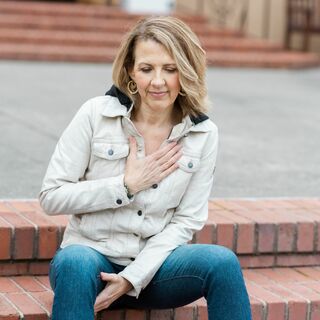
You might want to place a hand over your heart or on your belly.
Wherever it feels like it's nurturing to yourself.
And bring to mind a younger version of yourself,
Someone small.
Someone who didn't have the power to protect herself.
You don't really have to go to somewhere super difficult.
You can actually just picture yourself at a young age.
And look at her with the eyes of someone who loves her.
And if you're able,
Say to her silently or out loud if you like.
This happened.
It wasn't your fault.
You were little.
And you needed somebody to protect you.
And I see that now.
Notice whatever is coming up for you.
There's no wrong thing.
Could be sadness,
You could feel numb,
You might be angry.
Maybe you feel some relief,
Or maybe you feel nothing.
It's all ok.
If it feels like it's a little too much for you when you're flooded.
Open your eyes,
Look around the room,
Feel your feet on the floor.
And whenever you're ready,
You can let that picture melt away and bring your attention back to this conversation.
And I want to say another thing.
You've probably looked at this in some way,
Shape,
Or form in the past,
Or maybe you haven't.
It's okay to need to come back to this many times.
To become more comfortable with meeting and getting to know the parts of you that were a victim as a child.
Now let's talk a little bit about shame.
I think part of the reason why it's hard for us to look at ourselves or others and see the victim in us is that when we're children and we get hurt,
There's often a second hurt that comes behind the first one.
And that is the adults who cause the harm.
Or the ones who couldn't bear to see it.
Often shame us for the pain.
Maybe we heard things like stop crying or toughen up.
Or don't be so dramatic.
Or I'll give you something to cry about.
Don't rock the boat.
It's not that big of a deal.
Are you sure it even happened?
And so a child learns things from that.
She learns that being hurt is something to be ashamed of,
Or that you won't be believed anyway,
Or that the way to be safe is to just be tough and strong.
Our culture also reinforces this.
It's always easier to say,
Get over it,
Than to look at how much harm exists,
Including the harm that we individually have caused.
So we end up growing up with this complicated relationship with the very word victim,
Or certainly the energy or the being of victimhood.
I mean,
Let's go back to what I said before about me,
That I had a hard time being with my friends,
Even when I had compassion with them.
At some level,
I took what I learned,
Which is to toughen up,
Don't be so dramatic,
I'll give you something to cry about,
I also wasn't believed.
And I know it seems so strange,
But to then use those same things that didn't help us and support others in that way.
Do you see how it gets passed on through our culture,
Through generations,
Through friends?
And we think that's the way we show up with a person is just to say,
Come on,
You're tough,
You can get over this.
Now,
I also see that there are oftentimes two ends of the spectrum or like a pendulum.
And on one side,
We might see people who act more like me,
Like,
I'm not a victim.
You'll never see me act that way again.
Don't even think about it.
We can just move on because I'm tough and I'm strong.
But there is the other side of this,
Which is The feeling of deep powerlessness,
The ongoing feeling that everything has happened to me and that everything has been done to me,
And that I have no power,
And that I am truly,
Perpetually a victim.
Now probably most of us aren't quite at the far extremes,
But let's just be honest,
Both sides are understandable.
And the problem is both sides also cost us something.
I would say the first one cuts us off from our own tenderness,
From our own feelings,
And the second one tends to cut us off from our own strength,
Billiards.
And healing lives somewhere in the middle.
Where we can say,
Yes,
I was hurt,
And also,
Yes,
I have power.
Now,
Maybe I didn't have power then,
But I have power now.
And that's what I would say is like a both and,
And it takes some practice to hold both of them.
Okay,
So let's just take one moment and I want you to ask yourself,
Where do you tend to swing on this pendulum?
Do you lean toward,
I'm fine,
I don't need anything,
Or toward,
Nothing I do makes a difference?
Just notice.
Okay,
So let's take a moment now to look at the villain part.
So,
If we're being honest,
Most of us have also been on the other side.
Maybe not in the same way,
But perhaps we've said something cutting,
Or we've withdrawn our love to punish someone else,
Or maybe we've dismissed someone's pain because we couldn't stand to feel our own.
I mean,
Think about that.
That is something I did.
I became a villain in someone else's story,
Not on purpose,
But because I couldn't even feel my own feelings around it.
And sometimes we've harmed people badly.
Like in ways that we feel really bad about.
Or maybe in ways that we didn't even know we caused harm.
And one other thing I really want to talk about here is the ways that we cause harm to ourselves.
The ways that we treat ourselves badly.
The ways that we dismiss ourselves.
Or that we withdraw our own love from ourselves.
So even if you cannot find the way you've been the villain in another person's story,
Can you look at the way that you have been a villain in your story?
Or could you even look at the possibility of how you could be a villain?
If you were put in a certain situation,
Perhaps to protect your children.
So remember,
This is a role of being a villain.
Or what we would call the persecutor in the drama triangle that we talked about earlier.
And stepping into that role doesn't inherently make you a bad person.
The harm that you've experienced and the harm that you caused are different things,
And the degree does matter.
All of us,
No exception,
Are human beings with the capacity to hurt other people.
And usually it's when we're afraid,
Or when we're exhausted,
Or when we feel super defensive,
Or if we're repeating something that we learned.
Research shows that people who sexually harm others are more likely than most to have been harmed themselves.
And even though the great majority of people who were harmed never go on to harm another person.
But it's just acknowledging the truth that hurt people sometimes,
Hurt others.
But when we do this type of work.
We build our capacity.
To make better choices,
To not pass these things on generation to generation.
Seeing what we have done or what we have the capacity to do gives us some level of responsibility.
And I think that's very different than blame.
It helps us to be able to say,
I want to choose to show up in a different way.
But I really believe that having a better relationship with the ways that we have been harmed and really looking at it,
Like facing it.
Head on.
Allows us to feel something that's more open to taking responsibility.
Blame says you're terrible,
And responsibility says I can see what I've done,
I care about it,
And I want to choose differently.
I think that blame and shame tend to leave us frozen.
They become almost like a circle,
And the shame and the blame are keeping us stuck in this cycle.
And responsibility gives us room to change and to choose.
Okay,
So let's take a second here and just see how you're feeling.
Just check in.
Is this a lot for you?
Because it could be bringing up some shame right now,
If you're trying to push this away,
And you don't really want to keep listening,
I completely understand,
And it's okay to take a couple breaths,
It's okay to pause,
It's okay to come back here later.
Okay.
So.
Let's keep going.
And this is kind of the crux of shadow work.
Which is the places that we judge in others.
Is most often pointing to something that we haven't made peace with in ourselves.
As I said before,
We have a complicated relationship with it.
When I used to feel cringy about someone else's victim mentality,
I didn't know it at the time,
But it was telling me something about my own unfinished business.
So maybe we can just ask ourselves a gentle question.
And obviously,
You'll just be answering this for yourself.
Is there a place in my life where someone might have felt hurt by me?
And it's okay.
I encourage you to hold that the same way that you hold a younger version of yourself.
You can say inwardly something like I'm human.
I am flawed.
I did the best that I could at that time with what I knew.
But I also want to learn.
I want to do better.
And maybe there is a place where there needs to be some repair.
And that can come later.
Right now?
I would invite you to just.
.
.
Be with yourself.
To try your very best to not shame yourself,
But to take responsibility,
To not blame yourself,
But to see it with clear eyes.
Remember the other role in the triangle was the rescuer?
And I think it's an easy one to miss because it looks a lot like kindness or being helpful.
And a rescuer steps in,
Usually to fix or advise or carry something for someone else,
Oftentimes when they didn't even ask,
And it's usually because it's uncomfortable for us to sit with their pain,
Or because being needed in some way makes us feel safe or in control?
Remember,
That's what I did.
I told people,
Toughen up.
You are strong.
You're capable.
I was being a rescuer.
But in many ways,
I may have been playing.
The role of a persecutor or a villain in their life.
Because they didn't maybe need to be rescued,
They just needed to be heard.
And sometimes when we're in the rescuer role.
It can quietly keep the other person in sort of a one-down position.
Like we're better than them.
And so I just ask you,
Where do you rescue?
And what might you be avoiding feeling when you do?
Especially if it comes up around being a victim or even a villain.
Okay,
I already mentioned this before,
But I want to call this out just a little more clearly right now,
Which is the place where we're the villain within.
The place where we're the hardest of all on ourselves.
I hear it.
I've done it.
We talk to ourselves in ways that we would never,
Ever speak to a friend.
Whether that be shaming ourselves or pushing ourselves past our limits.
Punishing ourselves for having needs.
Being critical of ourselves.
Maybe even if you have done something to harm another person,
That you just won't let it go.
You won't forgive yourself.
You're relentless.
And even though other people may not know it.
Because it's happening internally.
It is a form of harm.
End.
If we don't learn how to talk more kindly and more lovingly to ourselves,
Unfortunately,
It will keep playing out in our lives and in the world.
It matters.
The way we treat ourselves matters.
So I'd like for you to take a moment and think about how you speak to yourself on a hard day.
Or if you've done something that you're not proud of.
I am not trying to blame you for this.
Probably you learned it.
And.
.
.
Doing inner child work and shadow work can be a way that we heal.
And that we become.
Kinder to ourselves,
We treat ourselves with the love and the care.
That we needed when we were young and we all deserve now.
Let's also talk about power,
Because in some ways it's the piece that ties this together.
And it really is a separate shadow that we could have a whole talk about.
But I think it's important because it is related to being a victim and being mistreated.
And oftentimes we were harmed by someone who was in power and we were powerless.
But it also can be things that we've watched,
Like.
.
.
We watch other people misuse or abuse their power,
And then we might decide that power itself is dangerous.
And then we avoid it.
Or we avoid people or criticize people who seem to have it.
But power in itself isn't actually the problem.
Having personal power is what allows us to create in the world,
To set boundaries,
To ask for what we need,
To change our lives,
To move in the direction of what we desire.
The question that matters is how we use it.
And that's the question we get to answer every day.
When we as children were harmed,
We truly were powerless.
And our response to that was understandable.
It made total sense.
As adults.
We have more choices than we had then.
We are not powerless in the same way.
Now,
I'm not denying you might feel powerless,
But it is different when you're an adult.
You have some power,
Even if it's tiny little choices,
Even if it's just a small question about our circumstances.
Maybe it's talking to a friend or a therapist who can help us to heal.
Sometimes it really is just deciding to treat ourselves better today.
There's a teaching often attributed to Viktor Frankl.
And it's the concept that there's a space between what happens to us and how we respond.
The space between the stimulus and the response.
End.
Even if we can't change what's happening or what has happened,
We can choose how we meet it.
Viktor Frankl was a victim of the Holocaust.
Under some of the most horrific circumstances,
He said,
You cannot steal how I think about this situation.
You can starve me,
But at the end of the day,
I'm going to choose how I relate to other people.
And how I think about the situation.
And how I'm going to handle the situation.
Well,
We can do that too.
And that is not meant to say you need to be like Viktor Frankl or somehow to minimize you because you can't be Viktor Frankl.
Because,
I mean,
That's a pretty lofty thing to expect from ourselves when we've been victims of horrible things.
And I also don't want you to rank pain.
Like,
I don't want you to look at his situation and say,
Well,
My situation wasn't quite as bad.
At the end of the day,
Your situation was your situation.
And if you feel like it harmed you,
I say it harmed you.
Ant.
At some point,
It's time for us to make peace with our inner victim and our inner villain,
And to reclaim our power that we lost when we were powerless as young children when we were harmed,
Or when we were harmed as adults when we were powerless,
When we were harmed at any time in our lives when we were powerless.
I just happen to be speaking about the child because I tend to do inner child work.
But at the end of the day,
When we can meet ourselves true victim,
And see where we were harmed,
And really acknowledge the harm that other people caused,
And acknowledge the powerlessness,
But also acknowledge that we have some power now.
When we can look at the ways that we have caused harm,
Perhaps because of the ways that we were harmed,
Or perhaps in other ways that we didn't know better.
What happens is.
.
.
We become less able.
And less willing to tolerate.
Being mistreated.
We become less capable.
Of mistreating others.
And we stop having to be on guard all of the time because we aren't running from any part of ourselves.
It's essentially cleaning up this whole system of victim and villain and even rescuer,
And the system around power.
We start to form a healthier relationship with power and with the human ability to abuse and misuse power,
But also with the human ability to wield power responsibly and safely and in a way that improves the world and improves our lives and improves our relationships.
And so my question for you is,
Where in your life do you want to use your power more wisely?
Whether that be speaking up.
Or setting a boundary.
Being kinder to yourself or others,
Or even the power to look honestly at your life.
And you may not even have an answer.
It might be more that you're just willing to consider this possibility.
So I want to leave you with this.
Shadow work is some of the hardest work we do.
And it's also some of the most freeing work.
But this might be hard for you.
Receiving this might be hard.
So here's the thing.
When we cut off parts of ourselves,
Whether it's the victim,
The villain,
The needy one,
The selfish one.
The one with power or without power,
We end up living in a fragmented way.
We end up acting from old conditioning,
And from what we think will win love and approval,
Or will avoid us getting harmed.
Understandably so.
But when we bring those parts home,
We gain choice.
We stop feeling so fragmented.
We stop running on autopilot.
And we start to be in any given moment more present with ourselves and present with the other person,
More honoring of our own feelings and needs,
And also more able to see what another person's feelings and needs are.
And we start to be able to ask ourselves,
What does this situation actually call for?
And we start to respond from a greater level of wholeness,
Self-awareness,
Holistic awareness,
Instead of from fear or from defensiveness.
Or even from.
Unacknowledged aspects of our background,
Of our lives,
Of ourselves,
And even from the place of being wounded.
What I know is that wholeness can feel like aliveness and fullness.
And imagine what it would be like to feel that.
I think that the way we do it is through shadow work and inner child work.
Where we start to reparent the inner child.
And we start to look at the places where we have exiled or cut off from aspects of ourselves and we bring them home.
So before we come to a close,
Just let's take one more breath together.
In through the nose and out slowly.
And place a hand where it's going to feel most nourishing.
And say to yourself.
I'm allowed to have been hurt.
I acknowledge that.
I'm also willing to take responsibility for the ways that I show up.
And I am learning to hold all of me.
With compassion.
Thank you for being here.
I know that it's hard work.
I'm so happy you're here,
Being open to hearing about this and thinking about it.
It takes courage,
And I look forward to sharing more about the shadow here.
So take care of yourself and allow this to unfold in your life.
This is not a one and done.
This is in many ways opening something up in you that may continue to work you over the weeks and months to come.
Alright,
Namaste.
Keep moving toward wholeness.