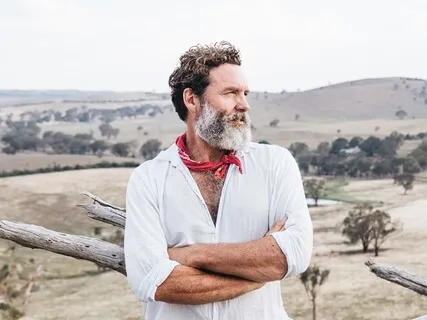
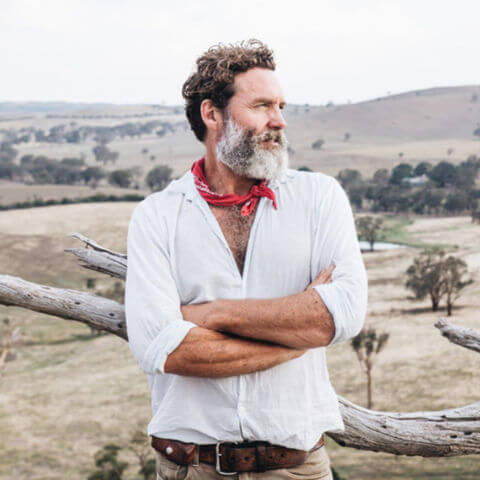
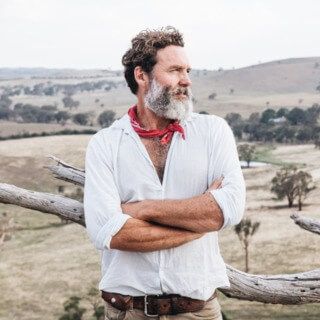
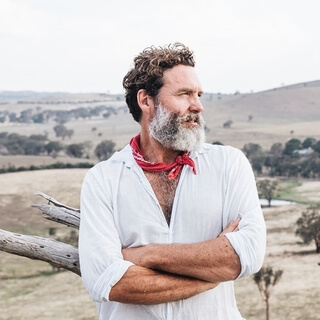
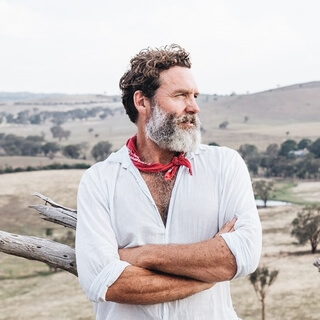
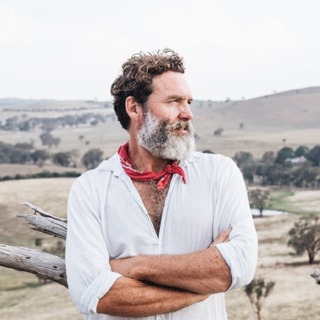
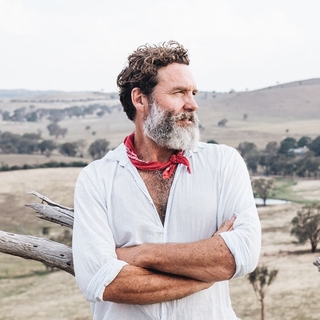
I just think a lot of people are waking up and it's brilliant now where I think in the end and if you look at our particular government at the moment and the US government before the recent change,
You see that the only way to change things is if people lead it.
We can't expect our leaders to save us because that's just not going to happen.
That was Neil Perry and you're listening to The Regenerative Journey.
We acknowledge the traditional custodians of country throughout Australia and internationally and their continuing connection to country,
Culture,
Community,
Land,
Sea and sky and we pay our respects to elders past,
Present and emerging.
G'day,
I'm your host Charlie Arnott,
An eighth generational Australian regenerative farmer and in this podcast series I'll be diving deep and exploring my guests' unique perspectives on the world so you can apply their experience and knowledge to cultivate your own transition to a more regenerative way of life.
Welcome to The Regenerative Journey with your host Charlie Arnott.
G'day,
Super excited to bring you a wonderful interview with Neil Perry today.
I've known Neil for a few years now.
He signed a book for me some years ago and in the front of it he said,
What was it,
He said,
Keep the bastards honest or no,
Keep at the bastards,
I think he wrote.
Lovely fellow,
We were lucky to have a chat here at Rockpool Bar and Grill in Sydney and Sydney's CBD,
Can't even talk,
Haven't even had a drink yet.
And we talked about,
We talked about sort of the impact of COVID.
We talked about Neil's regenerative journey,
Which really started early in his life where his family were sourcing food from nearby and his father was a butcher and so really he had,
He was getting the good stuff into him from an early,
Early time.
We had a couple of Patreon questions too from our Patreon members about changing trends in where restauranteurs are sourcing food from and also about airline food.
Asked him about mentoring,
Latest projects,
What is our rate about?
What is he excited about?
And just before we jump into the interview,
I just want to let you know and remind you that we will be,
Hamish Mckay and I will be down in South Australia with all those wonderful crow eaters down there at Barossa,
The Barossa Valley on the 3rd and 4th of May at the Alkina Wine Estate.
There were Dan and Amelia and all those wonderful people.
Now just to make a note of that,
We are just talking about how biodynamics applies to wine and viticulture.
It is about horticulture,
It's about broad acreage,
It's about small scale garden,
It's whatever you want to,
However you want to apply biodynamics to your world and your life.
So there on the 3rd and 4th of May in the Barossa Valley at the Alkina Wine Estate and on the 7th and,
Sorry 6th and 7th of May,
That's later in that same week at McLaren Valley,
Gemtree Wines there with Melissa and Michael who produce some amazing wines as does the Alkina Estate.
So just to reinforce that,
You don't have to be a wine grower,
You might want to be a grape eater,
But not a wine grower or a wine maker to come to these courses down there in South Australia.
They are open to everyone so spread the news far and wide,
We'd love to see you there.
Tickets are available on charliearnett.
Com.
Au and I hope everyone enjoys this interview with Neil Perry as much as I do.
Neil Perry.
Charlie.
Welcome to your restaurant,
Rockpool Bar and Grill.
We're sitting up in a,
Where are we,
One of the private rooms.
One of the private rooms,
The Bligh Room with a nice little view over Bligh Street,
That's the name.
Hence the name.
Not too creative.
Well that was my next question,
What is outside,
So you've answered that one.
Neil,
I have got you here as a guest on the regenerative journey and I'm most appreciative of your time as well,
You're a very busy man and I want to make sure that you get some value out of this as well as our listeners.
And what I do is I want to make sure my guests are in a place,
A happy place and I suspect that we're in a happy place.
Yeah,
Absolutely.
We're looking at a beautiful Chinese home out there overlooking the CBD of Sydney and can you tell us about,
Neil I guess,
What does Rockpool mean to you?
What is it?
Because I want to try and set the scene.
Well I mean,
You know,
For me it's the brand that I've had in my life for 33 years now.
Moving on from the fine dining Rockpool to 15 years ago Rockpool Bar and Grill in Melbourne and then 12 years ago Rockpool Bar and Grill in Sydney and then 10 years ago Rockpool Bar and Grill in Perth as well as a few of my other restaurants.
But this,
You know,
Being the namesake or the continuation of Rockpool,
Which is a really important pillar in my life and probably the brand that I'm most known for,
Is something that's really close to my life.
And at the moment,
Yeah,
I love watching the fire like I was this morning and seeing the boys cut all that beautiful beef and yeah it's incredible.
Are you here,
Because being as busy as I think you are,
I suspect you are,
Do you,
How much time do you actually spend,
I mean if not on the pans,
Just sort of in situ in your you know.
Yeah well I'm still a shareholder in the Rockpool dining group but I kind of stepped away,
I sort of retired for five minutes but yeah.
Well I mean it was.
I was seriously thinking of taking a really nice big break and just focusing on the charity that we do with Rockpool Foundation,
Rockpool dining group and Quadrant Hope Delivery,
Which is just about to restart fantastically.
And I was really going to take a big break but from a day to day running,
But what I am is a mentor to many of my old team and I love the restaurants and I'm here all the time and say hi to the customers and make sure that everybody knows that I'm still around and still incredibly supportive of Rockpool dining group and Rockpool Bar and Grill in particular.
I think it's really important that the boss as it were,
The principal is seen on the,
On you know on site and it's not just like oh he's the guy that sort of pops in and yells at us and bugs off you know for a couple of days.
Yeah yeah no definitely and I think that whole culture and people working together it's important that the leadership is part of that.
Neil I want to,
If I may drill down into,
I mean hence the name of the podcast,
The Regenerative Journey,
I'm looking to understand you know going back in time to you know your earlier years and I guess I'm looking for some points in time potentially without you know putting words in your mouth.
There were some sort of either tension events or times when you you know had some deep reflection on what you were doing and then decided to change.
Before we get to those points just give us a bit of a sense of Neil Perry before those points in time.
Well I go all the way back because the reality of it is that you know my father taught me pretty much everything I know about food without me probably realising it at the time.
You know he was a butcher so we ate great meat,
Always ate lots of offal and he was,
My three brothers were butchers as well as well as my uncle so it was like really rooted in the family but he was a mad keen fisherman.
We lived on George's River so everything that we ate that came from the sea,
We'd be in Burrill Lakes in summer,
We'd be up at Yamba in winter and they were our holidays and so I ate fresh seafood,
We caught gutted scales on the beach or in the lake at Burrill Lakes or George's River and we lived on Stewart Street and we had a small plot of land,
We had an aviary so the chickens laid the eggs and Dad would kill the chook every now and again and you know that'd be the roast chook or bring home incredible meat or it'd be fish that we caught but we had a really beautiful little vegetable garden so we grew things and we ate squash and zucchinis and tomatoes and eggplant in summer and dug root vegetables in autumn and winter and grew potatoes out in spring and so I didn't realise at the time but I was completely immersed in seasonality without kind of realising it and also freshness and I guess when I started cooking that really reflected on me that that was where I needed to start with the season with the quality of the ingredients,
With as fresh as I could possibly get and because I'd actually dug fruit and dug vegetables and picked fruit and scaled fish and cut large pieces of meat with Dad because he'd bring home a whole rump and we'd slice and put it on the barbecue or whatever it might be then I felt like that was somewhere where I really needed to go and have a relationship with suppliers and when I first started,
Even before I started cooking actually in late 70s,
78,
79,
Probably 78 actually,
The first sort of serious cookbook I bought was Great Chefs of France and it sort of plotted the 12 I think chefs of France at the time who lived in the provinces,
Not in Paris,
Who were three star chefs and they told the story of each of the chefs and I suppose the endeavour,
The amount of energy and the length of time that you had to put into every day from sourcing the amazing ingredients at the local markets through to prepping it and family meal and cooking for the customers and cleaning down and starting it all again for dinner.
So that was a really pivotal read for me.
And I think you were sort of age,
What did you give a sense of?
22,
23,
Something like that.
Well 21 actually and then around the same time the great Michel Guerard who was one of the,
Along with the Coos and Tragro and Sandaran and those guys they were,
Chapal,
They were all the guys who were cooking the old cuisine at the time,
The late 70s through to the beginning of the 80s and sort of one by one I sort of got their books and read it and everything that came through those pages was about quality,
About seeking out the best,
About building relationships with suppliers and we say no you're a producer now but that's sort of where I started.
So right back at Baranjo House in 1983 when I took over the reins as the chef there or at the end of 82 actually,
I made sure I put on the menu the suppliers that we had relationships with and that was the first time that I started doing that.
Is that the first time that someone did it?
I think someone did it in Australia really,
Yeah.
And we used to have local fishermen bringing 15,
18 kilo dew fish in the back door and beautiful squid and live prawns and stuff that we were using locally which was fantastic and bit by bit as John Sussman and I sort of got involved in Blue Water Grill and then started getting direct off fishermen large volumes of seafood from around Australia,
South Australia,
Tassie,
Victoria and then he started flying squid brothers when I started rock pool on George down in 1989 and he said to me hey I'll start a seafood business if you all buy off me so that sort of started a great relationship and then… Who got the better deal?
Sussman,
What do you say?
And then we did things like Tony Lehman was my brother-in-law at the time or cousin of my first wife and he was a farmer and we got hold of,
I'd said to him,
I really lament the fact that when I go to France and eat these amazing milk fed lambs it's mind blowing.
Just like when you eat an incredible like the first breast chicken you have and you go okay now I know why I pay as much for chicken as I do for a beautiful piece of beef,
Whatever it might be.
So we did Ilobo lamb and then we started working with a whole lot of other producers and suppliers and now it's amazing the amount of things that you can get here and the relationship you can develop like here at Barn and Grill with all the fishermen that we work with directly and all the cattle growers that we work with directly.
So it's great because if you've got an open relationship you can pass comment backwards and forwards and you're a conduit between the producer and the customer.
And I think it's great for the producers because they get to understand how prized their ingredients are and how well looked after they are by the chef.
We have on the menu the cornerstone of good cooking is to source the finest ingredients.
Richard,
Who was my chef at Rosetta up until just recently,
Put it even more simply about good Italian cooking is good shopping and that's just a fancy way,
An easy way of saying what I said before,
But the reality of it is that the best dish starts with the best ingredients and you can't get around that,
Not if you want to taste the nature within the product.
We were in Italy a couple of years ago for a couple of months,
Neil,
And Angelica,
My wife,
Being Italian,
A half Italian,
Wanted to go back and that was certainly the message,
But the impression,
And that's what we saw was the most simple food with the finest ingredients done well and simply and often quickly.
It was all we needed.
And you go to Italy and you walk into one of those vegetable shops,
Fruit and veg shops there,
It blows your mind,
The quality of the product.
And you sometimes lament that you can't get things like that here on a scale that you do there.
That's just every fruit and veg shop.
It's normal.
It's normal,
Yeah.
But we're getting better and better at that.
And when I think about in 1982 or 83,
If we forgot to order something off our fruit and vegetable supply,
We ran down to the local fruit shop,
Fruit and veg shop to get an interesting lettuce or something.
Forget it.
It was a Mignonette and an iceberg and that was it.
Now you've got 20 different types of rocket.
You're confused.
You name it.
Yeah,
Yeah.
It is amazing.
So we have come a long way and certainly I think small farmers who care have learnt to be able to market the difference in their product and do what you do,
Which is look after the earth.
I mean,
It's a pretty simple idea,
But if we look after the earth and we look after the sea,
Pretty much going to look after the planet.
But there's a lot of people who don't seem to understand how simple and how do you feed the world?
Well,
You don't feed it by industrial farming.
You feed it by getting the most out of the earth and as you know,
Having biodiversity and quality within the earth,
You grow the products in and then they're better for you as well.
Well,
As Charlie Massey says,
And he quotes it,
That 70% of the world is fed from farms five acres or less.
And then 80% is 10 acres or less.
We can actually do this.
Yeah,
Yeah.
We don't have to lay the earth bare all the time.
We don't have to rape the sea.
There's some really interesting things happening,
But the great thing about it is with this podcast and obviously with the advent of things like Netflix and so forth that aren't commercial TV so that you can get things that make statements and don't have to be the most popular,
But can be seeked out by people who really care about things.
So there's a lot of really great documentaries on food and the environment and the sea.
And I just think a lot of people are waking up and it's brilliant now where I think in the end,
And if you look at our particular government at the moment and the US government before the recent change,
You see that the only way to change things is if people lead it.
We can't expect our leaders to save us because that's just not going to happen.
Now have you already read my questions?
Because you're pretty much answering them all.
Did Gene send you a copy of my questions?
No,
No,
No.
It's a classic.
You're making it.
Well,
In some ways you make my job easier,
But harder.
Neil,
Were there points in.
.
.
So what I'm getting is that normal for you was growing your own food.
Fresh meat was coming in through the door.
Seafood was at hand.
So I guess in some ways your regenerative journey or a sense of a connection with your food and its source was from day one.
Yeah.
And very unusual.
You think back and I was born in 57.
So if you think from there through to the seventies,
You know,
Sorry?
Really?
Yeah.
If you look for.
.
.
See,
That's what good food does.
If you look from there,
Exactly.
And wine.
And if you look from there through to the seventies,
You know,
A lot of people in Australia weren't eating like that.
I mean,
You know,
We had what we call the new Australians,
Of course,
Back in the day,
And they were Greek and Italians and few select Europeans.
You've got 1972 and Whitlam comes to power,
White Australia policy,
Vietnam War over.
A lot of Southeast Asian people coming to Australia,
Middle Eastern,
People who bring culture and really interesting things and interesting food stuff.
And you see an explosion in biodiversity of.
.
.
Or sorry,
Diversity of the sorts of cuisines and food and the ethnic places that you can eat at in Australia.
And in a very short period of time,
You know,
We've taken on an amazing food journey.
And then in the last 10 years,
What's been brilliant is the recognition that we also had some amazing native ingredients that are incredible.
First Australians are part of our.
.
.
Must be part of our story because that's what makes us unique and interesting.
And they're incredible people and they've been managing,
You know,
Water shortage and fire in this country for 60,
000 years.
And so you've got an incredibly,
You know,
Multi-layered flavour pot in this country,
Which is almost unique to anywhere in the world.
And there are other multicultural countries,
But I think because of the way that we grow and the attitudes that we have and then,
You know,
Layering our first strains over the top of it and our incredible seafood and our ability to grow from warm climate to cold climate,
You just have such an amazing wealth of things to work with.
So why wouldn't you be inspired by a Thai ingredient or an English ingredient or a local ingredient or an Indigenous ingredient,
You know,
Whatever it might be?
So here in Australia,
I think we do things very differently because we're part of Asia.
We really are.
We're so influenced by it.
We've travelled to it as young Australians a lot.
Many Asian people of Asian descent call themselves and they are Australian here.
And we've got this kind of rich culture that's in a way open with Asia.
And so I think if you look at all the countries around the world that people pick up,
Western white people pick up Asian ingredients and cook with them,
Very few manage,
I think,
To make it as comfortable and as authentic as we do here in Australia.
I think that's a really unique part of what we do here.
We're spoiled,
Aren't we?
Just with ingredients and with climate and the access and I guess given the multicultural nature of where we're really open to all sorts of different food.
Having said that,
As a country boy going to the Imperial Peking,
Chinese,
Down at the rocks back in the day,
That was a treat.
Mermaid tresses.
That was one of the specialties I used to go to.
And Mongolian lamb.
Mongolian lamb.
Well,
They're all the classics.
They're still available in the local Chinese and wherever.
Is Imperial Peking still around?
No,
It's not.
No,
It wasn't there for a long time.
They just,
I think about three years ago or two years ago,
Redeveloped the walls.
But that was there for a long time.
And there was an Imperial Peking in Double Bay as well,
Which no longer exists,
Sadly.
That's right.
It was underneath,
Just opposite the Oak there.
Somewhere there,
Wasn't it?
Somewhere around there,
Just somewhere around there.
Neil,
So were there some moments in your,
Again,
Your journey,
Your development,
Your career where from a,
Was it like a food sourcing or just upon reflection,
Some moments that were really,
Were pivotal,
Were turning point,
Or you learned a lot from an event or something that I guess I'm trying to get a sense of,
You know,
Lessons that you've learned that you can pass on to our listeners.
Well,
I think it's been true,
Questioning what's your truth or what's true to you.
So,
I mean,
I remember in 1984,
I'd been at Baron Jo House for a year and a half and being cooking,
You know,
I'd worked with Stephanie and Damian Pinole and Gabe Ilsen and Jenny Ferguson,
Me and you,
Who was an amazing cook in King Street.
I don't know if you remember that restaurant went there,
But it's amazing.
And so I kind of worked with all those guys and worked at the Bayswater Brasserie and then I got a job at Baron Joey.
But I was in Palm Beach and I was essentially cooking,
You know,
Provincial French food,
I suppose,
A bit of Italian overtone or whatever it might've been.
But I went to France and ate in all these amazing three-star restaurants and Freddy Gérardets in Switzerland and sort of 21 days,
18,
16 three-star restaurants.
It was incredible,
Actually.
I think I put on about stone and a half back in those days.
Worth every pound.
Yeah,
It was worth every pound.
I spent a lot of money,
But I came back and thought,
Wow,
You know,
That's incredible food,
Incredible French cooking,
But they're cooking it in France and sort of what am I doing at Baron Joey House cooking essentially French food at this amazing location in Sydney.
So I'd always loved Asian cooking,
Chinese.
My father had me very sort of switched into that and I love,
You know,
I've been reading a lot about Moroccan food and playing around with that as well.
And so I really kind of thought to myself,
Why aren't I cooking the food that I love and also some of the other cultural influences that I see here in Australia in my country.
And so that's when I decided in 84 that I would start to cook my own food,
Really.
Not renditions of dishes that I'd seen in cookbooks or cooked with people or what have you.
So that was kind of the starting of the real Neil Perry journey,
I suppose,
Right through Blue Water Grill and then to Rockpool where we were sort of very creative and doing different things.
And then,
You know,
It was always Blue Water Grill was an amazing seafood restaurant as my father was a butcher,
Was always in my mind to have a steakhouse.
And so when the opportunity arose to create Rockpool Bar and Grill,
I kind of jumped in with hands wide open and it was a really fantastic,
You know,
Kind of part of my career.
And I sort of see now going down to Double Bay and opening this new restaurant where for the first time ever I'm going to own it 100%.
And I kind of see that as a secret squirrel.
It's a bit of a secret squirrel.
I'll tell you off camera.
Yeah,
I'll tell you off camera.
It's about the end of April.
So I see that as the next kind of defining focus of my career because I want to really create a kind of world class neighbourhood restaurant,
The sort of place that everybody wants to be and hang out and use for different things.
And,
You know,
It feels like they should take the family there for a birthday or should dive in and have a glass of wine and a burger,
You know,
Or just have some oysters and a glass of chablis,
Whatever it might be.
Are you looking for more information to assist you on your regenerative journey?
We've created an online community of supporters with exclusive access to interview transcripts,
Live online Q&A sessions with Charlie and his interviewees,
As well as the opportunity to be interviewed on the show yourself.
If you would like to be part of this community or would simply like to contribute to the development of the podcast series,
Please make your way to patreon.
Com forward slash the regenerative journey podcast.
We look forward to you becoming a member of the regenerative journey community.
Let's get back to this week's episode.
Neil,
I want to just divert off there for a little bit.
I want to sort of go a bit higher level.
What do you think,
What would you say your journey is?
I think probably getting the best out of other people.
You know,
I've never thought of myself as the world's greatest cook or restaurateur or whatever it might be,
But I think I'm really good at actually getting people together,
Leading them in a direction and getting the best out of them along with myself.
So I guess never having the ego where you're insecure about having people that seem to have more talent or are smarter or have a skill that you don't have,
But getting the best out of them.
And I think that and probably moving forward all the time,
Recognizing that I can't really control anything except for what's within my sphere.
So,
You know,
Making sure that I keep all of that under control and then I'm in a better position to when things are coming at me,
You know,
I'm in calmer,
Better,
More relaxed,
More focused on what we're doing.
I've got the troops going forward.
We're doing the best we possibly can every day.
We're doing better tomorrow.
Things come at us,
You know,
We can deal with it.
We're not worried about what other people think.
We're not worried about what's going to happen.
You know,
We love a great review or you love something that's really fantastic,
But that's not what our focus is.
Our focus is doing the best that we can.
And then when these outside influences happen,
Then you just have to take it for what it is,
Good or bad,
And then just got to move on and marshal the troops and get the best out of them.
So I think actually leading people and getting the best out of them would probably be,
You know,
I think my strong suit.
It's a bit like in some ways farming or regenerative farming where we try and focus on what we're in control of.
And like the weather,
Can't do that.
Pray.
Well,
That's true.
Go to church more.
But having said that,
Though,
The being prepared for the rain when it comes.
You know,
Just sort of having the ground cover as an example and making sure I can't make it rain,
But when it does rain,
I make sure I capture as much of that as I can.
I've got so many questions,
But I'm going to have to cull them.
Actually,
You have answered quite a few.
What are you irate about at the moment?
Is there anything that sort of gets up your goat?
Well,
I mean,
I think one of the things that I really disappointed most in is how we started down a great path of reconciliation and we seem to have gone off the boil a little bit.
I must say that when Morrison jumped out and said after Gladys,
And I've been saying it on Instagram for a while,
You know,
The simple changing of the word one as opposed to free in the national anthem.
When you get up there and listen to the All Blacks,
You know,
Sing the national anthem half of it's in Maury and then they do the Harker and then,
You know,
We are young and free to a country that's got 60,
000 years of continual culture,
A bit rich.
So I was kind of,
Yeah,
Well,
It's a bit remiss.
I mean,
I think we have to rewrite history right because we know enough of it now to be inclusive and we have to be inclusive to take the next step in the journey.
So that gets,
Might go a bit.
And then I think the other thing is really making sure that we focus on the environment.
I mean,
I know we've had to listen to the science,
Which has been brilliant and all of our politicians have said listen to the science on COVID.
And we've got to where we are by listening to the science and by focusing on that.
And everyone's done an amazing job in Australia of respecting each other,
The fellow human being.
But I do think when we say listen to the science on climate change,
And for some reason,
We're able to ignore that science.
Just seems to me that if you can stand up there and tell everybody that they've got to go into lockdown for two months because of the science and then you can say,
Oh,
Well,
You know,
Coal could be the answer.
Gas-led recovery,
You know,
You kind of you're going to wonder where,
What's got to happen to make people realise that climate change is real and that the reality of it is,
I mean,
Even if the,
You know,
The guys who have got the negative view were right,
I mean,
What's wrong with having a cleaner planet?
It would be just like saying,
Oh,
Don't clean up your bedroom kids or don't fix the house up or don't,
You know,
I mean,
It's why would you want the seas to be polluted with plastics?
Why would you want to pollute the earth,
CO2s?
And why would you want to chop down the Amazon or burn it?
You know,
The irresponsibility just seems ridiculous.
I think Neil is actually your Instagram feed where I saw you replayed the national anthem at the rugby game,
Which I was blown away,
Missed the game,
Missed so many games on the television,
Don't watch much.
But that was,
Thank you for posting that because I totally would have missed that.
Yeah.
Well,
You know,
I was just blown away by it.
I mean,
The beautiful young girl singing was fabulous.
But I think,
You know,
To the point that we recognise that Australia has such a rich history and culture and the more that we push towards that and more the understanding is that we're all one people here and we've got to get on with it.
I think that's for sure for me is,
You know,
In my lifetime,
I'll be so proud of seeing a lot of change,
You know,
If I kick on for a few more years,
Hopefully,
Because I think in the next 20 years,
There's going to be some serious rewriting of all the writing of history.
And when you think about it,
You know,
Hopefully the right things being taught in school and also,
You know,
Hopefully,
And it's interesting,
Actually,
Because I think we have quite a few young Indigenous kids from the National Indigenous Culinary Institute who've been fantastic cooking with us and,
You know,
Working with their native ingredients and going out and seeing some of the picking and harvesting and whatever.
And I think a lot of reconciliation can start to happen through food,
Because it starts to show that we do have great respect and we understand what it is to be Australian and how unique this country is,
Because it is incredibly unique.
So,
You know,
Let's celebrate that.
It's a wonderful,
You know,
From an Indigenous and sort of a,
You know,
Anglo sort of point of view or,
You know,
Different district point of view,
Different regions of Australia or the world,
You know,
Food again,
Is that central,
As I say,
When I talk of things,
You know,
Put your hand up and eat food.
Not many don't.
You know,
It's like,
It's the thing that is quite a lot care about.
I mean,
There are a few who could just eat cornflakes every day.
But,
But,
But I mean,
You know,
The reality of this,
You know,
You frame,
It's an important part of framing culture and country.
And so for us to bring it,
The uniqueness out that we have in our,
In our food is fabulous.
But I think also importantly,
To celebrate the different cultures that we have in Australia,
You know,
We have incredible ethnic restaurants that we can go to where we can taste beautiful food that,
That represents people who are part of this,
You know,
The Australian fabric.
I mean,
You know,
We're one people in this planet,
You know,
It's just crazy that we just have so many arguments about religion,
Colour,
Sex,
Gender,
Sorry,
Gender,
Sexuality.
You know,
It was just so frustrating.
Thank God Malcolm managed to get the plenicide up and going for same sex marriage.
It was very clear that the overwhelming majority of Australians want everybody to be able to marry,
Find love,
And be a couple.
And,
You know,
Why would you cut out a vast amount of people out of society out of that,
But just,
We seem to have this way of going to war on each other as humans,
Which I just faber-gassed it at,
You know,
It's kind of,
If you take Islam and Judaism and Christianity,
I mean,
Half the people who don't even realise it's just the one God we're talking about,
You know.
It's the same woman.
It's just,
It's just frightening.
But anyway,
I mean,
Hopefully,
You'd hope that things can change,
But I'm not overly optimistic that we can stop trying to hurt each other.
Just let's raise the tone.
What are you excited about?
Is it something to do with Hope Delivery?
Yeah,
Really excited about Hope Delivery at the moment,
Because we've got,
You know,
5000 people that we're going to be able to feed a week in about four weeks.
So we're super excited about that.
We know vulnerability in Australia's increased through COVID.
It hasn't gone,
You know,
Backwards,
It hasn't gone forwards,
It's gone backwards.
So we know that more people are dropping below the poverty line.
We know that more people are struggling,
Making a decision like,
Can I afford to eat today?
Or do I leave my house and become homeless?
Or,
You know,
There's a lot of stuff going on that we know that we can support through Hope Delivery.
And that's a wonderful experience.
And I know through COVID,
Looking at the experience of,
Say,
Melbourne,
Where we were in hard lockdown for four and a half months after we came out of lockdown in Sydney,
That my guys really,
Their mental health was fantastic,
Because they got to come to work anywhere between four and two days a week,
Cook food or pack food and actually hand out food Riverside to 1000 people a day.
They were such a part of a community,
It was such a strong kind of focus for those guys that it really helped them through what a lot of people in Melbourne struggled with,
Which was the mental health issue that COVID created outside of the physical issues that we had with the disease itself.
So just for those who don't know,
Just explain what Hope Delivery is,
That giving of.
.
.
Yeah,
Well,
You know,
I mean,
It was really just G basically saying,
Hey,
Chef,
You've got the ability to do something about this,
Because there's a lot of visa holders,
A lot of people who don't have a safety net from the government and stop talking about it on Instagram and actually do something.
And well,
We had a kitchens,
All my staff are going,
Chef,
What's going on?
Like,
Anything we can do to help.
And interestingly,
Because Tricia and I have been always very community minded,
We had our own foundation,
The Rockpool Foundation,
Which was ordered by KPMG for the last seven years.
So when we said to people,
You can donate,
It's tax deductible,
This is what we're hoping to achieve.
It was fantastic.
Everybody jumped on board.
So we raised about $400,
000 in about three weeks and got about serving 300,
000 meals in nine months.
It's incredible.
And I guess the farmers didn't stop growing food.
No,
And we were able to support producers,
Which was fantastic.
And we were able to,
Small,
Small suppliers who were kind of caught in the middle of restaurants owing them money and them wanting to pay their producers.
And we all of a sudden were buying $10,
000 a week worth of food.
And it worked well for those guys,
Which was fantastic.
If only we could solve the current problem of fruit and vegetables not being able to be kicked because we just don't have the employees and the backpackers.
Well,
Charlie,
The interesting thing is,
I mean,
The only thing that concerns me about opening a new restaurant is staff.
Now,
When you've got X amount of unemployed in Australia,
You would suspect that wouldn't be the case.
But in hospitality,
Without all the skills visas that have had to go home because they couldn't survive without a safety net,
With the travellers who've all had to go home because again,
They had no safety net,
And with diminishing students who used to work 20 hours a week in the restaurant industry or hospitality industry,
We're in serious trouble.
So the thing that's going to impact the ability for the restaurant industry to come back to full strength is a staff one.
So we really need the government to understand that we've got to get the right balance between bringing people in to pick fruit,
Dig vegetables,
Do the sorts of things that in agriculture is desperately needed.
And as you say,
Like,
I feel sorry for you guys,
Because you had some rain this year and decent rain.
So you grow up probably had the best,
Probably had the best year.
And you say you have a great year and then can't fully monetise it,
Which,
You know,
It seems seems a tragedy.
So we do need to get back to some kind of what does COVID normal look like afterwards?
And how do we get people travelling again?
And look,
I'm very optimistic that with the vaccine and with the way,
Particularly with the way looking at the numbers in the UK and America and Israel,
Where they're rolling out substantial vaccination,
The vaccination does seem to be making it more like the flu rather than hospitalisation and potential death,
A bad cold and you can get over it or immunity.
And the numbers are dropping quite substantially at the moment.
So there's some encouragement.
And I was talking to Lyndon Pride who owns a Dante bar in New York.
He works for me and I just give him a call from time to time and see how he's going.
It's been pretty dire for those guys for a big chunk of time.
And they're back to 35% open and they're going to actually be a lot more than that by spring into inside dining.
And he's saying in America,
Saying round about July,
Which isn't that far off now when you think about it,
Round about July,
They think they'll have herd immunity to the point where,
You know,
Life can return to fairly normal.
So I hope so.
So I mean,
Not the numbers restrictions?
No,
Yeah,
Not the number restrictions.
So we're very lucky here in Australia.
Have you got restrictions?
Well,
We're at two square metres,
But that pretty much helps most restaurants,
In particular the smaller ones.
I felt very sorry for those guys during the four square metre rule,
Which had to happen,
Of course.
We completely understand why everything was going on.
But,
You know,
And the other great thing,
Of course,
Now is with the vaccine going into quarantine workers,
You would hope leakage is zero or almost minimal.
And I think for the,
You know,
50,
000 people have to come back to put 50,
000 vaccines towards them.
You know,
You should be going to Australia House in London or in New York to wherever you've got to go to,
To get a vaccination and then COVID test two weeks later and then come back to Australia.
I mean,
I think if we do that,
And then hopefully everybody who comes in is vaccinated after that when we start to open bubbles and borders.
But I think,
You know,
Considering where I thought we were,
You know,
May last year to where we are now.
Big turnaround.
Big turnaround.
Positive.
We have a little,
Well,
It's getting bigger,
Group of members,
Patreon members,
Patreon being a sort of a platform where people can subscribe and they,
We have webinars every month with some of our interviewees and they get transcripts of the interviews and so on.
And we put to them this morning,
It was at last minute,
Any questions that they might have for Neil Perry.
And two popped up.
Well,
Two that I was happy to share.
One relates to,
I've said my opinion,
Are you seeing a shift away from restauranteurs sourcing food from overseas?
And is there a shift more towards,
You know,
Sourcing good organic or generally grown produce from Australia?
And if so,
Why do you think that trend,
Is that a customer led trend?
Is it restaurateurs going,
Actually,
We've got it all here anyway.
What's the.
.
.
Yeah,
Look,
I think it's definitely happening.
It's certainly happening in the best restaurants.
You know,
We really pushed to get a greatest,
You know,
Because we produce great Australian olive oils now,
Great vinegars and things that we might've bought from overseas.
And,
You know,
People are growing lentils now and farro and all sorts of things we might've bought from Italy and different places.
And we're wanting to mill Australian flowers for our pastas and our breads and things.
And we're focusing on Australian wine.
I mean,
Sure,
We're going to be selling imported wines,
But we're really focusing.
And I had a big campaign through my Instagram about Drink Australian and support the Australian industry because it's been through,
You know,
Fire and,
You know,
Well,
It went through a fire flood and then obviously COVID and,
You know,
Now China and so forth.
So all of these industries within Australia,
I think the pandemic made us realise that,
You know,
We have a certain responsibility to support our own country and our own producers.
And very interestingly,
I think,
You know,
Manufacturing and pharmaceuticals and IT and all the sorts of things that we generally have in spades.
I mean,
Most of the really great ideas,
You know,
In universities and different things end up,
Researchers end up going overseas to.
.
.
Get the money.
Yeah,
To get the money to formalise the idea they had in Australia.
And I think what COVID's made possible is,
You know,
The government funding and the different fundings that are available is to recognise that we have this wonderful treasure here in this country of intellect and we want to hold onto it and we want to hold onto manufacturing and we want to be able to make face masks here and great to see the fact that we'll be making our own vaccines and so forth.
And importantly,
A focus towards Australian wine and Australian producers and making sure that we're using Australian salt and,
You know,
All sorts of things that,
You know,
Again,
Help the producers thrive and get through all the various things that they have to get through because you're right,
You can't dial the weather in and out.
I often wonder why anyone would be a farmer.
That was my other question.
I was going to say,
When are you going to buy a farm?
Yeah,
No mate,
No,
No.
Matt,
Leave that to Matt Moran.
He keeps all those little piggies running around.
All he sees is money.
Actually,
I texted him this afternoon and I said,
Have you got any questions for Neil?
I don't think he got back to me.
He's busy,
Mate.
He is a busy bloke.
I'm looking at the time too,
Neil.
You're a busy bloke.
A couple of the basic ones.
I asked Matt this the other day.
What's cooking with oil?
What's the best oil to cook with?
Well,
I just cook usually either if I'm cooking Asian food,
I'll cook with vegetable oil or peanut oil.
And if I'm cooking Western food,
I'll pretty much always cook with olive oil and finish with extra virgin olive oil.
So I just love the flavour and people will often,
And I'll often cook a sauce with extra virgin olive oil and people say,
Oh,
Isn't that a bit wasteful?
I honestly believe everything tastes better in the end.
It's sort of like if you use a decent glass of wine,
I mean,
You don't have to go crazy,
But you use a decent glass of wine and reduce it down to make a red wine sauce.
If the wine tastes great,
Start with the sauce.
Pretty much tastes great.
If you use a terrible cooking wine,
Nothing's going to save it,
Right?
So that's a bit of a rule of thumb,
Isn't it?
If you're going to serve wine at dinner or the dish requires wine,
It's appropriate that it goes in the dish,
Goes in the table.
That's it,
Absolutely.
Same thing.
One last question.
Tell me about copper pots because my wife's nuts for them.
Yeah,
Love them.
And I want to know,
Because they're as dear as poison,
But I want to know,
Are they worth the,
Like,
Are they just the best to cook on?
Oh,
They're beautiful to cook on.
So obviously they're rendered useless by induction if you're using induction,
But they're really beautiful to cook with.
So I used to have a lot of them.
So I,
When I was going to France from 1984 and pretty much from 1984 to 1986,
I probably went every year to France,
Sometimes a couple of times and I'd in all the brilliant restaurants.
I was lucky enough to eat at Robuchon in 84 in 96 when he,
When he,
When he closed.
But I would go to what would be the chef's warehouse in Marmont in Paris.
And I'd always buy two or three pans and bring them back.
So I had a massive collection down at Rockpool where I would have had 20 sauté pans of all different sizes and all copper souffle pans and beautiful little sauce boats and all that sort of thing.
But to cook out of here,
The evenness of the heat is absolutely fantastic.
So to do one of the classic French dishes,
Like a sauté of chicken,
For instance,
You just can't beat it.
So when my wife turns up and says,
I've just spent 300 bucks on a little copper pot,
I won't crack the shit.
It does hurt,
Doesn't it?
But I'll appreciate what comes out of it.
Yeah,
That's amazing.
New projects now?
Yeah,
New projects,
Restaurant down in Double Bay,
Couple of other things over time down there.
Getting,
Sinking our teeth back into Qantas as we get back more domestic flying now with the borders down.
And we're viewing first hub flying,
I would say,
Bubble flying and then a return,
Hopefully next year.
What's bubble flying?
Well,
I think New Zealand will open up first.
Singapore's already a green zone that way,
But not back.
So Thailand seems to be under control,
Vietnam,
Taipei,
Hong Kong to a certain extent getting better and better.
China's in pretty good shape.
So we'll see that.
And then it looks like the States might come good slightly quicker than Europe.
So over a period of time,
We'll see that.
So Qantas is on the boil,
Hope delivery.
Yeah,
We want to cement that and make sure that that's on the radar for even a day.
My new cookbook comes out in October,
So I just finished shooting.
We're kind of doing pages soon.
We're doing that last tidy up of the edit,
Which has been ongoing.
And it would be good to get that out of my life.
And then we start flogging it,
Of course.
So that'll be out in October and we're super excited.
Talking about airlines,
Neil,
We had a question about airline food.
Can we go there?
It's a quick one.
Why can't we have real food on flights instead of the shit storm of chemicals?
I don't know about that.
I mean,
When we're in full flight at Qantas,
I think our premium product is fantastic.
But economy can be difficult and it's really all about costs.
I think the economy product in Qantas is pretty good internationally.
Of course,
Domestic.
It's interesting as Australians,
We have a view of what we should get on planes,
But you jump on a flight in Europe or in America and it's like jumping on a bus.
I mean,
You get nothing.
So I would say some of our domestic flying is some of the best stuff in the world,
Really,
Because we do get things.
And I think the majority of our terminals are something to be proud of.
We take for granted infrastructure in this country.
When you think about the size of Australia,
Which is roughly the same size as the United States of America,
Without all the bits,
And you think about 300 million odd people and then you think about our little 25 million in this vast country,
The quality of the flying and the quality of the infrastructure and the quality of our roads.
I often travel and I think America is kind of falling apart.
I love America.
You go for a drive on some of the infrastructure,
The bridges and the roads,
You think,
Whoa,
Gee,
They haven't been fixed since Roosevelt put them in.
Well,
I mean,
We are,
Again,
We're lucky,
The food and the infrastructure.
And just talking about the terminals,
I was blown away a couple of years ago walking into,
Must have been the Qantas,
Sydney there,
Wolfgang Puck restaurant there.
Because years ago,
Angie and I went to,
In LA,
One of his restaurants there,
And was horrified when we said,
Have you got any grass fed?
And he goes,
No,
Sir,
But we've got this big tray of grain fed stuff.
They would have been cut or whatever.
Yeah,
Well done.
We stole a spoon.
Oh,
Really?
We can't sell that.
You've probably got a few towels from all the hotels.
I haven't got any rock pool spoons yet though,
Not yet.
What else,
Neil?
Oh,
A couple more,
Just very quick ones.
If there was a message,
A sign,
If there was a message or a phrase or a quote or a question you could put on a billboard just next to the harbour bridge there,
What would it be that everyone could see?
Yeah,
I think I'd say as Australians,
We are all one.
I think I'd really love to see a small country like this be able to lead the world on climate change,
Be able to lead the world on cultural diversity and most importantly on showing how well we can love each other and be one voice and one opinion.
I mean,
I've had many different opinions,
But the reality is really understand the fact that we're all the same,
But we are different and celebrate those differences.
You don't have to be frightened of difference.
You don't have to be frightened of religion or gender or sexuality or colour.
We really are underneath.
We're all one people.
And I would think that just like I'd love for us to lead the world in climate change rather than say,
Oh,
We can't make an impact.
I think we could lead the world on so many things because we are a small,
Beautiful country that has so many positive things about it.
I mean,
When you think about all the countries in the world that you could be born into,
I can't think of one that I'd rather be than here in Australia.
So how would you say that we are the same?
Is that it?
Yeah,
We are the same.
We are one.
It's just colour is skin deep.
I mean,
All those sorts of things are not cliches.
It's a reality.
We need to understand our diversities and our differences and get along.
And there's really no reason why we have to be frightened of each other.
Neil,
I don't think anyone's going to be frightened of you after that.
And can I just thank you so much for your time,
Not just your time now in the last 48 minutes,
But your time that you put into creating wonderful cookbooks,
The Hote Delivery Initiative,
The inspiration you give,
Not just your people who eat your food,
But the people you've been mentoring over many,
Many years,
Because you're really,
Again,
I am pumping up your tyres,
I know,
But I want to because I think it's absolutely,
I'd like to because you're leading the way in so many different areas in the food industry in Australia and to get through COVID and to be still mentoring and serving up good food and helping less fortunate people as well,
Which is not a lot of people do that.
I mean,
Maybe they should do more of that,
You didn't have to do that.
Well,
Thank you.
I mean,
We always feel community comes first.
I mean,
They've been so fantastic to us and myself,
And I just feel like you've got to give back.
Well,
Thank you for giving today,
Neil.
We will be very excited to put this out on the airwaves on the regenerative journey.
And just one quick one,
I'll probably mention in the intro,
We have the air con in the back.
Yeah,
Right.
So if it's a bit hard to hear,
You'll get,
You'll,
Reese,
My production man,
He'll sort something out.
He'll tidy it up.
We couldn't turn the whole restaurant off just for the.
.
.
Come on,
You're the boss.
Not with the wood fire girls,
Elliot.
Neil,
Thank you again.
Pleasure,
Charlie.
Look forward to seeing you.
Thanks,
Mate.
And the release of the book and the opening of the restaurant.
You bet.
Beautiful.
See you soon,
Mate.
Thanks,
Mate.
Pleasure.
Well,
There you go.
Neil Perry,
Delightful chat there with him at Rockpool.
Very generous with his time and very generous in his mentoring of many other chefs that I know.
He's quite the figurehead in the industry and rightfully so because he has been such an inspiration and a cornerstone of Australian cuisine for many years now.
Talking about cornerstone,
That's a good segue,
Isn't it?
Next week's interview is with Aaron McKenzie.
He's the creator of Origins of Energy.
He owns a sort of a small gym.
That's one of the many things he does.
He's all about health,
Fitness,
Well-being,
Spiritual and physical.
And we had a really good yarn with him in his studio arrangement,
Gym arrangement.
And I say cornerstone because he's built.
He's into fitness and health and he's a delightful bloke and he's so into.
.
.
He's not just a fitness guy.
He just goes,
I'm just going to work out and tell people how they might work out.
He's all about individual health and well-being and also the connection of food with their health and where that food's coming from.
So really good yarn with Aaron McKenzie and I hope you're looking forward to that one as much as I am next week.
This podcast is produced by Rhys Jones at Yeager Media.
If you enjoyed this episode,
Please feel free to subscribe,
Share,
Rate and review.
For more episode information,
Please head over to www.
Charlianet.
Com.
Au.
Thank you.