When we are brought up in a particular way of thinking that our cognitive function tends to lock in that world view and it takes a lot of disturbing to crack it open and make yourself open and new and it takes a lot of courage actually.
And I think anyone that's made that shift which is walking against the grain of the most dominant power in society,
The big multinationals,
Your peers,
Your local friends in your district,
Your Department of Agriculture,
Universities,
The whole thing,
You're taking on an enormous establishment to make this shift.
It takes a lot of guts and that's what impressed me about these farmers.
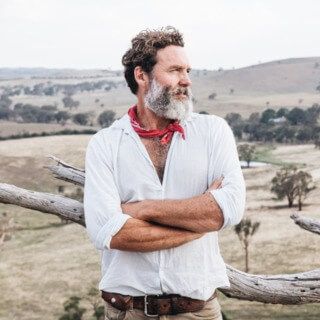
That was Charlie Massey and you're listening to The Regenerative Journey with Charlie Arnott.
We acknowledge the traditional custodians of country throughout Australia and internationally and their continuing connection to culture,
Community,
Land,
Sea and sky.
And we pay our respects to elders past,
Present and future.
G'day I'm your host Charlie Arnott and in this podcast series I'll be uncovering the world of regenerative agriculture,
Its people,
Practices and principles and empowering you to apply their learnings and experience to your business and life.
I'm an eighth generation Australian farmer who transitioned my family farm from industrial methods to holistic regenerative practices.
Join me as I dive deep into the regenerative journeys of other farmers,
Chefs,
Health practitioners and anyone else who's up for a yarn and find out why and how they transition to a more regenerative way of life.
Welcome to The Regenerative Journey with Charlie Arnott.
G'day today's interview has been one of my,
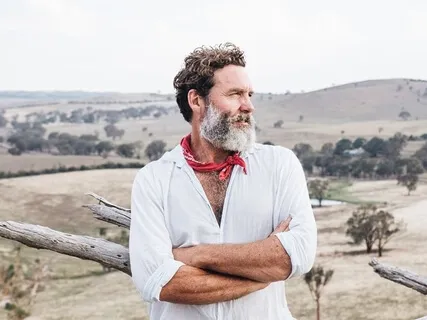
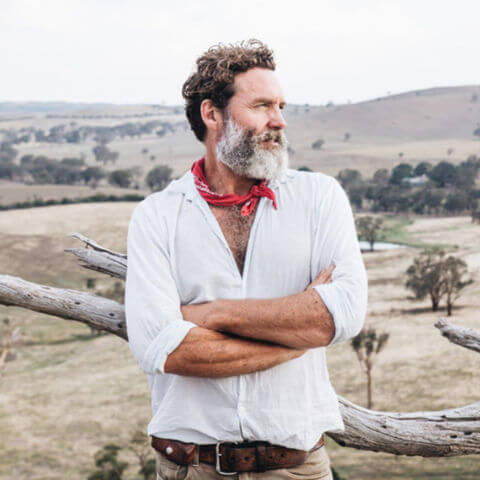
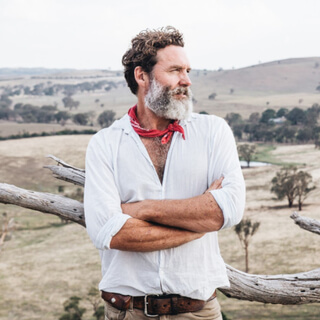
One of the ones I've been looking forward to for so long is with the legend Charlie Massey,
The author of called the re-warbler the one of the catalytic books of our time published a couple of years ago now but certainly made making making waves across the globe.
Today we talked about sitting here in Charlie's office at Severn Park near Cooma about all sorts of things,
Nutrient density of food,
Transition to regenerative agriculture,
Mental health,
The biome and the influence of nature has on the expression of genes.
We talked about the indigenous history of this beautiful landscape here and Charlie's exploration of that and relationship he's building with nature.
There's too much to bang on about in this interview that was absolutely wonderful and what an honour to sit down with Charlie and this is part one.
Charlie Massey welcome to your office.
Welcome to you.
Thank you.
Thank you amidst your work and at Severn Park your home here near Cooma and we're sitting in your wonderful office looking at your garden.
We're getting glimpses of the landscape out there.
I had a good view of it on the way through and great to have you on the show.
This has been,
It's been in the pipeline for a while and we've done a few of the interviews in the past on the machine there on the phone but this is very,
I'm very excited Charles.
Oh good of you mate.
I think it's a great idea getting ideas out both video and recording and this office was specially designed so I wasn't in four walls.
If you're going to get me into an office I want to be able to see some nature through the window.
We can see plenty of that.
Now before we,
I'll start with the most serious question that I can think of.
Is it Charles or Charlie?
Because I'm a Charlie too and depending on my behaviour.
It's the same with me.
I'm Charlie until I'm naughty.
What,
Fiona,
Fiona will say,
You know when she says Charles,
Charles you didn't pick up your dinner plate.
That's right.
And then it's just the depth that varies.
And the tone.
That's right.
Accompanied by a stern look.
Yep.
Yeah I think we're,
We're seeing out of the same book there.
Charlie tell me about,
About Severn Park or what it means to you.
I want to get a sense of,
I guess,
Where we are,
Location,
Geography and your place in it.
We are in your office which obviously conjures up all sorts of,
You know,
Notions of work and numbers and computers and stuff.
But what are we seeing beyond that?
What do we,
What does it mean for you to look upon this landscape sitting here?
Oh a combination of things.
It's a challenging landscape.
We're bottom end of the southern tablelands.
So we have to our west the main mountain range in Australia,
Snowy Mountains range,
Which means that we have an orographic rainfall.
It means we've got a rain shadow effect when the mountains are getting snow and when you want the rain coming into a spring we have a dry winter.
So our rainfall is a sinusoidal curve if you like.
It's hollow in the depths of winter and it's a peak in the summer.
So we only have really six months growing season on the southern tablelands where we are.
We can get frost down to minus 14,
15 and 40 degree days.
So and no rain until the spring.
So you've got to really be a very precise landscape manager in planning when you lamb or carve and how you conserve your feed because six months no growth.
If you think about a factory inventory and we do a stock take of what we call the end of the growing season just before end of April because we know whatever feed we've got on the ground then has to last us too well into September and you add in other months in case of a dry season.
You've got to allow for pregnant animals,
Feed requirements doubling,
All those lambs,
Et cetera.
So luckily with modern regenerative agriculture we've got some excellent tools to do those sorts of feed budgeting and if the season really dries off we've got some other sophisticated tools of tracking our carrying to the season at any time.
And I use a graph of 10 per cent higher than the average normal running.
Once the red line goes over that we start making early sell decisions and so you don't end up bearing a country and destroying your landscape function.
So quite often in the last few years we've had to do that.
We've had a shocking dry run.
So two years ago that danger trigger point from my records said we're getting into danger territories so we were able to sell sheep while they were still fat and their markets were still good instead of hanging on like I used to in my mistaken early management days when I would have – for example 1982 I didn't know how to manage a drought,
Didn't know many things.
I learnt the hard way and it got worse and worse.
I said I'll hang on.
Our most valuable asset is our genetics whereas in fact it's actually your landscape.
But I hung on under that false belief and we bared the country so we fed ourselves into a huge debt and then when I did decide to sell the sheep weren't fat and the markets were poor and in one semi-trail I'd owed a sheep I had to send a cheque in with them because the freight was worth more than the animals were worth.
So you live and you learn.
And Charlie,
I want to get back to I guess the Indigenous connection and the history and the research you've been doing.
I want to go a bit further than that.
You grew up here at Severn Park.
What was your – I guess what I'm trying to get a sense of your growing up,
The influencing factors that led you to then farming as you used to farm and then there was a turning point and there were some things that happened.
Tell me about life here at Severn Park.
Yeah,
If I could just finish with your earlier question.
I've described the physical climate except for this is a very old landscape.
It's 8 compared to Europe.
Our younger soils are about 40 million years old,
The basalt.
It's pretty old.
But our older soils are half a billion.
And our granites are about 440 million.
So that allows a lot of time for the nutrients to be eroded.
Some of the oldest soils in the world are in Western Australia.
They're 3.
8 billion which is three quarters of the age of the earth.
So that will relate to some discussions we'll have later of how the Europeans came here under huge misunderstandings of how this land would behave.
The other thing I just make before I get onto your question is this was probably anywhere between 15 and 25,
000 years of Indigenous care,
Landscape management before we came.
And the Manera has a shocking record on what happened with Indigenous people and the district still in denial over massacres and things.
Anyway,
That's by the by.
But it does relate to the fact that I've tried to learn from lucky to find some elders who are happy to work here and teach me a lot of things because I'm in kindergarten with them.
So how did I get farming?
I grew up an only child.
So my mother died when I was about four and a half.
I became pretty self-sufficient.
So from the age of six,
Seven and eight,
I was pretty much alone hunting rabbits with dogs and then out on the paddocks and then took to the bush,
Quite comfortable to camp up there by 11 or 12 on my own and track and hunt and all that sort of stuff.
So I got a deep love of nature.
I was very privileged at school when I was about nine.
I had a fantastic teacher who was mad keen on bird watching and he inducted me into that and gave me a lifelong love of both ornithology but also nature in general.
So then I had a couple of years home before I went to uni.
That wasn't too enjoyable.
My father and I didn't get on 100%.
He was a good father but strict and I was probably a bit wild and woolly.
So I went off to uni and about two and a half years into my zoology degree and doing human ecology which was the first course in Australia in holistic thinking which had a profound impact on me.
It was very new then.
He had a major heart attack and so I came home and took over the farm.
Must have been about 22 or something.
So you didn't complete the course?
Yeah,
I did.
I went back,
Finished part-time.
Okay.
And added bonus was I was calling my wife,
Future wife at the time.
So that was an attractant to keep finishing.
You should thank her for … Absolutely.
Keep finishing the course.
I thank her for lots of things.
So just because you grow up on a farm doesn't mean you know how to manage it.
And so I was just catapulted into it and about 10 days into taking over,
Trying to get a hold of where the sheep were.
My father thought he was dying at the time but hung on for a little while luckily because he did give me good advice.
But about 10 days in I went out mustering one day and he's 40 dead weiners in the paddock.
And there's a particular intestinal sheepworm called barber's pole which had struck in the autumn of thin.
Won't go into the details but the worms thrive.
So that was a hard welcoming.
And so I determined to read what I could which was all traditional industrial research and literature propagated by the Department of Agriculture.
Although scientists and extension officers really thought they were doing the right thing.
Talked to the best in inverted brackets farmers in the district.
And so I really set out to become a good traditional manager.
I did okay I guess.
But without any understanding of the soil and the complexity of nature that I was managing.
Then we walked into the five year drought of the 79,
83 period.
And a story I told about sending the sheep off.
The country just got barer and barer and the dust blew and mentally physically exhausting stuff.
You know what I'm talking about I'm sure.
And it was at the end of that with a debt total exhaustion belted landscape I said,
Thinking like a European this is a soft lush landscape where it always rains.
It's just crazy.
It's not working.
And so that was really the start of me starting to change my thinking.
And despite the fact I love nature I still didn't see what I was doing as a farm manager was completely at odds with that what you call bio-filia.
Did you at that time think I want to get out?
Like this you know you've got a choice you can stay and change or you can just bugger off and leave farming?
Yeah because when I went to uni I wanted to become what's called an ethologist,
A wildlife researcher.
I wanted to go all over the world and remote places.
But I guess a feeling of family responsibility that my father,
Still alive by the early 80s.
I didn't think I knew it would kill him if I said I'm gone.
And I don't regret that,
The right decision.
But it took a while yet before because I got caught up in sort of cutting edge merino sheep breeding using molecular genetics and a lot of biology and stuff like that in a very conservative industry.
So by that stage I could see I was starting to learn about paradigms and power,
All those things that infiltrates industrial society and traditional rural societies.
So I guess my back was getting up that we had some pretty reactionary old fashioned thinking in things like merino sheep stud breeding but also in the way we were treating the land.
So I thought I'd have a real crack at trying to change the industry and we did.
I was involved in developing a new type of sheep with some scientists which today we became pioneers of not having to mule sheep,
Animal welfare benefit,
First sheep to do that,
Growing a beautiful fibre and I did a lot of direct marketing with the copy Italian firms and so that was a wonderful experience.
But trying to run a complex merino stud with a lot of embryo transfer and artificial breeding and the specific mating groups,
It doesn't allow ecological grazing management which is what this place was crying out for.
So eventually I sold a stud,
Simple reason I wanted to live longer.
When did you do that?
When was that sold?
We would have sold it in the early 2000s.
And then by then I'd already started to do some early courses from the early 90s in the new ecological grazing and did start to do a lot of reading.
So I was starting to get my deep empathy for nature in sync now with management but hadn't fully flipped over until we sold the merino stud.
So the next thing we did soon after that,
Had sort of a national dispersal sale.
Was that tough?
I don't know,
Was it a bittersweet kind of thing?
Yes and no.
I had a lot of great clients I worked with because we built our business on servicing clients.
I'd learnt the hard way early in my career when I had a traditional sheep classer and when I decided he wasn't doing the right thing and replaced him,
He took 95% of my clients away.
I said,
There's no way to build a business,
That's sort of an ego dependence.
But anyway,
The step after we got rid of the stud was we had a major clearing sale of all our industrial farm machinery.
Sold everything.
Big tractors.
I'd only been spraying pastures for two years but got rid of the spray machine and the big ploughs,
All that sort of stuff,
Even the drought feeding equipment.
So it was a bit like what Cortez did when he landed in Mexico.
He burned the boats.
We scuttled the boats anyway.
The mythology is he burnt them but he actually scuttled them and then he said to all his crews,
Well now you're committed to the journey.
So we were committed.
Would you recommend that strategy to others?
Bit radical because now we're looking at doing multi-species cover cropping to regenerate soil biology and all I've got is a 1958 40 horsepower tract.
But that's all I want actually because it's ties of farm and gates where the gates we want and have compaction,
That sort of stuff.
But anyway,
That was the journey full of mistakes but that's the best way to learn in some respects.
And Charlie,
Stepping forward a little further into I guess the clearing sale,
The selling the start and understanding of the,
There need to be more of a focus on the ecology.
Were there some significant moments,
Whether it's actually literally a moment where a paradigm was broken or something you saw or something you heard or something you felt in the moment that was,
As you say,
Called the re-warbler,
A tension event,
Might have been more of a tension moment that actually was a significant point of change?
It was more gradual in my case.
I think the first big drought of the 80s was what I would call a head cracking event because by the time I'd finished both undergraduate and then my PhD that I ended up doing was also in human ecology.
So if we're going to talk about humans on earth,
You've really got to understand how they impact our natural environment.
So the concept of an intervisibility between we humans and our sustaining environment is to me it's just inseparable and it teaches you holistic thinking.
So it was that background that really led me increasingly,
The drought and then the succeeding drought finished it off.
So it wasn't sort of like in some cases a radical event it took because I had the Merino Stud which was our major income source.
I couldn't just sort of quit it until we were ready.
But eventually we got there.
But I think where you're leading and I might as well anticipate it,
It was – You've done this before.
Not really.
Not really,
But it follows on from what I've just been saying.
I think this process – well,
First of all,
The need for a different approach to managing Australian landscapes became increasingly obvious because when I had a Merino Stud I had two or three hundred clients in every state in Australia.
I was driving 70,
000,
80,
000 kilometres a year and I was just seeing this ongoing slide down in the health of our landscapes,
Increasing amounts of bare ground.
Then when the modern cropping came,
Huge – millions of acres of bare fallows for the summer,
All that sort of stuff in the Mediterranean cropping zone which is a major cropping zone,
More and more clearing,
More and more salting,
Dry land salting.
So I knew things were wrong.
By then,
Having read a lot of books on a lot of the great thinkers in regenerative agriculture and Aldo Leopold,
That sort of writing,
It wasn't specifically on regen then.
It was just great thinkers on nature,
Et cetera.
That started to create a dissonance in me that there was time I started to talk.
When we began doing that,
I got really interested in this process of change.
So through my original mentor,
A wonderful lady called Professor Val Brown,
Who is still a close friend at 90,
Wrote the forward to my first edition of my book.
She had been my tutor as an undergraduate in human ecology and she became my supervisor for my PhD.
What I did in that was to ask – and we were really looking at paradigms,
Well-fused,
Because that's what it's about.
The question was why had they changed?
So I interviewed 80 of the leading regen farmers across Australia and those that I could track down at that stage.
So I started this PhD in about 2008 when I was about 57 or 58 and finished it about four years later.
I can tell you,
Starting a PhD at that later stage of life,
I was way behind the 22-year-olds on the computer skills,
But I knew how to cut the corners a lot better.
Do you need to give me some tips on that after we finish?
The major finding of that research was really stark and that was in about 60 per cent of the cases – and I'm talking about a lot of the leading innovators – it had been a major life shock that had cracked that mind paradigm.
If you think about a tortoise shell,
It was like a big hammer blow cracking it open.
The other 40-odd per cent,
It was a series of little factors probably if they weren't already biophilic nature in time.
There's one other piece of research that I tracked down in the learning field in the USA and academic area and it supported that finding almost the same.
So there's something about when we are brought up in a particular way of thinking that our cognitive function tends to lock in that world view and it takes a lot of disturbing to crack it open and make yourself open and new.
It takes a lot of courage,
Actually.
And I think anyone that's made that shift,
Which is walking against the grain of the most dominant power in society,
The big multinationals,
Your peers,
Your local friends in your district,
Your Department of Agriculture,
Universities,
The whole thing,
You're taking on an enormous establishment to make this shift.
It takes a lot of guts and that's what impressed me about these farmers.
And for those listening who may well be listening to try and get some ideas about how to transition their thinking about it,
I know a lot of listeners are people who want to even just get into farming so they may not necessarily have those paradigms to break in the first place,
Which is,
As David Marr says,
Is actually one of the best assets that they have,
Not growing up on a farm.
What would you say,
Talk to me about some of those strategies for people who are farming,
Who want to change,
Can actually employ,
Not necessarily on farm put a fence in there,
But the thinking,
The challenges they find and the courage,
I guess,
They're going to need to muster to do it.
Good question.
And look,
It doesn't just apply to farmers.
If you're an urban person,
You want to get into healthy food for your family's sake,
How do you get access to it?
Can you get involved in community gardening schemes,
The local farmers markets?
How can you relate?
It takes the same courage based on this research and meeting the right people and a bit of luck to make the same shift.
So it applies in the bush or in the city.
We're in a vastly better position today.
When a lot of this movement started,
The new ecological grazing didn't come to Australia,
And that's the regenerative field that's impacting most hectares because it's broad acre stuff.
It didn't come here until 1989 when a guy called Terry McCosker brought Stan Parsons who worked with Alan Savory who evolved it and the Savory system didn't come in for a few years.
So things like biodynamics might have been around longer,
But those broader acre new cropping and grazing systems are only pretty recent.
So those early pioneers really had not much support to go to,
So they were able to go to some early courses.
Today there's a plethora of courses right across the field.
There's very sophisticated social learning systems set up in grazing,
Cropping,
Hydrodynamics,
Agroforestry,
Silvo pasture,
The whole box and diet.
And in the city now,
There's CSA,
Community supported agriculture systems,
Box schemes,
Urban gardens and the whole thing,
And relating to farmers markets are now more sophisticated things of trying to get young farmers onto farms near the cities,
Et cetera.
So it's an exciting time to be moving into it for all sorts of reasons we can touch on.
But early on,
It was a lot more challenging.
But the other really important thing that's evolved is that there's really a great amount of reading now around.
And now we've had – Do you know any books on that that might be relevant?
You've written one or not?
Yeah.
No,
I'm not here to push my book.
I am.
I certainly collated the stories.
There's a lot of good books in the cropping and agroforestry and grazing stuff,
So dozens of them.
It's just a matter of getting into the right sort of booksellers.
But it's a lot easier now to get informed.
And of course what you've got now we didn't have back in the 80s and 90s.
You've got the computer power of YouTubes and all those sorts of things.
And YouTubes,
For example,
And the equivalent of having a huge impact on bringing this message because you can tap into people all over the world and actually see what they're doing and all those sorts of things.
So it's not just a written word.
It's a really exciting phase and we can touch on why because if we don't get on with it,
Our species is history,
Quite frankly.
I do want to touch on that.
I see that the – I guess the points that are thinking about leading to implementation of some of these practices is getting to the point of actually picking up your book or even looking online for an RCS course or an HM course.
That sort of moment of either curiosity gets the better of them or there's too much pain.
They're sort of pushed in that – they're sort of drawn to it.
They're attracted to it or they're actually pushed away from something else,
Which is a great situation I've found because that was sort of I guess more my experience was we have now and back when you changed it probably wasn't that attractive force to something else because there wasn't much around.
You knew a bit – it was innate knew that there needed to be change taking place.
But now I feel there's pain behind people.
For me it was seeing my paddocks blow away literally.
That was something that was pain to get away from.
But also there was pleasure to be gained,
So-called pleasure or attraction to something else.
There was a push and pull going on,
Which is a really unique and wonderful situation.
But that wasn't – that probably wasn't your case.
There probably wasn't – there was probably more pushing you but to where?
How did you find where to go?
Yeah,
Good question.
Let's go back a step.
What's driving this whole scene and discussion of why regenerative agriculture is so important?
We've got to this stage with the human species.
I'll go back in one step.
The modern form of western agriculture,
Or not the modern form but its origins,
Began about 10 or 11,
000 years ago in the Middle East and then they were adapted and taken to Europe.
From that beginning of domesticating the first,
What were really weeds,
Cereals and sheep and goats,
Very early domesticate and then cattle later,
Evolved the modern forms of agriculture but it led to the rise of human civilisation,
Western civilisation.
It took a while to – and then – we'll touch on this later I think,
The mechanical and the organic mind,
But it then led to the modern scientific revolution,
Et cetera,
Following the scientific revolution of the 17th,
18th centuries and the capitalist industrial revolution.
We now find ourselves – and this is why the planet is in deep shit,
If I can say that.
You can say worse than that if you want.
I can say,
But it is.
You did.
We're in the most alarming state now.
So that 10,
000-year period,
About 12,
000 years,
Which enabled agriculture to evolve,
Was when our planet came out as the ice ages,
What is called the Pleistocene era,
Into the Holocene,
That unique period of exactly the right carbon dioxide temperatures for things to grow,
The right temperatures – carbon dioxide,
The percentage I mean – the right temperatures,
The whole thing,
And that's what enabled all that agriculture to get going.
We now know – and the reasons I'm going to explain now – we've now tipped ourselves out of that safe,
Secure period into a new dangerous phase of much too high carbon dioxide,
High temperatures,
The whole box and dog.
What's behind that is that when we ended up finishing that – and it was a unique and wonderful thing,
Post the Renaissance,
The Scientific Revolution,
The rise of capitalism and industrial capitalism,
It was quite remarkable for a species to do that.
We've got to the stage now where we have this dominant world philosophy of neoliberal economic rationalism,
Which means the only way we can progress is to continue growing.
Continue growing means continuing,
Consuming,
Continuous destruction of resources and stuff.
That dominant philosophy,
Though,
Comes from all the major governments.
The world's biggest multinationals,
Chemicals,
Pharmaceuticals,
Energy,
Food processing,
That flows to the governments and their policy.
Can you imagine a national Australian government saying,
We don't have to have growth,
We've got to have sustainability?
God forbid.
And then it flows to government policy,
It flows to university teaching and policy,
It flows to the Department of Agriculture.
So the whole dominant paradigm is driving us to this industrial – Health?
You mentioned health?
Absolutely.
Well,
I didn't,
But absolutely.
And so that's what is driving all this.
So to stand up against that and say,
Hang on,
Because when you shift to regenerative agriculture or to try and to source all your food,
If you're in the city from healthy,
Grown organics,
Farmers markets and stuff,
You're actually saying,
I don't agree with – in effect,
You're saying,
I don't agree with this dominant world philosophy that is destroying both the planet and human health and our landscape.
And so that's really the big background here.
And it's sort of,
Let's not go there.
But that's what's behind it.
And so the result now is that we have tipped our planet because of that over – see,
I know this is a big picture,
But I think this is so important because it's now becoming more and more relevant.
Our planet Earth is sustained by nine integrated Earth systems.
It's not just climate.
There's biodiversity.
Yes,
There's climate.
There's the water cycles.
There's land use and function.
There's integrated nitrogen-phosphorus cycle.
There's the oceans and their chemical health.
We've destabilised all nine,
Some of them very alarmingly,
Into almost a stage where there could be runaway events.
We're currently into the sixth greatest extinction event on Earth of all species.
That's human caused.
This year seems to have even accelerated that a little more,
Doesn't it?
It does.
And climate now is really becoming manifest even to the worst of the deniers.
You can't now deny it.
And same with overuse of water,
Destruction of land,
Et cetera,
Et cetera.
So and the exciting thing is,
Because I've been privileged to work with some wonderful people and one of them is Paul Hawken,
Who's been one of the world's leading social environmental thinkers for the last three,
Four decades.
As a young reporter,
I think he even was covering Martin Luther King when he walked over that famous bridge.
So that sensitised him to the social.
Anyway,
Cut a long story short.
He got sick of,
As I understand it,
Everyone saying,
Oh,
Isn't it dreadful where climate's getting worse?
We're putting out too much carbon dioxide.
So he got together 70 or 80 scientists and said,
Well,
Let's come up with the best solutions to pull down carbon dioxide and put it away,
Reduce the level.
And they published a worldwide bestseller called Drawdown.
And when I had a good look at it,
70 or 80 scientists working on this,
The top 20 solutions on numbers,
Half of them are regenerative agriculture.
So I said to Paul,
Put them all together,
Call them regenerative,
We're number one by a country mile.
By 2.
4 times.
Well,
That's right.
Only because you told me.
Right.
And so that's significant,
Isn't it?
It's unbelievably exciting.
I mean,
Turning around our soils and our landscapes and our urban gardens and more green space can actually have the best solution to the greatest planetary crisis we've ever seen in what life's been on.
Humans have been on.
So his next book that they're working on in a big way,
A similar number of analysts,
Is called Regeneration.
And the first third,
A key part will be on farming,
Regenerative agriculture.
So this is big picture stuff translated down to on the ground.
So we farmers and the consumers that support us can play an unbelievable role and the urban gardeners,
Et cetera,
In really addressing these big issues.
And if that's not exciting,
I don't know what is.
Let's talk about,
I want to know what you were put here to do,
Charlie.
Talk to wonderful interviewers like you.
On a Saturday,
You could be doing a thousand other things.
So I appreciate that if I didn't say that upfront.
But what do you think if you were asked,
I just did,
What were you put here to do?
I don't know if I was put in here to do anything,
But look,
Through a combination of circumstances,
And I guess along that journey we've been discussing,
I got interested in writing.
As we all write,
I just wrote some terrible crap in the early days,
But that's how you learn what goes in the bin.
And then got into a bit lucky to publish some books.
And I realised that as a species,
We're made for story,
Sitting around the campfire.
It's story that cuts through.
You can cut through to the basics that touch our hearts,
Our subconscious,
Because there's a lot of evidence to show that when modern humanity evolved,
Maybe it's debatable,
Quarter of a million years ago,
The final version of Homo sapiens sapiens,
Why we're called doubly wise,
It's beyond me.
It's not because we're doubly smart.
No,
It's certainly not.
But there's evidence to show that deep in our subconscious,
We're impregnated this reactivity sensitivity to metaphors,
Which is story.
And so I got into writing and being passionate about the more informed I got at uni and reading,
I felt,
Well,
We've got to get this good story out,
All these wonderful farmers doing regen stuff.
And that's what led to my book,
I guess,
And ongoing writing.
Any more to it than that?
You're a storyteller?
You're telling a particularly significant story.
Yeah,
The story.
Yeah,
I am.
And I realised that if I could write a book that wasn't too academic,
It's got to be,
You've got to have a well researched,
So it's got sort of platformed to defend itself.
But if I could get from these great innovators,
Their stories,
Their aha moments,
Their sad and terrible stories and try and bring in nature with it,
That might be one of those sort of cut through approaches to touching people's hearts and minds and hitting those metaphors that might trigger change.
And so that's really why I set out to write the book.
I realised I couldn't do another heavily academic,
Scientific thing if I wasn't going to access the people that need it.
And so that's the old story in writing or art or anything.
You can't pick timing.
And I just fluked it.
I think that's why it's sort of gone into a lot of reprints and I think in Australia,
So well over 20,
000 now and going into audio versions and other editions.
And it's not a 50 page book.
It's a big story,
Big book.
It's a big book,
But it seems to have touched a,
It's filled a gap just by luck really.
You know what?
That's a load of bollocks.
It's not luck at all.
It is.
Timing is luck.
Luck is the confluence of preparation and opportunity.
Yeah.
It's all so timing.
Which is the opportunity.
Right.
Okay.
Anyway,
Whatever it is,
Let's not get into that.
No,
No,
No.
I'm just trying to pump your tyres up a little bit only because,
And I think it's well deserved because I know you don't do it enough being the humble fella you are,
That you were able to distil many years of information,
Experience,
Wisdom,
Knowledge into a book,
Which I believe and not just me,
I can't tell you how many people have just mentioned this,
That publication,
That collection of stories and the way you put it together in such a wonderful way has been the catalyst for so many people,
Doctors,
Chefs,
Nurses.
And the list goes on of people that aren't farmers,
Right?
Someone might think,
Oh,
This is a book about farming.
Well,
It is,
But it isn't.
It's so much more than that.
So yes,
The timing was good because we were at a point where there were decisions that people are needing to make and some choices.
But I think that the way that you pull that together,
I don't know anyone else who could have done it with your experience of the topic and the connections and your compassion,
Compassion as much as anything for the people that you spoke with to pull that together and the courage to do that.
Yeah.
No,
Look,
Thanks,
Mate.
Just remember that if you pump tyres up,
They can always get a punch if you let down.
We're talking about that.
What has there and if there has been,
What's been the cost of that,
Of the idea,
I say,
Notoriety or the,
You,
You and the world now.
And I say the world because it is in the world.
I mean,
There's been a lot of benefits.
I've met some wonderful people,
Done a lot of travel locally,
International,
Some of the wonderful people involved in organisations like Landcare,
Busy working mothers and fathers,
But a lot of them,
Wonderful women that are driving that from their hearts and internationally been able to speak and meet great people.
The Paul Hawkins and others of this world,
Zach Bush's.
That's so many upsides and your learning journey accelerates.
You get exhausted on that international,
National circuit and the downsides are the inevitable attacks and some pretty vicious stuff comes your way.
But to me,
That's a sign that we've got them worried because there's still a lot of extraordinary stuff going on that needs to change.
You know,
I was giving a lecture the other day at a certain university.
They asked me down,
The agriculture department wouldn't have a bar of me,
But the environmental group.
This is in Australia.
In Australia.
Yeah.
And some of the students that did the agriculture course came along and said,
Well,
Actually,
It's a bit new to us,
All this soil biology stuff you're talking about because our lecturer told us that our role,
Our soil lecturer told us that our role was to kill all the soil biology,
Then you can control all your inputs.
I sort of nearly fell off the chair,
But it's that sort of reactionary.
It was that Frankenstein professor.
Industrial thinking that gets really exacerbated when someone I see as radical and crazy comes along and so I've got a little bit,
But I mean,
It's inevitable if you don't,
If you're going to put your head up a bit,
You're going to get shot at.
To me,
If it wasn't happening,
You haven't got them worried.
Well,
As they say,
If you don't have a few enemies,
You're not having a go.
Well,
That's right.
Yeah.
And who are they?
You mentioned them.
We've got them worried.
Apart from crazy professors,
Who else?
Without naming names,
Of course,
But just the general sort of people with a particular paradigm who,
What sort of paradigms are there?
Tends to be more university and department of agriculture.
And look,
A lot of them are people that have dedicated their lives to a certain pathway and someone comes along that could threaten to pull the rug from it,
They're going to react.
So that's the way I read it.
Probably leave it there.
That's all we know.
We know they are out there.
Let's get back to here,
To Severn Park and that amazing courage that many people would have read about in the call,
The Read Wall and certainly in any number of videos and interviews you've done.
Tell me,
Tell us about that.
We're looking at it right now and it's quite a magnificent tree.
Tell us about the significance of that one.
Well,
The first thing when I look at this lovely native Australian tree is it normally doesn't belong here.
It won't grow on this Tuffman era.
So,
And I grew up with two of those.
One died and I didn't know better.
And then part of my journey was a realisation that in effect we farmed on stolen country.
The Indigenous story on the Monaro,
It's pretty horrific.
They're pretty well through massacres mainly and small and isolated shootings and then disease that some of which was deliberately brought in with infected blankets with small pox and arsenic,
Strychnine poisoning,
Things like that in the flower.
It was a pretty horrific story and then there were remnants,
This is only within two or three decades,
Were shipped to a concentration camp on the south near Delegant.
Those that survived that were then shipped off to a coastal settlement and then sent up to Sydney to La Perouse.
So it was pretty much an ethnic cleansing.
No one talks about it still and because there's not many Indigenous people living on the island of Monaro,
You hardly see an Indigenous person.
So growing up as a white kid,
I just wasn't sensitised to that until I went to uni.
And so I realised by the time I got myself into this new thinking space that I had to engage and understand and if possible try and work with Indigenous people.
And I was lucky to befriend a senior lawman of the local Ngarraga people whose actual clan country is this country.
The Monaros divided into about seven or eight clans.
And so he'd done some training in ecology and that's apart from his native learning of ecology which is ten times better than anything I did at uni.
And so we began engaging with him and the first time he came here was with a group of white ecologists and they parked the car just out past that car,
John.
Sorry,
Why did they come here?
Did you invite them?
Yeah,
We were working with ecologists.
I've been logging our bird species and things over many decades and they came to do a survey and see what was going on and we wanted Rod engaged and that's developed into other things working with New South Wales Conservation Trust,
Et cetera,
Biodiversity Conservation Trust.
Anyway,
Rod got out of the car and walked up and then I could see him spot this car,
John.
And he walked over to it and got very emotional.
He was about my age.
And I eventually got the story from him that it was a cultural tree.
Many Karajongs in Australia are cultural trees.
They've been spread by Indigenous people and lately a few white people.
And then he showed me on the tree these long scar marks and that was where Aboriginal women had pulled off the fibres.
The Karajong bark makes it very strong fibre,
Fishing line on nets and stuff,
Well as it being a food and other resource tree.
And so that was a real eye opener.
And so that tree is of enormous importance.
We've tried growing some more but with our minus 14,
15 frosts,
We're going to have to do a better job.
The drought's killed off 10 we've planted and we'll have to have another go.
And I'm thinking this is granite country that meant it was thick,
Grassy woodland before the whites cleared it.
They probably planted those Karajongs under thick wattle and they had protection.
So anyway,
That journey,
I'm only in the kindergarten with Rod and he comes here now,
Every now and then.
And we spend time up on country and around a campfire.
I'm just in kindergarten.
I'm in awe of his extraordinary knowledge on how to burn.
We've run cultural burning workshops here with him.
And the more time I spend with him and I visit him around the coast whenever I can.
And in fact,
I've just helped him with a story under his name and his story that will appear in a major international journal.
So that's been a bigger learning,
Even bigger learning curve,
Just getting him to tell his story that goes back really 30,
000 years.
I mean,
Culturally,
They've got stories of hunting diaprotodons,
The giant wombats.
Yeah,
The megafauna.
The megafauna.
And because their oral tradition goes back,
They can remember the ice ages and stuff through his story.
I mean,
It's boggling.
And so that knowledge of his reading of country,
How to burn,
How it worked,
How they used to manage it with fire and other techniques is just quite extraordinary.
And I realised really,
I'm in kindergarten when I work with him.
It's passed down on the maternal side.
Is that how it works?
It's more the mums and the females tell their stories.
Is that how it sort of.
.
.
No,
Both.
It depends on their clan system and their sort of what I call the moiety structures.
But it's what Bill Gammage,
Bruce Pascoe,
But particularly Bill Gammage with his greatest estate on earth talked about that we know there's at least 250 individual Indigenous nations,
Each with their own language.
And the countries that they occupied were distinct ecological units.
That's what's really exciting that these people had evolved over thousands of years,
Management techniques and knowledge that applied to that country.
And flexible enough that if one particular piece of country was in shocking drought,
They were able through relationships and skin groups to be able to be taken in by other people.
It's just the most extraordinary story that I think we've got a lot to learn from.
And Bruce Pascoe's Dark Emu is another eye opener,
Wasn't it,
In terms of his deep dive into farming.
Yeah.
And look,
There's been another couple of great books just come out by Indigenous people.
Victor Steffensen's On Burning.
And Tyson Yankajara's book Sand Talk is just quite mind-boggling.
Sand Talk.
Sand Talk.
We'll put all these in the show notes too.
So there's some really excellent Indigenous thinkers now writing in this space that takes a lot to get your head around,
But realise,
Wow,
We're in kindergarten.
And Charlie,
Given your sort of newfound or heightened,
I guess,
Appreciation of the history and the significance of trees like that,
Currajong,
How has your sort of relationship with landscape changed?
Or has it changed over time?
Is it still evolving?
And do you look at that landscape differently now?
Oh,
Totally.
And it's constantly evolving.
Every season's different.
You try and minimise your mistakes.
Through our ecological grazing,
We're trying to get from the overgrazing,
The rabbits,
Some of the pasture improvement on the granite country,
We destroyed a lot of the native grasses.
All our granite country's grassy woodland,
They totally over cleared it.
So trying to get some functionality,
Ecological functionality back into it.
We've planted 60 odd thousand trees and shrubs,
Sort of local provenance,
Enough mixture to get full function.
And by that,
I mean,
Insects,
Birds,
Reptiles,
Actually doing the pest control,
Etc.
And I'll give you an example of that.
My father told me that when he came here in the late 20s through to the early 80s,
About every seven or eight years,
We'd be wiped out by wingless grasshoppers,
Almost instant drought.
Yeah.
Yeah.
And they thrive on simplified landscapes,
Bare ground for their egg bags,
No predators.
Well,
You know,
The basic stuff of simplifying complex systems.
And we should get onto complex adaptive systems.
I'll write that down.
And so when we then started to plant trees,
Initially,
Well,
The mistakes I made,
Too few species,
Too narrow the tree break,
Because I thought I was saving country,
All that kind of stuff.
But eventually,
We fenced off bigger areas.
We're growing wider tree breaks,
We've got patches and mosaics and getting them linked up.
Getting ground cover up is huge.
We haven't had a grasshopper attack since the mid late 80s.
But we know people not far away under traditional management are still getting wiped out.
So and I can go for a drive.
Even the other day on a minus eight.
Just adjusting the video here to storage is full.
I knew that was gonna happen.
Didn't I?
I told you.
Damn.
No way.
Keep going.
Keep going.
Push on.
Even the other day on a minus eight,
When I was going out on a bike getting frozen with the dogs,
His spider's webs in the frosted grass and on the fence lines in July.
So on a dewy morning in summer,
Spring,
Autumn and lesser in July,
Because not all spiders are that silly to pack their heads up in a minus eight or nine.
But it's nothing to see almost every grass with spider web on it.
So what's happened since we've got more into ecological grazing and landscape management is we've had no wingless grasshoppers attack.
If you take away the bare ground,
They don't tend to lay eggs.
And if it's moisture because there's more water going in through more carbon and deeper roots,
Your nematodes will attack their eggs.
And then you've got both in the grass with those spiders,
But in the tree breaks and stuff,
You've got all those other predators controlling them.
And that's to me,
That's why we just don't get hit anymore.
And they're there,
Aren't they?
There's a,
I mean,
It's not as though they've disappeared from the landscape.
They are there in a balanced population.
You'll see a little hatching every now and then.
But I don't know how I could put a monetary value on not being wiped out every seven or eight years.
That's it.
We used to do the same thing.
I remember,
Used to drive mum nuts because we'd get our sandshoes and squash them on the veranda.
That and the caterpillars that fall out of the grape on the veranda.
Squash them,
They make a mess.
And that was great fun.
And I remember one year we had green canvas warnings on the outside of the windows and they ate them.
All that was left was the aluminium structure.
That's right.
Now,
Apparently my father said that another hung a tablecloth on the line with green flower patterns.
They just ate the green out of it and they ate the green paint on a randa post.
So they're programmed for green.
So we've got to deprogram them through ecology.
There you go.
It's just part one of my interview with Charlie Massey.
What a fascinating fellow and such a wonderful opportunity to sit with him at Severn Park down there at Cooma and chat away.
Look forward to part two next week.
This podcast is produced by Rhys Jones at Jager Media.
If you enjoyed this episode,
Please feel free to subscribe,
Share,
Rate and review.
For more episode information,
Please head over to www.
Charliernet.
Com.
Au.