And by the way,
This is not new stuff.
This is not new practice.
This is actually harking back to ancient practices,
Ancient principles and common sense type farming.
The people who pick up this style of farming and implement these practices and adapt these practices to their businesses,
They're the sort of people that you want to hang out with.
You know,
You want to be part of.
You like to be around.
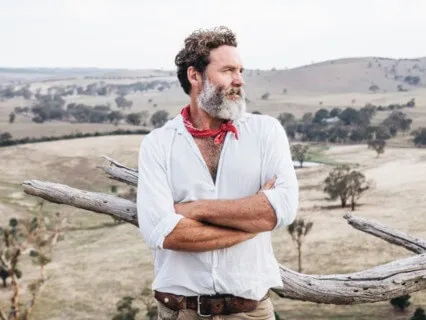
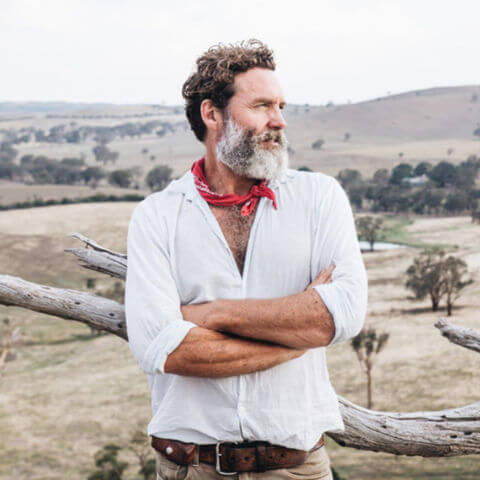
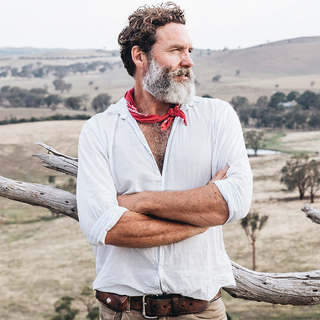
That was Charlie Arnott and you're listening to The Regenerative Journey.
G'day,
I'm your host,
Charlie Arnott.
And in this podcast series,
I'll be uncovering the world of regenerative agriculture,
Its people,
Practices and principles,
And empowering you to apply their learnings and experience to your business and life.
I'm an eighth generational Australian farmer who transitioned my family farm from industrial methods to holistic regenerative practices.
Join me as I dive deep into the regenerative journeys of other farmers,
Chefs,
Health practitioners and anyone else who's up for a yarn and find out why and how they transition to a more regenerative way of life.
Welcome to The Regenerative Journey with Charlie Arnott.
G'day,
Welcome to the first episode of The Regenerative Journey.
I thought it'd probably be appropriate that I start with my own regenerative journey,
Which started about 15 years ago.
Before I go there,
Though,
I just give you a bit of backstory.
I grew up on a farm,
A mixed enterprise farm at Burrawah,
Family farm,
Lots of enterprises,
Lots of inputs,
Lots of outputs.
And you'd probably say,
Oh,
I'd probably call it now an industrial farming situation.
I didn't really know about that then.
There wasn't a word that was really used in agriculture at the time.
To me,
What we were doing was very normal.
And it was also very reflective of what I'd learned at university and really the sort of not that I did agriculture even at school in my secondary education,
But it was certainly in line with that sort of way of thinking,
Very science based way of producing commodities.
And not that that's a bad thing.
It's just that it was the focus.
So life at Hanaminahawe at Burrawah there was fantastic.
I had a really fortunate blessed childhood with my brother and mum and dad and a lot of time outside,
A lot of time actually in nature.
But I guess the interesting thing about that was I didn't really,
Whilst I was in nature,
I didn't probably really appreciate it.
Yes,
We had creeks and we had trees and we had grass to roll around in and all sorts of wonderful things.
But I guess I wasn't really thinking about the context of me in nature.
It was really just a playground,
Essentially,
Which was fine.
And I was young and that's just a part of being young and living on a farm.
So wonderful childhood.
And what we did there and how we ran that farm and what we produced was really reflective of farming in Burrawah,
Farming across a lot of Australia and really farming across a lot of the globe,
As I said,
High input,
High output,
A lot of chemical use,
A lot of machinery.
And that to me was very normal.
And so in my education at university,
I did a rural science degree at the University of New England in New South Wales.
It was science based,
Very science based and it was reflective of my previous experience and how we had been running the farm.
And again,
It was fine.
It was a natural progression to go to a tertiary education,
Which was focusing on agriculture and the science of agriculture.
And again,
It was very industrial,
Very science based,
As I said.
It was clear demarcations in the chemistry and the biology and the physics of soil,
For instance,
Very siloed in its approach.
And again,
It was reflective of how we were running our farm.
We weren't running it with an entire view of the business or the resources at our disposal,
Which is really how we used to look at the farm.
It was a basket,
So-called basket of resources that we could use.
There was water,
There was grass,
There was soil,
There was air,
There was sunshine and we just sort of,
I guess,
Essentially mined it.
Again,
I didn't think about that back then.
It wasn't something that I really considered.
We were farming as we always had and we were farming as our neighbours did and we were farming in a way that we thought was appropriate.
And I certainly did,
Having grown up that way and been to university and learnt practices and learnt theory that supported that current paradigm.
And I guess one of the defining features of that paradigm is we would battle nature.
And I went back to Hanimino in 1997 after doing a couple of years and working in pubs in Sydney.
And anyone who's thinking about doing that,
Do it or children leaving school,
I have to say it's a great place to learn social skills.
Nonetheless,
I moved home to manage in 1997 and I went hard,
Passionate young fella who was keen to do his best.
I had a checkbook on one hand and my agronomic how-to book on the other and we went pretty hard.
And probably more chemical use then when I got home,
More machinery,
Probably a little less sort of ploughing sort of machinery.
We got a bigger tractor and we went pretty hard,
Burnt a lot of diesel.
And really every morning I was waking up and I was killing stuff.
That's what one did.
If one was farming,
One was unwittingly battling nature.
And you sometimes see it in the paper that farmers are battling drought.
And really I'll get to it later on,
But we just simply don't need to do that.
So here I was every morning killing something,
Whether it was bugs or bacteria or fungus or something,
Internal worms,
It could be any number of things I was trying to kill every day and mammals of course.
And really a defining feature of that sort of way of farming is we were treating symptoms.
We'd see something that we thought was wrong and then we'd buy something to treat it.
And that changed eventually,
But that was again a defining feature of industrial farming.
So a number of years went by and we went through a number of years of drought.
We just had cattle all over the state and into Queensland.
We were again using a lot of chemical,
A lot of inputs.
And I was really starting to somewhere along the line question what I was doing.
I didn't really have a feeling of purpose.
I was really starting to – I wasn't really disinterested.
I wasn't at all disinterested in the farm.
I loved it.
However,
I just was probably getting to a stage where I couldn't see a clear line of sight between me and my future.
And one of the defining moments for me that changed everything was going to a one-day course in Boorua called Profiting from the Drought.
And I saw it in the local newspaper and thought,
Gee,
That'll be a laugh.
I'll get along to that.
How do you profit from a drought?
And it wasn't a drought.
It was about 2004,
Few years into the millennial drought.
And I went along and it changed my life.
It really got me thinking about who I was as a farmer.
And it got me probably most importantly thinking about who – asking myself better questions.
Because I wasn't – to that point I wasn't asking myself better questions.
I wasn't thinking about who I was as a farmer if I was – if what I was doing was aligned with my values,
For instance.
I mean I didn't even – the words value and farming,
Values and farming was not something that I'd even heard of.
It wasn't discussed at school.
It wasn't discussed at university.
And I sort of – from that day on I sort of started realising that perhaps my actions and my behaviour wasn't aligned with my values.
Once I'd actually determined my values,
It was quite clear that I wasn't aligned with those.
I was treating the symptoms.
I was battling nature.
And one of the best questions that I was asked actually that day was by the facilitator and he said to me,
That's all fine but are you happy?
And I turned to him and I said,
Well look,
I'm not unhappy,
Which is really pretty ordinary answer I thought.
And again that day changed a lot of things in me and I – then a month later I went on to do a course called profit – sorry,
Grazing for profit,
Grazing for profit.
And that was done put on by Resource Consulting Service Australia.
That was a month later.
And that really was a month – sorry,
It was a week-long course,
Very intense.
But I needed that.
I needed to bust paradigms.
I needed to look at things differently.
I needed to change the paddock between my ears so that I could actually do things differently on ground.
And that's – I needed to change my attitude.
And to do that I was getting back to asking better questions.
Some really hard questions were being asked of me.
And one really I was asking myself was this my purpose?
Is this what I want to be doing?
I always thought I wanted to be farming but I guess it was how I was farming and why I was farming were things again I just hadn't asked myself.
So the grazing for profit course just busted open my head.
It was really intense but so worthwhile,
Life-changing,
Life-saving stuff.
I tell people that I just can't speak more highly enough about that course.
And similar ones,
Holistic management is another very similar different sort of format.
But the same principles,
Asking better questions,
Decision-making and it gets people to think about what they're currently doing and are they comfortable doing that.
And again,
Are their behaviours and activities aligned with their values?
And do they have a vision?
I didn't have a vision.
I didn't think,
I wasn't really thinking more than a week ahead or two weeks ahead or a month ahead maybe.
And there were other days of no mobile phones and I just had a diary and I didn't think about a computer.
So it was a wonderful time.
It was challenging.
Changing the paddock between my ears is absolutely essential.
You know,
Paradigm's been broken and all these things were foreign concepts to me.
They weren't,
Again,
Words,
I just hadn't heard these words at university or school and you certainly didn't hear them in the paddock,
Boora or at the pub.
And my transition wasn't smooth.
I was a bit of a cold turkey kind of guy and I wouldn't recommend that at all.
I sort of just dropped chemical one day and sold all the stuff,
All the spray gear and big ploughs and everything else.
And I just went hard.
I just said,
No,
I just can't do this.
Once I knew you understood the principles and I understood how those principles impacted the practices of our farming,
You know,
I just couldn't go back.
I couldn't unlearn them.
I couldn't unhear those things.
And so we just stopped using chemical one day and it did have an impact.
Again,
I wouldn't recommend people do that.
It's all about transitioning.
It's all about taking steps and adapting what you learn and what you hear,
What you see,
What you read about into your current practice.
And so we started working with nature,
Just sort of summarising that next stage after transitioning or whilst we were transitioning,
You know,
My relationship with nature at that point had been very economically based.
And from that point on,
That transition and learning and not being able to unhear these things,
You know,
I just – my perception,
My relationship,
My partnership with nature was the most important thing.
And really a farmer's relationship with nature is – it's their most important partnership.
We just – we forget about that.
We use nature.
We consider it as a – as I said before,
Like a resource to be used to achieve the goals,
Our business goals or our personal goals,
Generally economic goals.
You know,
We don't generally think about the needs of nature.
And,
You know,
A problem is always the result of unmet needs,
Generally of people.
But in farming,
I think the biggest problem is farming is the needs of nature aren't getting met.
You know,
And you think about if the needs of your biggest and most important business partner aren't getting met,
What hope have we?
So these are some of the things that I started thinking much more about,
Started implementing different techniques,
Started using biodynamics not long after we changed our ways and been to a few of these courses I had at least.
And that alone,
You know,
Gave me some structure,
Gave me some – sort of it really resonated with me and it helped me understand my new relationship with nature and the context of that in farming and in business and in our lives.
Because really,
You know,
One of the – again,
The defining sort of principles of farming is we generally – it's generally our lives,
It's our homes.
You know,
So what was my role in the business and what was my role in nature and nature's synergistic relationship with that business?
Another turning point for me when I was transitioning from industrial sort of way of farming to regenerative agriculture was when I took the responsibility of what I actually was doing.
And I was – as a farmer,
I was growing food.
But at the time,
In my industrial sort of paradigm,
I was just growing a commodity.
I was producing a commodity,
Using the resources at my disposal to then pump out wheat,
Wool,
Meat and sell into the marketplace,
Not really caring too much about who was buying it.
However,
The minute that I really,
Again,
Took responsibility of what I was doing and realised and acknowledged that I was actually a grower of food and that food I was growing was impacting on people's health,
Probably negatively in a way.
It wasn't necessarily nutritionally dense.
I was producing a lot of it.
But,
You know,
I went to a new place,
A new paradigm of responsibility,
Which I think is really important.
For me,
It was life changing because from that moment on,
Every decision I made was around is this food I'm producing actually helping or harming people.
And so for me,
That was a big turning point.
And that also relates to,
Obviously,
Health and human health and my understanding of human health and my,
Again,
Responsibility for what – how I was contributing to other people's health was absolutely paramount.
Before that,
It hadn't really occurred to me.
And so it had just taken me that long to work that out.
So – and I was – had a much better understanding of human health,
My own health,
The impact of what I was doing on my health and my family's health.
And also discovering a new word,
Biome,
You know,
Which is one that Zach Bush,
Dr.
Zach Bush,
Is the king of.
You know,
He really understands it and look this guy up,
He's incredible.
And his understanding and I guess my growing understanding of the importance of us being in nature and actually being part of nature and literally absorbing nature.
And so in that context,
If I'm on a farm and I'm spraying chemical everywhere,
I'm literally absorbing that into my body.
And that is impacting on my gene expression.
You know,
I want to apologise for getting too scientific,
But in actual fact,
You know,
When we're spraying chemicals around and that impacts on the expression of genes and that's called epigenetics.
You know,
We are – our bodies are absorbing chemicals and substances and proteins that we have,
You know,
Since the dawn of time have never had to deal with before.
And that's another whole topic about genetically modified organisms.
But,
You know,
It's a similar thing.
Our bodies are trying to cope with this.
So my understanding was greatly improved.
And again,
Having an awareness of that changed my practices and my philosophy and the way that I just took responsibility for being a farmer.
One of the other sort of wonderful things about my regenerative journey is the people I've been meeting,
The people I've met,
The people who've helped me along the way and the books I've read written by these wonderful people.
And,
You know,
I've found them to be just so overwhelmingly generous with their time and their wisdom and their experience.
And I always say to people,
You know,
Find yourself a mentor,
Find yourself someone who's done this and has done what you want to do and avoid making those mistakes.
You'll always make them.
I made plenty of ripper mistakes,
You know,
Sort of the – once you learn all the stuff you learn in GFP or probabilistic management and different techniques and practices,
You can still really sort of screw up things,
You know.
The tool in the hands of an ignorant or,
You know,
Incompetent person,
That can be really dangerous.
So,
You know,
Let's just try and not to make too many mistakes.
It's only a mistake if you do it twice.
So the people I met,
You know,
And the conferences I went to and the collegiate sort of attitude and the sharing and the warmth of these people – and that's not to say this wasn't in industrial farming in my previous sort of farming history and experience.
But it was – it was – there's a greater degree of it in the regenerative agriculture farming space.
Because I think people who transition to this way of farming – and by the way,
This is not new stuff,
This is not new practice,
This is actually harking back to ancient practices,
Ancient principles and common sense type farming.
The people who pick up this style of farming and implement these practices and adapt these practices to their businesses,
They're the sort of people that you want to hang out with,
You know.
You want to be part of,
You like to be around.
And they're open-minded and they're,
You know,
They're smart people and they're inclusive.
And I think that as much as the principles and the practice and the experience I've had in these last 15 years have changed me and made me a better farmer in my definition of success or,
You know,
Feeling purposeful in farming,
It's the people that have made,
You know,
Really made me who I am to this point,
You know.
And I will continue to develop and become a better farmer,
A better person.
Because I think this is an interesting thing,
You know.
In farming we – the practices and principles of farming are so intertwined with oneself,
With one's personality,
With one's purpose,
You know,
Because we are literally – we're working with nature,
We're living on farm,
You know,
Living in our – on our businesses.
So as we develop our farming skills we're really – if we're doing things right,
You know,
And I hesitate to use the word right,
But if we're doing things in a way that's,
You know,
Effective and productive and purposeful,
We're also building our sort of personal – ourselves and defining and refining who we actually are in this world in not just the ag space but in the world of,
You know,
Being a person,
You know,
Our role in mankind,
In humanity.
And talking about humanity,
I'm recording this currently in an interesting time in the history of mankind where,
You know,
We've sort of – we're in the middle of or somewhere in the middle of this coronavirus in Australia and across the world.
And,
You know,
I think this – I'm really excited about this podcast because we're entering a space where a lot of the stuff we'll be talking to and a lot of the people I'll be speaking with,
You know,
Talking about practices and principles and philosophies that I think are going to become more normal.
And I think it's really tiring that this is coming out.
I'm really excited about the people I'll be speaking with and I've already spoken to quite a few and I've got so many people lined up.
And again,
It's about the people who are involved in this space that,
You know,
Have got so much knowledge and so much warmth and so much generosity in telling us about their own journey.
So I'm really excited about this.
I'm also excited by the fact that Landcare Australia,
Through me receiving the Bob Hawke Landcare Award a couple of years ago,
They're very generously supporting this first season,
First series of the regenerative journey.
I can't thank them enough for helping us get off the ground.
It's been just a couple of years in the making and a wonderful organisation as is Landcare across the whole country.
You know,
It's 31 years young this year and,
You know,
It's one of those organisations that has braved the storms of changes of government and legislation and sort of regional boundaries and all sorts of ups and downs and,
You know,
Kept their head above water and have been represented environmental stewardship and good environmental practice for those 31 years.
So again,
Thank you,
Landcare Australia,
For your very generous support of this podcast.
And I'm really excited to announce that our next interview,
Our next podcast is with the one and only Joel Salatin.
If you have heard of Joel and listened to him before,
You're going to love this one.
And if you haven't,
You haven't heard of Joel,
Then you're going to love this even more because he is an amazing fella quoted as being the world's best farmer by some.
I don't disagree there.
And just a wonderful interview.
He never disappoints.
He always digs deep.
He's always coming up with little nuggets of gold.
And I can't tell you how excited I am to be helping you guys,
My listeners,
My new listeners,
Helping you even start your own regenerative journeys through listening to this podcast,
Listening to my guests.
And I trust that you'll get a lot of value out of doing that.
There's so many podcasts out there at the moment,
Which is a great thing.
Lots of variety.
And I trust that this one will be somewhere at the top of your list.
So look forward to joining you in this coming series.
Got some really exciting and interesting interviewees coming up in the next few episodes and can't wait to share them with you.
Talk to you soon.
For more episode information,
Please head over to www.
Charleyharnett.
Com.
Au.
This podcast is produced by Rhys Jones at Jager Media.
And as the recipient of the Bob Hawke Landcare Award,
Charlie would like to thank Landcare Australia for their support in the creation of this first series of the Regenerative Journey.
Thank you.