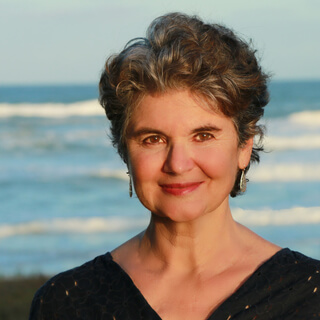
Welcome to In the Deep.
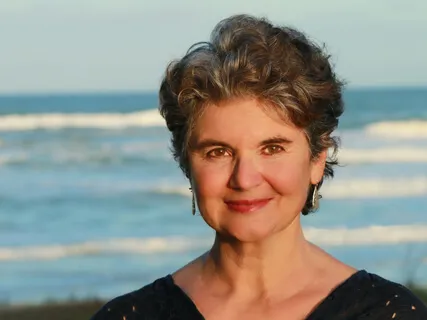
I'm your host,
Katherine Ingram.
The following is excerpted from a session of Dharma Dialogues held in Lenox Head,
Australia in July of 2019.
It's called The Empty Boat.
It's an old spiritual story.
I've told it before,
But I'm going to tell it with a new twist.
So it's from Zen.
It's called The Empty Boat.
Does anyone know it?
No?
Okay.
All right.
So if you're on a body of water and you're in a rowboat and you see someone coming toward your rowboat and they're headed for a direct hit.
So you start shouting,
You start saying,
Hey,
Pal,
Watch out.
But they don't listen to you and they keep coming towards you.
It seems that they can hear.
So you start yelling louder and eventually becoming quite angry that they're about to crash right into you.
Now,
Let's imagine that the other boat has no one in it.
It's an empty boat and it's coming toward you.
You're not screaming.
You're not angry.
You might be a little frightened,
But you're not angry.
And you're not cursing because the boat is empty.
So the way this is told in Zen,
The last few lines have to do with emptying your boat,
Emptying your boat of your own some bodiness that goes around and causes reactions,
Which we do know people like that,
Don't we?
So that's the usual frame on it,
Empty your boat.
But there's another one.
There's another one I just thought of while sitting here,
Which is there's a way to see that even if there was somebody in there in that boat,
That it was still empty because people don't,
It's like forgive them for they know not what they do.
People are going around asleep and on their own programming of conditioning and in their own locked down fiery set of desires that are usually born of fear.
Right.
And so another way to see it is not only empty your own boat,
But see the boat is empty,
Even if there's someone in it foolishly about to bang into you in some way.
Now that's a tough order,
Isn't it?
It's quite tough in the moment.
And sometimes you can't get there in the moment.
In the moment you are feeling angry,
You are feeling frustrated,
You are cursing the idiocy.
Sometimes it takes reflection afterward,
Right,
To really see,
Forgive them for they know not what they do.
Right.
Now we're living in a time where we're confronted with because there's so many humans on the planet.
We're confronted with looking at human nature,
Both in all its glory,
Because we are privy to how much beautiful effort and love that and mercy that flows around.
We're also seeing kind of the worst of humanity as well.
We're able to see all of these news items and stories in real time pretty much.
You know,
Just crazy stuff going on.
Wow,
You know.
And I know a lot of people who are almost in a state of constant rage,
Especially a lot of my friends in America.
They're just in a state of anxiety and rage and frustration and bitterness and fear,
You know.
And it's understandable,
Of course,
But it's not very helpful.
It's not helpful for themselves.
You know,
It's debilitating and it can make you sick to carry on in that mind state for a very long time.
It's also not helpful for any kind of movement because any kind of movement forward is going to have to be born of understanding and of conversation and of meeting,
You know,
Heart to heart.
And maybe in many cases,
That's not going to be possible.
But that would be the only chance,
Right?
That would be the only chance,
The only opportunity as it has always been.
As all of the great movements forward in our history,
In social understanding and in all of the different rights movements,
Right?
We've been born because more and more people,
Their hearts turned,
Their hearts turned into openness on a given subject.
So they moved from understanding,
From love,
From conversation,
From compassion,
Right?
You know,
I grew up in the time of lots of activist movements,
One of which was the civil rights movement in America.
When I started going to school,
Our schools were segregated.
I remember,
I remember the day an African American girl got sent to our school and was in my class.
I remember the day,
I was,
I think,
In the sixth grade.
It was so different.
It was like just so different that we had a black girl in our class.
And what happened during that civil rights movement was that what had been a system that had been in place a very long time and that no one really questioned,
Right?
People just didn't question it.
It just was what it was,
Just how it was,
You know?
And as the images started appearing in our television news of black people and also the white people who marched with them being hosed with fire hoses or being beaten just for sitting at a lunch counter and not reacting back,
Not turning violent against their oppressors,
As these images began to play,
It transformed the country's view and brought the whole subject into every living room,
Even though there was still a lot of pushback and a lot of battle.
But the tide turned.
And,
You know,
It's like Gandhi used to say,
He wanted the British to quit India and he wanted them to quit as friends,
Right?
Because if you approach someone and you treat them like they're despicable,
They're not going to listen to you,
Right?
They're going to just react.
So the spin on this story is,
Believe it or not,
People are doing their best.
It may not look so great in many cases to your own standards,
But if you could walk in their shoes for a few hours,
You might realize that they're actually being kind of heroic,
Given what they're working with.
Right?
Sometimes you see that you see they're doing the absolute best.
And that's another way of seeing the boat is empty,
Right?
That they are a conditioned creature.
A lot of times you attribute some sort of deliberation or intentionality where you really shouldn't.
There may be and there are,
I think,
Quite a few sociopathic type characters who not only don't feel empathy,
But perhaps take pleasure in causing pain.
And it's fair enough to stop those people in their tracks and to lock them up.
I have no problem with that.
If you can't be in society without harming others,
Then you don't get to be in society.
Even then,
Though,
You might view that person as a kind of like a rabid dog or something,
You know,
You just see it as a dangerous creature.
Somehow genetics make those,
Right?
Somehow that occurs in nature.
So again,
Another way to see it as impersonal and to take action as needed,
But to take it with an impersonal kind of clarity.
All right,
That's what came to say today on our rainy day.
What comes to mind as you're speaking is the compassion,
But also what can we do as an example for people that are less privileged than we are?
And I think I've told you now about 30 years ago,
My family and I took a 19 year old young woman into our home.
A what kind of woman?
19 year old young woman.
She had been in foster care for a number of years,
Had lived on her own for a few years,
But was very clearly struggling.
And she came to me for some sessions and we ended up taking her into our home.
And when she asked for some advice,
We,
Yeah,
Anyway,
Long story.
But what I found over and over is,
I mean,
I had struggles with her.
She was depressed.
I would drag her out of her bed to take her for walks because otherwise she wouldn't come.
But I think it was our whole family showing how it can be done,
How you can live,
That actually changed her life around.
And she's now married.
She's got a daughter.
She's doing really well.
But there's that as well,
Is how can we be an example?
How can we show people this is possible?
How can you come from love?
Yes.
Well,
I mean,
You did that.
You proved that that's a very effective method.
Yeah.
It was intense.
Yes.
And took a lot of patience for you on your part,
No doubt.
Yeah.
It's to be that example in your,
Like even just sharing that story,
You know,
Flows out to all of our hearts and all of the people who are going to hear this conversation.
And basically is a reminder that,
You know,
Simple connections like that,
You know,
In a person in within a family situation that transforms this person's life just by being immersed in another way of being.
It takes a little getting used to.
Absolutely.
Yeah.
Because I mean,
The story she told me over time of how she had grown up was so radically different from what I knew.
Yes.
Yeah.
Yes.
Sure.
Yeah.
A lot of this is just changing habits,
Of course,
Habits of mind and ways of being and feeling safe.
You know,
If you've grown up in circumstances where you just never feel safe or relaxed and suddenly you're in this other,
It takes a little while to really understand that this is true.
This is I can actually rest here.
These people are kind and loving and,
You know,
An adjustment.
Yeah.
But I love that.
Well,
That you did that and that she's doing so well.
And yeah,
I suppose one could also say,
Though,
Even in cases and of course,
We hear about them where a foster child is taken in and but because of the damage done in earlier times,
They never quite can fly,
You know.
But I would still say that whatever moments of relief or kindness or moments of safety that that person got to experience,
That's a boon.
That's a boon that they wouldn't have otherwise had.
And of course,
In the offering of it,
One always has to assume that you don't know how it's going to play out.
Absolutely.
We had no idea.
Yeah.
No,
The offering was pure in terms of just.
I saw a will to live and a drive in her to for her to find that love inside herself.
Otherwise,
We probably wouldn't dare to take it on.
Right.
Yeah,
Right.
What's astonishing to me sometimes is people who who do take on really hard cases.
And I knew of a case back in Oregon.
My God children were going to a private school there,
A really good school.
And there was a kid there who had been adopted from Cambodia.
But he was probably about four or five when they adopted him.
And he was quite troubled.
Like he he's adopted into a quite wealthy family,
But he was always sort of hiding food in the drawers of his room,
You know.
And but anyway,
He went to the school.
He did really well,
Really bright kid.
He was in this lovely,
Fabulous school for years.
But when he was 17,
He hung himself.
But even though that's tragic and it indicates something that was deeply broken at an early age,
I still felt at least he experienced that he was 17 when he did this,
At least he experienced love for whatever time he had here on the earth,
You know.
And that's another good way to see this kind of thing in terms of it's a way I see things now,
Very much so in our time that we have no guarantees of time now.
And so to really just be grateful for whatever we're getting as life and whatever everybody else is getting as a life.
You know,
It's like Leonard's great,
Great song,
May everyone live and may everyone die.
Hello,
My love and my love goodbye.
It's a sort of complex question,
This one,
Because if I think about the empty boat,
I can do that for most things,
For most things,
You know,
Eventually,
Given space and time,
Eventually come back,
Well,
How much of a choice did they really have given who they are,
Blah,
Blah,
Blah,
Blah.
Or even with myself,
How much of a choice did I really have given,
You know,
Yeah.
But then I think of the bigger forces at work in the world,
You know,
The Murdoch's and the multinational companies,
BHP,
BP,
Shell,
And the high executives that are earning mega millions at the cost of many others,
You know,
The creating work and conditions that are just hideous for so many millions of people on the planet.
And if I go,
I guess it's the question about the nature of what an empty boat is,
Because if I go,
It's,
Oh,
They can't really help that.
Do you know what I mean?
It kind of puts me to sleep a little bit.
There's a sleepiness involved with that.
If I go the other way,
There's an anger that comes.
But then part of me is like,
Is it the nature of an empty boat to be angry?
Sometimes,
You know what I mean?
Like,
It seems like anger is an appropriate response.
And would it be wrong to just go,
Well,
This,
I can't help this being me,
Is going to be angry about that situation.
Do you know what I'm saying?
I do.
Yeah,
Yeah.
And I liked that you said that it's mostly,
You know,
That mostly is sort of good enough,
Honestly.
There may be times when you're angry about something and you stay angry about it.
For years in some cases.
Yeah,
So like every time you think about it,
You get angry.
But I would also,
I'm going to just put one more possibility in there,
Because basically,
It's about being angry at human nature.
That the greed and the fear and the oblivion and the me first and the selfishness,
Right?
It's this is not new,
Right?
This is not a new thing.
This has been around a long time since we've been around.
In fact,
Our particular form of Homo sapiens.
Now the theory is that we killed off the other humanoid types,
We did away with them.
The Neanderthals and the others,
Right?
We're kind of a tough bunch.
And with a lot of stuff encoded that is selfishly driven,
And we know it in ourselves.
But we have been so privileged.
We have been,
We have just,
We're the lotus eaters of the planet.
We have had the best.
I was talking to my friend Peter Russell yesterday on the phone.
And he was saying,
Which I loved that he said it flat out.
He said,
We hit the best time slot in history.
I think it's probably true.
Right?
We had a really good one.
It may not have the most happy ending.
But in terms of like years of privilege and wealth and access to everything,
Every wonderful thing,
And the world at our fingertips now and anything you wanted to study,
You could just go anywhere you wanted to go to study it.
We had the money to do it as well.
And on and on,
You know,
Just privilege like crazy.
You know,
Never a day that we thought,
Am I not going to have food today?
Unless we were deciding to fast on some special green drink.
You know,
So with all of this privilege,
And all of this ease of life,
We still have moments of depravity.
I do.
With all that privilege,
I have moments of craziness.
I have moments of me first.
I have moments of greed,
Anger,
Hatred.
Right?
Moments.
So I have to also consider,
Well,
What if one was much less privileged in various ways?
One of those ways might be that you were reared by people who were also locked down,
Closed down.
And you're a little kid,
A little child who got no love,
And perhaps was beaten or forced into various ways of being that were not really soft on your little self.
And you turned into a little mini tyrant yourself.
And then you grew up to be a tyrant,
Or you grew up to be some just some greedy,
Seemingly just greedy,
Awful person,
But who's driven by a hole in themselves that can never get filled,
A hungry ghost realm that they live in,
A constant proving,
A constant feeling unloved unless I get all this stuff.
So even though it's painful to watch those people tromping around the world and making a mess and actually doing things that in fact are killing,
If not directly,
Some of them are actually killing things,
Killing beings directly with the weapons that they're producing,
Or the drones that they're sending from thousands of miles away.
But a lot of people are indirectly,
Because they're polluting,
They're indirectly killing a lot of people.
And it's very hard and painful to watch that level of ignorance writ large in its effects.
And naturally a kind of righteous anger arises.
But again,
I think it's possible and I do hold it this way almost always,
To see it from a much bigger picture,
Take many steps out.
You know,
In my essay,
There's a whole section about the great filter.
Right,
Whereby we can look at the possibility,
Just the possibility,
Which some of the astrophysicists are now proposing,
Or not just now,
They've been proposing it for a while.
And some of the great biologists have proposed this.
The reason we don't hear from any other planet's creatures,
Despite the overwhelming odds,
The crazy,
Crazy,
Crazy high odds that there should be life on other planets.
And that's based on just counting the numbers of planets that are in proximity to their suns in a similar proximity as ours.
And just counting those,
There's just billions of billions and billions.
And that's just what we can,
What our astrophysicists understand as the size of the universe,
Which keeps expanding in their knowledge,
Because they keep realizing,
You know,
It's bigger,
It's bigger,
It's bigger,
It's bigger,
Maybe it's infinite.
That makes more sense to me.
And if it were infinite,
Then the number is even far higher,
It's an infinite number.
When you think about that,
And you think we haven't heard from anybody.
Well,
Their proposal is that it's because they wiped themselves out when they got to this level of development.
That's the theory.
It's called the great filter.
They filtered themselves out.
So there may be many of them on the way there at some primitive stage of development.
And there may be who knows how many that ended their scene.
So if we looked at it that way,
If we looked at it that way,
If we took that on as a possibility,
Which I do take it on as a possibility,
Then it's like there's an almost I hate to use the word destiny because I don't believe in predestiny,
But it's almost like it just rolled out exactly like it was expected to roll out.
And that the selfishness and the greed and the whole of that,
It has a deleterious effect.
And it isn't sustainable for life in the long run.
However,
It's been a pretty beautiful bloom also.
And maybe that's part of why it's beautiful that it kills itself off.
You know,
So it's good to keep all of it in the picture.
And it's human enough to have reactions to destruction and to misery that is caused.
It's certainly a human thing to feel very sad and mad about that.
It just takes another part of your mind to override it and to get the bigger picture and to alleviate your own anger and suffering in that anger.
And this is something,
I mean,
I'm not saying I'm perfect at doing this.
It's just the way I lean.
Yeah,
I love the great filter.
I love that concept.
And it's interesting just kind of going with you on the journey.
I could kind of go there and feel the contraction of that.
I mean,
Yeah,
As you say,
I don't want to judge.
I don't really want to judge the anger either.
But it's also good to have one foot in it and one foot out of it.
Yes,
Exactly.
Instead of both feet in it.
Right.
Yeah.
Yes.
Which I can get caught in.
Yeah.
Yeah.
Yeah.
Yeah.
And I,
You know,
I watch people who are acting and some of them are acting like,
You know,
Who are activists and they some are very enraged.
I've just watched it over so many years hanging out with activists over the many,
Many years.
And I know that it's not sustainable.
That's the problem.
It's not sustainable.
That's not the only problem.
But that is a problem with that being the motivating factor.
Often they come to a point where they realize they cannot maintain it.
Or they get sick.
Yeah.
Thank you.
Yeah.
I think I've got a question about this sort of impersonalness.
When you were telling the story about the boat,
My mind was like,
Why don't you just move the boat out of the way that you're in?
Like,
You know,
Instead of,
You know,
If a boat was coming towards me,
Maybe why don't you just move?
You know,
Instead of like,
Hey,
You know.
You move,
Not me.
Well let's assume that the one was going very slow and the other was going fast.
I was making up,
So this was a ship,
You know,
A big massive ship.
Yeah,
There you go.
But yeah,
I think that sort of emphasis on where you're going,
But also what you said about not taking it personally.
Like as soon as you realize there's no one driving the boat,
Then there's no one intentionally trying to harm you.
And when I left the house,
Actually,
My sister said a very similar thing to me about that dog.
Well,
It's not even,
It's her dog.
And I really love the dog and I look after it during the day and it's all over me.
It follows me around,
Sleeps in bed with me.
And she comes home and it abandons me.
It doesn't even look at me.
It's like I don't exist.
And I'm like,
What happened?
And I'm like,
I'm not the alpha female in the house.
I have no place.
And are you the one who feeds her?
Yes.
Yeah.
Yeah.
Just,
You know,
Sam Bonnet and Sam's like,
Don't take it personally.
And what I realized is.
.
.
Probably if there was no one around and you were feeding her for a few days,
Her allegiance might shift.
No,
I had her for three weeks.
Oh my gosh.
Sam came back in.
I was dropped.
But I realized that Sam's like,
Don't take it personally.
And I was like,
Okay.
But I want to take it personally because when Sam's gone and the dog's following me,
I want to know that the dog loves me.
So it's.
.
.
Loves you above all else.
Everybody else.
I'm number one.
If I don't take his rejection personally,
I can't take his love personally either.
So I don't want to be in this kind of Zen impersonal,
Everything's just happening.
I don't get the good.
You know what I mean?
Of course.
Yes.
Yes.
Well,
I mean,
One other slight frame is that it's possible for dogs to love more than one human.
But there's an order.
They do love someone more.
Yeah.
Well,
That might have to be what you accept about the creature.
I'm basically going to get my own dog.
There you go.
None of this sharing.
And your own dog better not love anybody else.
Yeah.
No,
I get it.
And I think it applies in lots of our ways.
There is a way in which even with best friends who can just get a little jealous because you might have a good close other friend and it's amazing.
Or siblings.
But also how much juice you get from those little things.
And if you actually realize people are just acting because of their own stuff,
Even if it's nice a lot of the times,
Things that I think,
Oh,
This person's doing something really special for me.
And then I find out whilst it's a kindness or a specialness,
It's really about them.
You know what I mean?
At what point?
So there's that level,
But at what point is there intentionality?
So if you're going to say that I'm not going to put intentionality on someone because they're ignorant,
At what point,
Where does intentionality fit in?
Where can you break through,
I'm just doing it because of unconscious reasons?
Do you know what I mean?
Yep.
Where does the piece of intentionality become?
Like more.
.
.
Like a real thing and not just an acting from an unconscious script.
So we can say Trump's acting from an unconscious script is doing that.
But at what point,
Even in the good,
Like where do we get beyond that to true intentionality and true acting in the world?
I mean,
I do notice that when one of the other torments that we might have is the way that we expect someone who we perceive to have a lot of awareness and self-awareness and a lot of consciousness,
You could say,
When they kind of slip or they make a mess or they're unethical or dishonest in some circumstance,
You know,
There's a kind of a little bit of a thing because you're dealing with your own expectations about them.
And,
You know,
And you're attributing intentionality that you feel you had a right to attribute because they were conscious in other ways,
A lot of other ways,
Perhaps.
Right?
But they might be asleep in one category and they might consistently stay asleep in that category or they might have a kind of spotty,
Like sometimes they're consistent in various ways and other times they're not consistent.
And so just as we are ourselves,
Right?
Like sometimes I surprise myself,
You know,
With,
I refer to this particular situation as crazy lady made that plan.
So sometimes crazy lady is operating and I see it in hindsight.
But,
You know,
So in,
And you do ask,
Well,
What was going on?
How did that happen?
You know,
It's,
I mean,
It's not to say that you go around and give everybody a pass all the time,
You know,
You know,
The person who's shaking their kid in the grocery store or whatever.
It's not as if you just think,
Oh,
Well,
You know,
It's an empty boat really,
You know.
Of course,
One has human reactions to these circumstances.
And there may be certain circumstances where you can actually intervene and do something that would be helpful or would stop the abuse,
But mostly not,
Mostly not,
You know.
So then what are we going to do?
Then we're left with having to over and over again accommodate human nature,
How it's playing out,
Whether it's on its brutal side or its holy side,
Right?
It's like we're constantly just saying,
Okay,
Up there it is again.
There's human nature,
People sacrificing themselves,
Their actual lives for other people,
Right?
Amazing.
That is really amazing.
You know,
Strangers,
You know,
And others who are so,
Even though they have everything and are just rolling and wealth and stuff and everything and have not the most,
Not even one generous moment in their hearts,
Right?
And there it is,
You know,
There's your range.
And as you say that what occurs to me is this range is going on within the one person all the time.
Yes.
So you know,
You can have that condition,
Kind of no one's in the boat because you're not really conscious and you can be also acting consciously like it's not an either or.
It's not like all behaviours.
Yes.
No,
It's a range for sure.
It's a range within yourself and within others.
So seeking that aspect that is real or intentional or true and then also being able to go,
Okay,
What is that layer where it's not.
Yeah,
And I think in terms of the word intentionality,
I think for myself the way that I relate to that is keeping the channel as clear as I can,
Right?
Having the internal channel very open and clear and relaxed.
Then the decisions and the impulses that come through that channel or that are going to be enacted,
They have a greater clarity,
You know,
And I could say those were like higher intentions.
Those were intentions born of this greater clarity.
But sometimes I can feel myself operating on conditioned program,
Right?
And which is most of the time okay,
It doesn't matter mostly,
But occasionally the conditioned program I know is,
You know,
Crazy lady who's gotten her hand in it.
So to also allow,
Like I'm saying,
Most people are just sleepwalking through and they're dealing with whatever conditioning they happen to get.
They haven't actually even tried to step out of that conditioning,
Whether even if it was just mundane ordinary stuff,
Right?
And I think what's beautiful is even though we can say most people are sleepwalking through,
They're still capable of beautiful intentional acts and moments and exchanges,
Even in the midst of that.
And then just because they're sleepwalking is there doesn't mean that's not true and real and a real exchange.
I think that's what's important for me to kind of see that it can be both and all.
Yes,
Absolutely.
That,
I mean,
Only the hardest of hearts would not be susceptible to at least moments of love or tenderness.
And has to add for them.
Exactly.
Yes.
And,
You know,
And another thing I think about a lot in terms of not only the amount of life that we have and the appreciation in this amount of life we have left,
But the range on which we're living.
That's an interesting part,
Too,
Just to really feel a really big range of life.
So how that plays out for me,
How that is for me is someone showed me a picture the other day of her niece and she said,
She's very beautiful,
But she's sad.
She's often looks sad.
And she showed me a picture.
And sure enough,
The niece looked sad in the picture.
And but to me,
It looked beautiful.
Her sadness looked really beautiful to me.
And I said to my friend,
I'm a little sad.
I get it.
I get that she's that way.
I'm a little sad living in this world.
So I really feel like the range I live on is definitely has sadness and also has a lot of joy.
I am very lucky in that way.
I have a lot of joy,
A lot of wonderful people and lovely things.
And I live in this beautiful place in this gorgeous area.
And,
You know,
I feel very lucky.
And I notice all those lovely things.
And I also feel sad.
But for me,
That's a richness.
I wouldn't take that away.
I wouldn't give that up.
If I could,
I wouldn't.
Because I feel it also keeps the empathy strong.
And I understand sadness.
I don't mind.
And I don't mind being around someone who's a bit sad either.
Yeah,
I was thinking on the way here actually,
You know,
Depressions or sadnesses and things in anger,
They afford,
They like an affordance to other things to occur,
You know?
Yeah.
Yeah.
They have their own unique contribution.
Yes,
Right.
Yeah.
Yeah.
So yeah,
To feel this kind of incredible range of human experience of what it is to be here,
What it is to feel all of this and love and lose.
And years ago,
In London,
Having Dharma dialogues,
And I was at my friend's house,
And we were watching this quite interesting program of writers being interviewed.
And one of them said,
All great literature has death as its primary story.
And if you think about it,
It's true,
Right?
Like,
It's just always there in the great stories of life.
So how can you not be a little sad about that?
This has been In the Deep.
You can find the entire list of In the Deep podcasts at Catherine Ingram.
Com,
Where you can also book a private session,
Or make either a one time or recurring tax deductible donation to help with the production costs.
Assuming you like these podcasts,
We would also appreciate a review wherever you're getting yours.
Till next time.