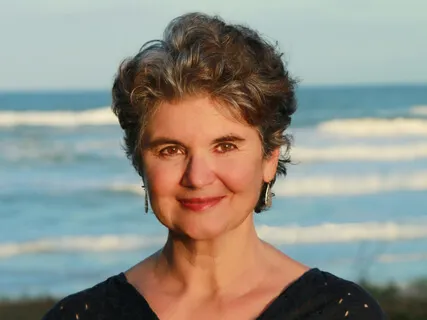
Welcome to In the Deep.
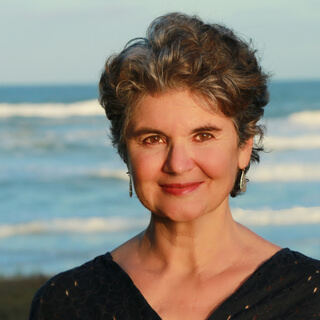
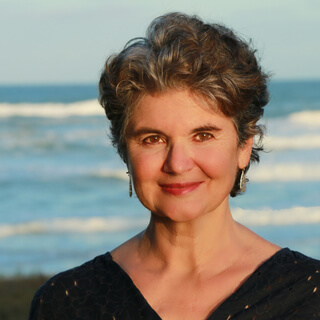
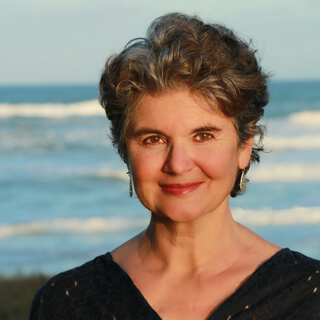
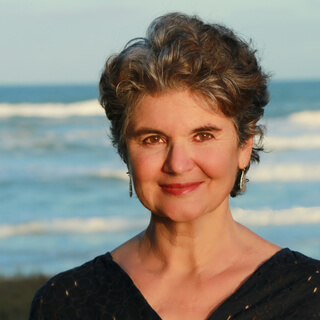
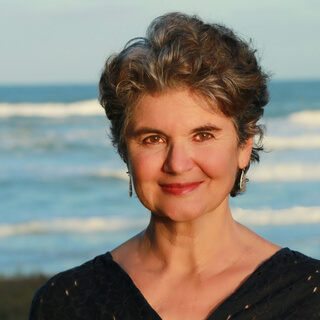
I'm your host,
Katherine Ingram.
The following is excerpted from a session of Dharma Dialogues held in Lenox Head,
Australia in April of 2019.
It's called A Matter of Time.
As we set the clocks back today,
I was reflecting on time.
I didn't know we were to do that,
Set the clocks back,
Until sometime in the mid-morning.
And I was reflecting on the fact that it's just so arbitrary.
It's just,
Okay,
The big agreement are in the world.
It's a different time.
I was reflecting on just the history of time,
That for a long time in our human history,
We really didn't keep track of time so specifically,
Obviously.
When we finally did start keeping track in the olden times,
It was with sundials.
So,
The nighttime,
You didn't know what time it was.
You only knew according to the sundials.
And it wasn't until the 14th century,
I just looked this up today,
That we cut it up into 24-hour segments,
Right?
24 hours,
24 bits.
And now we chop it up quite tiny into nanoseconds in our world.
And everyone is racing against time,
It seems.
Everybody's out of time.
It's always so little time in the day,
Even though we have all these nanoseconds now.
So,
I read a quote recently.
Let me see if I remember it exactly.
Wasting time doing what you enjoy is actually not wasted time.
Right.
So,
As those of you who come regularly know,
My encouragement is to really let yourself live in as much joy as you can.
And don't bother racing against the clock.
Right.
These imaginary,
Arbitrary demands of time.
And see if you can more and more fall into a feeling of timelessness.
Like when we were kids,
Right?
When we were kids,
I don't remember looking at a watch when I was a kid.
You know,
It was either morning or evening or night.
Or day.
And in my life,
In the times when I have lived in a more organic rhythm with nature,
Those times of my life have been,
They live so powerfully in my memory.
Yeah,
Like when we lived in India,
For instance,
You know,
My first time in India.
We were there a year and in 1976 and India itself was kind of timeless in that phase.
It was very different than it is now.
But everything was slow.
Everything took forever to do and it was slow.
You just had to go on a different rhythm.
And yet,
Wow,
That year,
I feel like the days are emblazoned in my awareness.
And yet we forget that way of life,
We forget that in our modern time,
In our 21st century life.
And living on computers and living on the expectation like you sent an email and you don't get a reply for two days and you think they're ignoring you.
It's difficult to challenge the culture's rhythm,
Right?
It's quite difficult.
But I really recommend doing it as much as possible.
Obviously one has to be responsible.
If you've agreed to be somewhere at a certain time,
Definitely keep your agreement.
Barring accident or something.
But in terms of your own time,
The time allotted to you that you're not on somebody else's demand or agreement or clock,
Really let yourself be timeless and maybe tune in much more to the rhythms of nature,
Right?
Really let yourself know when it's getting to be sunset and let yourself experience the sunset or if you happen to be an early riser.
Really letting yourself remember the original rhythms by which our species operated for a couple hundred thousand years before we started chopping it up into nanoseconds.
Because you are a creature that is much more designed for that kind of rhythm.
And I propose that living like that brings just a lot of joy,
It brings a lot of feeling of healthiness and well-being.
Like the creatures,
Right?
Like the other creatures.
The birds know when it's time to wake up,
Right?
And when it's time to go to sleep,
Right?
Here in this wonderful,
Amazing area in which we live,
We often see massive flocks of shattering,
Twittering birds at the end of the day finding their roost for the night.
And they're sometimes quite loud,
Right?
They're making quite a cacophony of sound as they're finding their spot.
They know exactly when it's time to turn in.
Call it a day.
Like that.
If possible,
Live a bit slower in yourself and in your life and in your meals with your friends.
Linger more.
OK.
That's what I came to say today on the day we turned back the clocks.
I always like the days we turn back the clocks.
I wrote a note to a text to Annika because I wasn't sure if she knew we were turning back the clocks and I knew she's always very prompt in coming here to do the door.
And I said to her,
I wish we could turn them back every day until we end up at about 1920.
It makes me think about how I use time to hide,
Unconsciously or consciously,
And how I observe that with others as well.
What do you mean by hide,
Though?
Using it to be,
Say,
Being late because I'm busy or I can't get to see you because I'm running a bit behind or running ahead.
Right.
And using that story or the illusion of time to not be present.
And then when I get to you,
I'm thinking about maybe,
I mean,
Obviously not all the time,
But I'll be using,
You know,
Not being fully present with where I'm at.
Thinking about what I have to do.
Yeah.
The next thing.
Yeah.
So using time to hide,
I'm just thinking it's a little bit like that.
Well,
That's part of the speed up of our modern life is that we're kind of falling into the future all the time as well.
You know,
That there's a kind of buzz going on of the next thing and next thing.
I've got to do that.
And I read ages ago,
But the amount of information we're processing,
Like in a very short amount of time in our lives in a few days is equivalent to what people used to process in more like a year.
Right.
So it's this,
That's my whole point,
And I speak about it in different ways a lot.
It's like we're just jamming all of this noise and to do and this bit and that bit.
And we can,
You are juggling 50 balls,
You know,
And.
It takes an act of will,
In a sense,
To step out of it.
So when you use the word hide,
I noted it because.
Another way to look at that is simply that you need some breaks,
You know,
So you find ways to take breaks.
And I wouldn't even call that hiding.
The word hide,
I think,
Would be more applicable to living in within the demands of the culture that says you have to be on point,
You have to be on target,
You have to keep going.
You know,
And it might be it might appear that if somebody is not doing that,
They're kind of dropping the ball or hiding out.
But again,
I really recommend and John,
You're in a good position to control your own time.
You're privileged in that way.
Question.
And it's about the years,
Like as I get older,
And that's the term older and.
I noticed the other day with a friend who is probably very probably hasn't got a long time ahead of her and I was sort of going.
My own mortality at times can be a welcome thing and at other times,
Quite a thing of fear of going like,
Oh,
I must be three quarters of the way through my life or like.
Like there's things to I don't even know why that is,
Like what I've got to do or but the there is something about the finality of and the years stacking up,
Like leaving the 50s and going into my 60s and.
What does this mean,
If anything?
But I noticed that it's not just with joy,
There is a trepidation.
What do I need to get done and things?
Yeah.
Yeah.
Well,
I think that's part of the human experience.
That's very common.
What you're describing.
Sure.
You know,
I would wonder if because there is that reflection going on kind of in the background as one gets older,
If there isn't some subliminal preparation that's also going on.
I mean,
I would say that's the case for me,
That even though one loves life and it's you know,
You don't necessarily celebrate the idea of death,
At least while your body is relatively healthy.
I think I think once the body disintegrates more,
Death can be your really close friend that you'd be happy to visit.
But,
You know,
Until that point,
And especially if one is loving life and loving the beings that are in the life.
Yeah,
There's a poignant sadness about thinking about leaving all of all of this loveliness.
And yet,
One also,
If you're a lover of truth,
You have to start making friends with it.
And I think that that can happen really just on its own.
It's not even that you have to be practicing something,
Right,
Or thinking about it in certain ways to make yourself feel more amenable to the idea.
Right,
You're just living and observing and watching different forms of letting go happen in your own case.
One of my friends,
He died quite a long time ago.
He got a brain tumor,
Died in his 50s.
And he said along the way,
He was doing treatments,
And they said along the way,
I'm going to fight for my life,
But I'm not going to make an enemy of my death.
I guess you could say it another way,
Too.
You could say,
I'm going to celebrate my life,
But I'm not going to make an enemy of my death.
Well,
I really liked what you were saying,
And I was connecting to it,
How important it is not to sort of get out of time and just enjoy the gardening and in the morning and,
You know,
The evening and when the birds are chirping.
What I'm finding is that I'm enjoying that maybe too much or,
You know,
With quotes,
But I sort of don't feel like doing things,
Other things,
Obligations,
Obligating myself.
You know,
I do some volunteering and that's fine.
It's in classes of fitness,
But I'm shying away from other commitments because I actually don't want to be busy with,
You know,
Don't forget and be on time.
And so that's quite an effort for me lately,
Sort of the opposite.
So I'm sort of thinking,
Well,
I should be doing something more or we should be doing something.
Yeah.
And you think that because why?
Well,
I'm here,
I'm alive,
I'm breathing.
Contribute,
You know,
Do something.
So I do some volunteering,
But I had an opportunity not long ago to do some classes and somebody called me and I was like,
I don't just want to organise all that.
And get out of no time,
Out of timelessness.
I just really rebelled against it.
I thought,
Oh,
You should be doing like it's a skill I have.
Why not teach infant massage?
So why not share what you have?
Like that's a goal of my life as well,
To share what I have.
And have you already done that?
Yes,
I have done that a lot in the past.
Yeah.
But it was like a real resistance to,
I'm not going to do that.
Anyway,
So I'm sort of thinking,
You know,
Just looking for the balance for myself.
Yeah.
Yeah.
You know the phrase,
Don't just sit there,
Do something?
Well,
There's another one.
Don't just do something,
Sit there.
So you're hinting at not to feel guilty.
I am.
Just enjoying the timelessness.
Absolutely.
I'm more than hinting.
I'm very explicitly saying.
I just feel,
You know,
My body's still okay.
I like the idea of contributing,
But it's on one hand and the other is fine.
It might be that the contributing will show up in ways unexpected,
Right?
And that the intention about that and wanting to be helpful is beautiful.
And it will find,
You know,
The appropriate opportunities for that.
But to impose it based on a should and how,
You know,
Your life should look or how people might be thinking about you or anything like that or how you're thinking about you.
How I'm thinking about myself.
So that could be something you release as an extra burden,
You know,
And really kind of come into your own authenticity.
You've probably done a lot in your life and you say you're volunteering,
Which is a lot more than most people do.
And so to really go with what's deeply true for you,
Right?
And if you find you're lolling about too much and too long and you start feeling a little uncomfortable with that,
Then that will make itself known as well to you.
There will be a discomfort in lolling about.
Any further.
So,
But what I notice,
And I'm not proposing this is the case for you,
But what I notice is that most people are on the other end of the spectrum.
They're doing way too much and they're stressed.
And in some cases,
They're not doing what they're actually doing very well because there's too many things they're doing and they're dropping balls.
And that doesn't look like a smart way to play it.
It seems to me unsustainable.
I know a lot of people who are stressed,
Living in fairly constant stress.
And,
You know,
I'm always telling people,
Rest more,
Relax more,
Stop.
Yeah,
So your way ahead.
No,
Give yourself full permission to live your authentic life,
Do what you can that feels right,
Feels good,
Feels like it lifts your heart.
It does feel great to be helpful,
But that can show up in very,
Very ordinary,
Basic ways.
My across the street neighbour broke his foot recently.
So I get to like be pretend nurse,
Which I actually it's a role I sort of love.
I'm always fussing over him,
Palling every day.
Do you need anything?
Yeah,
That's right.
Wherever you find it.
Yes,
Yes.
Yeah,
Exactly.
Wherever you find it.
And it may be that a lot of it is anonymous.
It's offered anonymously.
I'm one of the fortunate ones that have plenty of time living here and which is wonderful.
But sometimes,
You know,
I can spend hours,
I suppose you can call it wasting time,
Just,
You know,
Get on the internet and look at one thing and then an hour later you're still on there,
You know,
Looking at different websites.
But is it enjoyable to you?
Not always.
It's a bit addictive,
I think.
But,
Yeah,
A lot of the time it is.
But it can be quite addictive.
But when you say addictive,
Is it a negative,
Like you're feeling negative inside or agitated or you're just enjoying it?
Not really.
It's more that,
You know,
Maybe it means that I'm not doing other things that are probably more beneficial.
But I was going to say that I have two 15-year-old dogs who are very old and so every night they struggle up from their beds and wag their tails at me and I take them for a very,
Or we take them for a very,
Very,
Very slow meditative walk.
And that just,
You know,
A quarter of a mile takes about,
You know,
So long.
But it's really,
Yeah,
So that kind of brings me down.
And also I do have a meditation practice too.
So,
Yeah,
It's an interesting one time.
I'm interested in the cycles as well because I am very much a night person and,
You know,
The hours just changed and I know that I'm going to get back to that night time.
I have a husband who's a morning person.
It could be the secret to a great marriage,
Actually.
We have separate bedrooms now.
Yeah.
And that works.
Yeah.
So there's,
Yeah,
Time.
But,
Yeah,
Wasting time,
I don't know,
You know,
It's.
.
.
But if you're enjoying it,
Like I said,
So-called wasting time doing something you enjoy is not wasted time,
You know.
Your joy is a gift,
Not only to you.
Your joy is a gift.
It's probably why your dogs have lived 15 years,
Right?
It's a gift to others.
So it's something that people don't quite understand.
They sometimes feel some guilt,
Actually,
About indulging their own joy or being,
You know,
Joyous.
And it doesn't necessarily protect you from sadness,
Of course,
But there's a possibility of being someone who is a light,
Has a lightness of spirit,
Despite all the different hardships of the world.
And that is an incredible gift to be rolling around in,
You know.
So,
I mean,
I love researching things.
I tend to.
.
.
That's a form of joy and happiness for me,
Just built this way.
So I enjoy,
Like if I find something interesting,
I'll go down all the rabbit holes about it.
On the Internet,
You know,
It's better than the old days when I used to have to go to libraries,
Figure out the Dewey Decibel System,
You know.
So,
You know,
We're lucky in that regard if you're someone who has a kind of natural inclination to research.
It's a lovely way to spend time,
Right?
And there can come a point where you feel,
OK,
Enough,
Need to get up from the screen,
So on,
Like that.
But to be,
Again,
To live in your authenticity of what lights your own bulbs,
Right?
What's fun for you?
What's interesting to you?
I just noticed recently getting rather irritated by people saying,
Oh,
You're 81,
You're very good for your age.
And I find that for your age.
So what does that mean?
The numbers,
It doesn't mean anything,
Really.
It's like for your age,
You know,
It's like it's demeaning somehow.
It's,
You know,
Well,
It's annoying.
I see you.
You respond.
I notice that as one is in the lived experience of getting older and of like having a number attached to your so-called age,
Like it doesn't feel very different from how I felt most of my life,
You know?
Yeah,
Inside it's,
You know,
Very,
Very familiar.
And yet I notice that I also used to have those kinds of thoughts and projections about so-called older people.
You know,
Like I think sometimes about one of my closest friends,
She's now in her 80s.
I met her when she was younger than I am now,
Quite a bit,
Actually.
And I thought of her as an old woman at the time.
And I did notice that I would take care of her in certain ways or she'd say,
No,
You don't have to do that.
And now I see that my younger friends doing that with me.
Right.
Or kind of reminding me of things that they think I might have forgotten,
You know,
Or and I realize sometimes I do repeat myself things that I already told them.
And I can see that that they're,
You know,
Sometimes looking at me,
Of course,
As an older person.
I know what you mean,
That kind of inside you want to say,
No,
No,
No,
I'm not that far gone yet.
But so,
Yeah,
One has to be allowing,
I guess,
Of the folly of youth.
So I'm going to try to articulate I'm thinking about all the things about needing to be seen and full life and all those things.
And my question is around the human need to be acknowledged and accepted as part of a group,
Perhaps,
Or that group could mean your immediate family when you're born.
And speaking only for perhaps our society,
How often it is because of all the rushing and the thinking mind space that everyone seems to pretty much be in.
I,
My own self-examination and I notice with others,
Realize how my parents coming from their generation did love me.
I have no doubt with that.
However,
There was this kind of conventional idea of abandonment because they were quite shut down emotionally in themselves.
So we're not able to support me emotionally.
And I read a fantastic book,
The Continuum Concept.
It was really,
Really interesting.
It just opened so much up.
I don't know.
And I thought,
Yes,
There it is.
You know,
There's all these people just shut down a bit and trying to be noticed and loved and please love me,
You know,
Acknowledge me.
And so in relation to sitting with that,
Is there one kind of thought or idea that you might apply in loving the self?
Because I really,
Really get,
I think I'm getting better and better.
I used to be extremely needy.
I now work in aged care and I am fairly new to it and I'm discovering the privileges of doing that because I'm with people who are not going to recognize me,
Most of them.
But they so need the recognition.
And there are so many little moments where I can just touch someone's face even.
And it's often spontaneous and it's such joy and it's simple and no one else is noticing,
But it's an opportunity and it's there.
And I can give so much in that moment to those people.
Not everyone,
But I don't know if anyone else has been in aged care facilities.
Some are really great and others are awful.
But inevitably there are people who are frightened and alone and very much in their body because they're in pain and that's all that's left.
And it's quite an extraordinary experience to consider my role in there.
So I go home overnight and I'm tired and exhausted,
But I have to find a way to keep my own,
I guess it's self-love in order to go in the next day.
Is there,
So applying that acknowledgement of self,
Do you do that in your practice at all?
I need to phrase my question.
No,
I hear the question.
I wouldn't phrase it the same way in terms of acknowledgement of self necessarily.
I have over time a lessening of self-referencing.
So in other words,
I don't bother with a lot of checking in about myself and how is this and I used to,
Used to be my primary focus.
All about me.
Right.
And that has greatly lessened over time and that has been a great relief.
So often I'm not,
I'm not doing much self-referencing.
I'm not asking what's missing or what is needed or did they notice or all that.
I've just,
I don't have as much interest in that.
And is that through simply focusing on others,
Shifting the focus on self?
Not necessarily others per se.
Sometimes it's others.
If I happen to be with others or thinking about others in some context.
But no,
It can just be there's making the coffee or brushing the teeth or just,
You know,
Reading something or watching something.
I mean,
There's just not a whole lot of how am I doing?
What is this about?
What are they thinking?
How am I going to be in the future?
So what's caused that transition?
That's what I'm asking.
What's caused it,
I would say the simplest way is that I saw that there was a lot of suffering with all the rest.
That the whole self-referencing comes with tremendous suffering.
And it gets a bit tiring and boring after a while.
Completely.
Yes.
Yes.
And exactly.
And the tracking of are you up or down?
You know,
It's like the,
The,
The tracking of how you're doing and what it's,
What's it all about for you.
And all of that is tedious.
It's wearisome.
And I began to really experience it that way.
I think I had a very bad case of self-interest.
And it was it was for a long time.
And I,
I knew it was painful.
It was what started me off on a spiritual journey.
I mean,
My story was very painful.
I had a hard childhood and I just had a really tough mind.
And so I was very focused on doing something about it.
And I went into a meditation practice for 17 years.
Very,
Very intensively.
Very strict mindfulness practice.
But I,
That became wearisome too.
You know,
That was basically like,
You know,
One of my friends,
Francis Lucille,
Who's a teacher.
You know,
He,
He referred to it as like giving the dog a bone so it doesn't chew up the furniture.
You know,
It's like,
Do you understand that?
Like you're basically,
You're basically giving it,
You're basically distracting it in a way,
Not that they would agree that it was distraction,
But that you're giving these mental notations to just have the mind chewing on a bone.
Busy.
And so,
You know,
As soon as you let up from that,
The flood of all the other materials right there waiting for you.
And I realized after all that practice,
It fell away.
And thankfully,
I met a teacher who understood these matters very profoundly and deeply and pointed to yet a different way of handling this situation,
Which had to do with de-linking from this constant self obsession and seeing through it,
Seeing through the whole ego structure very clearly.
And realizing,
Just like we're talking about making up time,
Like the concept of time,
We made it up and we've arbitrarily made it up.
We actually are making up this sense of I.
The sense of self.
The sense of I is a construct.
But let me just finish that,
You know,
That you can with very little rational and conceptual deconstruction,
You can see through it pretty quickly.
You know,
You realize if you just look at the animals,
They don't go around with a sense of I.
They don't have it.
They have biological impulses and needs that they do follow,
But the self referencing is not one of them.
And so we as animals,
We have developed this.
It may have been,
It may have served us well at some point in history,
But I don't think it's serving us now.
And it's very,
Very powerful.
It's very,
Especially now in this new,
Our new wave of culture,
Which is completely self obsessed.
I mean,
It is,
There's never been more of a self obsession phase of history,
I would dare say.
So if you can see through that entire construct,
Then you start operating much more like an animal.
And I use this way of understanding quite a lot because I find that is exactly how I experience myself.
I experience myself more and more as a creature,
As an animal,
As a creature with certain needs,
Certain biological needs,
Needs to be fed,
Needs to be closed,
Needs shelter,
Needs the illumination.
It needs certain and it has also some psychological needs and some emotional needs,
Which I take care of as best I can.
But they are way diminished from what they used to be.
It used to be a big,
Gigantic construct and it's now come down to a rather small amount.
And so that has alleviated a tremendous amount of suffering that went with it.
And that's why I can talk about these things,
About aloneness,
About sitting on the mountaintop of freedom,
Because a lot of those needs for me are greatly diminished.
And so it could be as simple as there's a thing that I find myself doing when I realise that everything's just escalated.
I'm yeah,
Without being critical,
Self critical,
I've become extremely self indulgent and it's a big catastrophe.
And I've discovered that if I remember to do it,
I go,
Oh,
For heaven's sakes,
Just get over yourself.
And it just goes bang and it just all disappears.
Yeah.
And it shifts.
Good.
And also,
And also in because I go through that whole thing before I remember to do it.
Right.
Well,
Also,
You're aided,
I would say,
By the fact that you are spending time with people at the end of life,
Some of whom now have lost the ability to even think straight.
And so what a great reminder to you to really just enjoy and what you're calling self indulgent.
It may just be simple enjoyment for you as a creature who gets to have a little pleasure in this life.
Yeah,
Lucky.
Thank you.
You're welcome.
This has been in the deep.
You can find the entire list of in the deep podcast at Catherine Ingram dot com,
Where you can also book a private session by phone or Skype or make either a one time or recurring tax deductible donation.
Assuming you like these podcasts,
We would also appreciate a review wherever you're getting yours till next time.