Tales of Norse mythology.
The beginning.
In the center of space there was,
In the morning of time,
A great abyss called Kinnun-Gagap,
The Cleft of Clefs,
The yawning gulf,
Whose depths no eye could fathom,
As it was engulfed in perpetual twilight.
North of this abode was a space or world known as Niflheim,
The home of mist and darkness,
In the center of which bubbled the exhaustless spring Fergelmir,
The Seeding Cauldron,
Whose water supplied twelve great streams known as the Elivagar.
The water of these streams flowed swiftly away from its source and,
Encounter the cold blast from the yawning gulf,
It soon hardened into huge blocks of ice which rolled downward into the immeasurable depths of the great abyss with a continental roll like thunder.
South of this dark chasm and directly opposite Niflheim,
The realm of mist,
Was another world called Misflheim,
The home of elemental fire,
Where all was warmth and brightness and whose frontiers were continually guarded by Surtr,
The flame giant.
This giant fiercely brandished his flashing sword and continually sent forth great showers of sparks which fell with a hissing sound upon ice blocks in the bottom of the abyss and partly melted them by their heat.
Great Surtr,
With his burning sword,
Southward at Misbur's gate kept ward and flashes of celestial flame,
Life-giving from the Fireworld came.
As the steam rose in clouds it again encountered the prevailing cold and was changed into Rime or Whore Frost which,
Layer by layer,
Filled up the great central space and thus by the continual action of cold and heat and also probably by the will of the uncreated and unseen,
A gigantic creature called Umyr,
The personification of the frozen ocean,
Came to life amid the ice blocks in the abyss and as he was born of Rime he was called a Hrimthurs or ice giant.
In early times when Umyr lived was sand nor sea,
Nor cooling wave,
Nor earth was found,
Nor heaven above,
One kaosal and nowhere grass.
Groping about in the gloom and search of something to eat,
Umyr perceived a gigantic cow called Oðumla,
The nourisher,
Which had been created by the same agency as himself and out of the same materials.
Hastening towards her,
Umyr noticed with pleasure that from her other flowed four great streams of milk which would supply ample nourishment.
All his wants were thus satisfied but the cow looking about her for food in her turn began to lick the salt of a neighboring ice block with her rough tongue.
This she continued to do until first the hair of a god appeared and then the whole head emerged from its icy envelope until by and by,
Búri stepped forth entirely free.
While the cow had been thus engaged,
Umyr the giant had fallen asleep and as he slept a son and daughter were born from the perspiration under his armpit and his feet produced the six-headed giant Þrúðgelmir,
Who shortly after his birth brought forth in his turn the giant Bergelmir,
From whom all the evil frost giants are descended.
Under the armpit grew this side of Hrímðurs,
A girl and boy together,
Foot with foot begat,
Of that wise Jötunn,
A six-headed son.
When these giants became aware of the existence of the god Búri and of his son Börr,
Whom he had immediately produced,
They began waging war against them,
For as the gods and giants represented the opposite forces of good and evil,
There was no hope of their living together in peace.
The struggle continued evidently for ages,
Neither party gaining a decided advantage until Börr married the giant as Bestla,
Daughter of Börlþorn,
Who bore him three powerful sons,
Óðinn,
Vili and Ve.
These three sons immediately joined their father in his struggle against the hostile frost giants and finally succeeded in slaying their deadliest foe,
The great Émir.
As he sank down lifeless,
Blood gushed from his wounds in such floods that it produced a great deluge in which all of his race perished,
With the exception of Bergelmir,
Who escaped in a boat and went with his wife to the confines of the world.
Here he took up his abode,
Calling the place Jötunheim,
The home of the giants,
And here he begat a new race of frost giants,
Who inherited his dislikes,
Continued the feud,
And were always ready to sally forth from the desolate country and raid the territory of the gods.
The gods,
Also known as the Æsir,
Having thus triumphed over their foes and being no longer engaged in perpetual warfare,
Now began to look about them with intent to improve the desolate aspects of things and fashion a habitable world.
After due consideration,
Bör's sons rolled Õmir's great corpse into the yawning abyss and began to create the world out of its various component parts.
Out of the flesh they fashioned Midgardr,
As the earth was called.
This was placed in the exact center of the vast space and hedged all round with Õmir's eyebrows for bullwalks or ramparts.
The solid portion of Midgardr was surrounded by the giant's blood or sweat,
Which warmed the ocean,
While his bones made the hills,
His flat teeth the cliffs,
And his curly hair the trees and all vegetation.
Well pleased with the result of their first efforts at creation,
The gods now took the giant's unwieldy score and poised it skillfully as the vaulted heavens above earth and sea.
Then scattering his brains throughout the expanse beneath,
They fashioned from them the fleecy clouds.
To support the heavenly vault,
The gods stationed the strong dwarfs Nordri,
Sytri,
Austri,
Vestri at its four corners,
Biding them sustain it upon their shoulders,
And from them the four points of the compass received their present names of North,
South,
East,
And West.
To give light to the world thus created,
The gods studded the heavenly vault with sparks secured from Muspilheim.
Points of light which shone steadily through the gloom like brilliant stars.
The most vivid of these sparks however,
Were the reserve for the manufacture of the Sun and Moon which were placed in beautiful golden chariots.
When all of these preparations had been finished and the steeds Arvagr and Alsfidr were harnessed to the Sun chariot,
The gods fearing lest the animals should suffer from their proximity to the Arden sphere placed under their withers great skin filled with air or with some refrigerant substance.
They also fashioned the shield Svalin and placed it in front of the car to shelter them from the Sun's direct rays which would else have burned them and the earth to a cinder.
The moon car was similarly provided with a fleet steed called Alsvider but no shield was required to protect him from the mild rays of the moon.
The chariots were ready,
The steeds harnessed and impatient to begin what was to be their daily round but who should guide them along the right road?
The gods looked about them and their attention was attracted to the two beautiful offspring of the giant Mundilfadi.
He was very proud of his children and had named them after the newly created orbs Mauni the moon and Sol the Sun.
Sol the Sunmaid was the spouse of Glaur who was probably one of Surtr's sons.
The names proved to be happily bestowed as the brother and sister were given the direction of the steeds of their bright namesakes.
After receiving due counsel from the gods they were transferred to the sky and day by day they fulfill their appointed duties and guided their steeds along the heavenly paths.
The gods next summoned Noth,
A daughter of Nervi,
One of the giants,
And entrusted to her care a dark chariot drawn by a sable steed Hrimfaxi from whose waving mane the dew and hoarfrost dropped down upon the earth.
The goddess of night had thrice been married and by her first husband Naglfari she had a son named Oud,
By her second Anar a daughter Yrth and by her third the god Dellingr.
Another son of radiant beauty was now born to her and he was given the name of Dagr.
As soon as the gods became aware of this beautiful being's existence they provided a chariot for him also drawn by their resplendent white steed Skinfaxi from whose main bright beams of light shone forth in every direction illuminating all of the world and bringing light and gladness to all.
But as evil always treads close upon the footsteps of good hoping to destroy it,
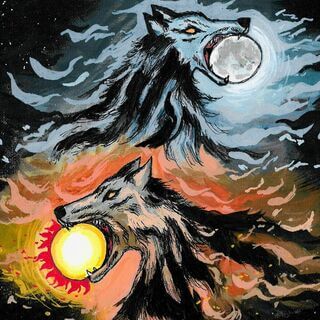
The ancient inhabitants of the northern regions imagined that both Sun and Moon were incessantly pursued by the fierce wolves Skrl and Hati,
Whose sole aim was to overtake and swallow the brilliant objects before them so that the world might again be enveloped in its primeval darkness.
At times they said the wolves overtook and tried to swallow their prey thus producing an eclipse of the radiant orbs.
Then the terrified people raised such a deafening clamor that the wolves frightened by the noise hastily dropped them.
Thus rescued,
Sun and Moon resumed their course,
Fleeing more rapidly than before,
The hungry monsters rushing along in their wake lusting for the time when their efforts would prevail and the end of the world would come.
For the northern nations believed that as their gods had sprung from an alliance between the divine element Böhr and the mortal Bestla,
They were finite and doomed to perish with the world they had made.
Mone was accompanied also by Huki,
The waxing,
And Biel,
The waning moon.
Two children whom he had snatched from Earth where a cruel father forced them to carry water all night.
The gods not only appointed Sun,
Moon,
Day,
And Night to mark the procession of the year but also called evening,
Midnight,
Morning,
Forenoon,
Noon,
And afternoon to share their duties making summer and winter the rulers of the seasons.
Summer,
A direct descendant of Svassud,
Inherited his sire's gentle disposition and was loved by all except Winter,
His deadly enemy,
The son of Vinsual,
Himself a son of the disagreeable god Vassud,
The personification of the icy wind.
The cold winds continually swept down from the north,
Chilling all of the earth,
And the northmen imagined that these were set in motion by the great giant Hrassvelgr,
Who,
Clad in eagle plums,
Set at the extreme northern verge of the heavens,
And that when he raised his arms or wings the cold blast darted forth and swept ruthlessly over the face of the earth,
Blighting all things with their icy breath.
While the gods were occupied in creating the earth and providing for its illumination,
A whole host of maggot-like creatures had been breeding in Ymir's flesh.
These uncouth beings now attracted divine attention.
Summoning them into their presence,
The gods first gave them forms and endowed them with superhuman intelligence and then divided them into two large classes.
Those which were dark,
Treacherous,
And cunning by nature were banished to Svartlheim,
The home of the black dwarves situated on the ground once they were never allowed to come forth during the day under penalty of being turned into stone.
They were called dwarves,
Trolls,
Gnomes,
Or kobolds,
And spent all their time and energy in exploring the secret resources of the earth.
They collected gold,
Silver,
And precious stones which they sewed away in secret crevices once they could withdraw them at will.
The reminder of these small creatures,
Including all that were fair,
Good,
And useful,
The gods called fairies and elves and they sent them to dwell in the airy realm of Alfheim,
Home of the light elves,
Situated between heaven and earth,
Whence they could flit downward whenever they pleased to attend to the plants and flowers,
Sport with the birds and butterflies,
Or dance in the silvery moonlight on the green.
Odin,
Who had been the leading spirit in all these undertakings,
Now bade the gods,
His descendants,
Follow him to the broad plain called Idavoldr,
Far above the earth on the other side of the great stream Ithing,
Whose waters never froze.
In the center of the sacred space,
Which from the beginning of the world had been reserved for their own abode and called Ausgard,
Home of the gods,
The twelve Æsir and twenty-four Asinyr,
All assembled at the bidding of Odin.
Then was held a great council,
At which it was decreed that no blood should be shed within the limits of the realm or peace-stead,
But that harmony should reign there forever.
As a further result of the conference,
The gods set up a forge where they fashioned all their weapons and tools required to build the magnificent palaces of precious metals,
In which they live for many long years in a state of such perfect happiness that this period has been called the Golden Age.
Although the gods had from the beginning designed Mithgardr,
Or Manaheim,
As the abode of man,
There were at first no human beings to inhabit it.
One day Odin,
Vili and Ve,
According to some authorities,
Or Odin,
Hönir and Lodhir,
Also known as Loki,
Sotted out together and walked along the seashore,
Where they found either two trees,
The ash,
Ask,
And the elm,
Embla,
Or two blocks of wood,
Hone into rude semblances of the human form.
The gods gazed at first upon the inanimate wood in silent wonder,
Then perceiving the use it could be put to,
Odin gave these logs souls,
Hönir bestowed motion and senses,
And Lodhir contributed blood and blooming complexions.
Thus endowed with speech and thought,
And with power to love and to hope and to work,
And with life and death,
The newly created man and woman were left to rule Mithgardr at will.
They gradually peopled it with their descendants,
While the gods,
Remembering they had called them into life,
Took a special interest in all they did,
Watched over them,
And often vowed to save their aid and protection.
Alfather next created a huge ash called Yggdrasil,
The tree of the universe,
Of time,
Or of life,
Which filled all of the world,
Taking root not only in the remotest depths of Niflheim,
Where bubbled the spring Kvergelnir,
But also in Mithgardr,
Near Mimir's Well,
The ocean,
And in Ausgard,
Near Yggdrasil's fountain.
From its three great roots,
The tree attained such a marvelous height that its topmost bough,
Called the Leradr,
Overshadowed Urin's Hall,
While all the other widespreading branches towered over the other worlds.
An eagle was pushed on the bow Leradr,
And between his eyes sat the falcon Verth-Fernir,
Seeing his piercing glances down into heaven,
Earth,
And Niflheim,
And reporting all that he saw.
As the tree Yggdrasil was evergreen,
Its leaves never withering,
It served as pasture ground,
Not only for Odin's goat Heithrun,
Which supplied the heavenly mead,
The drink of the gods,
But also for the stags Dain,
Tvalin,
Dyneir,
And Durathor,
From whose horns honeydew dropped down upon the earth,
And furnished the water for all the rivers in the world.
In the seeding cauldron Vergelmir,
Close by the great tree,
A horrible dragon,
Called Nidhoggr,
Continually gnawed the roots,
And was helped in his work of destruction by countless worms,
Whose aim it was to kill the tree,
Knowing that its death would be the signal for the downfall of the gods.
Through all our life attempt the Phras malignant,
The cruel Nidhoggr from the world below.
He hates that acerlite whose rays benignant on the hero's brow and glittering swore bright glow.
Scampering continually up and down the branches and trunk of the tree,
The squall Ratatosgr,
The typical busybody and tail bearer,
Passed its time repeating to the dragon below the remarks of the eagle above and vice versa,
In the hope of stirring up strife between them.
It was,
Of course,
Essential that the tree Yggdrasil should be maintained in a perfectly healthy condition,
And this duty was performed by the Norns,
Or Fates,
Who daily prinkled it with the holy waters from Brdhr's fountain.
This water,
As it trickled down to earth through branches and leaves,
Supplied the bees with honey.
From either edge of Niflheim,
Arching high above Nidhgard,
Rose the sacred bridge Bifrust,
Built of fire,
Water,
And air,
Whose quivering and changing cues it retained and over which the gods traveled to and from to the earth or to the Urdarswar,
At the foot of the ash Yggdrasil,
Where they daily assembled in council.
The gods arose and took their horses and set forth to ride.
O'er the bridge Bifrust,
Where as Heimdall's watch,
To the ash Yggdrasil and Ida's plain,
Thor came on foot,
The rest on horseback road.
Of all the gods,
Thor only,
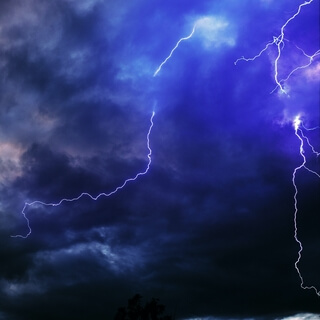
The god of thunder,
Never passed over the bridge,
For fear lest his heavy tread or the heat of his lightnings would destroy it.
The god Heimdall kept watch and ward there night and day.
He was armed with a trenchant sword and carried a trumpet called Gjallarhorn,
Upon which he generally blew soft note to announce the coming or going of the gods,
But upon which a terrible blast would be sounded when a Ragnarök should come and the frost giants and Surtr combined to destroy the world.
Surtr from the south comes with flickering flame,
Shines from his sword,
The Valgaard's son,
The stony hills are dashed together,
The giantess is totter,
Men tread the path of hell and heaven is cloven.
Now although the original inhabitants of heaven were the Æsir,
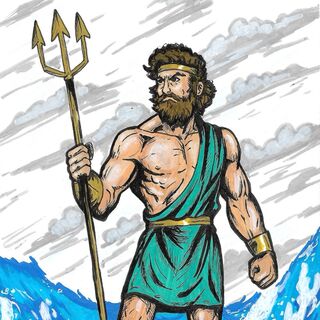
They were not the sole divinities of the northern races who also recognized the power of the sea and wind gods,
The Vanir,
Dwelling in Vanaheim and ruling their realms as they pleased.
In early times,
Before the golden palaces in Asgard were built,
A dispute arose between the Æsir and Vanir and they resorted to arms,
Using rocks,
Mountains and icebergs as missiles in the fray,
But discovering ere long that in unity alone lay strength,
They composed their differences and made peace and to ratify the treaty they exchanged hostages.
It was thus that of the Vanir,
Njörðr came to dwell in Asgard with his two children,
Frey and Freya,
While of the Æsir,
Hörnir,
Odin's own brother took up his abode in Vanaheim.
Now until the story continues next time,
If you're not already asleep,
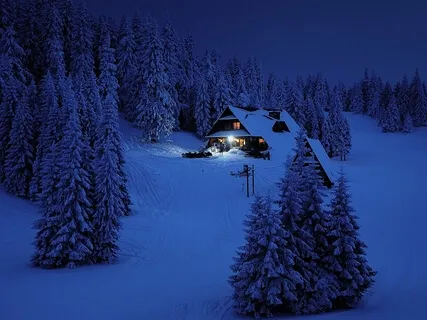
Imagine that you are sleeping in the cozy yet cold places of Niflheim and enjoy the sounds of the snow as you are slowly falling asleep in the cold winds and get cozy atmosphere of Niflheim,
The land of ice.
Thank you for listening and until next time,
Good night.