Welcome to this guided meditation for sleep and storytelling.
Focus on the sound of my voice and feel free to fall asleep at any time.
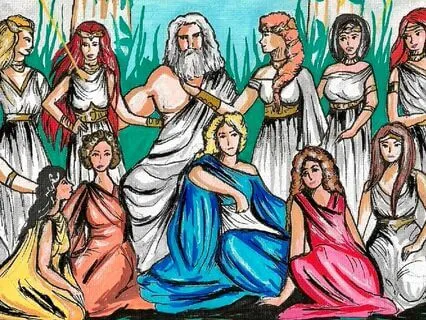
Tales of Greek Mythology Zeus Zeus had seven immortal wives whose names were Metis,
Themis,
Uranami,
Demeter,
Mnemosyne,
Leto,
And Hera.
Metis,
His first wife,
Was one of the Oceanids or Cynibs.
She was the personification of prudence and wisdom,
A convincing proof of which she displayed in her successful administration of the potion which caused Cronus to yield up his children.
She was endowed with the gift of prophecy and foretold to Zeus that one of their children would gain ascendancy over him.
In order,
Therefore,
To avert the possibility of the prediction being fulfilled,
He swallowed her before any children were born to them.
Feeling afterwards violent pains in his head,
He sent for Hephaestus and ordered him to open it with an axe.
His command was obeyed and out sprang with a loud and martial shout a beautiful being clad in armor from head to foot.
This was Athene,
Otherwise known as Minerva,
Goddess of armed resistance and wisdom.
Themis was the goddess of justice,
Law,
And order.
Uranami was one of the Oceanids and the mother of the Cairots or Graces.
Demeter,
The daughter of Cronus and Rhea,
Was the goddess of agriculture.
Mnemosyne,
The daughter of Uranus and Gaia,
Was the goddess of memory and the mother of the Nine Muses.
Leto,
Otherwise known as Letona,
Was the daughter of Cias and Phoebe.
She was with wonderful beauty and was tenderly loved by Zeus.
But her lot was far from being a happy one,
For Hera,
Being extremely jealous of her,
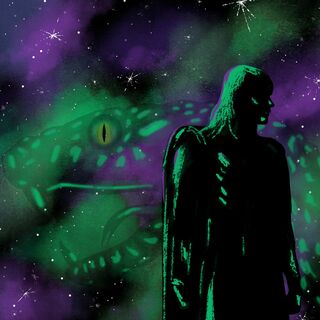
Persecuted her with inveterate cruelty and sent the dreadful serpent Python Python to terrify and torment her wherever she went.
But Zeus,
Who had observed with the deepest compassion her weary wanderings and agonized fears,
Resolved to create for her some place of refuge,
However humble,
Where she might feel herself safe from the venomous attacks of the serpent.
He therefore brought her to Delos,
A floating island in the Aegean Sea,
Which he made stationary by attaching it with chains of adamant to the bottom of the sea.
Here she gave birth to her twin children Apollo and Artemis,
Otherwise known as Diana,
Two of the most beautiful of the immortals.
According to some versions of the story of Leto,
Zeus transformed her into a quail,
In order that she might thus elude the vigilance of Hera.
And she is said to have resumed her true form when she arrived at the island of Delos,
Of Delos.
Hera,
Being the principal wife of Zeus and Queen of Heaven,
A detailed account will be given of her in a dedicated episode.
In the union of Zeus with most of his immortal wives,
We shall find that an allegorical meaning is conveyed.
His marriage with Metis,
Who is said to have surpassed both gods and men in knowledge,
Represents supreme power allied to wisdom and prudence.
His union with Themis typifies the bond which exists between divine majesty and justice,
Law and order.
Euronymy,
As the mother of the chariots or graces,
Supplied the refining and harmonizing influences of grace and beauty,
Whilst the marriage of Zeus with Mnemosyne typifies the union between genius and memory.
In addition to the seven immortal wives of Zeus,
He was also allied to a number of mortal maidens whom he visited under various disguises,
Under various disguises,
As it was supposed that if he revealed himself in his true form as King of Heaven,
The splendor of his glory would cause instant destruction to mortals.
The mortal consorts of Zeus have been such a favorite theme with poets,
Painters,
And sculptors that it is necessary to give some account of their individual history.
Those best known are Antiope,
Laeda,
Europa,
Callisto,
Alcmene,
Semele,
Io,
And Denae.
Antiope,
To whom Zeus appeared under the form of a satyr,
Was the daughter of Nicteus,
King of Thebes.
To escape the anger of her father,
She fled to Sicyon,
Where King Epopeus,
Enraptured with her wonderful beauty,
Made her his wife without asking her father's consent.
This so enraged Nicteus that he declared war against Epopeus in order to compel him to restore Antiope.
At his death,
Which took place before he could succeed in his purpose,
Nicteus left his kingdom to his brother Lycus,
Commanding him,
At the same time,
To carry on the war and execute his vengeance.
Lycus invaded Sicyon,
Defeated and killed Epopeus,
And brought back Antiope as a prisoner.
On the way to Thebes,
She gave birth to her twinsons Amphion and Zethus,
Who,
By the orders of Lycus,
Were at once exposed on Mount Cytheron and would have perished,
But for the kindness of a shepherd who took pity on them and preserved their lives.
Antiope was,
For many years,
Held captive by her uncle Lycus and compelled to suffer the utmost cruelty at the hands of his wife,
Dercy.
But one day,
Her bonds were miraculously loosened and she flew for shelter and protection to the humble dwelling of her sons on Mount Cytheron.
During the long period of their mother's captivity,
The babes had grown into sturdy youths and,
As they listened angrily to the story of her wrongs,
They became all impatient to avenge them.
Setting off at once to Thebes,
They succeeded in possessing themselves of the town and,
After slaying the cruel Lycus,
They bound Dercy by the hair to the horns of a bull,
Which dragged her hither and thither until she expired.
Her mangled body was cast into the founts near Thebes,
Which still bears her name.
Amphion became king of Thebes in his uncle's stead.
He was a friend of the Muses and devoted to music and poetry.
His brother,
Zethus,
Was famous for his skill in archery and was passionately fond of the chase.
It is said that when Amphion wished to enclose the town of Thebes with walls and towers,
He had but to play a sweet melody on the lyre given to him by Hermes,
And huge stones began to move and obediently fitted themselves together.
The punishment of Dercy at the hands of Amphion and Zethus forms the subject of the world-renowned marble group in the Museum at Naples,
Known by the name of the Farnese Bull.
In sculpture,
Amphion is always represented with a lyre and Zethus with a club.
Laeda Laeda,
Whose affections Zeus won under the form of a swan,
Was the daughter of Thestius,
King of Aetolia.
Her twin sons,
Castor and Pollux,
Were renowned for their tender attachment to each other.
They were also famous for their physical accomplishments,
Castor being the most expert charioteer of his day,
And Pollux the first of the pugilists.
Their names appear both among the hunters of the Caledonian Boar Hunt and the heroes of the Argonautic Expedition.
The brothers became attached to the daughters of Lucipus,
Of Lucipus,
Prince of the Mycenaeans,
Who had been betrothed by their father to Idas and Linceus,
Sons of Apharis.
Having persuaded Lucipus to break his promise,
The twins carried off the maidens as their brides.
Idas and Linceus,
Naturally furious at this proceeding,
Challenged the Diascuri to mortal combat,
In which Castor perished by the hand of Idas and Linceus by the hand of Pollux.
Zeus wished to confer the gift of immortality upon Pollux,
But he refused to accept it unless allowed to share it with Castor.
Zeus gave the desired permission,
And the faithful brothers were both allowed to live,
But only on alternate days.
The Diascuri received divine honors throughout Greece and were worshipped with special reverence in Sparta.
Europa was the beautiful daughter of Agenor,
King of Phoenicia.
She was one day one day gathering flowers with her companions in a meadow near the seashore,
When Zeus,
Charmed with her great beauty and wishing to win her love,
Transformed himself into a beautiful white bull,
Trotted quietly up to the princess so as not to alarm her.
Surprised at the gentleness of the animal and admiring its beauty as it lay placidly on the grass,
She caressed it,
Crowned it with flowers,
And at last playfully seated herself on its back.
Hardly had she done so than the disguised god bounded away with his lovely burden and swam across the sea with her to the island of Crete.
Europa was the mother of Minos,
Aecus,
And Radimanthus.
Minos,
Who became king of Crete,
Was celebrated for his justice and moderation,
And after death he created one of the judges of the lower world,
Which office he held in conjunction with his brothers.
Alcmene.
Alcmene,
The daughter of Electrion,
King of Mycenae,
Was betrothed to her cousin Amphitryon,
But during his absence on a perilous undertaking,
Zeus assumed his form and obtained her affections.
Heracles was the son of Alcmene and Zeus.
Semele.
Semele,
A beautiful princess,
The daughter of Cadmus,
King of Phoenicia,
Was greatly beloved by Zeus.
Like the unfortunate Callisto,
She was hated by Hera with jealous malignity,
And the haughty queen of heaven determined to effect her destruction.
Disguising herself,
Therefore,
As Bero,
Semele's faithful old nurse,
She artfully persuaded her to insist upon Zeus visiting her,
So he appeared to Hera in all his power and glory,
Well knowing that this would cause her instant death.
Instant death.
Semele,
Suspecting no treachery,
Followed the advice of her supposed nurse,
And,
The next time Zeus came to her,
She earnestly entreated him to grant the favor she was about to ask.
Zeus swore by the Styx,
Which was to the gods an irrevocable oath,
To accede to her request whatsoever it might be.
Semele,
Therefore,
Secure of gaining her petition,
Begged Zeus to appear to her in all the glory of his divine power and majesty.
As he had sworn to grant whatever she asked of him,
He was compelled to comply with her wish.
He therefore revealed himself as the mighty lord of the universe,
Accompanied by thunder and lightning,
And she was instantly consumed in the flames.
Io Io,
Daughter of Aeneas,
King of Argos,
Was a priestess of Hera.
She was very beautiful,
And Zeus,
Who was much attached to her,
Transformed her into a white cow in order to defeat the jealous intrigues of Hera,
Who,
However,
Was not to be deceived.
Aware of the stratagem,
She contrived to obtain the animal from Zeus and placed her under the watchful care of a man called Argos Panoptes,
Who fastened her to an olive tree in the grove of Hera.
He had a hundred eyes,
Of which,
When asleep,
He never closed more than two at a time,
Being thus always on the watch.
Hera found him extremely useful in keeping guard over Io.
Hermes,
However,
By the command of Zeus,
Succeeded in putting all his eyes to sleep with the magic of the sound of his lyre,
And then,
Taking advantage of the helpless condition,
Slew him.
The story goes that in commemoration of the services which Argos had rendered her,
Hera placed his eyes on the tail of a peacock as a lasting memorial of her gratitude.
Ever fertile in resource,
Hera now sent a gadfly to worry and torment the unfortunate Io incessantly,
And she wandered all over the world in hopes of escaping from her tormentor.
At length,
She reached Egypt,
Where she found rest and freedom from the persecutions of her enemy.
On the banks of denial,
She resumed her original form and gave birth to a son called Epaphis,
Epaphis,
Who afterwards became king of Egypt and built the famous city of Memphis.
Dene Zeus appeared to Dene under the form of a shower of gold.
The Greeks supposed that the divine ruler of the universe occasionally assumed a human form and descended from his celestial abode in order to visit mankind and observe their proceedings,
Their proceedings,
His aim being generally either to punish the guilty or to reward the deserving.
On one occasion,
Zeus,
Accompanied by Hermes,
Made a journey through Phrygia,
Seeking hospitality and shelter wherever they went.
But nowhere did they receive a kindly welcome till they came to the humble cottage of an old man and his wife,
Called Philemon and Baucis,
Who entertained them with the greatest kindness,
Setting before them what frugal fare their humble means permitted,
And bidding them welcome with unaffected cordiality.
Observing in the course of their simple repast that the wine-bowl was miraculously replenished,
The aged couple became convinced of the divine nature of their guests.
The gods now informed them that on account of its wickedness their native place was doomed to destruction and told them to climb the neighboring hill with them,
Which overlooked the village where they dwelt.
What was their dismay on beholding at their feet in place of the spot where they had passed so many years together,
Nothing but a watery plain,
The only house to be seen being their little cottage,
Which suddenly changed itself into a temple before their eyes.
Zeus now asked the worthy pair to name any wish they particularly desired and it should be granted.
They accordingly begged that they might serve the gods in the temple below and end life together.
Their wish was granted,
For spending the remainder of their lives in the worship of the gods,
They both died at the same instant,
And were transformed by Zeus into trees remaining forever side by side.
Upon another occasion,
Zeus wishing to ascertain for himself the truth of the reports concerning the atrocious wickedness of mankind,
Made a journey through Arcadia.
Being recognized by the Arcadians as king of heaven,
He was received by them with becoming respect and veneration.
But Lycaon,
Their king,
Who had rendered himself infamous by the gross impiety of himself and his sons,
Doubted the divinity of Zeus,
Ridiculed his people for being so easily duped,
And according to his custom of killing all strangers who ventured to trust his hospitality,
Resolved to murder him.
Before executing this wicked design,
However,
He decided to put Zeus to the test,
And having killed a boy for the purpose,
Placed before him a dish containing human flesh.
But Zeus was not to be deceived,
He beheld the revolting dish with honor and loathing,
And angrily upsetting the table upon which it was placed,
Turned Lycaon into a wolf,
And destroyed all fifty of his sons by lightning,
Except Nictimus,
Who was saved by the intervention of Gaia.
Thank you for listening,
And enjoy the rest of your sleep.
Good night.