Welcome to the I Can't Sleep Podcast,
Where I help you drift off one fact at a time.
I'm your host Benjamin Boster,
And today's episode is about supernova.
A supernova is a powerful and luminous explosion of a star.
A supernova occurs during the last evolutionary stages of a massive star.
Or when a white dwarf is triggered into runaway nuclear fusion.
The original object,
Called the progenitor,
Either collapses to a neutron star or black hole,
Or is completely destroyed to form a diffuse nebula.
The peak optical luminosity of a supernova can be comparable to that of an entire galaxy before fading over several weeks or months.
It is expected that supernovae in our galaxy occur on average once every 61 years.
Although the last to be observed was Kepler's supernova in 1604.
SN 1987A occurred in the Large Magellanic Cloud,
A satellite galaxy of our galaxy,
In 1987.
Several thousand supernovae are typically seen in distant galaxies every year.
Theoretical studies indicate that most supernovae are triggered by one of two basic mechanisms.
The sudden reignition of nuclear fusion in a white dwarf,
Or the sudden gravitational collapse of a massive star's core.
In the reignition of a white dwarf,
The object's temperature is raised enough to trigger runaway nuclear fusion,
Completely disrupting the star.
Possible causes are an accumulation of material from a binary companion through accretion,
Or by a stellar merger.
In the case of a massive star's sudden implosion,
The core of a massive star will undergo sudden collapse once it is unable to produce sufficient energy from fusion to counteract the star's own gravity,
Which must happen once the star begins fusing iron,
But may happen during an earlier stage of metal fusion.
Supernovae can expel several solar masses of material at speeds up to several percent of the speed of light.
This drives an expanding shockwave into the surrounding interstellar medium,
Sweeping up an expanding shell of gas and dust observed as a supernova remnant.
Supernovae are a major source of elements in the interstellar medium from oxygen or rubidium.
The expanding shockwaves of supernovae can trigger the formation of new stars.
Supernovae are a major source of cosmic rays.
They might also produce gravitational waves.
The first supernovae to be studied by astronomical methods were Tycho's supernova in 1572 and Kepler's supernova in 1604,
Both of which were in the Milky Way and were visible to the naked eye.
Analysis of the historical record suggests that apart from telescope findings,
Fewer than 10 supernovae have been seen over the last 2,
000 years.
Observations of recent supernova remnants within the Milky Way,
Coupled with studies of supernovae in other galaxies,
Suggest that these powerful stellar explosions occur in our galaxy approximately 1.
6 to 4.
6 times per century on average.
In 1987,
The supernova SN 1987A appeared in the Large Magellanic Cloud,
A satellite galaxy of the Milky Way,
In an easily studied part of the sky.
Many astronomical observations were made on SN 1987A,
Including the only measurements of astronomical neutrinos,
Other than the sun's.
The event was attributed to an explosion of a blue supergiant star.
The word supernova has the plural form supernovae,
Or supernovas,
And is often abbreviated as SN or SNE.
It is derived from the Latin word nova meaning new,
Which refers to what appears to be a temporary new bright star.
Adding the prefix super distinguishes supernovae from ordinary novae,
Which are far less luminous.
The word supernova was coined by Walter Bade and Fritz Zwicky,
Who began using it in astrophysics lectures in 1931.
Its first use in a journal article came the following year,
In a publication by Knud Lundmark,
Who may have coined it independently.
Compared to a star's entire history,
The visual appearance of a supernova is very brief,
Sometimes spanning several months,
So that the chances of observing one with the naked eye are roughly once in a lifetime.
Only a tiny fraction of the 100 billion stars in a typical galaxy have the capacity to become a supernova,
The ability being restricted to those having high mass and those in rare kinds of binary star systems with at least one white dwarf.
A rock carving in the Burtzahama region of Kashmir,
Dated to 4500 plus or minus 1000 BC,
Showing what might be Nova Hb9,
Is the earliest of many claimed but unverifiable records of supernovae by prehistoric people.
The first widely recorded supernova was SN 1006,
Observed in AD 1006 in the constellation of Lupus.
This event was described by observers in China,
Japan,
Iraq,
Egypt,
And Europe.
The supernova SN1054,
Which produced the Crab Nebula,
Was recorded by Chinese astronomers in AD1054.
Supernovae SN 1572 and SN 1604,
The latest Milky Way supernovae to be observed with the naked eye.
Had a notable influence on the development of astronomy in Europe.
Because they were used to argue against the Aristotelian idea that the universe,
Beyond the moon and planets,
Was static and unchanging.
Johannes Kepler began observing SN 1604 at its peak on October 17,
1604,
And continued to make estimates of its brightness until it faded from naked eye view a year later.
It was the second supernova to be observed in a generation,
After Tycho Brahe observed SN 1572 in Cassiopeia.
There is some evidence that the youngest known supernova in our galaxy,
G1.
9 plus 0.
3,
Occurred in the late 19th century,
Considerably more recently than Cassiopeia A from around 1680.
Neither was noted at the time.
In the case of G1.
9 plus 0.
3,
High extinction from dust along the plane of the galactic disk could have dimmed the event sufficiently for it to go unnoticed.
The situation for Cassiopeia A is less clear.
Infrared light echoes have been detected,
Showing that it was not in a region of especially high extinction.
With the development of the astronomical telescope,
Observation and discovery of fainter and more distant supernovae became possible.
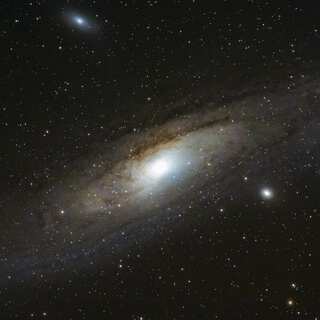
The first such observation was of SN 1885A in the Andromeda Galaxy.
A decade later,
Two further supernovae,
SN 1895-A and SN 1895-B,
Were discovered in NGC 4424 and NGC 5253 respectively.
Early work on what was originally believed to be simply a new category of Novi was performed during the 1920s.
These were variously called Upper Class Novi,
Hup Novi,
Or Giant Novi.
The name Supernovae is thought to have been coined by Walter Bade and Fritz Zwicky in lectures at Caltech in 1931.
It was used as supernovae in a journal paper published by Nutt-Lundmark in 1931,
And in a 1934 paper by Bade & Zwicky.
By 1938,
The hyphen was no longer used,
And the modern name was in use.
Rudolf Minkowski and Fred Zwicky developed the modern supernova classification scheme beginning in 1941.
During the 1960s,
Astronomers found that the maximum intensities of supernovae could be used as standard candles,
Hence indicators of astronomical distances.
Some of the most distant supernovae observed in 2003 appear dimmer than expected.
This supports the view that the expansion of the universe is accelerating.
Techniques were developed for reconstructing supernovae events that have no written records of being observed.
The date of the Cassiopeia A supernova event was determined from light echoes off nebulae,
While the age of supernova remnant RX J0852.
0-4622 was estimated from temperature measurements and the gamma ray emissions from the radioactive decay of 44 Ti.
The most luminous supernova ever recorded is ASASSN-15LH at a distance of 3.
82 gigalight years.
It was first detected in June 2015 and peaked at 570 billion solar luminosities,
Which is twice the bolometric luminosity of any other known supernova.
The nature of this supernova is debated,
And several alternative explanations,
Such as tidal disruption of a star by a black hole,
Have been suggested.
SN2013FS was recorded three hours after the supernova event on October 6,
2013 by the Intermediate Palomar Transient Factory.
This is among the earliest supernovae caught after detonation,
And it is the earliest for which spectra have been obtained,
Beginning six hours after the actual explosion.
The star is located in a spiral galaxy named NGC 7610,
160 million light years away in the constellation of Pegasus.
The supernova SN2016GKG was detected by an amateur astronomer,
Victor Buzo,
From Osario,
Argentina,
On September 20,
2016.
It was the first time that the initial shock breakout from an optical supernova had been observed.
The progenitor star has been identified in Hubble's space telescope images from before its collapse.
Astronomer Alex Filipenko noted,
Observations of stars in the first moments they begin exploding provide information that cannot be directly obtained in any other way.
Because supernovae are relatively rare events within a galaxy,
Occurring about three times a century in the Milky Way,
Obtaining a good sample of supernovae to study requires regular monitoring of many galaxies.
Today,
Amateur and professional astronomers are finding about 2,
000 every year,
Some when near maximum brightness,
Others on old astronomical photographs or plates.
Supernovae in other galaxies cannot be predicted by any meaningful accuracy.
Normally,
When they're discovered,
They're already in progress.
To use supernovae as standard candles for measuring distance,
Observation of their peak luminosity is required.
It is therefore important to discover them well before they reach their maximum.
Amateur astronomers,
Who greatly outnumber professional astronomers,
Have played an important role in finding supernovae.
Typically by looking at some of the closer galaxies through an optical telescope and comparing them to earlier photographs.
Toward the end of the 20th century,
Astronomers increasingly turned to computer-controlled telescopes and CCDs for hunting supernovae.
While such systems are popular with amateurs,
There are also professional installations,
Such as the Katzmann Automatic Imaging Telescope.
The Supernova Early Warning System project uses a network of neutrino detectors to give early warning of a supernova in the Milky Way galaxy.
Neutrinos are subatomic particles that are produced in great quantities by a supernova,
And they are not significantly absorbed by the interstellar gas and dust of the galactic disk.
Supernova searches fall into two classes,
Those focused on relatively nearby events,
And those looking farther away.
Because of the expansion of the universe,
The distance to a remote object with a known emission spectrum can be estimated by measuring its Doppler shift or redshift.
On average,
More distant objects recede with greater velocity than those nearby,
And so have a higher redshift.
Thus,
The search is split between high redshift and low redshift,
With the boundary falling around a redshift range of z equals 0.
1 to 0.
3,
Where z is a dimensionless measure of the spectrum's frequency shift.
High redshift searches for supernovae usually involve the observation of supernova light curves.
These are useful for standard or calibrated candles to generate Hubble diagrams and make cosmological predictions.
Supernova spectroscopy used to study the physics and environments of supernovae is more practical at low than at high redshift.
Low redshift observations also anchor the low distance end of the Hubble curve,
Which is a plot of distance versus redshift for visible galaxies.
As survey programs rapidly increase the number of detected supernovae,
Collated collections of observations,
Light decay curves,
Astrometry,
Pre-supernova observations,
Spectroscopy,
Have been assembled.
Pantheon dataset,
Assembled in 2018,
Detailed 1,
048 supernovae.
In 2021,
This dataset was expanded to 1,
701 light curves for 1,
550 supernovae,
Taken from 18 different surveys,
A 50% increase in under 3 years.
Supernova discoveries are reported to the International Astronomical Union's Central Bureau for Astronomical Telegrams,
Which sends out a circular with the name it assigns to the supernova.
The name is formed with the prefix SN,
Followed by the year of discovery,
Suffixed with a one or two letter designation.
The first 26 supernovae of the year are designated with a capital letter from A to Z.
Next,
Pairs of lowercase letters are used,
AA,
AB,
And so on.
Hence,
For example,
SN2003C designates the third supernova reported in the year 2003.
The last supernova of 2005,
SN 2005 NC,
Was the 367th.
Since 2000,
Professional and amateur astronomers have been finding several hundred supernovae each year.
Historical supernovae are known simply by the year they occurred.
SN 185,
SN 1006,
SN 1054,
SN 1572,
Called Tycho's Nova,
And SN 1604,
Kepler's Star.
Since 1885,
The additional letter notation has been used,
Even if there was only one supernova discovered that year.
For example,
SN 1885A,
SN 1907A,
Etc.
This last happened with SN 1947A.
SN,
For supernova,
Is a standard prefix.
Until 1987,
Two-letter designations were rarely needed.
Since 1988,
They have been needed every year.
Since 2016,
The increasing number of discoveries has regularly led to the additional use of three-letter designations.
After ZZ comes AAA,
Then AAB,
AAC,
And so on.
For example,
The last supernova retained in the Asiago Supernova Catalog,
When it was terminated on December 31,
2017,
Bears the designation SN 2017 JZP.
Astronomers classify supernovae according to their light curves and the absorption lines of different chemical elements that appear in their spectra.
If a supernova's spectrum contains lines of hydrogen,
It is classified Type II.
Otherwise,
It is Type I.
In each of these types,
There are subdivisions according to the presence of lines from other elements,
Or the shape of the light curve.
Type I supernovae are subdivided on the basis of their spectra,
With Type Ia showing a strong ionized silicon absorption line.
Type 1 supernovae without this strong line are classified as Type 1b and 1c,
With Type 1b showing strong neutral helium lines and Type 1c lacking them.
Historically,
The light curves of Type I supernovae were seen as all broadly similar,
Too much so to make useful distinctions.
While variations in light curves have been studied,
Ossification continues to be made on spectral grounds rather than light curve shapes.
A small number of Type 1a supernovae exhibit unusual features,
Such as non-standard luminosity or broadened light curves,
And these are typically categorized by referring to the earliest examples showing similar features.
For example,
The subluminous SN2008HA,
And is often referred to as SN2002CX-like,
Or Class 1A 2002CX.
A small proportion of type 1c supernovae show highly broadened and blended emission lines,
Which are taken to indicate very high expansion velocities for the ejecta.
These have been classified as type 1 CBL.
Calcium-rich supernovae are a rare type of very fast supernova with unusually strong calcium lines in their spectra.
Models suggest they occur when material is accreted from a helium-rich companion rather than a hydrogen-rich star.
Because of helium lines in their spectra,
They can resemble type 1b supernovae,
But are thought to have very different progenitors.
Type 1EN has been proposed to explain observations of the supernova SN 2021 YFJ.
Having lost its outer layers of hydrogen,
Helium,
And carbon,
The star,
Just before the explosion,
Released an unusual hidden layer of silicon,
Sulfur,
And argon,
Elements that are not often seen in dying stars.
During the explosion,
The material from the star's core collided with the gaseous shell,
And the heat of the collision caused the silicon and sulfur layer to glow.
The explosion showed that stars can be completely stripped down and still produce a brilliant explosion observable from very far distance.
The discovery provided direct evidence of the long-theorized but difficult-to-observe internal structure of massive stars.
In the type's name,
E describes the position of the silicon's sulfur layer in the internal structure,
While N signifies narrow emission lines.
The supernovae of type II can also be subdivided based on their spectra.
While most Type II supernovae show very broad emission lines,
Which indicate expansion velocities of many thousands of kilometers per second,
Some,
Such as SN 2005 GL,
Have relatively narrow features in their spectra.
These are called type 2n,
Where the n stands for narrow.
A few supernovae such as SN 1987K and SN 1993J appear to change types.
They show lines of hydrogen at early times,
But over a period of weeks to months become dominated by lines of helium.
The term Type 2B is used to describe the combination of features normally associated with Type 2 and Type 1B.
Type II supernovae,
With normal spectra dominated by broad hydrogen lines that remain for the life of the decline,
Are classified on the basis of their light curves.
The most common type shows a distinctive plateau in the light curve shortly after peak brightness,
Where the visual luminosity stays relatively constant for several months before the decline resumes.
These are called type 2-P,
Referring to the plateau.
Less common are Type II-L supernovae that lack a distinct plateau.
The L signifies linear,
Although the light curve is not actually a straight line.
Supernovae that do not fit into the normal classifications are designated Peculiar or PEC.
Zwicky defined additional supernovae types based on a very few examples that did not cleanly fit the parameters for type 1 or type 2 supernovae.
SN1961i in NGC 4303 was the prototype and only member of the Type III supernova class,
Noted for its broad light curve maximum and broad hydrogen-balmer lines that were slow to develop in the spectrum.
SN 1961F in NGC 3003 was the prototype and only member of the Type 4 class,
Was a light curve similar to a Type 2-P supernova,
With hydrogen absorption lines,
But weak hydrogen emission lines.
The Type 5 class was coined for SN 1961V in NGC 1058.
An unusual faint supernova or supernova imposture with a slow rise to brightness.
A maximum lasting many months,
And an unusual emission spectrum.
The similarity of SN 1961 V to the Ida Kiriny Great Outburst was noted.
Supernovae in M101 and M83 were also suggested as possible type 4 or type 5 supernovae.
These types would now all be treated as peculiar type 2 supernovae,
Of which many more examples have been discovered,
Although it is still debated whether SN 1961V was a true supernova following an LBV outburst or an imposter.