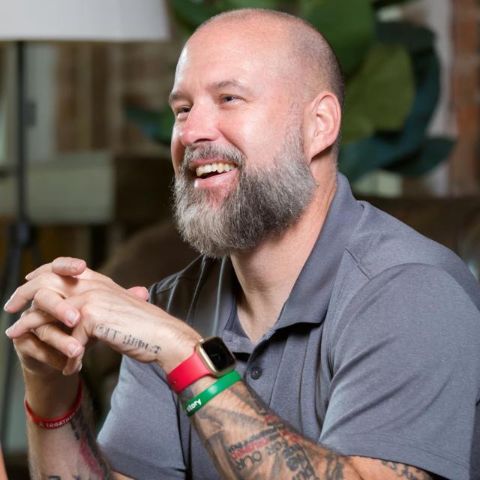
Hey,
I'm Ryan.
Thank you for joining me.
I know there are a lot of places you could be right now,
So I don't take it lightly that you chose to spend these next few minutes with me.
If you found this talk,
There's a good chance you're looking for answers to some of your questions about depression.
Maybe you're the one struggling.
Maybe it's someone you love,
Or maybe you're trying to understand how someone can have a life that looks okay on the outside and still feel so empty,
Disconnected,
Or exhausted on the inside.
Maybe you're tired of people telling you to think positively.
Maybe you've been told to be more grateful,
To get outside,
To exercise,
To pray more,
Or to stop focusing on what's wrong.
And while some of those things may help,
They don't always answer the deeper questions.
Why do I feel this way?
Why can't I just pull myself out of it?
And why does depression keep coming back,
Even when I'm doing everything I know to do?
That's what I want to talk with you about today.
Not as someone standing above you with all the answers,
But as someone sitting across from you,
Like we're having a cup of coffee in an honest conversation.
Because I'm not talking to you as someone who has only studied depression.
I'm talking to you as someone who has lived it.
For more than 20 years,
I struggled with anxiety,
Depression,
Panic attacks,
Obsessive thoughts,
And emotional pain that I didn't know how to explain.
From the outside,
I could look okay.
I could smile.
I could work.
I could take care of my responsibilities.
I could tell people I was fine.
But inside,
I was tired,
Not just physically tired.
I was tired of fighting with my own mind.
Tired of waking up and feeling like I was already behind.
Tired of pretending I was living when,
Honestly,
Most days I was just trying to make it through the day.
And maybe you know that feeling.
Maybe you still get up every morning,
You go to work,
You take care of your family,
You answer the phone,
You smile when people ask how you're doing.
But deep inside you feel disconnected.
Empty.
Lonely.
Like you're watching your life happen.
But you don't really feel like you're living it.
I'm not here to give you another list of things you should be doing better,
Because when you're depressed,
The last thing you need is another person making you feel like you're failing at healing too.
I want to help you understand what depression may really be,
Not just what it looks like,
Not just how it affects your life,
But what may be living underneath it.
The pain,
The loneliness,
The grief,
The rejection,
The shame.
And the feelings you may have spent years trying not to feel.
Because depression is not always where your story begins.
Sometimes depression is where your story ends,
After years of carrying pain alone.
So as we begin,
You don't have to fix anything right now.
You don't have to force yourself to feel better.
And you don't have to figure everything out.
Just be here.
And for the next few minutes,
Let's begin looking underneath the depression.
And listening to what your pain may have been trying to tell you.
For me,
Depression didn't begin with one bad day.
It wasn't one event.
It wasn't one disappointment.
It was years of carrying feelings I didn't understand and pain I didn't know how to talk about.
For more than 20 years,
I lived with anxiety,
Panic attacks,
Obsessive thoughts,
Depression,
And moments when I honestly didn't know how much longer I could keep going.
I became very good at hiding it.
I knew how to function.
I knew how to keep moving.
I knew how to show up for work,
Take care of my responsibilities,
And make people believe I was okay.
But I wasn't okay.
I was hurting.
I was angry.
I was afraid.
I was lonely.
And underneath all of that,
I carried a deep feeling that something was wrong with me.
I didn't feel good enough.
I didn't feel safe inside myself.
And no matter how hard I tried to think differently,
Achieve more,
Stay busy,
Or push the feelings away,
They always came back.
That's the part of depression many people don't see.
They see you lying in bed.
They see you pulling away.
They see you losing interest in the things you used to enjoy.
They may see you becoming quiet,
Irritable,
Numb,
Or emotionally distant,
But they don't always see the years that came before it.
They don't see everything you carried.
They don't see how long you tried to be strong.
They don't see how many times you told yourself to get over it,
Move on,
Be grateful,
Or stop feeling sorry for yourself.
And maybe your depression doesn't look the way mine did.
Maybe you're not lying in bed all day.
Maybe you're still going to work.
Maybe you're raising children.
Maybe you're running a business.
Maybe you're the person everyone else depends on.
Maybe you're even the one who encourages everyone around you.
But when you're alone.
.
.
You feel empty.
You feel disconnected from yourself.
You feel tired in a way that sleep doesn't fix.
And sometimes you wonder why you can be surrounded by people and still feel completely alone.
In 2011,
I reached a place where all of that pain became too much for me.
I had spent so many years fighting what I felt that I no longer knew how to live with it.
I didn't want to keep feeling the way I felt.
And at that point,
I didn't know there was another way.
That year became one of the darkest moments of my life,
But it also became the beginning of something I could not see at the time.
Because eventually I had to stop asking only.
How do I make these feelings go away?
And I had to start asking a different question.
What happened inside me that made life feel this painful?
That question changed the direction of my healing.
Because for years,
I believed depression was the problem.
I believed depression was what needed to be defeated.
I believed that if I could just think better,
Pray harder,
Stay busier,
Or become stronger,
Then maybe I could finally escape it.
But depression wasn't the beginning of my story.
It was the result of a story I had never fully understood.
A story filled with fear,
Rejection,
Abandonment,
Loneliness,
Shame,
Grief,
And years of feelings I had learned to push down instead of process.
And maybe that's true for you too.
Maybe depression isn't proof that you're broken.
Maybe it's not proof that you're weak.
Maybe it's not proof that you're failing at life.
Maybe it is your mind and your body telling you that you have been carrying too much for too long without knowing how to release it.
And that is where I want to take this conversation next.
Because before we can understand how healing begins,
We have to understand what depression may be protecting you from.
For a long time,
I thought depression was attacking me.
I saw it as the enemy.
Something inside me that was ruining my life and keeping me from becoming the person I wanted to be.
But as I began looking deeper,
I started to understand something.
What if depression wasn't only trying to destroy me?
What if some part of me was also trying to protect me?
Now,
I know that may sound strange because depression doesn't feel protective.
It can feel heavy,
Dark,
Exhausting.
It can steal your desire to do the things you once enjoyed.
It can make getting out of bed feel like work.
It can make you feel distant from the people you love and disconnected from the person you used to be.
But sometimes what hurts you today began as something that helped you survive yesterday.
Let me explain what I mean.
When you were young,
You may not have had the words to explain what you were feeling.
You may not have known how to say,
I feel rejected.
I feel forgotten.
I feel emotionally abandoned.
I don't feel good enough.
I'm afraid nobody is coming for me.
And even if you did have the words,
There may not have been anyone willing or emotionally able to listen.
So you adapted.
You learned to hold it in.
You learned to hide what hurt.
You learned to stay busy.
You learned to make people laugh.
You learned to take care of everyone else.
You learned to be strong.
Or maybe you learned to shut down and stop needing anything at all.
That became your protective self,
The part of you that learned how to keep functioning when the hurting part of you did not feel safe enough to be seen.
Your protective self may have said,
Don't cry,
Because crying won't change anything.
Don't need anyone because people leave.
Don't trust anyone because people hurt you.
Don't slow down because then you might feel everything you've been trying to avoid.
And for a while,
That protection may have worked.
It helped you keep going.
It helped you survive painful experiences.
It helped you become independent,
Responsible,
Productive,
Helpful,
Or successful.
But the problem is,
The feelings never actually went away.
They were pushed deeper.
The grief was still there.
The loneliness was still there.
The anger was still there.
The shame was still there.
The little boy or little girl inside you was still carrying the pain.
Even while the adult version of you was trying to move on.
And eventually,
Carrying all of that becomes exhausting.
Because it takes an enormous amount of energy to spend your life trying not to feel your life.
You may think you're tired because you aren't sleeping enough.
And that may be part of it.
But sometimes you're tired because you've spent years fighting yourself.
You've been trying to silence your thoughts.
Control your emotions.
Hide your pain.
Please everyone around you.
Hold your family together.
Pretend the past no longer affects you.
And prove that you're okay when something inside you knows you're not.
So depression may become the place where your protective self finally says,
I can't keep doing this.
I can't keep carrying all of this alone.
I can't keep pretending this pain doesn't exist.
That doesn't mean every person's depression has the same cause,
And it doesn't mean you should blame yourself for what you're feeling.
It means there may be more to your depression than what you see on the surface.
Because what looks like laziness may actually be emotional exhaustion.
What looks like withdrawal may be a fear of being hurt again.
What looks like numbness may be years of feelings that became too painful to keep feeling.
And what looks like giving up may be a wounded part of you that no longer knows how to keep asking for help.
This is why I began asking a different question.
Not only how do I get rid of depression,
But what is my depression protecting me from?
Is it protecting me from grief I never allowed myself to feel?
Is it protecting me from the anger I was taught was wrong?
Is it protecting me from remembering how lonely I felt as a child?
Is it protecting me from the rejection,
Abandonment,
Betrayal,
Or shame I've spent years trying to forget?
Because sometimes the depression isn't asking you to fight harder.
Sometimes it is asking you to finally listen.
To listen to the part of you that still hurts.
The part of you that still feels forgotten.
The part of you that became strong because it never felt safe enough to be vulnerable.
The part of you that has been waiting for someone to say,
What happened to you mattered.
What you felt was real and you should not have had to carry it alone.
That is not weakness.
That is where healing begins,
Not by judging the depression,
Not by hating the part of you that feels tired,
But by becoming curious about what is underneath it.
Because when you stop asking.
.
.
What is wrong with me and begin asking what happened to me.
You begin moving away from shame and toward understanding.
And once you begin understanding the pain underneath the depression,
You can begin learning how to feel what you once had to hide.
For years,
I tried to think my way out of depression.
I tried to replace the negative thoughts.
I tried to focus on what was good.
I tried to be more grateful.
I prayed.
I exercised.
I stayed busy.
I pushed myself to keep moving.
And some of those things helped me get through difficult moments,
But they didn't answer the deeper question.
Why did my mind keep returning to the same dark place?
Why didn't I still feel empty when I had things in my life to be grateful for?
Why did the depression keep coming back,
Even after I convinced myself I should be feeling better?
Maybe you've asked yourself those same questions.
Maybe you've looked around at your life and thought,
I have a family.
I have a home.
I have people who love me.
I have things other people would be grateful to have.
So why do I still feel this way?
And then the shame begins because now you're not only depressed,
You're judging yourself for being depressed.
You start believing you're selfish,
Ungrateful,
Weak,
Too sensitive.
Or somehow failing at life because the good things around you haven't taken away the pain inside you.
But gratitude doesn't erase grief.
A good life today doesn't automatically heal what happened yesterday.
And loving people around you cannot reach the wounded places inside you that you refuse to acknowledge.
You can appreciate the life you have and still hurt from the life you lived.
Both can be true.
The problem is not that positive thinking is bad.
Your thoughts matter.
What you believe matters.
The way you speak to yourself matters.
But you cannot keep placing positive thoughts on top of unprocessed pain and expect the pain to disappear.
It's like painting over a crack in the wall.
For a little while,
The wall may look better.
The crack may even become harder to see.
But underneath the new paint,
The wall is still broken.
And eventually,
That crack begins showing through again.
Not because the paint was bad,
But because the deeper damage was never repaired.
That is what many of us do emotionally.
We repeat better thoughts.
We read another book,
Listen to another podcast,
Save another quote.
Tell ourselves the past is over.
And try to convince ourselves that we're okay.
But awareness goes to the head,
Healing goes to the heart.
You can understand exactly why you struggle and still remain stuck in the same pain.
You can know that your father's absence created an abandonment wound.
You can know that your mother's criticism left you feeling inadequate.
You can know that your relationship awakened the rejection you carried from childhood.
You can know why you shut down,
Pull away,
Overthink,
Or lose hope.
But knowing where the wound came from is not the same as healing the wound.
Because healing requires more than understanding what happened.
At some point,
You have to allow yourself to feel what happened.
That is the part most people try to avoid.
Because the feelings can seem too big,
The grief feels too deep,
The anger feels wrong,
The loneliness feels unbearable,
And the shame keeps telling you that you should have gotten over it by now.
So you return to your thoughts,
You analyze,
You explain,
You intellectualize,
You try to find the perfect answer that will finally make the pain stop.
But you cannot think your way out of a feeling you have never allowed yourself to feel.
Feelings change thinking.
Thinking changes believing.
And what you believe affects how you live.
But many of us try to start at the end.
We try to create a new belief while the wounded part of us is still carrying the same old feeling.
You may tell yourself.
I am enough,
But the little boy or little girl inside you still remembers feeling unwanted.
You may tell yourself,
I am safe,
But a part of you still remembers how quickly love could be taken away.
You may tell yourself,
I deserve to be loved.
But underneath those words,
You may still carry the shame of believing you were the reason someone rejected,
Neglected,
Or abandoned you.
The words are not wrong.
But the feelings underneath those words still need your attention.
Because the hurting part of you does not need to be argued with.
It needs to be heard.
It needs to be understood.
And it needs to know that it no longer has to carry the pain alone.
This is why forcing yourself to feel better often makes you feel worse.
Because every time you tell yourself,
I shouldn't feel this way,
You reject the part of you that already feels rejected.
Every time you say,
I need to get over it,
You abandon the part of you that already feels abandoned.
And every time you shame yourself for struggling,
You repeat the same emotional pain you're trying to heal.
Healing begins when you stop fighting yourself,
When you stop treating your feelings like the enemy,
And when you become willing to sit with the pain long enough to understand what it is connected to.
That doesn't mean you spend the rest of your life living in the past.
It means you finally stop allowing the unhealed past to quietly control your present.
Because what you refuse to feel,
You will continue to carry.
And what you continue to carry will continue to affect the way you think,
Believe,
Relate,
And live.
So the next step is not forcing yourself to become more positive.
The next step is learning how to safely and honestly turn toward the feelings underneath the depression.
Not to drown in them.
Not become defined by them.
But to finally give those feelings somewhere to go.
And that is what I want to walk you through next.
How healing begins when you stop asking your pain to disappear and start giving yourself permission to feel,
Understand,
And release what you have been carrying.
So how do you begin turning toward the feelings underneath depression?
Without becoming overwhelmed by them.
You begin slowly,
You begin honestly,
And most importantly,
You begin without judging yourself for what you find.
Healing is not forcing yourself to dig through every painful memory all at once.
It is not reopening every wound and living inside the past.
And it is not sitting in your pain until the pain becomes your identity.
Healing is learning how to stop running from what you feel.
Long enough to understand what those feelings are connected to.
For me,
Healing began with awareness.
Not aware as a depression.
I already knew I was depressed.
I knew I was anxious.
I knew my thoughts were dark.
I knew I was struggling.
But I wasn't aware of what was living underneath all of that.
I didn't understand the loneliness.
I didn't understand the abandonment.
I didn't understand the grief.
I didn't understand how much anger I carried from feeling unseen,
Unheard,
And emotionally alone.
So I had to begin asking myself questions I had avoided for most of my life.
What am I actually feeling right now?
Not what am I thinking?
Not what am I afraid may happen?
Not what story is my mind creating?
What am I feeling?
Am I sad?
Am I lonely?
Do I feel rejected?
Do I feel forgotten?
Do I feel ashamed?
Do I feel like I'm not enough?
Do I feel like nobody truly understands me?
At first,
You may not know.
You may have spent so many years pushing your feelings away that everything simply feels like numbness or heaviness or exhaustion.
That is OK.
You do not have to force an answer.
Sometimes healing begins by simply admitting.
I know something inside me hurts,
Even if I don't understand it yet.
That is awareness,
Not having all the answers,
Just becoming willing to stop pretending there is nothing underneath the pain.
Then comes acknowledgement.
Acknowledgement means allowing yourself to say,
What happened to me mattered.
The rejection mattered.
The neglect mattered.
The betrayal mattered.
The loss mattered.
The loneliness mattered.
The words they said mattered.
And the things they never said.
Mattered too.
Acknowledgement does not mean blaming everyone for the rest of your life.
It does not mean refusing to take responsibility for who you are today.
It simply means you stop lying to yourself about how deeply something affected you.
Because you cannot heal something you continue to minimize.
Maybe you tell yourself.
My childhood wasn't that bad.
Other people had it worse.
My parents did the best they could.
I should be over that relationship by now.
It happened years ago.
And maybe all of those things contain some truth.
But none of them change how you felt.
Someone may have done the best they could.
And their best may still have hurried.
Someone may not have intended to abandon you.
And you may still have felt abandoned.
Someone may have loved you.
And still not known how to love you in the way you needed.
Acknowledging your pain is not attacking them.
It is finally being honest with you.
Then comes discovery.
Discovery is where you begin connecting what you feel today to what you may have felt before.
Let's say someone you love becomes distant.
Maybe they are quiet.
Maybe they do not answer your message.
Maybe they seem distracted or emotionally unavailable.
On the surface you may think.
They don't care about me.
They're leaving me.
I'm not important.
I must have done something wrong.
But underneath those thoughts may be an old feeling.
The feeling of being forgotten,
The feeling of being overlooked,
The feeling of being the child who never knew when love would be available.
The situation today may be real.
But the intensity of what you feel may be connected to something much older.
This is why I often ask.
When have you felt this feeling before?
Not one have you experienced the exact same situation.
When have you felt the same feeling?
When did you first feel unwanted?
When did you first feel like you were too much?
When did you first feel like your needs did not matter?
When did you first feel that you had to earn love?
When did you first feel alone while surrounded by people?
Those questions can begin leading you away from the surface struggle and toward the core wound underneath it.
Then comes acceptance.
Acceptance does not mean you like what happened.
It does not mean you approve of it.
It does not mean you excuse the people who hurt you.
Acceptance means you stop fighting the reality that it happened.
And you stop fighting the reality that it affected you.
You stop saying,
I should not feel this way and begin saying,
This is what I feel.
You stop saying,
I should have been stronger and begin saying,
I was carrying more pain than anyone understood.
You stop hating the wounded part of yourself and begin seeing that part with compassion.
Because that part of you was not trying to ruin your life.
It was trying to protect you with the only tools it had.
Maybe it protected you by shutting down.
Maybe it protected you by withdrawing.
Maybe it protected you by staying in bed.
Maybe it protected you by becoming numb.
Maybe it protected you by convincing you not to hope,
Because hope had disappointed you too many times before.
Acceptance allows you to look at that protective part and say,
I understand why you learned to do this.
But we do not have to live this way forever.
Then,
Little by little,
You begin to release.
Release does not mean forgetting.
It does not mean pretending the pain never happened.
And it does not mean the memory disappears.
Release means the memory no longer has to carry the same emotional weight.
It means you begin giving the sadness somewhere to go.
You begin expressing the anger instead of turning it against yourself.
You begin grieving what you lost.
You begin grieving what you needed but never received.
Sometimes release happens through journaling.
Sometimes it happens through prayer.
Sometimes it happens through a conversation.
Sometimes it happens by writing a letter you never send.
Sometimes it happens by sitting quietly and allowing yourself to cry without explaining or apologizing for it.
And sometimes release includes forgiveness.
Not forgiveness that pretends what happened was okay.
Not forgiveness that removes boundaries,
Not forgiveness that requires you to trust someone who has repeatedly hurt you.
Forgiveness is releasing yourself from the responsibility of carrying the pain forever.
It is saying,
What you did affected me.
But I no longer want what you did to decide how I live.
That kind of healing takes time,
It takes honesty,
It takes patience,
And sometimes it requires support from someone who knows how to sit with you without rushing,
Judging,
Or trying to fix you.
But this is how you begin moving from simply surviving.
Into living.
Living does not mean you never feel sadness.
It does not mean you never have a difficult day.
It does not mean every painful thought disappears.
Living means you are no longer spending every day trying not to feel.
It means your pain no longer makes every decision for you.
It means your past may still be part of your story.
But it is no longer writing every new chapter.
You begin making choices from who you are today,
Instead of from the wounded child who is still afraid of being abandoned,
Rejected,
Or forgotten.
And this is important.
You do not have to do all of this today.
You do not have to understand every wound.
You do not have to forgive everyone.
You do not have to force yourself to cry.
You do not have to prove that you are healing.
You only have to become willing to take one honest step towards yourself.
Maybe that step is admitting that you are hurting.
Maybe it is naming one feeling.
Maybe it is writing down one memory.
Maybe it is telling someone you trust that you are not okay.
Maybe it is finally asking for the support you have been convincing yourself you should not need.
Because healing does not begin when you have everything figured out.
Healing begins when you stop abandoning yourself in the places where you already feel abandoned.
And in the next part of our conversation.
I want to slow things down.
I want to give you a few quiet moments to begin listening to the part of you that may have been carrying this pain for a very long time.
Not to fix it.
Not to force it to change,
But to finally let that part of you know you do not have to carry this alone anymore.
For the next few minutes,
I want to slow this conversation down.
You do not need to find the perfect answer.
You do not need to force yourself to feel anything.
And you do not need to go anywhere inside yourself that does not feel safe to visit right now.
Just allow yourself to be here.
You can close your eyes if that feels comfortable,
Or you can simply soften your focus and listen.
Notice what it feels like to stop for a moment,
To stop trying to fix yourself,
To stop trying to understand everything,
To stop trying to convince everyone,
Including yourself,
That you are OK.
You have probably spent a long time pushing yourself to keep going,
Getting through the day,
Taking care of what needs to be done,
Showing up for the people who depend on you.
But right now,
You do not have to perform.
You do not have to be strong.
You do not have to have the right words.
Just notice what is here.
Maybe you feel sadness,
Maybe you feel tired,
Maybe you feel numb,
Maybe you feel nothing at all.
Whatever you notice,
Try not to judge it.
There is no wrong feeling,
And there is no wrong way to experience this moment.
Now,
Quietly ask yourself,
What have I been carrying alone?
Do not search for the answer,
Just notice what comes to mind.
Maybe it is a loss you never fully grieved.
Maybe it is a relationship that changed you.
Maybe it is something that happened in childhood that everyone else seemed to forget.
But some part of you never did.
Maybe you have been carrying the pain of rejection.
The loneliness of feeling unseen,
The shame of believing you are not enough,
Or the exhaustion of spending your life trying to become enough for everyone around you.
Ask yourself,
What feeling have I been trying not to feel?
Is it sadness,
Anger,
Fear,
Grief,
Loneliness,
Rejection,
Abandonment?
Maybe there is a feeling you learned to hide because nobody knew what to do with it.
Maybe you were told to stop crying,
To calm down,
To toughen up,
To move on,
To forgive before you were ever allowed to acknowledge how badly you were hurt.
Maybe you learned that your feelings made other people uncomfortable,
So you became uncomfortable with them too.
Now ask yourself.
When have I felt this feeling before?
Not when did the exact same situation happen.
When did this feeling first become familiar?
When did you first feel forgotten?
When did you first feel unwanted?
When did you first feel like your needs were too much?
When did you first feel that love had to be earned?
When did you first feel emotionally alone?
You may not receive a clear memory.
And that is OK.
You may only notice a feeling.
An image,
A name.
A moment.
Or a heaviness you cannot explain.
You do not have to force it.
Just allow yourself to notice.
Now,
Imagine the younger part of you who first learned to carry that feeling.
Maybe you picture a little boy.
Maybe you picture a little girl.
Maybe you do not see anything clearly,
But you can sense that younger part of you.
That part of you may have learned to be quiet.
To be good,
To be useful,
To be independent,
To make everyone else happy,
Or to stop expecting anyone to show up.
And for a long time,
The younger part of you may have believed.
If I can just be better,
Maybe they will love me.
If I do not need anything,
Maybe they will stay.
If I hide how I feel,
Maybe I will not be rejected.
If I stop hoping,
Maybe I will not be disappointed again.
But that child should never have had to earn love.
That child should never have had to hide their feelings to stay connected.
And that child should never have had to carry all of that pain alone.
So quietly,
In your own words,
Say to that part of you,
I see you.
I know you are hurting.
What happened to you mattered.
What you felt was real.
And you do not have to carry this alone anymore.
You do not have to make the pain disappear right now.
You are simply beginning to build a different relationship with it.
Instead of rejecting the hurting part of you,
You are listening.
Instead of shaming that part of you,
You are understanding.
Instead of telling yourself to get over it,
You are finally allowing yourself to admit that it hurts.
And if a motion begins to rise,
Let it be there.
You do not have to hold on to it.
And you do not have to push it away.
Just let the feeling move through you in whatever way feels natural.
Maybe that means tears.
Maybe it means silence.
Maybe it means placing your hand over your heart.
Maybe it simply means saying,
Yes,
This still hurts.
There is nothing weak about that.
You are not falling apart.
You are beginning to stop holding everything together so tightly.
Now ask yourself one final question.
What do I need today?
Not what do other people need from you.
Not what should you accomplish,
Not how can you prove that you are okay.
What do you need?
Maybe you need rest.
Maybe you need honesty.
Maybe you need support.
Maybe you need to grieve.
Maybe you need to set a boundary.
Maybe you need to stop carrying something that was never yours to carry.
You do not have to act on every answer right now.
Just acknowledge what is true.
Take a moment and remind yourself.
I am allowed to feel.
I am allowed to need.
I am allowed to ask for help.
And I am allowed to heal at a pace that is honest for me.
When you're ready,
Begin bringing your attention back to where you are.
Notice the space around you,
Notice the surface beneath you,
And allow yourself to return without rushing.
You may not feel completely different.
You may not have found every answer.
That is not the purpose of this moment.
The purpose was to stop abandoning yourself,
To listen.
To acknowledge and to begin reminding the hurting part of you,
You are not alone anymore.
As we come to the end of this time together,
I want to leave you with something I wish someone had told me years ago.
Depression may be part of your story,
But it is not your identity.
For a long time,
I believed something inside me was permanently broken.
I thought the darkness was who I was.
I thought I would always be fighting my own mind.
And after enough years of feeling that way,
I stopped asking whether life could change.
I only wondered how much longer I could keep living the life I had.
But what I eventually discovered was that I was not broken.
I was wounded.
I was carrying grief I had never grieved,
Abandonment I had never acknowledged,
Anger I had turned against myself,
Loneliness I had learned to hide,
And shame that kept convincing me something was wrong with me.
In 2011,
I reached one of the darkest places of my life.
At the time,
I could not see a future beyond the pain.
But that moment was not the end of my story.
It became the beginning of me finally asking different questions,
Not only How do I make depression go away?
But what pain have I never allowed myself to feel?
What happened to me that I am still carrying?
And what would healing look like if I stopped fighting myself?
Healing did not happen all at once.
It happened one honest feeling at a time.
One journal entry.
One hard truth.
One moment of grief.
One act of forgiveness.
One boundary.
One choice to stop abandoning myself.
And little by little,
I began to experience something I had forgotten was possible.
I began to feel alive again,
Not because my past disappeared,
Not because I never felt sadness,
And not because every difficult thought suddenly stopped.
I began to live again because the pain was no longer carrying me.
I was finally learning how to carry it differently,
How to feel it,
Understand it,
And release what I no longer needed to keep holding.
That is what I want you to remember today.
You do not have to heal everything right now.
You do not need to have all the answers.
You do not need to force yourself to feel hopeful before you are ready.
Just take the next honest step.
Maybe that step is admitting you are not okay.
Maybe it is writing down what hurts.
Maybe it is grieving something you have spent years minimizing.
Maybe it is reaching out to someone you trust.
Maybe it is asking for professional support instead of continuing to carry this alone.
There is courage in asking for help.
There is courage in staying.
There is courage in believing that the way you feel today does not have to be the way you feel forever.
And if you are in a place where you feel you may hurt yourself,
Please do not stay alone with that pain.
Reach out to someone you trust,
Contact emergency services,
Or connect with a crisis support service in your area right now.
Your life matters,
Even if the pain is making that difficult to believe.
You cannot heal what you refuse to feel.
But you also do not have to feel it all at once.
Healing can begin gently.
Honestly.
One feeling at a time.
Thank you for sitting with me today.
Thank you for being willing to look beneath the depression instead of only judging what it looks like on the surface.
And most of all,
Thank you for giving the hurting part of you a chance to be heard.
Depression is not where your story has to end.
It may simply be the place where you finally stop running from your pain and begin finding your way back to yourself.