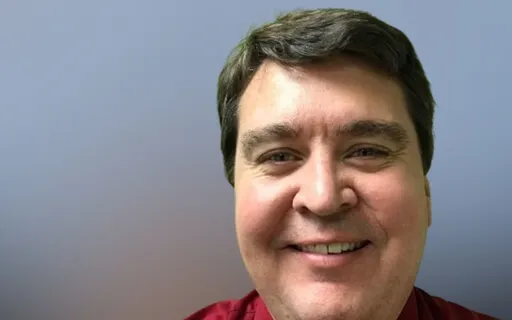
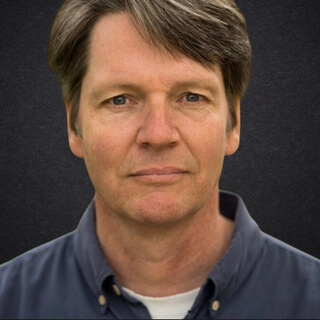
Eric Putkonen,
Thank you for joining me.
Thank you for having me.
Eric,
We communicated very briefly over the last few days,
And I've been on a binge watching some of your videos on YouTube.
The videos have a similar vein from other people and yours.
It's so paradoxical to the way that I've been bought up as a Western individual,
That I have to.
.
.
There's a mental incongruency going on.
So the reason that I talk to people like you is because it enables me to expand my awareness basically.
Can I sit here and say that I think and act and as you communicate,
I can only say no because I'd be lying to myself and I'd be lying to everybody that I communicate with.
But when I listen to you,
There seems to be some sort of resonance with the words that have been spoken.
And that's why I love to communicate with people like you.
So I do appreciate you coming on.
Thank you.
Eric,
Can I just say,
Ask you a question because you say,
You call yourself,
If you like,
On YouTube enlightenment and non-duality teacher,
Can you define enlightenment for me?
Enlightenment is a non-conceptual,
It's a visceral insight into the nature of reality and who and what you are.
So basically it shatters the illusion of separation and basically the illusion of me.
So let's go there,
The illusion of me.
So let's expand on that.
Well,
As an infant,
As a newborn,
There is no me.
I mean,
Even psychologists will say we have this oceanic feeling and we're given a name and over life,
We build this idea of me and there's this concept of me.
There's a very natural,
It's incorrect conclusion,
But it's a very natural conclusion to start separating between what I can control,
What I can't control physically,
What actions I decide to do,
What kind of seems to happen to me.
And so between our life story and these basic assumptions we start building upon of what I can control,
What I can do,
We get this idea of a me that is separate and other from everything else.
So is that a natural thing that you think occurs or would you suggest that that's like a cultural input?
Well,
Cultural input is part of it,
But it's a very natural progression to have an ego form.
Because the body is trying to explore the world.
But yeah,
It is cultural.
There's a lot of conditioning,
Cultural and otherwise that's kind of built into the idea of me.
That's part of the story.
So,
I mean,
The me is basically any self-concept,
Self-image,
All story,
A sense of me,
Which also includes like body contractions,
Things like that.
I mean,
If somebody says,
Pull yourself together,
What do you do?
And you've got this feeling of one there in the center somewhere.
There's always this feeling of being in the center.
And so that and having a center is also part of the me.
Because in non-duality,
Ultimately there's no circumference,
There's no border,
There's no other.
And that which has no circumference has no center.
And the me is fundamentally a center.
And the word,
The term non-duality,
It's a tricky one for my mind again,
Because it's like I'm trying to pinpoint it on something.
I'm trying to make it something.
Whereas the definition itself is there isn't anything.
Would that be right?
Basically non-duality,
The term comes from Sanskrit Advaita,
Which in a more raw translation is just not to.
So that's the fundamental idea,
There's not two of anything.
There's no separation.
Yeah,
I wouldn't say it's not anything,
But it's just,
It's not separation.
It's not otherness.
Yeah,
Yeah,
Sure.
So you know,
The sense of I-ness,
The sense of me,
Would you suggest that that is an illusion or would you suggest it's just a perception error?
It's more of a perception error,
Misconception,
Misunderstanding.
I mean,
If you're dreaming at night and you think you're this dream character and you think you are separate from other things.
And so you see trees,
Other people,
You know,
But fundamentally there is no one else in your dream.
Everything in the dream is you arising from you.
But we just have this idea that,
Well,
I'm just this because I'm only aware of this.
But every character has the same experience that I am just this because it's bound by its conscious awareness.
But in fact,
The entirety of the dream is not separate.
It's all one thing.
And would you suggest that us sitting here,
Communicating here,
That is exactly the same thing?
How's that again?
Would you suggest that what we're doing here and what we do every day in the moment,
Is that the same thing as a dream?
It very much is kind of like a dream.
Yeah.
It's a pretty classic analogy.
And even Ramana Maharshi,
I think,
Said it's good to think of the world as a dream.
So how do,
What,
What,
What enlightenment,
Let's say that word,
How does that differ from what philosophy might call solipsism?
Well,
Solipsism is often under the idea that the only thing I can know is that I exist.
And everything else don't know.
It could be just made up in my head,
Bringing a box scenario.
And nonduality is different in that even that me is a fiction.
It's like a level beyond solipsism.
Well,
I mean,
Put it this way.
I mean,
In a dream,
We always think we're the dreamer,
But the dream character is the one being dreamed.
It's not the dreamer.
Which goes back to your point about having a center where there isn't a center point in reality.
Yeah.
Okay.
There really isn't some center and solipsism is just another way of having a center.
I am the center of everything.
And so yeah,
Nonduality is not quite the same as solipsism,
But there are some parallels,
I guess.
So,
Eric,
In your life,
Was there like a distinctive moment that like an instant happening or was it a gradual,
You know,
Destruction of the ego?
Well,
It was a sudden and complete realization.
It was,
It just happened.
And the illusion of me just crumbles.
And I've come to understand and I tend to talk from the viewpoint of it can only be sudden and complete.
The whole idea of gradual is only in terms of a me.
And only a me can make progress.
But however little or much of me there is,
The fundamental belief in a me is still there.
And so there are practices where you diminish the me and weaken the me.
But it's one of those curves that,
You know,
As it approaches zero,
Flattens out,
Never reaches zero,
It flattens out.
And so there's a point where the me can never see through itself.
The me can never dispel itself.
And so there's a point where you just hit this wall and set that gap between,
You know,
Where the line flattens out and zero,
It can never make that leap.
And so in the end,
That last bit is sudden and complete.
The very principle,
The foundation idea of me shatters.
So,
Eric,
What value then does what we know as psychology have?
Well most of psychology is built around improving the me,
Improving life.
And so,
You know,
That's fine and dandy if that's what you want to do.
I mean,
If you're trying to overcome a deep suffering or something,
You know,
There is value in that.
But even psychology has never doubted the existence of a me.
And so there's a pretty good departure between psychology and enlightenment because psychology has never even posited the idea that the very idea of me is an illusion.
Psychology goes,
No,
No,
There is a you and we can make it better.
And I suppose in the same way as an ego wouldn't want enlightenment,
Psychology would probably react in the same way in the sense that it would render itself obsolete.
Yeah,
It would render itself obsolete and I would think the best of the healing arts always render themselves obsolete.
Yeah,
Could you expand on that a little bit?
Well I mean,
If in any form of healing art,
Be it psychological or mental,
It's not there to be there for the rest of your life as a way to maintain.
The best of a healing art would be,
It would render itself obsolete because it would no longer be needed.
At some point it would fall away because you are healed.
Yeah,
I think the ego,
I know because of what happens here is that it seems to have an addiction to the problems that keeps itself as a point of center.
So it will get addicted to the issues that it pretends that it's trying to fix.
Well the idea of me is strengthened and somewhat maintained by its struggle and resistance with the world and what's going on.
And so having problems and having conflict is to some degree an advantageous thing for the idea of me.
Yeah,
That doesn't go down too well.
And so if there was complete peace and silence,
It doesn't find this very comforting.
It finds it kind of unnerving.
And that's why in some people pursuing enlightenment or awakening,
They'll say in meditation or something will happen and they find themselves in very deep peace and silence.
And then suddenly they go,
It feels like I'm dying.
That's the me just going,
This isn't right.
There's nothing to resist the idea of me.
There's nothing to hold it anymore.
Yeah.
And if there is no meanness there,
How do we incorporate free will slash determinism,
That duality?
Well,
I say the illusion of me shatters not that the me disappears.
I want to clarify,
It's kind of like a mirage in terms of,
If you think it's water,
If you're going after the water,
The craving of water causes suffering.
There's this inherent confusion because you think it's water.
But when you see through the illusion of the mirage,
You just recognize it's not water.
It doesn't mean the mirage disappears.
And so it's not like this idea of me totally disappears.
It's just not really believed or taken seriously.
Now in terms of free will,
I tend to talk from the standpoint of free will.
I know that it's kind of in vogue and the mass majority tend to speak in terms of fate and determinism and things like that.
But really it's just different perspectives.
You can say that nothing is chosen and everything's predetermined,
Or you can say everything is chosen and it's free will.
And it kind of leads you to the same place.
You just run into problems when you say,
I chose this,
But I didn't choose that.
Because that's fueling the idea of me,
That you can choose one or the other.
And so I tend to go the free will route.
And when I talk about free will and choice,
There's only,
You can call it absolute reality,
Brahman consciousness,
Self,
Pick your term,
Really doesn't matter.
I'll go with self,
But really the self is the only one that chooses.
And so the self is ad-libbing and improving,
The game of life.
Even the self isn't sure where it's going to go.
So choice is happening,
But no one is choosing.
The self is choosing,
But the self isn't someone.
It's not personal.
It's not a center.
You could just drop off the whole idea of a chooser or a doer and go,
Well,
There's doing and choice.
There's just no chooser or doer,
But there's still choosing and there's choice.
We get sometimes caught up in the conventions of speech because the conventions of speech will say,
Well,
If there's choice,
There's got to be a chooser.
But all you're really saying is a noun has to proceed a verb.
And really if you go with,
Well,
There are really no nouns.
I mean,
What is a noun?
A noun is just a thing.
It's a conception.
Really there's nothing static nor separate.
So noun is kind of a strange thing.
There are no real nouns in existence.
And so if you go from more of a verbing kind of perspective,
Yeah,
There's choosing,
There's choice,
There's doing,
But there's no particular pronoun or doer or chooser.
You can subscribe to it.
And you know,
When this absolute enlightenment occurs,
Is there a sense of no-mindedness or is the mind very still as it was active,
But there's like a separation between thinking and the silence?
I would say normally it's a pretty silent mind.
No mind is the standard.
Mainly because when the illusion of me shatters,
The thought about a me kind of goes with it.
And the vast majority of thought we have is all self-referential,
Self-reflexive.
It's about a me or concerns a me in some way.
And when that me is no longer believed,
The thoughts concerning a me fall away.
It may not be immediate.
I mean,
Right after awakening,
The brain has habitual thoughts.
And so the thought of a me will still arise.
It just simply can't be believed.
It's not grasped or held onto.
And it takes a little bit of time for the mind to go,
Oh,
This habitual thought just kind of falls away with it.
So the brain is kind of slow to turn.
It's kind of like a tanker in that way.
It doesn't turn on a dime.
And so when you awaken,
A lot of thought falls away,
But there would be occasional thought that will arise until,
I guess,
The brain realizes it's not that interesting anymore,
And even that falls away.
So I would say initially after awakening,
I think a vast majority of thought fell away.
But now that it's been over 15 years later,
The normal state is pretty much silence of mind.
Thought arises as needed,
Which it's not needed very often.
Your day-to-day life,
Eric,
Do you work full time?
Do you do this full time?
What do you do?
Before awakening,
I was a corporate recruiter in HR,
And I'm still doing that.
So I've been doing that over 20 years.
Yeah,
I'm still working.
I'm basically on my lunch hour.
Oh,
Cool.
Well,
Thank you for sharing that with me.
I appreciate that.
Because I think enlightenment has a lot of new age,
Sometimes new age dogma wrapped around it.
And we sort of think it's all,
You're going to end up floating and levitating and all this type of stuff.
But everyone I've ever spoken to who would suggest that they've had this experience would say that it's incredibly ordinary,
More ordinary than what I am probably living here now and perceiving reality.
Would you suggest that that's the same?
Yeah,
It's not particularly special or extraordinary.
It's actually,
Yeah,
I would say it's quite ordinary.
Not exactly what the me or the ego wants to hear,
But yeah,
It is pretty much the truth.
But there are pretty stark changes.
In saying that it's ordinary,
It's not like everything remains the same.
And there are some differences that I would think people that are still running off the idea of me might think are quite amazing.
It's just not seen as particularly amazing after awakening.
Because one of the things I tend to point to is a stark contrast is kind of like in Buddhism they talk about in the Four Noble Truths how Dukkha,
Suffering can fall away.
And I find that tends to be a good pointer of whether awakening or enlightenment has happened is whether or not suffering has fallen away by and large.
And that's because of the fundamental change of understanding.
Action and reaction arise from our understanding.
And when that understanding changes,
The way we react to the same stimuli we've gotten before changes.
And so when anxiety falls away,
Some people find it quite amazing.
Because I've since after awakening have been unemployed sometimes for long periods of time.
And people are like,
Well,
Aren't you worried?
Not particularly.
And so some people might go,
Well,
That's extraordinary.
It could be perceived as extraordinary.
But when you're living it,
It's actually quite ordinary in terms of,
No,
There's no reason to really pick up a fuss and worry about it.
Because I'm doing what I can to make changes for a better future,
Working with what is cooperatively and collaboratively.
There's no point in making myself miserable and cause myself suffering by worrying about what I can't change.
Or resisting reality and making a problem out of it.
And so I could see how some people might think while living without anxiety and being at peace,
That sounds extraordinary.
It only sounds extraordinary if you're in deep suffering and not at peace.
But when you're living in peace,
It's quite ordinary.
It's not anything special.
Suffering itself.
We could use probably worldly events to make a point.
You've got the war in Ukraine and Russia and that part of the world.
Political correctness probably isn't my strong point here.
But would you say that that is just a happening and there's nothing anybody can really do about that?
It's just going on.
There's no doership.
Well,
I mean,
The self is doing everything.
And you are that.
So I mean,
It's,
I wouldn't say- So there's no wrongdoing.
There's no wrongdoing.
It's kind of like what Bodhidharma once said,
Kind of a famous line is,
Vast emptiness,
Nothing holy.
And I usually add,
Well,
Nothing unholy either.
But yeah,
There's nothing particularly right or wrong.
It's not like there's nothing happening,
But it's not inherently right or wrong.
And we like to judge really early.
I mean,
If you're reading a story and there's some major down before the hero kicks in or whatever,
If you were just sitting at that point in the story going,
Everything here sucks.
We like making those kind of snap judgments,
But we have no idea what the future holds.
We don't know what it's going to be like after humanity in general becomes wiser and learns.
We like to make it a problem that any mistake is made.
We think there should be no mistakes ever made.
That's fundamentally what we're saying on a large scale,
That this mistake should never have happened.
But no one is born a master.
We basically have to learn everything from life and life is trial and error.
And so there's always error.
I mean,
A toddler is going to fall on his rump time and time again until you get it right.
Are you going to hold all those times you fell on your rump against yourself and just say they should have never happened and how could I have done that?
No.
When you finally learn to walk,
You're not thinking that.
You're thinking,
Well,
Now I've got it.
And if you look back,
You're like,
Yeah,
All that time of falling on my rump and potentially painful falls in the rump were needed to get to this point.
And whether it's your own personal life,
Because a lot of people hold a lot of guilt and baggage on their failings in life.
It's like,
No,
There's never been a really a failing.
It's a misstep.
It was the necessary thing to learn.
And that's what learning is,
Is sometimes you flub.
What's the most important thing is would you do it again?
If the circumstances were the same,
Would you do the same thing you did last time or have you learned to do something different?
And whether that different is better or worse,
You'll find out through experience.
The same thing applies on a planetary scale.
Or Ukraine,
Massive mistake.
Maybe we'll learn this time.
Probably not,
But maybe.
Maybe.
Yeah.
So physiologically,
Did you notice a change in yourself?
And the reason I asked the question for context,
Traumas and everything,
There's a lot of science to suggest that trauma gets lodged in the body energetically.
So with this enlightenment experience,
Did you notice a physiological change either at that time or leading up to it?
Not particularly.
I mean,
There's always stuff that's locked in the body.
And until it's seen,
It's never resolved.
And sometimes there's triggers in life that will make it rear its head and that's an opportunity to see it.
But I wouldn't say there was any physiological changes.
I would say a fair amount of the conditioning fell away with awakening,
But there's still some that remains.
There's always some that was more deeply lodged than others and just hasn't been seen yet.
And so since then,
Yeah,
Occasionally things will pop up and then they fall away.
I'd say they're easier to fall away at this point.
There's less holding onto it.
So let's suppose,
Eric,
That,
I don't know,
Anger,
You had an overwhelming sense of anger,
For example,
Or guilt or something.
As your state at the moment,
Do you simply just be aware of that?
Just leave it to be as it is?
Well,
I'll give you actually a story here.
This is from a couple of years ago.
Now,
I will preface this by saying I had a fiery anger from a very young age.
I don't know if it was genetic or whatever,
Because my mom goes,
You were just like my sister.
I mean,
You know,
But I had a very fiery temper.
And so it's always been something I've been aware of.
But after awakening,
I would say I've gotten a lot more mild.
Anger still pops up.
Usually it starts up as frustration.
But I mean,
I was sitting in traffic one day.
This is when I was still in Minnesota before moving to Florida.
I was on this route that three lanes,
Two were going into the city,
One went around the city,
But everybody wanted the one go around the city.
So usually the two lanes were empty and everybody's in the one.
And I was sitting in line and queue and a couple of miles from the exit and like a mile up,
I can watch car after car cutting in.
And as I'm sitting there watching this,
I'm feeling this frustration starting to arise.
And I know how things spiral one way or the other.
You know,
You got negative spirals and positive spirals,
But I could tell,
You know,
Negative spiraling.
This is going to tick me off if I just let it go.
So frustration was the first flag of,
Hey,
Something's going on.
And so as I'm feeling it,
I'm just going,
Well,
Where do I feel it in my body?
And I kind of noticed it in the pit of the stomach a bit.
And so as I'm feeling it,
Both as an emotion and a physical sensation,
I just kind of threw out the question,
So to speak,
Where is this coming from?
What's the root?
You know,
What is the source of this frustration that's arising that could spiral into anger left unchecked?
And as I was sitting there just kind of open,
Not really looking for an answer,
A memory from when I was like four came to mind,
Just kind of flashed.
And it was from when I was like four in a grocery store with my mom and we're going to the checkout line.
I cut around one of the kiosks and unintentionally cut off somebody,
But was trying to help her out going,
Come this way,
Mom,
Leading through.
And as I kind of unintentionally cut off this guy,
I remember my mom quite sternly grabbed me by the shoulder and saying,
No,
Everyone's got to wait their turn line.
And that was the seed of my frustration.
There are breaking mom's rules from that I was conditioned from when I was like four.
You know,
I wasn't particularly getting ticked off that they were cutting me off.
It was just they were cutting in line.
And that's against the rules.
And as this unconscious conditioning is being brought to the conscious mind,
It needs to rectify itself with current understanding.
And so as it's as it's being brought to mind,
It started seeming rather ridiculous.
I'm like,
Oh,
Yeah,
I know that's kind of a rule of just being nice to others and civil and society.
But you know,
Between but there's so much people cut in line all the time.
You know,
It's not it's not an absolute rule.
It's kind of ridiculous.
And as this was being resolved on a conscious level,
The frustration just kind of lifted.
And and now even years later,
I can be in a similar situation sitting in Q and people cut in.
It doesn't bother me at all.
But,
You know,
It's just this unseen stuff buried.
It could be trauma,
But it could be just simple childhood conditioning.
You know,
A parent or somebody else important to you at the time sternly said something and it locked a rule in your head because at that age,
You want nothing more than to please them.
Yeah.
Yeah.
Yeah,
A good story.
Thank you for sharing that.
And the sitting in a car and being very frustrated,
I understand that when you look around and you wonder how on earth have you passed your driving test?
But believe that one.
Let's can we talk a little bit about death?
The topic of death.
I've noticed that a lot of the fears that I hold all have that root in my own non-existence.
Would you agree that that is where all fear comes from that of death?
Yeah.
I mean,
You could,
I've heard it two ways and it's just different ways kind of saying the same thing.
But you could say all fear ultimately comes down to your own non-existence.
But also with that existence is the idea of me.
And so all fear arises because other is seen.
Because you don't fear yourself.
And as long as there's no other,
There wouldn't be fear.
You know,
And so fear also arises from other.
So you could say your own non-existence or the existence of other.
I think when people,
I think we have a very poor relationship in the Western world with death.
I know in other cultures they hold it in a very different light than we do.
Do you think that's why potentially we're so addicted to things like technology and all that because we're sort of filling that void somehow?
Well,
The technology is just another distraction and we love distraction.
From what?
From what?
What we're distracting ourselves from?
Well,
A lot of it's a lot of times just silence.
I mean,
Think about what we deem as punishments or even torture.
I mean,
What do we do with prisoners when they do some infraction?
We put them in solitary confinement.
There's a torture called white room torture where everything is white.
You're just stuck in a white room in solitary confinement.
And we classify that as torture.
In both instances,
It's just being by yourself with nothing to do.
And that is rather disconcerting for the ego and any of our repressed stuff comes up.
And so we tend to spend a lot of our time as adults with distraction because it helps us forget what we're oppressing.
It helps us not look have to look at things very closely and it kind of makes things easier to live.
I can't remember what psychologist said this,
But I think he said all of psychological problems boil down to our inability to be in a room by ourselves.
It's one of those things where we like distracting ourselves.
And actually that's why usually when people are asking me,
Well,
What can I do for awakening?
One of the primary things I talk about is ceasing to do.
Cease distracting yourself.
Cease doing things.
Just be still and delve into that.
And so,
Yeah,
Technology is just another way to distract,
I think.
But we've been having more and more distractions for a long time now though,
Because movies came out,
Radio came out,
Then movies came out.
Now we have internet and technology.
VR will eventually become very good at some point.
The distractions will just keep growing.
There's always going to be something to distract ourselves.
Do you think there's something to the Hindu idea with the Yuga cycles?
Not particularly.
The Yuga cycles are kind of interesting in that they kind of describe the world in an interesting way.
I know lots of people once talked about this,
But the Yuga cycles,
If you put it this way,
In non-duality,
There's only the self,
Brahman,
You can even call it God.
There's only God,
You are that.
And if you're a God,
What would you do?
And saying,
Let's say every night you can dream a lifetime of however long you want to dream and you could do whatever you want.
And so,
At first you would have the most fabulous dreams.
Everything would be awesome.
And there would be no wrong and no evil and nothing would happen,
But eventually it would get dull.
Night after night of this,
It's like everything is perfect.
I've done absolutely everything I wanted to do.
Everything has gone great.
I've won the lottery.
I've done this.
I've been famous.
I've done everything.
I want something different.
I want a surprise.
And so,
In order to have a surprise,
You've got to have something that you don't know is going to happen,
Happen.
And so,
You've got to put a bit of randomness in there.
And so,
You start having things where you might have a close shave,
Almost had an accident,
Almost killed you,
Or instead of succeeding,
You failed for a change.
And you start having more and more farther out experiments because you're just looking to experience different things.
And so,
You start adding more darkness to the world,
So to speak.
And this is actually kind of in the yoga cycle of the Hindus because they'll say the first one is all bliss,
All perfect.
It's actually the longest of the cycles.
And then the next one,
Something's not quite perfect.
It's a little bit off.
And then it succeeds all the way to the Kali Yuga where you finally get to about 50-50.
And then it starts going the other way,
Kind of.
But if you think about it,
If you're dreaming any dream and you start going further and further out,
Eventually you get kind of a world like we're living now and you get to the life that you're living now.
Perhaps this is God dreaming this current life in this current world.
And that's part of it is just living the game further and further out.
So,
Because people go,
Why isn't everything perfect?
Well,
That'd be dull.
I mean,
Just think about in terms of movies,
If you watched these days movies are two,
Two and a half hours,
Two,
Two and a half hours where nothing significant or bad happens.
Everything is perfect for two and a half hours.
Who would pay to watch that?
I mean,
We like a music,
We like roller coasters because it goes up and down.
Movies go up and down.
There's got to be twists and turns,
Otherwise it's not entertaining.
And so,
The Yuga cycle,
I think is more of a kind of a macro way of looking at the world.
But it's a way to kind of realize that there is a cycle,
Which I find interesting.
The Yuga cycle never gets more than about 50-50 white and dark,
The light and dark.
And then it goes back the other direction.
And if Sri Yukteswar,
He's a guy who wrote a book called the.
.
.
Howly Science.
Yeah.
He was Paramahansa Yogananda's guru.
And in his book,
He talked about the Yuga cycles and he goes,
Well,
The math was a little off in the calculations.
But according to him,
We're already past the Kali Yuga and we've already entered the ascending light side,
The Dwapara Yuga.
So it's like,
Well,
Things could be getting better.
We made it through the dark ages and the plagues and everything else.
Things are slowly getting better.
If you look around,
I know a lot of people like saying the world has gotten really bad.
But if you really realistically look back 50,
100 years,
We've made a ton of progress.
Things are a lot better than it was.
The thing is,
Is just our news reporting is much better.
So every tragedy,
Every war is so well reported immediately.
We're all aware of all the darkness so much more in the past.
But if you really give a realistic look,
We've actually made great strides.
I think we're on upward arc at this point.
I hope so.
Eric,
You've mentioned a few times here about effort and effortless.
Again,
Because I'm so conditioned to get stuff done and win.
I was a professional sportsman.
The effort that I put into being a professional sportsman was wordless.
I just put everything into it.
To me,
That's a difficult concept,
Which might be the problem in the first place,
To get my head around.
I read a book by,
I think it was Wu Weigwu or something like that.
And he spoke about effortless effort.
And that was the only thing that was like,
Oh,
Okay,
When you lose yourself in that effort,
That is what now I perceive when you say things like remove the effort and remove the doership.
That is how I conceptualize it.
Does that make sense?
Well,
It is important to cease doing and cease all the efforting and be still and be silent when you're trying to see what is.
Because all you're really doing is you're trying to eliminate distraction.
Like I said,
We've gotten very good at distracting ourselves.
And one of the things we distract ourselves with is by doing things,
But also thought we're just constantly thinking these concepts and we're focused on them all the time.
And so it is only when you're just being still silent,
Fully aware,
Not even thinking is one of those rare times where you're not being distracted by doing something.
You're not being distracted by thought.
And there's a chance to see what is as it's always been just sitting there.
But we've just been too distracted to notice.
And that's where the effortlessness and ceasing to do comes in is we just don't want to keep distracting ourselves,
Because if you want to go into anything,
It's like,
Well,
I need to purify this,
That or the other thing.
You can purify for the rest of your life and you still won't get there.
It's not a matter of purification.
I hear it all the time.
I reckon these healing circles or whatever they call them,
These spiritual retreats and stuff,
And the people are going to them for like 30 years and I'm going at some point you've got something wrong here.
Something's not working.
You need to change.
You see that with healers,
Retreats,
Meditation centers.
I've had people come to me and go,
Yeah,
I know something wasn't quite right when I went to a meditation center and there's these 40,
50 year meditators.
The most senior of the people there,
They've been there forever.
And they're like,
Yeah,
I'm still seeking enlightenment.
And it's like,
But it's almost there if I just keep going.
That's always the dangle is I'm almost there if I just keep going.
So I mean,
It's not a matter of doing constantly.
And that's why just stopping,
Cease doing periodically,
Regularly is important.
Because it's not a matter of if I just put in more effort,
Then I'll get there.
No,
It's not that actually put this way.
If you are trying to fall asleep,
What do you do?
You go into a dark and quiet room,
You get comfortable.
Now does a dark and quiet room or getting,
Getting it laying down cause sleep?
Absolutely not.
Any,
Any insomniac can tell you that you can go into a dark and quiet room.
You're not going to fall asleep if you don't want to.
However,
If you have a very important meeting the next day or something,
And it's vitally important,
You fall asleep.
So you go into a dark and quiet room and it's like,
I must fall asleep.
The more you want and try to fall asleep,
The harder it is to fall asleep.
You just sit there awake.
It's like,
I got to fall asleep.
I must fall asleep.
And the more you do this,
You just can't fall asleep.
Sleep isn't something we directly cause.
It is you fall asleep.
It's something that happens to you.
And so the dark and quiet room,
Although they don't cause sleep,
Because you could fall asleep sitting up in the,
In the sun,
You know,
Like a cat nap,
That's possible too.
But a dark and quiet room and laying down,
Giving,
Being comfortable does set a more conducive environment.
And so not,
You know,
And so there's this difference between,
Well,
If I just do more and I get,
Make it more conducive,
That's like somebody really trying to stack the deck and must fall asleep.
It starts working against them at some point.
It's like,
I just can't fall asleep.
I'm doing all this stuff.
I've made everything conducive.
I just still can't fall asleep and I must fall asleep.
That kind of mindset is,
Is what's going to make it very difficult.
Now,
Awakening is the same as there's a certain amount of,
Yeah,
You can set in a conducive environment.
There's things you can do.
You can be still,
You can be silent.
That helps.
You can diminish the me.
You can investigate,
Look at the me,
All this,
All this helps too.
But I always point out,
Cause I think it's very important,
You can never cause awakening.
It's not something you can directly cause.
The me cannot shatter the illusion of me.
Cannot happen.
And so the more you're trying to force it,
You start at some point,
Start getting in your own way.
And I think a lot of spiritual seekers have hit that point where they're so trying to get there,
It starts working against them.
And so I try to reel it back a bit sometimes.
I'm like,
Focus more on ceasing to do,
You know,
You don't need to do,
You don't need to redouble your efforts and hit it harder,
Faster,
Try to cause it.
Cause you're never going to cause it.
What do you think,
And I consider myself one of these,
By the way,
What do you consider the spiritual seekers,
For the lack of a better term?
What are they actually seeking?
Well.
Would it just be life as it is?
I've met a lot of seekers over the years,
And it's not like everybody's looking for the same thing.
Because you know,
There's different camps.
I mean,
A lot of them are just looking for a better me.
They just want a better version of me.
I'm still here,
But life is better.
You know,
Some are seeking some kind of experience,
Because you have the experience seekers.
They're just looking for some new great experience.
So I mean,
There's a lot of different reasons why seekers seek.
I know a lot of times it's just trying to find,
Some are just trying to get out of suffering,
Some are just trying to find peace and contentment.
I mean,
The reasons vary.
It's really hard to classify why seekers seek.
So you know,
When somebody goes,
Well,
Why am I seeking?
I usually have to throw the question back on them going,
Well,
You got to look at your own beliefs,
Concepts and drives.
Why are you seeking?
I can't tell you.
There's any number of reasons why.
Have you heard of Jed McKenna?
I've heard of him.
Okay.
I'm assuming you haven't read his books,
No?
Nope.
I haven't read his books.
Okay.
So Jed McKenna,
Essentially,
He says,
No self is the true self.
And basically,
No belief is true,
Essentially.
Would you agree with that?
Yes.
In that there is no belief that's true.
Any belief is always a conceptual map,
So to speak,
Of a territory and the map is never the territory.
And so the belief is always going to miss something.
The belief is never going to be complete.
And then,
You know,
No self is,
How do you say that?
I sort of put my own thing onto it,
But essentially he said that no self is true self.
That is the only thing,
There's no self.
Yeah.
Really what he's meaning there is there's nothing to identify with,
Is the way I would put it.
Okay.
You know,
There's nothing you can identify with.
No me,
Something to identify with is the true self.
Yeah.
Because the self,
As I usually talk about,
Because I sometimes use the word no self or self,
Depends on who I'm talking to.
But when I talk about the self,
Like I said,
It's not a center.
It's not a me.
It's not personal.
It's also nothing you can identify with.
It's beyond concept.
And so,
Yeah,
I usually,
One of the things I point to is ceasing to try to identify with anything,
Any self,
Anything that you can say,
This is me.
And I will say some people in the non-noir community fall into the,
Well,
I'm the self and they've got this idea of the self.
And I'm like,
No,
You're not that either.
It's now turned into a concept.
It's turned into identification.
As soon as there's a concept and identification,
You've lost it.
So if you,
I think you said at the beginning.
It's very similar to what Lao Tzu said,
You know,
The Tao that can be said isn't the true Tao.
It's on the same vein as that.
Yeah.
So would you suggest that there are stages of like ego development to the point where you might show you're born,
You don't have a sense of self,
You then get one as you mature,
You get conditioned through parents,
Through culture,
Through all this stuff.
Is there like,
Let's call it a psychological adulthood whereby you sort of,
I don't like these buzzwords,
But transcend the ego to the point of no self.
Would that be an organic progression or do you think it's just like,
No,
It's through grace?
It's not really a progression.
Yeah.
I would say,
You know,
It's a grace where the ego,
The me shatters.
I mean,
Really the vast majority of the time is we get this adult ego and we're stuck with that till the moment we die almost.
And there's a moment before impending death where some people see past it and go,
This wasn't it all along.
But most people don't bother questioning it because fundamentally we don't tend to question who and what we are because we think we know what we are and we think we know who we are,
Nor do we question our reality.
I mean,
If you think about in a dream,
It's rare that we ever question the world and who we are in the dream.
And that's actually one of the techniques that lucid dreamers will talk about is you have to go,
Is this a dream?
You have to doubt it first.
And so,
You know,
Having to doubt go,
Well,
Do I really know who and what I am?
What am I really?
And re-questioning,
Reinvestigating,
And then even questioning the fundamental premises that we live on is not an easy thing because some people,
You know,
This is their stability.
And so,
You know,
Their security.
And so you start questioning it.
It's like,
Well,
Now I'm feeling very insecure,
More fearful,
You know,
And it's not easy.
So I would say it's often avoided.
It's not a natural progression.
People get to an adult ego and often live that way.
It's only when they get more spiritual per se and start,
You know,
Becoming more introspective where they start questioning,
Well,
Who am I really?
Do I really know?
You know,
Obviously I can't be the content of my wallet.
And they start looking at everything.
Am I really this?
And we start looking for the me.
You find out often that the stuff that you thought of as part of me or,
You know,
Connected to me,
There's no me there.
You know,
But unless it's really looked at and questioned,
You just don't know.
And I would say a lot of people don't bother looking.
And that's what the first step of being spiritual is,
Is you guys start looking,
You start delving into the stuff that you took for granted or didn't question before and go,
Is this true?
I guess a paradox in my mind,
Eric,
Is you've sort of suggested that there is no,
You need to stop doing so much.
Yeah.
And I don't know if there's a gent called Tony Parsons,
Jim Newman,
Who I've spoke to in the past.
And they essentially say,
Like,
There's literally nothing you can do.
Forget the meditation,
Forget the silence and all that.
You don't need it.
It just happens.
Yeah.
Well,
For some people that may work because you get into this total,
If you really get into a total stoppage and surrender,
There's an opportunity,
There's a possibility for awakening to happen,
For the grace to occur.
But if it doesn't happen and there's still a me,
Then you're kind of stuck there and the me really wants to do something.
I mean,
I often tell people,
You know,
Cease doing,
Stop,
Just be still,
Be silent,
Be fully aware,
Not even thinking.
But then I say,
If you insist on doing something,
If you're doing this regularly and you just get,
Hey,
I got to do something,
Then delve into this me you think and feel yourself to be.
Look at this me,
Question it,
Delve into it.
Am I really this?
And any other practice that diminishes the me,
Be it surrender or detachment,
You,
Whatever.
It doesn't matter if there's a me doing it because it's,
You know,
It's if a me is trying to detach from things,
It's the me getting rid of me and mine and the less me and mine there is,
There's less of a me there being reinforced.
Yeah.
So then the question by Sri Ramana Maharshi,
Who am I?
Would you just encourage people just to keep asking questions like that inquiry?
Well,
Ramana Maharshi's self-inquiry of who am I,
The primary purpose was to quiet the mind.
He never said that it was a mantra or something you got to contemplate or something you got to keep repeating.
It was a simple process of a thought comes up,
Who's having this thought?
I am.
Who am I?
And you're following that to prior the I thought.
And prior to the I thought is silence.
And he goes,
Abide in silence,
The end.
That was his whole thing was just abide in silence.
That's it.
And that is helpful.
But and so when I talk about I don't call it self-inquiry,
I call it self-investigation where you're actually delving into who am I and questioning it.
But it's also not a mental exercise.
You got to try to keep it as kinesthetic and feeling based as possible.
You know,
So it's like,
Do I really,
Where do I really feel and sense I am or that is me?
And that you may feel why I really feel I am the body.
Well then,
Are you all the body?
Are you part of the body?
And I've had people come back and go,
I'm all the body.
Okay,
Let's go with that then and question it.
If you get a haircut or a fingernail clipping,
Are you less you?
Have you lost something of you?
Well,
No,
I'm still all me.
Okay,
That's two parts of the body you're not.
Let's continue.
You can start whittling away and soon enough you're like,
Okay,
I'm not all the body anymore.
And you start,
You know,
You can delve into this and that's not really self-inquiry.
That's why I usually don't call that self-inquiry.
Some people call that self-inquiry,
But I don't want to muddle up the water,
So to speak,
Because I like self-inquiry as Ramana taught it,
Which is following the thought to prior to the I thought and abiding in silence.
And because that is I think valuable to you because that,
You know,
If you can quiet the mind that way and just abide in silence,
Again,
That's just sitting,
Being still,
Being silent,
Being fully aware,
Which is what I always recommend.
I suppose the argument for like a materialist scientist in that question that you asked regarding the body is,
Well,
The brain and the nervous system,
Because you can't sort of remove that without dying,
I suppose,
But where you could take your kidney out,
You could have a liver transplant.
But are you all of the brain and nervous system?
No,
You can take some out,
Yeah.
If you get really smashed with,
You know,
Some night with alcohol,
How many thousands of brain cells have you killed off?
Are you less you?
No,
I'm still all me.
Well,
You weren't those brain cells then.
What part of the brain are you?
Yeah.
You just got to keep delving further.
And sometimes it takes a little bit of investigation into,
You know,
Say health journals,
You know,
Medical journals and stuff,
Because if you start delving into the brain part and go,
I'm stuck with the brain,
I go,
Okay,
Well,
Really delve into that.
Look through the medical journals,
Because obviously you can't lose parts of your own brain very easily other than drinking,
You know.
And but if you go through the medical journals,
You know,
People have been either born or injured or had removed the entire left hemisphere,
Entire right hemisphere,
Parts of the front,
Parts of the back.
And you look through enough of the studies,
You come to learn there's really been no part of the brain that's ever been removed where they've become a different person or said,
I'm no longer me.
You know,
You're always you or you're dead.
That's about it.
And then you get into the mind too,
Which is just,
It's the brain.
We,
The mind is just a term we use for the stream of thought and memory and concept.
But if you start delving into,
Well,
Like,
You know,
Prior to,
To all,
You know,
Let's say amnesia or,
Or,
Or Alzheimer's,
Whatever,
And you start losing memories or have you lost part of yourself?
No,
I mean,
I've had,
You know,
You talked with people with Alzheimer's,
They still fully know they're there,
They're who they are.
They just don't remember the most recent stuff anymore.
You know,
It's,
You know,
People that have temporary amnesia that they didn't become someone new when their memories returned and they lose who they were when the memories are gone.
They still felt they were them.
There's just,
There was a lack of context that all the,
All the mental baggage wasn't there.
Or if you even go regress backwards,
You go as an infant,
Before I gained all this stuff,
I was me.
So I can't be any of this.
This is all stuff I've acquired and identified with after the fact.
You know,
And,
And so,
I mean,
There's ways to delve into and dissect and that basically it's playing devil's advocate with yourself.
You're looking for the exception.
At what point is there an exception to the rule?
Because some people,
For example,
Will identify with conscious awareness.
Well,
I'm conscious awareness then.
Well,
What about deep dreamless sleep or under anesthesia or whatever,
Where you,
There's been time periods where there's been no conscious awareness.
Did you still exist?
Well,
Yeah,
Because I didn't come to and suddenly be somebody else.
I didn't say I didn't exist.
No,
I existed.
There's a continuity.
And so,
You know,
You find,
Well,
You see,
You have to look at this,
Am I really conscious awareness?
Because if it can totally disappear for periods of time,
Every night,
Deep,
Deep dream asleep or under anesthesia,
You know,
I still remain me.
So I can't be that either.
And so it's,
It's,
It's,
It's an interesting play.
It's a deep investigation of,
You have to keep looking until you can't find a me anymore in the body or the mind.
It's like wherever I look,
There isn't a me anymore.
And then you stop identifying with that.
And then that perception and that level of understanding is what you may call enlightenment.
Well,
No,
That just gets you to do that.
That's just part of the diminishing the me.
That's not enlightenment.
And then,
So I suppose the question I'm asking is,
Is it grace that does that at that moment?
Well,
It's easier for,
For that grace to occur at that moment.
There's less,
There's less of a concept of a me that grace needs to fight.
Okay.
Where does desire sit in this?
Obviously,
There's got to be a me to desire something.
A lot of people say that the Buddha said,
You know,
Get rid of all desire.
I don't necessarily think that I've never actually come across that to go into like,
It's been said wrong,
But it's,
It's being said wrong.
It's a poor translation.
I mean,
The Buddha was fundamentally saying that Dukkha,
Which is often translated as suffering,
But is also discontentment,
Dissatisfaction arises because of Tanha,
Which we often translate in English as desire,
But actually means longing,
Thirsting,
Craving.
And if you think about it,
Well,
Yes,
It makes perfect sense.
I'm discontent because I long and thirst for things to be other than it is.
It makes logical sense.
And so really it's not trying to get rid of all desire.
It's trying to get,
It's trying to let go of craving and thirsting,
Needing it to be different.
And so,
And so,
Yeah,
After awakening,
I wouldn't say all desire disappears because if you think about it,
Like you're playing a game of cards,
I could,
I could want to win.
And so I try to win because why would you try to win unless you want to win?
Which of course is the sole thing you need to make the game interesting.
Cause if you ever played against somebody that doesn't care if they win or not and doesn't try to win,
It's no fun.
Everyone has to try to win.
And so you can be playing the game,
Trying to win,
But at the same time,
You could not be craving the winning.
You don't need to win.
So the,
The,
The,
The craving and longing the winning and just wanting to win could be two different things because desire is a very vague word in English.
And I'm like,
You know,
That's why I could see why they went with desire.
Cause that's probably the closest English word,
But in,
In poly and Sanskrit and other languages around the world,
Desire is a bit more segmented into wanting versus craving,
Wanting versus needing.
And and so,
Yeah,
You can play a game sincerely,
But not seriously.
And so if you happen to not win,
You're okay with that.
And so you don't suffer because you realize the whole point was to just play the game and enjoy it and have fun.
And so,
Yeah,
Getting rid of desire isn't really the point,
But you know,
And there's still desire after awakening it's it,
But it's more like there's no bad choice.
It's like,
What,
What,
What,
What kind of tugs in your fancy at the moment,
You know,
It's kind of like kids when they're,
When they're all playing together,
They're like,
What are we going to play today?
And people throw out their various ideas of what they happen to be pulled towards that day.
Well,
I feel like playing this.
Well,
I feel like playing this and you may not get to play the game you wanted to play,
But in the end you still play and have fun because there was no bad choice.
Would you say that life is a play?
Life is play.
Yeah.
Yeah.
I would say life is play.
And there are no bad choices in terms of there's no incorrect,
There's nothing to be condemned for.
You know,
It's,
It was a,
Again,
It's part of a learning experience.
No one has born a master out of the womb.
It's like,
You need to learn this stuff as you go.
And there's gonna be a lot of error in that trial and error before you learn.
Yeah.
Okay.
We've,
We've,
Uh,
We're creeping onto an hour and five minutes.
I've loved speaking to you.
Is there any way that,
Uh,
You want to send people a website or YouTube channel or anything?
Um,
Well,
I mean,
My,
My YouTube channel is non-duality and enlightenment simplified.
Um,
And I,
It's,
I don't,
Uh,
I might have to just,
I don't know.
I don't know the link off the top of my head.
It's mostly just my name.
I think it's just,
I think it's just,
I think the channel is just slash Eric Putkonen.
You mean on YouTube or yeah.
Yeah.
Yeah.
I've just had a look.
Yeah.
Um,
If,
If it's too hard to search for it that way,
It's easy to go through my website,
Uh,
Non-duality simplified.
Com.
Um,
There I've got archive,
All the blog posts I've done.
Um,
For,
I did a couple of years of blogging.
I did about three years podcasting.
So I've got like three years of audio podcasts.
And I think I've got a link also to my YouTube channel there too.
Okay.
Wonderful.
Thank you for,
Thank you for joining me.
I really enjoyed speaking to you.
Well,
Thank you for having me Alex.
Thank you.
All the best.
All the best.
Bye.