Welcome to another episode of Learn Buddhism.
I'm Alan Pito.
Do you need to believe in everything that Buddhism believes in?
So you're just starting off in Buddhism,
You're coming into the religion,
And you're being thrown a lot of things at you that you probably didn't believe that Buddhism has inside it.
You might have had a particular view or vision of Buddhism,
Maybe very scientific,
Or maybe it's just all about meditation.
And then everything else about the religion is coming towards you.
Rebirth,
The realms of rebirth,
Karma,
Buddhas,
Bodhisattvas,
Celestial realms,
Hungry ghosts,
Gods,
All these different things are coming at you in Buddhism.
And if you're coming from a Western culture where you may want to go,
I need to scientifically prove things,
Or you need to see it for yourself,
Or experience it for yourself,
Or prove it for yourself,
That might be something that you want to do.
Also,
If you're coming in from another religion where belief is paramount to that religion,
That's going to be a shocking thing for you as well.
Because maybe you're thinking Buddhism doesn't have beliefs in the same way you saw it in the religion you're coming from.
So all that being said,
What do you do?
Do you have to believe in what Buddhism believes in?
The short answer is,
You can absolutely come into the religion and go,
Okay,
I see they're believing in all these different things,
I don't know enough about it right now.
So my recommendation for everybody,
I'll say it right at the very beginning of this episode is,
Go in there with an open mind and a respectful attitude.
So this is the religion.
Sometimes Westerners go,
Well,
That's traditional Buddhism or cultural Buddhism.
It's simply Buddhism.
That is what we're talking about here.
It is Buddhism that the half billion Buddhists around the world practice in and believe in.
Now when we come in,
As a Westerner comes in,
We need to be respectful of that.
That's really paramount and important.
Because we're coming in with our own perceptions and beliefs and all these different things,
Where we're going to miss out on some very important parts of Buddhism.
So you can definitely come in and go,
You know,
I don't really know if that's true or not true,
Or I don't know what I think of this belief,
Whether that's pick whatever is confronting you right now in Buddhism that you don't understand right now.
Maybe it's rebirth,
Or maybe it's even karma,
Or different concepts,
Or different types of beings.
And you're like,
I don't understand how that plays in.
Is that just made up?
Or is that real?
Or why does it matter?
Going in with a respectful attitude is actually a very healthy thing inside Buddhism.
Because we got to remember,
We are as sentient beings very much clouded to the truth,
Right?
And we want to understand the Buddha's dharma.
We want to become liberated from this cycle of rebirth,
From trainees on wholesome karmic actions.
And so all these things may still be new to you,
And you're not really sure what it all means.
Going in respectful,
That's going to get your mind in the right place.
And as Buddhists,
And if you are a Buddhist at this point,
That means you're going in there with a respectful attitude,
And a very level and welcoming attitude and mindset as well.
And as you're experiencing all these things,
You may absolutely come up years from now,
Let's say,
That you still don't believe in certain beliefs.
That's okay as well.
Half a billion Buddhists around the world will have varying degrees of beliefs about different things that Buddhism as a whole believes in.
So Buddhism is made up of many different traditions.
And based upon that,
They are in many different countries as well.
So you're going to see lots of different lots of different variations of Buddhism,
Lots of overarching beliefs,
Lots of foundational beliefs.
But then you can see little beliefs here and there,
You're going to see different things are going to be maybe shaped a little bit differently in different countries and different cultures,
But it's still all Buddhism.
So when we're going in and keeping an open mind,
Two things,
In my opinion,
Is going to be beneficial for you.
One,
You're not going in there very much like a bull in a china shop.
You're not going in there crashing into everything and going,
I know the right way through here.
I know,
I know,
I know.
I believe,
I believe,
I believe.
Leave that at the door.
It's not important for us to prove anything,
Even to ourselves.
So as I kind of mentioned in the beginning,
You may have many different reasons why beliefs in Buddhism is maybe a concern for you.
So when you're going inside there,
Maybe it was in your former religion.
Well,
They believed in all these things.
I don't want to go into another religion where I have to believe in things.
Just let it,
Let that,
I will say,
Not stumbling block,
But challenge that you're having in your mind right now.
Go,
Go,
This is Buddhism,
Accept that.
Go inside there and see how it takes you over.
So what I mean by that is,
It's not saying,
Well,
You're just going to blindly believe in things and well,
It's going to be just like the other religion you just left,
Right?
Or maybe you can't scientifically prove something and you really wanted to.
Just go through that door,
Figurative door of the religion,
And that's going to be physically like a temple,
And you're going to go through there and practice and practice and understand and learn.
And remember,
You're starting off typically fresh inside this religion.
You're not growing up in it.
You haven't been going there to temple,
For example,
Ever since you were a kid with your family.
You haven't been into classes.
You haven't been to a variety of different things where you've been exposed to Buddhism for a very long time.
That's the same for me as well.
And so when you are entering the religion,
Know some things are going to feel uncomfortable.
Yes,
There could be cultural things.
Yes,
There could be things with the religion itself.
And understand that that challenge that you're feeling inside you is actually going to be a good thing.
So when we're looking at actually progressing on the Buddhist path,
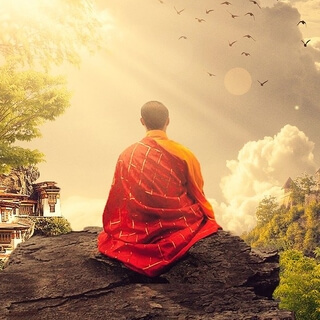
It's not about finding some beautiful mountaintop in a cave somewhere and you just meditate there and no challenges.
It's samsara.
It's this cycle of rebirth.
It's this everyday experiences and world that we're in,
Which is challenging to us,
Is what gives a lot of Buddhists that encouragement and that effort that they want to practice Buddhism to gain as much progress as they can in this current existence.
That's where when you're even going as yourself,
Maybe a Westerner or from another country,
You're coming into this religion and it just feels challenging to you.
It's just,
Again,
Could be culturally,
Could be religion.
Use that.
Go,
Yes,
I am feeling challenged here.
Yes,
I'm feeling a little uncomfortable as well too,
But I'm going to continue on this.
Because if you are a Buddhist,
You've likely have already taken the triple gem.
That's where we put our faith,
Our refuge,
Our belief in the Buddha as a teacher,
The dharma,
His liberating teaching,
And the sangha,
His monastic community.
So when we have put our faith in there,
We're going,
You know what,
I don't know about everything yet.
And that's the same for lots of Buddhists around the world,
Even in countries where Buddhism is the religion.
They're going in with that faith in the triple gem,
Knowing that a lot of these concepts and a lot of teachings are still even for them hard to understand.
And they don't have it all because,
Well,
If they did,
Well,
They could be enlightened,
Right?
So even they are going through different parts there,
But they have the faith in the triple gem that this Buddha,
And we also have,
For example,
In Mahayana,
Other Buddhas and Bodhisattvas as well,
They are enlightened beings and they understand this path for us to get to liberation.
And we have the teachings that help us get to that.
And we have a monastic community where we can generate good merits and help them as well,
And they can help us.
It is this whole religion,
Right?
Very whole,
That allows us to progress on the path.
So it's going to feel uncomfortable in some ways.
It's going to feel challenging in some ways,
But that's a good thing.
For example,
In the tradition that I'm in right now,
It's essentially Chinese Buddhism.
And so even certain chanting that goes on,
It's in Chinese.
And do I speak Chinese?
No.
And very much when I first started,
And this wasn't my first experience with Buddhism,
But it's the tradition I'm in now,
It was in some ways a very uncomfortable experience because I wasn't exactly sure what to do in this tradition,
In this particular temple.
And I have never even chanted in,
For example,
Chinese before.
So I felt very uncomfortable,
Very unsteady,
Very uneasy,
Right?
So that's okay because not only am I being exposed to another culture,
Which is fantastic,
That's a great way to grow,
But this is something that's helping me develop as a Buddhist.
And they're going to have beliefs in the tradition that I'm in now that I didn't have in,
For example,
Other traditions that I may have explored in Buddhism before.
And we see how that coalesces where I've talked about this before.
Even some rituals,
For example,
That we see throughout Buddhism,
That I looked at it in very skeptical eyes.
And this is where that belief comes in,
Right?
Like,
Come on,
That can't be real.
That can't be really what happened,
Right?
And even to this day,
I may not know 100% if certain stories are real or not,
But when I go and put my faith in the Triple Gem,
And I see that there's some very interesting things going on inside Buddhism.
Remember,
This is a religion that's been going on for 2600 years.
They understand what's going on here and how to help us as laypersons,
Monastics,
Etc.
And so you see these different rituals,
And you see these different beings being talked about,
And concepts,
And teachings,
And all these different things.
And some things seem so disconnected,
I would say.
Like,
In what way is that even Buddhism?
But we call these skillful means inside Buddhism.
Sometimes,
A lot of times,
You're doing something that actually connects you to Buddhist teaching to help you understand it.
I remember my first experience was understanding a particular ritual,
And I thought,
Like,
This is just weird,
Right?
Like,
Why are we doing this?
And I understand the meaning behind it,
And I'm like,
Beautiful.
I was so impressed by it,
And I love it.
And so,
Understanding something,
I think,
Gives you a little bit of comfort level.
But you don't always have to be comfortable.
There's things in Buddhism where I don't know,
Like I mentioned just a few seconds ago,
That I don't know for 100% is real or not.
But when I let go,
Like,
If I would have let go with my labels,
And my assumptions,
And perceptions of different ceremonies,
And different things,
I would have had a much more open,
And maybe a little bit more rewarding,
And initially experience with Buddhism.
So,
When we go into it,
You're going to listen to the different lay persons there,
Listen to the monastics,
Explore a little bit.
You don't have to believe everything right off the bat.
And I think that's a key part of this episode.
You don't have to believe everything right off the bat.
Because there is,
Of these half billion Buddhists around the world,
There's a lot of them that either may have the same views as you,
They may have different views to a little degree,
Or don't understand something,
But they definitely,
If they're a Buddhist,
And of course,
We can put that label out there,
Right?
Traditionally,
If you take the triple gem,
As I mentioned,
You take the refuge,
And the triple gem,
And put that faith in the Buddha,
The Dharma,
And the Sangha,
We're saying there's something about Buddhism here that that captures us,
Right?
And we want to continue in this religion.
Now,
We could also just be exploring Buddhism at this time,
And not really made up our minds yet.
Now,
That's another part I'd like to talk about.
So,
Maybe you are just exploring Buddhism,
And you're not a Buddhist yet,
And so I've been kind of talking about if you're a Buddhist already,
You're already practicing,
But even if you are just exploring Buddhism,
This could be a quote,
Unquote,
Turn off,
Because you're like,
Wait a minute,
They believe in that?
They believe in this?
What does that even mean?
And that could be something that's pushing you away.
Also,
Even was that if you are what we call what we call an observer of Buddhism,
Let it go.
It's definitely okay to ask questions about it,
But please be respectful as well.
This is a religion that's practiced by half a billion people around the world,
Lots of different traditions,
Lots of different beliefs,
And as I mentioned earlier,
Overarching and foundational beliefs as well.
But find out about those different types of beliefs.
Find out about these different concepts.
And you may not make up your mind going,
Okay,
Well,
I'm convinced now,
But maybe you have a little better understanding about it.
Now,
Even when we talk about that,
And you understand maybe something a little more,
Let's say,
Intellectual level,
You understand more about this practice or maybe a being,
For example,
Like a bodhisattva,
And you're like,
Okay,
I got it.
There's a lot more that goes into that too,
Is what's actually happening inside us,
Like in our heart,
In our mind.
So,
For example,
In Mahayana Buddhism,
You're seeing that bodhisattvas are huge.
And so that's really important because we're going,
Well,
Wait a minute,
Bodhisattvas,
And you'll see lots of different imagery when it comes to bodhisattvas,
Right?
Why is that so important?
And because it's showing you that this compassion,
This loving kindness,
This generosity,
This support is out there.
So whether we can scientifically prove things like bodhisattvas or not,
It doesn't matter to a large degree.
And I know that might not be the answer you're looking for,
Because you're like,
Well,
I really want to prove this.
Maybe you have a very intellectual mind and understanding things intellectually or factually could be very helpful for you.
So if you can't prove it,
That's going to be a challenge.
Well,
There's things even scientifically,
In science,
We can't prove right now.
Scientists may have certain beliefs or assumptions about how something works or is based upon scientific theory.
You may have a medical field,
You have physicians and doctors,
And they are practicing medicine,
Right?
And you're going to have medication.
And a lot of times you look on these medications and you really dive into the details here,
And you see things like the mechanisms of action aren't fully understood.
It means they basically don't understand how this is actually doing things in the body,
But we know it works in the body.
So I think that's a good analogy for this as well.
When we look at the Buddha,
We're looking at him also as a physician.
The Dharma is also sort of like a medical instruction book and the Sangha,
Monastics,
Are like his nurses.
Of course,
We're not talking about medical when it comes to Buddhism,
But it's always been a great analogy when it comes to this because the Buddha is looked at as this great physician,
This great doctor.
He is healing us of this sickness,
Of dukkha,
This suffering,
This unsatisfactoriness,
Caused by the cycle of rebirth,
Caused by karma,
All these different things.
So the mechanism of action of what the doctors are doing for you,
Sometimes with medication and different things,
Not always fully understood.
We have some ideas about how they might be working in the medical field,
In science,
But we don't fully understand why the body is doing certain things to actually heal us with these medications or these treatments,
But we know it works.
And so when we look at Buddhism and when it comes to the beliefs,
Maybe you can look at it that way.
I don't know how this medication works.
And would you go,
I will not take this medication to stop pneumonia,
Where I might die,
Until I scientifically understand all the mechanisms of action.
I'm not going to take it until then.
I will not be satisfied until I know it fully,
Then I will take a medication.
Would you really go down that route?
Or would you go to the physician who goes,
I have treated tens of thousands of people with this medication.
I have healed them.
We've done this.
I cannot tell you maybe scientifically how this particular medication works,
But I know it's going to work.
And how it works in your body,
Maybe we don't know all the mechanisms,
But we know it works.
Same thing with Buddhism.
So there's many different aspects to it.
When you see the culture aspects or holidays,
Rituals,
Ceremonies,
Dharma talks,
Dharma friends,
Dharma friends,
All of these different things are there to help us to progress on that path,
To understand certain teachings.
I've had those experiences as well on something that I would never have realized before could help me understand maybe a concept or a teaching.
It helped me to a degree.
I'm far,
Far,
Far away from ever being enlightened,
But understanding a concept through something we get through are what we may go,
I'm not going to believe in that.
I'm not going to practice it.
Practice it.
Try to get into that.
And you're going to see these doorways open that you may have had closed based upon your own mind and your own beliefs.
Now,
If you want to have an intellectual curiosity about Buddhism as a Buddhist,
That's perfectly okay as well.
So you definitely see where wisdom is very important in Buddhism and study is also important,
But it's never overarching compared to practice because practice is like going to the gym.
I may not understand all the full mechanisms of how all these machines work and all of these different exercises are going to do,
But I know based upon maybe a physical trainer at the gym that I'm working with is going to say these particular movements.
And if you also take these nutrients as I'm explaining it to you,
And you have rest days and all these different things,
Your body will be able to build muscle.
So I don't fully understand the way the body works in that way.
I may have certain understanding,
Some basic understanding,
But here we're going on the advice of somebody who understands what to do and can help us that way.
So when we're practicing in Buddhism,
We are going to the gym.
I can go sit at home and read how to do exercises and read how to build muscles,
For example,
Right?
But if I don't practice,
No muscles will ever be created.
So that's why practicing in Buddhism is so important because as you get to that gym and as you're working with other people,
For example,
In Buddhism,
We're going to have temples,
We're going to have Dharma friends,
Right?
They're going to show us how to do different things,
Whether that's how to chant or maybe how to wear your robes at temple if you do wear something like that.
These are all different things where you're going to get help and you're going to get that assistance.
Just like if you were at the gym with a personal trainer,
It's going,
Hey,
Here's the right movement,
The right movement so you don't get hurt,
So that you can build that muscle.
So practice in Buddhism is so important.
Even if you don't understand all the mechanics of it,
Even if you don't understand all the reasoning behind it,
Allow yourself to be engaged in Buddhism to practice Buddhism.
That intellectual understanding can,
Believe it or not,
In Buddhism really get in your way compared to practice.
And I think my gym analogy is a good example.
Or maybe I'm not going to go to the doctor until I read all the medical textbooks to self-diagnose myself and I'm going to go then to the doctor to get the medication totem I want.
That's also another issue.
So I've talked about this before,
But there's a great fable with the Buddha where he gave this example where this person gets shot with an arrow,
A poisoned arrow,
Right?
And everyone's like,
Well,
We've got to help you.
We're going to take that arrow out.
He's like,
No,
I need to find out who shot me,
Why they shot me,
What the poison is made of,
And what their family's like,
All these different things,
Right?
And we look at that story and we're going,
That's crazy.
Why don't you just take the arrow out and save yourself instead of asking all these questions and having to know things for a fact?
That was an important part for the Buddhist to explain because that's how we are.
I need to know this.
I need to believe in this first before I practice or before I do it.
So as Buddhists,
We are definitely taking,
If you want to say,
A leap of faith,
But it's actually a very foundational leap of faith in that triple gem.
There is something there that we have understood from classes or teachings.
There's something for me to grab onto.
I don't understand everything.
I don't believe in everything because I don't understand everything right now.
We are very clouded to the truth as sentient beings,
As the Buddha explained.
But we look at the Buddha as this perfected being who has,
Through his effort,
Through countless lifetimes,
Accumulated in this era where we can do Buddha of our era,
And that is showing us that it is possible.
He also shows possible with his disciples that were with him.
In Mahayana,
We can also see that there's many other Buddhas and Bodhisattvas and all these different capabilities for us to become enlightened.
So we're seeing that this is absolutely possible,
Even if we don't fully understand everything.
So go into Buddhism with a respectful attitude is my recommendation.
So this is a religion of a half billion Buddhists around the world.
You don't have to go in right away and understanding and believe in everything,
Because like I mentioned a couple of times,
A lot of Buddhists don't understand everything.
That's why we're practicing.
That's why we're listening to Dharma talks from monastics,
So we can gain some more understanding.
Even monastics are listening to Dharma talks and they're trying to understand as well.
So we're trying to understand.
We're practicing to transform our morality,
Our conduct,
Our mind.
We're trying to do all these things as the Buddha and Buddhas and Bodhisattvas have shown us to do on the path.
It's okay.
So I hope this has been some help for you.
If you have been just challenged by all these beliefs in Buddhism,
You can use this as an opportunity to understand,
Especially with a lot of different Buddhist traditions out there,
Different cultures,
Different practices,
Different beliefs,
But also to engage in them and find these skillful means in Buddhism to help you understand teachings,
To become more connected with Buddhism,
With the path as well.
The biggest thing,
And it's very hard to do,
And I've talked about it a little bit in this episode today,
But it's very hard to do for us to really push aside our wanting to be right,
The wanting to fully understand things,
Because deep down inside we are fearful that we're going to maybe make a mistake,
Or maybe we're going to believe in something that's maybe not real,
Or do something that,
Well,
It's not going to make us look silly.
It's okay.
If you want to be a Buddhist,
Let that go,
Because this opportunity right now,
In this realm,
This human realm,
The Buddha has said many times,
Is a rare experience to be in this human realm of rebirth.
Whether you believe in the realms of rebirth right now or not,
This life we have as humans is rare,
Is precious,
The Buddha said,
And we shouldn't waste our time here.
So studying,
Practicing the Dharma,
It is the most precious thing in the world,
And that's why you see very much like devout Buddhists,
They're looking at this as an urgency,
An urgency to understand and practice Buddhism.
And when you get to that point,
Because you've been practicing and you're understanding more,
You're like,
This is something I want to practice.
And then all these other beliefs either will not be so much of a concern anymore to you,
Or you're going to understand more about them,
Where they may become a beautiful part of your practice that you just can't see right now.
So I hope you open your eyes and your heart and your mind and your entire body to this practice in Buddhism.
And go in there,
Ask questions,
There's absolutely monastics and Dharma friends,
Laypersons at the temples,
They'd be glad as you start developing and start practicing your way,
Hey,
Can you help me understand a little bit about this?
Or maybe there's something I can read more on this,
Right?
Because we do want to satisfy that intellectual curiosity.
But also,
It'd be good if you have these Dharma friends at the temples or groups,
See what they believe in,
They're like,
Well,
How do you feel about this?
Or in a nice way,
For example,
Like,
How does this make you feel?
You know,
Like,
Maybe go like,
This makes me feel a lot of comfort or makes me very much devoted to the path that can also plant seeds in your mind going,
I understand now.
Do you have any questions about having to believe in everything that Buddhism believes in?
I'd love to hear back from you.
You can leave a comment to this podcast episode.
Or you can send me a message on my website,
Alanpeto.
Com or my social media.
I look forward to talking with you in our next episode.
Thank you.