Welcome to Learn Buddhism,
I'm Alan Pedo.
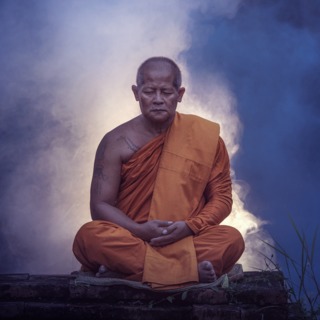
Enlightenment is the goal of all Buddhists.
But why?
And why is it so important?
We're referring to a particular word in Buddhism called Bodhi.
Bodhi is commonly translated as either enlightenment or awakening.
And essentially it means to wake up and to understand the truth that the Buddha taught us.
I'm going to talk about that in this episode.
Now what's really interesting is when people would go to the Buddha when he was alive,
They would ask what he was.
He wouldn't say,
I'm the Buddha.
He would say he was Budo with an O at the end.
Budo means awake.
So Bodhi is a word we use to reference enlightenment or to become awakened.
It's what occurred.
Budo is what you now are.
You are awake to the truth.
But what about the word Buddha?
Buddha is a title of an awakened or an enlightened teacher.
So Shakyamuni Buddha is our current Buddha of our era.
Before he became the Buddha,
He was known as Siddhartha Gautama.
So as he sat under the tree of enlightenment and he realized,
Achieved Bodhi,
Enlightenment,
Awakening,
Because he understood the truth,
He became Budo,
Awake.
He was now an enlightened being.
Now when he became the Buddha,
This was a decision point.
Right after this enlightenment,
This awakening,
He just shouted out,
Marvelous,
Marvelous,
All sentient beings have my wisdom and virtue.
But they failed to realize it because they cling to deluded thoughts and attachments.
So what he's referencing here is something we heavily emphasize in Mahayana Buddhism,
Throughout all of Buddhism,
That inherently we all have the same capacity as the Buddha to become enlightened.
Bodhi,
We can all do it.
To become Budo,
Yes,
We can become awake,
Absolutely.
But as the Buddha described here,
We are clinging to deluded thoughts and attachments.
And so that's sort of like having a dirty mirror or dirty window or just not seeing clearly.
This is what's preventing us from actually even understanding that we can become enlightened.
So at that point,
He could go,
You know what,
I'm an enlightened being.
I've realized my true,
Peaceful,
Calm,
Natural state of Nirvana.
Nirvana is the goal of Buddhists as well,
So we become enlightened to realize our true natural self state of Nirvana,
Which is free of dukkha,
Which is sometimes commonly translated as suffering.
We have blown out something called the three fires or three poisons of greed,
Anger,
And delusion.
So we are liberated,
Freed from a cycle of rebirth.
So enlightenment gets us to this goal of Nirvana by blowing out these three things,
Greed,
Anger,
And delusion,
Which has been causing us such unsatisfactoriness,
Discomfort,
Stress,
Suffering in our lives,
And frees us,
Liberates us,
So we can basically live as we truly should be.
The way we're living right now,
Even though sometimes you may be happy,
Sometimes sad,
Sometimes this will be good,
Sometimes it will be bad,
That's not our natural state.
Nirvana is,
But we don't see it.
So the Buddha,
When he was Siddhartha Gautama,
He became enlightened,
He became Buddha,
But not Buddha yet,
Said that statement,
He could have just stayed enlightened,
And that's perfectly fine.
He would have no longer had suffering,
Escape the cycle of birth and death.
But he realized he had to go and set forth to teach,
Even though it would be difficult and challenging,
And not everyone's going to get this.
So to become an enlightened being is not a guarantee.
It takes hard work,
And I'm going to talk more about this in this episode.
It takes hard work,
And not everyone's going to be understanding what needs to be done,
Or willing to put in the effort to become enlightened.
But he still felt that he needed to do it.
So set forth for over 40 years teaching others,
And the reason we still have the Buddhist religion today is because we can look back,
Even to his time,
And even after him,
People became enlightened,
They became Buddha.
They achieved Bodhi,
Came enlightened,
Came awakened,
They were Buddha.
We've seen this in the historical accounts of Buddhism.
So that means his teachings work.
They can liberate you,
They can free you from this existence,
Which is unsatisfactory.
So you can live in your natural state,
In your vana.
It's not like a heaven,
It's right here,
Right now.
So that was really key right there.
It wasn't just he expounded some teaching,
And people went,
Okay,
That's great,
Maybe it makes me feel a little bit better now,
Or whatever.
It was this liberating teaching based upon Bodhi.
You have to become enlightened,
Awaken to the truth,
To realize nirvana,
To blow out this suffering that we have in our life.
But what's really going on here?
We're referring to a particular concept in Buddhism called non-self,
And this is really important because it really separated Buddhism from everything.
Even at that particular time,
Into our current time right now,
This is one of the many defining aspects of Buddhism,
Where the Buddha said we do not have a permanent,
Unchanging,
Independent self.
Instead,
We are constantly changing.
We are not permanent,
And we are interdependent upon other things.
And sometimes at an intellectual level,
We can understand this.
We know we're going to die.
We know,
Yeah,
I'm going to get older,
So I'm unchanging.
But we believe that there's something inside us,
All of us do,
That there's something inside us that's permanent,
Unchanging,
And independent of other things.
Whether you believe that your virtues,
Your thinking,
Your beliefs,
Or you have a soul or a self,
Whatever,
There's something in you that you believe is permanent,
Is unchanging,
And is independent of other things.
The Buddha flat out said,
This doesn't exist.
This is the illusion,
This illusion of self.
And because we have this illusion of self,
We,
Going back to his statement,
We cling and crave to things that essentially reinforce this delusion,
This ignorance.
And because of that,
Part of the three fires,
Three poisons,
That's that delusion of ignorance,
We are challenged at many,
Many different ways throughout our lives.
When maybe a loved one dies,
Or we don't get something that we want,
Or a feeling or perception,
Whatever,
We resort to this greed portion of that three fires,
Where we want to,
We love this idea of self,
We want to retain,
We want to cling,
We want to crave,
Attach ourselves to things that make us feel good,
That reinforce whatever beliefs we have,
Even though those are fleeting.
And when that doesn't work,
Because it's not going to work,
Because it just doesn't,
We resort to hatred and anger.
And it's this constant cycle going around and around and around again,
These three fires,
Three poisons,
You can just think of them all interconnected that way.
It's creating,
Among other things,
Dukkha,
Or suffering,
Or unsatisfactory in our lives.
So there's many things that will create dukkha,
But that three fires,
Three poisons is a major contributor.
And that's why when you have bodhi,
You become buddha,
You can blow out the three fires that create angry delusion.
And I think this is a key point here.
When you are able to fundamentally understand,
And not intellectually,
But fundamentally,
That we do not have a permanent,
Unchanging,
Independent self,
And I realize that's a hard concept for us just to wrap our heads around in,
Which is why we practice a lot in Buddhism,
And we try to gain wisdom and everything else,
Because a lot of these concepts,
Just as our regular,
Everyday thinking,
Is hard to understand,
But when we fundamentally understand that,
We are awakened to the truth of that,
We realize,
Okay,
That delusion,
That ignorance is gone,
Because now I've realized the truth,
So that's one part of the three fires.
Why am I clinging and craving greed to something that doesn't really exist,
Which is illusionary?
It's almost like the curtain has been pulled back and you see the truth,
Or that window is clean,
And you can finally see that those shadows outside that were scaring you,
Was just a tree blowing in the wind,
So the shadows looked like somebody.
And so why are you getting angry?
Right?
Why are you getting mad?
So you are essentially no longer putting fuel on the fire of these attachments that are just keeping you trapped in the cycle of rebirth,
Which is causing us,
We are a,
What the Buddha called,
A temporary grouping of things,
The five aggregates,
And it works so seamlessly together that we believe in this idea of self,
Just so fundamentally that we go,
There is something permanent inside me,
We believe it.
And of course,
For different people,
That's going to be at various different levels on how they perceive death,
But we do believe it.
And so because this body,
This current iteration of us works so seamlessly together,
Even though each of those components is ever-changing,
Is impermanent,
And is interdependent upon other parts of that grouping there,
But also other things,
We don't see it that way,
Because it just works.
It's called nama rupa in Buddhism.
And the only thing the Buddha said continues on is not a self.
There's no reincarnation in Buddhism.
It's called rebirth.
And that's fundamental because we don't want to get it confused with like,
Oh,
Your soul goes into a new body.
So there's something permanent in you,
Right?
You just go,
Whatever good stuff you do now in this life,
It's going to benefit you in the future.
Buddha didn't say that it exists.
What continues on is our actions,
Karma.
Karma is intentional,
Volitional actions.
And this is what really stops a lot of beginners and Westerners,
Like karma,
That's it,
Because a lot of times we think about why we practice Buddhism.
We believe it's benefiting us.
Well,
I want to become enlightened in my lifetime,
And I want to achieve this state because I will know the truth and I can be happy or whatever,
Whatever the meaning may be for many different people.
But becoming enlightened is not for you.
There's no you to benefit.
There's no permanent unchanging independent self,
You,
That benefits from that,
Which is very much a mind twister,
If you can think about it.
So why are we even practicing Buddhism?
So if karma is the only thing that continues on and the trace impressions of those that came to fruition,
That continues on and we call this a stream of consciousness,
Why are we even practicing this?
What's the point if I can't become enlightened in this lifetime?
So that brings us up to another particular topic when it comes to bodhi or enlightenment in Buddhism,
Which is instant enlightenment,
And very much heavily,
I would not say promoted,
But you would hear it more on the Zen side,
And Zen has many different traditions that's just a Japanese word for it,
But basically you hear about this instant enlightenment,
And this is extremely appealing to beginners and Westerners.
They're like,
Okay,
So if I just devote it all,
Everything,
To meditation,
I can become enlightened,
Instant enlightenment.
It may just actually take me a couple of weeks.
I can do that.
No,
Actually instant enlightenment is sort of a play on words,
If you will,
Because instant enlightenment really means that maybe for eons,
Prior existences have been building up to that point,
Which is also very challenging to understand,
But this stream of consciousness,
So just imagine a string,
And imagine beads on that string.
Each bead is independent of each other,
Right?
I mean,
They're not the same bead on each particular portion of that string,
But that string right there is karma.
It's this casual connection between these existences,
But that is what maybe at this particular point,
Like you listen to this podcast,
You're reading books,
You're watching videos,
Going to temples,
There was something that interested you in Buddhism or maybe even casually.
So something happened in the past.
It could have even been centuries ago.
So there's something on that string that kind of led you here or led you elsewhere when it comes to Buddhism.
And I think that's an important thing to mention,
Not just about instant alignment,
That there was something progressing.
Yes,
It does take your own effort to become enlightened.
There is this casual connection,
So you might have been benefited in many different ways,
But what about you?
Do you really need to become enlightened in this lifetime,
Or can you make the effort,
The progression moving forward?
And I don't want to sound too preachy here,
But a lot of times in the West,
We very much have an achievement-based mindset.
I need to become rich,
Or I need to get this career,
Or I need to get this degree,
Or I need to,
In maybe the case of Buddhism,
Enlighten.
And I'm going to become a monk.
I'm going to fly out tomorrow.
I'm going to get this all done so I can go back home and say,
Look,
I've become enlightened.
When someone becomes enlightened,
It went through a lot of hard work,
And probably through prior existences,
Lifetimes as well.
There's this positive,
This wholesome karma that continues through your lifetimes that has helped that person,
Maybe helped you.
So instant enlightenment is actually not instant,
Even though it may seem that way.
So let's say you are going and meditating.
That's fantastic,
But meditation is only one part of achieving bodhi,
Or realizing bodhi.
There's also,
With the Buddha's Noble Eightfold Path,
There are three categories.
There's a wisdom category,
There's a morality conduct category,
And there's this concentration category,
Which includes meditation or meditative concentration.
And you need all three of those to become awakened.
And for a lot of laypersons,
They really much focus on the morality conduct portion and also the wisdom portion.
Do they still do the meditative concentration?
Sure,
Absolutely.
But it's not always going to be sitting meditation.
It could be chanting or reciting,
Which can also stimulate the same brain centers of your brain.
And what we're trying to achieve here is to clean that dirty window,
That dirty mirror,
To get rid of this delusion of ignorance so we can see the truth.
If you just meditated and that's all you did,
How can you really become enlightened?
How can you become like the Buddha or one of his enlightened followers without morality conduct or without wisdom?
They're all interconnected with each other to achieve bodhi.
But,
Inherently,
Bodhi is already inside you.
So you can kind of think about it two ways.
Bodhi is this enlightenment awakening.
But you know what,
It's nothing that's really separate from you already.
You just can't see.
You can't become awake because you're in this deep sleep or drugged,
If you will.
So I like to give an example that I give you the example of a dirty window and a dirty mirror.
Here's two more examples to really hit home about bodhi.
You can look at a lotus flower.
Bodhi flowers,
They grow up in this muddy,
Dirty water.
You can't even see down to where they are at in the riverbed or the pond right there.
And so they are gaining the nutrients from this mud,
This muddy water.
And they're slowly growing,
Growing,
Growing.
But they're feeding off the nutrients.
So I want you to think of that muddy pond right there,
The bottom of the pond.
That's where we're at right now.
We call this cycle of birth and death Samsara.
It's also called the Saha world.
And this is where it's unsatisfactory.
There's suffering.
The Buddha said of all the realms of rebirth out there,
There are not so great realms.
There's like animal realms and hell realms,
But there's also heavenly realms.
These are the extremes.
The human realm is our best way to become enlightened.
Why?
Because here we have the ability to not only hear the Dharma,
The Buddhist teachings,
The truth,
But we have the capacity to become enlightened.
It's almost like this perfect mixture,
Like this lotus flower.
It needs that mud.
It needs those nutrients in the ground right there.
It just can't survive just on the water,
Almost like a heavenly realm.
And it can't exist without the water either.
So it needs this perfect balance.
And so when you're inside this human realm,
We're almost kind of agitated.
We know things aren't right,
But we don't really fully understand it.
That's why the Buddha and his teachings have helped us.
They've essentially opened the door for us.
So this lotus flower is slowly growing,
Growing,
Growing.
If we're looking just outside at this pond,
We don't see the lotus flower down there until it breaks the surface of the water.
And even then,
Then it will eventually bloom.
But it's been a long process.
It goes back to that instant enlightenment theory.
It's been a long process and there's effort involved.
If you think,
You know what,
Meditation is too hard,
Or I don't want to really read these sutras or chant them or recite them.
Or,
Why do I have to be a good person?
This person wasn't nice to me.
We're all defeating the wholesome aspects of the Buddha's Noble Eightfold Path that gives us wholesome karma,
Good merits,
That progress us on the path towards Bodhi.
But if we don't do that,
You're never going to break the surface of that water,
That pond,
To bloom.
So when that lotus flower blooms,
That's enlightenment,
Awakening.
As you break that surface,
You get to see the beautiful sky,
The clear sky,
The sun,
Everything else,
Right?
Because below it,
You can't see that.
It's muddy water.
So believing you can't become enlightened,
You are what you believe,
Right?
You've heard that saying.
So you may be right there,
Almost going to break that surface.
But if you give up,
You give up.
That's why effort,
Determination,
And faith inside Buddhist practice is so important.
And that's why you see the lotus flower symbolize so much in Buddhism because it's really an example of Bodhi.
And here's my final example of Bodhi in Buddhism.
I mentioned a few times that the Buddha allowed us to be liberated,
Freed,
Right?
And we're being freed,
He said,
From the cycle of birth and death.
And this is unsatisfactory because we come into existence.
And this current existence is unsatisfactory because,
As we've talked about,
We believe we have a permanent,
Unchanging,
Independent self,
And we are greedy,
We cling and crave,
Because of this delusion,
This ignorance,
And we have anger,
Hatred.
We create these unwholesome karmic actions and just keep us bound here.
So I'd like to give the example of jail.
You can think of this life right now,
It doesn't matter how beautiful a home you're living in or what type of job you have in it,
We're in jail.
We are in jail right now,
A jail of your mind.
And it's almost like an actual jail where you're a career criminal and you've been in jail for most of your life,
And you've been granted parole.
And the outside world is really scary for you because you're used to the routine inside jail,
You've got all your friends,
You know how to play the system or whatever it might be,
You're used to that environment.
So outside,
I really don't want to go outside,
Even though it's freedom,
Because it's scary.
It's what I don't know.
Even though jail is not my true home,
It's outside of jail.
So what the Buddha did,
He essentially opened the door for us.
He's showing us outside,
He's like,
I can lead you right out this door.
You don't have to stay in the prison system.
You can leave.
Be happy,
Peaceful,
Calm,
Free,
Nirvana.
Now with us,
We're still inside that muddy water,
My lotus example.
And so sometimes we see that door,
Sometimes we don't.
And if we haven't even been introduced to the Buddha's teachings,
We don't see the door at all.
And so we believe our prison is right,
Just seems familiar to us.
So when the Buddha provides us that door,
He gives us a path outside the door,
Which is a noble eightfold path,
And all the traditions practice it in a different way,
But it's based upon the threefold training of the eightfold path of wisdom,
Morality,
Conduct,
And concentration.
This is our way out through the door.
So yes,
It can be a little scary,
It can be a little confusing in Buddhism,
But we're trying to achieve bodhi so we can see that door,
We can go out that door,
And now we are awakened to the freedom of what we should be,
Nirvana,
That this is our true existence.
So do you have any questions about enlightenment in Buddhism?
I know I covered quite a bit in this podcast,
In this episode,
But we'll talk more about the different parts of Buddhism that connect with bodhi in future episodes,
But this is the goal of all Buddhists because we want to be free.
And I look forward to talking with you in the next episode.
Thank you.