Hi,
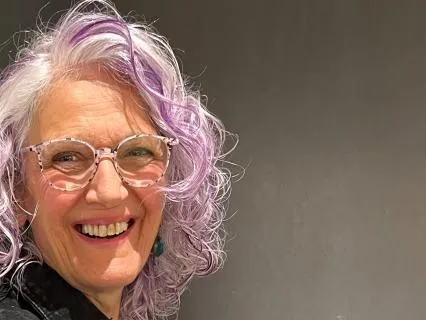
This is Teresa Conte.
Welcome to part two of Grief,
The journey no one plans for,
For parents and the friends who walk beside them.
Finding our way through grief.
If you're a parent who has a child who's passed,
My hope is that you will find comfort,
Support,
And healing as you listen to today's talk.
Please feel free to leave a comment about something you've heard that was helpful.
Or something you wish to share about your personal journey through the grieving process.
Your comment may help another listener.
I'd like to begin with a quote from Megan Devine.
She wrote,
Grief is not a problem to be solved.
But a process to be understood.
My son Ian passed in July 2025 at the age of 48.
While I'm still in early grief at the time of this recording,
I've learned a lot about the grieving process,
About relationships,
How people respond and react,
And about our need for being seen,
Having a grief witnessed,
And feeling safe,
Understood,
And supported.
No matter how recent or how long ago our child passed.
While our experiences may be similar,
We are unique and no one's grief is the same as ours.
It's so important to honor our own process as well as that of others who are walking on this most painful and challenging path.
I found that friends,
Colleagues,
Acquaintances,
And others may say or do things in an attempt to help us feel better.
And while well-meaning,
Their comments didn't always land inside of us the same way they intended and may feel more painful than supportive.
For instance,
Comments such as,
At least you had them for as long as you did.
She or he lived a long life.
You can always have another child.
You need to move on.
They're in a better place.
It was their time.
I know how you feel.
Be strong.
It's been a while.
You should be over this by now.
And comparing their grief with ours may leave us feeling angry,
Hurt,
And resentful.
Perhaps you've heard some similar comments.
Shortly after Ian died,
I found that coloring in a mandala coloring book helped me to breathe more deeply and relax.
It calmed my nervous system so I could be present in the moment and enjoy the coloring process.
I took a photo of the page I was coloring and sent it to a friend who's an artist,
Thinking he might appreciate it.
I felt at ease letting him know that the process was helping me relax and assumed that the emotional context would be understood as he had been a source of support in the past.
He texted me that he was always relaxed and proceeded to tell me about a mural he created in a nearby town.
I fumbled my way through the conversation,
Ending it as I was stunned by his response,
Which left me feeling dismissed and angry.
Like my experience,
What I shared and the vulnerability behind it was completely overlooked as he focused on himself rather than acknowledging what I had shared.
A few days later,
I left him a message letting him know how I felt,
But never did hear back.
Seeking support and empathy sometime later,
I shared the experience with a couple of friends.
It was another painful exchange.
Rather than offering comfort,
One of them lectured me about expectations,
And the other judged me by telling me I was being judgmental.
I was shocked by their comments and no longer felt safe confiding in them.
I share these experiences as a way to let you know that people won't always respond the way we hope for or anticipate.
So it's important to find our tribe.
The people who support us or want to,
No matter how we're feeling or how long we've been grieving.
So there are times when we may need to resize our relationships and reduce our contact with the people whose responses bring more pain than comfort.
As a way to take care of ourselves and our sense of well-being.
Our responses to comments,
Like the ones I've shared,
May change over time as we grow and heal.
While their words and actions may still hurt,
They may not affect us as deeply as they once did,
As we are nourished and buoyed by the support of those who care for us.
So how can we love,
Nurture,
And care for ourselves in the midst of this most painful journey?
Recognizing our limits and setting healthy boundaries is essential to our healing.
As well as listening to our intuition and our body's needs for rest,
Quiet time,
Movement,
And nourishment.
For instance,
After Ian passed,
There were times I slept for hours,
Far more than I needed to before he died.
And there were days when laying on the couch watching movies was all I had the energy to do.
And then there were times when I felt moved to get out of the house guided to get fresh air and go for a walk.
Listening to our bodies.
Our needing and our intuition are ways that we can honor our needs in each moment,
Rather than pushing ourselves beyond our limits or doing what others want or may expect for us.
So when people offer to visit or invite us out and we're not feeling up to it.
It's okay to decline,
To thank them and let them know we're needing some downtime.
And would like to join them another time.
And invite them to ask us again.
If that's truly how we feel and what we'd like.
Grief has a life of its own.
It comes and goes in waves and may show up in ways and at times we least expect.
And our feelings may be much more intense than before a child passed.
A few examples may include feeling angry,
Confused,
Irritable,
Fatigued,
Forgetful,
Guilty for things we may or may not have said or done,
And shame.
And we may experience memory loss,
Have difficulty concentrating,
Sleep too little or too much.
Or we may lose interest in things we used to enjoy.
We may eat too much or too little or perhaps not at all.
We may feel numb and isolate among other responses.
But we may also feel bursts of energy and the presence of our loved one or a sense of peace and even joy.
It's okay to embrace the good feelings that arise,
To allow ourselves to feel whatever comfort and solace they bring.
And while moments of happiness are also a natural part of our healing process,
We may feel guilty for having them.
For instance,
That was true for me.
I remember a time when I was feeling a little better and then realized I wasn't thinking about Ian 24-7.
I panicked because it felt like I was betraying him and that was the last thing I wanted to do.
You may experience this too.
We're not alone in feeling this way.
It's a common response to grief.
Times of feeling happy or peaceful doesn't mean we love or miss our children any less.
Or that we're leaving them behind.
In fact,
Our children want us to be happy.
And knowing that can help us begin to live on,
Not without them,
But with them.
We can welcome all that we experience as part of our unfolding journey.
I'd like to share a little bit now about secondary loss.
We may experience a secondary loss,
For instance,
When the support we anticipated from family and friends isn't forthcoming.
There may be people who disappear without a word or retreat because they're uncomfortable with our grief.
Which may stimulate fears of losing their own child or someone else close to them.
Their withdrawal can be deeply painful.
And when family or friends are grieving the same loss as we are,
They may be drowning in their own pain and not have the emotional capacity to provide the support we need.
Knowing that doesn't make their absence hurt any less,
And it can be difficult not to take it personally.
But it doesn't mean they don't love or care for us.
It may simply be a reflection of how much they're struggling to survive their own grief.
In times such as this,
We can reach out to the people who have been there for us and have proven their support.
We can give our family and friends the time and space they need to grieve and heal,
Which can change from day to day or moment to moment,
As is true for us.
I've also found that support often comes from surprising places,
As people we barely know or least expect show up and shine their light on us.
And we can open our hearts to receive it.
Therapists,
Coaches,
Grief groups,
Listening to talks and watching videos about grief.
Can also provide comfort,
Understanding,
And help us heal as they normalize our experience.
Of course,
I'm still grieving the loss of my son Ian and miss him immensely.
That will never change.
Our children will always be a part of us.
So what are some ways we can heal?
One ritual I found helpful as I awake each morning is to ask my higher power for the strength to move through the day with grace and ease.
To connect with and feel Ian's presence and recognize the signs he's sending me.
I also ask what's possible today,
Which helps me open to whatever there may be for me to focus my attention on.
We will never get over the loss of our children.
But our love continues to blossom and grow as we learn to connect with them in new ways.
As we open to each day and treat ourselves with kindness.
We can come to see that life is filled with unexpected blessings that help us heal and grow.
Thanks so much for listening.
If you're a parent,
I hope you've heard something helpful and that in some way lessens your feeling of being alone in what you are experiencing.
I encourage you to reach out to those who have offered you friendship and support.
I know it can feel vulnerable,
But there are those who are there for us and want to be.
A process I found particularly helpful is to have a program I can use as a refuge,
A go-to when I'm feeling a sense of distress.
If you'd like to learn more about it,
You can find my podcast,
Living With Loss,
Creating a program for support and healing.
Helpful.
If you like,
You can find it on my profile page.
If you're here to support someone you care about,
I hope you've gained a deeper understanding of the grieving process and what the person you wish to support may be experiencing.
Please come back to part three of grief,
The journey no one plans for,
For parents and the friends who walk beside them.
Walking beside a grieving parent.
Where I'll share additional information and tools that will help you feel more at ease in knowing what to say and do.
Thanks again for listening and wishing you a most blessed and beautiful day.
With love,
Teresa.