Welcome to Sleep Stories with Steph.
Your go-to romantic podcast that guarantees you a calm and entertaining transition.
Into a great night's sleep.
Come with me as we immerse ourselves in a romantic journey to a time long since forgotten.
But before we begin.
.
.
Let's take a moment.
To focus on where we are now.
Take a deep breath in through your nose.
And let it out.
With a long sigh.
That's it!
Now close your eyes.
And feel yourself sink deeper into the support beneath you.
It is time to relax and fully let go.
There is nothing you need to be doing now.
And know where you need to go.
Happy listening.
Chapter 51 affording an explanation of more mysteries than one,
And comprehending a proposal of marriage with no word of settlement or pin money.
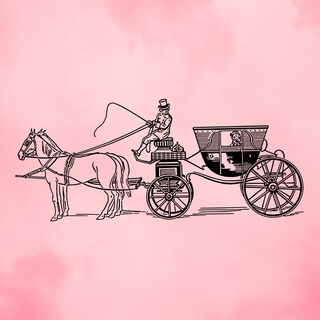
The events narrated in the last chapter were yet but two days old when Oliver found himself at three o'clock in the afternoon in a travelling carriage rolling fast towards his native town.
Mrs Mailey and Rose and Mrs Bedwin and the good doctor were with him.
And Mr Brownlow followed in a post chaise.
Accompanied by one other person whose name had not been mentioned.
They had not talked much upon the way,
For Oliver was in a flutter of agitation and uncertainty,
Which deprived him of the power of collecting his thoughts,
And almost of speech.
And appeared to have scarcely less effect on his companions who shared it in at least an equal degree.
He and the two ladies have been very carefully made acquainted by Mr.
Brownlow with the nature of the admissions which had been forced from monks.
And though they knew the object of their present journey was to complete the work which had begun so well,
Still,
The whole matter was enveloped in enough of doubt and mystery to leave them in endurance of the most intense suspense.
The same kind friend had,
With Mr.
Lozburn's assistance,
Cautiously stopped all channels of communication through which they could receive intelligence of the dreadful occurrences that had so recently taken place.
It was quite true,
He said.
They must know them before long.
But it might be at a better time than the present.
And could not be at a worse.
So they travelled on in silence,
Each busied with reflections on the object which had brought them together.
And no one disposed to give utterance to the thoughts which crowded upon all.
But if Oliver under these influences had remained silent when they journeyed towards his birthplace,
By a road he'd never seen,
How the whole current of his recollections ran back to old times,
And what a crowd of emotions were wakened up in his breast.
When they turned into that which he had traversed on foot.
A poor houseless wandering boy without a friend to help him or a roof to shelter his head.
See there!
Cried Oliver,
Eagerly clasping the hand of Rose.
That's the style I came over.
There are the hedges I crept behind for fear anyone should overtake me and force me back.
Yonder is the path across the field leading to the old house where I was a little child.
Oh Dick,
My dear old friend.
If I could only see you now.
You will see him soon replied Rose.
You should tell him how happy you are and how rich you've grown and that in all your happiness you have none so great as the coming back to make him happy too.
Yes,
" said Oliver.
We'll take him away from here and have him clothed and taught.
Send him to some quiet country place where he'll grow strong and well,
Shall we?
Rose nodded yes,
For the boy was smiling through such happy tears,
She could not speak.
It will make you cry to know,
To hear what he can tell.
I know,
But never mind,
It'll be all over and you'll smile again Rose,
I know that too.
He said,
God bless you to me when I ran away,
Cried the boy with a burst of affectionate emotion.
And I'll say God bless you now and show him how much I love him for it.
As they approached the town and at length drove through its narrow streets,
It became matter of no small difficulty to restrain Oliver within reasonable bounds.
There was Sowerbreeze the Undertaker's justice it used to be only smaller and less imposing.
There were all the well-known shops and houses,
With almost every one of which he'd had some slight incident connected.
There was Gamfield's cart,
The cart he used to have standing at the old public house door.
There was the workhouse,
The dreary prison of his youthful days,
With its dismal windows frowning on the street.
And there was the same lean porter standing at the gate.
At sight of whom Oliver involuntarily brunk back.
There were scores of faces at the doors and windows he knew quite well.
There was nearly everything as if he'd left it but yesterday.
And all his recent life had been but a happy dream.
But this was pure,
Earnest,
Joyful reality.
They drove straight to the door of the chief hotel,
And there was Mr Grimwig all ready to receive them,
Kissing Rosemary and the old one too when they got out of the coach,
As if he were the grandfather of the whole party.
Notwithstanding all this,
When the hurry of the first half hour was over,
The same silence and constraint prevailed that had marked their journey down.
Mr Brownlow did not join them at dinner,
But he remained in a separate room.
The two other gentlemen hurried in and out with anxious faces.
And during the short intervals when they were present,
They conversed apart.
Once mrs may be was called away And after being absent for nearly an hour,
Returned with eyes swollen.
All these things made Rose and Oliver,
Who were not in any new secrets,
Nervous and uncomfortable.
They sat wandering in silence or if they exchanged a few words they spoke in whispers.
As if they were afraid to hear the sound of their own voices.
Then at length,
When nine o'clock came,
And they began to think they were to hear no more that night,
Mr.
Lossburn and Mr.
Grimwig entered the room,
Followed by Mr.
Brownlow.
And a man who Oliver almost shrieked to see.
They told him it was his brother.
And the same man you'd met at the market town.
And seam locking in with faking.
At the window of his little room.
Monks cast in the look of hate.
Even then he could not assemble it.
Then he sat down near the door.
Mr Brownlow,
Who had papers in his hand,
Walked to a table near which Rose and Oliver were seated.
This is a painful task,
" said he.
But these declarations which have been signed in London before many gentlemen must be in substance repeated here.
This child,
" said Mr Brownlow,
Drawing Oliver to him and laying his hand upon his head,
Is your half-brother,
Monks.
The illegitimate son of your father.
My dear friend Edwin Lieford by Paul Young,
Agnes Fleming who died in giving him birth.
Yes,
Said monks,
Scowling at the trembling boy.
This is the bastard child.
The term you use,
" said Mr Brownlow sternly,
Is a reproach to those long since passed beyond the feeble centre of the world.
It reflects disgrace on no one living except you who use it.
Let that pass.
He was born in this town.
In the workhouse of this town.
Was the solemn reply.
You have the story here.
He pointed impatiently to the papers as he spoke.
I must have it here too.
Said Mr Brownlow looking round to the listeners.
Listen then returned monks his father being taken in at Rome was joined by his wife my mother from whom he'd been long separated.
He went from Paris and took me with her to look after his property,
For what I know,
She had no great affection for him nor he for her.
He knew nothing of us for his senses were gone and he slumbered on till next day when he died.
Among the papers in his desk were two.
Dated on the night his illness first came on,
Directed to Mr Brownlow.
And enclosed in a few short lines.
To you,
With an intimation on the cover of the package,
It was not to be forwarded till after he was dead.
One of these papers was a letter to this girl Agnes.
A whale.
What of the letter?
Asked Mr Brownlow.
The latter.
Set marks.
A sheet of paper crossed again with a penitent confession and prayers to God to help her.
He palmed a tail on the girl that some secret mystery presented her marrying just then.
And so she'd gone on trusting patiently.
Until she trusted too far and lost what none could ever give her.
She was at that time within a few months of her confinement.
He told her all he'd meant to do to hide her shame if he'd lived.
And prayed if he died not to curse his memory or think the consequences of their sin would be visited on her or the young child for all the guilt was his.
He reminded her of the day,
Giving her the little locket in the ring with her Christian name engraved on it and a blank left of that which she hoped one day to have bestowed upon her.
He prayed her to keep it and wear it next to her heart as she'd done before.
Then he ran on wildly and the same words over and over again as if he got distracted.
I believe he had.
And they will,
Said Mr Brownlow.
Was in the same spirit as the letter.
He talked of miseries his wife had brought of him,
And of the rebellious disposition,
Vice,
Malice,
And premature bad passions of you,
His only son,
Who had been trained to hate him,
And left you and your mother such an annuity of eight hundred pounds.
The bulk of his property he divided into two equal portions.
One for Agnes Fleming and the other for their child if it should be born alive.
If it were to be a girl,
It was to inherit the money unconditionally.
If a boy,
On the stipulation that he should never have stained his name with any public act of dishonour,
Meanness,
Cowardice or wrong,
He did this to mark his confidence in the other and his conviction only strengthened by approaching death.
That the child would share her gentle heart and noble nature.
If he were disappointed in this expectation,
The money was to come to you.
For then,
And not till then,
When both children were equal,
Would he recognize your prior claim upon his purse.
Who had none upon his heart,
But had from an infant repulsed him with coldness and aversion.
My mother,
Said monks in a louder tone,
Did what a woman should have done.
She burnt this will.
The letter never reached its destination,
But that and other proofs she kept in case they ever tried to lie away the blot.
The girl's father had the truth from her with every aggravation of violent hate could add.
I love her for it now.
Guided by shame and dishonour,
He fled with his children to a remote corner of Wales,
Changing his very name.
That his friends might never know of his retreat.
And there,
No great while afterwards,
He was found dead in his bed.
The girl who left her home in secret some weeks before.
He searched for her on foot in every town and village.
It was on the night when he returned home.
.
.
Assured she destroyed herself.
To hide her shame and hairs.
That his old heart broke.
There was a short silence here until Mr.
Brownlow took up the thread of the narrative.
You.
Edward Leifert.
Your mother came to me years after this.
He said.
He left her when only eighteen,
Robbed her of her jewels and money,
Gambled,
Squandered,
Forged.
Then fled to London.
Wear you,
Edward Leiford.
Associated with lowest outcosts.
She was sinking under a painful incurable disease.
And wished to recover him before she died.
On her deathbed,
Said Monks,
She bequeathed these secrets to me.
Together with her unquenchable,
Deadly hatred of all who name-bowl.
She would not believe the girl had destroyed herself and the child too,
But was filled with the impression a male child was born and alive.
I swore to her,
If it ever crossed my path to hunt it down,
Never to let it rest,
To pursue it with the bitterest and most unrelenting animosity.
To venge upon it the hatred I deeply felt,
And to spit upon the enemy bold of that insulting will by dragging it,
If I could,
To the very gallows foot.
My mother was right.
He came in my way at last.
I began well.
And but for babbling drabs,
I would have finished it.
Just as I began.
Then the villain folded his arms tight together and muttered curses on himself.
Mr Brownlow then turned to the terrified group beside him.
And explained that Fagin,
Who'd been his old accomplice and confidante,
Had a large reward for keeping Oliver ensnared.
Of which some part was to be given up.
In the event of his being rescued.
And a dispute on his head.
That led to their visit to the country house for the purpose.
.
.
Of identifying him.
The locket and the ring,
Said Mr Brownlow,
Turning to monks.
I bought them from the man and woman I told you of who's stolen from the nurse who's stolen from the corpse.
You know what became of them.
Then Mr Brownlow nodded to Mr Grimwig,
Who disappeared with great alacrity.
And shortly returned,
Pushing in none other.
Than Mrs.
Bumble.