Welcome to Sleep Stories with Steph,
Your go-to podcast that offers you a calm and relaxing transition into a great night's sleep.
It is time to relax and fully let go.
There is nothing you need to be doing now,
And nowhere you need to go.
Close your eyes and feel yourself sink into the support beneath you and let all the worries of the day drift away.
This is your time and your space.
Take a deep breath in through your nose and let it out with a long sigh.
There is nothing you need to be doing now,
And nowhere you need to go.
Happy listening.
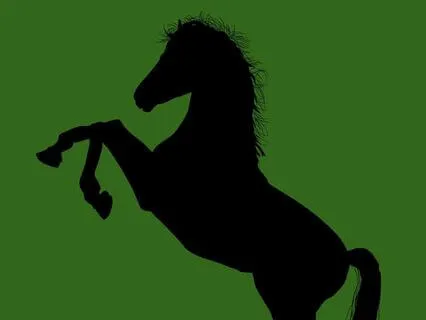
Chapter 34 An Old War Horse Captain had been broken in and trained for an army horse.
His first owner was an officer of cavalry going out to the Crimean War.
He said he quite enjoyed the training with all the other horses,
Trotting together,
Turning together to the right hand or the left,
Hooting at the word of command or dashing forward at full speed at the sound of the trumpet or signal of the officer.
He was when young a dark dappled iron grey and considered very handsome.
His master,
A young high spirited gentleman,
Was very fond of him and treated him from the first with the greatest care and kindness.
He told me he thought the life of an army horse was very pleasant,
But when it came to being sent abroad over the sea in a great ship he almost changed his mind.
That part of it,
Said he,
Was dreadful.
Of course we could not walk off the land into the ship,
So they were obliged to put strong straps under our bodies.
Then we were lifted off our legs in spite of our struggles and swung through the air to the deck of the great vessel.
There we were placed in small close stalls and never for a long time saw the sky.
The ship sometimes rolled in high winds and we were knocked about and felt bad enough.
At last it came to an end though and we were hauled up and swung over again to the land.
I was glad of that.
I snorted and neighed for joy.
We soon found out the company we had come to was a very different country from our own.
We had many hardships to endure beside the fighting,
But many of the men were so fond of their horses they did everything they could to make them comfortable in spite of snow and all things out of order.
But what about the fighting,
Said I,
Was that not worse than anything else?
Well,
Said he,
I hardly know.
We always liked to hear the trumpet sound and be called out.
We were impatient to set off,
Though sometimes we had to stand for hours waiting for the word.
Then,
When the command was given,
We'd spring forward as gaily and eagerly as if there were no cannonballs,
Bayonets or bullets.
I believe so long as we felt our rider firm in the saddle and his hand steady on the bridle,
Not one of us gave way to fear,
Not even when the terrible bombshells whirled through the air and burst into a thousand pieces.
With my noble master I went into many actions together without a wound,
And though I saw horses shot down with bullets and gashed with fearful sabre cuts,
Even though we had to leave them dead on the field or dying in agony,
I don't think I ever feared for myself.
My master's cheery voice as he encouraged his men made me feel if he and I could not ever be killed.
I had such perfect trust in him when he was guiding me,
I was ready to charge up to the very cannon's mouth.
I never felt terror,
I never felt terror,
Until that day I shall never forget.
Here old captain paused for a while and drew a long breath.
I waited as he went on.
It was one autumn morning,
As usual an hour before daybreak,
And our cavalry had turned out.
It might have been fighting or walking we were to do,
No one knew,
But the men stood by their horses waiting ready for orders.
As the light increased there seemed to be some excitement among the officers,
And before the day was well begun we began to hear the firing of the enemy's guns.
Then one of the officers rode up and gave the word.
The men mounted and in a second every horse was expecting the touch of the rain or the pressure of his rider's heels.
We'd been trained so well,
Except by the champing of our bits and the restive tossing of our heads from time to time,
It could not be said that we stirred at all.
My dear master and I were at the head of the line.
We all sat motionless and watched.
He took a little stray lock of my mane,
Which he'd turned over on the wrong side,
And he laid it over to the right.
He smoothed it down with his hand and patting my neck he said,
We shall have a day of it today,
My beauty,
But we'll do our duty as we always have done.
He stroked my neck that morning more than he'd ever done before,
I think,
Quietly on and on,
As if he was thinking of something else.
I stood very still,
I knew all his moods by this time,
And when he liked me to be quiet I was quiet.
I cannot tell all that happened on that day,
But I will tell of the last charge we made together.
It was across a valley,
Right in front of the enemy's cannon.
By this time we were well used to the sound of heavy guns and rattle of musket fire,
But never had I been under such fire as we woe through on that day.
From the right,
The left,
The front,
Shot and shell poured in upon us.
Many a bave man went down,
Many a horse fell,
Flinging his rider to the earth.
Many a horse without a rider ran wildly out of the ranks,
And terrified at being alone,
With no hand to guide him,
Came pressing in among his old companions to gallop with them to the charge.
No one stopped,
And no one turned back.
Every moment the ranks were thinned,
But as our comrades fell we closed in to keep them together,
And instead of being shaken or staggered in our pace,
Our gallop became faster and faster.
My dear master was cheering on his comrades with his right arm raised on high,
But one of the balls,
Whizzing close to my head,
Suddenly struck him.
I felt him stagger with a shock.
Though he uttered no cry,
I tried to check my speed,
But the sword dropped from his right hand.
The rein fell loose from the left,
And sinking backward from the saddle,
He fell to the earth.
The other riders swept past us,
And by the force of their charge I was driven from the spot.
I wanted to keep my place by his side and not leave him under that rush of horses' feet,
But it was all in vain.
And now,
Without a master or a friend,
I was alone on that great slaughter ground.
Then fear took its hold on me.
I trembled as I'd never trembled before.
I'd seen other horses do that,
So I tried to join in the ranks and gallop with them,
But I was beaten off by the swords of the soldiers.
Just then a soldier's horse was killed under him,
Caught at my bridle,
And mounted me,
And with this new master I was again going forward,
But our gallant company was cruelly overpowered.
Those who remained alive after the fierce fight for the guns came galloping back over the same ground.
Some of the horses were so badly wounded they could scarcely move.
Other noble creatures were trying on three legs to drag themselves along,
And after the battle the wounded men were brought in and the dead were buried.
But what about the wounded horses?
I asked.
Were they left to die?
No,
The army farriers went over the fields with their pistols.
I never saw my dear master again.
I believe he fell dead from the saddle.
I never loved any master so well.
I went into many other engagements after that,
But was only once wounded and then not seriously,
And when the war was over I came back to England.
I've heard people talk about war as if it was a very fine thing,
Said I.
Nah,
He replied.
I should think they never saw it.
No doubt it's very fine when there's no enemy,
When it's just exercise and parade and sham fight.
Yes,
It's very fine then,
But when thousands of good brave men and horses are killed or crippled for life,
It has a very different look.
Do you know what they fought about?
I asked.
No,
Said Captain.
That is more than a horse can understand.
But that enemy must have been awfully wicked people if it was right to go all that way over the sea on purpose to kill them.