Hello.
Welcome to Sleep Stories with Steph,
Your go-to romantic podcast that guarantees you a calm and entertaining transition into a great night's sleep.
Come with me as we immerse ourselves in a romantic journey to a time long since forgotten.
But before we begin,
Let's take a moment to focus on where we are now.
Take a deep breath in through your nose and let it out with a long sigh.
That's it.
Now close your eyes and feel yourself sink deeper into the support beneath you.
It is time to relax and fully let go.
There is nothing you need to be doing now and nowhere you need to go.
Happy listening.
This is S.
D.
Hudson-Magic.
Jane Eyre.
Chapter 27.
Further Continued.
Don't talk any more of those days,
Sir.
Don't talk any more of those days,
Sir.
I interrupted,
Furtively dashing away some tears from my eyes.
His language was torture to me,
For I knew what I must do and do soon.
And these revelations of his feelings only made my work more difficult.
No,
Jane,
He returned.
What necessity is there to dwell on the past when the present is so much surer?
The future so much brighter.
I shuddered to hear the infatuated assertion.
You can see now how the case stands,
Can you not?
He continued.
After a youth and manhood passed half in unutterable misery and half in dreary solitude,
I have for the first time found what I can truly love.
I have found you,
Jane.
You are my sympathy,
My better self,
My good angel.
I am bound to you with a strong attachment.
I think you good,
Gifted,
Lovely.
A fervent,
Solemn passion is conceived in my heart,
And it leans to you,
Draws you to my centre and spring of life,
Wraps my existence about you,
And kindling in pure,
Powerful flame,
Fuses you and me in one.
It was because I felt and knew this that I resolved to marry you.
To tell me I already had a wife is empty mockery.
You know I had but a hideous demon.
I was wrong to deceive you,
But I feared a stubbornness that exists in your character.
I feared early instilled prejudice.
I wanted to have you safe before hazarding confidences.
This was cowardly.
I should have appealed to your nobleness and magnanimity at first,
As I do now.
Open to you plainly my life of agony.
Describe to you my hunger and thirst after a higher and worthier existence.
Shown to you not my resolution,
But my resistless bent to love faithfully and well,
Where I am faithfully and well loved in return.
Then I should have asked you to accept my pledge of fidelity and to give me yours.
Jane,
Give it me now.
Why are you silent,
Jane?
I was experiencing an ordeal.
A hand of fiery iron grasped my vitals.
Terrible moment full of struggle,
Blackness,
Burning.
Not a human being that ever lived could wish to be loved better than I was loved.
And him who thus loved me I absolutely worshipped.
And I must renounce love and idol.
One dream,
One dream.
One drear word comprised my intolerable duty.
Depart.
Jane,
You understand what I want of you.
Just this promise.
I will be yours.
Mr.
Rochester,
I will not be yours.
Another long silence.
Jane,
Recommenced he,
With a gentleness that broke me down with grief and turned me into stone cold with ominous terror.
For this still voice was the pant of a lion rising.
Jane,
Do you mean to go one way in the world and to let me go another?
I do.
Jane,
Bending towards and embracing me.
Jane,
Bending towards and embracing me.
Do you mean it now?
I do.
And now,
Softly kissing my forehead and cheek.
I do,
Extricating myself from restraint rapidly and completely.
Oh,
Jane,
This is bitter.
This is wicked.
It would not be wicked to love me.
It would to obey you.
A wild look raised his brows,
Crossed his features.
He rose,
But he forbore yet.
I laid my hand on the back of a chair for support.
I shook.
I feared.
But I resolved.
One instant,
Jane.
Give one glance to my horrible life when you're gone.
All happiness will be torn away with you.
What then is left?
For a wife I have but the maniac upstairs.
As well might you refer me to some corpse in yonder churchyard.
What shall I do,
Jane?
Where turn for a companion and for some hope?
Do as I do.
Trust in God and yourself.
Believe in heaven.
And hope to meet again there.
Then you will not yield.
No.
Then you condemn me to live wretched and to die accursed.
His voice rose.
I advise you to live sinless and I wish you to die tranquil.
Then you snatch love and innocence from me.
You fling me back on lust for a passion,
Vice for an occupation.
Jane?
Mr.
Rochester,
I no more assign this fate to you than I grasp it for myself.
We were born to strive and endure.
You as well as I.
Do so.
You will forget me before I forget you.
You make me a liar by such language.
You sully my honour.
I declared I could not change.
You tell me to my face I shall change soon.
And what a distortion in your judgment.
What a perversity in your ideas is proved by your conduct.
It is better to drive a fellow creature to despair than to transgress a mere human law.
No man being injured by the breach.
For you have neither relatives nor acquaintances whom you need fear to offend by living with me.
This was true.
And while he spoke my very conscience and reason turned traitors against me and charged me with criming resisting him.
They spoke almost as loud as feeling and that clamoured wildly.
Oh comply,
It said.
Think of his misery.
Think of his danger.
Look at his state when left alone.
Remember his headlong nature.
Consider the recklessness following on despair.
Soothe him.
Save him.
Love him.
Tell him you love him and will be his.
Who in the world cares for you or who will be injured by what you do?
Still indomitable was the reply.
I care for myself.
The more solitary,
The more friendless,
The more unsustained I am,
The more I will respect myself.
I will keep the law given by God,
Sanctioned by man.
I will hold to the principles received by me when I was sane and not mad as I am now.
Laws and principles are not for the times when there's no temptation.
They're for such moments as this,
When body and soul rise in mutiny against their rigour.
Stringent are they,
Inviolate they shall be.
If at my individual convenience I might break them,
What would be their worth?
They have a worth,
So I have always believed.
And if I cannot believe it now,
It is because I am insane,
Quite insane,
With my veins running fire and my heart beating faster than I can count its throbs.
Preconceived opinions,
Foregone determinations are all I have at this hour to stand by.
And there I plant my foot.
I did.
Mr.
Rochester,
Reading my countenance,
Saw I had done so.
His fury was wrought to the highest.
He must yield to it for a moment,
Whatever followed.
He crossed the floor and seized my arm and grabbed my waist.
He seemed to devour me with his flaming glance.
Physically I felt at the moment powerless,
A stubble exposed to the draught and glow of a furnace.
Mentally I still possessed my soul.
And with it the certainty of ultimate safety.
The soul,
Fortunately,
Has an interpreter,
Often an unconscious,
But still a truthful interpreter,
In the eye.
My eye rose to his,
And while I looked in his fierce face,
I gave an involuntary sigh.
His gripe was painful and my overtasked strength almost exhausted.
Never,
Said he as he ground his teeth,
Never was anything at once so frail and so indomitable.
A mere reach he feels in my hand.
He shook me with the force of his hold.
I could bend her with my finger and thumb.
And what good would it do if I bent,
If I uptore,
If I crushed her?
Consider that eye.
Consider the resolute,
Wild,
Free thing looking out of it,
Defying me with more than courage,
With a stern triumph.
Whatever I do with its cage,
I cannot get at it,
The savage,
Beautiful creature.
If I tear,
If I rend the slight prison,
My outrage will only let the captive loose.
Conqueror I might be of the house,
But the inmate would escape to heaven before I could call myself possessor of its clay-dwelling place.
And it is to you,
Spirit,
With will and energy and virtue and purity that I want,
Not alone your brittle frame.
Of yourself you could come with soft flight and nestle against my heart,
If you would.
Seized against your will,
You will elude the grasp like an essence.
You will vanish ere I inhale your fragrance.
Oh,
Come,
Jane,
Come.
As he said this,
He released me from his clutch and only looked at me.
The look was far worse to resist than the frantic strain.
Only an idiot,
However,
Would have succumbed now.
I had dared and baffled his fury.
I must elude his fury.
I must elude his sorrow.
I retire to the door.
You are going,
Jane.
I am going,
Sir.
You are leaving me.
Yes.
You will not come.
You will not be my comforter,
My rescuer.
My deep love,
My wild woe,
My frantic prayer are all nothing to you.
Jane.
What unutterable pathos was in his voice.
How hard it was to reiterate firmly.
I am going.
Jane.
Mr.
Rochester.
Withdraw,
Then.
I consent.
But remember you leave me here in anguish.
Go up to your own room.
Think over all I have said.
And,
Jane,
Cast a glance on my sufferings.
Think of me.
He turned away and threw himself on his face on the sofa.
Oh,
Jane,
My hope,
My love,
My life broke in anguish from his lips.
Then came a deep,
Strong sob.
I had already gained the door.
But,
Reader,
I walked back.
I walked back as determinedly as I had retreated.
I knelt down by him.
I turned his face from the cushion to me.
I kissed his cheek.
I smoothed his hair with my hand.
God bless you,
My dear master.
I said,
God keep you from harm and wrong.
Direct you,
Solace you,
Reward you well for your past kindness to me.
Little Jane's love would have been my best reward,
He answered.
Without it,
My heart is broken.
But Jane will give me her love.
Yes,
Nobly,
Generously.
Up,
The blood rushed to his face.
Forth flashed the fire from his eyes.
Erect,
He sprang.
He held his arms out.
But I evaded the embrace and at once quitted the room.
Farewell,
Was the cry of my heart as I left him.
And despair added.
Farewell,
Forever.
That night,
I never thought to sleep.
But a slumber fell on me as soon as I lay down in bed.
I was transported in thought to the scenes of childhood.
I dreamt I lay in the red room at Gateshead.
That the night was dark and my mind impressed with strange fears.
The light that long ago had struck me into a syncope,
Recalled in this dream.
Syncope,
Recalled in this vision,
Seemed glidingly to mount the wall and tremblingly to pause in the centre of the obscured ceiling.
I lifted up my head to look.
The roof resolved to clouds,
High and dim.
The gleams such as the moon imparts to vapours.
She is about to sever.
I watched her come.
Watched with the strangest anticipation,
As though some word of doom was to be written on her disc.
She broke forth as never moon yet burst from cloud.
A hand first penetrated the sable folds and waved them away.
Then not a moon but a white human form shone in the azure,
Inclining a glorious brow earthward.
It gazed and gazed on me.
It spoke to my spirit.
Immeasurably distant was the tone.
Yet so near it whispered in my heart.
My daughter,
Flee temptation.
Mother,
I will.
So I answered after I had waked from the trance-like dream.
It was yet night,
But July nights are short.
Soon after midnight,
Dawn comes.
It cannot be too early to commence the task I have to fulfil,
Thought I.
I rose,
Was dressed.
I had taken off nothing but my shoes and knew where to find in my drawer some linen,
A locket,
A ring.
In seeking these articles,
I encountered the beads of a pearl necklace Mr.
Rochester had forced me to accept a few days ago.
I left that.
It was not mine.
It was the visionary brides who had melted in air.
The other articles I made up in a parcel.
My purse containing twenty shillings.
It was all I had.
I put in my pocket.
I tied on my straw bonnet,
Pinned my shawl,
Took the parcel and my slippers,
Which I would not put on yet,
And stole from my room.
Farewell,
Kind Mrs.
Stout.
Farewell,
Kind Mrs.
Fairfax,
I whispered as I glided past her door.
Farewell,
My darling Adele,
I said as I glanced towards the nursery.
No thought could be admitted of entering to embrace her.
I had to deceive a fine ear.
For aught I knew,
It might now be listening.
I would have got past Mr.
Rochester's chamber without a pause,
But my heart,
Momentarily stopping its beat at that threshold,
My foot was forced to stop also.
No sleep was there.
The inmate was walking restlessly from wall to wall,
And again and again he sighed while I listened.
There was a heaven,
A temporary heaven in this room for me,
If I chose.
I had but to go in and to say,
Mr.
Rochester,
I will love you and live with you through life till death,
And a fount of rapture would spring to my lips.
I thought of this.
That kind master who could not sleep now was waiting with impatience for day.
He would send for me in the morning.
I should be gone.
He would not be here.
He would have me sought for vainly.
He would feel himself forsaken,
His love rejected.
He would suffer,
Perhaps grow desperate.
I thought of this too.
My hand moved towards the lock.
I caught it back and glided on.
Drearily I wound my way downstairs.
I knew what I had to do,
And I did it mechanically.
I sought the key of the side door in the kitchen.
I sought to a file of oil and a feather.
I oiled the key in the lock.
I got some water.
I got some bread,
For perhaps I should have to walk far,
And my strength,
Sorely shaken of late,
Must not break down.
All this I did without one sound.
I opened the door,
Passed out,
And shut it softly.
Dim dawn glimmered in the yard.
The great gates were closed and locked,
But a wicket in one of them was only latched.
Through that I departed.
It too I shut,
And now I was out of Thornfield.
A mile off beyond the fields lay a road which stretched in the contrary direction to Millcote,
A road I had never travelled but often noticed and wondered where it led.
Thither I bent my steps.
No reflection was to be allowed now.
Not one glance was to be cast back,
Not even one forward.
Not one thought was to be given either to the past or the future.
The first was a page so heavenly sweet,
So deadly sad,
That to read one line of it would dissolve my courage and break down my energy.
The last was an awful black,
Something like the world where the deluge was gone by.
I skirted fields and hedges and lanes till after sunrise.
I believe it was a lovely summer morning.
I know my shoes,
Which I'd put on when I left the house,
Were soon wet with dew,
But I looked neither to the rising sun,
Nor smiling sky,
Nor wakening nature.
He who is taken out to pass through a fair scene to the scaffold thinks not of the flowers that smile on his road,
But of the block and axe edge,
Of the disseverment of blown and vain,
Of the grave gaping at the end.
And I thought of drear flight and homeless wandering and all with agony.
I thought of what I had left.
I could not help it.
I thought of him now in his room watching the sunrise,
Hoping I should soon come to say I would stay with him and be his.
I longed to be his.
I panted to return.
It was not too late.
I could yet spare him the bitter pang of bereavement.
As yet my flight,
I was sure,
Was undiscovered.
I could go back and be his comforter,
His pride,
His redeemer from misery,
Perhaps from ruin.
All that fear of his self-abandonment,
Far worse than my abandonment,
How it goaded me.
It was a barbed arrow head in my breast.
It tore me when I tried to extract it.
It sickened me when remembrance thrust it further in.
Birds began singing in breaken copse.
Birds were faithful to their mates.
Birds were emblems of love.
What was I?
In the midst of my pain of heart and frantic effort of principle,
I abhorred myself.
I had no solace from self-approbation,
None even from self-respect.
I had injured,
Wounded,
Left my master.
I was hateful in my own eyes.
Still I could not turn,
Not retrace one step.
God must have led me on.
As to my own will or conscience,
Impassioned grief had trampled one and stifled the other.
I was weeping wildly as I walked along my solitary way.
Fast,
Fast I went,
Like one delirious.
A weakness,
Beginning inwardly,
Extended to the limbs,
Seized me,
And I fell.
I lay on the ground some minutes,
Pressing my face to the wet turf.
I had some fear or hope that here I should die.
But I was soon up,
Crawling forward on my hands and knees,
And then again raised to my feet,
As eager and determined as ever to reach the road.
When I got there,
I was forced to sit to rest me under the hedge.
And while I sat,
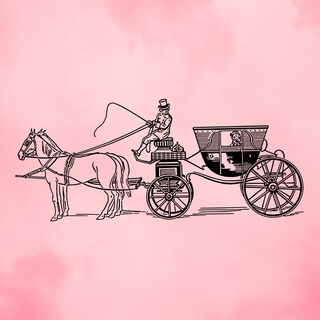
I heard wheels and saw a coach come on.
I stood up and lifted my hand.
It stopped.
I asked where it was going.
The driver named a place a long way off and where I was sure Mr.
Rochester had no connections.
I asked for what sum he would take me there,
And he said thirty shillings.
I answered I had but twenty.
Well,
He would try to make it two.
He further gave me leave to get into the inside,
As the vehicle was empty.
I entered,
Was shut in,
And it rolled on its way.
I was not sure where I was going.
Was shut in,
And it rolled on its way.
Gentle reader,
May you never feel what I then felt.
May your eyes never shed such stormy,
Scalding,
Heart-wrung tears as poured from mine.
May you never appeal to heaven in prayers so hopeless and so agonised that in that hour left my lips.
For never may you,
Like me,
Dread to be the instrument of evil to what you wholly love.