This is SD Hudson Magic Jane Eyre Chapter 26 Continued At Thornfield Hall,
Ejaculated the clergyman,
Impossible!
I'm an old resident in this neighbourhood,
Sir,
And I never heard of a Mrs.
Rochester at Thornfield Hall.
I saw a grim smile contort Mr.
Rochester's lip,
And he muttered,
No,
By God!
I took care that none should hear of it or of her under that name.
He mused.
For ten minutes he held counsel with himself.
He formed his resolve and announced it.
Enough!
We shall bolt out at once,
Like the bullet from the barrel.
Wood,
Close your book and take off your surplus.
John Green,
To the clerk,
Leave the church.
There will be no wedding today.
The man obeyed.
Mr.
Rochester continued,
Heartily and recklessly,
Bigamy is an ugly word.
I meant,
However,
To be a bigmist.
But fate has outmanoeuvred me,
Or providence has checked me,
Perhaps the last.
I am little better than a devil at this moment,
And as my pastor there would tell me,
Deserve no doubt the sternest judgments of God,
Even to the quenchless fire and deathless worm.
Gentlemen,
My plan is broken up.
What this lawyer and his client say is true.
I have been married,
And the woman to whom I was married lives.
You say you never heard of a Mrs.
Rochester at the house up yonder,
Wood,
But I dare say you've had many a time inclined your ear to gossip about the mysterious lunatic kept there under watch and ward.
Some have whispered to you she's my bastard half-sister,
Some my cast-off mistress.
I now inform you she is my wife,
Whom I married fifteen years ago,
Bertha Mason by name,
Sister of this resolute personage,
Who is now with his quivering limbs and white cheeks,
Showing you what a stout heart men may bear.
Cheer up,
Dick,
Never fear me,
I'd almost as soon strike a woman as you.
Bertha Mason is mad,
And she came of a mad family,
Idiots and maniacs through three generations.
Her mother,
The Creole,
Was both mad and drunk,
As I found out after I'd wed the daughter,
But they were silent on family secrets before.
Like a dutiful child,
Bertha copied her parent in both points.
Oh,
But my experience has been heavenly,
If only you knew it.
But I owe you no further explanation.
Briggs,
Wood,
Mason,
I invite you all to come up to the house and witness Mrs.
Poole's patient and my wife.
You shall see what sort of a being I was cheated into espousing,
And judge whether or not I had a right to break the compact,
And seek sympathy with something at least human.
This girl,
" he continued,
Looking at me,
Knew no more than you would of the disgusting secret.
She thought all was fair and legal,
And never dreamt she was going to be entrapped into a feigned union with a defrauded wretch.
Then,
Still holding me fast,
He left the church.
The three gentlemen came after.
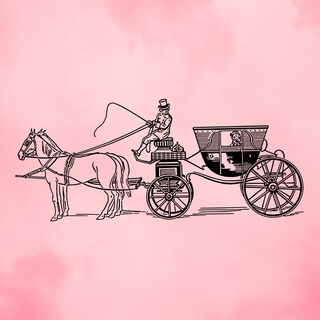
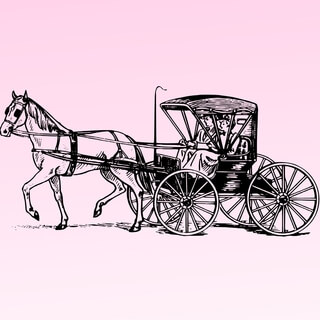
At the front door of the hall we found the carriage.
Take it back to the coach house,
John,
Said Mr.
Rochester coolly.
It will not be wanted today.
At our entrance,
Mrs.
Fairfax,
Adele,
Sophie,
Leah,
Advanced to meet and greet us.
To the right about every soul,
Cried the master.
Away with your congratulations.
Who wants them?
Not I.
They are fifteen years too late.
He passed on and ascended the stairs,
Still holding my hand,
And still beckoning the gentlemen to follow him,
Which they did.
We mounted the first staircase,
Passed the gallery,
Proceeded to the third story,
The low black door,
Opened by Mr.
Rochester's master key,
Admitted us to the tapestry room with its great bed and its pictorial cabinet.
You know this place,
Mason,
Said our guide.
She bit and stabbed you here.
He lifted the hangings from the wall,
Uncovering the second door.
This too he opened.
In a room without a window there burnt a fire,
Guarded by a high and strong fender,
And a lamp suspended from the ceiling by a chain.
Grace Poole bent over the fire,
Apparently cooking something in a saucepan.
In the deep shade at the further end of the room,
A figure ran backwards and forwards.
What it was,
Whether beast or human being,
One could not at first sight tell.
It grovelled seemingly on all fours,
It snatched and growled like some strange wild animal,
But it was covered with clothing and a quantity of dark grizzled hair,
Wild as a mane,
Hid its face.
Good morrow,
Mrs.
Poole,
Said Mr.
Rochester.
How are you and how is your charge today?
Which horrible,
Sir,
I thank you,
Replied Grace,
Lifting the boiling mess carefully onto the hob.
Rather snappish,
But not rageous.
A fierce cry seemed to give the lie to her favourable report.
The clothed hyena rose up and stood tall on its hind feet.
Oh,
Sir,
She sees you,
Exclaimed Grace.
You'd better not stay.
Only a few moments,
Grace,
You must allow me a few moments.
Then take care,
Sir,
For God's sake,
Take care.
The maniac bellowed.
She parted her shaggy locks from her visage and gazed wildly at her visitors.
I recognise well that purple face,
Those bloated features.
Mrs.
Poole advanced.
Keep out of the way,
Said Mr.
Rochester,
Thrusting her aside.
She has no knife now,
I suppose,
And I'm on my guard.
One never knows what she has,
Sir,
She's so cunning.
It's not immortal discretion to fathom her graft.
We had better leave her,
Whispered Mason.
Go to the devil,
Was his brother-in-law's recommendation.
Where?
Cried Grace.
The three gentlemen retreated simultaneously.
Mr.
Rochester flung me behind him.
The lunatic sprang and grappled his throat viciously and laid her teeth to his cheek.
They struggled.
She was a big woman in stature,
Almost equaling her husband,
And corpulent besides.
She showed virile force in the contest.
More than once she almost throttled him,
Athletic as he was.
He could have settled her with a well-planted blow,
But he would not strike,
He would only wrestle.
At last he mastered her arms.
Grace Poole gave him a cord and he pinioned them behind her with more rope which was at hand.
He bound her to a chair.
The operation was performed amid the fiercest yells and the most convulsive plunges.
Mr.
Rochester then turned to the spectators,
Looked at them with a smile both acrid and desolate.
That is my wife,
Said he.
Such is the soul-conjugal embrace I am ever to know.
Such are the endearments which are to solace my leisure hours,
And this is what I wish to have.
Laying his hand on my shoulder.
This young girl who stands so grave and quiet at the mouth of hell,
Looking collectively at the gambols of a demon.
I wanted her just as a change after that fierce ragout.
Wood and bricks,
Look at the difference.
Compare these clear eyes with the red balls yonder,
This face with that mask,
This form with that bulk.
Then judge me,
Priest of the gospel and man of the law,
And remember with what judgment ye judge,
Ye shall be judged.
Off with you now,
I must shut up my prize.
We all withdrew.
Mr.
Rochester stayed a moment behind us to give some further order to Grace Poole.
The solicitor addressed me as he descended the stair.
You,
Madam,
Said he,
Are cleared from all blame.
Your uncle will be glad to hear it,
If indeed he should be still living when Mr.
Mason returns to Madeira.
My uncle,
What of him do you know him?
Mr.
Mason does.
Mr.
Eyre has been the correspondent of his house for some years.
When your uncle received your letter intimating the contemplated union between yourself and Mr.
Rochester,
Mr.
Mason,
Who was staying at Madeira to recruit his health,
On his way back to Jamaica,
Happened to be with him.
Mr.
Eyre mentioned the intelligence,
For he knew my client here was acquainted with a gentleman of the name of Rochester.
Mr.
Mason,
Astonished and distressed as you may suppose,
Revealed the real state of matters.
Your uncle,
I'm sorry to say,
Is now on a sickbed,
From which,
Considering the nature of his disease,
Decline,
And the stage it's reached,
It is unlikely he will ever rise.
He could not then hasten to England himself to extricate you from the snare into which you'd fallen,
But he implored Mr.
Mason to lose no time in taking steps to prevent the false marriage.
He referred him to me for assistance.
I used all dispatch,
And I'm thankful I was not too late,
As you doubtless must also be.
Were I not morally certain your uncle would be dead ere you reach Madeira,
I would advise you to accompany Mr.
Mason back,
But as it is,
I think you'd better remain in England till you hear further,
Either from or of Mr.
Eyre.
Have we anything else to stay for?
He inquired of Mr.
Mason.
No,
No,
Let us be gone,
Was the anxious reply,
And without waiting to take leave of Mr.
Rochester,
They made their exit at the hall door.
The clergyman stayed to exchange a few sentences,
Either of admonition or reproof with his haughty parishioner,
And this duty done,
He too departed.
I heard him go as I stood at the half-open door of my own room,
To which I had now withdrawn.
The house cleared,
I shut myself in,
Fastened the bolt that none might intrude,
And proceeded not to weep,
Not to mourn,
I was yet too calm for that,
But mechanically to take off the wedding dress,
And replace it by the stuffed gown I had worn yesterday,
As I thought for the last time.
I then sat down.
I felt weak and tired.
I leaned my arms on a table,
And my head dropped on them.
And now I thought.
Till now I had only heard,
Seen,
Moved,
Followed up and down where I was led or dragged,
Watched event rush on event,
Disclosure open beyond disclosure,
But now I thought.
The morning had been a quiet morning enough,
All except the brief scene with the lunatic.
The transaction in the church had not been noisy.
There was no explosion of passion,
No loud altercation,
No dispute,
No defiance or challenge,
No tears,
No sobs.
A few words had been spoken,
A calmly pronounced objection to the marriage made,
Some stern,
Short questions put by Mr.
Rochester,
Answers,
Explanations given,
Evidence adduced,
An open admission of the truth had been uttered by my master,
Then the living proof had been seen,
The intruders were gone,
And all was over.
I was in my own room as usual,
Just myself,
No obvious change.
Nothing had smitten me or scathed me or maimed me.
And yet,
Where was the Jane Eyre of yesterday?
Where was her life?
Where were her prospects?
Jane Eyre,
Who had been an ardent expectant woman,
Almost a bride,
Was a cold,
Solitary girl again.
Her life was pale,
Her prospects were desolate.
A Christmas frost had come at midsummer,
A white December storm had whirled over June.
Ice had glazed the ripe apples,
Drifts crushed the blowing roses.
On Hayfield and Cornfield lay a frozen shroud.
Lanes which last night bloomed full of flowers,
Today were pathless with untrodden snow.
And the woods which twelve hours since waved leafy and fragrant as groves between the tropics,
Now spread,
Waste wild,
And white as pine forest in wintry Norway.
My hopes were all dead,
Struck with a subtle doom,
Such as in one night fell on all the first born in the land of Egypt.
I looked on my cherished wishes,
Yesterday so blooming and glowing,
They lay stark,
Chill,
Livid corpses that could never revive.
I looked at my love,
That feeling which was my master's,
Which he had created.
It shivered in my heart like a suffering child in a cold cradle.
Sickness and anguish had seized it,
It could not seek Mr.
Rochester's arms,
It could not derive warmth from his breast.
Oh,
Never more could it turn to him,
For faith was blighted,
Confidence destroyed.
Mr.
Rochester was not to me what he had been,
For he was not what I had thought him.
I would not ascribe vice to him,
I would not say he had betrayed me,
But the attribute of stainless truth was gone from his idea,
And from his presence I must go,
That I perceived well.
When,
How,
Whither,
I could not yet discern,
But he himself I doubted not,
Would hurry me from Thornfield.
Real affection,
It seemed,
He could not have for me,
It had been only fitful passion.
That was balked,
He would want me no more.
I should fear even to cross his path now,
My view must be hateful to him.
Oh,
How blind had been my eyes,
How weak my conduct.
My eyes were covered and closed,
Eddying darkness seemed to swim around me,
And reflection came in as black and confused afloat.
Self-abandoned,
Relaxed and effortless,
I seemed to have laid me down in the dried-up bed of a great river.
I heard a flood loosened in remote mountains,
And felt the torrent come.
To rise I had no will,
To flee I had no strength.
I lay faint,
Longing to be dead.
One idea only still throbbed lifelike within me,
A remembrance of God.
It begot an unuttered prayer.
These words went wandering up and down in my rayless mind,
As something that should be whispered,
But no energy was found to express them.
Be not far from me,
For trouble is near,
There is none to help.
It was near,
And as I had lifted no petition to heaven to avert it,
As I had neither joined my hands nor bent my knees,
Nor moved my lips,
It came,
In full heavy swing,
The torrent poured over me.
The whole consciousness of my life lorn,
My love lost,
My hope quenched.
My faith death struck,
Swayed full and mighty above me in one sullen mass.
That bitter hour cannot be described.
In truth,
The waters came into my soul.
I sank in deep mire.
I felt no standing.
I came into deep waters.
The floods overflowed me.
The End