Hi,
My name is Priscilla,
And today I want to guide you through a three-part breath called Durga Pranayama,
Also known as the elongated breath or three-part breathing.
And in this practice,
Some of the benefits of this breath is that we are going to be bringing our focus to three parts of the body,
The belly,
The lower ribs,
The upper chest.
And we're going to do this where it's a breath in,
Pause for a brief moment,
Another sip of breath in,
Pause for a brief moment,
Another sip of breath in,
Pause.
And then we reverse the way down from upper chest,
Rib cage,
Belly.
And I also like to think of this like I'm filling up like a balloon and then deflating and letting go.
This is such a great tool for preparing for meditation.
It's also great for those that are just looking for a breathing practice that can try on at any time during the day just to help get their nervous system regulated and to find a more deep breath.
If you tend to be a very shallow breather,
This is a really great tool to get you into a proper breathing rhythm and pattern to deepen your breath.
And it's also really,
Really great for the respiratory system.
So let's give it a try.
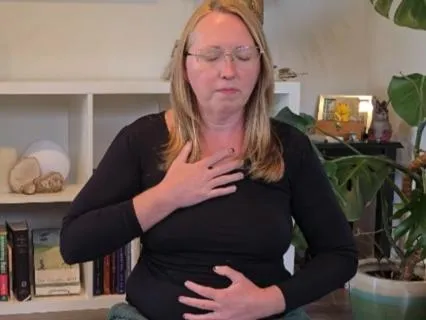
We're going to bring our awareness to our belly and sometimes it can be nice to do a a hand on your belly and a hand on your chest,
And just bringing your attention to these three areas of the body.
So we're going to start on the belly,
Taking a breath in through the nose,
Taking a brief moment of a pause.
And then we're going to bring that second sip of air in through your diaphragm,
Through the rib cage.
And then we're going to take our third breath in through the upper chest.
And then just a nice slow exhale out,
Collapsing the collarbones down,
The chest,
Down,
Relaxing through the ribcage and then relaxing through the belly.
So again,
Just imagine you're going to breathe in,
Filling the belly,
Take a pause,
Breathe in,
Filling the rib cage,
The lower rib cage,
The abdomen.
Take a pause and then bring that breath up into the upper chest.
And then exhale.
Just letting it all collapse and go down from the upper chest,
Lower ribs,
Belly.
So let's give that a try together.
And again,
I love having a hand on the chest,
A hand on the belly,
And then we can fill those three cavities.
So when you're ready,
Taking a deep breath in through the nose.
Belly,
Paws.
Sip of air in,
Lower ribs.
Expanding,
Paan Another breath in through the upper chest.
Filling all the way up.
And then exhale out the nose or mouth,
Whatever is most comfortable for you,
Letting the upper chest soften,
The rib cage soften,
The belly soften.
And we're just going to do five rounds of breath,
Just like that.
Let's begin.
And you can just keep exploring with this breath.
Also trying this maybe laying down or in a more reclined position if you find it hard to really feel yourself expanding.
It's a great one to set yourself up before bed.
But just continuing to fill the belly,
The lower lungs,
The upper lungs,
And let it all go.
Breathing in,
Getting expanded belly.
Lower lungs,
Upper lungs.
And letting it go.
Let's do one more round.
Filling the belly.
Short pause,
Another breath in,
Filling the lower lungs,
Short pause.
Final breath in,
Filling the upper cavity.
And then letting it all go.
And then just letting your hands soften,
Taking a moment to notice what you notice.
Letting your breath return to a normal pace.
And just thanking yourself for trying on.
This breath.
I hope you enjoyed this practice and again you can take some time to journal on this or invite yourself to try this on maybe before bed or at any time during your day where you feel you could use a little bit more If you find yourself really shallow breathing,
Especially,
I highly recommend giving this one a try and try it on every day and just notice any shifts,
Any difference throughout your time.
My name is Priscilla.
Thank you for breathing with me.
The light in me recognizes and honors the light within you.
Namaste.