Hello everyone.
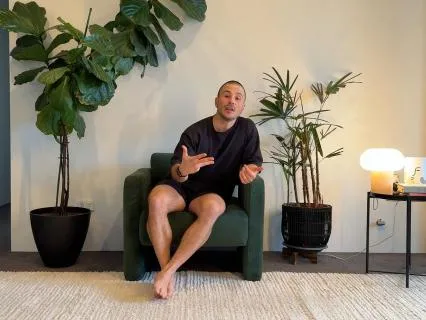
My name is Pedro Avila and this is part two of the difference between mobility and flexibility.
After part one,
I'm sure you guys get the difference between mobility and flexibility.
That makes sense.
Cool.
But then the next question is,
When do I do what?
And what does each one of these actually give me?
So let's clear that up.
Flexibility is how passively a muscle can move through its full range.
Make sense?
Okay.
And mobility is how well can you actively move through that range?
Make sense?
One is passive,
One is active.
Flexibility,
Passive.
Mobility,
Active.
Good,
Just remember this,
Mobility is what gets you through your life.
Is the most important one,
In my opinion.
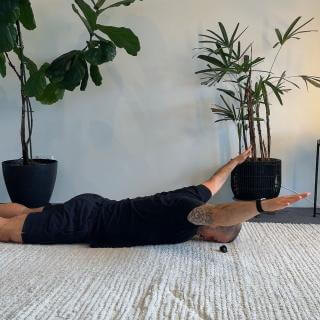
So when should I do mobility and what it really achieves?
I believe that it's best that you do as a daily practice.
I believe that you should have mobility as a daily kind of practice habit.
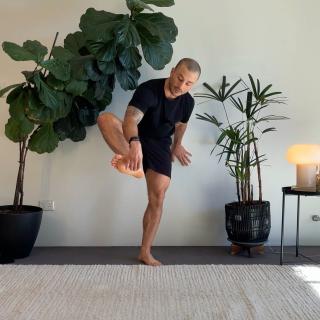
You can use mobility to prime the muscles before an exercise.
When you move a joint through its full range,
You are priming the muscles,
The joints,
The ligaments,
The tendons,
And that really helps when you want to do a certain specific exercise.
For example,
You are doing squats,
Okay?
It's really important that you do mobility around your hip joint,
Okay?
Moving through its full range.
Make sense?
Because that will help you not feel stiff and rusty when you are performing the movement.
Great.
Let's move on to flexibility.
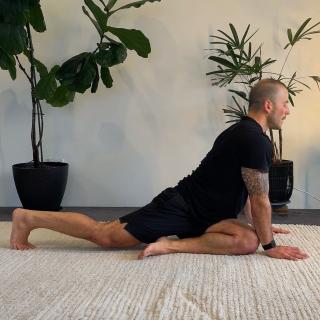
But when should I do flexibility stretching and what it really achieves?
I believe that you should do that after your exercise or in the evening when you want to wind down,
When you want to relax the tissue.
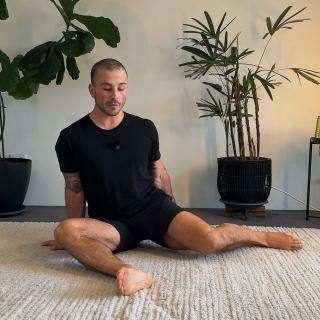
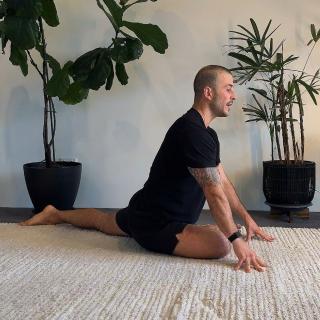
Flexibility is going to allow you to get further into your range of motion.
Passively,
You won't have control at the end,
But that's ok,
This is your new range,
You can achieve it and this is good for you.
Now that you have an extra range,
You can build mobility through its full thing.
Make sense?
Ok,
Let's move on to strength.
Now this is the missing piece.
When to do strength?
And what it achieves.
Strength equals longevity.
Good.
Strength,
In my opinion,
Should be built on full range of motion.
Now,
That depends.
If you're a powerlifter,
Okay,
These guys that lift very heavy,
They want to be stiff.
Okay,
Because it will translate to what they do outside of the gym,
Which is lifting heavy.
So you have to be stiff to be able to lift that heavy.
For us,
Just people living through our lives that don't want to feel any kind of pain,
Just live well.
Do full range,
Because full range of motion exercises translates to real life.
Make sense?
For example,
A squat.
Instead of squatting and stopping halfway through,
Or when your hips are in line with your knee,
Try to get below.
Because then you're going to stretch more your quads,
You're going to stretch your glutes,
You're going to bend your knee even more.
And this is another good case,
For example,
Knees.
We are seated for the most of the day,
Okay?
So this is the degree of how much knee bend we have.
We rarely go below this.
Make sense?
So in this position,
Yeah,
90 degree angle,
We have strength in the knees.
Here,
When the muscles are stretched,
When the joint is fully flexed,
We don't have a lot of strength.
So,
We do have passive range,
Okay?
But we don't have an active range.
Think about it.
Try to squat all the way down to the ground,
Okay?
Ask the ground,
That's what we say.
It's gonna feel way harder to come back up.
If you compare to when you squat,
Have your hip in line with the knee at the bottom.
So one,
If you squat down here,
The other one you squat up here.
This is going to feel much harder than this.
Make sense?
Okay.
That's why I believe that you should train through the full range because if this is easy,
This is going to be easy too.
In having the ability to move through its full range,
Through all the joints,
It will give your body Safety your brain is gonna feel safe moving through anything and everything in life.
It's gonna allow you to Be courageous,
Yeah,
And not avoiding the movement will allow you to avoid injuries.
Not that you can actively avoid injuries,
This is something we can't do,
But we can reduce the chances of you getting injured by having strength through its full range.
Make sense?
So if you are hypermobile,
I would suggest that you go really slow,
Really control,
Try to pause at the bottom,
Try to have assistance to get out of the end of the range,
Which is usually when we don't have a lot of strength.
And then you build from there.
Strength is extremely important.
And then when you combine these three,
Strength,
Flexibility,
And mobility.
You're gold.
You're good.
This is longevity.
This is what we want.
So practice the three of them.
So just to recap.
Mobility to prepare and control the joint.
Strength to protect and own the range.
And flexibility or stretching is to relax and achieve a new and deeper range of motion.
Good.
I hope you guys enjoyed.
If you have any questions,
Let me know down below and I'll see you in the next one.
Cheers.