Before we begin,
Please note that this conversation includes references to death,
Family tragedy,
Grief and trauma.
Please listen in a way that feels supportive to you.
You're welcome to pause,
Skip ahead,
Or return to this interview at another time.
Anything feels too sensitive.
Please take care of yourself as you listen.
So namaste,
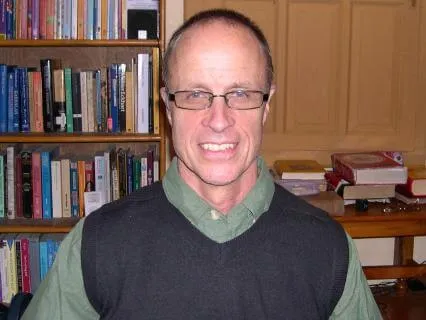
I'm very happy to be joined by Bruce Martin,
Navadvip Dasji,
Who's the editor of the Satsang Darbas,
Translated by Babaji Satyanarayana Das,
And who is the author of several publications,
Articles,
And co-author of other books with Babaji,
Who has studied a lot in the field of consciousness,
Spirituality,
And energy work,
Who has himself a lot of experience in that field of energy work.
Who has many,
Many decades of experience with Qigong and perhaps other energy systems.
So I thought he's the perfect person to inquire from about modern mystics' experiences in the realm of consciousness,
And I would like to understand how that can be reconciled with Gaudiya Vaishnava understanding of Shastra.
Yeah,
Thanks for the introduction.
I actually starting my translation career.
Around 19.
.
.
92.
So I've been involved in the field of translation.
And editing for the last.
33 years.
Bye.
Initially I was studying Sanskrit.
Bengali and Hindi as well.
Um.
.
.
Just as a basis of going into the study of the scriptures to have access to them,
First hand.
And to gain a greater understanding.
Of the Scripture,
Of course.
Up to that time.
I had been involved in the past.
For some.
Well,
Since 1979.
Is when I first became involved.
But even for years before that,
Actually from the time of 15 years old,
I was.
Studying.
Buddhism and Vedanta and had some exposure to the Upanishads and Zen and was practicing yoga and And some.
Had my first introduction to Tai Chi at the time,
So there was already some years.
Leading up to becoming involved.
With the Krishna movement.
Um I.
Moved to Vrindavan in 1990,
So that really became the beginning of my period of study of Sanskrit and so on.
Initially,
I just began.
Translating portions of Jai Vidharma and Bhakti Rasamritha Sindhu.
Again as a We're going more deeply into the philosophy.
I shared some of these translation pieces with friends and devotees.
That encouraged me.
To pursue it,
You know,
That's awesome.
Potential.
Hmm.
So I.
Was continuing this Translation,
I translated some smaller works.
Including bhakti-rasamrta-sindhu-bindu,
Manasiksha,
Um.
.
.
The shakshashtak.
My name is Christian and I'm from Stuttgart.
Oh.
Editions of Bhaktivinoda Thakur.
The Bhakti Rishabh Mitra Sindhu Bindu of India.
Vishwanath Chakravarti.
And uh.
.
.
At least the first part of Javed Arama.
And of course,
While.
Getting more and more involved in translation.
I was avidly studying all the Goswami works but all the supportive Literature.
Meaning the whole Vedic context,
The various darshans.
And the future of literature.
Uh.
.
.
And so on and so forth But then around.
The mid-90s,
I was relating this earlier in our exchange,
It occurred to me.
.
.
That although I had greatly enlarged the context,
You know,
In which I was undertaking.
The service But it was.
.
.
Still,
In a sense,
Confined.
We're still within the Vedic exploration with virtually No exposure.
To anything outside of that.
And I felt that in order to be relevant.
In order to serve the purpose of translation,
Which was not just for a select devotee community,
But the wisdom that was coming through was so universal but needed to be rendered in a language that could communicate that could touch the heart.
Know that could find correspondence with seekers of all traditions and and for that to be possible I needed to be in contact With those traditions,
I needed to be in contact with the language and the grammar of physics and modern psychology and so on,
So this began a.
.
.
Vast study of many disciplines which is still ongoing.
And which began to,
With every new discipline studied,
Putting it into.
A conversation with the Gaudia tradition.
And also,
Let's say,
Approaching each of these traditions with an openness.
You know,
Instead of.
Like holding on to a set of beliefs.
And ideas to be defended.
These are the core ideas that need to be defended against all the heretical ideas.
You know,
Like bracketing all of that.
Uh.
.
.
Exploring each new system on its own terms,
Allowing it to disclose itself in its own terms,
And then putting it into dialogue.
You know,
With the Gaudiya understanding.
This brought.
New insights.
That were,
In a sense,
Self-disclosed,
And.
My whole exploration of Qigong,
Which is now which began in 2003.
Of course,
I had a background in yoga prior to that.
But from.
Beginning in 2003 and continuing up till now.
There was a.
Very,
Very deep.
Exploration of Qigong,
Both in terms of theory and practice.
Which for a period of 10 years,
Involved.
Um.
.
.
Anywhere from four to six hours of practice every day.
With hardly missing a single day.
In the course of the whole year,
I could maybe count no more than 10 days that I might miss.
And as a result of that exploration,
There was.
In a sense,
An immediate disclosure.
Of the dimensions of the body-mind system and how they fit together.
So an immediate experience of the whole vital network,
Um,
Psychosomatic flow channels within the system,
Nadis,
Meridians chakras including immediate disclosure subtle sound,
Light,
And tacticity that are functioning within those realms.
And the integration.
And let's say all of that.
And immediate experience.
Made the approach to the philosophical inquiry and translation allowed it to take place on a on a different level on a experiential phenomenological level you know,
Like describing not just not just trying to Um.
.
.
Translate in terms of you know,
An intellectual exercise or,
You know,
Just working with words.
But first and foremost,
The experience of what is being described,
How it's given in consciousness,
And then the language is,
In a sense,
Disclosed by itself.
To accord with those experiences.
You know,
So all of this experience What has it been?
Helpful.
In both the intuition of and the description of within my given Savor of translating?
Absolutely.
Yeah.
You know,
So this is a.
.
.
Some background of my.
Study and experience.
You know that I'm.
Trying to bring to.
This discussion.
Thank you so much and then I think we can dive into the questions.
Why do so many people and from different cultures,
Different backgrounds.
All say the same thing about certain points and how to reconcile that with Shastra.
And one of the points is karma.
What is karma?
And I have sent you that word file about what some channels,
Some light meetings say about karma.
And our idea about karma is just that it's,
We have no choice,
It's,
Karma is influenced by our present action and by our consciousness,
And Once the momentum is set,
Then everything else is arranged by higher beings.
Like this one verse,
Bhagavatam 3.
30.
1.
1,
So he explains how the soul enters the womb and so on.
Our past karma is something which is just a result of our previous action and we get that result in our next birth.
And it's arranged by some higher powers or intelligences without any choice from our side.
So only very advanced souls can choose their birth,
Like yogis or R.
I mean,
Bhishma Dev was able to choose the time of death,
But otherwise a soul has absolutely no choice.
And in many of these sessions I have experienced,
I have heard,
There are many channels who speak,
They channel even the soul of a person and they find out,
They get into the scene of their planning of the next life and they hear the conversations and then this makes total sense for the person and gives them big relief also to understand why they planned a very tragic situation like is I understand the perspective of the perpetrator or of the victim or whatever it is.
So I've come across this again and again and Rob Schwarz has.
.
.
Has dedicated his whole life to exploring that.
He has worked with various mediums who independent of each other,
Can access these situations of the pre-birth planning and why even the soul chooses different other people to have this life experience with them.
So all that has no place in our philosophy.
Absolutely no.
And I see no way to reconcile it.
So my big question is,
How is it that so many people speak about it,
So many mediums speak about it,
Who have no contact with each other?
I think Edgar Cayce was maybe the first one,
Madame Blavatsky,
Who started speaking about that.
But then you hear it from different cultures and even a small child who hasn't yet heard anything.
I think I sent you that newspaper article,
A five-year-old boy said to his father,
That's why I chose you as my father.
So these experiences are recorded.
And they all point to the same idea that there is a choice involved in coming to this life.
And some even say that there's a choice whether we can continue this life cycle,
Whether we return or whether we learn our lessons.
Not in Earth life,
But in other realms.
Now,
My approach to the Shastra has been Um.
.
.
A little different,
I mean,
Probably quite radically different.
You know,
Although I have also undertaken.
Um.
.
.
Of the study of you know,
All the different aspects of Vedic Shastra.
But let's say beginning from.
Mid to late 90s,
I reached a point after almost 20 years of only studying you know,
Vedic Shastra.
I mean,
The first 10 years.
Let's put it down to this,
It was only ProPod's books.
Know and the next 10 years I studied much more Goswami books and Vedanta and the Puranas and Upanishads and Yoga Sutras and so on but everything was within this And I reached a point where after 20 years of study and practice,
I still felt a sense of existential angst of incompletion and you know,
Certain events occurred whereby I thought I have not Expose myself to everything outside.
Of the Veda Canon.
You know,
And I'm maybe even holding opinions about,
You know,
Things that I don't know about,
You know,
That are outside of that.
You know,
That don't really measure up.
And this began A,
Which is still ongoing.
You know,
Which is now nearly 28,
30 years.
Of investigating a vast range you know,
Of knowledge systems,
Religions.
You know,
Mystical paths,
Healing systems.
Linguistics,
Science,
You name it.
You know,
So.
Let's say this so and in the course of that Everything that I had already studied,
And in particular the Gaudia Revelation,
Suddenly started to Disclose itself.
In.
In a new light.
In a light.
That could accommodate all these various systems.
You know,
Within an ordered or holistic understanding.
When I started the investigation,
I tried to be as objective as possible,
Like not to assume that,
You know,
The Gordians have their real understanding and let's see how these measure up.
You know?
I tried to enter into each particular path that I looked into You know,
In.
In their own right.
You know,
To understand it from their own perspective.
To see what would be disclosed and then afterwards.
To make the integration.
Between them.
You know,
So.
When I hear what you just expressed,
You know,
About karma.
I don't feel in any way threatened by Let's say what is being presented.
As an inconsistency.
But what needs to be questioned in this whole thing or let's say even the questions that are being raised.
Have to be looked into both from the perspective of metaphysics In other words.
The science of being and from the perspective of phenomenology.
The science of meaning.
Or how?
The world,
Whether the world we're exploring is the world that science explores,
You know,
Material nature.
Or and and it's uh you know the the laws of interaction that govern it.
Or whether we're experiencing,
Exploring this field,
The psychic realm.
It is.
Important to ground the investigation.
In a understanding of,
Okay,
What is that realm?
That were that we are.
What you know what is the composition what's the constitution in a sense of the psychic realm you know and How is it experienced?
In other words,
How is that realm Given.
In intuition,
Within consciousness.
Without looking into these things,
We don't have the proper basis to even adequately evaluate The question.
You know,
So I want to deal with this question of karma,
But before.
.
.
I get into it.
I think that it's necessary.
To,
Let's say,
Clarify,
You know,
To enter these two Fields.
And in terms of And this is not just from the Gordia perspective.
You know,
I'm looking at this.
From the perspective,
From the,
Let's say,
The corresponding views.
Of what is referred to as the perennial philosophy.
Basically the core.
Principles.
The core theory of being.
The common core principles of being of the great wisdom traditions,
Whether we're talking about Vedanta,
Whether we're talking about Buddhism,
Whether we're talking about Kapila,
Christian mysticism,
You know,
There are core,
In spite of their differences.
There are core.
Ideas.
About.
Let's say the.
The hierarchy of being.
You know,
From the absolute.
To this realm and all the realms in between.
So now,
If we're talking about.
.
.
The psychic realm you know then we are speaking about the subtle realm of Prakriti.
Yes.
That's clear.
Know,
And even the instruments with which we are investigating this realm.
In other words,
The higher capacities of mind You know,
Even the instruments.
With which we are undertaking the investigation are themselves Evolute.
Subtle evolutes of Prakriti.
So obviously there is a correspondence between them.
In Kabbalah one of the famous sayings is As above,
So below.
As below,
So above.
There's a correspondence between.
Macrocosm and microcosm.
You know,
So we should be clear.
You know,
At least as as Gauri Vaishnav's but you know as Practitioners.
Of any wisdom tradition.
You know,
That are trying to understand this realm,
The relation between the realm and absolute transcendence.
It's important to make these distinctions.
So that we're clear about what it is we're investigating.
OK,
Now.
To get a better perspective of this,
Um.
.
.
This can correspondence can be made Krama Mukti.
Gradual liberation.
You know,
This is discussed in various places,
But it comes up in Prithi Sundarbar in particular.
And you know,
So.
They discuss this immediate liberation,
Sadhyamukti.
Gradual liberation,
Krama mukti.
Now,
The.
.
.
Immediate liberation.
Is when the Jivan Mukta one who is liberated while living.
What does liberated by living actually mean?
What does it entail?
It means that one has seen through and transcended the identification with the gross and subtle body,
And one is you know,
Firmly established in this scene.
Okay,
Now,
For such a person.
.
.
They use those verses from the Bhagavatam,
Second canto of chapter two,
21 and 22 that discuss these two things.
So the.
The one who attains immediate liberation The term used is unapeksha.
They're free from a picture.
They're free from.
Expectation,
Desire,
From any sort of intent.
Other than.
Union with the absolute you know so on on leaving They leave not only the gross body,
They leave the subtle body.
You know,
And they attain immediate transcendence.
Whether that immediate transcendence is emerging in Brahman or Nirvana,
Shunyata,
Or the lok of Bhagavan,
Doesn't matter in this discussion.
You know,
Because now we're talking about the criteria of immediate liberation or gradual.
So in the case of the gradual,
It's understood that there is some a picture,
There's still some desire.
To explore.
The subtle realms of the universe.
There's no better way to do this.
Than when you're completely free from the limitation of this gross form.
You know,
But let's say the exploration of the subtle realm that is being done here and now by persons who have tapped into the higher powers of the mind,
Which is the process that you're involved with,
And which many are involved in from different perspectives.
What they're exploring is the same realm.
Or realms that are explored.
Bye.
The jivanmukta that's attained,
You know,
Gradual liberation.
And it's attained by the same powers.
You know,
The higher powers of mind.
The only difference being that.
.
.
You know,
For those of us that are undertaking this exploration that are in these gross bodies,
There may be more limitation and there may be,
Let's say,
You know,
Moments of access of that state through specific psychotechnologies.
You know,
Of meditation and so on.
Whereas the person that is Let's say.
The Kramer Mokta there's no coming and going out of that state.
They're,
You know,
Permanently grounded,
Or at least for the time they're there.
You know,
But the correspondence I'm making is that the realm is essentially the same.
Now we're speaking of metaphysics.
We're talking about the structure of being,
Or the constitution of being,
Of the realm being explored,
And phenomenology,
How that realm is given in experience,
In consciousness,
Okay,
Now if we're clear about this,
The realm being explored,
The means to explore it,
And the fact that it entails.
A desire on our part to explore it.
And and that desire may be um in line with the ultimate goal of transcending that realm altogether,
Because it's still a limited realm.
Or it may be undertaken with a desire to master powers and all the knowledge that becomes available and everything that goes along with that,
Which is still entanglement in samsara.
Now if we're clear on these things,
You know,
Then the question can be raised.
A let's say the The common What needs to be pointed out here is now you're speaking about the common experience of persons that are cultivating,
That have access to some degree,
These powers of mind.
And hence,
Let's say,
The givenness of Karma.
Of the laws of karma.
That is given to them.
Is necessarily from the perspective of a person that is awake to that realm,
To the powers of mind,
And Hence,
Naturally.
Let's say,
Becomes eligible to enter into the Um.
.
.
Intent.
Of what form is going to be obtained.
This is seen even in Krama Mukti.
The desire Obviously,
The adept.
The Jeevan Mukta.
At the time of death.
It's not that,
Oh,
Because they are jivanmukta,
That Paramatma is automatically,
You know,
Nonetheless recognizing they have some desire,
So he's going to connect them.
No,
It's understood that because of the cultivation,
Because of the raised level of awareness,
The choice they have.
The possibility of choice.
We're not talking about individuals.
Who have no such awareness.
No,
No,
Even in.
.
.
There,
The.
Um.
.
.
In natural life,
In normal life.
Choice!
Is the prerogative of those who are informed.
If you are not well informed,
You know.
The possibility of a conscious choice is greatly reduced.
And all the people that are sharing this common understanding of karma are all people that have made themselves eligible to choose.
Furthermore,
Furthermore,
This understanding of karma as yes balancing is certainly um an important factor.
In the understanding of karma.
You know,
But.
If we're talking about the balancing of the sum total of all phenomena within the cosmos.
You know,
That can that can bring into a balance.
You know,
The whole system of planets and stars and their movements,
You know,
So on the macrocosmic scale,
On the subatomic scale,
You know,
Of subatomic particles coming together,
And on the psychic individual scale,
What sort of intelligence?
Would be required.
To keep all of this.
In balance.
You know,
So karma essentially.
.
.
Is.
The laws of cause-effect Conditioner is it's the it's the whole Hierarchy.
Of nested causal relations that determine The possibilities.
For the cosmos as we know it,
As it's given to us,
Including the gloss realm,
The subtle realm,
And our movements through these realms.
And much of it.
Does in fact go on.
Like,
It goes on unconsciously,
The processes that are going on in our body.
You know,
Of respiration and so on.
Are happening.
Without our controlling them.
You know but it's possible Um.
.
.
Through accessing the higher powers of mind,
The higher potentials within us,
To become conscious of some of these powers.
You know,
So to be able to.
Access.
Metacon,
You know,
Metanormal powers of healing,
Metanormal powers of integration of the body-mind system,
You know,
And to bring these into alignment within these powers,
You know,
As they are manifest within the subtle realm for healing for transcendence.
You know,
But this requires.
A profound understanding and a profound rooting in the core understanding If your goal is to bring it into alignment,
With.
The knowledge that's already been given to you.
You know,
But this would require to a certain extent.
Even a radical reframing of that knowledge.
You know,
To bring it into alignment.
So that is a very interesting point about this radical reframing.
I think that may be interesting also for for a broader audience to understand how this could be reframed.
Because nowadays we hear so much about the earth moving into the fourth or the fifth dimension,
Spiritual awakening.
There's a lot of knowledge available now and people feel that spirituality becomes more of a mainstream and of more interest.
So how would you view Gaudiya Vaishnavism in this regard?
What kind of how could this be broadened so that this reframing can take place.
Well,
First one has to.
Enter be ready to enter into dialogue Um.
.
.
All the various realms.
Of knowledge.
All the new insights that are coming forth.
Now,
Here's the thing.
Not only in Gaudiya Vaishnavism,
But let's say in all the ancient wisdom traditions.
Although the view of the world that was presented was very vast.
But still,
It did not have to take into account Consideration.
What has been disclosed through advancement in modern physics,
Chemistry,
Biology,
In let's say,
The whole exploration of metanormal powers.
I don't know if you've encountered this book.
I'm going to show you here.
This is called The Future of the Body.
This book was published in 1992.
This is by Michael Murphys,
The co-founder of the Essilon Institute,
Which began a lot of these studies in the 60s.
Know to integrate um especially uh eastern wisdom traditions but also all the great wisdom traditions of the world you know with um modern science and whatnot.
You know,
If you look at some of the OK,
It's called.
Explorations into the further evolution of human nature.
OK.
Okay,
So part one is possibilities for extraordinary life.
Part two is evidence.
For human transformative capacity.
And part three,
Transformative practices.
It's a huge book.
It's very,
Very well researched.
He presents A lot of the research that was done up to that time,
I'm sure now,
You know,
92,
We're talking about the last.
33 years.
Know since that time how much more research has been done but but this book can kind of be taken as in a way the bible you know on this topic or it's at least one of the forerunners Up to that time,
At least from the 1950s,
So much research.
Was done in,
You know,
Even clinical study with LSD and other hallucinogenics.
A whole body of evidence by transpersonal psychologists like Stanislav Grof.
Yes.
You know,
So many controlled scientific experiments to look into,
You know,
Telekinesis and all these different metanormal powers.
There's a tremendous amount of evidence.
For these things,
You know,
And his Focus in particular is not just to present.
Um.
.
.
You know,
To enlighten people about.
These potentials.
But the integration of these potentials within the wisdom traditions.
You know,
So that they are.
Properly situated.
You know,
To serve their specific role.
In supporting the growth of.
Human beings toward ultimate transcendence.
And I think that this has to be the orientation.
So again,
You know,
He asked specifically about Gaudiya Vaishnavism.
Let's say the opening.
Towards.
Uh,
You know entering into A dialogue.
With the possibility of these you know,
Powers as being.
Higher potentials.
Of the self.
They may or may not be interesting,
Not only to Gordievaishnevs,
But to other Let's say more the.
Um.
.
.
Know,
The traditional practitioner.
Because after all,
If we identify this realm as the realm of Prakriti,
And that it involves.
Um an interest a desire of some kind to explore that realm then the question naturally comes so is that not a distraction right You know?
And is it not possibly leading us astray?
I've read a lot of Arida,
I don't know if you've heard of him.
He was,
Or at least Let's say.
Presents himself as an enlightened master or is presented in that way.
He's also recognized by many or has been very influential on people like Stanislav Grof again,
Who was very involved with him at one time.
Ken Wilber and many others.
I've read a lot of his writings and found it to be extremely helpful in terms of the whole exploration of uh the human development Chakra,
The chakra system.
Uh.
.
.
Transcendence so on and so forth and has gone through these realms,
You know,
Has explored these realms,
So it's certainly not Um.
.
.
Let's say,
Critical of them,
But it is intent on making clear what they're involved in.
And here's one line.
That can seem derogatory but can also seem humorous from another perspective.
So he's saying here in one place in his book,
The enlightenment of the whole body.
Which also gives you an idea of.
The breadth of the exploration.
And he says in one place,
All mystical experience is only a tour.
Within the range of the separated personality.
This may also,
For those that are.
.
.
Let's say,
Adepts in this particular realm.
This may seem derogatory,
But if we see it again in terms of Krama mukti.
Then.
There's a certain sense.
In which this is true because What is the.
What is the subtle body?
You know,
It's still part of.
It's still an Upadi,
It's still a superimposition on the Atma.
It's still part.
Of the separated personality.
And obviously,
This statement would be like,
If your interest is to explore this realm for its own sake,
Then what are you doing?
You're taking a tour within the range of the separated personality.
Okay,
Now,
If your intent.
.
.
It is to use the exploration of this realm as a support for the greater exploration leading to transcendence then it's not that.
You know,
But.
.
.
It's important to see that It can be that,
If it's being explored.
For its own purpose.
Just like the exploration of any other realm.
For its own purpose,
You know,
Like physics.
Explores the realm of material nature.
Now we're not going to say that the exploration of the realm of material nature is without value.
But if one is exploring it for its own sake alone,
Then the exclusive lending of attention to that realm,
The samukhya of that realm,
You know.
Does not or it takes that attention away.
So it becomes an exploration of the separate ego or the separate.
You know,
Seeing Prakriti as separate.
Right.
It's important to ground this investigation in a non-separate way.
Orientation.
There's very little knowledge given about this realm in Shastra.
And I was always wondering whether the reason maybe not to distract the adept,
Because it can be very distracting to have these experiences.
So could that be a reason or why is it that we know very little or hardly anything about what is happening between lives after death?
We only know about this gross physical realm and then Goloka.
But anything in between,
There's not much information given.
Well,
I.
.
.
Wouldn't would not necessarily agree with you on that.
I mean,
I think that Um.
.
.
There is a fair amount of information available.
Perhaps not.
Um.
.
.
In the detailed fashion that you're becoming aware of.
In your present exploration.
I think that it is.
Elaborated more in terms of its metaphysics.
You know,
Like in.
In the way that I have been.
I was lighting it up to this point.
You know,
But for example,
If we go into.
The fifth canto of the Bhagavad,
The Bhagavat.
Although with.
It's very difficult to understand,
You know,
It's very.
.
.
Nebulous in a way,
And seems to be an account of the structure.
Of the universe.
But I think a lot of what it's dealing with is of a very symbolic nature.
And that it's pointing to a certain correspondence again between the realms of being In other words,
If we take the chakra system of the body,
The seven chakras,
Can find correspondence to the structure of the universe and its different realms.
And.
Let's say the what can be disclosed.
Within those realms.
So in a sense,
Like one time,
One of my Qigong teachers You know,
Who.
.
.
Did a lot of outer body experiences.
You know,
Explored these realms extensively.
One thing that was very interesting he said to me once was that This is not so much an out-of-body experience as an inner-body experience.
You know,
Because after all.
.
.
It's experience.
In the subtle body or through the means.
Of the subtle body.
You know,
So what is really being experienced here?
You know,
Are we experiencing the dimensions.
You know,
The subtle dimensions within this body-mind system or within the universe?
And probably both realms are being experienced simultaneously,
You know,
Through the interconnection.
That is there.
So there's actually a lot of Um.
.
.
Information there in the Shastra.
But it's of a very.
.
.
Uh.
.
.
Sort of mystical the languages very mystical it's a hard to understand You know,
So.
But when you start to.
.
.
Explore the realms that you're exploring.
The realms of Shastra that pertain to it are going to take on new insight and they should be looked into for new insight or for integration.
That's interesting.
Just one last thing.
Because my realm in particular,
I mean I have explored these realms.
To a certain extent through my exploration of Qigong.
We can speak about this perhaps in another session,
But because my interest has been to support my work of translation to explore you know,
Metaphysics and phenomenology and so on.
Both from other traditions and from the perspective of modern science,
Consciousness studies,
Cognitive science,
And so on,
That every time I look into in some new realm.
My understanding of metaphysics in Gaudiya Vaishnavism is enlarged and enriched and disclosed in a new way.
That makes me realize that,
Oh!
This is actually there.
But I never saw it.
Why didn't I see it?
Because it's not the primal.
It's not the primary focus.
You know,
So like the realms that,
You know.
The realm of physics,
The realm of psychic exploration,
The realm of biology or chemistry or psychology.
You know,
These are all.
Let's say more specialized realms,
They have specialized knowledge,
So they're going to disclose things that are not the main concern of the wisdom traditions in general,
But let's say that specialized knowledge As it's disclosed.
In lived process,
In immediate intuition,
Through accessing the psychic technologies that you're accessing,
Are going to be seen to be in correspondence.
That's why I find it very surprising because my investigation has led me only to see correspondence.
The differences that are there are more differences of external features.
So I really have to question the questioning that's going on.
That perhaps the questioning that's going on is because.
.
.
They have not probed deep enough in their own metaphysics,
Have not grounded their own metaphysics deeply enough,
And hence certain Uh.
.
.
Data of experience of that realm They're not seeing how it can be integrated.
Mostly when we hear about the fifth canto,
What most devotees,
The immediate association is,
You know,
All these hellish experiences.
And this seems to be more repelling whereas Consciousness explorers generally have very pleasant sensations when they go into these other realms.
There's hardly any experience of hellish pain and suffering.
So I'm wondering why it seems that the Bhagavatam puts more emphasis when explaining these realms on the on these negative experiences.
But again,
I have to repeat the same point.
That the investigation,
You know,
The conclusion that's being drawn is of those who have a certain mastery at least of the psycho technologies to be able to access these realms whether it's meditation or something else So naturally the experiences that are given to them are not necessarily going to be the experiences Um.
.
.
Of those who are let's say,
Whose awareness is completely covered.
The obviously.
The descriptions of hell and so on.
Are not applying to The awakened.
So it's important to bear in mind that we don't have a control group.
All the people who are adepts are all reporting the same experience.
You know,
That after death there's a choice,
That it's all light and bliss.
Of course.
That's the experience that's going to be given to them.
What about the experience of those whose you know,
Who have been engaged in.
You know,
Harmful.
Actions,
Actions of violence.
So on and so forth who are completely ignorant of themselves.
You know as uh.
.
.
As connected in some way to some greater reality.
So.
This has to be seen.
In the inquiry.
Now,
As far as the experience of hell and so on,
Different perspective on this in different traditions that show both correspondence and difference,
And that may also allow us for a different view,
Let's say,
Of the fifth canto itself.
Now,
First of all,
Just as Karamamukti is and the the.
Exploration.
Of the subtle realms of Prakriti.
Takes place through the instrumentation of the subtle body.
So also.
What is described as hellish realms.
Let's just,
You know,
Make it an objective inquiry.
We're not even concluding that such a thing exists,
But let's say if such a thing exists,
Than just as.
The subtle realms of light and so on.
Necessarily have to be.
Explored in the subtle body,
So also the hellish realms would have to be experienced.
Through the subtle body.
Now in Buddhism you have the idea of,
You know,
After death,
There's this,
I'm forgetting now the term,
But there's an exploration of psychic realms.
This whole exploration of psychic realms which occurs in something like a period of 49 days before the next.
Incarnation.
Could be.
Like for the person undergoing the experience could seem timeless.
Right,
Right.
You know,
You've reported or the exploration of the subtle realm.
Is timeless.
It could literally be experienced as lifetimes almost,
Although from the perspective of gross realm experience,
The time is very short.
You know?
The the.
Psychological there's psychological trauma.
Experienced in the processing of the karma.
If there's an accumulation of a lot of negative karma,
The rebalancing.
Can it actually involve trauma?
You know,
If you mean to say that those that are proposing the theory of karma is just a rebalancing,
It almost sounds like,
Oh,
Just a very pleasant,
You know,
Yeah,
I'm going to choose,
You know,
To be crippled and so on and so forth,
Just as a nice way of rebalancing.
It's not that.
Yeah,
No,
It's painful.
There's karma involved.
But so it can be very traumatic.
The weather,
It's exactly as is said.
In the Bhagavatam,
Or whether some of this It is hyperbolic.
You know,
Like even Maharajji said,
Not everything in Shastra is literal.
There are some things that are literal.
And there are some things that are perhaps symbolic.
In nature,
Or we know even in,
I think it's in the Bhakti Sandarbha,
There's a statement that the Vedas teach in the way or at least some of the teaching is in the way of Um.
.
.
As though reprimanding a child?
You know,
So the shastra sometimes teaches by,
You know,
If you're bad,
You know,
Santa's not going to bring you any gifts.
That seems to happen quite a lot.
Yeah,
You know so um But.
.
.
What is important to understand is that We're talking about a realm.
Of a psychic realm.
As much as the psychic realm that you're talking about is an exploration of the higher evolutionary powers,
And potentials.
But still within the realm of Prakriti.
So it has a corresponding.
.
.
Psychological realm experienced through the subtle body.
That you know for those that that have been living in ignorance there's a certain rebalancing that is apparently of a negative nature.
You know,
But that creates.
Some scar,
You know,
Because all realms,
All action,
Karma is essentially action.
An action,
Every action,
Including thought,
Creates a samskara,
Which creates a certain chain.
Hence,
Karma is to be understood as a chain of or hierarchy of interdependent nested causal relations and this is not predetermination This is not predetermination.
Certain things are predetermined.
This body,
I didn't choose it.
Not per se,
The exact biology of it and physics and chemistry You know,
There's a certain amount of forming a constitution that's not happening by my will.
You know,
That is what they call the Prarabdha Karma.
And every action certainly does.
You know,
Set in motion a chain.
This is also corroborated by the transpersonal psychology especially Stanislav Grof again.
But that doesn't mean that once.
A seed.
Is planted.
That it will necessarily lead to the effect.
In other words,
There's always the possibility,
And the possibility will be greater the more conscious we are that we can take a different course of action.
If karma is predetermination,
Then,
In the absolute sense,
Then we should be freed from moral obligation,
From moral responsibility.
If we are absolutely predetermined,
Then.
The legal system becomes meaningless.
How can you?
Punish a person.
For a crime which which they had no controlled over if they were absolutely determined.
So karma is not a theory of predetermination.
It's a theory of understanding the intricacies of cause-effect relations and the possibility of intervention within that by conscious agents.
In their interactions.
You know,
With these forces.
Now as we speak of possibility.
How do you view the idea of the quantum field having innumerable timelines.
In these timelines there is just possibility.
So according to our choice we can change between these timelines and then experience a different reality.
If we access that quantum field,
Which some people describe as the absolute or the source or whatever,
How is that?
Is there any.
.
.
Reconciliation with Gaudia philosophy.
It's a difficult question.
I mean it's a difficult.
.
.
Topic.
And it's one that's very popular now,
I mean.
It's all over Netflix and so many shows are talking about this.
Um.
.
.
Now,
It's always presented as the one and the same Jeeves.
Present in the multiple universes.
At least this is the popular version of it.
But in different universes.
The same Jeeve.
It may not always be clear whether it's the same jiv or a different jiv,
But it seems to be the same jiv.
You know,
But that has a different.
Um.
.
.
Personality,
A different Um.
.
.
You know,
Let's say mind-body system.
So on this point.
Which may not necessarily be clear.
I'd be interested to hear if.
.
.
Those that you're doing studies with or have looked into.
What is their exact claim?
In this regard in terms of the Jeeve and its possible presence in different universes and different timelines.
What exactly are they saying in this regard?
The idea is that there's one higher self or one core self or there are different terms for it like one One.
So let's say soul.
Which has an overview of all lifetimes,
Of everything they have ever experienced.
And there are different aspects of that personality.
Each of them has their own life,
Their own personality,
But they are connected with and part of that core self or however you call it,
Super self or whatever,
Soul,
Original higher self.
So these aspects can experience different lives either in the same timeline or in other timelines or in other Timeframes.
But only from this perspective,
These are different,
Let's say,
Past and future.
But from another perspective,
From the perspective of that higher self,
There's no time.
So this can be all experienced simultaneously.
And if one connects with that,
Hiya self!
Then one has a choice to experience consciously different possibilities or different timelines.
Each of these aspects,
Each of these personalities can change into a different timeline.
But all these personalities are like a soul group.
They're all the same,
Connected with the same original.
Self.
And may not even be aware of their identities.
Remember different lives,
Previous lives.
But we can also connect with with deceased ones on the other side who may have already taken another birth,
But they are still there as we have known them when they had that specific life.
So that's possible.
I can access my grandmother,
For example,
Or a medium can channel somebody.
In the form,
In that realm,
As that personality was known to somebody,
Whereas that personality may already have taken birth in another life in another body.
That means it exists,
That same personality exists in that realm in a subtle realm and can present itself in the form as it was.
Known to a certain person.
And at the same time have another birth and be not even aware of that other.
Personality.
So that would be the multi-facet of the self.
Yeah,
I don't feel entirely qualified to.
.
.
Elaborate too much on this question because it's something that I need to reflect on more,
Maybe need to look into more.
But there is an interesting story.
That Brahma is coming for an interview.
You know,
With Bhagavan.
And the doorkeeper or whatever.
The personal attendant.
Goes to Bhagavan and Bhagavan says to him,
Ask him,
Which Bhagavan?
Which Brahma?
You know,
And grandma's like.
Which Brahma?
Is there any other Brahma than me?
You know?
And it's like.
Than all the Brahmas from all the different universes.
Simultaneously.
You know,
Bowing with their crowns.
At the feet of Bhagavan.
And turns out that he is the least significant.
And he's only got four heads.
Some have 10 heads,
Some have 100 heads,
Some have a million heads.
You know,
And there are a number of heads corresponding to the dimension.
Of the universe.
You know,
So.
Of course,
We know from.
.
.
The Vedic perspective that Brahma is a post that is held.
By a Jeeve.
You know,
So there is a.
.
.
And Brahma in every universe.
Holding that particular roast.
And endowed with the capacities to fulfill it.
So this is perhaps.
At least.
Showing some correspondence.
To this idea.
But I think that as it's being elaborated,
It's far more complex.
Then that.
You know,
But.
Again,
I don't want to elaborate too fully on this question.
If within the Akashic field.
All experience.
Is recorded.
In a sense,
All past,
Present,
And future experiences.
You know,
So in some form,
Every lifetime that we have experienced,
Is present.
Let's say the.
Um.
.
.
The information about that lifetime.
Or let's say even the Um.
.
.
Immediate givenness of experience of that lifetime is accessible.
You know and but obviously Um.
.
.
All of these.
Involve different lifetimes,
Different lifelines.
And the only thing,
The thing that unites all of them is that it's the same Atma.
Undergoing all these different experiences,
But the body-mind of each of them is distinct.
There may be,
On some level,
A causal relation between them in that one uh.
.
.
Led to another You know,
But but nonetheless.
Each is distinct.
You know,
But let's say those who are able to access.
Past lives.
Are able to see the link.
Between them.
Know so there's a link between them but they're each each unique in the sense that we're no longer that body-mind system.
You know,
One may have been a king and another a pauper.
You know,
They're very,
Very distinct.
Expressions of the body mind system.
But still in some way.
Karmically linked.
You know,
So now now whether.
That much you know is something I feel prepared to speak on But now whether.
Uh.
.
.
All of this is going on simultaneously or on different tidal lines.
Um,
Is a question that I would need to look into,
You know.
In more detail.
Maybe one last point.
What I find interesting is that all these teachers and mediums and explorers.
Come to the point of realizing the oneness of all that's across all the cultures and and groups,
There's a feeling of that oneness,
Of that absolute and source.
Which I find not too difficult to access because it seems that it is still within Prakriti at a very,
Very high level of maybe Mahatattva Prakriti.
But none of these people has any notion that there could be something beyond that which we understand as,
Which is our goal,
Like Goloka Vrindavan,
Vaikuntha,
The realm beyond Prakriti.
So it seems that,
I mean,
According to our Tradition,
It is not possible to have any knowledge about that.
Without grace.
I mean,
For all those people,
It would be very difficult to accept.
That only,
You know,
We have the clue to get there and they are still within the realm of Prakriti.
I mean,
So that's even enlarge it because amongst those that are.
Accessing.
You know,
These or cultivating these.
Psychotechnologies.
And exploring these realms,
But there are many who are Um.
.
.
Also keenly interested in transcendence.
Know,
As a further goal,
Let's say,
Or grounding the exploration of the subtle realms within that greater cultivation or exploration.
And you know that gain access to the immediate intuition of the self unity with the all.
You know,
If we call it drumming realization.
And.
Of course,
This will necessarily be experienced as unity consciousness.
And actually Jeeva Goswami discusses this In the British Sundarbans,
That Brahman realization.
Is universal or or let's say it's universally available You know,
Just as.
Because what is Roman realization?
You know,
Bremen realization.
Is the realization of the Atma's Conscious identity with the conscious whole.
Hmm.
Because.
.
.
Let's say,
We are the algebra.
You know,
We are Atoma.
So the realization of the Atma is in a certain way that which is most available to us.
Because that's what we are.
Uh.
Of the most subtle nature.
But in a way,
It's more accessible to us.
Than the knowledge of Prakriti.
Because we can only know Prakriti immediately.
You know,
Through the instrument of the senses.
The optimum we can know directly.
And because the the Atma in its constitution is an infinitesimal part of the whole.
This is another question.
I saw your eyes look up.
So I know you're already thinking.
Are we apart?
Because it's one of your questions.
I can see your reactions,
You know,
When you're struggling with certain points.
This will come up in another discussion.
Basically,
We are.
You know,
Of the nature of.
The conscious whole.
You know,
So the realization of that.
Is immediately available.
What do we say?
About Bhagavan.
You know in terms of the realization of Bhagavan in regard or in comparison with the realization of Bremen.
The realization of Brahman is as consciousness alone.
Okay,
Now,
It may also be such it an end.
You know but basically it is experienced as consciousness alone Whereas.
The realization of Bhagavan.
And we're talking about Adwai Agyan.
This is why the whole discussion throughout the Sandarvas is about doyagyan.
Right.
You know,
So it can be disclosed as Brahman or disclosed as Paramatma or disclosed as Bhagavan.
When disclosed as Brahman,
It's disclosed as consciousness alone.
Now,
And how it's disclosed,
Is according to Howard's approach.
If all those undertaking this investigation are approaching it as consciousness alone,
And it's disclosed as consciousness alone.
And the experience of that is immediate.
Then all those realizers will say,
Hey,
What was your experience?
Oh,
My experience was it was consciousness alone,
All light and bliss.
What was your experience?
Mine was that too.
And then there's the consensus.
In the Christian mystics.
What was your,
You know,
You take Teresa of Avila,
You know,
Or John of the Cross,
Or any of the others who had immediate experience of the absolute as,
You know,
As Jesus or as,
You know,
Christ consciousness,
And they all confirm the same.
So we all confirm the same,
So that's what it must be.
So then it must not be Shunyata for sure,
You know,
And those who have the experience of Shunyata,
Well,
Bhagavan,
That's just,
You know,
Somebody's imagination.
You know,
We make up a mythical god,
You know,
So at least we can be pious.
How do we integrate all these various different disclosures?
So this is the question,
And this is dealt with from the beginning of the Sandarvas.
That the disclosure is in correspondence with the orientation and even the psychotechnologies undertaken and the mood in which they're undertaken And.
The the you know getting back to the reverse from his point so while Brahman,
In a sense,
The universal consciousness of one's identity with that,
It's more readily available Of course,
According to our understanding,
It's still dependent on Svarūpa-śakti,
Because Svarūpa-śakti is the potency of the Absolute,
By which alone the Absolute is disclosed.
In whatever form.
You know,
But for the disclosure.
A Bhagavan.
That's not so readily available.
And it's not available unless the whole orientation has been such that It invites such a disclosure.
So the consensus opinion.
Is certainly validating the disclosure within the confines of the method undertaken.
And this is true of,
You know,
Why are there differences in the wisdom traditions?
Why is Advayagyan disclosed as Shunyata to the Buddhists?
Why is it disclosed as Brahman to the jnanis?
Why is it disclosed as Bhagavan to the bhaktas?
Why is the shamanic realm disclosed as it is to the shaman?
You know,
That does one disclosure.
Invalidate another note.
So how do they fit together?
This has to be seen.
This has to be looked into.
You know,
And in my own investigation,
The Sundarbos.
If they're studied thoroughly and understood properly.
Is the basis.
Of the integration that can be done.
You know,
And this is why,
You know,
The language.
That in which the Sundarbans have been translated is an attempt to facilitate such an integration,
But it needs to be.
Um brought out by brought out in more detail,
In dialogue and discussion with these kind of things that you're bringing up.