Hey Energy Matters listeners,
Welcome to another episode of the podcast.
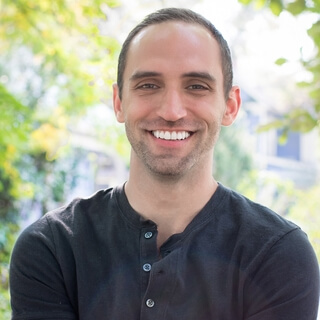
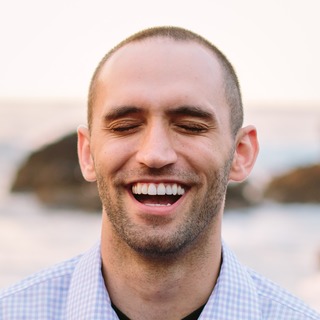
I'm here with my co-host Cody Edner and we've got a very special guest for you today.
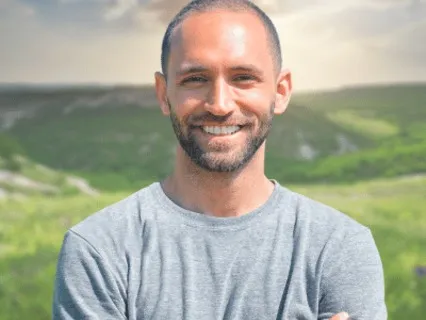
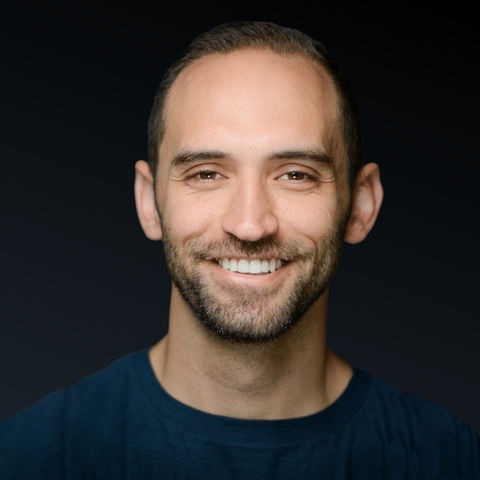
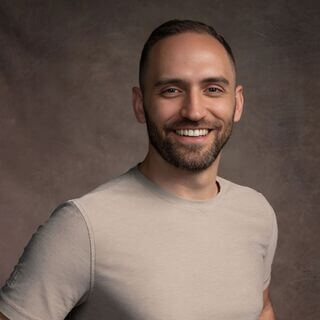
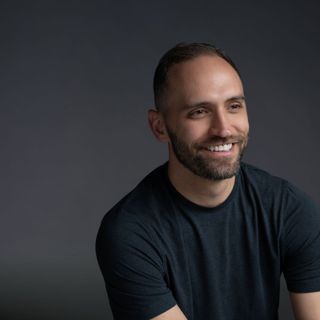
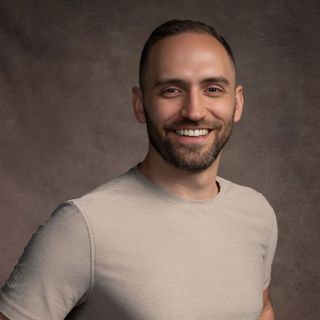
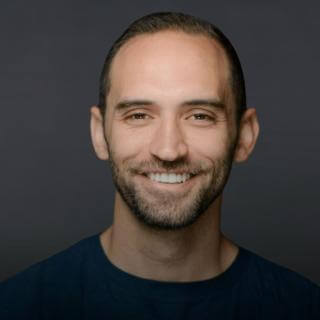
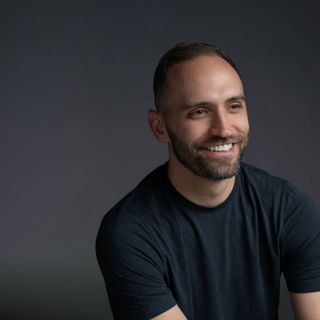
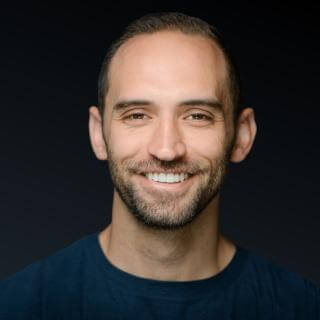
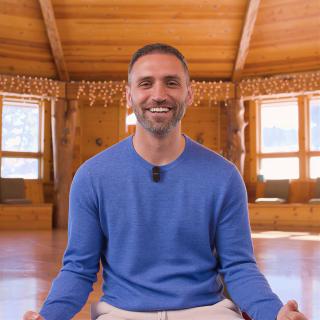
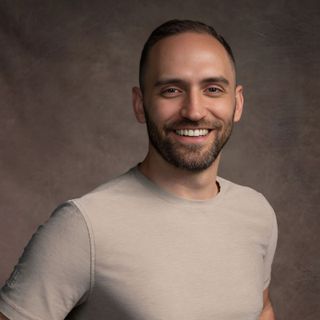
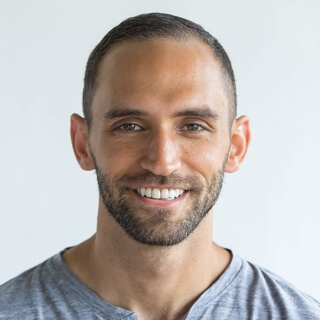
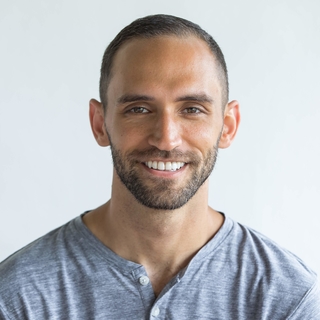
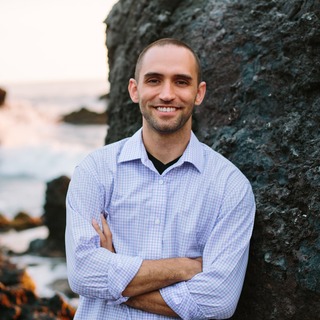
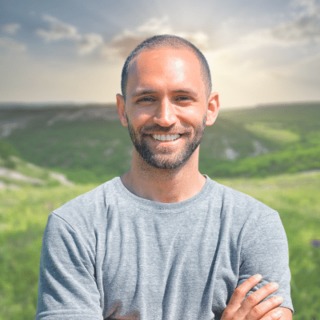
His name is Mark Gober.
He's an author and he's got a really special book called An End to Upside Down Thinking.
Mark started his career off,
Well first of all,
Mark graduated at the top of his class at Princeton.
I went to Rutgers so I'm like oh man,
He's smarter.
He started as an analyst at an investment bank and then ended up,
And Mark will tell you his story,
But he ended up learning about consciousness and it totally opened up his world which led to research and then writing of an end to upside down thinking.
And Mark traces his journey.
He explores compelling scientific evidence from a diverse set of disciplines ranging from psychic phenomenon to near-death experiences to quantum physics and beyond with cutting-edge thinkers like two-time Nobel Prize nominee Dr.
Ervin Laszloff,
Who I love his book's Pixar founder and two-time Academy Award winner Lauren Carpenter,
Chief scientist at Noetic Sciences,
Dr.
Dean Radin who's actually been on this podcast.
He's one of my absolute favorites.
He was fun.
Yeah,
We're gonna have to talk about him a bit.
And on and on and on,
You've got endorsements from Larry Dossi,
Jack Hanfield who wrote Chicken Soup for the Soul.
You've come a long way,
Mark,
Since 2016 when you had this awakening.
I mean,
Cody,
We're just talking about it before the show.
We're super impressed.
We're like man,
We could barely get off like five podcast episodes a year.
Mark's been on like a hundred.
He wrote a book and it's been like two years.
So we're gonna have to ask how you produce so much while you at the same time work in finance.
You've been cited in Bloomberg and you're just everywhere it seems.
So congratulations on that and thank you so much for being here.
Well,
Thank you both for having me.
Absolutely.
And Mark,
You are in San Francisco just so you all know.
Cody is in Colorado.
I am in Los Angeles.
So we are representing the West Coast today.
So Mark,
I just wanted to start at a really interesting place and I've heard you talk about this before,
But Nicholas Copernicus,
1500s,
He publishes this book on the revolutions of the celestial spheres right before his death in 1543.
And he says that the sun is the center of our world and not the earth.
And which obviously at that time was heresy.
But he recognized that the sun was the center of the world and he started to change the worldview,
Right?
And I think what you're talking about in your book and part of your thesis and maybe you can share with us is that there's another turn in worldview and that turn according to you is that consciousness is not a product of the brain.
So maybe we could just start there a little bit more about what you think about Copernicus and that change in worldview and that paradigm and then into what you're doing.
I think it's a good comparison to the consciousness revolution that is here or on its way.
In that it's probably the biggest worldview shift that our civilization has seen in recent history.
No one living today has been through a revolution in thinking that dramatic,
Where we thought the world was one way and we realized it was something completely different.
We've kind of been steadily in a pretty constant paradigm.
Maybe we're getting new developments in incremental ways,
But what I'm speaking about and what a number of scientists are starting to speak about is recontextualizing consciousness and really our own identity.
So in some ways,
And this is why,
For example,
Former Harvard neurosurgeon Dr.
Eben Alexander,
Who endorsed my book as well,
He calls this shift in thinking something that will make the Copernican revolution seem minuscule in comparison because the Copernican revolution is,
While it was extremely significant,
The realization that the earth is not at the center of the solar system,
That was a massive paradigm shift.
While it was still massive,
It represented something that was an external shift,
A shift in the way we viewed the world around us.
Whereas the shift that I'm speaking about and many others are speaking about is a shift in our own identity.
It is an internal shift,
Which in some ways,
And this is why I think Dr.
Eben Alexander said what he did,
It's perhaps a bigger deal.
What do you mean by that shift?
So how are we supposed to see ourselves as consciousness,
As not coming from formulating from the brain?
This is kind of skipping to the end.
This is where everything in my book and my research is pointing towards is the notion that consciousness,
When I say consciousness,
I mean the subjective inner experience that everyone listening to this conversation has right now.
We are all conscious we all have the subjective awareness that is absorbing the information that we're all hearing.
The mainstream assumption in science is that that consciousness is a product of the brain,
And we can discuss why that is a problematic assumption.
Most of my book is about the evidence suggesting that that assumption is not true,
And that instead,
Consciousness is not only not from the brain,
But it's the basis of all reality.
So the physical body,
The physical body,
Is the basis of all reality.
So the physical body is not the producer of our awareness,
But rather,
It is the vehicle through which consciousness is having an experience.
So our identity under this paradigm says that consciousness is our identity,
Not our body.
And that,
When you absorb that,
I think I'm still absorbing that.
It is a huge shift in how we think about the world around us.
Absolutely is.
And so if somebody comes up to you,
Mark,
And is like,
How is consciousness not a product of the brain?
Doesn't the brain kind of like a computer turn on and then the neurons fire and then now I'm self-aware?
Isn't it clear that there's that correlation?
How do you describe or explain to people the fact that there's a correlation,
But it's not actually derived from the brain?
And what kind of research did you do that like helped you come to that conclusion?
That's a great place to start,
Because when I talk to many people about consciousness and the brain,
There is this kind of assumption that,
Well,
Don't we know that when someone has brain damage,
For example,
Then they have memory loss,
Or there's some corresponding shift in consciousness.
When the brain is damaged,
The consciousness is shifted in a certain way.
And we can show many,
Many examples of ways in which the brain changes and then consciousness changes also.
And so there tends to be an assumption that,
Well,
The brain must be producing the conscious experience we have because the brain is so closely related to it.
But just using philosophy and logic,
We can't make that conclusion because just because two things are related to each other doesn't always mean that one is causing the other.
And there's an example that Dr.
Bernardo Kastrup uses,
Who is endorsing many of these similar ideas.
He says that imagine that you have a fire and lots of firefighters show up at the scene to put out the fire.
Let's say you have a larger fire and more firefighters show up.
We all know that the firefighters are not causing the fire in those instances.
So if we apply that kind of logic to the brain,
Is it that the brain is producing consciousness or is the brain just related to consciousness in some other way?
So the fact that there is such a strong correlation is not sufficient to then say the brain produces consciousness.
And that is a huge,
Huge point because I think there is this unspoken assumption often that the brain must be producing consciousness.
We already know that's true.
We just maybe don't understand exactly how.
And what I was shocked to learn in my research is that it's an open secret in science.
Science Magazine has called this the number two question that remains in all of science,
Which is that we don't know how a brain could produce consciousness.
All we know is that it's related to consciousness and it's called the hard problem of consciousness.
So that's maybe the first place to start is to establish,
Wait a second,
Even in mainstream circles,
There's a massive question around consciousness.
Yeah.
And I did my degree in philosophy and I was always the quote unquote hard problem is consciousness,
Which is funny to me that we call it the hard problem because it's like the most ephemeral,
Invisible thing there is.
But for the analytical materialistic mind,
It's the hard problem.
No solution.
I have to ask Mark,
What is the number one problem then?
The number one question,
And this was science magazine's list of top questions remaining in all of science.
They did this for their 125th anniversary edition in 2005,
I believe.
Number one question on the list was what is the universe made out of?
And I would argue that that is very much related to the number two question,
Which is what is the biological basis of consciousness?
To me,
The universe is made of consciousness.
And the number two question,
What is the biological basis of consciousness?
There is no biological basis of consciousness.
And that's why we haven't solved the hard problem.
The hard problem is asking how could a physical brain produce a non-physical consciousness embedded in that question is the assumption that the brain does somehow produce it.
Right.
So the question should be something more like how can consciousness produce this physical reality and how does that relate?
Yes.
What are the mechanisms right behind the physical manifestations?
Those are still big questions that are open,
But maybe the even broader question would be does the brain produce consciousness rather than how does the brain produce it?
And I would argue that the brain does not produce it.
And so if the brain doesn't produce it,
Then where does it come from?
That is a big question.
And it's one that I addressed towards the end of the book.
The question itself,
Where does consciousness come from if it's not produced by the brain?
It still presumes that causality is part of the universe,
Linear causality,
That the time goes from past to present to future and something from the past causes something in the future to occur.
That's one of the other paradigms that my book discusses and starts to break down,
Which is the notion that time is not linear in the way that we perceive it.
We perceive it that way,
But it's actually much more complicated.
And consciousness exists beyond all space and time.
So consciousness simply is beyond all causality.
And that's kind of where I come out.
This is one of those things that the human mind,
Which likes to think about things in very stepwise linear ways,
It kind of makes your head explode.
But I think that kind of a framework or something even beyond probably what language can describe is what's going on.
That's where,
To me,
All the research points in that direction more strongly than anything else.
And a lot of the ancient spiritual traditions throughout the world,
Like I used to live in India,
And that's inherent in their philosophy,
Is that everything is born of consciousness.
Yeah.
So yeah,
It seems like we had that notion in a lot of our ancient religions.
And then,
I don't know,
When did the Enlightenment and the great kind of scientific revolution happen?
500 years ago,
We broke from that in the West.
And now we're returning.
It's almost like science is coming back around to the fundamental ideas that have founded so many religions or belief systems that believe in spirituality and not so much the dogmatic religion side and the practices of meditation.
It seems like it's all converging together right now.
Do you have any implication or any thoughts as to why this kind of revolution of thinking,
This kind of spiritual renaissance is happening right now?
As you've researched this,
Do you kind of see some kind of a trend?
Yeah,
That's a great question.
It seems like there is an increase in interest in these topics coming from lots of different areas.
And maybe technology is playing a part in that.
For me,
In my personal journey,
I learned first about these topics through podcasts and then YouTube videos,
And then I started to read books.
But it's because of the accessibility of information that I was able to,
I think,
Advance in this so quickly,
Because it's all there.
And there's so many people that have studied these things for ages,
And you can read their synthesis of that information.
So I think that's part of what's happening.
Some people will say that there's kind of a broader awakening happening where we're awakening to this true nature and kind of acknowledging the illusion that our eyes seem to show us and acknowledging that there's more than what our eyes are showing us.
I don't know why that's happening,
But it does seem like there is a trend towards it.
Yeah.
I think it may have to do.
I've heard a number of people say that it has to do with this technological revolution of the internet,
Essentially,
And of the sharing of information.
And that the last big revolution on that level started with the printing press and the ability to share information at that level.
And now we have something happening that's really even bigger.
Yeah,
It's too bad Copernicus didn't have a podcast.
Yeah,
Exactly.
It would have changed everything.
It's speeding things up.
And I think on top of that,
The fact that our science has advanced in so many ways has helped it.
I mean,
The fact that I felt comfortable enough to write a book on this topic,
As someone who's not even a scientist,
Someone who works in the business world,
That could have only happened if there was enough evidence in distinct and independent areas.
And one of those areas is quantum physics,
Where the early quantum physicists who were only able to discover many of these things because of advances in technology that allowed them to explore the ultra small domains of the universe.
You have people like Max Planck,
Who in 1931,
He said,
I regard consciousness as fundamental.
I regard matter as derivative from consciousness,
The Nobel Prize winner in physics,
One of the early quantum physicists.
That's what he said.
He said it again.
That's awesome.
I'll say it again.
Nobel Prize winning physicist,
Max Planck in 1931,
He said,
I regard consciousness as fundamental.
I regard matter as derivative from consciousness.
Where did he get that idea?
Quantum physics is really pointing in that direction.
When we look at some of the experiments where some physicists interpret the results as demonstrating that consciousness is playing a role in physical reality in ways that our common sense wouldn't really understand,
But that's what the results are pointing to.
That's fascinating.
And so after,
Well,
Max Planck,
I think he was in the late,
Was he in the late 1800s?
That quote is from 1931.
Oh,
Is that late?
Okay.
So quantum physics was already,
Had been birthed in some form.
I wanted to bring up,
So just the other day,
Well,
I don't know when we're going to release this yet,
But recently the human beings took the first photo of a black hole.
And to me,
That was so cool to get to see that.
It took like,
I think,
Dozens of telescopes and hundreds of scientists.
And it was just,
It's amazing moment in human history.
And it came 101 years after Albert Einstein came up with the theory of general relativity.
And a hundred years later,
He gets proved right.
And I think it just a couple of years ago,
Gravitational waves,
He got proved right.
This guy is amazing.
And yet when it came to quantum physics,
He was very resistant,
Because it was so different than his worldview.
He's a father in some sense of quantum physics,
And yet he himself was resistant to it.
And he was always talking about,
You know,
Spooky action,
Not always,
But he mentioned he didn't really buy into spooky action at a distance,
Maybe when it came to like quantum entanglement.
And even someone as,
As open-minded as Einstein had resistance to changing the paradigm and the worldview.
And so if he had some kind of resistance to it,
Man,
You got to check ourselves.
He really did.
He called entanglement,
Entanglement,
Just to simplify it is the notion that you have one particle that's here,
Another particle that's far away.
When you affect the one that's close by,
The one that's far away is affected at the exact same instant in a correlated manner.
And the reason Albert Einstein didn't like that is he thought the speed of light was the fastest that anything could travel from one place to the other.
And yet he was so resistant to it.
And he was so resistant to it.
And yet he was so resistant to it.
And yet here we have something that is an instantaneous reaction or correlation at a distance.
So we said,
Wait a second,
No,
That can't be the case.
He tried to disprove entanglement and it now has been proven to be true.
So you're right that Einstein,
While a brilliant person was having trouble with some of these concepts and actually in a conversation that he had with a Begali mystic named Tagore in 1930,
They were discussing,
Yeah,
They were discussing basically materialism or realism,
The idea that there is a physical world that exists independently of any form of consciousness and that we are,
We emerge within that physical universe,
Which is the conventional scientific view.
That's kind of where Einstein sat.
Whereas the mystics will say,
No,
Consciousness is fundamental and there's nothing outside of consciousness,
Nor could we ever prove that anything is outside of consciousness.
Einstein said in that conversation,
He acknowledged,
He said,
I cannot prove that my conception is right,
But that is my religion.
So he was acknowledging that there is no way actually to prove the existence of the physical world independent of consciousness,
But he was kind of just sticking to that as what he thought to be true,
His belief system.
And that's where I think we are really as a scientific community and really a global community in many circles,
Is the belief that there is a material world that exists independently and we emerged within it.
Let's talk a little bit about some of the deeper topics here,
Psychic phenomenon,
Near-death experiences.
You did some research on that stuff as well,
And I'm sure that was pretty mind-blowing for you to get into that,
Like some of the work of Dr.
Dean Radin,
Rupert Sheldrake,
And you know,
I mean,
Cody and I,
We both have run intuitive training centers and we teach this work for a living,
So it's like all day,
Every day for us,
But maybe walk us through a little bit what that was like,
But we had our opening enlightening experiences with it as well.
Maybe walk us through for a minute how that was for you when you started to dive into these topics and go like,
What,
Psychic,
What?
There's actually evidence of this,
What was that like for you?
That's actually how this exploration started.
I heard a woman on a podcast,
Her name's Laura Powers,
She was on a health podcast talking about her own psychic abilities,
And then I ended up listening to her podcast where she has interviewed many other people that have either studied these topics or have had experiences.
So once I heard her podcast and I heard many independent accounts of psychic phenomena or things like consciousness might survive bodily death,
Things of that nature,
I became interested to look at the science and that's when I started to come across Dean Radin and other scientists that have really looked at this in a rigorous way.
And just for context,
The way that the book is structured and the way I now think about psychic phenomena and consciousness's survival beyond bodily death,
I look at them as pointers to this notion that consciousness is the basis of reality.
And there's an analogy that,
To me,
Is that when you look at Dr.
Bernardo Castro uses to explain this idea,
Which is to say that all of reality is like a stream of water,
Where water is like consciousness,
And each of us is a whirlpool within that stream.
So we are made of water within the stream,
We're made of the same water,
But there are boundaries to make it seem like we are having our own independent experiences,
Yet we are connected as part of this broader stream.
So if you buy that framework,
Then it has several predictions.
One is,
Let's just say some of the water from my whirlpool gets into another person's whirlpool.
That's like some of my consciousness entering their consciousness.
That's like a psychic or a telepathic ability.
So this model would predict that psychic phenomena should be real.
They would not be paranormal or anomalous.
They would be predicted by the model.
The second major prediction is to say,
Well,
What if the whirlpool stops being a whirlpool?
The water just flows into the broader stream.
It transitions into a new form.
That would sort of be like when the physical body dies,
The consciousness itself hasn't left the stream.
It's just transitioned into a new form.
So this model predicts that consciousness would survive bodily death.
Can you tell us a bit about some of the psychic research that you did?
Yes.
So the reason that I approach the psychic research is to say,
Look,
If any of these phenomena are real,
If any of them are real,
We are going to have a really hard time explaining them by saying that the brain produces consciousness.
Whereas if we're all connected as part of the same stream,
We can explain it.
So that's why I aggregated so much evidence to say,
I cannot shoot all this evidence down.
And if there's one thing that's real,
We're going to have to question the paradigm.
I happen to think there's a lot of strong evidence for many different areas like psychic phenomena.
So some of the best evidence that when I don't have much time to tell people about something,
I point them to declassified CIA documents that I was able to include in the book.
The US government ran a program for more than 20 years where they used psychic spies for national security.
The phenomenon is known as remote viewing,
Sometimes called clairvoyance,
Where you can perceive something that is not near you physically.
So you're not seeing it with your eyes.
It's far away and yet you can draw out what you see.
That's remote viewing.
There are declassified CIA documents that have reviewed what happened during the US government's program and for a long period of time it was very secretive.
One of the quotes in the documents is remote viewing is a real phenomenon.
There are a bunch of others,
But that one it's like,
Okay,
CIA is saying that it is real.
Reality of it,
Yeah.
That's just one little data point and actually for your listeners who are interested,
There's a new documentary out produced by Russell Targ who was one of the laser physicists at the Stanford Research Institute who ran the US government's program.
It's called Third Eye Spies,
Which chronicles what actually happened during the US government's program.
I've seen it.
It's really good.
I recommend it.
Russell Targ is a veteran of this work.
I think he's been doing it for like 50 years.
He is and I have my own podcast that will be coming out sometime in 2019.
I've interviewed many of the people that have studied these topics,
Including Russell Targ,
And to speak with someone like him who has seen the applications of psychic phenomena firsthand for years in real world situations,
There's no doubt as to whether or not psychic phenomena are real.
They're just real to someone like him.
Whereas for other people,
It's still,
Well,
Can I believe in the statistics or not?
It's interesting to talk to someone who's been in it like that.
I teach a class called Psychic twice a week here in Los Angeles at a very popular meditation place called the Den.
Most of the time when I teach brand new people half the room and they're like,
Last night I had three people they've never meditated before and they walk into a class called Psychic.
I start to just expose them to some of these concepts,
Ideas,
And meditation tools to open up these abilities.
In my experience,
And I think Cody would agree,
That everyone has these abilities.
It's just like anything,
You can sharpen them and get better.
I think where a lot of people who are like quote unquote skeptical maybe,
Well one,
They haven't been aware of having their own experiences even though when you go deep with some of them,
They will start to admit they have.
Two,
That they say it's very hard to replicate consistently,
Which is true.
If you take somebody with the ability and go tell me what card I'm going to choose in this deck 100% of the time,
Now you're asking someone to be all knowing.
I think that's beyond all of us.
You could probably elucidate this a little bit for us.
If you look at the metadata over time,
Over thousands of studies,
There's almost without a doubt incredible trend and statistical significance of people having all sorts of abilities.
I think there's a common misconception,
Which is that well if psychic abilities are real,
Then someone should be 100% accurate.
The misconception is whether or not they are accurate beyond what chance would predict.
Right,
That's a better question to ask.
Yeah,
That's a good one because there are,
I run into so many misconceptions when you speak of being psychic,
Especially when you use that word.
I think we,
Like if we talk about being intuitive,
People can have a little different idea in mind about what you're talking about.
But when you say psychic,
That word has been portrayed in the media to mean so many different things.
And through movies and things like that,
That everybody has this misconception that if you're psychic,
Either you should know exactly what,
I should know what you're thinking,
Or I should know what you're about to do,
As if being psychic means I can predict the next thing in a chaotic quantum world of potentiality.
I should be able to pick the next thing that's going to happen out of all that.
And if I could process that much data in my mind to pick that,
Then I would have something to sell,
I guess.
Mark,
We were hoping you could do that for us with the market today,
If you could do a little bit of that.
Right,
Exactly.
Well,
Interestingly,
Russell Targ was using a form of remote viewing to predict the silver futures market.
And they were correct nine times in a row and made a few hundred thousand dollars.
You're kidding.
Wow.
That's the thing I talked about in my book.
And there was a documentary on it,
Apparently.
And so people have been trying to do this.
It can be difficult.
And apparently,
Because the mind has to be really quiet,
It can be difficult when you're dealing with emotionally charged issues like money.
Because when the amounts start to get really big,
Then you lose the… if your brain's like an antenna,
All of a sudden you muddy the signal when you start to add emotion into it.
Right.
And a lot of it relies on focus too.
So the ability to kind of focus and kind of filter through all that information that's there when you look at something is a challenge.
It takes practice.
And if I could just add to that,
Cody,
In my experience,
Because I've done thousands of readings,
If it's not in someone's highest interest,
If they're not ready to know something,
For me,
Sometimes as someone working with them,
It doesn't really even come through.
There's almost like a natural law or barrier for certain information.
With that being said,
Just the other day,
I was with a client and I very clearly was like,
That looks like a bad idea.
And they didn't listen to me and it cost them a hundred thousand dollars.
Yeah,
It actually just happened.
So sometimes it does come through,
Sometimes it doesn't.
And it's this hard to explain.
For me,
Mark,
It's like this dimension plays by different rules.
And the more you play in it,
The more you understand the rules.
Kind of like you're a tennis player.
I think like with anything,
The more you're in the game,
You understand the nuances and people want to take their materialistic 3D worldview and say,
Well,
The psychic realm needs to behave exactly this way so I can predict it.
Otherwise it's not real.
And then they start from a premise that isn't true.
I totally agree with that.
I've noticed that a lot too,
That there's an assumption about how the rules work.
And when something doesn't conform to what they think the rules are,
They say it's inaccurate.
But that's assuming these rules in a multi-dimensional universe where we don't know much ourselves.
Right.
And that sounds like why you called your book and end to upside down thinking.
Yes,
There are many reasons.
The ultimate like meta reason is that I include triangles in the book that are actually adapted from Dr.
Gene Raden,
Where at the base of the triangle,
You have physical matter,
Like that's the big bang fills the universe with matter.
You have lots of these atoms in the universe interacting.
We call that chemistry.
So we've got matter,
Then chemistry above it.
And then when you have enough random chemical reactions that through chance leads to the evolution of a molecule like DNA,
Like randomly,
You're bound to end up with a molecule that can replicate itself.
So now we have biology.
We started with matter,
Chemistry,
Biology,
And biology is like a human being,
Which has evolved to develop a brain.
So you get brains above biology,
And then consciousness comes from the brain.
That is the chain of events in the materialist paradigm,
Which is running the world today.
Matter creates consciousness,
Matter at the bottom,
Consciousness at the top.
The alternative paradigm puts consciousness at the base,
Leaves everything else intact,
But says no consciousness is first.
And that's the genesis of the upside down thinking.
So how does it look if consciousness is first?
Is the rest of the pyramid the same?
Yes.
Yes.
And that's,
I think,
Hopefully should be relieving for many scientists or even just general thinkers,
Which is that we don't have to throw out everything we've learned about the material world.
We don't throw out chemistry and biology and neuroscience.
We just recontextualize them as being within consciousness rather than those things being the building blocks leading us to consciousness.
Right.
So we flip it to where consciousness is the cause of all,
Right?
Yes.
The causal thing.
Yeah.
Where do we go from here,
Mark?
So what is,
So we have this Copernicus style moment.
We start to recognize the importance of consciousness.
Maybe there's this kind of a spiritual awakening that happens across the planet for a lot of people.
So what do you see with the research that you're doing,
With the talks that you're giving?
Like what is the next step from that?
So let's say we,
For the moment,
Agree with you that consciousness does create all form and matter and our paradigm shifts.
Then how do you see the world going differently?
I mean,
You studied behavioral economics,
So you've looked at it from that angle.
But yeah,
What is your,
What is your second book?
Don't know what the second book is,
But to me,
The biggest implication of where this all goes,
There are a number.
I mean,
Science and medicine will need to shift to adjust for this new paradigm because the current paradigm says consciousness is an epiphenomenon of the brain that has no effect on the physical world around us.
Whereas what I'm just talking about says consciousness is the basis of reality,
Meaning all of our science and medicine suddenly needs to incorporate consciousness into the equation.
So that's massive for disciplines.
Yeah.
So when we change our consciousness,
Maybe it could heal the body or it could affect physical matter.
Is that what you mean?
That's definitely part of it.
And I have a chapter in my book on this topic.
It's known as psychokinesis in scientific terms.
So moving objects,
Moving matter,
Affecting physical matter with consciousness.
Yes.
And they did a very long 30 year study on that at Princeton.
Can you tell us a little bit about that?
Yeah.
So Princeton had a lab,
Which I didn't know about when I went to school there.
It was apparently very controversial.
It was run by the former dean of engineering who passed away in the last few years.
And it was called the Princeton Engineering Anomalies Research Lab.
They looked at these phenomena of consciousness.
They studied remote viewing as well,
In addition to the US government's research,
But they did spend a lot of time looking at psychokinesis through machines that are called random number generators.
So these are machines that spit out zeros and ones in a totally random fashion.
And when you look at the string of zeros and ones that come out,
You end up with close to 50% ones and 50% zeros,
Because it's totally random.
In the experiments,
People are the subjects or the participants in the studies are asked to try to mentally influence the machines without touching the machines.
And sometimes they're far away from them physically.
The experimenters say,
Hey,
Cody,
I want you to try to influence the machine with your mind so that it produces more ones than zeros.
And when they've looked at the results of these studies,
When they look at the strings of zeros and ones,
They find that there is a statistical effect that is very,
Very small,
But highly statistically significant,
Where when the person is putting the mental focus on the machine to try to make it produce more ones than zeros,
There are slightly more ones than zeros.
And they found that over 30 years of doing this trial.
Many,
Many,
Many trials of this stuff.
And again,
It doesn't blow people away because it's statistical in effect.
It's very,
Very small in its nature.
But when you use statistics,
Like we use in any other area of science,
We see that this is something that is happening beyond what chance would predict.
Well,
If I was creating studies like that,
Like that wouldn't be my optimal study because one,
Asking a machine to spit out a one instead of a zero is incredibly boring.
And right,
I have no skin in the game.
There's no energy behind that.
And there's no reality behind the one or the zero or in the computer.
So I could see why there would be statistically still significant but low result.
I think if you took some kind of adept,
Conscious healers slash intuitive people who have experience,
Put them in studies where something really mattered to them,
Like healing or something along those lines and studied that,
That you,
I,
My assumption would be you would get better results than asking a machine to spit out a one rather than a zero.
Well,
There have been studies on energy healing where people who have prodigious abilities are able to seemingly influence the body or influence cells or other forms of biology using mental intention.
I would say those studies are probably need more of the types of replication that we've seen for the random number generator experiments.
The good thing about the random number generator experiments is that there,
It just had so many results.
And in fact,
There's something called the global consciousness project where these same machines are set up all over the world.
Most people don't even know that they're running.
And the experimenters like Dr.
Roger Nelson,
Who was at Princeton running many of the studies there,
They look at what happens to the machines when there is a major global event that they think would shift the consciousness of the planet or many people on the planet in a certain direction.
So like 9-11 or Princess Diana's death,
They look at what the machines are doing that are again set up around the world.
Most people are not trying to affect the machines with their mind.
And yet the machines behave non-randomly during certain world events versus the baseline.
So there's tons of data because they're constantly,
These machines are constantly running.
What kind of a conclusion do they draw from that?
That there seems to be some collective effect where when many minds are thinking in a certain way,
There is an effect on a physical process.
Interesting.
The effect is the departure from the departure from randomness.
So the departure from the 50-50 that we would expect 50% 1s,
50% zeros.
Again,
There's this very small but highly statistically significant effect during some major world events.
Well,
I woke up at 4 a.
M.
To an earthquake last night.
So that could have been one of those.
The whole house shook.
I didn't know that.
Southern California?
Yeah,
I haven't looked online or anything yet,
But it was there.
I didn't feel it here.
It's fascinating.
Mark,
Do you have a specific practice yourself that you do?
I've experimented with many practices,
But many are just forms of meditation,
Whether it's breathing related or focusing on a certain thing.
But I think forms of meditation,
Which can be defined in many different ways to me,
That really means aligning with one's true identity as consciousness.
So it's kind of remembering,
Wait a second,
I am the consciousness that's experiencing thoughts,
The consciousness that's experiencing the body and the world around me.
And aligning with that rather than being drawn fully into the physical world and identifying with the body,
The pulling back to the identity as consciousness to me is meditation or contemplation.
And that can take on many forms.
And for different people,
I think it different forms are effective.
Yeah.
So you essentially you're recognizing you're not just the thoughts that you're having in your head,
You know,
The stressful,
Anxious thoughts that are going on all day,
That you're the awareness that is experiencing those thoughts.
Yeah.
So even if I say,
I am thinking that sentence,
The structure of a sentence indicates that there is an eye and that there is thinking is happening,
But I is what is experiencing the thoughts in that sentence.
Thanks,
Thanks,
Descartes.
You started that.
Yeah.
That's about as much as I remember from my philosophy degree at this point.
Are there things,
Mark,
That someone listening to this podcast,
Driving or sitting meditating,
Can do from your perspective to awaken to this more?
Like is there,
Yeah,
What would your advice be to somebody that's like,
I like Mark's paradigm of the world.
I want to deepen into it.
How do I go about doing that?
Well,
For me,
It's been very much an intellectual exploration where the exposure to information has forced me to accept a new paradigm where I couldn't,
I couldn't discount all the evidence in different areas.
And then the more I learned,
The more I felt like,
Oh,
Wow,
This is the reality I'm in.
And therefore I better align with that reality.
And to me,
Aligning with that reality is recognizing identity as consciousness rather than the body.
So to me,
It was kind of a chipping away at my old paradigm through examining evidence.
And that's one of the reasons I decided to write the book and why I'm speaking about the topic so much,
Why I have a podcast coming out,
Is to make that information accessible to those who want to go there.
Because once you hear these things or you see them,
You can't unhear them,
You can't unsee them.
And it starts to chip away at the paradigms that we've all grown up with.
That to me alone starts to create shifts.
And I've experienced it with many friends around me who say that once they kind of go down this path,
They start to have synchronicities,
They start to get rid of things in their lives that are not serving them very well.
And it begins to happen naturally as one kind of strives for understanding the truth of reality.
That is fascinating.
Boys and girls,
If you're listening,
Your whole reality is about to shift.
Or it already did.
And that's why you listen to this podcast,
Because we talk about cool shit every time.
You know,
And you mentioned with this paradigm shift,
Like we need to rethink our worldview changing in this way,
We need to rethink like healthcare,
And things like that.
Maybe economics,
Maybe what happiness is and how we arrive at what the good life is,
You know,
Quote unquote.
Because all of those are based on the materialistic model,
Which kind of drives a certain idea that once you get something in the materialistic world,
That's when you get happiness or success,
Maybe even success gets redefined through this.
But I'm interested in your economic thoughts,
Because you studied,
And maybe more from the behavioral economic side,
Because I'm interested in that whole field,
Actually,
It's such an interesting,
Fascinating field.
But what are the implications you see when you think about it?
What are the implications you see with this paradigm shift in that our kind of relationship to the world in that way?
Economics,
What we get from the world,
Where we get happiness,
All those things.
For me,
Everything starts with what is the nature of reality,
And the nature of reality then informs priorities,
Really.
And if we regard reality as being this interconnected stream of consciousness,
Where the separations that our eyes show us,
And we interpret it as separate,
Where I see you and I say,
Wow,
You're a separate person,
Because that's what my eyes show me.
And I'm used to interpreting that that way.
Whereas,
Maybe we're interconnected as part of the same stream.
And the separation that we see is really just kind of an illusion,
Or it's just a misinterpretation.
Then that has a set of implications,
Interconnectivity,
The notion that we are the same at the level of consciousness that vouches for or it becomes very rational to become altruistic under that framework.
Because by helping others,
You are helping yourself as part of the same consciousness.
And that influences things like economics,
Because the incentives to do things in the world and to make money,
They would still exist,
But maybe the purpose behind them would shift.
The purpose of using money or having an economic system would be to help the greater good more often than just helping the individual.
And you work still in finance every day,
Don't you,
Mark?
Tell us a little bit about what you do.
And how do you continue working in that field with this kind of new worldview?
How did those two clash or come together?
Well,
My career started in 2008 in New York,
I worked at an investment bank called UBS.
So during the financial crisis,
They're going to say Bear Stearns or yeah,
No brothers,
I was on Park Avenue in New York.
So not far from all that.
And we were exposed to it because many of my clients were banks and insurance companies and UBS was going through its own financial issues.
So I was in the heart of that.
And then when I left New York in 2010,
I joined my current firm called Sherpa Technology Group,
Where I'm now a partner.
And we advise primarily tech companies on their innovation and their business strategy.
So really advising senior management,
Boards of directors,
Centers of innovation on how to move their businesses forward in various ways.
So I view business as still being very important as an engine for progress in the world.
And the companies that we work with are very innovative and I think are helping the world in that sense and making things more convenient and better for many of us.
So I think it's just a matter of contextualizing how we look at things.
And how about your business partners?
What do they think about what you're doing?
They've been supportive.
They've been supportive.
And we work a lot with intellectual property and patents in particular.
And the nature of a patent by definition is that it is both novel and non-obvious relative to what has been done in the past.
So every patent that has been issued is looking at what had been done,
Looking at an old paradigm and showing how it is incomplete.
And that's really what I've ended up doing with this book,
Synthesizing what others have done and putting it into one place.
So when I presented the book to my partners and my other colleagues,
To them it's a very similar trend that we see in the innovation world.
That's so fascinating.
I have like a thousand questions about patents.
Do you see this model that we have right now of like endless growth,
Like the ultimate common denominator is like the GDP,
You know,
Like we are consumers of material.
And that's how we,
That's how basically we look at the whole economy.
How much material are we consuming and can we consume more?
Do you see that actually changing anytime soon?
To me,
It seems like even though there are shifts in consciousness and more people are awakening,
If I turn on the news on any given day,
It seems like nothing has shifted.
And so I don't know.
I don't know when we'll see a shift on a more tangible,
Noticeable scale.
The way things are going right now,
I don't see it shifting in the near term.
Yeah.
Well,
Maybe one of our psychic friends can tell us when it will and we can invest in more silver.
We'll ask Russell Targ.
Well,
Let's ask Russell Targ because my abilities on that end,
They don't always work so well.
A little rusty.
How about you,
Cody?
No,
I don't see it shifting.
Well,
I mean,
We are in the midst of a shift,
Which is the chaos we see,
But I don't know what the outcome will be.
Yeah.
What do you mean?
What do you mean we're in a shift because of the chaos?
I like that.
Well,
I mean,
To me,
The amount of chaos we see denotes that we're in the midst of a shift.
Like any big step in growth usually is accompanied with a lot of,
Well,
In our world,
We call it a growth period,
Like a time when you kind of don't know where you stand and everything's in flux.
And to me,
When I look at the world,
It looks like that's what we're seeing right now.
But that's just my take on it.
Yeah,
I like that.
I don't know.
But I think that part of it is exactly what Mark's talking about.
That shift is an internal paradigm shift.
And then as we experience that,
We're seeing the kind of reflection of that in the world.
There's a lot of noise about that shift,
A lot of different people trying to voice a direction or a concern.
But right now,
There's so much that's unfocused.
It's really hard to gather ourselves and to think about what we need to focus on moving forward.
Yeah,
I agree.
So Mark,
Before we finish,
I guess for me,
Just last question would be for,
And we always try to make all of these episodes like very listener centric and really give them something that they can walk away with to help their lives be a bit better.
So obviously,
Your book,
Which I want to mention,
Is a book that you're reading,
And it's called The End to Upside Down Thinking.
But are there some other books,
Resources,
Practices that you would say,
You know,
If you really want to shift your consciousness,
Take a look at this,
Something that in the last few years of your research that has really leaped out at you that you'd love to tell your friends about?
Yeah,
Definitely a few.
Dr.
David Hawkins.
Oh,
Yeah,
He's wonderful.
His books are incredible.
He has a book called Letting Go.
He was a.
.
.
I just read it.
Okay.
That's why all of his books are amazing.
But that one is really practical.
He was a top psychiatrist in the US before he essentially became enlightened.
So that book is a hybrid of basically an enlightened sage and a psychiatrist talking about different emotions and ways that we can let go of them.
So when I've recommended that to friends,
People have thanked me,
Thanked me often for that.
Couldn't agree more with that recommendation.
Yeah.
That's a good one.
On the topic of the philosophy of these topics,
Which in some circles,
People will call this idea idealism,
The notion that everything is mental,
That the universe is made of consciousness rather than matter.
So it's like idealism versus materialism.
And one of the biggest proponents today of idealism is Dr.
Bernardo Castro,
Who I mentioned earlier,
He has a new book out called The Idea of the World,
Which is probably his most academic book for your listeners who like kind of academic philosophy.
It is a really compelling and complete argument against materialism or physicalism from a philosophical standpoint.
So whether it's that book or some of his other books,
Your listeners might be interested in that.
In terms of the science,
Which is where a lot of my book focuses,
What I try to do is to summarize what I thought are some of the coolest resources.
We didn't get to talk much about the near-death experience,
But to me,
That's one of the most important things that I've learned about.
And one phenomenon I'll mention,
Because I like to mention it as often as I can,
It's known as the life review that is often reported during the near-death experience.
So near-death experience is when a person is in some kind of extreme physiological duress.
So we'll call it cardiac arrest or some kind of traumatic brain injury.
The person is clinically dead or close to it and their brain is not functional or it's barely functional.
What happens,
This has been reported throughout the ages.
The Egyptian Book of the Dead talks about it.
Plato talked about it because people have had these experiences.
They hover over their bodies in an out-of-body experience,
Again,
While their brain is impaired.
And they see things in the room that are sometimes verified as being accurate.
That's very difficult to explain under the conventional paradigm.
And then sometimes they're in other realms.
They see deceased loved ones.
Sometimes they see mystical figures,
But they often also describe in the state having a life review where they experience their whole life in a flash,
Starting from the beginning,
Typically.
And they are observing how they acted in those instances.
In many cases,
They're actually re-experiencing the events through the eyes of the person that they affected,
Which again,
If we're one consciousness,
It's like in this alternative dimension,
Somehow people can switch back and forth.
And one of the most compelling examples of this that really struck me is from Daniel Brinkley,
Who is famous for the near-death experience he had decades ago.
And he's now had four of them.
When I interviewed him a few months ago,
I knew about him.
He keeps getting hit by lightning,
Doesn't he?
Well,
That was his first one.
He got electrocuted picking up a phone.
I thought he did a couple of times get hit by lightning.
So he's had four near-death experiences,
Two during open-heart surgery,
One during brain surgery,
And then one while being electrocuted.
Each time for him,
He had a life review that started from the beginning.
And in his life,
He was in Vietnam.
He killed a lot of people.
He told me he was vicious as a warrior.
During his life review,
He's had to relive that.
So he has experienced the deaths of the people that he killed and the pain that they experienced.
Not only that,
He experienced the pain of the children who would no longer have a father because of what he did.
Wow.
Which speaks to the interconnectivity of everything.
But it gets to this point of,
Well,
Okay,
If the life review is a real thing,
And those who study near-death experiences or who have had it,
The things they tell me are the life review is real.
It is something everyone will have,
Whether you realize it or not.
Just the possibility that that is true and that we're going to have a life review and we're going to be evaluating how we acted towards people and the effect we had.
Just think about it for a second.
Cody's so screwed.
Yeah,
I don't want to think about it.
I couldn't agree more with that,
Mark.
And what I've experienced with the life review and my research with it and just my own intuition about it is that the only things that really matter are how much we grew and how much we loved.
Not like how much money we made or who we knew or what our legacy is,
But really how much we grew,
How much we loved.
Well,
Let's think about it just from a common sense standpoint.
We come into the body with nothing physical that we possess.
And when we leave the body,
Let's say consciousness does continue.
We're not bringing anything with us that's physical.
So all that does transfer are the ways in which we evolved or grew or loved or treated others.
So I agree with you,
David.
So that has to be the important thing,
Right?
Because that's the only thing that is lasting.
If we kind of believe this idea that we go beyond death,
Right?
And I love that,
The foundation of that paradigm shift that you're talking about where the realization of our levels of interconnectivity is kind of what starts to be made really revealed,
Maybe hopefully an individual consciousness on a daily basis.
And because that will change the whole world,
I think.
I can really see how this paradigm shift changes the world in that way.
And of course,
That's what David and I have been teaching meditation for years.
And that's what comes out of that deep level of meditation you get into is that realization.
And so we don't,
You know,
As meditators,
We don't always get to the place that we can articulate things in the same way that you are through science,
But we get to the place where we have the realization and we start to act differently in the world.
And I think bringing those two together is important.
I think it's important that we can articulate what's really happening so that we can share it in a broader sense.
And it's important that those that are starting to bring it to an understanding take it to that next level of realization by finding a practice.
But that's my thought on how to move forward.
That's a good thought.
One of the key descriptions of the near-death experience is ineffability,
The idea that people are unable to use language to describe what happened to them.
And that is part of the difficulty of expressing to people,
Oh,
Well,
I felt oneness and I saw everything,
But they're like,
I can't really use language to describe it.
If you haven't had that experience,
It's hard to convey it to someone in the same way that it can happen in meditation or with a psychedelic experience,
Transcendent states where people kind of leave the confines of these dimensions.
They're difficult to use words to describe.
So I think having the experience is probably the biggest thing that can happen to convince someone of the reality of it.
For others,
They might need the intellectual stepping stones to get there.
Yeah.
And it's like Edgar Mitchell's experience,
The astronaut coming back from space and experiencing that oneness which birthed the Center for Noetic Sciences.
Definitely can't force those experiences,
But sometimes life just hits you with them.
It's pretty wild.
Or you listen to a podcast and it hits you upside the head.
That happened to Mark,
But maybe somebody listening today that's happening to you too.
And if it is,
Email us.
We want to know.
That is our hope.
I'm looking forward to it to Mark.
It's so great.
Yeah.
Well,
Mark,
It has been such a pleasure to have you on the podcast.
We really appreciate the work that you're doing and articulating the things that me and Cody cannot articulate the way you do and saying hello to the science side of everything.
It's just so fascinating.
So I just want to acknowledge that.
Thank you so much for all that work.
And for all those of you who are listening,
If you want to find Mark,
You can go to markgober.
Com,
G-O-B-E-R,
And he's got a podcast that's going to be coming out soon.
Excited for that.
And his book is called An End to Upside Down Thinking,
Dispelling the Myth that the Brain Produces Consciousness.
And fascinating book.
Give it a read.
Thank you so much,
Mark,
For being here.
And thank you everyone for listening to the Energy Matters podcast.
See you next time.
Thanks for having me,
Guys.
Absolutely.
Bye,
Everybody.
You've been listening to the Energy Matters podcast with Cody Edner and David Gandelman.
Brought to you by intuitivevision.
Net and groundedmind.
Com.
Subscribe to the podcast on iTunes,
Stitcher,
Or soundcloud.
Com.