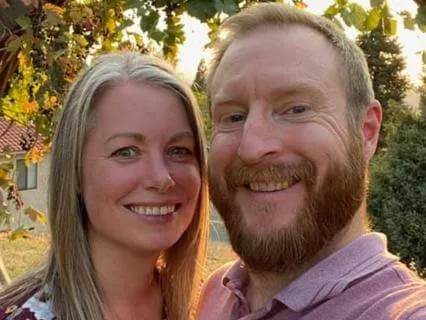
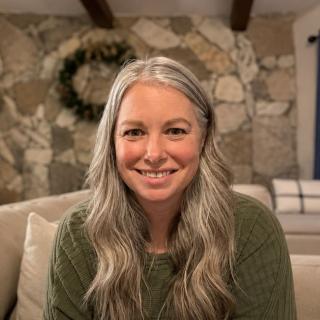
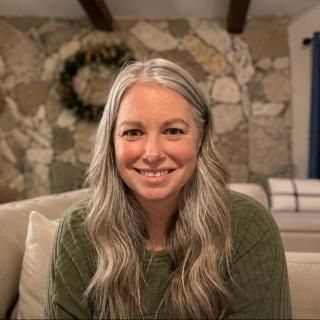
Hello and welcome to At The Helm with Jesse and Carolyn.
Today's episode is titled,
Vacation Disaster,
Or What To Do When The Universe Says No.
So we very recently scheduled a trip out to Kuala Lumpur here in California.
We really enjoy spending time in the Redwoods and by the ocean,
And we don't get to do that very often.
I've been working an awful lot recently and was really looking forward to some time to just relax with my partner.
I don't know about you guys,
But I talk about Vacation Jessie and I think Vacation Carolyn is a real thing too.
So there's a different version of us that gets to show up on vacation.
So I was really looking forward to spending some time with Vacation.
Husband,
Spending some time in the Redwoods,
Just really getting a chance to relax.
And truly,
There are parts of our brain that get activated when we're exploring together with our partners that don't get activated at other times.
So there's a lot of reasons to go on little trips or do new things together.
So we've scheduled that.
We scheduled the trip out into the Redwoods.
We got in the car.
We start driving.
We realize that it's a little bit farther than we actually expected it to be,
But that's okay.
There is a part of my people-pleasing anxiety that started to come up immediately as we started going out for the trip,
As Jesse realized how far he was going to have to drive that day.
But we managed to work through that,
And we start driving out towards the coast of California.
It was about a three and a half hour drive for us,
And so that was the beginning of that process.
Mm-hmm.
And as we're driving up the coast on Highway 1,
It's beautiful and we're looking out over the Pacific Ocean and we're high up on the cliffs.
If you've ever driven out there,
It's a very interesting highway.
And we start seeing signs of smoke in the air.
And that's a little concerning,
Especially in California,
Where we have four seasons.
We have spring,
Summer,
Fire,
Fall,
And winter.
That's fine.
That's what I said.
So,
We're driving up,
We're driving north and emergency vehicles start passing us on the road and we get behind one and it's really great for a while because it's clearing out the traffic well.
And as we're driving,
I just keep convincing myself and saying they're going to pull off at some point.
They're going to go off towards the fire and then we'll be able to continue on towards our destination.
We'll skirt this.
It's not going to be a big deal.
Everything's OK.
And so we keep driving,
We keep seeing more fire vehicles,
And eventually we get to a point on the one,
Which is a one lane,
Each direction freeway,
Literally on the coast of California.
And we get to a point where suddenly we see some of those same trucks that had recently passed us are now parked in the middle of the road and the road is shut down.
So the highway is shut down.
We pull up to a gentleman there,
A fire worker,
Who gives us directions to sort of make a right and kind of hang up around.
We started driving,
We go to the right,
And we look at each other and realize that neither one of us had paid attention.
Neither one of us had really heard the directions from him.
And then we look at our phone and realize that we don't even have cell service on our phone.
So now we have taken a right off of Highway 1.
We are driving in sort of the wilderness of California at that point with no cell service.
Clearly a fire that is happening in the area.
And then eventually,
Probably within about five or 10 minutes,
We get one of those alerts on the phone that even though we don't have cell service,
We still got the emergency alert stating that there's evacuation orders in place.
Do not call 911.
Get your stuff and leave.
And we start seeing more and more vehicles kind of around us.
We drive past people that we can tell are sort of trying to evacuate their home.
And suddenly,
We don't know where we are.
We don't really even have directions where we are.
We can't access our phones.
And a part of me,
And I think a part of Jesse,
Started to wonder if we were about to get trapped in a fire,
If we were going to be cars on the road that were in the way of people trying to evacuate or other fire vehicles.
And so eventually,
We did pull off.
We ran across a woman who was outside of her barn and very kindly offered,
Clearly,
Tourists to the area some advice on where to go and what directions to go.
She started kind of being a point.
More people started pulling off and kind of talking with her.
She clearly was trying to get her stuff.
Luckily we got turned around in the right direction.
And wound up just deciding at that point that there was no getting to the Airbnb.
And even though we didn't know if that was going to mean that it was going to be refunded or not,
Or what that was going to mean in terms of our trip,
We just decided that there was no point being one more car on the road,
Trying to get around this wildfire where evacuations were in place,
Where we might wind up at our Airbnb and be trapped in that anyway.
And so we decided to turn around and go home.
And that was kind of the extent of the day.
We wound up spending about eight hours in the car that day.
And our big stop off was Burger King for lunch that day.
And that turned out to be the entirety of the trip.
So we did stop off.
We were able to kind of pop out to the ocean briefly.
We stood on the ocean,
Put our feet in the sand.
In the smoke.
In the smoke,
And then decided to head on home.
And so we're so grateful.
Number one,
We recognize wildfires,
Especially here in California.
We're so grateful.
Our home was safe.
Our Airbnb was safe.
It was not part of the fire.
And so we just hope that everybody is safe and all of that.
And for us,
It also meant that our vacation got canceled,
Something that I have been looking so forward to spending time with my partner,
Celebrating some of the great things that have been happening in our lives together,
And really just getting the chance to sort of unwind and calm down.
So that's kind of how things went.
What was your experience on the drive?
My experience was I was very excited to take my wife on a much deserved and much needed vacation and everything was going well,
Even though it was a longer drive than we expected.
You know,
We'd been going for about three hours at that point.
And I was really just trying to will things to go the way that I wanted them to go so that she could get what she deserved.
When we pulled up on that road close sign,
I knew that it was pretty much a done deal at that point.
And like she said,
He rattled off a bunch of directions to strangers that don't know the area at all,
So there was no way we were going to memorize it.
And we turned off and we drove off into the coastal mountains.
And had no map or anything to even see where we were and try and figure anything out.
And at that point,
I felt a lot of the responsibility on my shoulders to take care of us as the driver.
And kind of my role is in emergency or pressure situations to kind of step up and take charge.
That's just kind of who I am.
And So I really shifted into,
I need to take care of Carolyn in this moment.
First of all,
I need to take care of us and get us safe and figure out what we're doing and where we're going and make sure that we're out of danger.
But then I knew that it was going to be a crushing loss for her.
You know,
She had built up all this anticipation and we were we were like 30 minutes away.
We were so close.
We were very close.
And I knew that it was just going to be so hard and that there was no like punting.
There was no way around it.
And that we had to face a long journey home after coming up empty-handed.
And so I did my best to try and to check in with you and keep you calm.
Gently give you the perspective that,
You know,
We need to stay in gratitude,
That we're not in danger,
That it's not our homes that we're evacuating right now.
You know,
I have friends that have lost their homes.
In wildfires so we had to kind of ground ourselves in okay let's have a perspective on this that yes this sucks this is bad this is a mini tragedy for us but it could be a lot worse if we had gotten there an hour earlier we certainly could have gotten trapped in the fire it was right off of the highway and so we got lucky with that and we we tried to stay grounded in that And Carolyn,
You know,
She did have a moment,
And she let out some tears,
And I encouraged that.
I said,
Yeah,
Let it go,
You know.
This is sad,
This sucks,
So let it out a little bit,
You know,
And just mourn the loss of this little thing,
And then we'll regroup and we'll get better.
And I think,
You know,
To our credit,
Like we turned around and once we finally got going in the right direction.
We just had a pleasant time,
Like we kind of laughed about the absurdity of it and how the circumstances worked out.
And we just made the best of it.
We just walked down to the smoky beach for 10 minutes and froze and listened to the waves and then just walked back to the car and got right back on the highway and sitting in traffic and everything.
And we just stayed in a good place.
And we talked about how we were going to salvage our vacation weekend.
And I said,
OK,
Here's what we're going to do.
When we go home,
You're not allowed to work because we're still on vacation,
Even though it's not what we planned on doing.
And so don't shift back into work mode.
And we'll find fun things to do at home.
And we'll find things that feel good.
And we'll readjust.
And we'll reschedule our trip.
And thankfully,
The Airbnb people were nice and offered us to reschedule with them.
So it was really good.
We had a good time in really terrible circumstances.
Yeah,
I think that that was the wildest part was being able to spend seven or eight hours in the car with Jesse and still coming home feeling like we actually had a very nice day together.
There are definitely moments in our relationship where that would not have been the case,
Where things would not have gone as smoothly as they did.
And so I think that the big shift for me as the more sort of emotional half of our relationship Was that was the checking in with emotion?
I think in the past,
Jesse is always very focused,
Like you said,
Number one,
Of course,
We want to make sure that you're safe.
So anytime something kind of goes awry in your relationship,
Of course,
The first thing is making sure that there's safety.
But number two is,
Is fixing the relationship before we fix the problem.
I think very often in the past,
Jesse jumps to trying to fix the problem.
He hates it when he can't solve a problem.
And so that's something that you're aware of.
I know that.
I am a troubleshooter.
That was literally my job in the Navy and other places.
So fixing things is something I love to do.
And it frustrates me to no end if I cannot fix something or solve a problem.
And so that's actually gotten in the way in the past because that's Jesse's first focus is how do we fix this problem?
And in that moment,
My emotional brain was kind of in the forefront.
And so fixing the problem wasn't really the key.
There was a couple of parts that kind of showed up.
One was this sort of younger part,
The kind of,
This isn't fair,
Sort of throwing the temper tantrum kind of feeling.
But also that people-pleasing part of me that had already gotten activated.
We left the house,
We plugged in the address,
And we started to get ready to go,
And Jesse went,
Three and a half hours.
I didn't realize it was that far away and immediately that people-pleasing part of me showed up and said,
Well,
You know,
Then maybe you should have planned the trip or it gets very defensive immediately.
Jesse allows me to plan a lot of these things and do a lot of this.
And then when things don't go perfectly right.
Man,
That people-pleasing part of me really pops up and wants to blame him or defend or deflect.
And so that people-pleasing part of me was already present,
You know,
Literally two minutes into the trip.
And now,
Here we are.
He had wanted to go a week earlier.
I couldn't really make that happen because of my work schedule.
He had potentially wanted to go somewhere a little bit closer to home.
All of those things put in place would have meant that we didn't even have that experience.
We weren't involved in that wildfire.
We had gotten to go and have our great vacation.
And so there were just several parts of me that popped up.
So the part of me that just felt like this isn't fair.
The part of me that was worried that now Jesse's trip is also ruined.
But I turned to my husband,
And he immediately was focused on number one,
Getting us safe,
You know,
Kind of driving us and getting us somewhere safe.
We definitely did have a little bit of friction around that because I think both of us were just feeling anxious.
We were feeling worried.
We didn't know where the wildfire was.
When we got that emergency alert that it was time to evacuate,
There was a part of me that definitely was like,
Why we're still here and there's a fire and I've never we live in sort of the suburbs So we haven't really had to deal with wildfire evacuations So there was a part of me that just got really scared and I think for you as well a little bit Yeah,
Of course,
There's a little bit.
Yeah,
And so Jesse was focused on that on the safety But pretty quickly was able to tune into me and realize how disappointing this was and how frustrated I was.
And I kept coming back to that sense of gratitude.
I was so grateful that I knew that we had a safe home to come home to and a home that we actually really love.
We love being in our home.
And so Jesse being very understanding and very compassionate about my emotions and all of that and not trying to force that perspective of like,
Hey,
It's no big deal.
We'll just drive home.
We've got a safe home to go to that we love.
This is not the end of the world.
World for us and it's in terms of our safety is just what we have to do.
Well and first of all you know something that I've learned over the years is I would gloss over the feelings too quickly because I am anxious to get to the problem-solving.
So it wasn't immediately like,
You should be grateful that you're not in this fire.
First it was acknowledging.
Yes,
This sucks.
I'm so sorry that this is happening.
I know that you feel terrible about this.
I acknowledge that.
I feel that for you and I want to take care of that part too.
Also,
I want to try and focus on fixing this problem as best as I can.
And so in this particular situation,
Once we kind of got our way back on a highway one and we knew that we were safely heading home,
Jesse then shifted into problem solving,
But in a very compassionate and emotional way of,
Hey,
Like he said,
This is supposed to be our vacation.
I don't want you working when we get home.
And number two,
What could we do tomorrow that would meet some of those needs?
So we wanted to have that experience with vacation Jesse and Carolyn.
What would that look like tomorrow?
And we happen to live in a beautiful part of California.
We could head up into the mountains here.
And go,
You know,
Spend the day doing a little bit of wine tasting and just spending a little bit of time out in nature.
I didn't want to drive anywhere very far,
So fortunately we have something kind of closer by that we were able to go and do.
But Jesse kept coming back to,
I want to make sure that you are taken care of and that you get to do something nice for yourself because that was the whole purpose.
And I'll have to admit,
There was even a part of me that felt guilty for that because his trip was also ruined,
Right?
You know,
He was looking forward to going on vacation.
But even more so for me,
Just with the amount of hours that I've been working.
I had just been so looking forward to it.
So it was really lovely that we were able to do that.
I think that we both reflected on the trip home,
How grateful we were that we hadn't gotten into a big argument.
And the way that we did that was by number one,
First making sure that we were safe,
Of course.
But number two,
Like Jesse said,
We didn't jump into problem solving mode.
We first acknowledge the situation.
And I think sometimes that's where we tend to go wrong,
Is that we don't acknowledge the emotion of the situation,
Even though that's emotion brain,
Right?
Not logic brain,
Which is where Jesse wanted to be,
But it was emotion brain.
So he stayed in that with me,
Checked in with how my emotions were,
And just acknowledged,
Just validated that,
Yeah,
This is sad.
This is a real bummer.
And it's okay to feel grateful that we're safe,
And also feel sad at the same time.
So two things can be true.
And so we headed home.
We had a very nice trip.
We had a lovely day out wine tasting the next day,
Spending some time with each other,
Just enjoying the mountains and sort of the trees here.
Not quite the same as the redwoods and the coast,
But we'll get back there one day.
And so I think that really trying to pay attention to taking care of each other in that situation instead of just solving the problem really made the difference and paying attention to the processes that were happening and not just the content.
The content was wildfires,
Long trips,
People pleasing,
All of this kind of stuff.
But looking,
We actually started talking about the process of what was happening.
I started to talk about the fact that I felt guilty.
I noticed that people pleaser coming up the minute that we left the house.
And Jesse was able to hear that,
The fact that he said,
Oh,
Three and a half hours,
That's longer than I thought it was going to be.
The minute that I got upset,
He checked in with me.
What's going on?
Why are you upset about the fact that it's a three and a half hour drive?
And I was able to acknowledge that the people pleasing part of me felt like that was too much.
It was too far.
It wasn't what Jesse wanted.
But he reminded me that we had actually planned this together.
I don't just randomly book vacation homes.
We talked about that together and it decided that this was the best option.
So being able to talk about the processes that are happening when the people pleaser shows up,
When resentment shows up,
Whatever those processes are can be really helpful.
And I think something I'd like to point out too is how much I've shifted over the years.
I'm considered neurodivergent and my brain is very practical and logical.
And so my instincts often say,
Do the most practical thing.
Do the action that you can do to fix the situation or improve the situation.
Get to the heart of the matter.
Get to the root of the problem.
And fix it.
And.
.
.
I've come to understand that,
Practically speaking and logically speaking,
The smartest thing that I can do is take care of my partner first.
And then focus on the problem afterwards,
Because my brain says if I fix the problem,
It'll help my partner and it makes it better.
But that's not often true,
And even if it does,
It doesn't mean we're not experiencing all the things that we're going through of the rollercoaster of emotions.
Even if I magically fix the problem,
We've still been going through all of this,
And you have to feel your feelings.
There's no way around it.
Feel them or you hold them in and they end up hurting you in the long run.
And so I've learned that it's so key.
And then I've also gotten really good.
At picking up on the signs and the feelings of,
Oh,
Something shifted when I said it's three and a half hours,
All of a sudden I could feel Carolyn shift,
And so I check in and go,
What just happened?
I'm not understanding what's happening internally,
But I can feel something externally has shifted.
Then you know and she's gotten better too.
Whereas in the past maybe it would have been a oh nothing You know,
I'm sure we're all familiar with the oh,
It's nothing Explanation when we all know damn well,
It is something and it's a mystery So she's gotten a lot better at going.
Okay.
This is what is happening.
This part is coming We now speak that parts language.
So we really key on that all the time.
This part of me is coming up the people-pleasing part And I go,
OK,
Now I understand what I'm dealing with.
I understand what part I'm dealing with.
And then I shift into,
How do I take care of that part?
Each one of her parts has different needs and different routines and ways they act.
And so I leap into action of taking care of that part emotionally and then working on,
Is there any problem to solve beyond that?
When I think even with what you just said.
.
.
That again,
Like it just highlights sort of the differences between us when Jesse just said that by problem solving,
That is his way of taking care of those emotional parts of me.
But in that moment,
Those emotional parts don't see that.
They just see someone ignoring my emotions.
And very likely that's that sounds like a pretty young part of me,
Right,
That maybe didn't know how to express emotions or maybe didn't feel heard.
And so when Jesse does that and sort of glosses over the emotions,
That part of me kind of digs it's heels and starts kind of making the emotions bigger and bigger in order to get acknowledged or seen versus jumping into problem solving mode and understanding that what he's trying to do is take care of me by solving the problem.
But the emotions feel ignored.
Very often,
I think a lot of relationships have that,
Where one of us might be more emotional and one of us might be more logic-driven,
And that's where we kind of bump into those things.
So,
Even for me now,
Like,
Again,
Remembering what you just said,
That by trying to problem-solve,
You're trying to take care of the emotional parts of me.
That's something that I have to work on,
Is that's just who you are,
Just like who I am is that kind of more emotional response person first.
Mm-hmm So one final point is that we talked a lot about me taking care of Carolyn's parts.
Also,
I'm taking care of my own parts during that.
And it's also her responsibility to take care of the parts that are coming up for her.
And she did and she was working on it But you know it's it's more difficult when it's your parts that are coming out to get a hold of that Because they're trying to take the wheel they're trying to take control They're often trying to protect you and so it's much more difficult to soothe them and take care of them yourself So if you have a partner that's helping you that's how we always approach it is that we are like parents,
Right?
Those parts that come out are kids and it's not one parent's responsibility responsibility to take care of the kid.
One parent might be more at the forefront at the time,
Or might have a better time working with that kid or that part,
But it's both parents' responsibility to take care of them.
And we did.
And because we did,
We turned that disaster of a vacation weekend into a pleasant weekend.
We came home,
We took care of ourselves,
We did fun things,
We made the best of it,
And it didn't devolve into,
This sucks,
And now we're taking it out on each other.
And that's a very easy trap to fall into.
So I'm very proud of both of us.
We made the best of it and we will regroup and we will do another well-deserved vacation and hopefully everything will go smoothly that time.
But,
As we say in the Navy,
Fair winds and following seas.
But that is often the easiest time to captain your ship.
So we hope no matter what the weather,
You approach your life with insight,
Self-compassion,
And a steady hand at the helm.
Take care,
Everybody.
Bye bye.