Hi,
I'm Anna Akravis.
In a moment,
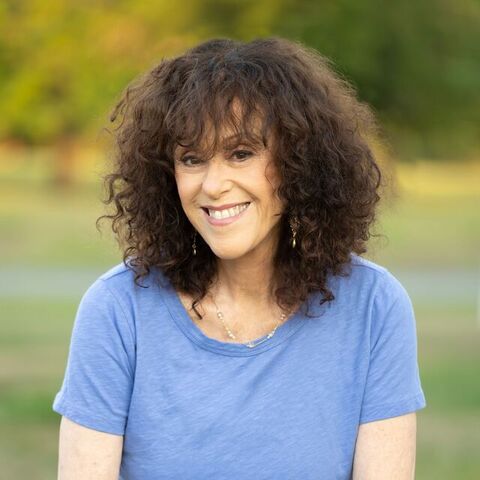
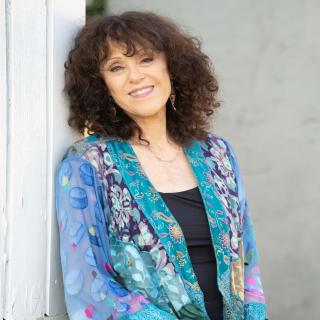
I'm going to introduce you to Jane Ross.
Jane has been my dear friend and meditation partner for over 20 years.
We've met weekly to meditate together and we've come to know and love each other deeply.
So I was surprised when Jane shared with me recently that she was a cancer survivor not once but twice over 30 years ago.
And this was surprising to me because Jane today is a very beautiful,
Vibrantly healthy woman in her mid-70s with a career that she loves.
So I asked Jane if she'd be willing to share with us her journey from first diagnosis to complete healing,
How she felt,
What she did,
What helped her the most,
And any words of wisdom she might be able to offer to those who have received a cancer diagnosis.
So when I asked Jane if she would do this interview,
There wasn't a moment's hesitation on her part.
She answered with a resounding yes.
We both hope that in sharing Jane's story,
It might offer help or inspiration to others going through their own experience with cancer.
We know that everyone's path to healing is different.
So take what you resonate with and leave the rest.
And on that note,
I'm honored to introduce to you my dear friend,
Jane Ross.
Hi,
Jane.
Hi,
Anna.
Thank you so much for having me on Insight Timer.
You're welcome.
I'm always inspired by your songs and your the things that you post and stories.
So I'm so happy to be on your program with you.
Well,
Thank you so much,
Because you have so much to share.
So let's just jump right in.
OK.
OK.
Let's start at the beginning with the moment that you received your first cancer diagnosis.
How did you feel?
I was traumatized with fear.
I was like a deer in the headlights.
I had trouble concentrating.
I had a lot of anxiety.
I didn't know what to expect.
And I kind of went into a little bit of a dark place.
That's how it first hit me.
I wasn't sure if it was a death sentence.
I just kind of went along with my feelings.
I just kind of took it for what it was,
But it was difficult.
So what did you wind up doing about that?
Well,
I had always gone for routine mammograms,
And I had noticed an abnormality in my left breast.
And I sought out a breast surgeon who was recommended to me,
Very good recommendation.
And she sent me for a mammogram,
And it came back negative.
So I was like,
OK,
This is great.
I'm fine.
But she was so thorough and so conscientious that she decided to have me go for a sonogram.
And it wasn't until I had the sonogram that they found two tumors.
And I was sent for a biopsy,
And that is how my diagnosis of cancer turned around.
And it was recommended that I have a mastectomy,
But because it was a slow-growing cancer,
I did not have to have chemotherapy,
That it was just going to be surgery and that was going to be the treatment.
And so at the time you had your own business,
Didn't you?
Yes,
I did have my own business.
It was a construction-related business.
And at the time,
I had three clients,
And they all were going Chapter 11.
So I got through my surgeries and closed my business and worked freelance from home.
But fortunately,
I was already in psychotherapy at the time.
I had been caring for my sister,
Who was chronically ill,
And I was able to talk to both of them.
Both very supportive.
I kept myself very busy.
It was very hard for me to fit the surgery into my changes with the business.
So it was extremely stressful.
And the way that I handled the stress was not the best,
Which I think has a lot to do with how well you heal from cancer is how do you deal with stress.
Yeah.
So from what you're telling us,
It sounds like,
You know,
You were very out,
You were working very hard and just trying to keep the boat afloat.
Yes.
And get to the next place wherever that was going to be.
Exactly.
And then a year later you received another,
A second cancer diagnosis.
And what would you say was different about your reaction to the second time around?
Well,
The second time around,
I had discovered the recurrence from self-examination.
So I was pretty certain that it had come back.
And I was more prepared for the negative news.
But it made me feel desperate.
Like,
Gosh,
I had the surgery.
I thought I was OK.
It's back again.
And the desperation of it kind of forced my consciousness to open a door and see if possibly something else could be done.
Yeah,
So it sounds like.
.
.
Yeah,
It was like,
You know,
The pressure of the desperation that I was feeling it almost was the cause of my opening.
A catalyst to open up my mind to something different,
Something that could be done.
And I would like to just mention,
Because you had told me about this,
That your oncologist was somebody you really,
Really liked.
You chose somebody that you felt,
You tell us how you felt about your doctor,
Because this is important.
Yes,
I found an excellent oncologist who told me that I would be going through chemotherapy and radiation.
Of course,
She would be the one overseeing the chemotherapy.
She was an excellent doctor and she told me that she would be by my side through everything that I needed to go through and that she would be watching over me and monitoring me and giving me moral support.
And that's exactly what she did.
Fortunate to have someone in my life like that.
My mother had breast cancer and she was very brave and strong.
I had that to look back on to draw some strength.
And you had mentioned to me when we were talking before the interview that your mother.
Said something to you that was so powerful for you that helped you all through this and continues to help you.
What were her words to you?
Yes,
She reminded me and my sister both in her passing that it was kind of a spiritual way of saying anything that you need help with in life because she knew that she wasn't going to be there Anything that you need in life for help will be there if you open up your receptivity and let it be known what it is that you need help with and that help would be there.
Just the right and perfect help.
So now if you would share with us,
You know,
Where did you find the help?
What did you do?
Well,
I was diagnosed with the second cancer and I had to go through chemotherapy and This opened up a whole world of mental and spiritual uplifting and strength for me because the chemotherapy nurse told me about a CD called Chemotherapy by Belruth Naperstadt.
And Belle Ruth is an American social worker,
Author,
And teacher,
And the producer of a guided imagery library of self-administered audio programs.
And I did this in union with my chemotherapy.
I would have the chemotherapy and then I would go home and listen to this guided imagery And I did this twice a day when I was not on chemotherapy for my treatments.
I would do it twice a day.
And it opened up my mind and my brain to different images of water fountains and sitting by a rock in the sun.
Letting all kinds of good things happen in my mind and it was helping me to heal and taking away my stress.
And to this day,
I still meditate.
So it was really a wonderful resource for me.
And I really do feel that doing the guided imagery in conjunction with the chemotherapy really helped to heal me.
I am a big believer in Western medicine.
I believe in the medical field,
But this opened up my world to a mind-body connection.
And even if you don't believe in the mind-body connection,
The healing that comes from meditating and from going to therapy and from reading books and doing exercises,
They all give you gifts that can last a lifetime.
Even if you don't have cancer,
They're good for you.
Good life things.
Yes.
You also mentioned to me a book.
Yes.
My therapist had given me a book called Getting Well Again by the Simontons.
And this is an amazing warehouse of all kinds of exercises to do especially they found in their studies of cancer patients that resentment was a very common emotion,
That there was people who had stored up toxic resentment in their mind,
In their body,
That were like emotional tumors.
Did that resonate for you?
Yes,
It resonated for me very much.
And I knew that I had a lot of work to do,
That I had a lot of forgiving to do,
That I needed to open up about the things that I was holding grudges and things of my family past.
Things of that nature.
So it was really,
Really good to do this.
Have you told us everything you wanted to say about the Symingtons?
Yes,
I did.
I also found another book that's just released called The Breast Advice.
It's by Elisa Port.
And she is an excellent doctor.
And she has compiled different cancer patients' stories with medical information,
Almost anything that you would want to know.
Very,
Very good book.
And it's just released this month.
That's excellent.
And towards the end of the interview,
We're going to repeat these resources again.
So,
You know,
If you want to write them down,
You can,
Or you want to listen to this again,
You can.
There's something that I don't think we mentioned,
But that you had mentioned to me,
Jane,
That I thought was really significant.
And that is that your oncologist was a cancer survivor,
Or is a cancer survivor.
Actually,
How that transpired,
I had my regular psychotherapist referred me to another therapist who was a cancer survivor.
And he is the one that listened to my blaming,
Listened to my carrying on,
All my saga and grief,
And wound up telling me that I was responsible for my own happiness,
That I was the one that was in charge of the reasons why I felt the way I felt.
At first,
I was like,
Wow,
This is really offensive.
I was very indignant at first.
Like,
How could the therapist be telling me it's my responsibility?
But in fact,
Over time of working with him,
I realized he was right.
And this changed my world.
And i decided you know what if i'm responsible for my own unhappiness that gives me a certain amount of control that means that i can go ahead and change the things that i want to change that i can become the person that I want to be,
Which is free and joyful and happy.
Which I know you as my friend.
That's who you are.
It's very inspiring.
Yes,
I wanted that more than anything.
And he recommended to me Also,
To go into a 12-step program called Codependents Anonymous.
And what did you gain by doing that?
The whole emphasis in that program is self-care.
And putting yourself as number one.
Because all my life I was the last on the list to consider.
I was taking care of my sister,
And I love her very much,
But I wasn't handling the situation.
By putting myself first and then taking care of other people.
So it really changed my whole perspective and it really gave me a tremendous amount of feelings of setting some boundaries,
Of standing up for myself,
Of taking care of Jane.
And making myself a happy person.
For the first time in my life.
So these resources were infinitely important and good.
And I recommend them to anyone who may find themselves last on the list.
It sounds like the 12-step program was very empowering for you.
Very empowering.
But all of this,
All of this combined really indicates that you were proactive for yourself.
You became an advocate for your own health.
And I guess in the beginning,
It couldn't be overwhelming,
But you found a path and you listened to input and you followed it and look where you are now.
It's very beautiful.
Thank you.
To see how you've blossomed over the years and all of this was 30 years ago.
Yes.
Yeah.
Is there anything you'd like to add,
Jane?
Yes.
I think the first thing that I would want to tell anyone who's been diagnosed with cancer is to definitely embrace the field of medicine there is.
Today.
Because cancer is no longer a death sentence.
And the improvements that you make in your life as a result of receiving the diagnosis,
The things that you do that are proactive in your life,
That bring you happiness,
To not be afraid to let go of things that don't bring you happiness,
To support yourself,
To to always love yourself deeply and love other people and embrace all the love and the support that you can that will come your way.
I think these are things that I would want anyone to remember when you're diagnosed with cancer is that the help is there,
The support is there,
And for yourself to love yourself and to embrace yourself and to take this time as a wake-up call to make your life good because we always have that option.
We always have that ability,
That control.
Some people will say we have no control in life.
There are things that we do and happiness is one of them.
So that is what I have to say about it.
It sounds like you're passing along the wisdom that your mother gave you.
Yes.
If you need help,
Reach out,
Ask for it.
Yes.
It's there.
The universe opens up when you open up.
Well,
I want to thank you so much for sharing what you have with all of us.
My pleasure.
It's been so,
I think,
Really wonderful.
For listeners,
We want to invite you to reach out to us with any questions or comments you might have for Jane.
I'm a teacher on Insight Timer,
So you can message me.
And I will relay your messages to Jane,
And I will relay her responses right back to you.
So thank you again,
Jane.
Thank you,
Anna.
I love meditating with you.
It's a blessing every time.
It's mutual.
And what we want to say to all of you out there is just go gently.
Care of yourself.
Goodbye for now from Jane Ross and from me,
Anna Epstein Kravis.