Hello there.
Thank you so much for joining me for this reading of A Pair of Blue Eyes,
The charming novel from 1873 by English author and poet Thomas Hardy.
He was a renowned author of the Victorian era and this is one of his lesser-known books.
We will be hearing about a bright,
Sensitive,
High-spirited young woman in a remote part of Cornwall in the west of England who is caught between two very different suitors.
We'll be hearing about the romance,
Social pressures of the time,
Inner conflicts and the complexities of rural life about a and a half ago.
So before we get further into the story here,
Let's just take a moment to have a nice deep exhale.
Letting go of the day,
Letting go of whichever baggage you might be bringing along with us into this moment.
For right now,
There's nowhere else we have to go,
Nothing else we have to be doing.
So we can just relax,
Get ourselves comfortable and enjoy the charming tale of A Pair of Blue Eyes.
Chapter One.
A Fair Vestal Throned in the West.
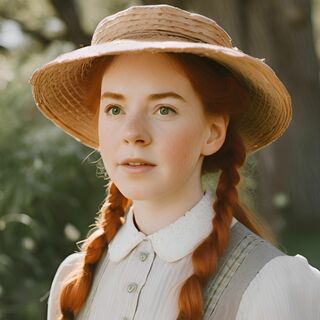
Alfrede Swancourt was a girl whose emotions lay very near the surface.
Their nature,
More precisely,
And as modified by the creeping hours of time,
Was known only to those who watched the circumstances of her history.
Personally,
She was the combination of very interesting particulars whose rarity,
However,
Lay in the combination itself rather than in the individual elements combined.
As a matter of fact,
You did not see the form and substance of her features when conversing with her.
And this charming power of preventing a material study of her lineaments by an interlocutor originated not in the cloaking effect of a well-formed manner,
For her manner was childish and scarcely formed,
But in the attractive crudeness of the remarks themselves.
She had lived all her life in retirement.
The monstrari digito of idle men had not flattered her.
And at the age of 19 or 20,
She was no further on in social consciousness than an urban young lady of 15.
One point in her,
However,
You did notice,
That was her eyes.
In them was seen a sublimation of all of her.
It was not necessary to look further,
There she lived.
These eyes were blue.
Blue as autumn distance.
Blue as the blue we see between the retreating mouldings of hills and woody slopes on a sunny September morning.
A misty and shady blue that had no beginning or surface and was looked into rather than at.
As to her presence,
It was not powerful.
It was weak.
Some women can make their personality pervade the atmosphere of a whole banqueting hall.
Elfride's was no more pervasive than that of a kitten.
Elfride had,
As her own,
The thoughtfulness which appears in the face of the Madonna della sedia without its rapture.
The warmth and spirit of the type woman's feature most common to the beauties,
Mortal and immortal,
Of Rubens without their insistent fleshiness.
The characteristic expression of the female faces of Correggio,
That of the yearning human thoughts that lie too deep for tears,
Was hers sometimes but seldom under ordinary conditions.
The point in Elfride Swancourt's life at which a deeper current may be said to have permanently set in was one winter afternoon when she found herself standing,
In the character of hostess,
Face to face with a man she had never seen before.
Moreover,
Looking at him with a Miranda-like curiosity and interest that she had never yet bestowed on a mortal.
On this particular day,
Her father,
The vicar of a parish on the sea-swept outskirts of Lower Wessex and a widower,
Was suffering from an attack of gout.
After finishing her household supervisions,
Elfride became restless and several times left the room,
Ascended the staircase and knocked at her father's chamber door.
Come in,
Was always answered in a hearty,
Out-of-door voice from the inside.
Papa,
She said on one occasion,
To the fine,
Red-faced,
Handsome man of forty,
Who,
Puffing and fizzing like a bursting bottle,
Lay on the bed,
Wrapped in a dressing gown and every now and then enunciating,
In spite of himself,
About one letter of some word or words that were almost oaths.
Papa,
Will you not come downstairs this evening?
She spoke distinctly.
He was rather deaf.
Afraid not.
Very much afraid I shall not,
Elfride.
I can't bear even a handkerchief upon this juiced toe of mine,
Much less a stocking or slipper.
But there it is again.
No,
I shan't get up till tomorrow.
Then I hope this London man won't come,
For I don't know what I should do,
Papa.
Well,
It would be awkward,
Certainly.
I should hardly think he would come today.
Why?
Because the wind blows so.
Wind!
What ideas you have,
Elfride!
Who ever heard of wind stopping a man from doing his business?
The idea of this toe of mine coming on so suddenly.
If he should come,
You must send him up to me,
I suppose,
And then give him some food and put him to bed in some way.
Dear me,
What a nuisance all this is.
Must he have dinner?
Too heavy for a tired man at the end of a tedious journey.
Tea,
Then?
Not substantial enough.
High tea,
Then?
There is a cold fowl,
Rabbit pie,
Some pasties and things of that kind.
Yes,
High tea.
Must I pour out his tea,
Papa?
Of course.
You are the mistress of the house.
What?
Sit there all the time with a stranger?
Just as if I knew him?
And not anybody to introduce us?
Tch,
Nonsense child about introducing.
You know better than that.
A practical,
Professional man,
Tired and hungry,
Who has been travelling ever since daylight this morning,
Will hardly be inclined to talk.
And air courtesies tonight,
He wants food and shelter.
And you must see that he has it.
Simply because I am suddenly laid up and cannot.
There is nothing so dreadful in that,
I hope.
Sigh.
You get all kinds of stuff into your head from reading so many of those novels.
Oh no,
There is nothing dreadful in it when it becomes plainly a case of necessity.
Like this.
But you see,
You are always there when people come to dinner,
Even if we know them.
And this is some strange London man of the world,
Who will think it odd,
Perhaps.
Very well,
Let him.
Is he Mr Hubie's partner?
I should scarcely think so.
He may be.
How old is he,
I wonder?
That I cannot tell.
You will find the copy of my letter to Mr Hubie and his answer upon the table in the study.
You may read them,
And then you'll know as much as I do about our visitor.
I have read them.
Well,
What's the use of asking questions then?
They contain all I know.
Ugh!
Odd plague you,
You young scamp.
Don't put anything there.
I can't bear the weight of a fly.
Oh,
I am sorry,
Papa.
I forgot.
I thought you might be cold,
She said,
Hastily removing the rug she had thrown upon the feet of the sufferer,
And waiting till she saw that consciousness of her offence had passed from his face,
She withdrew from the room and retired again downstairs.