Hello there.
Thank you so much for joining me for the beginning of this reading of Anne of Green Gables,
A much beloved classic novel from 1908 from the Canadian author Lucy Maude Montgomery.
This was her most popular book and is much beloved by people all around the world.
So before we get into the book,
Let's just take a moment here to really arrive to this moment now.
Leaving behind whatever baggage from the day we might be bringing with us.
Take a nice deep exhale.
We can just relax now,
Get ourselves comfortable and enjoy Anne of Green Gables.
Chapter one.
Mrs.
Rachel Lynde is surprised.
Mrs.
Rachel Lynde lived just where the Avonlea main road dipped down into a little hollow,
Fringed with alders and ladies' eardrops and traversed by a brook that had its source a way back in the woods of the old Cuthbert place.
It was reputed to be an intricate,
Headlong brook in its earlier course through those woods with dark secrets of pool and cascade.
But by the time it reached Lynde's hollow,
It was a quiet,
Well-conducted little stream.
For not even a brook could run past Mrs.
Rachel Lynde's door without due regard for decency and decorum.
It probably was conscious that Mrs.
Rachel was sitting at her window,
Keeping a sharp eye on everything that passed from brooks and children up,
And that if she noticed anything odd or out of place,
She would never rest until she had ferreted out the whys and wherefores thereof.
There are plenty of people in Avonlea and out of it who can attend closely to their neighbour's business by dint of neglecting their own.
But Mrs.
Rachel Lynde was one of those capable creatures who can manage their own concerns and those of other folks into the bargain.
She was a notable housewife.
Her work was always done,
And well done.
She ran the sewing circle,
Helped run the Sunday school,
And was the strongest prop of the Church Aid Society and Foreign Missions Auxiliary.
Yet,
With all this,
Mrs.
Rachel found abundant time to sit for hours at her kitchen window,
Knitting cotton warp quilts.
She had knitted 16 of them,
As Avonlea housekeepers were wont to tell in awed voices,
And keeping a sharp eye on the main road that crossed the hollow and wound up the steep red hill beyond.
Since Avonlea occupied a little triangular peninsula jutting out into the Gulf of St.
Lawrence,
With water on two sides of it,
Anybody who went out of it or into it had to pass over that hill road,
And so run the unseen gauntlet of Mrs.
Rachel's all-seeing eye.
She was sitting there one afternoon in early June.
The sun was coming in at the window,
Warm and bright.
The orchard on the slope below the house was in a bridal flush of pinky-white bloom,
Hummed over by a myriad of bees.
Thomas Lind,
A meek little man whom Avonlea people called Rachel Lind's husband,
Was sowing his late turnip seed on the hill field beyond the barn,
And Matthew Cuthbert ought to have been sowing his on the big red brook field away over by Green Gables.
Mrs.
Rachel knew that he ought because she had heard him tell Peter Morrison the evening before in William J Blair's store over at Carmody that he meant to sow his turnip seed the next afternoon.
Peter had asked him,
Of course,
For Matthew Cuthbert had never been known to volunteer information about anything in his whole life,
And yet here was Matthew Cuthbert at half past three on the afternoon of a busy day,
Placidly driving over the hollow and up the hill.
Moreover,
He wore a white collar and his best suit of clothes,
Which was plain proof that he was going out of Avonlea,
And he had the buggy and the sorrel mare,
Which betokened that he was going a considerable distance.
Now,
Where was Matthew Cuthbert going,
And why was he going there?
Had it been any other man in Avonlea,
Mrs.
Rachel,
Deftly putting this and that together,
Might have given a pretty good guess as to both questions,
But Matthew so rarely went from home that it must be something pressing and unusual which was taking him.
He was the shyest man alive and hated to have to go among strangers or to any place where he might have to talk.
Matthew dressed up with a white collar and driving in a buggy was something that didn't happen often.
Mrs.
Rachel,
Ponder as she might,
Could make nothing of it,
And her afternoon's enjoyment was spoiled.
I'll just step over to Green Gables after tea and find out from Marilla where he's gone and why.
The worthy woman finally concluded he doesn't generally go to town this time of year,
And he never visits.
If he'd run out of turnip seed,
He wouldn't dress up and take the buggy to go for more.
He wasn't driving fast enough to be going for a doctor.
Yet something must have happened since last night to start him off.
I'm clean puzzled,
That's what,
And I won't know a minute's peace of mind or conscience until I know what has taken Matthew Cuthbert out of Avonlea today.
Accordingly,
After tea,
Mrs.
Rachel set out.
She had not far to go.
The big,
Rambling,
Orchard-empowered house where the Cuthberts lived was a scant quarter of a mile up the road from Lin's Hollow.
To be sure,
The long lane made it a good deal further.
Matthew Cuthbert's father,
As shy and silent as his son after him,
Had got as far away as he possibly could from his fellow men without actually retreating into the woods when he founded his homestead.
Green Gables was built at the furthest edge of his cleared land,
And there it was to this day,
Barely visible from the main road along which all the other Avonlea houses were so sociably situated.
Mrs.
Rachel Lind did not call living in such a place living at all.
It's just staying,
That's what,
She said,
As she stepped along the deep-rutted,
Grassy lane bordered with wild rose bushes.
It's no wonder Matthew and Marilla are both a little odd,
Living away back here by themselves.
Trees aren't much company,
Though dear knows if they were there'd be enough of them.
I'd rather look at people.
To be sure,
They seem contented enough,
But then I suppose they're used to it.
A body can get used to anything,
Even to being hanged,
As the Irishman said.
With this,
Mrs.
Rachel stepped out of the lane into the backyard of Green Gables.
Very green and neat and precise was that yard,
Set about on one side with great patriarchal willows and the other with prim lombardis.
Not a stray stick nor stone was to be seen,
For Mrs.
Rachel would have seen it if there had been.
Privately,
She was of the opinion that Marilla Cuthbert swept that yard over as often as she swept her house.
One could have eaten a meal off the ground without over brimming the proverbial peck of dirt.
Mrs.
Rachel rapped smartly at the kitchen door and stepped in when bidden to do so.
The kitchen at Green Gables was a cheerful apartment,
Or would have been cheerful if it had not been so painfully clean as to give it something of the appearance of an unused parlor.
Its windows looked east and west.
Through the west one,
Looking out on the backyard,
Came a flood of mellow June sunlight.
But the east one,
Whence you got a glimpse of the bloom of white cherry trees in the left orchard and nodding slender birches down in the hollow by the brook,
Was greened over by a tangle of vines.
Here sat Marilla Cuthbert when she sat at all,
Always slightly distrustful of sunshine,
Which seemed to her too dancing and irresponsible a thing for a world which was meant to be taken seriously.
And here she sat now,
Knitting,
And the table behind her was laid for supper.
Mrs.
Rachel,
Before she had fairly closed the door,
Had taken a mental note of everything that was on that table.
There were three plates laid,
So that Marilla must be expecting someone home with Matthew to tea,
But the dishes were everyday dishes.
And there was only crab apple preserves and one kind of cake,
So that the expected company could not be any particular company.
Yet what of Matthew's white collar and the sorrel mare?
Mrs.
Rachel was getting fairly dizzy with this unusual mystery about quiet,
Unmysterious green gables.
Good evening,
Rachel,
Marilla said briskly.
This is a real fine evening,
Isn't it?
Won't you sit down?
How are all your folks?
Something that,
For lack of any other name,
Might be called friendship,
Existed and always had existed between Marilla Cuthbert and Mrs.
Rachel,
In spite of,
Or perhaps because of,
Their dissimilarity.
Marilla was a tall,
Thin woman with angles and without curves.
Her dark hair showed some grey streaks and was always twisted up in a hard little knot behind,
With two wire hairpins stuck aggressively through it.
She looked like a woman of narrow experience and rigid conscience,
Which she was.
But there was a saving something about her mouth which,
If it had been ever so slightly developed,
Might have been considered indicative of a sense of humour.
We're all pretty well,
Said Mrs.
Rachel.
I was kind of afraid you weren't,
Though.
When I saw Matthew starting off today,
I thought maybe he was going to the doctors.
Marilla's lips twitched understandingly.
She had expected Mrs.
Rachel up.
She had known that the sight of Matthew jaunting off so unaccountably would be too much for her neighbour's curiosity.
Oh no,
I'm quite well,
Although I had a bad headache yesterday,
She said.
Matthew went to Bright River.
We're getting a little boy from an orphan asylum in Nova Scotia,
And he's coming on the train tonight.
If Marilla had said that Matthew had gone to Bright River to meet a kangaroo from Australia,
Mrs.
Rachel could not have been more astonished.
She was actually stricken dumb for five seconds.
It was unsupposable that Marilla was making fun of her,
But Mrs.
Rachel was almost forced to suppose it.
Are you in earnest,
Marilla?
She demanded,
When voice returned to her.
Yes,
Of course,
Said Marilla,
As if getting boys from orphan asylums in Nova Scotia were part of the usual spring work of any well-regulated Avonlea farm,
Instead of being an unheard of innovation.
Then Mrs.
Rachel felt that she had received a severe mental jolt.
She thought in exclamation points,
A boy!
Marilla and Matthew Cuthbert,
Of all people,
Adopting a boy from an orphan asylum!
Well,
The world was certainly turning upside down.
She would be surprised at nothing after this.
Nothing!
Nothing!
What on earth put such a notion into your head,
She demanded disapprovingly.
This had been done without her advice being asked,
And must,
Perforce,
Be disapproved.
Well,
We've been thinking about it for some time.
All winter,
In fact,
Returned Marilla.
Mrs.
Alexander Spencer was up here one day before Christmas,
And she said she was going to get a little girl from the asylum over in Hopeton in the spring.
Her cousin lives there,
And Mrs.
Spencer has visited here and knows all about it.
So,
Matthew and I have talked it over,
Off and on,
Ever since.
We thought we'd get a boy.
Matthew is getting up in years,
You know,
He's sixty,
And he isn't so spry as he once was.
His heart troubles him a good deal.
And you know how desperate hard it's got to be to get hired help.
There's never anybody to be had but those stupid,
Half-grown little French boys.
And as soon as you do get one broke into your ways and taught something,
He's up and off to the lobster canneries or the States.
At first,
Matthew suggested getting a home boy,
But I said no flat to that.
They may be all right,
I'm not saying they're not,
But no London street Arabs for me,
I said.
Give me a native-born at least.
There'll be a risk no matter who we get,
But I'll feel easier in my mind and sleep sounder at night if we get a born Canadian.
So,
In the end,
We decided to ask Mrs.
Spencer to pick us out one when she went over to get her little girl.
We heard last week she was going,
So we sent her word by Richard Spencer's folks at Carmody to bring us a smart,
Likely boy of about 10 or 11.
We decided that would be the best age,
Old enough to be of some use in doing chores right off and young enough to be trained up proper.
We mean to give him a good home and schooling.
We had a telegram from Mrs.
Alexander Spencer today.
The mailman brought it from the station saying they were coming on the 5.
30 train tonight,
So Matthew went to Bright River to meet him.
Mrs.
Spencer will drop him off there.
Of course,
She goes on to White Sands Station herself.
Mrs.
Rachel prided herself on always speaking her mind.
She proceeded to speak it now,
Having adjusted her mental attitude to this amazing piece of news.
Well,
Marilla,
I'll just tell you plain that I think you're doing a mighty foolish thing.
A risky thing,
That's what.
You don't know what you're getting.
You're bringing a strange child into your house and home,
And you don't know a single thing about him,
Nor what his disposition is like,
Nor what sort of parents he had,
Nor how he's likely to turn out.
Why,
It was only last week I read in the paper how a man and his wife up west of the island took a boy out of an orphan asylum and he set fire to the house at night.
Set it on purpose,
Marilla,
And nearly burnt them to a crisp in their beds.
And I know another case where an adopted boy used to suck the eggs.
They couldn't break him of it.
If you had asked my advice in the matter,
Which you didn't do,
Marilla,
I'd have said for mercy's sake not to think of such a thing.
That's what.
This job's comforting seemed neither to offend nor to alarm,
Marilla.
She knitted steadily on.
I don't deny there's something in what you say,
Rachel.
I've had some qualms myself,
But Matthew was terrible set on it.
I could see that,
So I gave in.
It's so seldom Matthew sets his mind on anything that,
When he does,
I always feel it's my duty to give in.
And as for the risk,
There's risks in pretty near everything a body does in this world.
There's risks in people's having children of their own.
If it comes to that,
They don't always turn out well.
And then Nova Scotia is right close to the island.
It isn't as if we were getting him from England or the States.
He can't be much different from ourselves.
Well,
I hope it will turn out all right,
Said Mrs Rachel in a tone that plainly indicated her painful doubts.
Only don't say I didn't warn you if he burns Green Gables down or puts strychnine in the well.
I heard of a case over in New Brunswick where an orphan asylum child did that and the whole family died in fearful agonies.
Only it was a girl in that instance.
Well,
We're not getting a girl,
Said Marilla,
As if poisoning wells were a purely feminine accomplishment and not to be dreaded in the case of a boy.
I'd never dream of taking a girl to bring up.
I wonder at Mrs Alexander Spencer for doing it,
But there she wouldn't shrink from adopting a whole orphan asylum if she took it into her head.
Mrs Rachel would have liked to stay until Matthew came home with his imported orphan,
But reflecting that it would be a good two hours at least before his arrival,
She concluded to go up the road to Robert Bell's and tell the news.
It would certainly make a sensation,
Second to none,
And Mrs Rachel dearly loved to make a sensation.
So she took herself away,
Somewhat to Marilla's relief,
For the latter felt her doubts and fears reviving under the influence of Mrs Rachel's pessimism.
Well,
Of all things that ever were or will be,
Ejaculated Mrs Rachel when she was safely out in the lane,
It does really seem as if I must be dreaming.
Well,
I'm sorry for that poor young one,
And no mistake,
Matthew and Marilla don't know anything about children,
And they'll expect him to be wiser and steadier than his own grandfather,
If so be's he ever had a grandfather,
Which is doubtful.
It seems uncanny to think of a child at Green Gables somehow.
There's never been one there,
For Matthew and Marilla were grown up when the new house was built.
If they ever were children,
Which is hard to believe when one looks at them,
I wouldn't be in that orphan's shoes for anything.
My,
But I pity him,
That's what.
So said Mrs Rachel to the wild rose-bushes out of the fullness of her heart.
But if she could have seen the child who was waiting patiently at the Bright River Station at that very moment,
Her pity would have been still deeper and more profound.
Profound.
Chapter two.
Matthew Cuthbert is surprised.
Matthew Cuthbert and the sorrel mare jogged comfortably over the eight miles to Bright River.
It was a pretty road,
Running along between snug farmsteads,
With now and again a bit of balsam-y fir wood to drive through,
Or a hollow where wild plums hung out their filmy bloom.
The air was sweet with the breath of many apple orchards,
And the meadows sloped away in the distance to horizon mists of pearl and purple,
While the little bird sang as if it were the one day of summer in all the year.
Matthew enjoyed the drive after his own fashion,
Except during the moments when he met women and had to nod to them.
For in Prince Edward Island you are supposed to nod to all and sundry you meet on the road,
Whether you know them or not.
Matthew dreaded all women,
Except Marilla and Mrs Rachel.
He had an uncomfortable feeling that the mysterious creatures were secretly laughing at him.
He may have been quite right in thinking so,
For he was an odd-looking personage,
With an ungainly figure and long iron-grey hair that touched his stooping shoulders,
And a full soft brown beard,
Which he had worn ever since he was twenty.
In fact,
He had looked at twenty very much as he looked at sixty,
Lacking a little of the greyness.
When he reached Bright River,
There was no sign of any train.
He thought he was too early,
So he tied his horse in the yard of the small Bright River hotel and went over to the station house.
The long platform was almost deserted,
The only living creature in sight being a girl who was sitting on a pile of shingles at the extreme end.
Matthew,
Barely noting that it was a girl,
Sidled past her as quickly as possible without looking at her.
Had he looked,
He could hardly have failed to notice the tense rigidity and expectation of her attitude and expression.
She was sitting there,
Waiting for something or somebody,
And since sitting and waiting was the only thing to do just then,
She sat and waited with all her might and mane.
Matthew encountered the stationmaster,
Locking up the ticket office,
Preparatory to going home for supper,
And asked him if the five-thirty train would soon be along.
Five-thirty train has been in and gone half an hour ago,
Answered that brisk official,
But there was a passenger dropped off for you,
A little girl,
She's sitting out there on the shingles.
I asked her to go into the lady's waiting room,
But she informed me gravely that she preferred to stay outside.
There was more scope for imagination,
She said.
She's a case,
I should say.
I'm not expecting a girl,
Said Matthew,
Blankly.
It's a boy I've come for.
He should be here.
Mrs.
Alexander Spencer was to bring him over from Nova Scotia for me.
The stationmaster whistled.
Guess there's some mistake,
He said.
Mrs.
Spencer came off the train with that girl,
Gave her into my charge,
Said you and your sister were adopting her from an orphan asylum,
And that you'd be along for her presently.
That's all I know about it,
And I haven't got any more orphans concealed hereabouts.
I don't understand,
Said Matthew,
Helplessly,
Wishing that Marilla was at hand to cope with the situation.
Well,
You'd better question the girl,
Said the stationmaster carelessly.
I dare say she'll be able to explain.
She's got a tongue of her own,
That's certain.
Maybe they were out of boys of the brand you wanted.
He walked jauntily away,
Being hungry,
And the unfortunate Matthew was left to do that which was harder for him than bearding a lion in its den.
Walk up to a girl,
A strange girl,
An orphan girl,
And demand of her why she wasn't a boy.
Matthew groaned in spirit as he turned about and shuffled gently down the platform towards her.
Towards her.
She had been watching him ever since he had passed her,
And she had her eyes on him now.
Matthew was not looking at her,
And would not have seen what she was really like if he had been,
But an ordinary observer would have seen this.
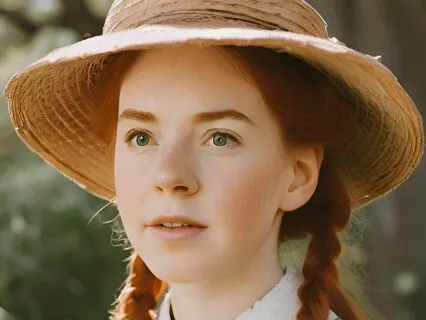
A child of about eleven,
Garbed in a very short,
Very tight,
Very ugly dress of yellowish-grey wincy,
She wore a faded brown sailor hat,
And beneath the hat extending down her back were two braids of very thick,
Decidedly red hair.
Her face was small,
White and thin,
Also much freckled.
Her mouth was large,
And so were her eyes,
Which looked green in some lights and moods,
And grey in others.
So far,
The ordinary observer,
An extraordinary observer,
Might have seen that the chin was very pointed and pronounced,
That the big eyes were full of spirit and vivacity,
That the mouth was sweet-lipped and expressive,
That the forehead was broad and full.
In short,
Our discerning,
Extraordinary observer might have concluded that no commonplace soul inhabited the body of this stray woman-child,
Of whom shy Matthew Cuthbert was so ludicrously afraid.
Matthew,
However,
Was spared the ordeal of speaking first,
For as soon as she concluded that he was coming to her,
She stood up,
Grasping with one thin brown hand the handle of a shabby,
Old-fashioned carpet-bag,
The other she held out to him.
I suppose you are Mr Matthew Cuthbert of Green Gables,
She said,
In a peculiarly clear,
Sweet voice.
I'm very glad to see you.
I was beginning to be afraid you weren't coming for me,
And I was imagining all the things that might have happened to prevent you.
I had made up my mind that if you didn't come for me tonight,
I'd go down the track to that big wild cherry tree at the bend,
And climb up into it to stay all night.
I wouldn't be a bit afraid,
And it would be lovely to sleep in a wild cherry tree,
All white with bloom,
In the moonshine,
Don't you think?
You could imagine you were dwelling in marble halls,
Couldn't you?
And I was quite sure you would come for me in the morning if you didn't tonight.
Matthew had taken the scrawny little hand,
Awkwardly,
In his.
Then and there,
He decided what to do.
He could not tell this child with the glowing eyes that there had been a mistake.
He would take her home,
And let Marilla do that.
She couldn't be left at Bright River anyhow,
No matter what mistake had been made.
So,
All questions and explanations might as well be deferred,
Until he was safely back at Green Gables.
I'm sorry I was late,
He said shyly.
Come along,
The horse is over in the yard.
Give me your bag.
Oh,
I can carry it,
The child responded cheerfully.
It isn't heavy,
It isn't heavy,
I've got all my worldly goods in it,
But it isn't heavy,
And if it isn't carried in just a certain way,
The handle pulls out,
So I'd better keep it,
Because I know the exact knack of it.
It's an extremely old carpet bag.
Oh,
I'm very glad you've come,
Even if it would have been nice to sleep in a wild cherry tree.
We've got to drive a long piece,
Haven't we?
Mrs Spencer said it was eight miles.
I'm glad,
Because I love driving.
It seems so wonderful that I'm going to live with you,
And belong to you.
I've never belonged to anybody,
Not really,
But the asylum was the worst.
I've only been in it four months,
But that was enough.
I don't suppose you ever were an orphan in an asylum,
So you can't possibly understand what it is like.
It's worse than anything you could imagine.
Mrs Spencer said it was wicked of me to talk like that,
But I didn't mean to be wicked.
It's so easy to be wicked without knowing it,
Isn't it?
They were good,
You know,
The asylum people,
But there's so little scope for the imagination in an asylum,
Only just in the other orphans.
It was pretty interesting to imagine things about them.
To imagine that perhaps the girl who sat next to you was really the daughter of a belted earl,
Who had been stolen away from her parents in her infancy by a cruel nurse who died before she could confess.
I used to lie awake at night and imagine things like that because I didn't have time in the day.
I guess that's why I'm so thin.
I am dreadful thin,
Ain't I?
There isn't a pick on my bones.
I do love to imagine I'm nice and plump with dimples in my elbows.
With this,
Matthew's companion stopped talking,
Partly because she was out of breath,
And partly because they had reached the buggy.
Not another word did she say until they had left the village and were driving down a steep little hill,
The road part of which had been cut so deeply into the soft soil that the banks,
Fringed with blooming wild cherry trees and slim white birches,
Were several feet above their heads.
The child put out her hand and broke off a branch of wild plum that brushed against the side of the buggy.
Isn't that beautiful?
What did that tree,
Leaning out from the bank,
All white and lacy,
Make you think of,
She asked.
Well now,
I don't know,
Said Matthew.
Why,
A bride,
Of course.
A bride,
All in white,
With a lovely misty veil.
I've never seen one,
But I can imagine what she would look like.
I don't ever expect to be a bride myself.
I'm so homely,
Nobody will ever want to marry me,
Unless it might be a foreign missionary.
I suppose a foreign missionary mightn't be very particular,
But I do hope that someday I shall have a white dress.
That is my highest ideal of earthly bliss.
I just love pretty clothes and I've never had a pretty dress in my life that I can remember.
But of course,
It's all the more to look forward to,
Isn't it?
And then I can imagine that I'm dressed gorgeously.
This morning,
When I left the asylum,
I felt so ashamed,
Because I had to wear this horrid old wincy dress.
All the orphans had to wear them,
You know.
A merchant in Hopeton last winter donated 300 yards of wincy to the asylum.
Some people said it was because he couldn't sell it,
But I'd rather believe that it was out of the kindness of his heart,
Wouldn't you?
When we got on the train,
I felt as if everybody must be looking at me and pitying me.
But I just went to work and imagined that I had on the most beautiful pale blue silk dress.
Because when you are imagining,
You might as well imagine something worthwhile.
And a big hat,
All flowers and nodding plumes,
And a gold watch,
And kid gloves and boots.
I felt cheered up right away.
And I enjoyed my trip to the island with all my might.
I wasn't a bit sick coming over in the boat.
Neither was Mrs Spencer,
Although she generally is.
She said she hadn't time to get sick,
Watching to see that I didn't fall overboard.
She said she never saw the beat of me for prowling about.
But if it kept her from being seasick,
It's a mercy I did prowl,
Isn't it?
And I wanted to see everything there was to be seen on that boat,
Because I didn't know whether I'd ever have another opportunity.
Oh,
There are a lot more cherry trees,
All in bloom.
This island is the bloomiest place.
I just love it already.
And I'm so glad I'm going to live here.
I've always heard that Prince Edward Island was the prettiest place in the world.
And I used to imagine I was living here,
But I never really expected I would.
It's delightful when your imaginations come true,
Isn't it?
But those red roads are so funny.
When we got into the train at Charlottetown,
And the red roads began to flash past,
I asked Mrs Spencer what made them red.
And she said she didn't know,
And for pity sake not to ask her any more questions.
She said I must have asked her a thousand already.
I suppose I had too,
But how are you going to find out about things if you don't ask questions?
And what does make the roads red?
Well now,
I don't know,
Said Matthew.
Well,
That is one of the things to find out sometime.
Isn't it splendid to think of all the things there are to find out about?
It just makes me feel glad to be alive.
It's such an interesting world.
It wouldn't be half so interesting if we know all about everything,
Would it?
There'd be no scope for imagination then,
Would there?
But am I talking too much?
People are always telling me I do.
Would you rather I didn't talk?
If you say so,
I'll stop.
I can stop when I make up my mind to it,
Although it's difficult.
Matthew,
Much to his own surprise,
Was enjoying himself.
Like most quiet folks,
He liked talkative people when they were willing to do the talking themselves and did not expect him to keep up his end of it.
But he had never expected to enjoy the society of a little girl.
Women were bad enough in all conscience,
But little girls were worse.
He detested the way they had of sidling past him timidly with sidewise glances,
As if they expected him to gobble them up at a mouthful if they ventured to say a word.
That was the Avonlea type of well-bred little girl.
But this freckled witch was very different.
And although he found it rather difficult for his slower intelligence to keep up with her brisk mental processes,
He thought that he kind of liked her chatter.
So he said,
As shyly as usual,
Oh,
You can talk as much as you like.
I don't mind.
Oh,
I'm so glad.
I know you and I are going to get along together fine.
It's such a relief to talk when one wants to and not be told that children should be seen and not heard.
I've had that said to me a million times if I have once.
And people laugh at me because I use big words.
But if you have big ideas,
You have to use big words to express them,
Haven't you?
Well,
Now that seems reasonable,
Said Matthew.
Mrs.
Spencer said that my tongue must be hung in the middle,
But it isn't.
It's firmly fastened at one end.
Mrs.
Spencer said your place was named Green Gables.
I asked her all about it,
And she said there were trees all around it.
I was gladder than ever.
I just love trees.
And there weren't any at all about the asylum.
Only a few poor weenie teeny things out in front with little whitewashed cagey things about them.
They just look like orphans themselves.
Those trees did.
It used to make me want to cry to look at them.
I used to say to them,
Oh,
You poor little things.
If you were out in a great big woods with other trees all around you and little mosses and June bells growing over your roots and a brook not far away and birds singing in your branches,
You could grow,
Couldn't you?
But you can't where you are.
I know just exactly how you feel,
Little trees.
I felt sorry to leave them behind this morning.
You do get so attached to things like that,
Don't you?
Is there a brook anywhere near Green Gables?
I forgot to ask Mrs.
Spencer that.
Well,
Now,
Yes,
There's one right below the house.
Fancy!
It's always been one of my dreams to live near a brook.
I never expected I would,
Though.
Dreams don't often come true,
Do they?
Wouldn't it be nice if they did?
But just now,
I feel pretty nearly perfectly happy.
I can't feel exactly perfectly happy because,
Well,
What colour would you call this?
She twitched one of her long glossy braids over her thin shoulder and held it up before Matthew's eyes.
Matthew was not used to deciding on the tints of ladies' tresses.
But in this case,
There couldn't be much doubt.
It's red,
Ain't it?
He said.
The girl let the braid drop back with a sigh that seemed to come from her very toes and to exhale forth all the sorrows of the ages.
Yes,
It's red,
She said resignedly.
Now you see why I can't be perfectly happy.
Nobody could who has red hair.
I don't mind the other things so much,
The freckles and the green eyes and my skinniness.
I can imagine them away.
I can imagine that I have a beautiful rose-leaf complexion and lovely starry violet eyes,
But I cannot imagine that red hair away.
I do my best.
I think to myself,
Now my hair is a glorious black,
Black as the raven's wing.
But all the time I know it is just plain red and it breaks my heart.
It will be my lifelong sorrow.
I read of a girl once in a novel who had a lifelong sorrow,
But it wasn't red hair.
Her hair was pure gold rippling back from her alabaster brow.
What is an alabaster brow?
I never could find out.
Can you tell me?
Well,
Now,
I'm afraid I can't,
Said Matthew,
Who was getting a little dizzy.
He felt as he had once felt in his rash youth when another boy had enticed him on the merry-go-round at a picnic.
Well,
Whatever it was,
It must have been something nice because she was divinely beautiful.
Have you ever imagined what it must feel like to be divinely beautiful?
Well,
Now,
No,
I haven't,
Confessed Matthew ingenuously.
I have,
Often.
Which would you rather be if you had the choice?
Divinely beautiful,
Or dazzlingly clever,
Or angelic,
Or divinely beautiful,
Or divinely beautiful,
Or dazzlingly clever,
Or angelically good?
Well,
Now,
I don't know exactly.
Neither do I.
I can never decide,
But it doesn't make much real difference,
For it isn't likely I'll ever be either.
It's certain I'll never be angelically good.
Mrs.
Spencer says,
Oh,
Mr.
Cuthbert!
Oh,
Mr.
Cuthbert!
Oh,
Mr.
Cuthbert!
That was not what Mrs.
Spencer had said.
Neither had the child tumbled out of the buggy,
Nor had Matthew done anything astonishing.
They had simply rounded a curve in the road and found themselves in the avenue.
The avenue,
So called by the Newbridge people,
Was a stretch of road,
Four or five hundred yards long,
Completely arched over with huge,
Widespread apple trees,
Planted years ago by an eccentric old farmer.
Overhead was one long canopy of snowy,
Fragrant bloom.
Below the boughs,
The air was full of a purple twilight,
And far ahead,
A glimpse of painted sunset sky shone like a great rose window at the end of a cathedral aisle.
Its beauty seemed to strike the child dumb.
She leant back in the buggy,
Her thin hands clasped before her,
Her face lifted rapturously to the white splendor above.
Even when they had passed out and were driving down the long slope to Newbridge,
She never moved or spoke.
Still with rapt face,
She gazed afar into the sunset west with eyes that saw visions trooping splendidly across that glowing background.
Through Newbridge,
A bustling little village where dogs barked at them and small boys hooted and curious faces peered from the windows,
They drove still in silence.
When three more miles had dropped away behind them,
The child had not spoken.
She could keep silence.
It was evident,
As energetically as she could talk.
I guess you're feeling pretty tired and hungry,
Matthew ventured to say at last,
Accounting for her long visitation of dumbness with the only reason he could think of.
But we haven't very far to go now,
Only another mile.
She came out of her reverie with a deep sigh and looked at him with the dreamy gaze of a soul that has been wandering afar,
Star-led.
Oh,
Mr.
Cuthbert,
She whispered.
That place we came through,
That white place,
What was it?
Well now,
You must mean the avenue,
Said Matthew after a few moments' profound reflection.
It is a kind of pretty place.
Pretty?
Oh,
Oh,
Pretty doesn't seem the right word to use,
Nor beautiful either,
They don't go far enough.
Oh,
It was wonderful,
Wonderful.
It's the first thing I ever saw that couldn't be improved upon by imagination.
It just satisfies me here,
She put one hand on her breast.
It made a queer,
Funny ache,
And yet it was a pleasant ache.
Did you ever have an ache like that,
Mr.
Cuthbert?
Well now,
I just can't recollect that I ever had.
I have it lots of time,
Whenever I see anything royally beautiful.
But they shouldn't call that lovely place the avenue.
There is no meaning in a name like that.
They should call it,
Let me see,
The white way of delight.
Isn't that a nice imaginative name?
When I don't like the name of a place or a person,
I always imagine a new one,
And always think of them.
So,
There was a girl at the asylum whose name was Hepzibah Jenkins,
But I always imagined her as Rosalia Dever.
Other people may call that place the avenue,
But I shall always call it the white way of delight.
Have we really only another mile to go before we get home?
I'm glad,
And I'm sorry.
I'm sorry because this drive has been so pleasant,
And I'm always sorry when pleasant things end.
Something still pleasanter may come after,
But you can never be sure,
And it's so often the case that it isn't pleasanter.
That has been my experience anyhow,
But I'm glad to think of getting home.
You see,
I've never had a real home since I can remember.
It gives me that pleasant ache again,
Just to think of coming to a really truly home.
Oh,
Isn't that pretty?
They had driven over the crest of a hill.
Below them was a pond,
Looking almost like a river,
So long and winding was it.
A bridge spanned it midway,
And from there to its lower end,
Where an amber-hued belt of sand hills shut it in from the dark blue gulf beyond,
The water was a glory of many shifting hues,
The most spiritual shadings of crocus and rose and ethereal green,
With other elusive tintings for which no name has ever been found.
Above the bridge,
The pond ran up into fringing groves of fir and maple,
And lay all darkly translucent in their wavering shadows.
Here and there,
A wild plum lent out from the bank like a white-clad girl tiptoeing to her own reflection.
From the marsh at the head of the pond came the clear,
Mournfully sweet chorus of the frogs.
There was a little grey house peering around a white apple orchard on a slope beyond,
And although it was not yet quite dark,
A light was shining from one of its windows.
That's Barry's Pond,
Said Matthew.
Oh,
I don't like that name either.
I shall call it,
Let me see,
The Lake of Shining Waters.
Yes,
That is the right name for it.
I know because of the thrill.
When I hit on a name that suits exactly,
It gives me a thrill.
Do things ever give you a thrill?
Matthew ruminated.
Well now,
Yes,
It always kind of gives me a thrill to see them ugly white grubs that spade up in the cucumber beds.
I hate the look of them.
Oh,
I don't think that can be exactly the same kind of thrill.
Do you think it can?
There doesn't seem to be much connection between grubs and Lakes of Shining Waters,
Does there?
But why do other people call it Barry's Pond?
I reckon because Mr.
Barry lives up there in that lives up there in that house.
Orchard Slopes,
The name of his place.
If it wasn't for that big bush behind it,
You could see Green Gables from here.
But we have to go over the bridge and round by the road,
So it's near half a mile further.
Has Mr.
Barry any little girls?
Well,
Not so very little either.
About my size?
He's got one,
About 11.
Her name is Diana.
Oh,
With a long in-drawing of breath.
What a perfectly lovely name.
Well,
Now,
I don't know.
There's something dreadful heathenish about it,
Seems to me.
I'd rather Jane or Mary or some sensible name like that.
But when Diana was born,
There was a schoolmaster boarding there,
And they gave him the naming of her,
And he called her Diana.
I wish there had been a schoolmaster like that around when I was born then.
Oh,
Here we are at the bridge.
I'm going to shut my eyes tight.
I'm always afraid going over bridges.
I can't help imagining that perhaps just as we get to the middle,
They'll crumple up like a jackknife and nip us.
So I shut my eyes,
But I always have to open them for all when I think we're getting near the middle.
Because,
You see,
If the bridge did crumple up,
I'd want to see it crumple.
What a jolly rumble it makes.
I always like the rumble part of it.
Ah,
Isn't it splendid?
There are so many things to like in this world.
There,
We're over.
Now I'll look back.
Good night,
Dear lake of shining waters.
I always say good night to the things I love,
Just as I would to people.
I think they like it.
That water looks as if it was smiling at me.
When they had driven up the further hill and around a corner,
Matthew said,
We're pretty near home now.
That's Green Gables over.
.
.
Oh,
Don't tell me!
She interrupted breathlessly,
Catching at his partially raised arm and shutting her eyes that she might not see his gesture.
Let me guess.
I'm sure I'll guess right.
She opened her eyes and looked about her.
They were on the crest of a hill.
The sun had set some time since,
But the landscape was still clear in the mellow afterlight.
To the west,
A dark church spire rose up against a marigold sky.
Below was a little valley,
And beyond,
A long,
Gently rising slope with snug farmsteads scattered along it.
From one to another,
The child's eyes darted,
Eager and wistful.
At last,
They lingered on one away to the left,
Far back from the road,
Dimly white,
With blossoming trees in the twilight of the surrounding woods.
Over it,
In the stainless southwest sky,
A great crystal-white star was shining,
Like a lamp of guidance and promise.
That's it,
Isn't it?
She said,
Pointing.
Matthew slapped the reins on the sorrel's back delightedly.
Well now,
You've guessed it.
But I reckon Mrs Spencer described it,
So you could tell.
No,
She didn't.
Really,
She didn't.
All she said might just as well have been about most of those other places.
I hadn't any real idea what it looked like,
But just as soon as I saw it,
I felt it was home.
Oh,
It seems as if I must be in a dream.
Do you know,
My arm must be black and blue from the elbow up,
For I've pinched myself so many times today.
Every little while,
A horrible sickening feeling would come over me,
And I'd be so afraid it was all a dream.
Then I'd pinch myself to see if it was real,
Until suddenly I remembered that even supposing it was only a dream,
I'd better go on dreaming as long as I could.
So I stopped pinching,
But it is real,
And we are nearly home.
With a sigh of rapture,
She relapsed into silence.
Matthew stirred uneasily.
Uneasily.
He felt glad that it would be Marilla,
And not he,
Who would have to tell this waif of the world that the home she longed for was not to be hers after all.
They drove over Lynn's Hollow,
Where it was already quite dark,
But not so dark that Mrs Rachel could not see them from her window vantage,
And up the hill and into the long lane of green gables.
By the time they arrived at the house,
Matthew was shrinking from the approaching revelation with an energy he did not understand.
It was not of Marilla or himself he was thinking,
Or of the trouble this mistake was probably going to make for them,
But of the child's disappointment.
When he thought of that rapt light being quenched in her eyes,
He had an uncomfortable feeling that he was going to assist at murdering something.
Much the same feeling that came over him when he had to kill a lamb or calf or any other innocent little creature.
The yard was quite dark as they turned into it,
And the poplar leaves were rustling silkily all around it.
Listen to the trees talking in their sleep,
She whispered as he lifted her to the ground,
What nice dreams they must have.
Then,
Holding tightly to the carpet bag which contained all her worldly goods,
She followed him into the house.